
Editorial
When laws fall silent


Saturday 6th September, 2025
Laws are said to fall silent in times of war, but in this country, they fall silent even when the ruling party politicians go on the offensive to further their interests. The Frontline Socialist Party (FSP) has complained that a group of JVPers who grabbed its party office in Yakkala, the other day, by attacking its members and driving them away, continues to occupy it, under police protection. In the aftermath of Tuesday’s barbaric attack on the FSP office and its workers, the JVP members produced a document calling it a court order confirming that the place belonged to their party. If so, they should have invoked the jurisdiction of that particular court to have the FSP activists evicted from the disputed building. They have committed a serious offence by taking upon themselves the task of carrying out a court order.
The government may have thought Tuesday’s incident would fizzle out, but the FSP is determined to keep the issue alive and takes it up at every forum, calling upon the police to act impartially, without going out of their way to curry favour with the JVP-led government. There is much more to the Yakkala dispute than a clash between the JVP and its erstwhile comrades in the FSP; it can be considered a foretaste of how the JVP is going to consolidate its power.
One may recall that the police acted differently when two factions of the SLFP clashed over their party office at Darley Road in April 2024. The police sealed the place immediately, denying access to anyone, on the pretext of conducting an investigation. They did not act impartially, but they at least did not let either faction gain access to the party office, albeit temporarily.
IGP Priyantha Weerasooriya never misses an opportunity to wax eloquent on what he calls the new-found independence of the police. But the manner in which the police are protecting the interests of the JVP at the expense of the FSP has belied his claim and proved that the police grovel before government leaders of their own volition. The police have demonstrated once again that they have no sense of shame and do not scruple to be at the beck and call of those in power.
The deployment of police personnel and making other arrangements to guard a building seized by the ruling party amounts to a misuse of state resources, for the JVP politicians who descended on the FSP office and grabbed it obviously took the law into their own hands. So, in the final analysis, the police are using their resources to defend an unlawful act committed by the JVP. The police bigwigs responsible for providing security to the place may be held answerable one day.
They should bear in mind that IGP Weerasooriya’s immediate predecessor, Deshabandu Tennakoon, is now facing legal action against his allegedly arbitrary actions during the previous government. Those who are violating the law at the behest of the government at present should learn from Tennakoon’s predicament.
Unless the police act on the FSP’s complaint against the JVP, over the Yakkala attack and property grab, and ensure that justice is served, they will set a very bad precedent; hereafter, those who win court cases concerning property matters may want to emulate the JVP and resort to violence. What the JVP has done in Yakkala is also antithetical to the new political culture it promised to usher in under an NPP government. If it is true that the FSP had occupied the disputed building for 13 or 14 years unlawfully until last Tuesday, when it was driven out, and a court has ruled in the JVP’s favour, the government can have the dispute settled through judicial means, with the police acting impartially.
Politicians’ scruples fall by the wayside when power goes to their heads, and the governments they represent careen downhill like juggernauts before ending up in disaster. This, we have seen over the last several decades.



Wednesday 25th March, 2026
The JVP-NPP government is slow on the draw whenever it responds to emergencies. Its long response time stood in the way of disaster mitigation in the immediate aftermath of the landfall of Cyclone Ditwah, which triggered a series of adverse weather events, claiming 638 lives and destroying more than 6,100 houses. Its delayed response also prevented the country from adopting emergency measures to manage its meagre fuel reserves immediately after the eruption of the latest Middle East conflict. Instead of reintroducing the QR-based fuel quota system at the first sign of trouble to prevent panic buying and stockpiling, it kept on issuing fuel to the market while hoarders were having a field day. Worse, it has taken three long weeks to issue energy saving guidelines to the state sector, which is bursting at the seams, with one public official for every 15 citizens. Curtailing waste in the state sector is half the battle in reducing national power and energy consumption substantially.
The Commissioner General of Essential Services has directed all state institutions to adopt the following measures to save energy: reducing fuel used for official travel, limiting physical meetings and using online platforms for that purpose, minimising paper and physical document transfers, reducing the use of air-conditioning, limiting elevator use, expanding online services, keeping offices closed outside working hours and monitoring energy saving. Essential as these measures may be, they cannot be considered a silver bullet. Much more needs to be done.
It has been estimated that if every vehicle in the state owned fleet saves one litre of fuel per day, Sri Lanka could reduce fuel use by about 92,000 litres daily. However, it is doubtful whether state employees will cooperate to reduce fuel consumption. The only way to ensure that they will use less fuel, in our view, is to reduce fuel allocation for the public sector. Many developing countries, such as Pakistan, have taken action to curtail energy demand. They have opted for nationwide austerity measures while Sri Lanka has focused more on conservation guidelines to the public sector and reducing commuting fuel use.
There is a pressing need for Sri Lanka to adopt drastic austerity measures to survive the worsening energy crisis. It ought to emulate Pakistan, which has halved fuel allocations for the state sector for two months, taken 60 percent of government vehicles off the road, suspended fuel allowances for ministers, reduced fuel allocations for state officials by 50 percent, and limited official protocol convoys to only one security vehicle.
The JVP/NPP politicians came to power, promising to use public transport. They ought to fulfil that pledge and set an example to others at this hour of crisis. Why can’t they travel in buses and trains at least until the current energy crisis is over? After all, the people’s representatives in some developed countries, such as the Netherlands, Denmark, Sweden, the United Kingdom, Germany and Finland, travel in buses and trains or cycle to work. Why can’t the self-proclaimed Marxist leaders in a country like Sri Lanka lead simple lifestyles like their capitalist counterparts in the Global North?
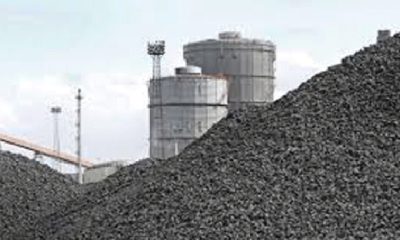
Most of all, while seeking public cooperation to save electricity and energy, the government must ensure that those who caused a sharp decrease in electricity generation at the Norochcholai power plant complex by procuring low-grade coal are brought to justice. The Opposition alleges a daily generation shortfall up to 170 MW due to the use of substandard coal at Norochcholai. This reduced efficiency has forced other power plants to burn diesel to cover the gap. Huge amounts of diesel are used by oil-fired power plants daily to meet the shortfall in electricity generation at Norochcholai, increasing pressure on the diesel supplies that could otherwise be used by the transport sector.
Unfortunately, the government politicians, including President Anura Kumara Dissanayake, have circled the wagons around Energy Minister Kumara Jayakody and his officials responsible for substandard coal imports, making one wonder whether the entire JVP has benefited from the coal racket.
Tuesday 24th March, 2026
The global energy crisis has taken a turn for the worse due to the Middle East conflict. International Energy Agency Executive Director Fatih Birol has issued a dire warning. If the Iran war persists, the world will face a mega energy crisis, whose economic impact will be far worse than those of the two oil crises in the 1970s, taken together, he has said, noting that today the world economy is losing about 11 million barrels of oil a day whereas it lost only five million barrels of oil each per day during the two crises in the 1970s. No country will be safe. However, the predicament of the developing nations, such as Sri Lanka, will be even worse, for their governments increase fuel prices in geometric progression when world oil prices rise in arithmetic progression, so to speak.
At this rate, a global recession may not be far off, economists have warned. Economies across the world are already screaming. But US President Donald Trump, who at the behest of Israeli Prime Minister Benjamin Netanyahu, started the current Middle East conflict, acts whimsically, and a credible endgame is conspicuous by its absence. It is doubtful whether he even has a well-thought-out military strategy. He orders airstrikes on Iran and keeps on pouring taxpayers’ money into an endless war, which may cost Americans more than a trillion dollars eventually, Prof. Linda Bilmes, a Harvard expert, has told The New York Times.
War is synonymous with destruction. In fact, it is hell, as American Civil War General W. T. Sherman famously said. Wars are said to have rules of engagement, but in reality, they are fought according to Rafferty’s rules. The US has used atomic bombs, napalm, Agent Orange, white phosphorus, etc., and carried out numerous massacres besides destroying critical infrastructure in other countries in a bid to win wars. Israel resorted to indiscriminate airstrikes and an equally devastating ground assault in Gaza in retaliation for the Hamas terror attacks. Therefore, the US and Israel should have anticipated fierce resistance and no-holds-barred retaliation from Iran when they carried out unprovoked attacks on that country. It was obvious from the beginning that Iran would shift the theatre of its military action to the economic front to pressure the US and Israel to stop attacks. It has done so with a devastating impact on the global economy. Not that it is totally blameless, but it is the US and Israel that conjured up a casus belli to start the current war and drove Iran to retaliate violently.
Those who started the Middle East war ought to stop it instead of asking Iran to declare a ceasefire, if the global economy is to be saved by reopening vital energy routes in that region. They will only aggravate the situation if they try to reopen the Hormuz Strait militarily. They have already made a series of military miscalculations. Israel and other US allies in the region have Iranian missiles and Kamikaze drones raining down on them. Iran is extending the range and capability of its missiles.
The US and Israel are obviously facing a situation they did not bargain for. They may have thought they would be able to bomb Iran into submission in a day or two and engineer a regime change. Their plan has gone awry. They expected the Iranian civilians to come out and overthrow the beleaguered government, but nothing of the sort has happened.
The best way to reopen the Hormuz Strait for international navigation and help overcome the global economic crisis is for the US and Israel to stop attacks immediately and let the neutral world powers negotiate with Iran, which has shown willingness to soften its stand. Now that Trump and Netanyahu have bragged that they wiped out Iranian nuclear facilities in the first few days of attacks, why they do not stop the war is the question.
It was reported at the time of going to press that President Trump had suspended planned strikes on the Iranian power grid for five days in view of “very good and productive conversations” with Tehran. One can only hope that this window for diplomacy will lead to de-escalation and an enduring ceasefire.
Monday 23rd March, 2026
The fuel price revision on the eve of the reintroduction of the QR-based fuel quota system the other day was only a feint, and the killer hook followed on Saturday, when massive fuel price hikes sent the public reeling. Curiously, Cabinet Spokesman and Minister Dr. Nalinda Jayatissa has said that despite the latest fuel price increases, “the Treasury is still bearing a cost of Rs. 100 per litre of diesel and Rs. 20 per litre of petrol, resulting in an estimated monthly subsidy expenditure of approximately Rs. 20 billion”. This claim lacks clarity. If it is true that fuel is still subsidised, the government ought to present a cost analysis based on landed costs of imported fuel, refining or processing costs, if any, administrative and distribution costs, dealer margins, and government taxes and levies. Mere words won’t do.
A statement made by President Anura Kumara Dissanayake on fuel pricing, in Parliament last Friday, runs counter to the Cabinet Spokesman’s aforesaid claim. What one gathered from the President’s speech was that the government would increase fuel prices in such a way as to make them cost-reflective. The President said the Ceylon Petroleum Corporation (CPC) accounted for 57% of the country’s fuel supply, and if it had been the sole supplier, world market price fluctuations could have been managed by offsetting current losses with future profits.
He said the private sector now controlled 43% of the market, and its position was that if retail prices did not reflect the current landed costs of fuel, it would stop imports. Emphasising that the contribution of the private sector was essential to maintaining the national fuel supply, the President noted that the private companies would participate only if they could sell fuel at cost-reflective prices. In other words, his position was that it was not possible to subsidise fuel. So, if the fuel prices determined by the CPC are not cost-reflective, due to subsidies, they will compel the private companies in the fuel trade to vote with their feet. It will be interesting to see whether they will do so. They have already matched the CPC prices.
Meanwhile, there are some measures that the government can adopt immediately to grant relief to the public. As we argued in last Saturday’s comment, the government should seriously consider suspending the loss-recovery levy of Rs. 50 per litre embedded in fuel prices, and imposing it again, if at all, when oil prices stabilise in the world market. This levy must also be replaced with a special commodity tax, which can be imposed on the private companies engaged in the fuel trade; at present they do not transfer the proceeds from loss-recovery levy to the Treasury, unlike the CPC, according to some former Petroleum ministers. Expanding the base of the loss-recovery levy in the form of a cess will help reduce its quantum. Surprisingly, this issue has not been taken up in Parliament.
There is also a pressing need for a car-pooling system to address the issue of soaring fuel prices and low-occupancy vehicles on the road. There are some car-pooling platforms in Sri Lanka, but they are not widely used. Car-pooling apps and similar services operate across Europe, Asia and Latin America in countries, such as France, Germany, Spain, Italy, Belgium, Poland, the UK, Turkey, India, Russia, Brazil and Mexico.
Successive governments have not cared to increase the country’s strategic petroleum reserves. The incumbent dispensation has failed to be different. In April 2020, world oil prices turned negative for the first time in history, with the oil producers paying buyers to remove the commodity owing to a fear that they would run out of storage facilities. Sri Lanka could not benefit from that windfall. The SLPP was in power at the time. If the Trinco oil tank farm had been repaired and made operational by then, the CPC would have been able to make huge profits and even turn itself around.
Speaking in Parliament, President Dissanayake recently lamented the limited oil storage facilities in Sri Lanka. No country can absorb oil price shocks unless it maintains strategic petroleum reserves. Only a few of the 99 oil tanks in Trincomalee have been developed. The Indian Oil Company (IOC) has been given 14 tanks, and the CPC 24 tanks, which remain unused; 61 tanks are to be developed under a joint venture between the CPC and the IOC. Each tank has a capacity of about 10,000 MT. There are no signs of the CPC-owned tanks in Trinco being made operational any time soon despite the JVP-led NPP’s election pledge to rehabilitate them fast as a national priority. Rhetoric is no substitute for strategic planning.

IPL captains’ meeting: What’s on the agenda?

Russia launches 948 drones at Ukraine in largest attack over 24-hour period

Oil at $150 will trigger global recession, says boss of financial giant BlackRock

Showers will occur at several places in the Western and Sabaragamuwa provinces and in Galle and Matara districts after 2.00 pm

Senior citizens above 70 years to receive March allowances on Thursday (26)

CEB Engineers warn public to be prepared for power cuts after New Year

‘Dates have the highest sugar content to fight Coronavirus’

Sunday Island 27 December – Headlines

#SundayIsland 17th December – Headlines

Sunday Island – 28th March

Sunday Island Headlines – 21 March

Sunday Island – 21st February – Headlines
-

 Features2 days ago
Trincomalee oil tank farm: An engineering marvel
-

 News6 days ago
Bailey Bridge inaugurated at Chilaw
-

 News5 days ago
CIABOC tells court Kapila gave Rs 60 mn to MR and Rs. 20 mn to Priyankara
-

 News6 days ago
Pay hike demand: CEB workers climb down from 40 % to 15–20%
-

 Features5 days ago
Science and diplomacy in a changing world
-

 News4 days ago
Colombo, Oslo steps up efforts to strengthen bilateral cooperation in key environmental priority areas
-

 Features2 days ago
The scientist who was finally heard
-
 News2 days ago
Substandard coal deepens energy crisis, warns former CEB Chief