
Opinion
Send in clowns and be damned!

The Director-General of the Sri Lanka Tourism Develop Authority has given the thumbs up sign to the Director General of Health and IGP to allow foreign tourists to travel across districts/provinces in Sri Lanka through ‘bubble tourism’. This is despite the fact that Sri Lanka’s Immunology and Molecular Medicine authorities have now identified six new Covid-19 variants in Sri Lanka. These include variants from Denmark, Europe, Middle East, Nigeria and South Africa, including the deadly Indian B.1.617.
A golden wand of protection seems to attend the path of these foreign visitors across the island, while the public is prohibited from venturing into or through such areas to prevent the spread of the virus. It is an irrefutable fact that when foreign tourists are ferried across the Island and allowed to visit the provinces, there is an entourage of locals to assist them at their accommodation, in transport and at places of tourist interest. One of the first Covid-19 patients in Sri Lanka was a Tour Guide! The policy of ‘back to business as usual’, sporadic restrictions, onus of self-protection and ‘never mind the consequences’ has hitherto yielded horrendous results.
The cost of opening the country’s borders to foreign tourists from January 2021, with some short-term gains to hoteliers, has boomeranged on the nation’s production, manufacture and general socio economic well- being. Each new morning new widows and infants howl and mourn the deaths of loved ones. Death Rate and total Covid cases in Sri Lanka have now reached phenomenal levels. Hospitals cannot cope with the rising numbers of patients, who are being accommodated in makeshift sheds and warehouses, or asked to remain in their homes sans medical attention!
Who is really calling the shots in controlling the pandemic that has now reached crisis proportions in Sri Lanka? Does the Minister of Tourism, Prasanna Ranatunga, have special qualifications and abilities in the medical field, to warrant such decisions and directives to be given across the board by his petty minions and willing sycophants in the government bureaucracy? Is he not aware that the practice of bubble tourism is between countries that have relatively small incidence of Covid, as in the case of Australia and New Zealand, holding strong track records of implementing consistently rigorous anti-covid restrictions and regulations? Is not the Director General of Tourism, Ms. Kirmali Fernando, whose husband owns and runs Tourist Hotels, properly advised on the practices around the world? Or is short term pecuniary gain more important than ordinary human lives? In Sri Lanka ” a land like no other” when Ukraine was in a lockdown situation, their tourists were hosted in Sri Lanka.
According to the WHO, the coronavirus variant was first identified in India last year and was classified as a variant of global concern, with some preliminary studies showing that it spreads more easily and is increasingly classified as a variant of concern at a global level. WHO statistics reveal a sharp linear rise in the new Covid cases in India commencing from March 2021, even while our ‘Health Experts’ in the Tourism Ministry were encouraging and further promoting Bubble Tourism Agreements with India until late April 20, 2021
The recent fiasco in Piliyandala saw the local MOH up in arms over the blatant idiotic interference by the Minister Lokuge, in giving counter orders against the Ministry of Health and opening up Covid-19 areas, possibly due to requests of business cronies among his constituents. The subsequent death rate due to Covid in Piliyandala bears ample testimony to the demented exertions of this politico.
Blustering, blundering politicians apart, what of the high-powered Committees, consisting of retired senior government servants, expert medical personnel, deciding to administer the First Dose of anti-Covid-19 AstraZeneca Vaccine to approx. 9 lakhs of the population, while only retaining 03 lakhs for the Second Dose! Surely it is common sense to spread the vaccine in a manner that ensures that both doses are given during the prescribed period of at least 10 weeks! The logic of entering into a signed contract for supply of AstraZeneca to be given for the second dose, and opening a letter of credit, does not seem to have entered into the calculations of those charged with such responsibilities, who perhaps have reached the age of Dementia or careless indifference!
There was enough time to secure the required stock of AstraZeneca from January 2021, if not for political will considering that the Budget of December 2020 had no provision for anti-covid vaccines! Leaving the approx 600,000 of people particularly in the over 60 age group in dire straits, after their first dose of AstraZeneca, which cannot be mixed with other vaccines now available in the market, is tantamount to criminal negligence, breach of trust and inequitable governance. Even in the midst of such severe bungling, there are some politicos trying to pour down Vaccine Cocktails, hitherto never tried or tasted in other parts of the developed world, down the throats of these unfortunate victims.
The cronyism and nepotism rampant in the numerous and now commonplace accounts of people with ‘influential connections’’ getting the vaccine over others, shows a moral impoverishment of the country. It is a fact that today there are those who work in the front line of infection in their respective workplaces, who have not been given priority in the administration of the vaccine. However, Notables, VIPs and Politicians and their allies are given pride of place in getting the scarce second dose of the AstraZeneca, irrespective of the fact that this is considered more appropriate for senior citizens above the age of 55 or 60.
It is a time that the Public has seen through the lies, sheer hypocritical terminology and slanted data that might have hitherto lulled them towards the so-called resurgence of the virus in the “Avurudu Pokura”. Some amusing but insidious half-truths, and concealments are worth mentioning. The media gave the impression for a long time that the deaths were due to underlying conditions of non-communicable diseases such as diabetes and high blood pressure when the causative agent was Covid 19. The undeniable truth is that had it not been for the Covid-19 virus, those with underlying diseases might have lived to a ripe old age with the medications! It is only now, with the escalating deaths and ensuring chaos in the health sector, that the real causative agent of those afflicted with Covid-19 is being acknowledged as Covid pneumonia! The crass negligence of garment factory owners in the Brandix cluster, and resultant probe into criminal negligence is without any progress and lies hidden and dormant. The reluctance to admit that there was a community wide transmission across the island, and the continued lies that this is confined in the main to the Western Province, and that every case could be traced back to the Brandix or Peliyagoda Fish Market clusters is now a sad laughing matter!
Those of us who watched the TV news in the time leading up to the present crisis are privy to the spectacle of the representatives of the people (Politicians), at the pinnacle of power, neglecting to follow simple guidelines such as wearing a mask, avoiding crowded meetings, etc. The subtle interplay of attributing a particular age group to the Covid-19 casualty, the balancing of numbers of positive cases and deaths with limited PCR, and the relative lack of a Geographical Information System by which selective and targeted lockdowns could be imposed in severely affected areas, have contributed to maintaining a fog index over the actual situation prevailing in the country.
A nation that has seen its own Minister of Health and other politicians expound the virtues of a fake decoction called “Dhammika Peniya” as a possible Covid-19 preventive, cannot be too surprised thereafter to witness any worse inanities and tragic bungles!
In conclusion, a nation that with renewed hope changes its political pillow for a new government be it, SLFP, Yahapalanaya, alias SJB, Podujana Peramuna, appears to be doomed to certain abject disillusionment. The truth is plain to see. Any apolitical citizen can now realise that whether there be bond scams, major bribery and corruption charges, criminal negligence on terrorist massacres, the policy of no real remedial action, talk only and a series of commission reports, parading on remand, will be the final product. Except for some sprats down the line, the kingpin will continue their rampage. It is said that there is a certain camaraderie and wheeler dealing even amongst those who represent the people on either side of the divide in Parliaments. Where there is neither honour, principle nor true love of country and its people, in a system that is replete with sycophant”public” servants and moribund self-serving intelligentsia, the dark prescription still is “Send in the Clowns and be damned”.
SONALI WIJERATNE
Kotte


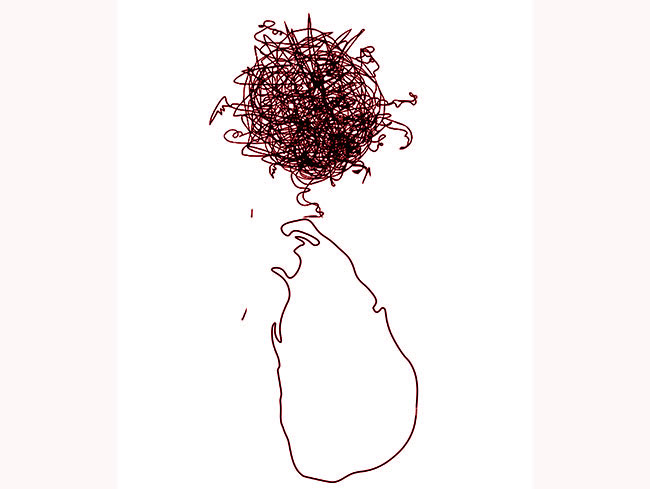
There is an abiding and tragic irony in Sri Lanka’s geography, as well as its history. We inhabit a land blessed with fertile soil, kissed by perennial sunshine, surrounded by the deep blue sea and wrapped in natural beauty that the rest of the world envies. Yet for all that, for decades, the story of this island has not been one of prosperity, but of a steady, agonising descent into unclassified chaos as judged by every possible dimension. Successive governments, populated by so-called leaders and politicians of every conceivable hue, have systematically brought this nation down, lower and lower, into a chasm of economic ruin and social despair. Today, despite grandiose promises of “system change” and “political resets”, the reality on the ground remains an indictment of a ruling class of politicians that has consistently put self-interest above statecraft.
Our woes are a miserable legion, and the vast majority of them are entirely man-made. The fundamental tragedy of Sri Lanka is that we have never had a true statesman: a leader of vision, integrity, and courage, who could drag us out of this hell hole and elevate our status to dizzy heights. Instead, we have been cursed with a rotating theatre of loud-mouthed politicians whose ideological and grandiose proclamations, which are quite different from their opponents’, evaporate even without a trace, the moment they taste unbridled power. Whether wearing the colours of old dynastic parties or wrapping themselves in the mantle of new populist alliances, the current set of politicians have absolutely nothing worthwhile to offer. The faces change, but the underlying mechanisms of stellar governance remain totally shattered. There are even many superlatives, grandiose adjectives and the highest accolades, used by the people and even the media, to describe our politicians of the past. Those words are not worth even the paper that they are written on.
The Blight of Rampant Corruption
At the heart of our national decay lies rampant, unchecked corruption. It is a cancer that has sent out its roots into every organ of the state. For decades, public office has been viewed not as a sacred duty to our nation, but as a gateway to personal enrichment. Irregularities mar multimillion-dollar contracts, public funds vanish into the ether of foreign bank accounts, and even international loans meant for national development are shamelessly preyed upon by hackers and bureaucratic thieves.
When a nation’s moral fabric is torn from the top, the rot inevitably trickles down, just as a fish starts to rot from the head downwards. The independent oversight bodies that should act as the state’s watchdog guard-rail systems, are routinely weakened, bypassed, or detrimentally politicised. We are repeatedly treated to the spectacle of high-profile arrests and anti-graft investigations, yet for all that, these exercises often feel more like political theatre than a genuine purification of the system. Politicians with handcuffs and wide smiles are bandied about in the media as if at a political rally, while hardcore criminals and murderers are allowed to cover their faces when they are featured in the media. True accountability remains elusive because the system is designed by the corrupt, principally for the corrupt. While the elite insulate themselves with their plundered wealth, the ordinary citizen is left to pay the bills for their profligacy.
The Betrayal of the Farmer and Food Insecurity
Perhaps there is no greater crime committed by our rulers than the systemic betrayal of our agricultural sector. Sri Lanka possesses the climate and the traditional knowledge to be completely self-sufficient in food production. Yet, our farmers are treated with scant respect and given minimal facilities or totally inadequate structural support. They are left at the mercy of climatic upheavals, volatile markets, inadequate storage infrastructure, a determined and fabulously rich mafia of unscrupulous and scheming middlemen, as well as erratic policy decisions that seem designed to fail, time and time, again and again.
It is an absolute travesty of justice that an island capable of feeding itself more than comfortably, is forced to spend its precious, hard-earned foreign exchange importing basic food articles. We are witnesses to the absurd spectacle of importing foods, fruits, confectionery, and sweets from abroad. Many of these items are what we already produce locally and which are of an exceptionally high quality and with the ability to stand on their own against any of the imports. Our homegrown endeavours based on agricultural produce such as tea, coconuts and spices, some of which have the reputation of being the best in the world, are stifled by a lack of state encouragement and a flood of imports favoured by policy loopholes and obeisance to political cronies. By failing to protect and subsidise our agricultural base, our leaders have not only impoverished the rural masses but have left the entire nation vulnerable to global supply shocks. A country that cannot feed itself from its own ever-so-rich soil can never truly claim to be sovereign.
The Crushing Burden of the Living
As a consequence of this economic mismanagement, the cost of living has soared to heights that are actively suffocating the average household. The price of basic commodities, fuel, and utilities has turned daily survival into an exercise in desperation. To appease international creditors and patch up the fiscal black hole dug by previous administrations, the state has resorted to implementing virtually punitive and totally suffocating taxes.
However, the high flyers are well-known to devise their own ways of circumventing these taxes. We do not hear of the Inland Revenue Department asking for details of how they acquired the wealth to import vehicles to the tune of tens and even hundreds of millions of rupees. In contrast, the tax people are well known to go after professionals who strive ever so hard to make a few honest bucks. These taxes do not target the wealthy elite who engineered the crisis. Instead, they fall disproportionately on the middle class and the absolute poor.
The burden of fiscal recovery has been placed squarely on the sagging shoulders of those least able to cope. At the same time, arbitrary economic restrictions, such as the prolonged and convoluted policies surrounding the importation of motor vehicles, have distorted the local market, making transport and commerce prohibitively expensive. The middle class is being systematically dismantled, held by the neck and squeezed, and forced to choose between economic stagnation at home or fleeing the country in search of better horizons.
The Collapse of the Social Safety Net: Education and Health
For generations, Sri Lanka has prided itself on its robust social indicators, anchored by free education and free healthcare, both free at the point of delivery. These were the twin pillars that allowed for social mobility and guaranteed a basic dignity of life. Today, those pillars are also crumbling.
Our public education system is failing, and has been failing for many a decade. It is blatantly starved of resources, and burdened by outdated curricula that do not prepare our youth for a changing world. Teachers are underpaid, schools lack basic infrastructure, and the universities have become battlegrounds of frustration rather than centres of excellence. There are no facilities at all to detect and foster our gifted children. If only our administrators and politicians remove their eye pads and look around the globe, the will be able to see the light of day that will usher in the sort of education that would change the entire landscape.
Simultaneously, the healthcare system is in a state of terminal decline. Public hospitals are plagued by critical shortages of essential medicines, surgical equipment, and specialised personnel. The “brain drain” triggered by the economic crisis has seen thousands of our finest doctors, nurses, and academics abandoning the country, leaving behind a hollowed-out and inadequate system.
When a citizen can no longer rely on the state to educate their child or save their life in an emergency, the social contract between the governor and the governed is entirely dead. The sheer grain of responsibility and accountability has been fractured forever, hardly ever, if not never, able to recover.
A Land Punished by Man and Nature
As if the misrule by politicians were not enough, nature itself seems to have turned its face away from us. In recent years, Sri Lanka has been repeatedly battered by an array of natural disasters, from severe droughts that parch our agricultural heartlands to supercharged monsoons, floods, and landslides that even sweep away entire villages. It certainly looks as if the Gods are against us.
Yet for all that, even these environmental calamities reveal the incompetence of our leadership. Climate change may be a global phenomenon, but the devastation caused by these disasters is magnified tenfold by local corruption and incompetence. Deforestation, unregulated construction on fragile hillsides, and the complete absence of modern disaster-preparedness infrastructure, ensure that every heavy rainfall transforms itself into a national tragedy. Nature has punished us…, YES, but our so-called leaders have stripped us of the armour needed to survive the blows.
The Elusive Search for a Glorious Humane Statesperson
We find ourselves in a totally miserable cul-de-sac, an impasse that is totally unfathomable, akin to a bottomless pit of despair. Our woes are a legion, and the historical ledger of our political class is a catalogue of failure, betrayal, and unfulfilled promises. The current political landscape offers no solace; it is populated by factions that excel at critique but are utterly bankrupt when it comes to execution of noble promises. They offer cosmetic adjustments to an economic framework that really requires a radical, ethical overhaul. Indeed, they can only excel at patchwork solutions.
What we need is neither a partisan autocratic politician nor another coalition born of electoral opportunism. We need a true statesperson, a man or a woman; a leader who has the moral authority, singular courage, and the aptitudes to enforce the rule of law, the vision to prioritise domestic production and agricultural sovereignty, as well as the honest valour to demand sacrifices from the wealthy rather than the vulnerable poor. Until such leadership emerges from the very soil of this country, we will remain trapped in this self-inflicted hovel, gazing pensively at the immense potential of our magnificent island, while living in the reality of its total and substantial ruin.
It is time for the citizens of Sri Lanka to stop waiting for spontaneous salvation from the current political hues, and demand a complete, uncompromised reconstruction of the state and our thrice-blessed Motherland. Towards that end, your guess is as good as mine as to whether our gullible, easily manipulated, and terribly short-sighted inhabitants of this isle of potential splendour would have even an iota of wisdom to do what is so desperately needed. Till that time, when the currently despondent and impulsive masses of this country, of all hues, castes, creeds and ethnicities, wake up from their nonchalant slumber, and rise up as a nation to clamour for their just desserts, we will continue to remain in this abyss of despair. At the end of the day, the celebrated architects of resurrection would be the people, very definitely, for the people.
By an Old Aficionado
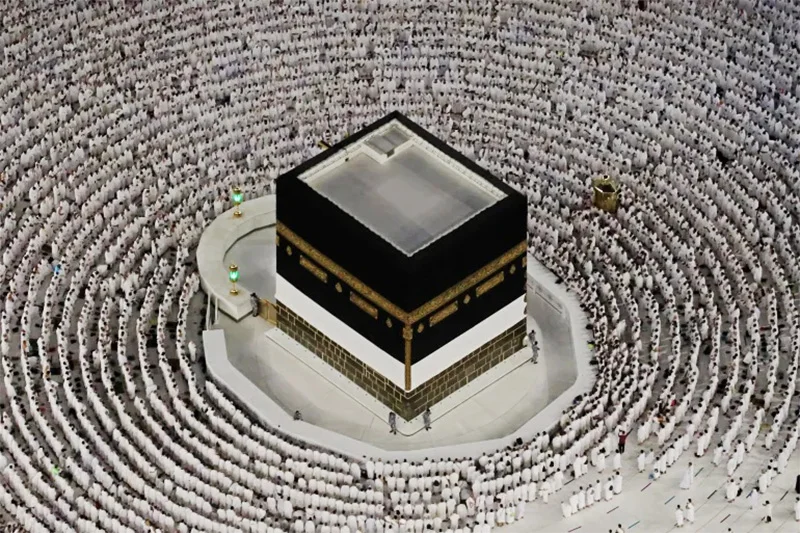
Every year, the spiritual compass of the Muslim world turns towards the holy city of Makkah, where millions of pilgrims gather for Hajj — one of humanity’s oldest and most profound journeys of faith.
This year, too, the sacred valleys of Saudi Arabia are filled with the echoes of “Labbaik Allahumma Labbaik” — “Here I am, O Allah, here I am” — as Muslims from every continent respond to a divine call that dates back thousands of years to Prophet Ibrahim (Abraham).
Among them are thousands of Sri Lankan pilgrims, dressed in simple white garments, leaving behind worldly status, wealth and identity in pursuit of spiritual purification and closeness to God.
According to Muslim Affairs authorities, the Kingdom of Saudi Arabia has allocated a Hajj quota of 3,500 pilgrims for Sri Lanka for Hajj 2026, enabling devotees from across the island to undertake the sacred pilgrimage. The annual allocation is determined through agreements between Saudi Arabia and Muslim-majority and minority nations worldwide.
Since early this month at the Bandaranaike International Airport in Katunayake, emotional scenes unfolded as families bade farewell to departing pilgrims with tears, embraces and prayers.
Elderly parents clutched prayer beads, children waved anxiously, while relatives sought blessings from loved ones embarking on the once-in-a-lifetime spiritual journey.
For many Sri Lankan Muslims, performing Hajj is not simply travel — it is the fulfilment of a lifelong dream nurtured through years of prayer, sacrifice and savings.
In villages, towns and cities across Sri Lanka, preparations for Hajj often begin months or even years in advance. Some families save gradually over decades, while elderly pilgrims regard the journey as the culmination of a lifetime of devotion.
Hajj is the fifth pillar of Islam and is obligatory for every financially and physically able Muslim at least once in a lifetime.
Yet the pilgrimage is far more than a religious obligation.
It is a journey deeply rooted in the story of Prophet Ibrahim, known as Abraham in Christianity and Judaism, and revered across the Abrahamic faiths as a towering symbol of faith, obedience and sacrifice.
Islamic tradition recounts how Prophet Ibrahim was commanded by Allah to leave his wife Hajjar and infant son Ismail in the barren desert valley of Makkah. With unwavering faith in God’s wisdom, Ibrahim obeyed.
Left in the scorching desert with little water or food, Hajjar desperately searched for water for her thirsty child, running seven times between the hills of Safa and Marwa.
Her determination, courage and trust in God are immortalised in the rituals of Hajj today.
Pilgrims reenact Hajjar’s desperate search by walking between Safa and Marwa, symbolising perseverance, faith and hope even in moments of despair.
According to Islamic belief, Allah answered Hajjar’s prayers by causing the miraculous Zamzam well to spring forth beneath baby Ismail’s feet — a well that continues to provide water to millions of pilgrims centuries later.
Another defining moment in Ibrahim’s story is commemorated during Hajj and Eid-ul-Adha — the willingness of the Prophet to sacrifice his beloved son in obedience to God’s command.
As Ibrahim prepared to carry out the sacrifice, Allah replaced Ismail with a ram, signifying that faith, sincerity and submission were greater than the act itself.
The symbolic stoning of the devil during Hajj recalls Ibrahim’s rejection of Satan’s temptations that sought to discourage him from obeying God.
Thus, every ritual of Hajj carries profound historical and spiritual meaning.
The pilgrimage is not simply movement through sacred spaces; it is a reenactment of timeless lessons in obedience, sacrifice, patience and devotion.
One of the most remarkable aspects of Hajj is the extraordinary equality it represents.
Pilgrims, regardless of nationality, race, language or social class, wear the same simple white attire, known as Ihram.
Presidents, businessmen, labourers and farmers stand side by side in prayer, under the blazing Arabian sun, erasing worldly distinctions and affirming the Islamic belief that all human beings are equal before God.
Religious scholars often describe Hajj as the world’s greatest annual demonstration of unity and humility.
The spiritual climax of the pilgrimage occurs at the plains of Arafat, where pilgrims spend hours in prayer and repentance seeking divine forgiveness.
Many Muslims believe that a sincerely accepted Hajj cleanses a believer of past sins and marks the beginning of a spiritually renewed life.
Upon returning home, pilgrims are honoured with the title “Hadji” or “Hajji,” a distinction that carries immense respect within Muslim communities, including in Sri Lanka.
Traditionally, a Hadji is viewed as someone who has fulfilled one of Islam’s most sacred obligations and returned with heightened spiritual responsibility.
However, Islamic scholars emphasise that the title is not merely ceremonial.
“The true significance of becoming a Hadji lies in personal transformation,” a Colombo-based Islamic scholar said.
“A pilgrim is expected to return with greater humility, compassion, honesty and social responsibility. Hajj is not about status; it is about becoming a better human being.”
Across Sri Lanka, mosques have been conducting special prayers for pilgrims, while families gather to seek blessings before departure.
The pilgrimage season also creates a unique emotional atmosphere within Muslim communities, where neighbours visit departing pilgrims and homes become centres of prayer and reflection.
Saudi Arabia has introduced extensive arrangements this year to facilitate the pilgrimage, including digital crowd management systems, improved transport networks, upgraded accommodation and enhanced healthcare services.
Sri Lankan diplomats and officials, stationed in Saudi Arabia, have been coordinating closely with Saudi authorities to ensure the welfare and smooth movement of Sri Lankan pilgrims throughout the pilgrimage period.
Sri Lanka’s Ambassador to Saudi Arabia, Ameer Ajwad, recently inspected facilities in Mina, prepared for Sri Lankan pilgrims, and reaffirmed efforts to provide a safe and spiritually fulfilling Hajj experience.
As millions circle the Holy Kaaba in prayer, Hajj continues to stand as one of the most extraordinary gatherings on Earth — a timeless spiritual movement connecting humanity across borders, cultures and generations.
For Sri Lanka’s pilgrims, the sacred journey is not merely a passage to Makkah.
It is a journey into the soul — a return to the eternal lessons of Prophet Ibrahim, Hajjar and Ismail — lessons of sacrifice, endurance, obedience and unwavering faith that continue to inspire humanity centuries later.
By Ifham Nizam

‘Ferocious in battle, Magnanimous in victory (Col Tim Collins- Brit Army)
Sri Lanka commemorated the 17th anniversary of the end of the 30-year Eelam conflict with a moving War Heroes Remembrance Day ceremony on 19 May 26 at the monument on the Parliament grounds. It was a solemn occasion when the Nation paid tribute to over 29,000 Defence and Police people (women and men) who died in the conflict. Sadly, politics, aberrations and theatrics were also on display.
The gravity of the sacrifices made and consequences of the Eelam war and two Southern terrorist insurgencies (1971 and 1988-9), are felt mostly by those who lost their loved ones in the conflicts as the nation mourns with them. Any hesitation to pay tribute belittle the fallen.
It was regrettable to see that the ceremony was also political. Why were the general public excluded from honouring the fallen? It defies understanding that such actions could take place at an event held sacred by the nation. Is there any other country where citizens are prevented from laying wreaths at a National Remembrance monument?
In the UK, from where this ceremony originates, 10,000 veterans (of an army of 109,000 -just half of Sri Lanka’s) take part in the march past every November. They are selected by their regimental associations from thousands of applications on a first come first served basis. Public access is unrestricted with numbers attending being the only barrier to viewing.
It is shocking that in Sri Lanka while public access is denied (selectively?), ‘invitations’ are given to attend a national Remembrance Day. They were restricted to just three government nominees! Who made this unwise decision and why?
Did the other government cohorts object to being invited? Would they have been embarrassed to come? Is the purpose of this to prevent prominent actors in the victory from receiving overwhelming accolades if they attended? Was there a fear of gate crashing? Perish the thought.
What is the need to make political speeches at an event to honour the nation’s dead? Couldn’t the speeches be made in Parliament or broadcast the day before? Seeing VIPs enjoying a joke at this ceremony hurts.
When laying wreaths at the monument, national customs should be followed by all, as in the past. A traditional low bow with hands clasped humbly, as at funerals, should be the form. In the West the head is bowed. It is unnecessary to imitate Americans by placing one hand over the heart when bowing, as on CNN. Bringing the other hand over the midriff elaborates but is an awkward addition.
The dress for all civilians attending should be similar, respectful and appropriate as for formal events and uniform, matching that of the retired military.
This is the time for the nation to remember and reflect for a moment on the dead in conflict, not only of the Military and Police who sacrificed their lives in thousands doing their duty but also of the innocent civilians who died in tens of thousands. Or, is it that some, other than the NOK, who survived in the North and South, have become hardened to death and do not wish to recall how appalling the losses were? Has death lost its meaning if also not its sting?
During 1988-9, when 60,000 died in 13 months (over 100 a day), a tea planter in Bandarawella was shot dead by Southern terrorists for hoisting the national flag on Independence day.
In the Eelam conflict just one regiment, (regiments are the core and heart of the Army), Gemunu Watch, lost 3,424 KIA and 4,272 WIA. The Imperial British Army after WWII lost 2551 (just over half of the Gemunu Watch number) in war in Korea (1949-51), Falklands (1982), Iraq, Afghanistan (20 years) and 40 years of insurgency in Northern Ireland. (SL Army infantry regiments (SL Light Infantry, Sinha, Gemunu, Gajaba and Vijayba) had about 19,000 of 21,000 of the Army KIA. That is the enormity of the sacrifices made by our indomitable military. Who then struggled to find heroes in the military?
Fisher Weerasuriya from Matara and farmer Vernugopal from Jaffna who never knew each other were brought to a place hundreds of miles from their villages, to blow each other’s brains out. ‘Had they a quarrel? Busy as the devil is, not the smallest. Their political leaders had fallen out; and instead of shooting one another had the cunning to get these blockheads to shoot each other’ (transcribed from ‘Sartor Resartus’ – Carlyle). Do Sri Lankan politicians who stirred the pot not know this when they fervently say they hope to prevent conflict in the future?
Is it correct then to exult that 6,000 troops died in the last phase of the war? Is that an achievement? As FM Montgomery said of the WW1 British Army “Good fighting Generals of the war appeared to have complete disregard for life’.
Reparations are claimed by the winners in wars between nations. After civil conflicts there should be reconciliation. There should be no humiliation. When will commemoration of the dead be national in Sri Lanka? How many from communal minorities attend this ceremony? Every citizen from North to South should be welcomed to attend Remembrance ceremonies in the future. That will hopefully help to sow unity.
The military died without a murmur for their companions so that the nation would survive. Let next year’s commemoration be a truly national event where the focus is on those who died while veterans in large numbers and the next of kin together with the general public, are warmly welcomed.
“If it be life that awaits, I shall live forever unconquered: If Death I shall die at last strong in my pride and free”. – Scottish National Memorial
by Old Soldier

Showers will occur at times in the Western, Sabaragamuwa and North-western provinces and in Galle, Matara, Kandy and Nuwara-Eliya districts

Harsha flays govt. over plan to pass coal, Treasury losses to public

PM opens Vesak pandals

UNP challenges NPP move to amend Vihara – Devalagam Act

Fuel price increases: Bus and trishaw operators demand fare hike

Govt. halts e-passport project

‘Dates have the highest sugar content to fight Coronavirus’

Sunday Island 27 December – Headlines

#SundayIsland 17th December – Headlines

Sunday Island – 28th March

Sunday Island Headlines – 21 March

Sunday Island – 21st February – Headlines
-
 News3 days ago
IMF urges Lanka not to meddle with exchange rate
-
 News7 days ago
Easter Sunday carnage: Court told Maulana’s statement cannot be accepted without cross-examination
-
 News7 days ago
UK passport holder hiding here wants to have deportation order rescinded to leave without blemish
-
 Business4 days ago
Sri Lanka’s construction industry losing ground while no one watches
-
 Opinion7 days ago
Undermining the democratic political framework
-
 News3 days ago
State of emergency extended
-
 Features4 days ago
The Division Bell Mystery
-
 Midweek Review6 days ago
Israeli-US aggression won’t go unanswered -Iranian Ambassador