
Sports
What Ranil can learn from cricket


by Rex Clementine
If your grandchildren ask how bad 2020 was tell them that even Ranil Wickremesinghe couldn’t survive as the leader of UNP!
Ranil’s tenure as UNP’s leader has been noteworthy. He assumed duties as the party leader in 1994. The Sri Lankan cricket captain at that point was Arjuna Ranatunga. Since then, Sri Lanka has had 11 different Test captains; England has won a World Cup; International Cricket Council’s founder members have lost their veto powers and India has taken over as world’s leaders of cricket. Even the Catholic Church has seen three different Popes during the last 25 year – John Paul II, Benedict XVI and Francis I. But Ranil remains UNP’s leader!
Sir Ian Botham is the greatest cricketer produced by England in the last 50 years. So is Ranil. Not many are fit to hold a candle to Ranil when it comes to his oratory skills or his knowledge of the Constitution. But everyone is not a leader. Botham had a brief stint as England captain. When the Ashes was slipping away from England under his charge in 1981, he sensed what was in store for him and stepped down before being axed. Mike Brearley, Botham’s successor was hardly a match winner; he never scored a Test match hundred and ended up with an average of 22. But Brearley, who had degrees from Cambridge for Classics and Moral Science, was an outstanding leader. As Rodney Hogg, the Australian fast bowler put it, “Brearley had a degree in people.”
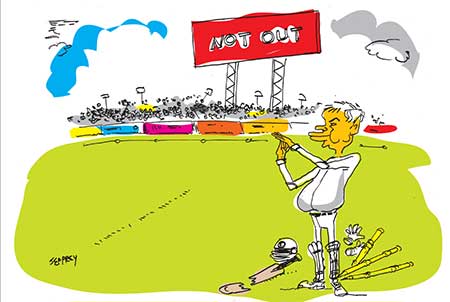 Ranil failed to see the signs. The writing was on the wall for him in the lead-up to the recent election. Instead of handing over the party reins to someone else he decided to stay put and the voters taught him an unforgettable lesson. Ranil did not have Botham’s humility to play under someone who could never match his abilities or skills.
Having stepped down from captaincy, Botham extended his fullest support to the new skipper. His impact in the 1981 series was such that it was called ‘Botham’s Ashes.’
Not Ranil, though; he dragged his feet on naming Sajith as UNP’s presidential candidate, and after naming him came up with some ill-timed moves that literally derailed his understudy’s campaign.
Ian Chappell is one of the finest captains the game has ever seen. He didn’t hesitate to take on the administration, demanding that his players be paid well and that he be part of the process where decisions were made. Chappell was so straight forward that he didn’t even spare Sir Don Bradman. Chappell was a true leader.
Ranil unfortunately while being in power didn’t fight for his rights or for those of his party members. He has absolved himself of any responsibility for the Easter Sunday attacks, claiming that he had not been invited to Security Council Meetings. Ranil shouldn’t have taken it lying down when he was kept out of those important meetings. Then after the attack, his lack of remorse during television interviews gave the impression of a man who did not feel for his people.
Chappell’s grandfather Vic Richardson also captained Australia. The best advice he gave young Chappell was ‘if you ever get a chance to captain Australia, don’t captain like a Victorian.’
Ranil too had close relatives at the helm of politics. They should have told him what ‘disce aut discede’ really meant.
Chappell even dropped his best mate Doug Walters from The Oval Test of 1972. It was the first time ever a New South Walesman did not feature in an Australian Test side. Dick Tucker, a reputed Australian journalist told Chappell that he was surprised at what the latter had done.
Chappell said something interesting: ‘Dick, If you think that I am going to pick Doug Walters because he is a mate of mine when that is not in the best interest of the team, you don’t know me. I am going to pick a team that is going to win a game. I am not going to pick up all my mates and leave out someone who I am not fond of. Ridiculous.”
Ranil has a lot to learn from Chappell. One of the first things he did after being in the opposition for more than a decade was to appoint his mate Arjun Mahendran as Governor of Central Bank. The rest, as they, say is history. After all, here’s a man who said, when President Mahinda Rajapaksa appointed Ajith Nivard Cabraal as the Governor of Central Bank, that it was like ‘picking a donkey for a Derby.’
Not just Botham and Brearley, Ranil has a lot to learn from even our own T.M. Dilshan. Not the brightest captain that we have had, Dilshan became the first Sri Lankan skipper to win a Test match in South Africa. But he lost the series. The following day he announced that he was stepping down from captaincy.
Ranil should have stepped down the day after his party was reduced to just one seat in Parliament. He is still hanging on, hoping against hope.

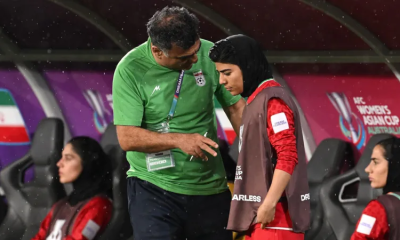




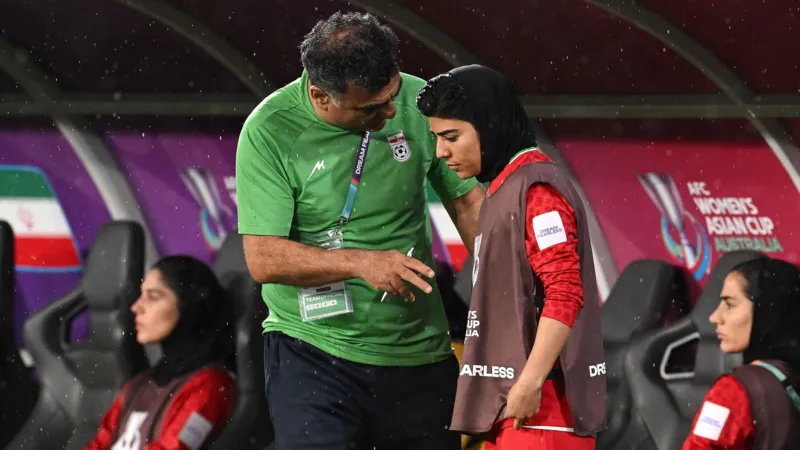
Three more members of the Iranian women’s football delegation – who were given humanitarian visas to stay in Australia – have changed their mind and will return home.
The trio have been named by human rights activists in the Iranian diaspora as Zahra Soltan Meshkehkar, Mona Hamoudi, and Zahra Sarbali.
Concerns grew for the Iranian team after they were silent for the country’s anthem in their opening Asian Cup match against South Korea on 2 March – which led to them being branded “war traitors” in Iran.
Confirming the decisions, Australia’s home affairs minister said his government had done everything it could to ensure the women were given the chance to have a safe future in the country.
“Australians should be proud that it was in our country that these women experienced a nation presenting them with genuine choices and interacted with authorities seeking to help them,” Tony Burke said in a statement.
“While the Australian government can ensure that opportunities are provided and communicated, we cannot remove the context in which the players are making these incredibly difficult decisions.”
Iran’s sports ministry also earlier confirmed the news, first reported by the Islamic Revolutionary Guard Corps-linked Tasnim News Agency, in a statement.
“The national spirit and patriotism of the Iranian women’s national football team defeated the enemy’s plans against this team,” the statement says, also accusing Australia’s government of “playing in Trump’s field”.
Tasnim said the three were on their way to Kuala Lumpur in Malaysia to join the rest of the squad and were “returning to the warm embrace of their families and homeland after withdrawing their asylum application in Australia”.
It said they had resisted “psychological warfare, extensive propaganda and seductive offers”.
It means that, of the seven who initially said they wanted to stay in Australia, only three now remain as defectors. One of the players made the same decision to return to Iran on Wednesday.
Hamoudi and Sarbali were among the original five who refused, after giving minders the slip at the team’s hotel on the Gold Coast, south of Brisbane, last Monday and being taken to a safe house by Australian Federal Police.
Zahra Soltan Meshkehkar, a member of the team’s technical staff, was one of two more women from the group to seek asylum the next day. The other – Mohaddeseh Zolfi – changed her mind hours after being given the right to stay. She is understood to have already rejoined the team.
There was concern in Australia that members of the team and their families might face repercussions in Iran after the players refused to sing the national anthem.
One conservative commentator on Iranian state media accused them of being “wartime traitors” and called for a harsh punishment.
The team did sing the anthem in their last two games before they were eliminated on Sunday, leading critics to believe they had been told to sing by government officials accompanying them during the tournament.
The remaining Iranian players left Australia on Tuesday night local time – two days after they were knocked out of the Asian Cup.
[BBC]


Our cricket bosses didn’t earn many admirers for their choice of chairman of selectors, but they have certainly struck a chord with students of the game like us, and more importantly with the fans, in their appointment of the national team’s head coach. In Gary Kirsten, Sri Lanka have brought in a man with a proven pedigree and it looks like a step in the right direction.
As an opening batsman for South Africa, Kirsten never quite possessed the charm, elegance or textbook technique of his older brother Peter Kirsten. Gary’s success was forged the hard way. He thrived on grit, discipline and a stubborn refusal to give in, the sort of qualities that don’t always make headlines but win you matches. Once asked to follow on by England, he dug in for more than 14 hours at the crease and churned out 275, the highest score of his career. That innings summed up the man perfectly. When the going got tough, Gary simply rolled up his sleeves and got going.
Those very traits travelled with him into coaching, where he carved out an enviable reputation. Managing a star-studded Indian dressing room featuring Sachin Tendulkar, Rahul Dravid, VVS Laxman and MS Dhoni is no walk in the park. Handling so many big personalities requires more than tactical nous; it demands man management. Kirsten passed that test with flying colours. Under his watch India climbed to the No.1 ranking in Test cricket and, of course, lifted the 2011 World Cup, breaking 21 million Sri Lankan hearts in the final in Bombay.
Kirsten was hugely popular with Indian supporters. Many wanted him to stay on, but he knew better than to overstay his welcome and bowed out gracefully.
Soon after, South Africa came calling and true to form he went about the job methodically, guiding the Proteas to the top of the world rankings. Wherever he has gone, results have tended to follow.
That said, simply because Kirsten has joined our ranks does not mean Sri Lanka will suddenly start knocking over the top sides week in, week out. Kirsten carries no magic wand. A coach, after all, can only take the horse to water; it is the players who must drink.
For a cricket team to flourish, the entire system needs to be rock solid. It starts with the players themselves, their hunger to improve, their willingness to leave their comfort zones and put in the hard yards. The next crucial cog in the wheel is selection. In years gone by, men like Michael Tissera and Sidath Wettimuny had the foresight to look beyond the obvious and the courage to make unpopular calls when necessary. A selection panel that continues to back Dasun Shanaka as captain, however, is asking for trouble. It’s a bit like appointing Sagala Ratnayake as National Security Adviser.
Sri Lanka Cricket deserves credit for trimming down the number of teams competing in the First Class tournament, but the worrying reality is that the number of international games Sri Lanka play each year has shrunk alarmingly. Last year the country played a grand total of four Test matches, hardly enough cricket for a side hoping to stay relevant in the longest format. The Test calendar needs beefing up and the Lanka Premier League must return to the fold if Sri Lanka are to stay competitive in white-ball cricket.
For a team to succeed consistently, cricket has to run like a well-oiled machine. In Sri Lanka’s case, however, the wheels tend to wobble. Ahead of almost every major tournament our leading bowler seems to be nursing an injury. That is hardly the hallmark of a smooth operation.
Kirsten, to his credit, has struck all the right notes since being appointed. He has spoken about improving Sri Lanka’s rankings, winning overseas and developing a strong bench, the sort of forward thinking the game desperately needs here.
Just look at India for an example of depth. Sanju Samson walks in as their back-up wicketkeeper and ends up as Player of the Tournament in a World Cup. They can hand the gloves to Ishan Kishan, while players of the calibre of Rishabh Pant and KL Rahul struggle to find a place in the squad. Any one of those four would walk into most international sides as the first-choice keeper. Such is the luxury of India’s bench strength.
There’s no point envying them. The smarter move is to learn from them.
Kirsten, therefore, has plenty on his plate. And if he is looking for a place to begin, he might start with a rather pressing issue, figuring out how Sri Lanka’s batters plan to play spin, a challenge that has been turning our innings into a procession far too often in recent times.
by Rex Clementine ✍️

Salman Ali Agha said that he would have done things ‘differently”, after Mehidy Hasan Miraz ran him out in controversial circumstances in the second ODI in Dhaka.
Agha, who made 64 from 62 balls, had been backing up at the non-striker’s end when Mohammad Rizwan drove the ball back towards him. He was still out of his ground as Mehidy swooped round behind him in an attempt to gather, and Agha had appeared ready to pass the ball back to the bowler before Mehidy reached down to grab it first and throw down the stumps.
Agha reacted furiously to the dismissal, throwing his gloves and helmet down in disgust at the decision. However, he later came to the post-match press conference, ahead of captain Shaheen Shah Afridi and player of the match Maaz Sadaqat, to clear the air.
“I think sportsman spirit has to be there,” Agha said. “What he [Mehidy] has done is in the law. I think if he thinks it’s right, it’s right, but if you ask me my perspective, I would have done differently. I would have gone for sportsman spirit. We haven’t done this [type of thing] previously, we would never do that in the future as well.”
Agha explained that he had been trying to pick up the ball to give to Miraz, thinking it was likely to have been called dead. “Actually, the ball hit on my pad and then my bat,” he said. “So I thought he can’t get me run-out now, because the ball already hit on my pad and my bat.
“I was just trying to give him the ball back. I was not looking for the run or anything like that, but he already decided [to make the run-out].”
Agha however regretted his angry reaction. “It was just heat-of-the-moment kind of stuff,” he said. “If you ask me what would I have done, I would have done things differently. But it was everything, whatever happened after that, it was in the moment.”
He was also involved in a robust exchange with Bangladesh wicketkeeper Litton Das, though he didn’t divulge many of the details.
“I can’t remember what I was saying and I can’t remember what he was saying,” he said. “I’m sure I wasn’t saying nice things, and I’m sure he wasn’t saying nice stuff as well. But it was just heat of the moment, so we are fine.
Asked if he had patched things up with Mehidy, Agha said: “I haven’t yet, but don’t worry, I’ll find him.”
Pakistan won the match by 128 runs via the DLS method.
[Cricinfo]

Three more Iran football team members change minds over asylum

Trump urges UK and other nations to send warships to Strait of Hormuz

Addressing the drug issue in the country must be treated as a national priority – PM

Showers will occur at several places in the Western, Sabaragamuwa, Central, North-western and Uva provinces and in Galle, Matara, Mannar and Anuradhapura districts after 2.00 pm.

Lanka discovers largest groundwater source

Lanka’s commercial legacy preserved in National Archives

‘Dates have the highest sugar content to fight Coronavirus’

Sunday Island 27 December – Headlines

#SundayIsland 17th December – Headlines

Sunday Island – 28th March

Sunday Island Headlines – 21 March

Sunday Island – 21st February – Headlines
-

 News6 days ago
Repatriation of Iranian naval personnel Sri Lanka’s call: Washington
-
 Features6 days ago
Winds of Change:Geopolitics at the crossroads of South and Southeast Asia
-

 News5 days ago
Prof. Dunusinghe warns Lanka at serious risk due to ME war
-

 Sports4 days ago
Royal start favourites in historic Battle of the Blues
-

 Sports3 days ago
The 147th Royal–Thomian and 175 Years of the School by the Sea
-

 News3 days ago
Historic address by BASL President at the Supreme Court of India
-

 Business4 days ago
BOI launches ‘Invest in Sri Lanka’ forum
-

 News4 days ago
CEBEU warns of operational disruptions amid uncertainty over CEB restructuring