
Sports
Susantha reveals key to success of Ratnayake Central

by Reemus Fernando
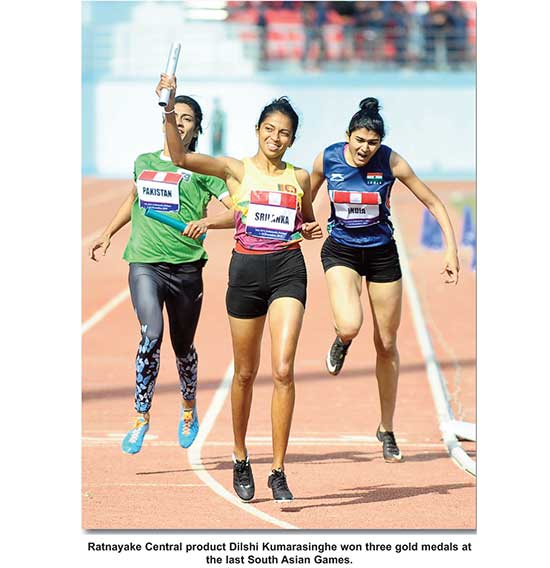
Dilshi Kumarasinghe, the golden girl of the last South Asian Games had been permitted to stay in the hostel of Sports School Ratnayake Central College, Walala for months after completing her education until she found employment, because of the far-sightedness of Central Province authorities, both past and present, Susantha Fernando, who trained her to win three Golds at the regional event, revealed in an interview with The Island. That was a decision the authorities of other Sports Schools or seats of learning, bound by various rules and regulation, would hesitate to take, he said.
With the restructuring and reinvigorating of Sports Schools in the country being discussed by the Ministry of Education and the Ministry of Sports, The Island interviewed Susantha Fernando, the coach behind the success story of Ratnayake Central Walala, the most successful Sports School of the country.
Fernando who culminated his three decades long coaching stint with t
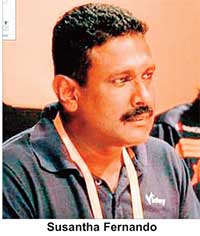
he Sports School recently, revealed that the special place of prominence given to sports by the Central Province education authorities and the individualized training plans were among the reasons behind the unprecedented success of Ratnayake Central.
Ratnayake Central dominated track and field sports for more than two decades. If title victories are of any indication to the success of a Sports School, then there was no school that could even come closer to beat the records set by Ratnayake Central. There are three major Schools Athletics Championships conducted yearly, namely the Sir John Tarbet Senior, All Island Schools Relay and the All Island Schools Games Athletics. They won both the Boys and Girls titles together in these championships on an unprecedented 19 occasions. Under Fernando’s stewardship Ratnayake Central athletes have gone on to win at Junior Asian Athletics Championship (seven medals), Asian Youth Games, Youth Olympic (1000m B grade 3rd), South Asian Junior Athletics Championships (7 medals at the last meet), Asian Athletics Championships, Asian Schools Games, South Asian Games (four goalds at the last edition) and many regional international events apart from representing the country at many World Youth, World Junior, Asian Championship, World Championships, Commonwealth Games and Asian Games. Here are the excerpts from the interview The Island had with Fernando.
What makes Ratnayake Central different from other Sports School?
“Ratnayake Central was selected as a Sports School because we performed better than any other school in the Central Province. We are the only Sports School that is run by Provincial administration. When the school was established Palitha Elkaduwa, the former Secretary of Education of the Central Province played a special role. The central province circular on the Sports School was a very strong one. There were two other sports schools in the Central Province (Poramadulla Central and Weera Keppetipola NS, Akuramboda). But they were taken over by the Ministry of Education later. The officials who made the school a Sports School understood the importance of sports. Even today the Department of Education of the Central province has no hesitation in going out of the way to help Sports programmes. We were also lucky to have a sports loving Director of Education in Thilak Ekanayake,” said Fernando.
Asked to be more specific Fernando compared and contrasted Ratnayake Central with other sports schools.
“Generally Sports Schools provide scholarships and recruit athletes for grade eight. But if we identify a future prospect who is in a higher grade we could take the athlete for that higher grade if there is a vacancy. That is not so with the Sports Schools that are under the Ministry of Education. They are strict. Dilshi’s case is another example. We knew that she is a future prospect. We could keep her in the hostel for months after she finished her Advance Level until she found employment in the Army. She went on to win three golds at the South Asian Games. We could do that because the Central Province Education authorities understood the need. I don’t think that would be possible with any other Sports School.”
Media had been highlighting the absence of a 400 metres track at Ratnayake Central for years. How could the school still perform better than the schools which had facilities.
“I had a plan for every athlete. At the school we maintained files for every athlete. There were over 70 files every year. The individual training plans were the secret. When others take leave for three months during school vacations we continued training. We conduct special training. Go for high altitude training. We send home sports scholarship holders for only ten days during vacation. My recommendation for other Sports Schools too is to continue training with probably ten days of leave during the school vacation. True we did not have a proper track. Not even a proper 200 metres track. The 200 metres track at Ratnayake Central has a 55% bend which is harmful for athletes. From 2018 we could take athletes for training to Digana where there is a good 400 metres track.
How do you compare the financial support Ratnayake Central received with other Sports Schools?
“The Central Province department of education has been good enough to understand the need for funds to run a proper programme. We’ll just take the case of competitions. You have to spend a lot of money on transport and food during competitions. There was no restriction on funds for Ratnayake Central in meeting expenses on transport or food for athletes. The other Sports Schools are given only rupees 25,000.00 for the entire year for transport and food to take part in meets. You have to travel to three or four national meets per year. It is important that the athletes we train take part in these meets and they are provided proper transportation, food and lodgings. I have seen sports officials of Sumana Balika (Sports School) preparing meals for their athletes when they go for national meets to save funds. That is pathetic.”
Central Province also increased the allowance paid to sports instructors to encourage them and provide a substantial scholarship money for athletes, when the sports instructors under the Ministry of Education receive a meager amount of rupees 1,000.00 monthly as an allowance.”
The Central Province education authorities promoted Fernando to the Assistant Director of Education – Sports and Physical Education post of the Wattegama Zonal in 2003 and was also responsible for monitoring sports progress of the zone which became one of the best zones of the country. Here are his views on the monitoring process of Sports Schools.
“There should be a proper monitoring system for Sports Schools. Some of the Sports Schools in the country became defunct because there was no proper monitoring system. There should also be qualified individuals to do that. Qualified officials who can advise the coaches of the Sports School and who could make recommendations on their coaching programmes. At present I don’t think that the Ministry of Education has enough qualified individuals to do that part.”
Many scholar athletes passing out from Ratnayake Central have gone on to become physical education teachers. How did Ratnayake Central looked after the education of scholar athletes.
“We provided free tuition to athletes after school when it was necessary. And there was continuous monitoring of the progress they made in education. We hardly had disappointments when results of exams came. Many have become Physical Education teachers. Currently there are over 400 physical education teaches who had their education at Ratnayake Central. They are serving at different schools. There are also good number of athletes who have gone on to become bank managers, Assistant Directors of Education to managers of leading private firms. For those who persevere a career in athletics there should be a system to look after them after they leave Sports Schools. The future prospects who are identified at Sports Schools should be looked after. The Sports Ministry should take the responsibility of these athletes after they leave schools.”
Often there are administration deadlocks between sports officials and principals leading to sports being given secondary status at schools. Fernando said that there were no such impasses at Walala but insisted that sports instructors should have some authority at Sports Schools. “In my opinion the head or the sports instructor of a Sports School should have some authority for him to run a successful programme.”
Fernando had a long stint (30 years) at Walala with the school and the old students association continuing to insist on acquiring his service. He continued as the head coach of Ratnayake Central while also functioning as the Assistant Director of Education – Sports at Wattegama Zone. This is his opinion on transfers.
“Teacher service requires teachers to be transferred according to vacancies that exist. There should be some leniency with regard to sports instructors. You cant change heads and expect good results in sports. There should be continuity for a training programme to be successful.”
He also insisted on the need to recognise the achievements of coaches and the need to provide suitable jobs for those passing out from would be Sports Universities as there is lack of suitable jobs even for those passing out from Universities with Sports Science and Physical Education Degrees at present.
While he has received praise for the yeoman service he has rendered to the field of sports, some national coaches have directed criticism at him citing that his trainees who had excelled at school level had not replicated those performances at senior national level.
“A coach can only help an athlete improve 30% of his performance level. Good performances are a combination of natural ability and proper coaching. A wast majority of athletes Ratnayake Central recruited were average athletes. Ratnayake Central is not situated in a town. Parents will opt for schools in Kandy when there is a choice between Ratnayake Central and a famous school in Kandy. Most athletes when they first came to the Sports School, were just winners at inter house meets, Divisional or Zonal meets. Inoka (many time marathon champion and first South Asian Games marathon medalist for SL) was just an inter house meet winner. She competed at national level for 20 years. I can give many examples. If there were special talents they had been trained accordingly to reach international level. For example Dilshi Kumarasinghe is a special talent and I am working on to help her reach top level. Indunil Herath (current national 800 metres record holder) was a long jump winner at Handaganawa when he was recruited. All athletes who came to Ratnayake Central underwent talent identification tests and later introduced to suitable disciplines which they had not even witnessed before. Herath had to leave the school for reasons beyond my control. Hadnt he successful? Raju (Geethani Rajasekara- first Sri Lankan marathoner at Olympics, trained by Sajith Jayalal after she left for Colombo) went to Colombo after marriage. Numbers will answer the critics. If those critics can tell of a single school which had produced more athletes to Senior National Athletics teams than Ratnayake Central then there should be some truth in their criticism. Ratnayake Central is the school that has produced the highest number of athletes to National Teams.”








Sri Lanka won the toss and elected to bowl first in the Asian games semifinal clash against India.
Sri Lanka XI: Lasith Croospulle, Sineth Jayawardene, Sohan de Livera (wk), Ashen Bandara, Sahan Arachchige (c), Nuwanidu Fernando, Chamika Karunaratne, Wanuja Sahan, Tharindu Rathnayake, Binura Fernando, Vijayakanth Viyaskanth

by Rex Clementine
President’s Counsel Dinal Phillips has defended a key provision in the proposed new constitution for Sri Lanka Cricket that allows one of the appointed members, rather than an elected representative, to serve as Chairman of the Board. There have been concerns that a former cricketer will not be able to be appointed as Chairman of SLC if the new constitution comes to effect, but Philips said that the country needed to move on with times.
Successive governments have promised sweeping reforms at the cricket board but delivered precious little. The NPP government, however, has taken concrete steps towards overhauling the administration, with a new constitution now in the public domain.
The proposed constitution has been gazetted and will be debated in Parliament, while the Supreme Court will determine whether its provisions are consistent with the laws of the country. Stakeholders will also have an opportunity to challenge provisions they consider contentious.
Once the legal and parliamentary process is completed, the new constitution will come into force, making SLC answerable to Parliament and by extension, to the public.
“The Chairman of the Board will be from among the appointed individuals because there needs to be a great deal of independence on the Board. You are talking about a Rs. 16 billion organisation,” Phillips told reporters at SLC headquarters yesterday.
Phillips has been a prominent figure in cricketing circles in recent years. He represented his Royal College schoolmate Kusal Janith Perera during the legal battle that eventually cleared the batsman following a doping suspension. He is also a former President of Tamil Union, one of SLC’s controlling clubs.
“You have to have people with sound accounting backgrounds, legal expertise, marketing and IT knowledge involved in running your cricket board. All those areas are covered in this structure,” Phillips said.
“The powers will also be vested in the CEO of SLC and he will run the business of the organisation. The Board of Directors will execute policy.”
Phillips, together with fellow legal expert Upul Kumaraperuma, played a key role in drafting the proposed constitution.
“Look at other parts of the world. We don’t want to be left behind; we want to move with the rest of the world. These are serious, long-term steps. We are trustees for 20 million people. We have been asked questions about what is happening to our cricket. We want to raise the bar,” Phillips added.
SLC chief Eran Wickramaratne was also present at the briefing and faced questions over the national team’s disappointing tour of England, where Sri Lanka were whitewashed 3-0 in the T20I series before enduring an inconsistent ODI campaign.
“We want to see the team winning, no doubt about that. But we don’t have concerns about individuals, say, for example, Gary Kirsten. It requires time to build,” Wickramaratne said.
“In 2011, we were ranked number four in Tests, number three in ODIs and number three in T20s. If you look at where we are now, we are towards the lower end; seven, eight or nine.
“That decline has happened over a period of ten to 15 years. You have to be realistic. Any coach who comes in cannot change things overnight. But we are on the right road.”

by Reemus Fernando
The Sri Lanka Automobile Association in Japan (SLAAJ) awarded a brand-new Honda Vezel to gold medallist Rumesh Tharanga at a felicitation ceremony held for the Sri Lankan team that competed at the Asian Games in Nagoya, Japan.
The gift was presented at a ceremony, held on the eve of the track and field team’s departure from Nagoya.
Sri Lanka’s team captained by Thranga concluded the track and field campaign on Tuesday.
Tharanga’s gold was the solitary medal won by the team.
”We decided to reward every Sri Lankan athlete who wins a gold medal with a brand-new vehicle. We invited all Sri Lankan athletes taking part in the Games to the felicitation, and at the time of the event, only Tharanga had won gold,” Nishantha Meegalla, Vice President of the Nagoya Prefecture of the Sri Lanka Business Council of Japan, told The Island.
Nishantha said that Tharanga will be able to get his vehical from the Hambantota Port.
He said that sea freight charges up to Hambantota port will be taken care of on behalf of Tharanga and it would be incumbent upon the government authorities to decide to waive off any taxes for the newly crowned Asian champion to receive the gift.
Tharanga, the world’s top-ranked javelin thrower this season, won Sri Lanka’s first-ever javelin medal at the Asian Games on Monday, sealing the historic victory with a throw of 88.55 metres.
With his Asian Games triumph the 23-year-old capped a remarkable season where he claimed multiple global titles including the Diamond League title, Commonwealth Games gold and the Ultimate Championship trophy.

India enter Asian Games final after Kishan and Bumrah ride roughshod over Sri Lanka

I extend my heartfelt wishes to all the sons and daughters of our country for a Happy World Children’s Day – President

Sri Lanka bowl first in semi final clash against India

Trump hints US could strike Iran, warns time coming

Showers or thundershowers will occur at most part of the island after 1.00 p.m.

US-assisted ‘Ice’ detection: NPC to examine IGP’s move to transfer drug-busting team

‘Dates have the highest sugar content to fight Coronavirus’

Sunday Island 27 December – Headlines

#SundayIsland 17th December – Headlines

Sunday Island – 28th March

Sunday Island Headlines – 21 March

Sunday Island – 21st February – Headlines
-

 Editorial5 days ago
Birth of a bad law
-

 Features6 days ago
Beyond traditional jobs: Why Sri Lanka needs to facilitate the gig economy
-

 News3 days ago
Police remove Thileepan statue in Jaffna
-
 Latest News7 days ago
Kusal, Wellalage star as Sri Lanka defend 322 in Headingley thriller
-
 News5 days ago
TIN mandatory for key transactions from Nov. 1
-

 Features3 days ago
The 22nd Amendment, constitutional recovery and illiberal slippage
-

 Features3 days ago
Of foreigners as CEOs of Lankan ventures
-

 News3 days ago
Sajith rejects Jt. Opp. protest sabotage claim; SJB TU chief demands remedial action