
Midweek Review
What does it mean to be ill? Philosophy of Disease and Corona Crisis

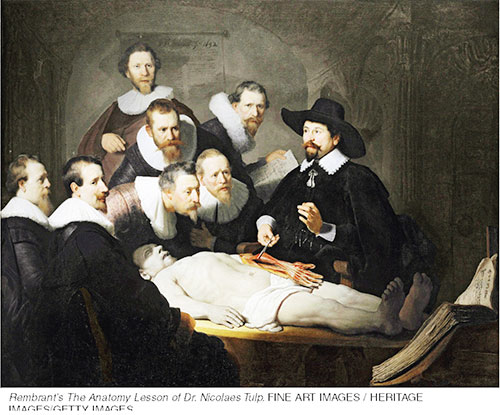
Illness is never entirely ‘mental’ or entirely ‘somatic’; illness is unhomelike being-in-the-world of Dasein including both aspects as inter-nested.
(Fredrik Svenaeus, Med Healthcare, and Philosophy, 2011)
By Saumya Liyanage
The COVID-19 outbreak has already brought about a myriad of medical, political and military procedures. Efforts are being made by national health institutions to curb the virus under the guidance of the World Health Organization (WHO). In this country, a Presidential Task Force has been set up to adopt measures to control the transmission of the virus.
The corona outbreak has led to racial and anthropocentric sentiments among communities and some social groups. The racial sentiment has been developing as humans are the carriers of the disease, and people who are infected, or are suspected to be infected, are required to undergo self-quarantine for the protection of society. Anthropocentric sentiment has developed among people because this viral infection has germinated through bats or other animals that humans have come into contact with.
This negative feeling towards nature and anthropocentrism further reflects how we think of the natural world and our sharing of it with other animals. This viral outbreak has gradually given rise to the idea that human existence is detached from the environment; the coronavirus infection has heightened this anthropocentric mentality that we are superior to all other species in the world. Humans have not only alienated themselves from the environments, mainly others species but separated the sick from the healthy. Social distancing has come to stay.
The distancing of humans from the environment due to the corona outbreak further reflects other suppressive apparatuses at work. As the form of anthropocentrism operates through the government regulations, this patriarchal domination suppresses women, children and old people in the community. My observation is that this dominant ideology is operated through medical and military structures through which the government is trying to battle against the viral infection. For the patriarchy, the coronavirus appears as the other, and their battle is to fight it. Countries like Sri Lanka, India, and many African nations have failed to practise social distancing due to diverse social stratifications. It is evident how the elite and bourgeoisie gather around supermarkets one-metre apart in keeping with medical and military procedures. As expressed in social media, social distancing and waiting hours at supermarkets reflect the apolitical sentiment of the bourgeoisie and their subordination, whereas the poo rush to other markets and try to grab anything they can find. However, this anthropocentric sentiment is othering not only the nature in which we live in but other marginalised communities who are weak and vulnerable to the pandemic. Under these circumstances, measures such as ‘social distancing’ are what only the bourgeoisie can practise.
Descartes’s Body and illness
In the traditional Cartesian philosophy, the human body is defined as something similar to a machine, and the spirit or the soul is defined as something separated from this mechanical body. This philosophical assumption is reflected through western medicine and the problem with the current medicinal practices is that the human body and its functionalities are defined and understood as a mechanical body that consists of certain parts and organs. According to this conception, the body organs and other body parts such as limbs are mere mechanical parts of the body that can be dissected, replaced or repaired (Kibbe 2014, Goldenberg 2010). This long historical problem of conceptualising the human body as a biomechanical entity has serious medical circumstances when it comes to how we understand the meaning of patient–health care worker relationship in the current medical care settings. James A. Marcum argues: ‘Working from the biomechanical model of the body, today’s physician operates primarily as a mechanic or technician, whose clinical gaze is focused neither on the patient as a whole nor on the patient’s lived context but exclusively on the diseased body or body part’ (Marcum. J. A., 2004, p. 311).
The dominant medical discourse in the world is thus focused on the human corpus as a place for performing dissections and replacements. This corpus can be opened, removed, replaced or have organs transplanted due to certain illnesses. The problem with these biomechanical approaches to the human body is that the medical world has forgotten the fact that the human body is not merely flesh or a collection of organs or limbs. The phenomenological understanding of the body in contrast to the biomechanical understanding of the body is somewhat different as phenomenology understands the human body as a sentient being or a ‘lived body’ that is already and always attuned to the world. The body thus has its own ways of being-in-the-world and the body also understands the world better than we rationally think of it. Hence, the phenomenal body challenges the biomechanical body in contemporary medical discourse. Writing about current medical practices and patient care, Goldenberg argues that, modern medical technology such as stethoscope, ophthalmoscope, and X-ray have conceptualized the human body as a mechanical object and this conceptualization has permitted us to dissect the lived body (Goldenberg M. J., 2010 p. 51).
First, I would like to briefly discuss why phenomenology is vital for us to understand the nature of illness in contrast to wellbeing. The coronavirus infection has brought up certain assumptions of the human body and its existence as something decayed through illness and death. The daily death tolls in the US, Italy and elsewhere have gradually created the sentiment that the human body is merely a physical entity that can be infected by a viral pandemic or it is a body that can be saved through mechanical manipulation of medical and political discourses. It is true that amidst this pandemic crisis, human beings have to abide by government regulations and medical procedures in such a way that they can deal with the viral pandemic.
However, in this catalytic situation, the human body becomes a mere object of medical and political manipulation. As seen in many of the international news channels, the human body is becoming a canvas for medical procedures as well as torture and violence. Web channels and Facebook circulate how the human body is being diseased and also being tortured by the military because of noncompliance with the rules and regulations amidst this coronavirus pandemic. One cannot contemplate these paradoxical reactions of law enforcement and medical institutions. The body is treated as a surface of violence, torture, diseased to establish its beauty, wellbeing, and immortality. In this respect, bodies’ presence in the current social milieu is somewhat controversial and fragmented. The ruling government and medical institutions need people to be healthy and adopt preventive measures. On the other hand, bodies are being threatened, beaten, isolated and further imprisoned or left behind amid corona warfare.
Phenomenology and the lived body
A new discussion about the human body has come to the fore because our bodies have been continually threatened by both the viral infection and law enforcement. As seen so far, whether it is medical or military discourses, the human body is being manipulated and treated in many forceful ways. The coronavirus infects the internality of the body while the government is policing the flesh of the body. But what it means to have a body and what the role of the body is in human existence are vital questions to be discussed in this difficult time. Hence, I turn to Edmund Husserl (1859-1938) known as the founder of phenomenology; he provides two sets of words to denote the existential natures of the body. The German word körper uses for the physical body or body as an object. The term Leib is used for the lived or living body. That is the body we perceive as a subject. Here, Husserl distinguishes two aspects of the human body. This means that in some situations, we tend to experience our bodies as objects; solid, physical like nature of the body; whereas, in some situations, we experience our body as a transcendental or a living entity which is known as the lived body. Generally, the word ‘lived body’ presents the body as a non-dualistic, sentient being in contrast to the Cartesian split of the body as a machine and the mind as an extended rational soul. The main difference between the lived body and the physical body is that this lived or animate body is always given as my own body (Crisis §2) and I experience myself as ‘holding sway’ over this body. The lived body is not just a centre of the experience, but a centre for action and self-directed movement (Luft and Overgaard 2014, ).
In this discussion of illness and disease, the German philosopher Martin Heidegger’s key concepts of phenomenology will also help to shed light to understand what it means to be diseased or what it means to be healthy. In this regard, concepts such as ‘being-in-the-world’ can be elaborated as to how a person is attuned to her/his environment and how this attunement is disrupted when the illness is invaded into a healthy body (Svenaeus 2011). Further, the French phenomenologist Maurice Merleau-Ponty developed the idea of ‘body-subject’ where he explains the power and expression of the human body not just as a corpus but as a consciousness establishing its ‘intentional arc’ as the power of attuning with the world. In this sense, I am motivated to write about the current illness caused by the coronavirus and understand the conundrum of being ill and not being ill in the light of phenomenology.
Alienation
When a person is ill and feeling unwell, one’s conscious experience is directly focused on her/his body, and the functionality and the smooth flow or the attunement of the body with its environment is primarily fractured or ceased. When one’s intentionality is directed towards her/his body, the autonomous nature of the body is paralyzed and ill-treated. This uncanny mood creates a disjuncture of our being-in-the-world which means our natural flow of being-with- other.
When someone is diseased, our natural flow of coping with the world and our emotional engagement with the world is disrupted. In a phenomenological sense, this can be understood as something similar to ‘unhomelike’ being-in-the-world (Svenaeus 2011). As Heidegger speculates in his Being and Time (1927), our natural attitude is that our body is thrown into the world where the body and the world are intertwined and bound together through its practicalities. The practicalities here refer to our bodily engagements with certain projects through tools and equipment. When we feel sick, that means our natural engagement with certain projects through the equipment is disrupted and disturbed. Our homelike being-in-the-world is fragmented or disrupted. Heidegger calls this ‘authentic anxiety’.
In this illness situation, our bodies experience the ‘otherness’ within oneself or alienation from oneself from her/his self. The idea of alienation is very familiar in theatre theory and especially Bertolt Brecht’s conceptualization of the actor’s disengagement with the character. In German, it is known as the verfremdung, which means the alienation or defamiliarizing of the familiar (Liyanage 2016). But the otherness that one may experience during illness is something that is to do with the duality of self and the experience of being self while possessing the dual existence. (the otherness of one’s own body comes to the fore). When the illness occurs the patient feels disengaged with her daily projects and she may feel pain, anxiety, dizzy and many other ailments. In such a situation, in a phenomenological sense what we experience is unhomelike being-in-the-world. This ‘unhomelikeness’ is the ‘otherness’ that one may experience during illness. In a healthy situation, a person’s projects are operated through bodily actions that are intertwined with the outer world. These activities always function with ease because the body is always absent in the delivery of human action. Yet the diseased body is not operated in this manner. When the body is diseased, it is not operated behind the curtain or in other words, the body is not absent. The body always comes to the fore. In contrast to this unhomelikeness, when the person is fully operative and engaged in projects in the world, these healthy engagements are characterized by the mood that one possesses in engaging ‘life-world’ activities (Nagatomo 1992). For instance, if I am not yet infected by the virus, my daily routine activities are not disturbed by the illness and my full operation as a healthy person is manifested by the emotional engagement and the expression that I have during my activities. This is vital for us to understand the ‘mood’ of the person who is fully being-in-the-world.
Gaze and Illness
In the recent discussion on the corona outbreak and the battle against the disease, one of the major social psychological factors that have developed in recent weeks is that people are afraid of being identified as COVID-19 infectious individuals. The problem of this phenomenon is that whether you are infected or not, people have a great fear of being identified as a diseased person. How can we understand this mental condition? As I discussed earlier, it is a fear of being alienated from our selfhood. Jean-Paul Sartre, in his book Being and Nothingness (1943) articulates this concept through the gaze of the other. The fear of being ill encapsulates the individual’s experience of her/his objectification of the body as an ‘unhomelike being-in-the-world in the wake of a disease. In Sartre’s lexicon, there are other ways that one’s body can be gazed at by others and alienated from her/his self. For instance, seeing a doctor check whether I have been infected by a disease demonstrates that in the confrontation of the doctor’s gaze, my body is becoming an object to me. However, this alienation of my own body from my own conscious experiences is the moment that I experience the discomfort and further the shame of being ill. In Sartre’s philosophy, ‘the gaze of another person has the power of objectification of my own body. Therefore, I experience the ‘otherness’ or the alienation of my own body as if someone who is a conscious person looking at me and makes my conscious attention towards my body’ (Svenaeus 2009).
Conclusion
The human body is an unprecedented creation of nature that is always being in the world as a living and sentient being. It is a sentient being because it always demonstrates to the world of its ‘becoming’ rather than being a final product. ‘The human body is a unique aesthetic material; it is a living organism, always in a state of becoming; that is, in a continual process of transformation’ (Fischer-Lichte 2014, p. 25). We need to understand the living nature of our bodies in this difficult time because, as argued in the foregoing, the human body is not merely a collection of organs or an assemblage of outer and inner materials combined to develop a physical body. As Merleau-Ponty speculates, the human body is a living entity and it is already anchored in the world before we rationally think of our outer world and environment. This is why medical doctors and health workers need to rethink how they should interact with or treat patients. Especially at this difficult time of the coronavirus outbreak, we further need to change our perspectives towards those who are affected with COVID-19, and how we understand their illness and how we take care of the diseased.
Acknowledgments
The author wishes to thank Himansi Dehigama and Sachini Senevirathne, PGIE, Open University Colombo who have proof read this paper.
Saumya Liyanage
(PhD) is an actor and a Professor of theatre and drama, at the Faculty of Dance and Drama, University of Visual and Performing Arts Colombo.
Email:
Reference list
Dermot Moran and Cohen, J. (2012). The Husserl dictionary. London ; New York: Continuum, Cop.
Dreyfus, H.L. (1991). Being-in-the-world : a commentary on Heidegger’s Being and time, division I. Cambridge, Massachusetts: MIT Press.
Fischer-Lichte, E. (2014). The Routledge introduction to theatre and performance studies. London: Routledge.
Goldenberg, M.J. (2010). Clinical evidence and the absent body in medical phenomenology: On the need for a new phenomenology of medicine. IJFAB: International Journal of Feminist Approaches to Bioethics, 3(1), 43–71.
Heidegger, M. (2013). Being and time. United States: Stellar Books.
Jean-Paul Sartre, Richmond, S. and Moran, R. (2018). Being and nothingness : an essay in phenomenological ontology. Abingdon, Oxon, UK: Routledge.
Kibbe, B. (2016). Feminist phenomenology and medicine, edited by Kristin Zeiler and Lisa Folkmarson Käll. Albany: State University of New York Press, 2014. IJFAB: International Journal of Feminist Approaches to Bioethics, 9(2), 219–223.
Luft, S. and Overgaard, S. (2014). The Routledge companion to phenomenology. London: Routledge.
Marcum, J.A. (2005). Biomechanical and phenomenological models of the body, the meaning of illness and quality of care. Medicine, Health Care and Philosophy, 7(3), 311–320.
Merleau-Ponty, M. and Smith, C. (2015). Phenomenology of perception. London: Forgotten Books.
S Kay Toombs (2001). Handbook of phenomenology and medicine. Dordrecht ; Boston: Kluwer Academic.
Saumya Liyanage (2016). Meditations on acting : essays on theory, practice and performance. Mount Lavinia, Sri Lanka: Dev Publishing.
Shigenori Nagatomo (1992). Attunement through the body. Albany, NY: State University Of New York Press.
Svenaeus, F. (2011a). Illness as unhomelike being-in-the-world: Heidegger and the phenomenology of medicine. Medicine, Health Care, and Philosophy, [online] 14(3), pp.333–343. Available at: https://www.ncbi.nlm.nih.gov/pubmed/21107913 [Accessed 21 Mar. 2020].
Svenaeus, F. (2011b). Illness as unhomelike being-in-the-world: Heidegger and the phenomenology of medicine. Medicine, Health Care, and Philosophy, [online] 14(3), pp.333–343. Available at: https://www.ncbi.nlm.nih.gov/pubmed/21107913 [Accessed 21 Mar. 2020].
Thomson, lain (1999). Can I die? Derrida on Heidegger on death. Philosophy Today, 43(1), pp.29–42.


CC in dilemma over filling impending vacancies
Sajith Premadasa
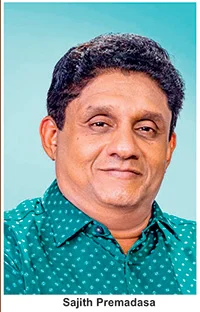
Amidst a simmering row over the controversial move to have Deshabandu Tennakoon as the IGP at the time of crucial presidential election, Opposition Leader Sajith Premadasa alleged: “The Speaker sent a letter to the President, recommending the appointment of Deshabandu Tennakoon as IGP. He distorted the Constitutional Council ruling by interpreting the two abstaining votes of civil society members as votes against Deshabandu and used his casting vote to recommend Deshabandu as the Constitutional Council decision. It is on the basis of the Speaker’s letter that the President made the appointment. The Speaker has blatantly violated the Constitution
.”
Speculation is rife about a possible attempt by the ruling National People’s Power (NPP) to take control of the 10-member Constitutional Council (CC). The only way to take command of the CC is to appoint those willing to pursue the NPP agenda as civil society representatives.
Against the backdrop of the NPP’s failure to obtain CC’s approval to finalise the appointment of the Auditor General, the government seems hell-bent on taking control of it. Civil society representatives, namely Dr. Prathap Ramanujam, Dr. (Mrs.) Dilkushi Anula Wijesundere and Dr. (Mrs.) Weligama Vidana Arachchige Dinesha Samararatne, whose tenure is coming to an end in January, blocked President Anura Kumara Dissanayake’s nominee receiving the AG’s position. They took a courageous stand in the greater interest of the nation.
Chulantha Wickramaratne, who served as AG for a period of six years, retired in April 2025. Following his retirement, President Anura Kumara Dissanayake first nominated H.T.P. Chandana, an audit officer at the Ceylon Petroleum Corporation. The CC rejected the nomination. Subsequently, President Dissanayake appointed the next senior-most official at the National Audit Office (NAO) Dharmapala Gammanpila, as Acting Auditor General for six months. Then, the President nominated Senior Deputy Auditor General L.S.I. Jayarathne to serve in an acting capacity, but her nomination, too, was also rejected.
Many an eyebrow was raised when the President nominated O.R. Rajasinghe, the Internal Audit Director of the Sri Lanka Army, for the top post. As a result, the vital position remains vacant since 07 December. Obviously the overzealous President does not take ‘No’ for an answer when filling key independent positions with his minions
The Bar Association of Sri Lanka (BASL) in a letter dated 22 December, addressed to President Dissanayake, who is the leader of the NPP and the JVP, Prime Minister Dr. Harini Amarasuriya, Speaker Dr. Jagath Wickremaratne and Opposition Leader Sajith Premadasa emphasised their collective responsibility in ensuring transparency in the appointment of civil society representatives.
Cabinet spokesperson and Health and Media Minister, Dr. Nalinda Jayatissa, is on record as having emphasised the urgent need to finalise the appointment. Minister Jayatissa alleged, at the post-Cabinet media briefing, that the President’s nominations had been rejected without giving explanation by certain members, including three representatives of civil society.
Parliament, on 18 January, 2023, approved the former Ministry Secretary Dr. Ramanujam, former Chairperson of the Sri Lanka Medical Association Dr. Wijesundere, and Dr. Samararatne of the University of Colombo as civil society representatives to the CC.
They were the first post-Aragalaya civil society members of the CC. The current CC was introduced by the 21 Amendment to the Constitution which was endorsed on 31st of October, 2022, during a time of grave uncertainty. UNP leader Ranil Wickremesinghe, who had been elected by the SLPP to complete the remainder of ousted President Gotabaya Rajapaksa’s five-year term, sought to manipulate the CC. Wickremesinghe received the SLPP’s backing though they fell out later.
During Wickremesinghe’s tenure as the President, civil society representatives earned the wrath of the then Rajapaksa-Wickremesinghe government by refusing to back Deshabandu Tennakoon’s appointment as the IGP. The then Speaker Mahinda Yapa Abeywardena was accused of manipulating CC’s ruling in respect of Deshabandu Tennakoon to suit Wickremesinghe’s agenda.
Amidst a simmering row over the controversial move to have Deshabandu Tennakoon as the IGP, at the time of crucial presidential election, Opposition Leader Sajith Premadasa alleged: “The Speaker sent a letter to the President, recommending the appointment of Deshabandu Tennakoon as IGP. He distorted the Constitutional Council ruling by interpreting the two abstaining votes of civil society members as votes against Deshabandu and used his casting vote to recommend Deshabandu as the Constitutional Council decision. It is on the basis of the Speaker’s letter that the President made the appointment. The Speaker has blatantly violated the Constitution.”
The NPP realises the urgent need to neutralise the CC. The composition of the CC does not give the Opposition an opportunity to challenge the government if the next three civil society representatives succumb to political pressure. The Speaker is the Chairman of the CC. The present composition of the Constitutional Council is as follows: Speaker (Dr) Jagath Wickramaratne, ex-officio, PM (Dr) Harini Amarasuriya, ex-officio, Leader of the Opposition Sajith Premadasa, ex-officio, Bimal Rathnayake, Aboobucker Athambawa, Ajith P. Perera, Sivagnanam Shritharan, Dr Prathap Ramanujam, Dr Dilkushi Anula Wijesundere and Dr Dinesha Samararatne.
In terms of Article 41E of the Constitution, the CC meets at least twice every month, and may meet as often as may be necessary.
The failure on the part of the NPP to take over Office of the AG must have compelled them to explore ways and means of somehow bringing CC under its influence. The end of the current civil society members’ term, has given the government a chance to fill the vacancies with henchmen.
BASL’s letters that dealt with the appointment of civil society representatives to the CC and the failure to appoint AG, both dated 22 December, paint a bleak picture of the NPP that throughout the presidential and parliamentary polls last year assured the country of a system change. The NPP’s strategy in respect of filling the AG’s vacancy and possible bid to manipulate the CC through the appointment of civil society representatives reminds us of the despicable manipulations undertaken by previous governments.
An appeal to goverment
BASL seems convinced that the NPP would make an attempt to appoint its own to the CC. BASL has urged the government to consult civil society and professional bodies, including them, regarding the forthcoming vacancies in the CC. It would be interesting to examine the NPP’s strategy as civil society, too, would face daunting challenges in choosing representatives.
Civil society representatives are nominated by the Speaker by agreement of the Prime Minister and the Leader of the Opposition.
If consensus cannot be reached swiftly, it would cause further political turmoil at a time the country is experiencing an unexpected burden of dealing with the post-Cyclone Ditwah recovery process.
The term of non-ex-officio members of the Council is three years from the date of appointment. In terms of the Constitution, the civil society representatives should be persons of eminence and integrity who have distinguished themselves in public or professional life and who are not members of any political party. Their nominations should be approved by Parliament.
In spite of the NPP having an absolute 2/3 majority in Parliament, the ruling party is under pressure. The composition of the CC is a big headache for NPP leaders struggling to cope up with rising dissent over a spate of wrongdoings and a plethora of broken promises. The furore over the inordinate delay in finalising AG’s appointment has made matters worse, particularly against the backdrop of the BASL, Transparency International Sri Lanka Chapter and Committee on Public Finance, taking a common stand.
Having been part of the clandestine regime change project in 2022; Western powers and India cannot turn a blind eye to what is going on. Some Colombo-based foreign envoys believe that there is no alternative to the NPP and the government should be given the opportunity to proceed with its action plan. The uncompromising stand taken by the NPP with regard to the appointment of permanent AG has exposed the ruling party.
In the wake of ongoing controversy over the appointment of the AG, the NPP’s integrity and its much-touted vow to tackle waste, corruption, irregularities and mismanagement seems hollow.
The government bigwigs must realise that appointment of those who campaigned for the party at the presidential and parliamentary polls caused deterioration of public confidence. The appointment of ex-top cops Sharnie Abeysekera and Ravi Seneviratne with black marks as Director, CID and Secretary to the Ministry of Public Security and Parliamentary Affairs, eroded public confidence in the NPP administration.
A vital role for CC
 The SLPP, reduced to just three lawmakers in the current Parliament, resented the CC. Having secured a near 2/3 majority in the House at the 2020 Parliamentary election, the SLPP made its move against the CC, in a strategy that was meant to strengthen President Gotabaya Rajapaksa’s hands at the expense of Parliament. Introduced in 2001 during Chandrika Bandaranaike Kumaratunga’s presidency, the 17th Amendment paved the way for the establishment of the CC. Those who wielded political power subjected the CC to critical changes through 18th, 19th and 20th amendments. Of them, perhaps, the 20th Amendment to the Constitution that had been passed in October 2020 is the worst. The SLPP replaced the CC with a Parliamentary Council. That project was meant to consolidate power in the Executive President, thereby allowing the appointment of key officials, like judges, the Attorney General, and heads of independent commissions.
People may have now forgotten the 20th Amendment removed civil society representatives from the so-called Parliamentary Council consisting of lawmakers who represented the interests of the government and the main Opposition. But such manipulations failed to neutralise the challenge (read Aragalaya) backed by external powers. The role played by the US and India in that project has been established and there cannot be any dispute over their intervention that forced Gotabaya Rajapaksa to flee the country.
Interestingly, Ranil Wickremesinghe, who had been picked by the SLPP to complete the remainder of Gotabaya Rajapaksa’s term, restored the CC through the passage of 21 Amendment on 31 October, 2022. Unfortunately, the NPP now wants to manipulate the CC by packing it with those willing to abide by its agenda.
It would be pertinent to mention that the 20th Amendment was aimed at neutralising dissent at any level. Those who formulated that piece of legislation went to the extent of proposing that the President could sack members appointed to the Parliamentary Council by the Prime Minister and the Opposition Leader without consulting anyone.
If not for the Aragalaya, the Parliamentary Council that didn’t serve any meaningful purpose could have paved the way for the President to fill all key positions with his nominees.
Recommendation of nominations to the President for the appointment of Chairpersons and Members of Commissions specified in the Schedule to Article 41B of the Constitution.
Commissions specified in the Schedule to Article 41B: The Election Commission, the Public Service Commission, the National Police Commission, the Audit Service Commission, the Human Rights Commission of Sri Lanka, the Commission to Investigate Allegations of Bribery or Corruption, the Finance Commission, the Delimitation Commission and the National Procurement Commission.
Approval/ Disapproval of recommendations by the President for the appointment to the Offices specified in the Schedule to Article 41C of the Constitution.
Offices specified in the Schedule to Article 41C: The Chief Justice and the Judges of the Supreme Court, the President and the Judges of the Court of Appeal, the Members of the Judicial Service Commission, other than the Chairman, the Attorney-General, the Governor of the Central Bank of Sri Lanka, the Auditor-General, the Inspector-General of Police, the Parliamentary Commissioner for Administration (Ombudsman) and the Secretary-General of Parliament.
NPP under pressure
In spite of having the executive presidency, a 2/3 majority in the legislature, and the bulk of Local Government authorities under its control, the NPP is under pressure. Their failure to muster sufficient support among the members of the Colombo Municipal Council (CMC) to pass its 2026 Budget underscored the gravity of the developing situation. The unexpected loss suffered at the CMC shook the ruling party.
But, the NPP faces a far bigger challenge in filling the AG’s vacancy as well as the new composition of the CC. If the NPP succeeds with its efforts to replace the current civil society representatives with rubber stamps, the ruling party may feel vindicated but such feelings are likely to be short-lived.
Having criticised the government over both contentious matters, the BASL may be forced to step up pressure on the government unless they can reach a consensus. It would be really interesting to know whether the government accepted the BASL’s request for consultations with the stakeholders. Unless consensus can be reached between the warring parties there is possibility of opening of a new front with the BASL and civil society being compelled to take a common stand against the government.
The developing scenario should be examined taking into consideration political parties and civil society confronting the government over the proposed Protection of the State from Terrorism Act (PSTA). Having promised to do away with the Prevention of Terrorism Act (PTA) in the run up to the presidential election, the NPP is trying to explain that it cannot do without anti-terrorism law. The civil society is deeply unhappy over the NPP’s change of heart.
The National Peace Council (NPP) that has been generally supportive and appreciative of the NPP’s efforts probably with the blessings of its benefactors in the West, too, has now found fault with the proposed PSTA. Dr. Jehan Perera, NPP’s Executive Director commented: “A preliminary review of the draft PSTA indicates that it retains core features of the PTA that have enabled serious abuse over decades. These include provisions permitting detention for up to two years without a person being charged before a court of law. In addition, the broad definition of terrorism under the draft law allows acts of dissent and civil disobedience to be labelled as terrorism, thereby permitting disproportionate and excessive responses by the state. Such provisions replicate the logic of the PTA rather than mark a clear break from it.”
Except the BASL, other professional bodies and political parties haven’t commented on the developing situation at the CC while taking into consideration the delay in appointing an AG. The issue at hand is whether the government intends to hold up AG’s appointment till the change of the CC’s composition in its favour. Whatever the specific reasons, a country that has suffered for want of accountability and transparency, enters 2026 without such an important person to guard against all types of financial shenanigans in the state.
All previous governments sought to influence the Office of the AG. The proposed establishment of NAO prompted the powers that be to undermine the effort. The Yahapalana administration diluted the National Audit Bill and what had been endorsed as National Audit Act, Nov. 19 of 2018 was definitely not the anti-corruption grouping originally proposed. That Act was amended this year but the Office of the AG remains vacant.
The NPP has caused itself immense harm by failing to reach consensus with the CC on filling the AG’s post. Unfortunately, the ruling party seems to be uninterested in addressing the issue expeditiously but is exploring the possibility of taking over control of the CC by stuffing it with civil society members favourable to the current ruling clique.
By Shamindra Ferdinando

‘Can Asians Think?’
I want to initiate this essay with several questions. That is, are we, in Sri Lanka and in our region, intellectually subservient to what is often referred to as the ‘West’? Specifically, can knowledge production in broad disciplinary areas such as social sciences and humanities be more creative, original and generated in response to local conditions and histories, particularly when it comes to practices such as formulating philosophy and theory as well as concepts and approaches? Why have we so far imported these from Western Europe and North America as has been the undisputed norm?
In exploring the responses and delving into this discussion, I will seek reference from the politics of the recently published book, Decolonial Keywords: South Asian Thoughts and Attitudes edited by Renny Thomas from the Department of Humanities and Social Sciences at the Indian Institute of Science Education and Research – Bhopal and me. The book was brought out by Delhi-based Tulika Publishers in December 2025.
Let me first unpack my anxiety over theory and philosophy, which I have talked about many times previously too. Any social science or humanities text we read here or elsewhere in South Asia invariably borrows concepts, theories and philosophical input generated mostly in Western Europe and North America. It almost appears as if our region is incapable of serious and abstract thinking. It is in this same context, but specifically with reference to India that Prathama Banerjee, Aditya Nigam and Rakesh Pandey have observed in their critical essay, ‘The Work of Theory Thinking across Traditions’ (2016), that for many “theory appears as a ready-made body of philosophical thought, produced in the West …” They argue, “the more theory-inclined among us simply pick the latest theory off-the-shelf and ‘apply’ it to our context, notwithstanding its provincial European origin, for we believe that ‘theory’ is by definition universal.”
Here, Banerjee et al make two important points. That is, there is an almost universal acceptability in the region that ‘theory’ is a kind of philosophical work that is exclusively produced in the West, followed by an almost blind and unreflective readiness among many of us to simply apply these ideas to local contexts. In doing so, they fail to take into serious consideration the initial temporal and historical contexts in which these bodies of knowledge were generated. However, theory or philosophy is not universal.
This knowledge is contextually linked to very specific social, political and historical conditions that allowed such knowledge to emanate in the first place. It therefore stands to reason that such knowledge cannot be applied haphazardly/ willy-nilly anywhere in the world without grave consequences. Of course, some ideas can be of universal validity as long as they are carefully placed in context. But to perceive theory or philosophy as all-weather universals is patently false even though this is the way they are often understood from universities to segments within society in general. This naiveté is part of the legacy of colonialism from which these disciplines as well as much of their theoretical and philosophical structures have been bequeathed to us.
It is in this context that I would like to discuss the politics our book, Decolonial Keywords: South Asian Thoughts and Attitudes entail. Here, thirty South Asian scholars from across disciplines in social sciences and humanities have come together to “discuss words and ideas from a variety of regional languages, ranging from Sinhala to Hebrew Malayalam” encapsulating “the region’s languages and its vast cultural landscape, crossing national borders.” To be more specific, these languages include Assamese, Arabic-Malayalam, Bengali, Hebrew Malayalam, Hindi, Nepali, Sanskrit, Sinhala, South Asian uses of English, Tamil-Arabic, Tamil, Urdu and concepts from indigenous languages of Nagaland and Arunachal Pradesh.
Each chapter, focuses on a selected word and “reiterates specific attitudes, ways of seeing and methods of doing that are embedded in the historical and contemporary experiences of the region” keeping in mind “the contexts of their production and how their meanings might have changed at different historical moments.”
In this exploration, the volume attempts to understand “if these words and concepts can infuse a certain intellectual rigour into reinventing social sciences and humanities in the region and beyond.” In short, what we have attempted is to offer a point of departure to a comprehensive and culturally, linguistically and politically inclusive effort at theory-building and conceptual fine-tuning based on South Asian experiences and histories. We assume these concepts from our region might be able to speak to the world in the same way schools of thought in politically dominant regions of the world have done so far to us. This is a matter of decolonizing our disciplines. But it is still not a claim for universality. After all, our main focus is to come up with a body of conceptual categories that might be useful in reading the region.
When Sri Lankan social sciences and humanities as well as the same disciplines elsewhere in the region thoughtlessly embrace knowledges imported in conditions of unequal power relations, it can never produce forums for discourse from which we can speak to the world with authority. In this book, Thomas and I have attempted, as an initial and self-conscious effort, to flip the script on theory-building and conceptualization in social sciences and humanities in South Asia in the region’s favour.
We are however mindful that this effort has its risks, intellectually speaking. That is, we are conscious this effort must be undertaken without succumbing to crude and parochial forms of nativism that are also politically powerful in the region including in Sri Lanka and India. This book presents an array of possibilities if we are serious about decolonizing our social sciences and humanities to infuse power into the discourses we generate and take them to the world instead of celebrating our parochiality like the proverbial frog in the well. Unfortunately, more often than not, we are trained to be intellectually subservient, and mere followers, not innovators and leaders bringing to mind the polemical title of Kishore Mahbubani’s 2002 book, Can Asians Think?
It is said that no man steps into the same river twice, for it is not the same river, and he is not the same man. These words came to mind upon reading Chandana Ruwan Jayanetti’s latest poetry collection, Poems from Galle, which inevitably invites comparison with his earlier work, particularly his first volume of poetry and prose, Reflections in Loneliness: A Collection of Poems and Prose (2015).
In this new collection, Jayanetti is demonstrably not the same poet he was a decade ago. His horizons have widened. his subject matter has diversified, and his thematic range has deepened. The earlier hallmarks of his work, including his empathetic attention to human experience, sensitivity to the natural world, and intimate, reflective tone, remain present. Yet they are now complemented by a stronger defiance, a more deliberate engagement with the political and the cosmic, and a broader mosaic of local and universal concerns. His poetic voice has evolved in scope, tonal range, and thematic ambition.
My own acquaintance with Jayanetti’s poetry dates back to our undergraduate days at Sabaragamuwa University of Sri Lanka, where we were classmates pursuing a BA in Languages (English Special). Even then, his work revealed precise observational skill coupled with profound sympathy for individuals. This early sensibility found fuller articulation in Reflections in Loneliness, a collection spanning nearly two decades of creative endeavor.
That inaugural volume traversed a wide thematic landscape: childhood memories; tender compassion toward humans and animals; tributes to the deserving; the joys and sorrows of young love; and reflections on Sri Lanka’s three-decade Northeast conflict, which concluded in 2009. Jayanetti’s verse, written with sincerity and empathy, moves fluidly from deeply personal to universally human. Moments of striking poignancy include the loss of his wife’s mother, the death of a young friend who marched unflinchingly to the warfront, and the bittersweet parting from a lover.
The prose section of Reflections in Loneliness offered a return to the rural simplicity of the 1970s and ’80s through the perspective of a schoolboy. Essays such as We Buy a Bicycle, Television Descends, The Village Goes to the Fair, Bathing Excursions and Hingurakanda evoke a bygone era with unvarnished authenticity. As literary critic Kamala Wijeratne noted, Jayanetti’s prose merited commendation for its perceptive and affectionate portrayal of rural life, written with the authority of lived experience. His meticulous attention to minute details revealed not only the flaws and frailties of human nature but also its loyalties and quiet virtues, articulated with unforced sympathy.
Consisting of 31 poems and five prose pieces, Reflections in Loneliness established Jayanetti as a writer of elegance, precision, and emotional depth. The current collection, however, confirms the Heraclitean and Buddhist insights: both the poet and his poetry have changed. The new work reflects an expansion from the personal to the cosmic, from the intimately local to the globally resonant, a testament to an artist in motion, carried forward by the ever-changing current of his creative life.
Jayanetti’s poetic corpus in the new book Poems from Galle, spanning thirty-five evocative works from They Heard the Cock Crow to A Birthday Celebration, reveals a profound and consistent artistic signature rooted in themes of humanity, nature, history, and social consciousness. Throughout these poems, Jayanetti demonstrates a distinctive voice that is simultaneously empathetic, contemplative, and alert to the complexities of his Sri Lankan heritage and the broader human condition. While maintaining a core of thematic and tonal consistency, each poem enriches this foundation by expanding into new dimensions of experience, whether personal, ecological, political, or historical.
A foundational element of Jayanetti’s poetry is the intimate relationship between humans and nature, frequently underscored by a deep ethical awareness. In poems like From a Herdman’s Life and My Neighbor, he gives voice to the quiet dignity of rural existence and animal companionship, portraying a symbiotic bond imbued with mutual care and respect. Similarly, Fallen Elephant and Inhumanity lament the cruelty inflicted upon majestic creatures, indicting human greed and violence. These poems articulate not only empathy for the natural world but also an implicit call for stewardship, threading a moral sensibility throughout the collection.
This concern extends to the socio-political sphere, as Jayanetti often situates his poems within the fraught realities of Sri Lanka’s history and struggles. Homage to Sir Henry Pedris honors a national martyr, while Confession of a Sri Lankan Cop exposes institutional corruption and personal integrity in tension. Hanuma Wannama and Gone Are They tackle political violence and social upheaval, reflecting the poet’s engagement with national trauma and collective memory. These works enrich the thematic landscape by connecting personal narrative to larger historical forces.

Jayanetti’s choice of subjects is remarkably diverse yet unified by a focus on lived experience—ranging from the intimate (To a Puppy That Departed, Benji) to the grand (Mekong, A Voyage). The poet’s attention to place, whether the Sri Lankan cityscape in City Morning and Evening from the College Terrace or the historic Ode to Galle Fort, anchors his work in locality while evoking universal themes of time, change, and belonging. Even poems centered on seemingly mundane moments, such as Staff Meeting or A Game, are elevated by the poet’s keen observational eye and capacity to find meaning in everyday rituals.
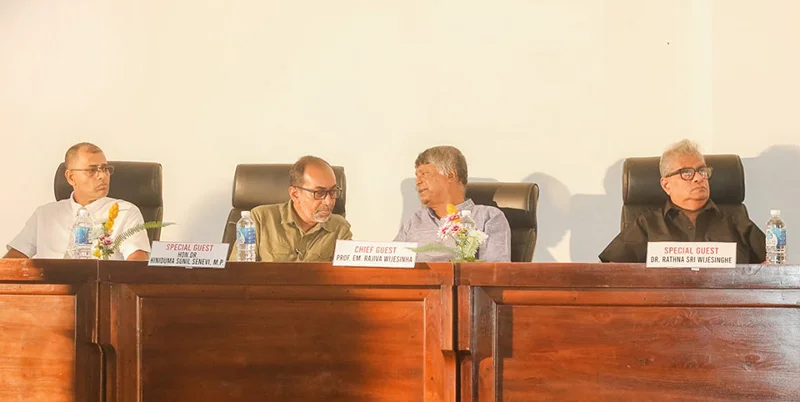
Moreover, Jayanetti often draws from historical and cultural memory, as seen in Ludowyk Remembered, Let Ho Chi Minh Guide You, and Rathna Sri Remembered, positioning his poetry as a dialogue between past and present. This choice expands his thematic range to include legacy, identity, and the power of remembrance, linking the individual to the collective consciousness.
Across the collection, Jayanetti’s tone is marked by a blend of gentle empathy and quiet strength. Poems such as A Companion Departed and To a Puppy That Departed convey tenderness and mourning with understated poignancy. His voice is intimate and accessible, inviting readers into personal reflections suffused with emotional depth.
Yet, this empathy is balanced by moments of stark realism and defiance.
In Corona and Hanuma Wannama, the tone shifts to urgent and accusatory, critiquing social injustice and political decay. A Ship Weeps mourns environmental devastation with an elegiac voice that is both sorrowful and admonitory. This tonal range reveals a poet capable of both consolation and confrontation, who embraces complexity rather than sentimentality.
While many poems explore specific moments or relationships, others invite contemplation on broader existential and cosmic themes. For instance, A Voyage and Mekong traverse spatial and temporal boundaries, evoking the interplay between human journeys and natural cycles. A Birthday Celebration reflects on legacy, learning, and the continuum of knowledge, blending personal homage with universal insight.
Even poems like A Bond and A Game gesture toward symbolic resonance, the former exploring interspecies loyalty as a metaphor for fidelity and duty, the latter invoking sport as a microcosm of life’s challenges and hopes. These works demonstrate Jayanetti’s ability to expand familiar motifs into metaphoric and philosophical territory, enriching his poetic landscape.
Jayanetti’s thirty-five poems in Poems from Galle collectively reveal a consistent and compelling artistic signature that intertwines compassionate engagement with nature and society, a profound sense of place, and an acute awareness of history and memory. His voice navigates seamlessly between moments of intimate reflection and urgent social commentary, creating a poetic landscape that resonates with both specificity and universality.
Each poem adds a distinct dimension to this mosaic. Historical and political awareness emerges strongly in poems like Let Ho Chi Minh Guide You and Homage to Sir Henry Pedris, where the sacrifices of national heroes and struggles for justice are evoked with reverence and clarity. Meanwhile, environmental consciousness is vividly articulated in works such as Abandoned Chena, Kottawa Forest, and Fallen Elephant, where the fragility of ecosystems and the human impact on nature are poignantly explored.
Jayanetti also delves deeply into themes of personal loss and companionship in poems like Benji, A Companion Departed, and In Memory of Brownie, tenderly capturing the bond between humans and animals. Poems like Confession of a Sri Lankan Cop and Hanuma Wannama offer raw social critique, revealing layers of political and moral complexity.
Through this interplay of historical, environmental, personal, and political themes, Jayanetti constructs a body of work that is distinctly Sri Lankan in its cultural and geographical grounding yet profoundly universal in its exploration of human experience. His poetry invites readers to reflect on the interconnected fates of humans, animals, and the natural world, urging a deeper awareness of our shared existence and responsibilities.
by Saman Indrajith

Showers will occur at times in the Eastern and Uva provinces and in Nuwara-Eliya, Matale, Polonnaruwa, and Mullaittivu districts

Curran, bowlers lead Desert Vipers to maiden ILT20 title

PUCSL and Treasury under IMF spotlight as CEB seeks 11.5% power tariff hike

Bellana says Rs 900 mn fraud at NHSL cannot be suppressed by moving CID against him

First harvest of rice offered to Dalada Maligawa

Grade 6 module controversy: SLPP asks PM to resign

‘Dates have the highest sugar content to fight Coronavirus’

Sunday Island 27 December – Headlines

#SundayIsland 17th December – Headlines

Sunday Island – 28th March

Sunday Island Headlines – 21 March

Sunday Island – 21st February – Headlines
-

 News2 days ago
Health Minister sends letter of demand for one billion rupees in damages
-
 News5 days ago
Leading the Nation’s Connectivity Recovery Amid Unprecedented Challenges
-

 Features6 days ago
It’s all over for Maxi Rozairo
-

 Opinion4 days ago
Remembering Douglas Devananda on New Year’s Day 2026
-
 News6 days ago
Dr. Bellana: “I was removed as NHSL Deputy Director for exposing Rs. 900 mn fraud”
-
 News5 days ago
Dons on warpath over alleged undue interference in university governance
-

 Features6 days ago
Rebuilding Sri Lanka Through Inclusive Governance
-

 Business5 days ago
Sri Lanka Tourism surpasses historic milestone with record tourist arrivals in 2025