
Business
‘Wewata Jeewayak’ CSR programme commences 8th tank restoration project


As a bank that takes pride in its Sri Lankan roots, Sampath Bank has always appreciated the immense value generated by the tank (Wewa) systems in and around the country and its ‘Wewata Jeewayak’ programme is a committed endeavour to restore the traditional irrigation networks that were constructed by the ancient kings of Sri Lanka.
The ‘Wewata Jeewayak’ programme is a part of Sampath Bank PLC’s community capacity building initiatives that aims to provide sustainable solutions to ensure a dependable supply of water for dry zone farmers to cultivate their paddy land and harvest both the Yala and Maha paddy seasons, annually. Through the project, the Bank aims to promote organic farming as a viable means of maintaining a sustainable livelihood through agriculture. Furthermore, this project contributes to the Bank’s triple bottom line as it enriches the lives of the community in the area, improves the water capacity of the tank and develops the surrounding eco-system and empowers agri-entrepreneurs by making them financially inclusive.
A structured undertaking to rebuild the tanks that have suffered neglect and ruin due to the passage of time, the ‘Wewata Jeewayak’ programme has seen the restoration of seven tanks to date namely; Udamaththala Wewa in Lunugamwehera (2001), Ilukpelassa Wewa in Thanamalwila (2002), Konketiara Wewa in Hambantota (2002), Dematawa Wewa in Panduwasnuwara (2014), Halmillakulama Wewa in Nochchiyagama (2017), Ambagahawewa in Kahatagasdigiliya (2018), Dhanyawa Wewa in Divulankadawala (2018) and has just broken ground on its latest project, the Kindagalla Wewa in Bibile.
Located in the Kokunnewa area in the Monaragala district, the Kindagalla tank has a surface area of 15 acres and currently provides water to 62 acres of paddy land, benefitting 60 farmer families. Post restoration the tank will supply 262 acres of farming land with water, thereby directly benefiting 260 families. The restoration work will be executed under the supervision and technical expertise of the Agrarian Development Department in Monaragala with the villagers forming most of the labour force.
The ground-breaking ceremony was preceded by several cultural and religious observances in order to invoke blessings upon the project. The ground breaking was conducted to the chanting of Pirith by religious leaders from the village temple and saw the participation of representatives of Sampath Bank, several government officials from the area, customers, members of farmers associations, village leaders as well as members of the community.
Speaking about the Bank’s ‘Wewata Jeewayak’ programme, Thusitha Nakandala, Group Chief Human Resource Officer of Sampath Bank PLC said, “It is challenging for the villagers to shoulder the entire burden of renovating and reconstructing these tanks. This task requires a lot of responsibility and such a meticulous process may affect the lives and livelihoods of the people residing in the area. Right from the inception, we have been working with government authorities and local communities to restore tanks around the island. Together with technical support from the Department of Agrarian Development and Department of Irrigation, we are very proud to be able to restore these tanks, thereby uplifting the lives of the people in the area and enabling a return to a historic and effective irrigation system.”
Currently, the tank’s bund has been damaged and its height is not enough to maintain the required water capacity for both seasons. Furthermore, the tank’s spill has been damaged, thereby greatly reducing its water retention capability. The restoration work which includes excavation of the tank and rebuilding of the tank bund and spill, is estimated to take approximately three months.
Sampath Bank’s CSR activities display a strong commitment to serve the community and generate sustainable benefits for the country and its citizens while supporting the sustainable development goals set by the United Nations. The Bank considers CSR to be an ingrained aspect of its operations and has constantly gone above and beyond the natural obligations which govern its activities in the ordinary course of business. With proven expertise and professionalism in banking and finance, Sampath Bank’s CSR efforts will be central towards economic development and the growth of individuals and society at large.


The government has initiated what could become one of the most significant reforms of Sri Lanka’s social security system in decades by appointing a Senior Officials’ Committee to examine the feasibility of bringing the Employees’ Provident Fund (EPF) and the Employees’ Trust Fund (ETF) under a unified tripartite governance framework representing the government, employers and employees.
Cabinet approval was granted following a proposal submitted by the Minister of Labour. According to Cabinet Spokesman and Minister Dr. Nalinda Jayatissa, the committee has been mandated to study whether the two institutions could operate under a common governance structure based on internationally recognised principles promoted by the International Labour Organization (ILO).
He stressed that the committee has been appointed only to examine the feasibility of the proposal, and no final decision has been taken to merge the two funds.
The official Cabinet statement notes that the EPF, established under the Employees’ Provident Fund Act No. 15 of 1958, has more than 2.5 million members and assets exceeding Rs. 4.9 trillion, making it Sri Lanka’s largest social security fund.
Custody of the fund, investment management, financial administration and payment of benefits are currently handled by the Central Bank of Sri Lanka, while the Department of Labour is responsible for member registration, employer compliance, recovery of arrears and safeguarding employee rights.
The ETF, created under Act No. 46 of 1980, is administered by a tripartite board comprising representatives of the government, employers and employees. It manages assets of approximately Rs. 637 billion and provides coverage to more than 2.5 million active members.
The Cabinet paper highlights that tripartite governance of social security institutions is an internationally recognised best practice and a fundamental principle promoted by the ILO, which forms the basis for examining a common governance model for both funds.
The proposal is expected to attract close scrutiny from the business community, trade unions and financial market participants, given that the combined assets of the EPF and ETF exceed Rs. 5.5 trillion, making them among the country’s largest institutional investors.
Economists note that any governance reforms should strengthen transparency, accountability, professional investment management and public confidence while safeguarding workers’ retirement savings.
By Ifham Nizam
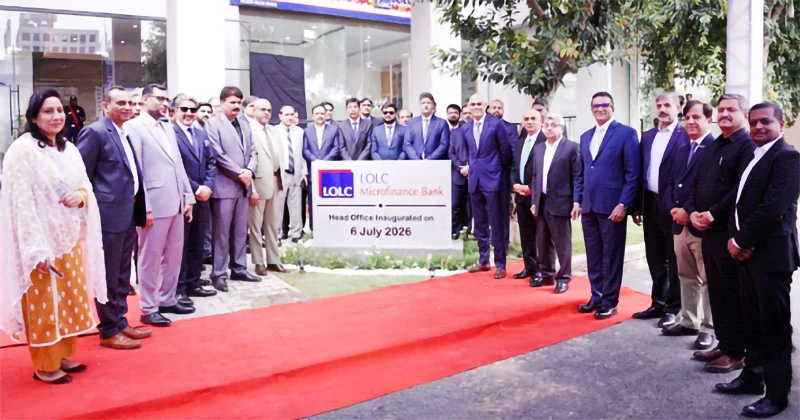
LOLC Microfinance Bank Pakistan, a fully owned subsidiary of the LOLC Group, has strategically relocated its Head Office to Gulberg Greens, Islamabad, marking a significant milestone in its growth journey. As one of the LOLC Group’s largest overseas operations in Asia, the Bank continues to advance financial inclusion and sustainable economic development across Pakistan.
The new Head Office was formally inaugurated in the presence of Chief Guests H.E. Admiral Fred Seneviratne (Retd.), High Commissioner of Sri Lanka to Pakistan, and Mr. Krishan Thilakaratne, Chairman of LOLC Microfinance Bank Pakistan. The ceremony was attended by the Bank’s Board of Directors, senior management and employees, commemorating another important chapter in the Bank’s continued expansion.
LOLC Microfinance Bank Pakistan is a fully-fledged Microfinance Bank regulated by the State Bank of Pakistan, operating through a network of 88 branches and employing over 1,200 staff members across the key cities of Karachi, Lahore, Hyderabad, Faisalabad, Sialkot, Islamabad, Peshawar and Gilgit. The Bank offers a comprehensive range of financial solutions, including business loans, microfinance, vehicle financing, gold loans and other financial products. It currently manages a loan portfolio exceeding USD 70 million and a deposit portfolio exceeding USD 90 million, comprising savings deposits, term deposits and current accounts.
The relocation to the new Head Office reflects the Bank’s expanding operations and its commitment to widening access to responsible financial services for individuals, micro-entrepreneurs and small businesses across Pakistan. In 2026, LOLC Microfinance Bank Pakistan was recognised as Pakistan’s fastest growing Microfinance Bank, highlighting its strong business momentum and growing market presence.
Addressing the gathering, H.E. Admiral Fred Seneviratne (Retd.), High Commissioner of Sri Lanka to Pakistan, stated, “The relationship between Sri Lanka and Pakistan continues to grow through meaningful partnerships such as this. LOLC Microfinance Bank Pakistan is making an important contribution by supporting entrepreneurs, strengthening the SME sector, and expanding financial access where it is needed the most. Institutions like these play a vital role in empowering communities and supporting sustainable economic growth.”(LOLC)
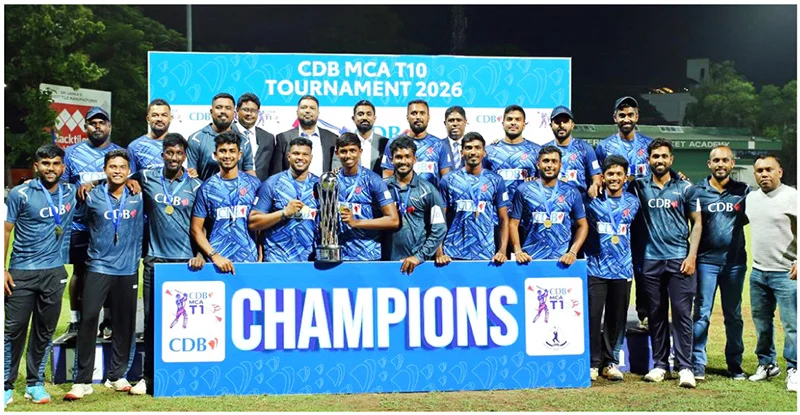
Citizens Development Business Finance PLC (CDB) lit up the CCC Grounds on June 28th, retaining the championship of the MCA T10 Cricket Tournament, further etching its record of being unbeaten and showcasing its signature persona of being determined and unstoppable.
Sealing the title without a single loss in the tournament from the first ball to the final cheer, Team CDB skippered by Tharindu Rathnayaka with Vice Captain Dunith Wellalage, both national players, showcased the calibre of a champion side.
Coached by national player Oshadha Fernando, CDB combined star power with relentless team spirit – the perfect combination of experience and youthful energy. CDB’s performance was not just about individual brilliance but about a collective drive that mirrors CDB’s corporate ethos of perseverance, leadership, and excellence.
The final match against the Abans Group was a fitting climax. Chasing 116, CDB powered to 120/4 in just 8.4 overs, sealing victory by six wickets. Vishad Randika rose to the occasion as Player of the Final. Nuwan Thushara’s consistent bowling prowess, including a hat trick — 2 overs, 11 runs, 4 wickets during the semi-finals — earned him the Best Bowler accolade.
This unbeaten run was more than a cricketing triumph. It was a statement by CDB of its dedication to excellence, which extends beyond financial services into fostering a high-performance culture through sports. The championship reinforced the company’s reputation as a leader in the financial sector while celebrating employee engagement, wellness, and community spirit.

Current El Niño Status in Sri Lanka

A few showers may occur in the Western, Sabaragamuwa and North-western provinces and in Kandy, Nuwara-Eliya, Galle and Matara districts.

Argentina face fine for Falklands banner in semi-final win

US launches fresh strikes on Iran as Trump warns Tehran it ‘better behave’

Govt. move to extend retirement ages of top judges: Opp. complains to UN

Dengue surge pushes hospitals to the brink as cases near 70,000

‘Dates have the highest sugar content to fight Coronavirus’

Sunday Island 27 December – Headlines

#SundayIsland 17th December – Headlines

Sunday Island – 28th March

Sunday Island Headlines – 21 March

Sunday Island – 21st February – Headlines
-
 News6 days ago
Herath warns prospective migrant workers not to get fleeced by racketeers
-

 Features4 days ago
Prison riots and politics: NPP’s biggest challenge and Sri Lanka’s biggest opportunity
-

 Editorial5 days ago
What’s the world coming to?
-
 Foreign News6 days ago
Tensions erupt in Indian state after 11-year-old raped and murdered
-

 Features6 days ago
Devanesan Annan – in Memoriam
-
Editorial6 days ago
Punishment in hellholes
-

 News7 days ago
Representatives of the Organization of Professional Associations (OPA) of Sri Lanka meet the Prime Minister
-
 Features1 day ago
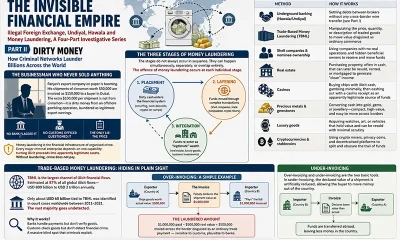
Dirty Money