
Features
Wesley College Colombo – Celebrating 150 years of Excellence

by Dr Nihal D Amerasekera
Wesley College Colombo is celebrating its 150th Anniversary in March 2024 with a programme of events, projects and initiatives taking place at the school and other venues. The school is proud to be recognised as one of Sri Lanka’s leading and progressive institutions. Wesley provides a fine all-round education reflective of its long-held customs and traditions.
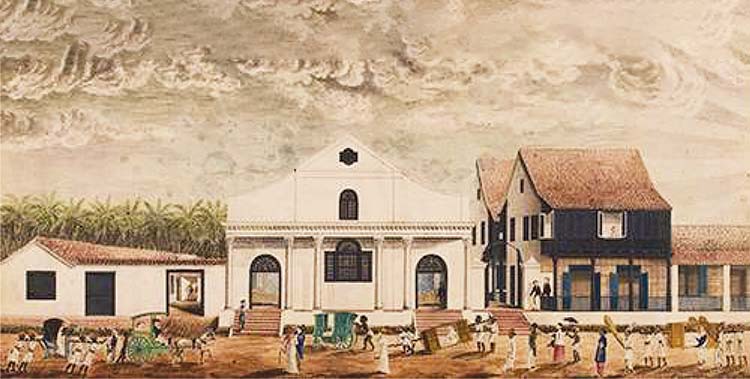
As I write this brief history I am ever reminded of the wisdom of Kahlil Gibran: “Yesterday is but today’s memory, and tomorrow is today’s dream.” This is an attempt to summarise the school’s long and tortuous journey from its lowly beginnings. Collating information belonging to three centuries is no mean task. On December 23, 1816, The chapel of the Wesleyan Mission House was opened for public worship in Dam Street, Pettah. There was a small school associated with the Mission House.
Its popularity grew and the student numbers increased. This early success led to its rapid expansion. With the vision and wisdom of Rev Daniel Henry Pereira, Wesley College was established on this site on March 2, 1874. The school then had around 100 students. Dam street in those days was quiet, dignified and respectable. Rev. Samuel Rowse Wilkin became its first Principal and Rev Pereira his deputy. By all accounts, together, they were impressive.
As Pettah rapidly became industrialised the school got lost in the urban sprawl. With the increasing noise, dust and grime of the area, the environment became less suitable for a school. The student numbers continued to grow and the space became too cramped and restrictive. It was around 1902 when Rev Henry Highfield , the Principal, decided it was time to move the school to better surroundings. In those distant days finding a suitable place for the new school was a monumental task and seemed like an impossible dream. He made a colossal effort to achieve this. The Rev Highfield made representations to the Methodist Mission in London for financial support. He cycled the length and breadth of the city and travelled the country calling for donations from his affluent past students and personal friends.
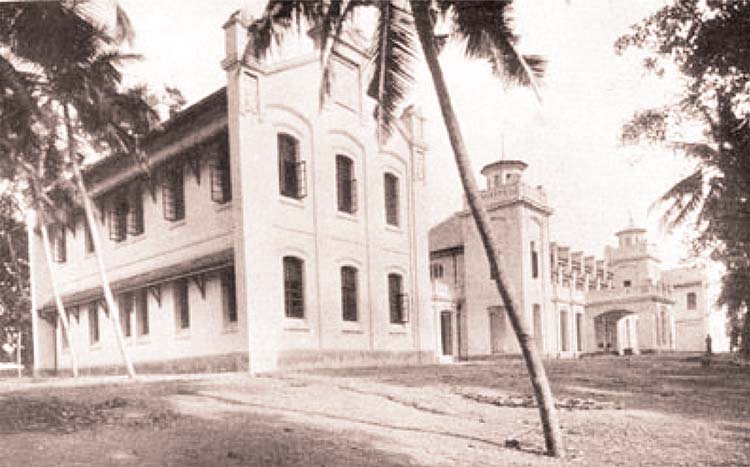
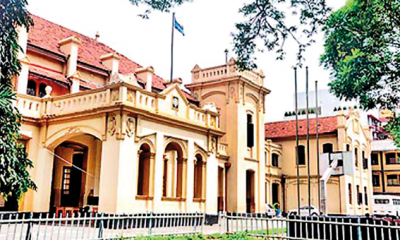
Wesley College in 1907
There was a substantial grant from London. With the money raised from local donations, Rev Highfield acquired five and a half acres of prime land at Karlsruhe Gardens to build the new Wesley College. The work began in 1905. Rev Highfield sought the help of the British Architect Edward Skinner and a handsome set of buildings were completed in 1907. This included dormitories for 100 boarders and science laboratories. The school with 639 students was opened in January 1907 with much pomp and pageantry. The Coronation Band played on as the Cadet Corp provided the guard of honour for the British Lieutenant Governor. When the school moved it took with it the spirit, culture and the ethos of Wesley College in Pettah.
The new school retained the motto “Ora et labora” (pay and work) introduced by Rev Arthur Shipham and the School Song composed by Mr H.J.V.I Ekanayake in 1889. These remained a rallying and unifying force and an important part of school life. The school crest introduced to the school in Pettah was later enhanced and altered by Rev John Dalby (1929-40). Rev. Albert Hutchinson (1925 – 1928) established the praepostor (prefect) system and the House System. Mr C.J Oorloff (1950-57) gave the primary school their own “Houses”. Rev P.T Cash’s wife Edith trained Wesley’s first choir in 1907, starting another noteworthy tradition of bringing music into the mainstream of Wesley life. It was Rev. P.T Cash who founded the Wesley College Scout Troop in 1917 and registered it as the 14th Colombo S.T.
Rev Henry Highfield is considered the father of the present school in Karlsruhe Gardens. A man of great determination, charisma and passion, he made a pioneering contribution to education in Ceylon, at the turn of the 20th Century. There are few Principals who have left a legacy that has profoundly and irreversibly changed the landscape of education in our Island. Wesley College has emerged from its quiet 19th-century grand traditions to embrace modernity. The fine original buildings still remain a tribute to Rev Highfield. This magnificent architectural masterpiece reflects the vision of a great man. After his dream was realised and Wesley became a successful institution, Rev Henry Highfield left for England for the final time in April 1925.
The seeds of decline and failure are almost always sown after periods of sustained success. The school progressed from strength to strength until the scourge of WW2. In a short period of time, 1940-44, we had the disruption of having three Principals in quick succession. Adding to our problems, in April 1942 the school buildings were taken over by the military. We lost much of our furniture and equipment in the process. The school was then exiled to Carey College and later to cadjan huts at Kitiyakkara in Campbell Place.
During those war years we lost many of our teaching staff. The student numbers reduced to a meagre 100. Our Principals’ steered the school through these difficult times until the buildings were returned to us at the end of 1945. Rev James Cartman then had the massive task of recruiting staff and getting the school into action again. His force of character helped to turn the school’s fortunes around and he did so with such resolve and dedication. During his principalship, Wesley College arose from the doldrum of the war years to become one of the best schools in the country. In grateful memory we have named our school library “The Cartman Library”.
This is a timely moment to express our gratitude to all our British Principals. They left the comfort of working in a rural Parish in Britain to be Missionaries in Ceylon. Life in Ceylon in those days was difficult. Medical facilities were rudimentary. Cyclical epidemics of Typhoid , Dysentery, Small pox and Cholera took their toll. Mrs. Highfield succumbed to typhoid fever.
To live as foreigners in a country struggling for independence could not have been easy. The achievements of our British Principals show their resilience and character. Many stories exist of their immense love for Wesley College and for the many students who were in their care. We are eternally grateful to the Methodist Missionary Society of Great Britain for sending us their best educationists. They have helped us in no small measure to enhance the stature of the school as one of the finest in the country. I must mention also the British Chaplains during my time at Wesley, Revs Wilfred Pile and Hugh Tattersall, both wonderfully kind people who provided the pastoral care immersing themselves fully in the life of the school.
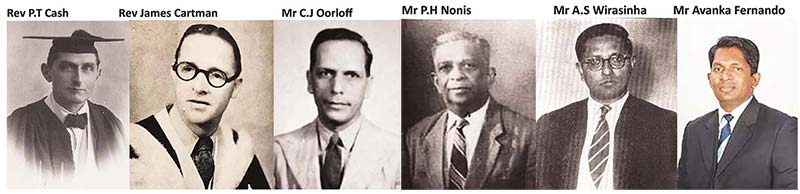

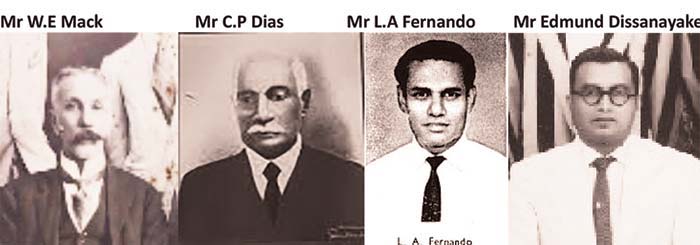
With the birth of a new nation after Independence in 1948, there was the inevitable surge of ultranationalism. The Government policy on education was switched to satisfy a country caught up in this nationalist fervour. During the Principalship of Mr C.J Oorloff in 1951 Wesley was made a Government Assisted School stifling his freedom to manage the school as before. Being a former Civil Servant, with his flair and intelligence he was able to guide Wesley into calmer waters. In 1961 the Government decided to take over all assisted schools.
Mr P.H Nonis (1957-61) had to make the drastic and radical decision for Wesley to become a private but non-fee levying school. This made our financial situation precarious. We had to sell the small park and staff flats to survive. The Welfare Board was established at this time to collect funds to run the school. During this period of perilous uncertainty Mr A.S Wirasinha (1962-83) was the Principal. With robust planning he steered the school through the rapids for a challenging 22 years. We value immensely his huge and impeccable personal effort.
Until the dawn of the new millennium, serious financial pressures sent the school into a spiral of decline. While the times were difficult mistakes have been made, for sure. Then the voices of dissent became loud and clear and the leadership came under close scrutiny. For many the prick of personal pride hurt deep within. This caused great worry and consternation to the past students, well-wishers and also to the Methodist Church. We were fortunate to have a succession of dedicated Principals to forge us forward.
Thankfully we had as Principal, Dr Shanti McLelland (2009-14). He secured success and prosperity to the school by his new management style of collaboration and cooperation with the Department of Education, the Old Boys Unions, the Methodist Church and the Board of Governors. He established economic stability and returned the school to the top of the league table again. We now have a young energetic Principal in Mr Avanka Fernando. The academic standards and sports are in the ascendancy. Wesley College is a much sought after institution of education. The current principal is an old boy of Wesley College and is well aware of the ethos, heritage and traditions of this great school.
As an institution the school remembers its Principals. Their names are prominently displayed on a board in the Great Hall. A school is only as good as its teachers. James Hilton In his literary masterpiece also made into a film, “Goodbye Mr. Chips”, he has a touching account of the dying Chips recalling the names of the pupils he had taught. I daresay that is bound to be a common trait amongst teachers. From its very inception Wesley College was largely influenced by the traditions, values and the spirit of British public schools. We are proud of our legendary and dedicated teachers. Many remained at Wesley all their professional lives and developed a close rapport with generations of students.
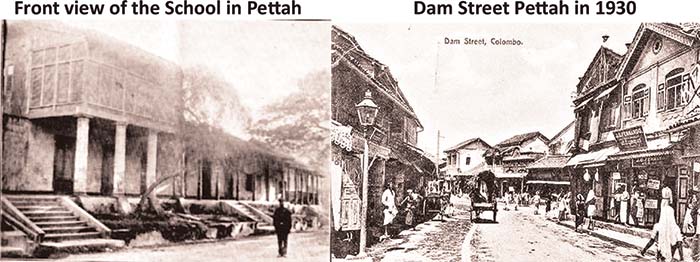
Those teachers are remembered with great fondness. Their photographs adorn the walls of the Great Hall. Students of every generation will have their own special teachers who have performed beyond the call of duty. Those from the Highfield era, Mr C.P Dias and Mr. W.E Mack among others are remembered for their loyalty and dedication. During my time at school in the 1950’s I feel immensely indebted to the colourful personality of Mr L.A Fernando and the doyen of cricket Mr Edmund Dissanayake. We remember all our teachers with affection and admiration. “Their names liveth forevermore”.
The success of a school is judged by the achievements of its alumni. Over the 150 years Wesley College have produced many who have achieved eminence and greatness in every walk of life from medicine, politics, security services, academia, education and high finance. The first Governor General of Ceylon is a product of Wesley as are three Air Vice Marshalls who have been entrusted with the security of the nation. The immense loyalty, affection and gratitude shown by the Old Boys Unions worldwide is an indication of their appreciation of the fine education they have received.
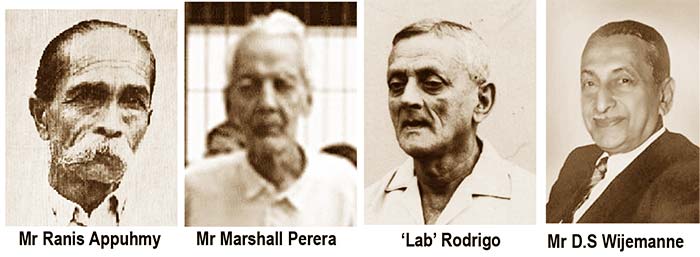
Every student who has been through the school gates will remember with affection and respect the many ancillary staff who have cared for the school buildings and the grounds while keeping the gardens neat and immaculate. During my time we had Ranis Appuhamy who rang the bell and the peon, Marshall, who did the errands. Each of them served the school for over 40 years. We recall with gratitude the laboratory staff and those who cared for Campbell Park. Wilbert the groundsman looked after the park and the pavilion with great dedication.
The boarding has been an integral part of the school since the days in Pettah. This provided a home away from home and a safe sanctuary for students. The excellent facilities have helped to make living and learning a great experience for boarders. I was a boarder 1952-58. The close-knit community helped to create lasting friendships. It fostered cultural diversity, independence, and self-reliance. The boarding prepared me for life beyond the school gates. More recently there has been a gradual decline in the popularity of boarding for students. After over a century of its existence, the school boarding closed its doors for the final time in 2019.
The birth of the school tuckshop is lost in the fog of time. There may have been a room or hall for the day boys to have their lunch from the days in Pettah. On personal communications it is my considered opinion that the tuckshop was first started after WW2 during the principalship of Rev Cartman. An entrepreneur and businessman Mr D.S Wijemanne was a former student of Wesley. He established the tuck shop adjacent to the hostel kitchen in a wooden shed with a corrugated metal roof. The “tuck” did brisk business during the school intervals. It was also a lifeline for the hungry boarders in the evenings. Mr Wijemanne fed several generations of Wesleyites until his demise in the early years of the new millennium.
During my years at school in the 1950’s there were 1200 students on the roll. As the population of the country increased the demand for education grew. Presently the numbers at school exceed 3000. These required more buildings and classrooms. The new Highfield Block was completed in 1959. The Labrooy Memorial Building, A.S Wirasinha building and the New Primary Block (Rev D.H Pereira Memorial Building) appeared in quick succession to accommodate the increasing numbers. The New Chapel is a place of refuge from the storms of school life. There is a new swimming pool. We have new feeder Primary Schools in Havelock Town and Tampola. Campbell Park belongs to the Colombo Municipal Council but is now on a long lease to Wesley College. The park remains our venue for all the major sports providing space for the pavilion and the OWSC (Old Weleyite Sports Club).
The school is immensely grateful to the many affiliated organisations for their support. Tradition has it that the Old Boys’ Union of the school was inaugurated on December 1, 1874, the year the school was founded. The Old Boys Unions of the school now active in almost every continent have united old boys worldwide. They have provided financial support to the school to tide over hard times and helped in the refurbishments needed to maintain the infrastructure in good repair. OWSC has been active since 1941. It is a place often dripping with nostalgia reigniting tight-knit friendships in the familiar surroundings of Campbell Park. There are many Wesley websites that ride the ether providing current information. There has been a whole galaxy of old boys who have been immensely loyal to the school. Although I am greatly tempted to mention the names of a few I will refrain from doing so as the list is far too long for this brief discourse.
I was a student at Wesley College 1950-62. I remember with great clarity and with some pain receiving six of the best from the Principal for my indiscretions. The sore bottom in no way has altered my love for the school. Throughout the centuries Wesley has stood for the freedom of the human spirit and the community of all her sons, to whatever race or religion they may belong. The Principal and staff stuck to their task to provide a fine education to all its students irrespective of their backgrounds and abilities.
Presently the school and the Wesley fraternity are a successful, busy and vibrant community. We can now look to the future with confidence. The support and loyalty of its alumni will be crucial to help and guide the school to be an educational institution worthy of its rich heritage. The school’s success will once again depend on the Principals and teachers for their dedication and devotion to prepare pupils for the rest of their lives. As always the onus will be on the students to learn and acquire the skills to be good and useful citizens of this wonderful world.
Writing the history, it becomes evident more than ever, that we live finite lives. As John Donne has said “No man is an island”. During our lives we are part of a family, a society and a community for which we have our affections and loyalty. It is for us to record history accurately and with respect. Everyone who has been associated with the school since its very inception has been an important part of our community. They will always be remembered with affection and warmth. Let the spark of history we leave behind enlighten others and light the flame to pass on into the future.







(This is the 100th column of the Out of the Box series, which began on 6 September, 2023, at the invitation of this newspaper – Ed.)
A new year is an appropriate moment to pause, not for celebration, but to interrogate what our politics, policies, and public institutions have chosen to remember, forget, and repeat. We celebrate the dawn of another brand-new year. But whose calendar defines this moment?
We hang calendars on our walls and carry them in our phones, trusting them to keep our lives in order, meetings, exams, weddings, tax deadlines, pilgrimages. Yet calendars are anything but neutral. They are among humanity’s oldest instruments of power: tools that turn celestial rhythms into social rules and convert culture into governance. In Sri Lanka, where multiple traditions of time coexist, the calendar is not just a convenience, it is a contested terrain of identity, authority, and fairness.
Time is never just time
Every calendar expresses a political philosophy. Solar systems prioritise agricultural predictability and administrative stability; lunar systems preserve religious ritual even when seasons drift; lunisolar systems stitch both together, with intercalary months added to keep festivals in season while respecting the moon’s phases. Ancient India and China perfected this balancing act, proving that precision and meaning can coexist. Sri Lanka’s own rhythms, Vesak and Poson, Avurudu in April, Ramadan, Deepavali, sit inside this wider tradition.
What looks “technical” is actually social. A calendar decides when courts sit, when budgets reset, when harvests are planned, when children sit exams, when debts are due, and when communities celebrate. It says who gets to define “normal time,” and whose rhythms must adapt.
The colonial clock still ticks
Like many postcolonial societies, Sri Lanka inherited the Gregorian calendar as the default language of administration. January 1 is our “New Year” for financial statements, annual reports, contracts, fiscal plans, school terms, and parliamentary sittings, an imported date shaped by European liturgical cycles and temperate seasons rather than our monsoons or zodiac transitions. The lived heartbeat of the island, however, is Avurudu: tied to the sun’s movement into Mesha Rāshi, agricultural renewal, and shared rituals of restraint and generosity. The result is a quiet tension: the calendar of governance versus the calendar of lived culture.
This is not mere inconvenience; it is a subtle form of epistemic dominance. The administrative clock frames Gregorian time as “real,” while Sinhala, Tamil, and Islamic calendars are relegated to “cultural” exceptions. That framing shapes everything, from office leave norms to the pace at which development programmes expect communities to “comply”.
When calendars enforce authority
History reminds us that calendar reforms are rarely innocent. Julius Caesar’s reshaping of Rome’s calendar consolidated imperial power. Pope Gregory XIII’s reform aligned Christian ritual with solar accuracy while entrenching ecclesiastical authority. When Britain finally adopted the Gregorian system in 1752, the change erased 11 days and was imposed across its empire; colonial assemblies had little or no say. In that moment, time itself became a technology for governing distant subjects.
Sri Lanka knows this logic. The administrative layers built under colonial rule taught us to treat Gregorian dates as “official” and indigenous rhythms as “traditional.” Our contemporary fiscal deadlines, debt restructurings, even election cycles, now march to that imported drumbeat, often without asking how this timing sits with the island’s ecological and cultural cycles.
Development, deadlines and temporal violence
Modern governance is obsessed with deadlines: quarters, annual budgets, five-year plans, review missions. The assumption is that time is linear, uniform, and compressible. But a farmer in Anuradhapura and a rideshare driver in Colombo do not live in the same temporal reality. Monsoons, harvests, pilgrimage seasons, fasting cycles, school term transitions, these shape when people can comply with policy, pay taxes, attend trainings, or repay loans. When programmes ignore these rhythms, failure is framed as “noncompliance,” when in fact the calendar itself has misread society. This mismatch is a form of temporal violence: harm produced not by bad intentions, but by insensitive timing.
Consider microcredit repayment windows that peak during lean agricultural months, or school examinations scheduled without regard to Avurudu obligations. Disaster relief often runs on the donor’s quarterly clock rather than the community’s recovery pace. In each case, governance time disciplines lived time, and the least powerful bend the most.
Religious time vs administrative time
 Sri Lanka’s plural religious landscape intensifies the calendar question. Buddhism, Hinduism, Islam, and Christianity relate to time differently: lunar cycles, solar markers, sacred anniversaries. The state acknowledges these mainly as public holidays, rather than integrating their deeper temporal logic into planning. Vesak is a day off, not a rhythm of reflection and restraint; Ramadan is accommodated as schedule disruption, not as a month that reorganises energy, sleep, and work patterns; Avurudu is celebrated culturally but remains administratively marginal. The hidden assumption is that “real work” happens on the Gregorian clock; culture is decorative. That assumption deserves challenge.
The wisdom in complexity
Precolonial South and East Asian calendars were not confused compromises. They were sophisticated integrations of astronomy, agriculture, and ritual life, adding intercalary months precisely to keep festivals aligned with the seasons, and using lunar mansions (nakshatra) to mark auspicious thresholds. This plural logic admits that societies live on multiple cycles at once. Administrative convenience won with the Gregorian system, but at a cost: months that no longer relate to the moon (even though “month” comes from “moon”), and a yearstart with no intrinsic astronomical significance for our context.
Towards temporal pluralism
The solution is not to abandon the Gregorian calendar. Global coordination, trade, aviation, science, requires shared reference points. But ‘shared’ does not mean uncritical. Sri Lanka can lead by modelling temporal pluralism: a policy posture that recognises different ways of organising time as legitimate, and integrates them thoughtfully into governance.
Why timing is justice
In an age of economic adjustment and climate volatility, time becomes a question of justice: Whose rhythms does the state respect? Whose deadlines dominate? Whose festivals shape planning, and whose are treated as interruptions? The more governance assumes a single, imported tempo, the wider the gap between the citizens and the state. Conversely, when policy listens to local calendars, legitimacy grows, as does efficacy. People comply more when the schedule makes sense in their lives.
Reclaiming time without romanticism
This is not nostalgia. It is a pragmatic recognition that societies live on multiple cycles: ecological, economic, ritual, familial. Good policy stitches these cycles into a workable fabric. Poor policy flattens them into a grid and then blames citizens for falling through the squares.
Sri Lanka’s temporal landscape, Avurudu’s thresholds, lunar fasts, monsoon pulses, exam seasons, budget cycles, is rich, not chaotic. The task before us is translation: making administrative time converse respectfully with cultural time. We don’t need to slow down; we need to sync differently.
The last word
When British subjects woke to find 11 days erased in 1752, they learned that time could be rearranged by distant power. Our lesson, centuries later, is the opposite: time can be rearranged by near power, by a state that chooses to listen.
Calendars shape memory, expectation, discipline, and hope. If Sri Lanka can reimagine the governance of time, without abandoning global coordination, we might recover something profound: a calendar that measures not just hours but meaning. That would be a reform worthy of our island’s wisdom.
(The writer, a senior Chartered Accountant and professional banker, is Professor at SLIIT, Malabe. The views and opinions expressed in this article are personal.)

The recent wave of pharmaceutical tragedies in Sri Lanka, as well as some others that have occurred regularly in the past, has exposed a terrifying reality: our medicine cabinets have become a frontline of risk and potential danger. In recent months, the silent sanctuary of Sri Lanka’s healthcare system has been shattered by a series of tragic, preventable deaths. The common denominator in these tragedies has been a failure in the most basic promise of medicine: that it will heal, not harm. This issue is entirely contrary to the immortal writings of the Father of Medicine, Hippocrates of the island of Kos, who wrote, “Primum non nocere,” which translates classically from Latin as “First do no harm.” The question of the safety of medicinal drugs is, at present, a real dilemma for those of us who, by virtue of our vocation, need to use them to help our patients.
For a nation that imports the vast majority of its medicinal drugs, largely from regional hubs like India, Pakistan, and Bangladesh, the promise of healing is only as strong as the laboratory that verifies these very same medicinal drugs. To prevent further problems, and even loss of lives, we must demand a world-class laboratory infrastructure that operates on science, not just sentiment. We desperately need a total overhaul of our pharmaceutical quality assurance architecture.
The detailed anatomy of a national drug testing facility is not merely a government office. It is a high-precision fortress. To meet international standards like ISO/IEC 17025 and World Health Organisation (WHO) Good Practices for Pharmaceutical Quality Control Laboratories, such a high-quality laboratory must be zoned into specialised units, each designed to catch a different type of failure.
* The Physicochemical Unit: This is where the chemical identity of a drug is confirmed. Using High-Performance Liquid Chromatography (HPLC) and Gas Chromatography-Mass Spectrometry (GC-MS), scientists determine if a “500mg” tablet actually contains 500mg of the active ingredient or if it is filled with useless chalk.
* The Microbiology Suite: This is the most critical area for preventing “injection deaths.” It requires an ISO Class 5 Cleanroom: sterile environments where air is filtered to remove every microscopic particle. Here, technicians perform Sterility Testing to ensure no bacteria or fungi are present in medicines that have to be injected.
* The Instrumentation Wing: Modern testing requires Atomic Absorption Spectrometers to detect heavy metal contaminants (like lead or arsenic) and Stability Chambers to see how drugs react to Sri Lanka’s high humidity.
* The injectable drug contamination is a serious challenge. The most recent fatalities in our hospitals were linked to Intravenous (IV) preparations. When a drug is injected directly into the bloodstream, there is no margin for error. A proper national laboratory must conduct two non-negotiable tests:
* Bacterial Endotoxin Testing (BET): Even if a drug is “sterile” (all bacteria are dead), the dead bacteria leave behind toxic cell wall products called endotoxins. If injected, these residual compounds cause “Pyrogenic Reactions” with violent fevers, organ failure, and death. A functional lab must use the Limulus Amoebocyte Lysate (LAL) test to detect these toxins at the parts-per-billion level.
* Particulate Matter Analysis: Using laser obscuration, labs must verify that no microscopic shards of glass or plastic are floating in the vials. These can cause fatal blood clots or embolisms in the lungs.
It is absolutely vital to assess whether the medicine is available in the preparation in the prescribed amounts and whether it is active and is likely to work. This is Bioavailability. Sri Lanka’s heavy reliance on “generic” imports raises a critical question: Is the cheaper version from abroad as effective as the original, more expensive branded formulation? This is determined by Bioavailability (BA) and Bioequivalence (BE) studies.
A drug might have the right chemical formula, but if it does not dissolve properly in the stomach or reach the blood at the right speed, it is therapeutically useless. Bioavailability measures the rate and extent to which the active ingredient is absorbed into the bloodstream. If a cheaper generic drug is not “bioequivalent” to the original brand-named version, the patient is essentially taking a useless placebo. For patients with heart disease or epilepsy, even a 10% difference in bioavailability can lead to treatment failure. A proper national system must include a facility to conduct these studies, ensuring that every generic drug imported is a true “therapeutic equivalent” to the brand-named original.
As far as testing goes, the current testing philosophy is best described as Reactive, rather than Proactive. The current Sri Lankan system is “reactive”: we test a drug only after a patient has already suffered. This is a proven recipe for disaster. To protect the public, we must shift to a Proactive Surveillance Model of testing ALL drugs at many stages of their dispensing.
* Pre-Marketing Approval: No drug should reach a hospital shelf without “Batch Release” testing. Currently, we often accept the manufacturer’s own certificate of analysis, which is essentially like allowing students to grade their own examination answers.
* Random Post-Marketing Surveillance (PMS): Regulatory inspectors must have the power to walk into any rural pharmacy or state hospital, pick a box of medicine at random, and send it to the lab. This could even catch “substandard” drugs that may have degraded during shipping or storage in our tropical heat. PMS is the Final Safety Net. Even the best laboratories cannot catch every defect. Post-Marketing Surveillance is the ongoing monitoring of a drug’s safety after it has been released to the public. It clearly is the Gold Standard.
* Pharmacovigilance: A robust digital system where every “Adverse Drug Reaction” (ADR) is logged in a national database.
* Signal Detection: An example of this is if three hospitals in different provinces report a slight rash from the same batch of an antibiotic, the system should automatically “flag” that batch for immediate recall before a more severe, unfortunate event takes place.
* Testing for Contaminants: Beyond the active ingredients, we must test for excipient purity. In some global cases, cheaper “glycerin” used in syrups was contaminated with diethylene glycol, a deadly poison. A modern lab must have the technology to screen for these hidden killers.
When one considers the Human Element, Competence and Integrity, the very best equipment in the world is useless without the human capital to run it. A national lab would need the following:
* Highly Trained Pharmacologists and Microbiologists and all grades of staff who are compensated well enough to be immune to the “lobbying” of powerful external agencies.
* Digital Transparency: A database accessible to the public, where any citizen can enter a batch number from their medicine box and see the lab results.
Once a proper system is put in place, we need to assess as to how our facilities measure up against the WHO’s “Model Quality Assurance System.” That will ensure maintenance of internationally recognised standards. The confirmed unfavourable results of any testing procedure, if any, should lead to a very prompt “Blacklist” Initiative, which can be used to legally bar failing manufacturers from future tenders. Such an endeavour would help to keep all drug manufacturers and importers on their toes at all times.
This author believes that this article is based on the premise that the cost of silence by the medical profession would be catastrophic. Quality assurance of medicinal compounds is not an “extra” cost. It is a fundamental right of every Sri Lankan citizen, which is not at all subject to any kind of negotiation. Until our testing facilities match the sophistication of the manufacturers we buy from, we are not just importing medicine; we are importing potential risk.
The promises made by the powers-that-be to “update” the testing laboratories will remain as a rather familiar, unreliable, political theatre until we see a committed budget for mass spectrometry, cleanroom certifications, highly trained and committed staff and a fleet of independent inspectors. Quality control of therapeutic medicines is not a luxury; it is the price to be paid for a portal of entry into a civilised and intensively safe healthcare system. Every time we delay the construction of a comprehensive, proactive testing infrastructure, we are playing a game of Russian Roulette with the lives of our people.
The science is available, and the necessary technology exists. What is missing is the political will to put patient safety as the premier deciding criterion. The time for hollow rhetoric has passed, and the time for a scientifically fortified, transparent, and proactive regulatory mechanism is right now. The good health of all Sri Lankans, as well as even their lives, depend on it.
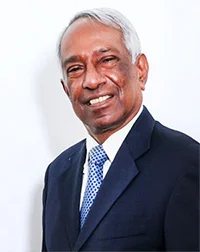 Dr B. J. C. Perera
MBBS(Cey), DCH(Cey), DCH(Eng), MD(Paediatrics), MRCP(UK), FRCP(Edin), FRCP(Lond), FRCPCH(UK), FSLCPaed, FCCP, Hony. FRCPCH(UK), Hony. FCGP(SL)
Specialist Consultant Paediatrician and Honorary Senior Fellow, Postgraduate Institute of Medicine, University of Colombo, Sri Lanka.
Joint Editor, Sri Lanka Journal of Child Health
Section Editor, Ceylon Medical Journal

In the immediate aftermath of Cyclone Ditwah, the government has moved swiftly to establish a Presidential Task Force for Rebuilding Sri Lanka with a core committee to assess requirements, set priorities, allocate resources and raise and disburse funds. Public reaction, however, has focused on the committee’s problematic composition. All eleven committee members are men, and all non-government seats are held by business personalities with no known expertise in complex national development projects, disaster management and addressing the needs of vulnerable populations. They belong to the top echelon of Sri Lanka’s private sector which has been making extraordinary profits. The government has been urged by civil society groups to reconsider the role and purpose of this task force and reconstitute it to be more representative of the country and its multiple needs.
The group of high-powered businessmen initially appointed might greatly help mobilise funds from corporates and international donors, but this group may be ill equipped to determine priorities and oversee disbursement and spending. It would be necessary to separate fundraising, fund oversight and spending prioritisation, given the different capabilities and considerations required for each. International experience in post disaster recovery shows that inclusive and representative structures are more likely to produce outcomes that are equitable, efficient and publicly accepted. Civil society, for instance, brings knowledge rooted in communities, experience in working with vulnerable groups and a capacity to question assumptions that may otherwise go unchallenged.
A positive and important development is that the government has been responsive to these criticisms and has invited at least one civil society representative to join the Rebuilding Sri Lanka committee. This decision deserves to be taken seriously and responded to positively by civil society which needs to call for more representation rather than a single representative. Such a demand would reflect an understanding that rebuilding after a national disaster cannot be undertaken by the state and the business community alone. The inclusion of civil society will strengthen transparency and public confidence, particularly at a moment when trust in institutions remains fragile. While one appointment does not in itself ensure inclusive governance, it opens the door to a more participatory approach that needs to be expanded and institutionalised.
Costly Exclusions
Going down the road of history, the absence of inclusion in government policymaking has cost the country dearly. The exclusion of others, not of one’s own community or political party, started at the very dawn of Independence in 1948. The Father of the Nation, D S Senanayake, led his government to exclude the Malaiyaha Tamil community by depriving them of their citizenship rights. Eight years later, in 1956, the Oxford educated S W R D Bandaranaike effectively excluded the Tamil speaking people from the government by making Sinhala the sole official language. These early decisions normalised exclusion as a tool of governance rather than accommodation and paved the way for seven decades of political conflict and three decades of internal war.
Exclusion has also taken place virulently on a political party basis. Both of Sri Lanka’s post Independence constitutions were decided on by the government alone. The opposition political parties voted against the new constitutions of 1972 and 1977 because they had been excluded from participating in their design. The proposals they had made were not accepted. The basic law of the country was never forged by consensus. This legacy continues to shape adversarial politics and institutional fragility. The exclusion of other communities and political parties from decision making has led to frequent reversals of government policy. Whether in education or economic regulation or foreign policy, what one government has done the successor government has undone.
Sri Lanka’s poor performance in securing the foreign investment necessary for rapid economic growth can be attributed to this factor in the main. Policy instability is not simply an economic problem but a political one rooted in narrow ownership of power. In 2022, when the people went on to the streets to protest against the government and caused it to fall, they demanded system change in which their primary focus was corruption, which had reached very high levels both literally and figuratively. The focus on corruption, as being done by the government at present, has two beneficial impacts for the government. The first is that it ensures that a minimum of resources will be wasted so that the maximum may be used for the people’s welfare.
Second Benefit
The second benefit is that by focusing on the crime of corruption, the government can disable many leaders in the opposition. The more opposition leaders who are behind bars on charges of corruption, the less competition the government faces. Yet these gains do not substitute for the deeper requirement of inclusive governance. The present government seems to have identified corruption as the problem it will emphasise. However, reducing or eliminating corruption by itself is not going to lead to rapid economic development. Corruption is not the sole reason for the absence of economic growth. The most important factor in rapid economic growth is to have government policies that are not reversed every time a new government comes to power.
For Sri Lanka to make the transition to self-sustaining and rapid economic development, it is necessary that the economic policies followed today are not reversed tomorrow. The best way to ensure continuity of policy is to be inclusive in governance. Instead of excluding those in the opposition, the mainstream opposition in particular needs to be included. In terms of system change, the government has scored high with regard to corruption. There is a general feeling that corruption in the country is much reduced compared to the past. However, with regard to inclusion the government needs to demonstrate more commitment. This was evident in the initial choice of cabinet ministers, who were nearly all men from the majority ethnic community. Important committees it formed, including the Presidential Task Force for a Clean Sri Lanka and the Rebuilding Sri Lanka Task Force, also failed at first to reflect the diversity of the country.
In a multi ethnic and multi religious society like Sri Lanka, inclusivity is not merely symbolic. It is essential for addressing diverse perspectives and fostering mutual understanding. It is important to have members of the Tamil, Muslim and other minority communities, and women who are 52 percent of the population, appointed to important decision making bodies, especially those tasked with national recovery. Without such representation, the risk is that the very communities most affected by the crisis will remain unheard, and old grievances will be reproduced in new forms. The invitation extended to civil society to participate in the Rebuilding Sri Lanka Task Force is an important beginning. Whether it becomes a turning point will depend on whether the government chooses to make inclusion a principle of governance rather than treat it as a show of concession made under pressure.
by Jehan Perera

Showers or thundershowers will occur at times in the Northern, Eastern, Central, North-central, North-western and Uva provinces

Israel to bar 37 aid groups from Gaza

Protests spread across Iran for third day after currency hits record low

Sri Lanka Customs exceeds revenue targets to enters 2026 with a surplus of Rs. 300 billion – Director General

Harmanpreet Kaur leads the way as India complete 5-0 sweep over Sri Lanka

Educators slam govt. for ‘unprepared’ education reforms

‘Dates have the highest sugar content to fight Coronavirus’

Sunday Island 27 December – Headlines

#SundayIsland 17th December – Headlines

Sunday Island – 28th March

Sunday Island Headlines – 21 March

Sunday Island – 21st February – Headlines
-

 News6 days ago
British MP calls on Foreign Secretary to expand sanction package against ‘Sri Lankan war criminals’
-
 News5 days ago
Street vendors banned from Kandy City
-
 Sports6 days ago
Chief selector’s remarks disappointing says Mickey Arthur
-

 Opinion6 days ago
Disasters do not destroy nations; the refusal to change does
-

 Sports2 days ago
Gurusinha’s Boxing Day hundred celebrated in Melbourne
-

 News5 days ago
Lankan aircrew fly daring UN Medevac in hostile conditions in Africa
-

 Sports3 days ago
Time to close the Dickwella chapter
-
 Sports6 days ago
Royal record crushing innings win against Nalanda