
News
Vote on Electricity Amendment Bill today: Will SLPP group disregard MR’s declaration?

By Shamindra Ferdinando
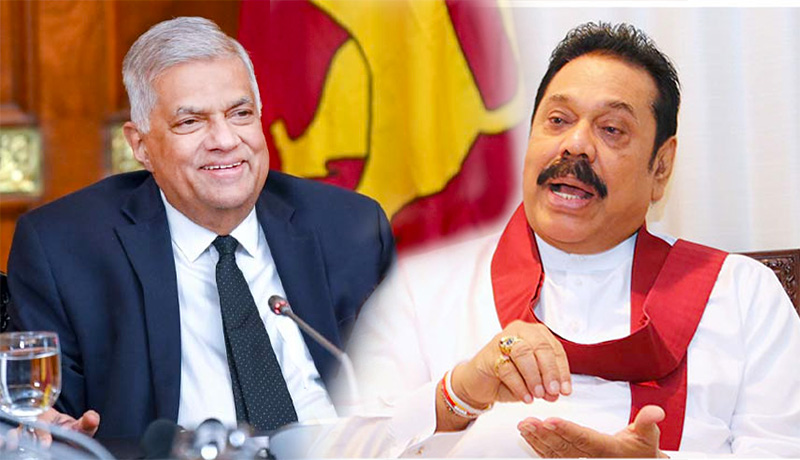
The ruling Sri Lanka Podujana Peramuna (SLPP) will be in a dilemma today (06), when Parliament is scheduled to vote on the Electricity Amendment Bill.
Opposition sources pointed out that it would be the first vote since SLPP leader and former President, Mahinda Rajapaksa, in a statement on May 12, urged President Ranil Wickremesinghe to stop the divestiture drive pending the conclusion of the presidential election, scheduled for Sept/Oct this year.
Against the backdrop of that declaration, the SLPP parliamentary group couldn’t vote for the Bill, under any circumstances, the one-time SLPP heavyweight Prof. G. L. Peiris told The Island yesterday (05).
The SLPP’s first Chairman said that the vote would reveal how many of its members had switched their allegiance to President Ranil Wickremesinghe, elected by the party, in July 2022, to complete the remainder of Gotabaya Rajapaksa’s five-year term.
Acknowledging that the SLPP is still the largest group represented in Parliament, Prof. Peiris said that the vote on the controversial Electricity Amendment Bill would decide the fate of the party.
The SLPP won a staggering 145 seats at the last General Election, whereas the SJB secured 54 and the TNA came a distant third with 10 seats. The JVP obtained three, EPDP and AITC (both Jaffna based parties) two each and nine political parties one each.
Responding to another query, Prof. Peiris said that the SC determination couldn’t have been made at a better time for the Opposition. The SLPP group could no longer engage in shenanigans in Parliament, the retired top academic declared, as it would have to take a stand whatever the consequences. “Actually, today’s vote is not only on a far reaching Bill but a reflection of the basis of the people who voted for Gotabaya Rajapaksa overwhelmingly at the 2019 Presidential Poll,” the SLPP National List MP said.
The SC ruling on the Bill proved that the Wickremesinghe-Rajapaksa government was hell-bent on pursuing its agenda. Recalling the circumstances the Parliament passed the Online Safety Bill, in late January this year, with 108 MPs backing it, while 62 voted against it, Prof. Peiris said that the current dispensation seemed to be planning to adopt unparliamentary tactics. But unlike on that occasion, the vote on the Electricity Amendment Bill was taking place after the SLPP leader finally took a public stand.
Prof Peiris said that it is significant that the SC, in its Determination, found the Bill, as a whole, inconsistent with Article 12 (1) of the Constitution. To achieve compatibility, the SC compulsorily proposed about 12 amendments, without which the Bill cannot lawfully be enacted by a simple majority. Reasonable time is therefore required to study the amendments required and to ensure that they are incorporated, in appropriate form, at the Committee Stage. Undue haste is destructive of legislative due process.
These considerations are compelling, in light of empirical experience in the recent past. The SC required a series of amendments to the Online Bill to prevent conflict with constitutional provisions, the ex-Minister said.
The MP said: “Many competent persons and institutions, including the Human Rights Commission, were not satisfied that the required amendments, as proposed, were in fact made. Unlike in jurisdictions, such as India, it is not possible to invoke the jurisdiction of the SC, after the Bill has been certified by the Speaker. Government resolve to rush such a crucial Bill through, without adequate scrutiny, is all the more to be deplored.”
A deluge of far reaching legislation is planned to be enacted in the last 100 days of this government, he warned.






Latest News
In order to safeguard the future of the country, a quality human resource must be developed. – Prime Minister

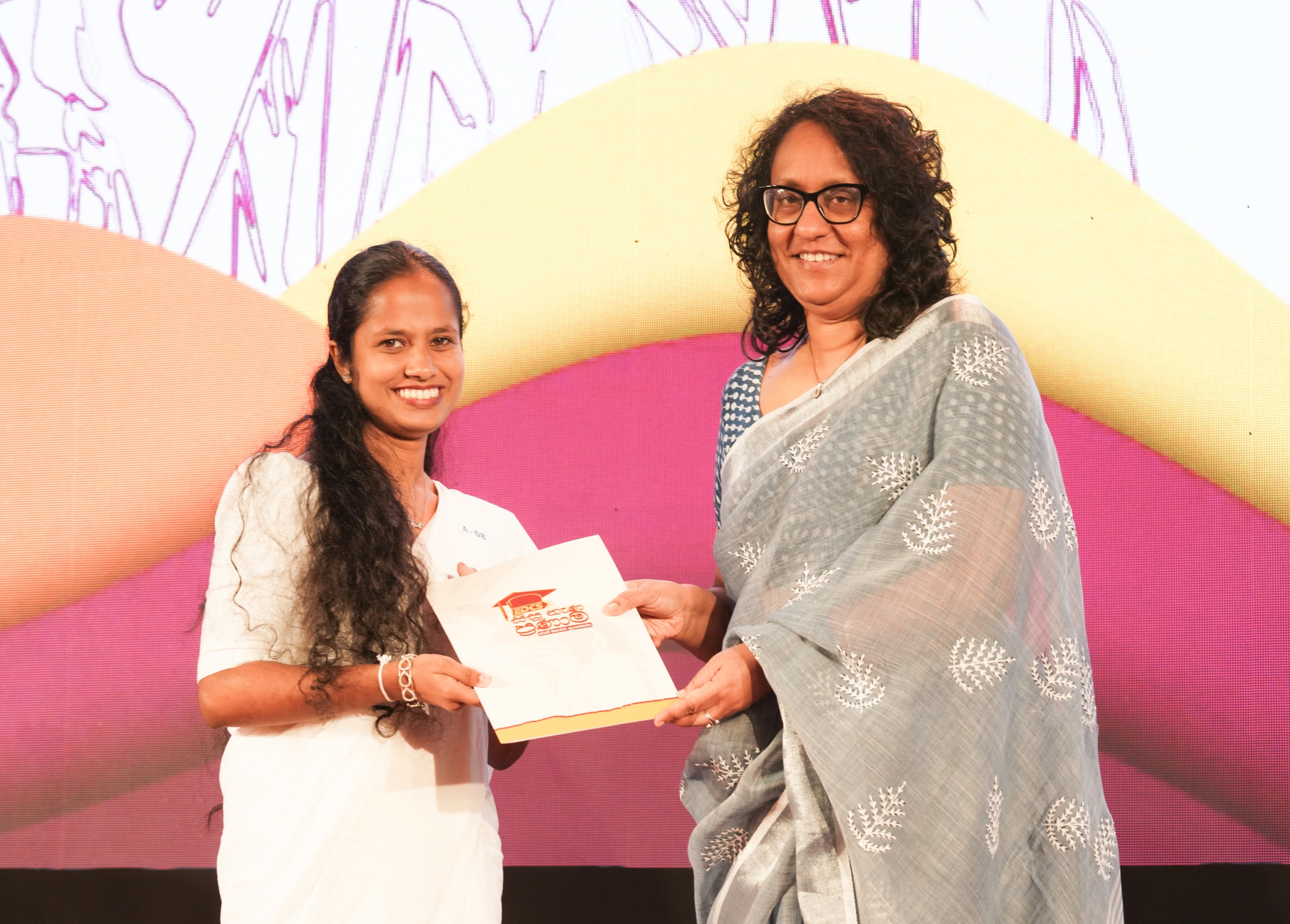
Prime Minister Dr. Harini Amarasuriya stated that in order to ensure the economic, social, and cultural security of the country, it is essential to develop a quality human resource, and that education plays a vital role in achieving this goal.
The Prime Minister emphasized that the government is committed to bring about a transformation in the education sector, and that the government will continue to move forward by overcoming obstacles encountered along the way, guided by a clear vision and purpose.
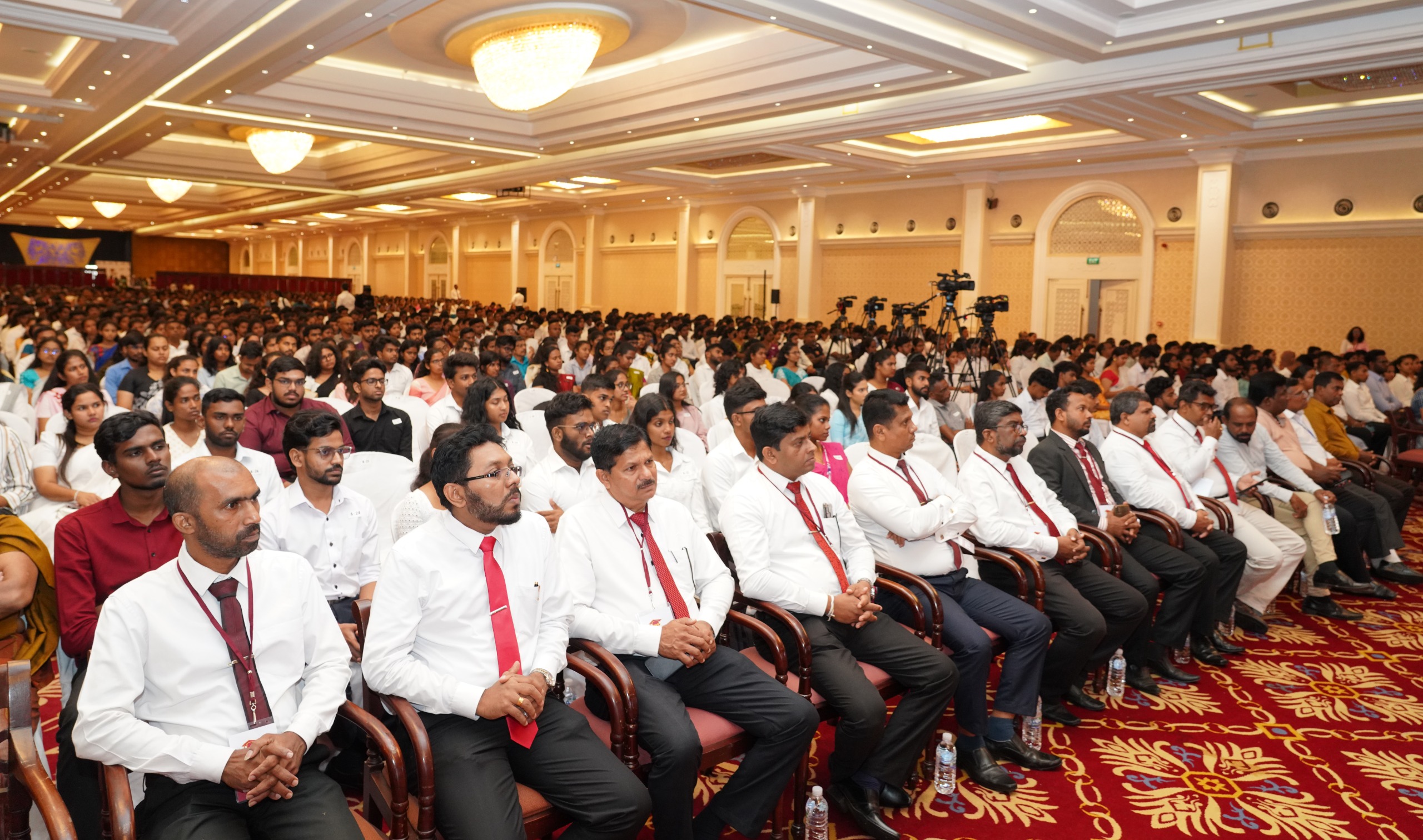
The Prime Minister made these remarks while addressing the EDCS Sisu Nena Pranama scholarship award ceremony held on Saturday (31) at Temple Trees, organized to recognize the children of the members of the Education Co-operative Society (EDCS) who have been selected to state universities for the academic year2023/2024.
Elaborating further, the Prime Minister noted that this program, organized by the Education Service Employees– Co-operative Thrift and Credit Society Ltd, is not merely about providing scholarships, but is an occasion that recognizes and appreciates the dedication of students and their parents who are preparing to shoulder the responsibility of the country’s future.
The Prime Minister also pointed out that it is a remarkable achievement that a society which began in 1930 with just 58 members and a membership fee of one rupee has today grown into the largest cooperative society in South Asia, with approximately 215,000 members.
The Prime Minister further highlighted how rapidly the world is changing, and the increasing necessity of developing human resources in the face of economic and environmental crises. She stressed that the education system must be transformed from the level of school education itself to align with the demands of the modern world, and that students entering universities should become leaders and active participants in this transformation.
Noting that out of nearly 300,000 students who enter primary education each year, only about 40,000 gain admission to universities, the Prime Minister urged students to make use of this opportunity for the development of the country.
Addressing the occasion, Deputy Minister of Labour and General Secretary of Ceylon Teachers Service Union, Mahinda Jayasinghe, stated that due to corruption-free management, it was possible to increase the financial stability of the society from Rs. 1,200 million to Rs. 1,700 million within a short period of approximately nine months.
Under this year’s program, scholarships amount to over Rs. 13.7 million were awarded to 2,292 students who have been selected to state universities.
This scholarship program, which initiated in 1984 with 15 students and an initial fund of Rs. 3,500, has been conducted continuously for 41 years. At present, scholarships of up to a maximum of Rs. 75,000 per student are awarded, demonstrating the collective strength and solidarity of the teaching community.
The event was attended by the Chairman of the Education Development Cooperative Society, Lal Kumara, the Western Province Director of Education, Darshani Iddamalgoda, along with other officials.
[Prime Minister’s Media Division]

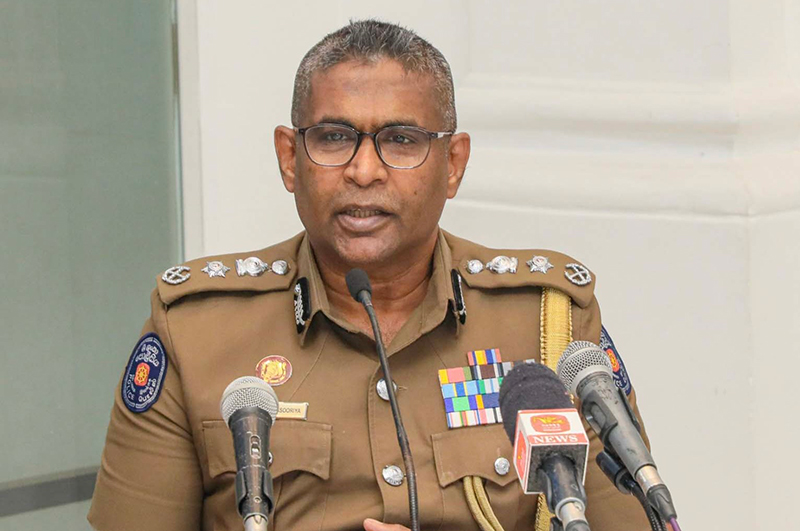
IGP Priyantha Weerasooriya says that the Police is facing a shortage of nearly 32,000 personnel and is currently operating well below its required strength.
He made these remarks while attending a ceremony held on Friday morning (30) to recognise the contribution of fingerprint officers, crime analysis officers and forensic photographers attached to the Criminal Investigation Department for their role in solving crimes.
Addressing the gathering, the IGP said that around 2,500 police officers are due to retire this year, with a further 2,700 officers expected to retire next year.
In view of the growing cadre shortfall, he said plans are underway to recruit 10,000 new officers to the Sri Lanka Police in the future.

Sri Lanka earned international recognition at the 41st Mrs. World pageant, with Sabina Yousaf being named Second Runner-Up, marking a notable achievement for the country at the prestigious global competition.
In addition to securing a top-three finish, Yousaf also won the Mrs. Photogenic mini-title and placed among the Top 20 contestants, underscoring her strong performance on the international stage.
The Mrs. World 2025 crown was won by Chanita Seedaket Craythorne of Thailand, while Paige Ewing of the United States was declared First Runner-Up.
The grand finale was held on 29 January in Las Vegas, Nevada, and featured contestants from more than 60 countries competing for the coveted title.
The announcement of the Top Three finalists placed Sri Lanka alongside leading global pageant contenders, reinforcing the country’s growing presence in international pageantry.
Final Results – Mrs. World 2025:
Winner: Thailand – Chanita Seedaket Craythorne
First Runner-Up: United States – Paige Ewing
Second Runner-Up: Sri Lanka – Sabina Yousaf

West Indies seal consolation win in ten-over shootout

In order to safeguard the future of the country, a quality human resource must be developed. – Prime Minister

Pathirana: ‘My body just automatically changed the release point’ after injury

U 19 World Cup: Emon five-for gives Bangladesh consolation win against Zimbabwe

Showers will occur at times in the Northern, North-Central, North-western, Eastern and Uva provinces and in Matale and Nuwara Eliya districts

Police face 32,000-officer shortage:IGP

‘Dates have the highest sugar content to fight Coronavirus’

Sunday Island 27 December – Headlines

#SundayIsland 17th December – Headlines

Sunday Island – 28th March

Sunday Island Headlines – 21 March

Sunday Island – 21st February – Headlines
-
 Business6 days ago
ComBank, UnionPay launch SplendorPlus Card for travelers to China
-
 Business3 days ago
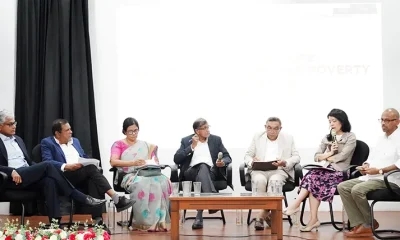
Climate risks, poverty, and recovery financing in focus at CEPA policy panel
-

 Opinion2 days ago
Sri Lanka, the Stars,and statesmen
-

 Business1 day ago
Hayleys Mobility ushering in a new era of premium sustainable mobility
-

 Opinion6 days ago
Luck knocks at your door every day
-

 Business1 day ago
Advice Lab unveils new 13,000+ sqft office, marking major expansion in financial services BPO to Australia
-

 Business1 day ago
Arpico NextGen Mattress gains recognition for innovation
-

 Editorial1 day ago
Govt. provoking TUs