
Foreign News
US in closely-guarded talks to open new bases in Greenland

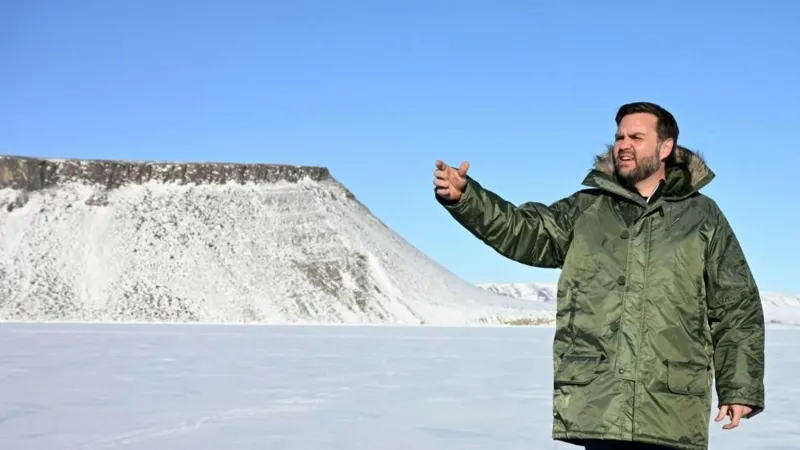
The US has been holding regular negotiations with Denmark to expand its military presence in Greenland, according to multiple officials familiar with the discussions, with talks between both sides progressing in recent months.
US officials are seeking to open three new bases in the south of the territory, a semi-autonomous part of Denmark, as they work to resolve a diplomatic crisis sparked by President Donald Trump when he threatened to seize Greenland by force.
Trump said in January that the US should “own” Greenland to prevent Russia or China from taking it. He said this could happen the “easy way ” or “the hard way”.
The White House confirmed the administration was engaged in high-level talks with Greenland and Denmark, but declined to comment on details of the negotiations. A White House official told the BBC the administration was very optimistic the talks were headed in the right direction.
Denmark has previously expressed a willingness to discuss additional American military bases in Greenland, and its foreign ministry confirmed talks with the US were taking place. “There is an ongoing diplomatic track with the United States. The Ministry of Foreign Affairs will not go into further detail at this time,” a spokesperson said.
US officials have floated an arrangement in which the three new military bases would be formally designated as US sovereign territory, according to one source with knowledge of the negotiations.
The bases would be in southern Greenland and primarily focus on surveillance of potential Russian and Chinese maritime activity in an area of the northern Atlantic between Greenland, Iceland and the United Kingdom known as the GIUK Gap, the officials who spoke to the BBC said.
The two sides have not formally agreed to anything yet and the final number of bases could change, the sources said. One of the new bases would likely be located in Narsarsuaq, on the site of a former US military base that housed a small airport.
Any other new military bases would likely also be located on sites in Greenland that have existing infrastructure such as airfields or ports, which could be upgraded at a lower cost than building new facilities, analysts said.
US officials have not raised the possibility during talks of somehow seizing control of Greenland, something that Denmark and Nato have publicly rejected.
Despite Trump’s threats, the countries have been actively working towards a deal in recent months.
The talks have been confined to a small working group of officials in Washington who have made headway negotiating outside of the spotlight while the administration has been consumed by the war in Iran.
General Gregory Guillot, the head of US Northern Command, gave a broad sense of the negotiations during congressional testimony in March. He said the US was seeking to open new bases, but the sources close to the talks described new details that paint a picture of regular high-level meetings that have progressed in recent months.
The delicate diplomatic effort is being led by Michael Needham, a senior state department official who has been tasked with crafting a deal that satisfies Trump while also respecting Denmark’s redlines around protecting its borders.
“Needham is running point” on Greenland, said a senior diplomat with knowledge of the talks. Behind the scenes, the person said, the administration is “approaching it very professionally”.
The teams have met at least five times since mid-January. Needham is usually accompanied by one or two US officials from the state department or National Security Council, several sources said. His counterparts in the room include Jesper Møller Sørensen, Denmark’s ambassador to the US, and Jacob Isbosethsen, the top Greenlandic diplomat in Washington.
Trump’s special envoy to Greenland, Republican Louisiana Governor Jeff Landry, hasn’t taken part in the negotiations and is largely absent from the diplomatic process, three sources said.
“He was supposed to be more of like a rah-rah cheerleader of the idea that we could just flex our muscles and take over Greenland as a security asset,” said a close Landry ally who asked not to be named. Landry “has never been to any of the actual talks.”
Landry’s office did not respond to a request for comment.
The US currently has one military base in Greenland, down from approximately 17 military facilities during the height of the Cold War. Pituffik Space Base is located in northwestern Greenland – it monitors missiles for NORAD but is not configured to conduct maritime surveillance.
Some current and former officials, as well as Arctic security experts, told the BBC that Washington could have advanced its interests in Greenland without threatening a Nato ally in such strong terms.
“Why threaten an ally with a military operation or invasion when what you want is something that could be negotiated quite easily?” said one former senior US defence official.
Others, however, praised the co-operation between the US and Denmark.
“Wherever the US and our allies leave a vacuum, that vacuum is often filled by China and Russia,” retired General Glen VanHerck, the head of Northern Command and North American Aerospace Defense Command (NORAD) from 2020 to 2024, told the BBC.
Behind closed doors, negotiators have sought to reach a compromise under the framework of an existing decades-old security agreement between the US and Denmark.
The 1951 pact grants the US a wide berth to expand its military operations in Greenland. The Danish government must approve any US military expansions in the territory, but Denmark has historically supported America’s military operations there and has never rejected a US request to expand its presence, Arctic security experts said.
Representatives of the Greenland government in Washington declined to comment. The US state department also declined to comment.
Trump expressed interest in the US gaining greater access to Greenland during his first term as president. But his renewed interest earlier this year set off a diplomatic crisis that highlighted tensions between Nato and the Trump administration.
[BBC]

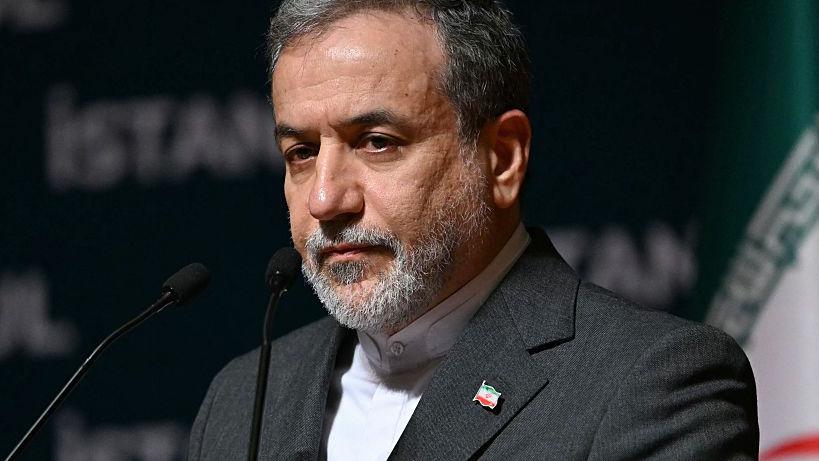
Iran’s Foreign Minister Abbas Araghchi has met with Qatari mediators in New York to discuss a proposal to reopen the Strait of Hormuz, while a United States official said there would be no agreement to end the war unless Tehran’s nuclear programme is addressed.
Araghchi told Iranian state media on Monday that the Qatari mediators would carry the ideas discussed at the meeting to the US and that he hoped to receive Washington’s final response by Tuesday.
“We talked about ideas and how to find solutions to fulfil Iran’s conditions and how to implement those conditions,” he said. “They had some ideas, and we had a discussion that they will also present to the American side.”
Asked whether he would stay in New York to await the reply, Araghchi said he would fly to Tehran within hours.
“Whenever the Qataris have a response, they know how to get it to us,” he said.
He described the meetings as part of an existing exchange of messages through Qatari and Pakistani mediators, which he said had taken on “a more serious form” since Iran submitted its proposal.
The Iranian plan , announced on Friday at the United Nations General Assembly in New York City, calls on the US to release frozen Iranian funds, lift sanctions and end its naval blockade of Iranian ports. Araghchi said those steps could be completed within four or five days, allowing the strait to reopen and negotiations on a final agreement, including on Iran’s nuclear programme, to begin by the seventh day.
US President Donald Trump, however, rejected the proposal on Saturday, calling it “unacceptable”
The US official, who spoke to Al Jazeera, said indirect discussions were continuing.
The talks were “positive and constructive”, the official said, but stressed there would be no agreement unless Iran’s nuclear programme is addressed. The official said Trump is willing to relieve sanctions and release Iran’s frozen funds in exchange for progress on nuclear issues.
“Iran has indicated they are flexible on the nuclear issues, but the sides still remain apart on the timing of the commitments and who takes which steps first,” the official said.
The official also expressed scepticism of Iran, saying it had broken the memorandum of understanding signed in June by firing on commercial vessels. Tehran denies the accusation and says it was Washington that broke its commitments by failing to halt Israel’s attacks on Lebanon and by seeking to establish alternate shipping routes through the Strait of Hormuz.
Iran had closed the strait, which handled roughly 20 percent of the world’s oil and gas supplies before the war, shortly after the US and Israel launched their offensive on February 28. Iranian attacks on vessels since have sharply curtailed shipping, and oil prices have risen above $100 a barrel.
Even so, crude exports from major Middle East producers rebounded in September to 12.8 million barrels per day, their highest level since the war began, the Reuters news agency reported, citing data from the maritime intelligence firm Kpler.
That is still well below the 18.8 million bpd exported in February.
Some ships have used the US military-supervised route hugging the coast of Oman, travelling at night with tracking systems off and offloading oil to tankers outside the strait. Admiral Brad Cooper, the head of US Central Command, said on Saturday that American forces had assisted 2,000 transits and more than 1 billion barrels of oil in recent months.
The US has also imposed a blockade on Iranian ports and threatened secondary sanctions against airports and companies that do business with Iranian airlines. The United Arab Emirates, Iraq and Oman have already cancelled related flights.
(Aljazeera)

Like every year, Pushpraj Rimal, a tour planner and taxi driver in Nepal’s capital, Kathmandu, was looking forward to September for his business to boom.
But what he got instead was a series of cancellations by tourists after catastrophic floods last month killed more than 1,450 people and destroyed key highways, deeply impacting the Himalayan nation heavily dependent on tourism.
“It is still a lockdown kind of situation,” the 42-year-old told Al Jazeera nearly a month after the disaster.
Pushpraj, who speaks Nepali and Hindi, works on commission for several hotels and trekking companies in Kathmandu and the scenic town of Pokhara, known for its lake nestled in the Annapurna mountain range. Pokhara also serves as a base for Himalayan trekkers.
Nepal’s tourist season peaks after the monsoon ends in August and the skies are clearer. Tourism attracts thousands of international travellers, accounting for nearly 8 percent of Nepal’s gross domestic product and employs more than 1 million people.
Last year, Nepal saw more than 1.15 million tourists visiting the country, nearly a third of them during the September-November season.
But the floods this year, triggered by a glacial mountain collapse along the Nepal-Tibet border in the north, have pushed tourists away from the unaffected areas as well.
“I had rented two cars for two months, but I have done one fourth of the business I usually do in a season. Tourists generally start pouring in from September, but most of them have cancelled this year,” he said.
“I will get no commissions from the hotels or trek organisers, nor has the taxi business worked well. … I am now waiting for the season to end.”
Rimal has two children, Hema, 14, and Rahul, 12, whom he had promised a tablet this Dussain, a prominent Hindu festival that usually falls in October. “But it seems impossible now. I will have to break their hearts and my promise to them for the very first time.”
(Aljazeera)
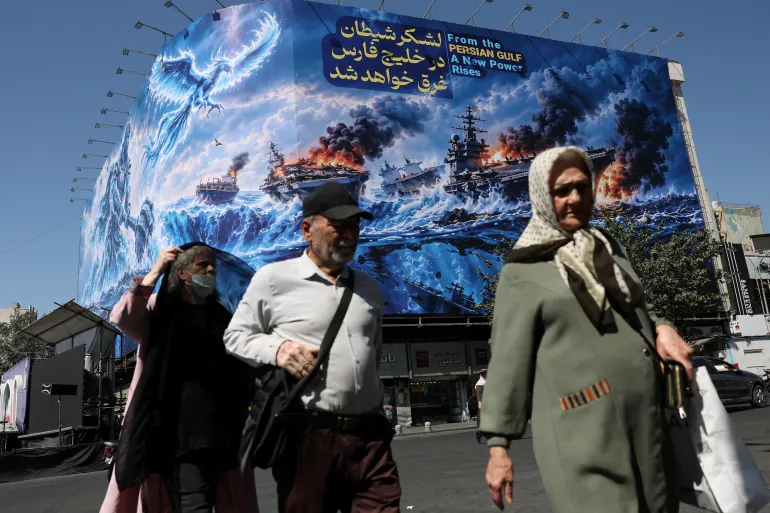
Hours after US President Donald Trump rejected a diplomatic solution put forward by Iran to reopen the Strait of Hormuz, explosions were heard in the waterway, according to Iranian media.
Reports of blasts near southern Iran’s Qeshm Island in the Strait of Hormuz suggested that multiple antiship missiles and drones were fired at vessels transiting the waterway against Tehran’s wishes.
While Iranian authorities did not confirm any attacks in the Strait of Hormuz that day, shipping continues to be attacked in the waters, including an Indian cargo ship last week which killed a sailor.
The Islamic Revolutionary Guard Corps (IRGC) maintains that the strait is closed to any ship that does not coordinate with Iranian authorities. On Sunday afternoon, it released video of what it said was a second US underwater drone seizd this month.
Tehran has issued instructions to shipping companies transiting the Strait of Hormuz to use a temporary route approved by Iranian authorities and pay relevant fees. But it has also said the strait will not fully reopen until the US blockade on Iranian ports ends.
Iran’s Persian Gulf Strait Authority announced on Saturday that it would blacklist any shipping charterer company which orders crews to use routes it considers to be unauthorised.
It also published what it described as an apology from an unnamed shipowner blaming commercial pressure from its charterer for trying to pass through the strait.
(Aljazeera

Sri Lanka to face India in semi-finals after washout

Bangladesh to take on Pakistan in semis after another washout

OpenAI scraps rollout of new model over safety concerns

Iran’s Araghchi meets Qatari mediators as US calls for nuclear talks

Showers above 50 mm expected in Uva, Eastern and Central provinces and in Polonnaruwa and Mullaittivu districts after 2.00 p.m.

PAFFREL raises concerns over Anti-Corruption (Amendment) Bill

‘Dates have the highest sugar content to fight Coronavirus’

Sunday Island 27 December – Headlines

#SundayIsland 17th December – Headlines

Sunday Island – 28th March

Sunday Island Headlines – 21 March

Sunday Island – 21st February – Headlines
-

 News6 days ago
Mastermind Naufer Moulavi among 15 found guilty
-

 Midweek Review6 days ago
Thileepan’s fast unto death: An authentic narrative that many missed
-
 Latest News5 days ago
Showers above 100 mm are likely at some places in the Western, Sabaragamuwa, Central and North-western provinces and in Galle and Matara Districts
-

 Editorial6 days ago
Big Bad Bills
-
Editorial5 days ago
Crimes punished and unpunished
-

 Features4 days ago
Beyond traditional jobs: Why Sri Lanka needs to facilitate the gig economy
-

 News6 days ago
No referendum needed for passage of 22 A: SC
-

 Latest News6 days ago
Ms. P. M. Jayadeera (Engineer) appointed Director General of Irrigation