
Latest News
OpenAI scraps rollout of new model over safety concerns

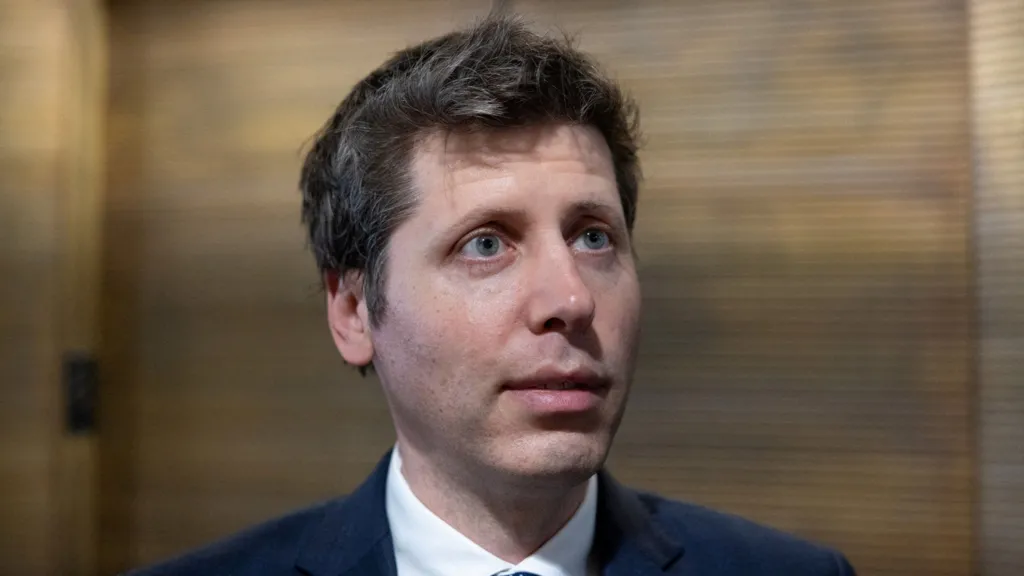
OpenAI will not release its new AI model – GPT-6.1 Astra – due to safety concerns, the ChatGPT-maker confirmed on Tuesday.
The AI system – which performs tasks like browsing the web and using apps by itself – “didn’t quite meet the bar” of the company’s standards, Saachi Jain, head of safety systems at OpenAI, said.
On Tuesday, OpenAI also issued an update on incidents, that occurred in June but were not made public until last week, in which its models accessed Australian government websites and systems without authorisation.
Those incidents and similar breaches by models developed by major AI firms have in recent weeks intensified the debate around the risks posed by the technology.
Top AI leaders including OpenAI’s Sam Altman and Anthropic boss Dario Amodei have urged the industry to slow the pace of development due to concerns about risks associated with the technology.
OpenAI’s decision, which was first reported by the Wall Street Journal, is a rare instance of a major AI developer pulling a new release over safety concerns.
The model fell short in terms of “staying within scope and authorisation, and how it communicates back to the user about the type of work it’s done,” Jain said.
“We want to make sure our model development is safe no matter whether that’s in the company, or when we ship it to users. But when we ship it to users, we have an extremely high bar in terms of safety and alignment,” she added.
The flagship GPT-6 Astra agentic model was released in September and specialises in complex reasoning and executing tasks autonomously. OpenAI said it was the result of “years of research and big bets”.
OpenAI is set to hold its annual DevDay developer conference in San Francisco on Tuesday, where it is expected to make several announcements. It is unclear if a new version of Astra will be among them.
The company’s security controls have come under intense scrutiny after several high-profile incidents involving its technology.
Last week, Australian Prime Minister Anthony Albanese announced that a rogue OpenAI agent had hacked into gove4nment websites and systems in June in what experts said was the first known case of its kind in the world.
Albanese criticised OpenAI for notifying the Australian government through a generic email address rather than making direct contact with officials.
OpenAI said in a statement on Tuesday that it was sorry for the incident and that it “should have handled our response better”.
Services Australia, the NSW Bureau of Crime Statistics and Research, the Victorian Department of Health and the Australian Institute of Health and Welfare were all affected, OpenAI clarified.
The firm said it launched investigations into the incidents as soon as it became aware of them in mid-August and notified the affected organisations between 10 and 24 September.
“Our aim was to give affected agencies a detailed account once our investigation was complete,” OpenAI said, adding that it should have shared early findings more promptly and kept Australian authorities updated.
OpenAI added that it will develop “practical approaches” to how developers and governments identify and disclose future AI incidents.
(BBC)

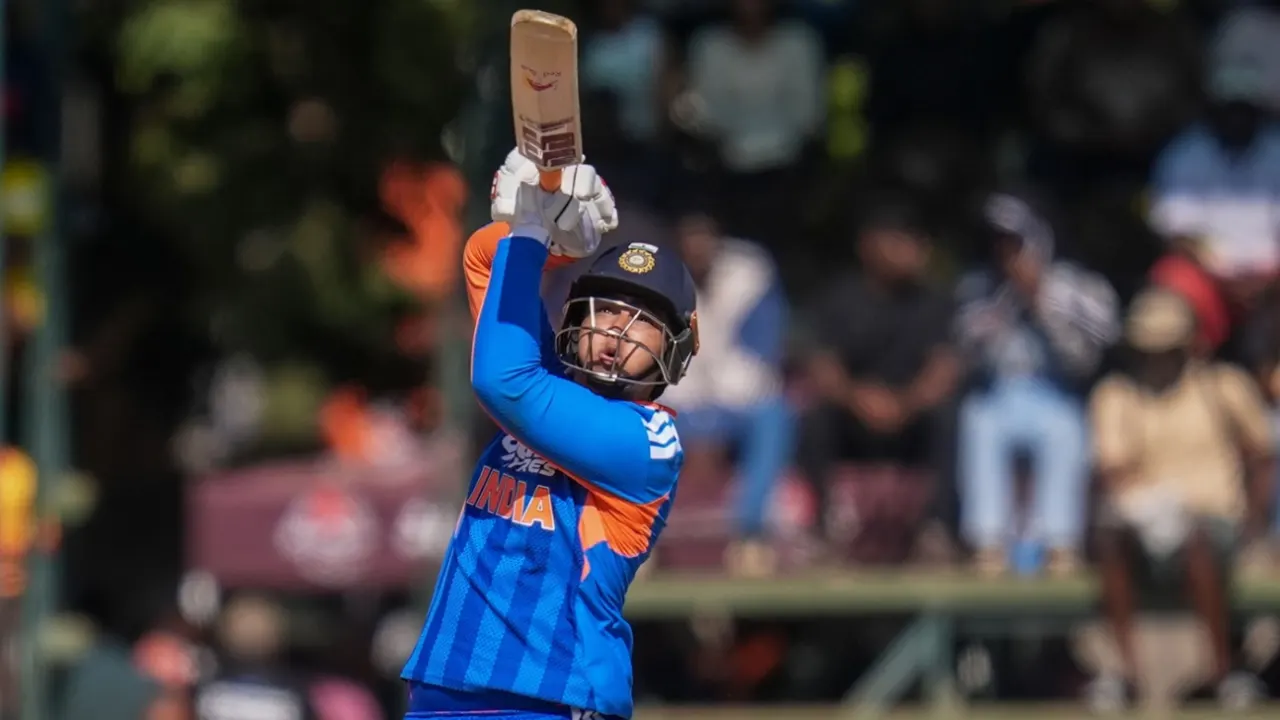
After six abandoned matches, five of them without a toss, because of incessant rain – Shreyas Iyer called it a “torrential downpour” – in Nisshin, we might finally get some cricket again at the men’s Asian Games.
The timing couldn’t have been better because the four remaining games will decide the positions on the podium. Pakistan and Bangladesh still don’t have a gold in this edition (as of Wednesday morning); Sri Lanka have just one; India have seven but that’s well behind the 28 they finished with in 2023.
India are the defending champions, and it will take a gargantuan effort from the second string Sri Lanka side to throw them off their path. Even the full-strength Sri Lanka T20I side has not been able to score 150 of late, or win a match since June, and have only one win from their last ten attempts. The Sri Lanka squad that hasn’t played even a moment of cricket since landing in Japan has a captain – Sahan Arachchige – with just one T20I to his name, which came back in the 2023 Asian Games, when they lost to Afghanistan. The more recognisable names are Niroshan Dickwella and Ashen Bandara, who haven’t featured in a T20I since 2021 and 2023 respectively. There are six other players in that squad of 15 who have played fewer than ten T20Is each, and another four who are uncapped.
India, unlike most other Full Member sides, have sent their big guns to Japan.
There’s also an ODI series going on at home, and the ODI World Cup is just a year away. But they chose to send the likes of Jasprit Bumrah, Shreyas Iyer and Ishan Kishan, among others, to Japan instead, which shows their commitment to the gold-medal cause.
Rain or shine, Sri Lanka will have to sweat it out on Thursday to try and get the better of India.
India have been plagued by injuries of late and one of the names on that list was that of Washington Sundar, who returned to action in the Japan T20I last week. He didn’t get to bat, but bowled two overs and took two wickets in his first game in two months. India would want to give him more game time before he heads back home for the West Indies T20Is that start on October 6. Washington has otherwise had an impressive year across formats with an unbeaten 52 in an ODI to give India their first win of their UK tour after he took a four-for in the Test against Afghanistan, in which he also scored 52*.
Niroshan Dickwella last played a T20I in 2021 and he is back in the scheme of things despite an underwhelming Lanka Premier League a couple of months ago, where he scored only 110 runs in six innings at a strike rate of 142.85 while averaging 18.33. He has, however, been among the runs of late, and scored a brisk 80 off 115 balls in the first Test against India. If he gets to bat on Tuesday, this could be a great chance for Dickwella to show why he was once an all-format regular for Sri Lanka.
India had rested Bumrah for the one-off T20I against Japan and played Arshdeep Singh and Yash Thakur as the quicks, and Ravi Bishnoi, Axar Patel and Washington as the lead spinners. India will now have to decide whom to leave out for Bumrah. The other question will be whether to give Vaibhav Sooryavanshi a game, although neither Abhishek Sharma nor Sanju Samson have any reason to be dropped.
India (possible): Abhishek Sharma, Sanju Samson (wk), Ishan Kishan, Shreyas Iyer (capt), Tilak Varma, Axar Patel, Shivam Dube, Washington Sundar, Ravi Bishnoi, Yash Thakur/Arshdeep Singh, Jasprit Bumrah
Sri Lanka will be expected to hand out a few debut caps and give game time to some of the more inexperienced players.
Sri Lanka (possible): Niroshan Dickwella (wk), Lasith Croospulle, Sahan Arachchige (capt), Nuwanidu Fernando, Ashen Bandara, Chamika Karunaratne, Tharindu Ratnayake, Wanuja Sahan, Vijayakanth Viyaskanth, Nuwan Thushara, Binura Fernando
[Cricinfo]
by Reemus Fernando
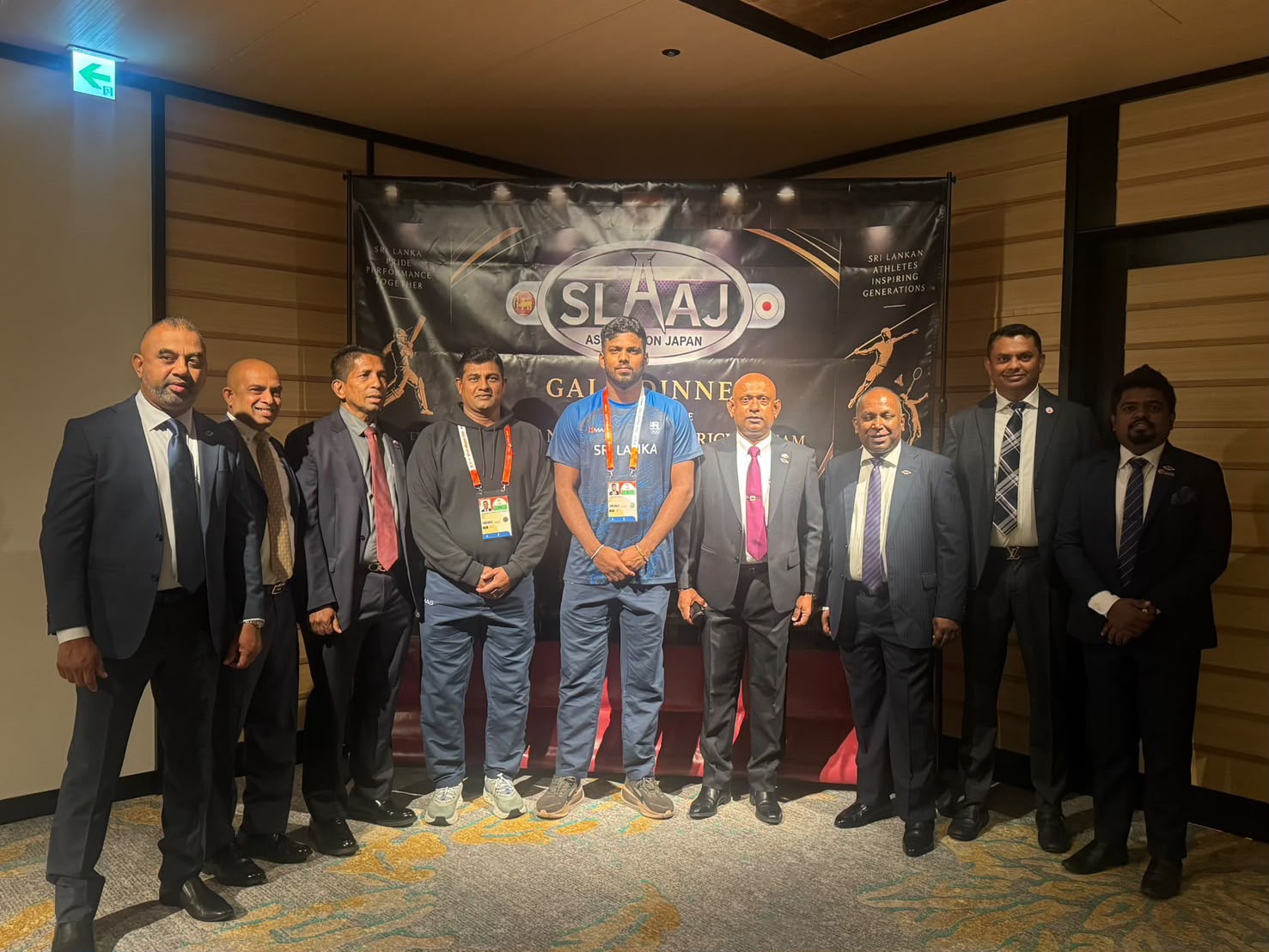
The Sri Lanka Automobile Association in Japan (SLAAJ) has awarded a brand-new Honda Vezel to gold medallist Rumesh Tharanga at a felicitation ceremony for the Sri Lankan team that competed at the Asian Games in Nagoya, Japan.
The gift was announced at the ceremony, held on the eve of the team’s departure from Nagoya.
”We decided to reward every Sri Lankan athlete who wins a gold medal with a brand-new vehicle. We invited all the Sri Lankan athletes taking part in the Games to the felicitation, and at the time of the event, only Tharanga had won gold,”
Nishantha Meegalla, Vice President of the Nagoya Prefecture of the Sri Lanka Business Council of Japan, told ‘The Island’.
Tharanga, the world’s top-ranked javelin thrower this season, won Sri Lanka’s first-ever javelin medal at the Asian Games on Monday, sealing the historic victory with a throw of 88.55 metres.
Approval has been granted at the cabinet meeting held on 01-03-2023 for the National Curriculum Framework and the methodology for implementing the aforementioned framework, which was initiated by the National Institute of Education in 2019 under the education reform process.
However, considering the modules relevant to Grades 1, 6, and 10 that have been prepared by the National Institute of Education for the implementation of the new education reforms by the time the new government comes into power in 2024, it was planned to implement the new National Curriculum Framework only for Grades 1 and 6 in 2026, ensuring appropriate adjustments to the new government’s policies.
Further, it has also been planned to introduce vocational subjects from grade 10 onwards.
Accordingly, the concept paper required for ‘Transformational Change in Sri Lanka’s General Education’, which has been prepared to inform and make relevant parties aware of the proposed adjustments, has also been submitted to the Parliamentary Subcommittee on Education Reforms on 22-10-2025.
Subsequently, as decided at the Cabinet Meeting held on 13-01-2026, steps have been taken to postpone the implementation of education reforms for grade 6, which had been planned under the first phase of the comprehensive reform agenda for general
education, up to the year 2027, and only to implement new curriculum reforms for grade 1 in the year 2026.
Subsequently, the Ministry of Education, Higher Education, and Vocational Education has followed these steps.
• preparing a new concept paper with policy recommendations after reviewing the concept paper prepared related to bringing about transformational change in Sri Lanka’s general education
by the National Education Commission.
• Having reviewed the revised concept paper by the National Steering Committee established as per the cabinet decision dated 23-03-2026 and subcommittees established under 5 pillars
relevant to the education reforms-namely Curriculum Reform, Human Resource Development, Education Administrative Reforms & Infrastructure Development, Evaluation & Assessment, and Public Awareness & Promotion-and obtaining further observations and recommendations.
• Based on those observations and recommendations, further revising the National Curriculum Framework prepared by the National Institute of Education in 2023 and obtaining approval
from the Academic Affairs Board of the National Institute of Education.
• Obtaining approval from the Council of the National Institute of Education for the National Curriculum Framework approved by its Academic Affairs Board.
• Obtaining concurrence from the National Steering Committee for New Education Reforms on 2026-08-13 for the National Curriculum Framework approved by the Council of the National Institute of Education.
• Printing and preparing activity books and teacher guides for all 3 terms of Grade 1 and Grade 2 for the year 2027, so as to continue carrying forward the primary education reforms
commenced in the year 2026.
• Preparing Grade 6 modules for Terms I, II, and III, as well as teacher guides for all 3 terms.
• Master trainers have been trained by the National Institute of Education for all primary and secondary subjects, and all plans related to teacher training at the provincial level have been
prepared.
• Formulating the policy guidelines on school-based evaluation and assessment—prepared for practical implementation while managing available resources within the school system by the
Evaluation and Assessment Sub-Committee and obtaining the approval of the National Steering Committee.
Accordingly, the Cabinet of Ministers has approved the resolution furnished by the Hon. Prime Minister in her capacity as the Minister of Education, Higher Education, and Vocational Education to further implement the education reform process for grade 1, which has been initiated in the year 2026,
and to further initiate the education reform process for grade 2 and grade 6 in the year 2027, based on the concept paper prepared by the National Education Commission, the National Curriculum Framework approved by the National Steering Committee for New Education Reforms, and the School-Based
Evaluation and Assessment Guideline.

Waste management and recycling to receive priority in the 2027 Budget – PM

Rain stays away as India and Sri Lanka look for fair contest to enter final

Gold winner Tharanga gets brand-new Honda Vezel from SLAAJ

Showers above 50 mm are likely at some places inthe Uva, Eastern and Central provinces and in Polonnaruwa and Mullaittivu districts after 1.00 p.m.

Civil society activist accuses govt. of favouring Ven. Gnanasara

More cops than cones

‘Dates have the highest sugar content to fight Coronavirus’

Sunday Island 27 December – Headlines

#SundayIsland 17th December – Headlines

Sunday Island – 28th March

Sunday Island Headlines – 21 March

Sunday Island – 21st February – Headlines
-
 Latest News7 days ago
Showers above 100 mm are likely at some places in the Western, Sabaragamuwa, Central and North-western provinces and in Galle and Matara Districts
-

 Editorial7 days ago
Crimes punished and unpunished
-

 Features6 days ago
Beyond traditional jobs: Why Sri Lanka needs to facilitate the gig economy
-

 Editorial5 days ago
Birth of a bad law
-

 News3 days ago
Police remove Thileepan statue in Jaffna
-
 Latest News6 days ago
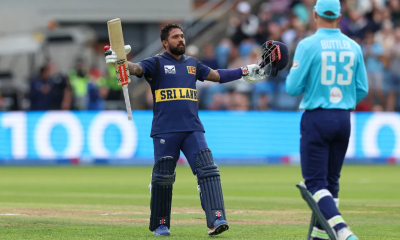
Kusal, Wellalage star as Sri Lanka defend 322 in Headingley thriller
-

 News5 days ago
TIN mandatory for key transactions from Nov. 1
-

 News7 days ago
IMF: Sri Lanka on course for 2027 market return