
News
US Embassy: Pompeo’s visit not confirmed yet


Indian HC Baglay meets PM following visit by top Chinese delegation
By Shamindra Ferdinando
Close on the heels of China reiterating its commitment to Sri Lanka’s development goals and backing for Colombo at International forums, the Indian High Commissioner in Colombo Gopal Baglay met Prime Minister Mahinda Rajapaksa on Thursday (15) evening to discuss ongoing Indian projects as well as cooperation on new projects.
A top level Chinese delegation, led by senior Chinese leader and top foreign policy official Yang Jiechi, who is also a member of the Chinese Communist Party Politburo and the Director of the Central Committee’s Foreign Affairs Commission met President Gotabaya Rajapaksa and Premier Mahinda Rajapaksa on Oct 8. Then the delegation also visited UAE, Algeria and Serbia.
Immediately after the high powered Chinese visit, a section of the media reported that US Secretary of State Mike Pompeo was also expected to visit Colombo later this month. Asked whether the US embassy had issued a statement as regards Pompeo’s impending visit, an embassy official told The Island such statements had been issued by the State Department. Subsequently, the official said: “No official travel has been confirmed at this time. Notice of any high level travel would be announced by the Department of State once a trip is officially confirmed.”
Sri Lankan officials said that Pompeo was scheduled to visit Colombo in June 2019 for talks with the then Prime Minister Ranil Wickremesinghe. During bilateral talks, he was hoping to discuss issues relating to counter terrorism, freedom of navigation in the Indian Ocean and the Indo-Pacific region, and the use of $480 million American Millennium Challenge Corporation Fund with then Premier Ranil Wickremesinghe. However, the visit which was to take place ahead of the US presidential visit to G-20 summit in Osaka was cancelled amidst media furore over the US seeking to finalize MCC (Millennium Challenge Corporation) Compact and SOFA (Status of Forces Agreement).
However, the US embassy in Colombo cited ‘scheduling issues’ over cancellation of the June 27, 2019 visit that was aimed at showing solidarity with victims of Easter Sunday terror attacks.
Pompeo was to travel to Colombo on a brief visit, scheduled between his New Delhi trip and a visit to Osaka accompanying President Donald Trump for the June 28-29 G20 Summit.
The Sri Lanka Prime Minister’s Office said HC Baglay followed on the virtual summit between Premier Rajapaksa and Indian Prime Minister Narendra Modi last month.
The PM’s Office said: “One priority sector for Prime Minister Rajapaksa is water and sanitation. The High Commissioner noted several areas on which the two countries could collaborate, including water requirements in schools, sanitation needs, rainwater harvesting, building of toilets for deprived areas, and a project that could convert sewage into fertilizer.
Prime Minister Rajapaksa indicated that the lack of safe drinking water in certain parts of the country is the main concern, including the role it plays in chronic kidney disease. This is now a key priority for the Sri Lankan Government.
High Commissioner Baglay spoke of the possibility to collaborate with Prime Minister Modi’s “Jal Jeevan Mission” (Water for Life Mission), which is the Indian Government’s program that aims to provide potable water for every household.
Prime Minister Rajapaksa noted that the lack of drinking water is a particularly serious problem in the dry zone region of Sri Lanka and requested the High Commissioner to look into any assistance that can be provided towards that end.
The Prime Minister also requested India to look at the pharmaceutical sector and encourage Indian investors to establish research and manufacturing facilities in Sri Lanka to help the country meet its medicinal drug required.”
In the wake of the high profile Chinese visit, the media sought an explanation from cabinet spokesman Media Minister Keheliya Rambukwella whether Sri Lanka was getting closer to China at the expense of its long standing relationship with Japan. Asked whether the government’s controversial decision to terminate proposed Light Railway System that was to be built with Japanese financial assistance in Colombo and its suburbs prompted by growing relationship with China, Minister Rambukwella pointed out that recently there was media furore over Foreign Secretary Jayanath Colombage’s comment on Sri Lanka’s relationship with India. But, Sri Lanka would continue to follow non-aligned foreign policy, the minister said.
Sri Lanka attributed the decision to cancel the Japanese funded project to many houses and business premises that would have to be destroyed during construction, important wetlands would be severely damaged, the cost of constructing the railway track on towers would be immense, and operating costs too would be excessive.
The Japan International Cooperation Agency signed a concessionary loan agreement with Sri Lanka worth about 30 billion yen ($284 million) in March 2019 for the project, the total cost of which would be about 246.6 billion yen.
According to foreign media reports the US, Japan and India are working together to counter growing Chinese regional and global influence.


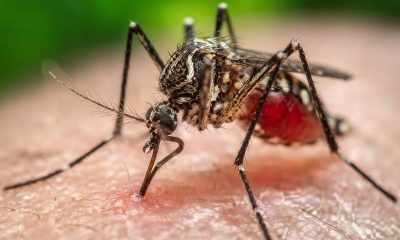

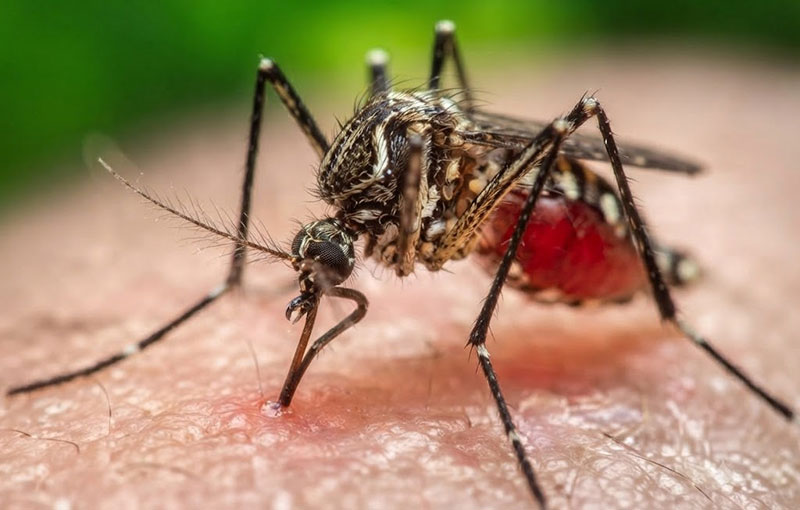
The countrywide dengue outbreak has intensified, with the death toll rising to 50, by July 16, as the number of reported infections surpassed 73,000, according to the National Dengue Control Unit (NDCU).
The country has recorded 73,455 dengue cases so far this year, with the case fatality rate standing at 0.07 percent, highlighting the severity of the ongoing outbreak.
The Western Province continues to remain the worst affected region, accounting for more than half of the total cases, with 38,700 infections. The Gampaha District has recorded the highest number of cases in the province with 15,341, followed closely by Colombo with 14,625.
The Southern Province has reported 11,382 cases, while the Sabaragamuwa and Central provinces have each recorded more than 6,000 infections.
Dengue cases have shown a sharp increase in recent months, with June recording the highest monthly total of 21,538 cases, while July has already reported 18,076 infections. In comparison, 8,590 cases were reported in May, and 5,651 in April.
Health authorities have identified 175 Medical Officer of Health (MOH) areas as high-risk locations during the 27th epidemiological week. An average of 2,677 new dengue cases are being reported daily, prompting authorities to intensify prevention and mosquito control measures.
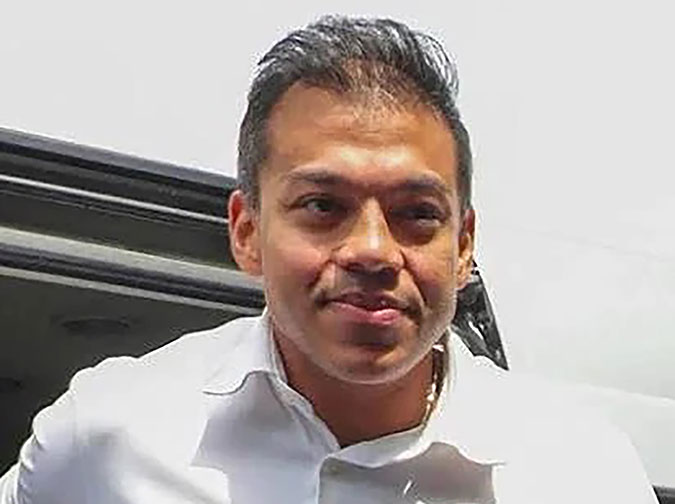
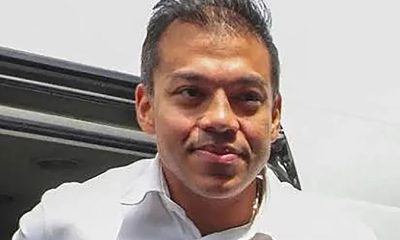
The Colombo High Court yesterday (17) resumed hearing the money laundering case filed against Yoshitha Rajapaksa, son of former President Mahinda Rajapaksa, under the Prevention of Money Laundering Act.
The proceedings were held before High Court Judge Udesh Ranatunga, where evidence was recorded from prosecution witnesses, under the direction of Deputy Solicitor General Janaka Bandara.
President’s Counsel Sampath Mendis, appearing for Yoshitha Rajapaksa, cross-examined the witnesses during the hearing.
After recording evidence, the court ordered that further examination of evidence be postponed until July 24.
The Attorney General has filed indictments, alleging that Yoshitha Rajapaksa committed an offence, under the Prevention of Money Laundering Act, by purchasing five plots of land in Dehiwala and Ratmalana, valued at more than Rs. 73 million.
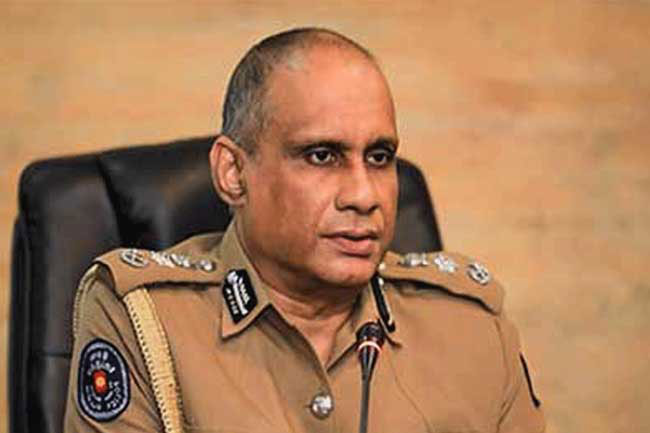
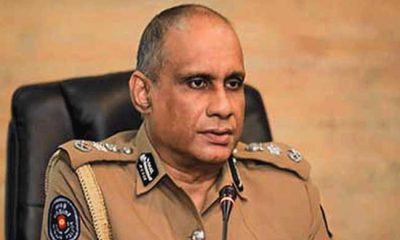
Former IGP Chandana Deepal Wickramaratne died after sustaining a gunshot injury at his residence, in Thalangama, yesterday (17), with police saying preliminary investigations indicate that the incident was a suspected suicide.
Kaduwela Magistrate Aruna Indrajith Buddhadasa, on Friday, ordered the Officer-in-Charge of the Malabe Police Station, Police Inspector Pradeep Ranasinghe, to conduct a formal investigation into the death and submit a report to court on its progress.
The order was issued after the Malabe Police Station presented facts before court regarding the incident.
According to police, the Malabe Police Station received information from the Police Unit of the Colombo East Base Hospital, in Mulleriyawa, that Wickramaratne, who resided in the Thalahena area, within the Malabe Police division, had died after being admitted to hospital, with gunshot injuries.
Police Spokesman ASP F.U. Wootler said Wickramaratne had allegedly used the firearm of his personal security officer and shot himself at his residence.
Police said the shooting had taken place at his residence on Parakum Road, Thalangama, on Thursday morning, before he was due to leave for his regular exercise routine. He was rushed to the Colombo East Base Hospital, in Mulleriyawa, with serious injuries but was pronounced dead upon admission, police said.
The deceased’s remains were placed at the Colombo East Base Hospital, where a post-mortem examination was scheduled to be conducted.
ASP Wootler said three police teams have been appointed to investigate the incident. Further investigations are being conducted by the Crime Division of the Western Province South Range and the Malabe Police Station.
Wickramaratne, 63, served as the 35th Inspector General of Police of Sri Lanka from November 27, 2020, to November 23, 2023.
He joined the Sri Lanka Police in 1986 as a Probationary Assistant Superintendent of Police and later served in several senior positions.
A graduate of the University of Colombo and the General Sir John Kotelawala Defence University, he also served as Acting IGP for more than a year, from April 28, 2019, before being appointed IGP, in November 2020.
He retired from the post of Inspector General of Police, in November 2023.
by Norman Palihawadane ✍️

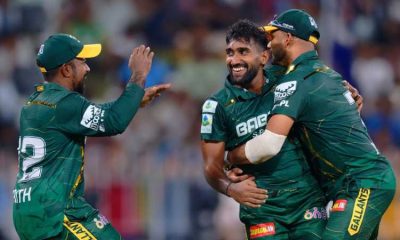
Malinga, Asalanka seal Galle Gallants win in LPL opener

Showers may occur in the Western, Sabaragamuwa and North-western provinces and in Kandy, Nuwara-Eliya, Galle and Matara districts

Dengue outbreak gallops ahead: Infections surpasses 73,455, leaving 50 dead

Evidence recorded in money laundering case against Yoshitha Rajapaksa

Former IGP C.D. Wickramaratne dies in suspected suicide

CAA sets aflatoxin limit for processed liquid milk from January 2027

‘Dates have the highest sugar content to fight Coronavirus’

Sunday Island 27 December – Headlines

#SundayIsland 17th December – Headlines

Sunday Island – 28th March

Sunday Island Headlines – 21 March

Sunday Island – 21st February – Headlines
-
 Features6 days ago
Prison riots and politics: NPP’s biggest challenge and Sri Lanka’s biggest opportunity
-
 Features3 days ago
Dirty Money
-

 Editorial6 days ago
Much ado about crime: Fish or cut bait
-
 Features6 days ago
More on Saudi Arabia: ARAMCO and beyond
-

 News1 day ago
Money laundering case against Yoshitha, fixed for pre-trial conference
-
 Sports6 days ago
The banker who rescued Sri Lankan cricket
-
 Midweek Review3 days ago
The sordid tale of theft and tragedy at Finance Ministry
-
 Latest News4 days ago
Oil prices hit 1-month high as US-Iran attacks dim Strait of Hormuz outlook