
News
UNP Gen. Secy. alleges SJB, section of TNA supporting Basil

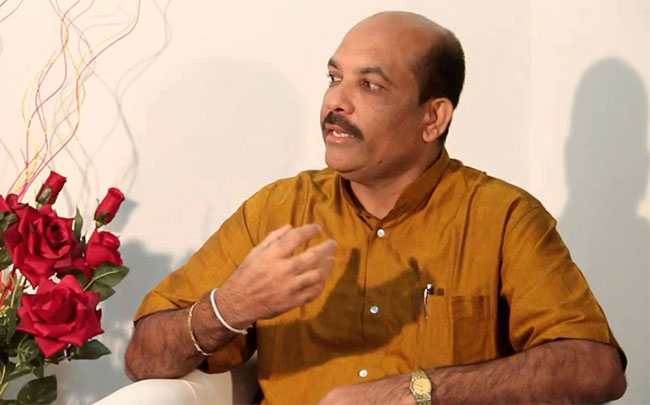
Rasamanickam questions Ranil’s pact with Rajapaksas
By Shamindra Ferdinando
UNP General Secretary Palitha Range Bandara has accused Samagi Jana Balavegaya (SJB) leader Sajith Premadasa of supporting the ruling Sri Lanka Podujana Peramuna (SLPP) on the sly.
Former lawmaker Bandara alleged that Premadasa, the serving Opposition Leader, was supporting SLPP founder Basil Rajapaksa, MP, though he publicly attacked the ruling coalition.
The UNPer alleged that Premadasa was simultaneously functioning as the Opposition Leader and Basil Rajapaksa’s protector. Having failed to retain his Puttalam district seat at the last parliamentary election in August 2020, Bandara received the post of UNP General Secretary in January 2021.

One-time State Minister for Irrigation and Water Resource Management Bandara said so at a recent meeting held at ‘Sirikotha,’ where he also alleged TNA lawmakers, M.A. Sumanthiran and Shanakiyan Rasamanickam of taking a stand supportive of Basil Rajapaksa.
MPs Premadasa, Sumanthiran and Rasamanickam opposed the proposed 21 Amendment to the Constitution in line with Basil Rajapaksa’s strategy, the top UNP official said.
Declaring that MP Premadasa should have unconditionally backed the 21st Amendment, if he genuinely loved the country, Bandara alleged the SJB leader was working overtime to sabotage the ongoing efforts to reach a consensus on the proposed amendment.
The former policeman said that MPs Sumanthiran and Rasamanickam opposed the 21st Amendment, though the TNA backed the current initiative. Claiming that the proposed amendment was much stronger than the 19th amendment enacted in 2015, Bandara alleged that the likes of Premadasa, Sumanthiran and Rasamanickam wanted to retain executive powers.
The UNPer said that the 21 st Amendment reflected the ‘Gota Go Home’ sentiments. According to him, SJB leader’s opposition to the 21 Amendment couldn’t be justified under any circumstances as it drastically reduced executive powers and strengthened anti-corruption efforts.
The UNP General Secretary alleged that the SJB leader appeased the Rajapaksas primarily for two major reasons. The ex-MP claimed that the Premadasas were eternally grateful for the Rajapaksas for blocking investigations after the arrest of Dulanjali Premadasa allegedly with forged Rupee currency notes amounting to Rs 20 mn.
The former law enforcement officer said that a person who had been arrested with forged 100 Rupee currency notes faced a jail term whereas the detection of Rs 20 mn worth forged currency notes hadn’t been at least investigated.
Bandara alleged that the Rajapaksas also stymied investigation into the alleged misappropriation of Rs 11 bn belonging to the Central Cultural Funds during the 2015-2019 yahapalana administration. Bandara served as State Minister during that period.
The former State Minister appealed for public support to sustain Premier Ranil Wickremesinghe’s untiring efforts to restore political stability. The UNP General Secretary said that the economy couldn’t be revived unless agreement was reached on a political settlement. According to him, the 21 Amendment was the key to political consensus, the ex-MP asserted. Therefore, all should set aside political differences and work towards achieving political stability, the UNP General Secretary said.
Lawmaker Rasamanickam said that the UNP General Secretary should direct his accusations at Ranil Wickremesinghe.
The TNA MP questioned the rationale of a section of the TNA being accused of cooperating with the Rajapaksas while the UNP leader now served the ruling coalition as its Prime Minister.
MP Rasamanickam said that Bandara had conveniently forgotten how the politically insolvent UNP with just one National List slot in Parliament accepted the premiership. The UNP should be ashamed of falling prey to the Rajapaksas as they were struggling to cope up with the growing public anger over ruination of the economy, MP Rasamanickam said.
Responding to another query, the Batticaloa District MP said that actually the Premier should be called Ranil Rajapaksa as he was the saviour of the notorious Rajapaksa brothers.
Rasamanickam also declared that Ranil Rajapaksa was the fifth Rajapaksa brother and now only second to Gotabaya.
Rasamanickam recalled how the TNA had intervened when President Maithripala Sirisena staged the constitutional coup in Oct 2018. Bandara appeared to have forgotten how the TNA fought for sacked Premier Wickremesinghe as the party stood for the people’s right.
MP Rasaminckam said that the UNP couldn’t deceive the masses by making unsubstantiated allegations. How could a one-seat party cover-up its shameless pact with the Rajapaksas that enabled Gotabaya Rajapaksa to save his presidency for the time being.



News
Establishment of an Institutional Framework to Inagurate Upper Hydro Catchment Areas Management Authority

Policy approval of the Cabinet of Ministers was granted at their meeting held on 08.06.2026 to establish the Upper Hydro Catchment Areas Management Authority for identification and
execution of a formal and long – lasting remedy to secure the central hills including the upper hydro catchment areas enabling them to sustain amidst extreme weather conditions
due to natural calamities and human activities as well as to be used for the sustainable development of the country.
Accordingly, a concept paper has been prepared including
institutional structure, activities, powers, active subject area as well as administrative and coordination mechanism for the proposed authority by an expert technical committee appointed by the Secretary to the President.
Based on the said concept paper, the Cabinet of Ministers granted approval to the resolution furnished by the President to instruct the Legal Draftsman to prepare a draft bill including legal provisions required for the establishment of Upper Hydro Catchment Areas Management Authority.
News
Introduction of Flora and Fauna (Regulation of actions of the Indigenous Community within the nominated areas) Regulations
With the objective of securing the traditional livelihood and the eco system of the indigenous community, it has been recognized the necessity of introducing a formal regulation methodology to secure their engagement in livelihood activities by being more sensitive to the existing laws.
Thereby, the Fauna and Flora (regularizing) regulations under the Fauna and Flora Protection Ordinance (Authority 469) have been prepared so that nominated activities within the prescribed area to a member of the indigenous community
who has been registered for securing the rights acquired from law or custom or usage or traditional stance to execute an act within a certain state land that is fundamental to the survival of the indigenous community permission can be granted
Accordingly, the Cabinet of Ministers granted approval to the resolution furnished by the Minister of Environment to publish the said regulations in the government gazette notification and thereby submit to the Parliament for its concurrence.
Latest News
M. M. D. J. Senarathne, appointed Director General of the Department of National Botanical Gardens
The Cabinet of Ministers approved the resolution furnished by the Minister of Environment to appoint M. M. D. J. Senarathne, who is the senior most officer in Grade I of Sri Lanka Scientific Service se

Establishment of an Institutional Framework to Inagurate Upper Hydro Catchment Areas Management Authority
Introduction of Flora and Fauna (Regulation of actions of the Indigenous Community within the nominated areas) Regulations
M. M. D. J. Senarathne, appointed Director General of the Department of National Botanical Gardens

Harmanpreet Kaur steps down as India captain

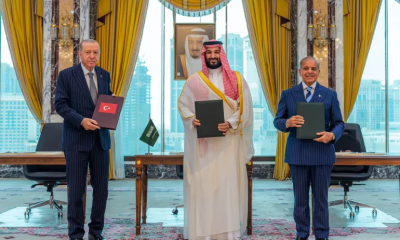
Turkiye, Pakistan agree Saudi Arabia military deployment under Mecca pact

Rumesh Tharanga among nominees announced for World Athlete of the Year 2026

‘Dates have the highest sugar content to fight Coronavirus’

Sunday Island 27 December – Headlines

#SundayIsland 17th December – Headlines

Sunday Island – 28th March

Sunday Island Headlines – 21 March

Sunday Island – 21st February – Headlines
-

 Latest News7 days ago
Gold winner Tharanga gets brand-new Honda Vezel from SLAAJ
-

 News6 days ago
US-assisted ‘Ice’ detection: NPC to examine IGP’s move to transfer drug-busting team
-

 Features7 days ago
Why Sri Lanka needs an Inclusive Civic Nationalism – urgently
-

 Editorial5 days ago
Colombo Port drug bust: The plot thickens
-

 News7 days ago
Civil society activist accuses govt. of favouring Ven. Gnanasara
-
 Midweek Review7 days ago
Dappula’s Easter Sunday ‘grand conspiracy’ claim demolished
-

 Editorial7 days ago
When crime bosses rise above law and shrines
-
Editorial6 days ago
Drug busting, transfers and trust deficit