
News
UNHRC resolution, step towards justice for Tamils; decisive action beyond the Council still necessary – PEARL


The People for Equality and Relief in Lanka (PEARL) yesterday said that decisive international action is the only way to achieve justice and a sustainable peace in Sri Lanka. PEARL said so in the wake of Geneva-based UNHRC adopting resolution against Sri Lanka with 22 members voting for, 11 against and 14, including India skipping the vote:
PEARL said that on March 23, the UN Human Rights Council had passed an important resolution rejecting Sri Lanka’s narrative of reconciliation and progress.
“The resolution mandates the UN Office of the High Commissioner for Human Rights to collect and preserve evidence of serious violations of international law that occurred in Sri Lanka and report on opportunities for accountability for these crimes. Though the resolution falls short of the robust demands made by Tamil civil society, this is a positive step that has the potential to lead to an international accountability mechanism, which Tamils have long demanded. We welcome the Core Group’s leadership and their engagement with Tamil groups throughout the process,” PEARL said.
The organization said that the limitations of the Human Rights Council have once again become apparent. PEARL said that the Council is limited, by its scope and its inherently political nature, to act decisively, particularly when dealing with intransigent states.
” As a result, the resolution falls short of the joint demands made by Tamil political parties and civil society groups. Many victim-survivors will be disappointed that the resolution didn’t go further, and did not reflect the strong call for action set out in the High Commissioner’s report, which encouraged the Council members to seek alternative avenues for justice such as through universal jurisdiction or the International Criminal Court (ICC). It is crucial for long-term stability in the region that the international community, particularly those in support of a rules-based order, heed the calls of the High Commissioner to “listen to the determined, courageous, persistent calls of victims and their families for justice”.
The organization said that the lessons must be learned from the international community’s failure to leverage their often positive engagement with Sri Lanka to push for progress on accountability, particularly in the period between 2015 and 2019. Tamils have consistently maintained that a credible domestic accountability process is inconceivable and that the government’s actions since 2009 continue to prove them right.
“Sri Lanka’s disingenuous accountability and reconciliation efforts are directly linked to the Sinhala-Buddhist supremacy it upholds. Attempting to address the need for accountability without considering the ethnocratic nature of the state makes such efforts doomed for failure. While PEARL believes this resolution is a step towards justice and accountability, decisive action beyond the Council must be pursued by member states. As highlighted in the High Commissioner’s report, member states should utilize the full breadth of tools and sanctions under international law to support justice and accountability for Sri Lanka. PEARL continues to encourage countries to pursue accountability for Sri Lanka’s mass atrocities in venues such as the International Court of Justice, the ICC, or through the establishment of a special ad hoc tribunal. PEARL also encourages countries to leverage the evidence gathered through the OHCHR to work with Tamil victim-survivor communities to initiate investigations and prosecutions in countries’ own domestic courts. Sri Lanka’s response today, consistent with its actions over the years, shows that decisive international action is the only way to achieve justice and a sustainable peace on the island.”


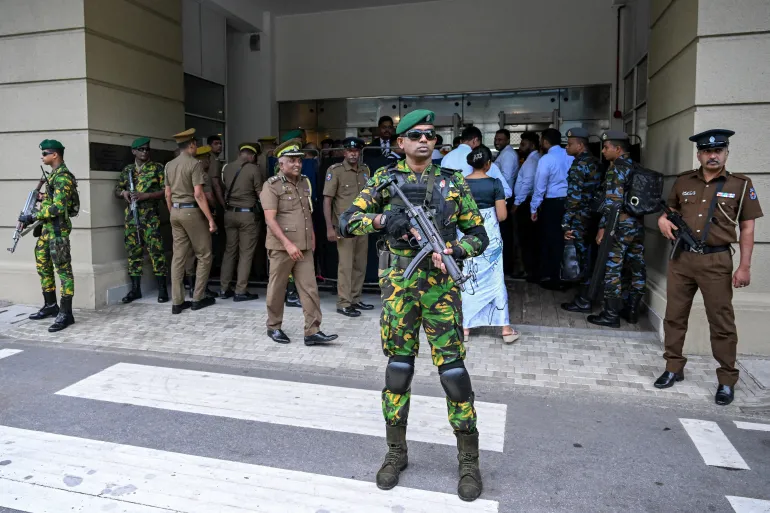
The High Court has convicted 14 of the 24 men accused of being directly involved in the 2019 Easter Sunday bombings, which killed 279 people.
The three-judge bench read out its decision on Tuesday after a five-year trial and said sentencing would take place later, the AFP news agency reported.
The charges included murder and conspiracy to commit terrorism.
Nine others were acquitted, while another defendant was found guilty of only some of the charges, the court said.
[Aljazeera]
By Shamindra Ferdinando
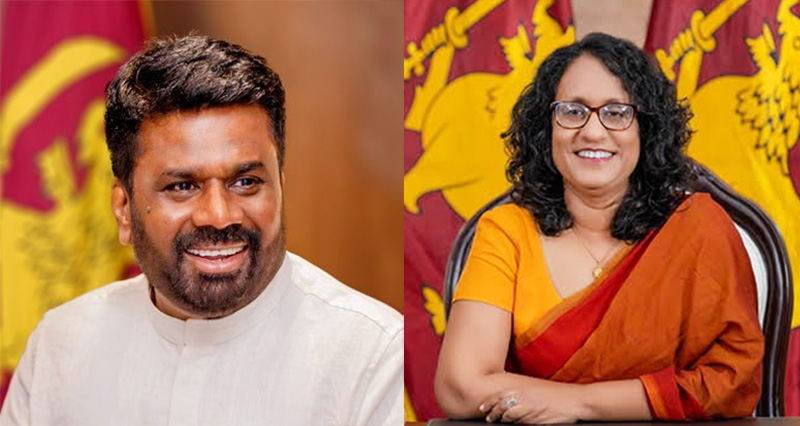
The ruling NPP yesterday (21) dismissed claims of a widening rift, within the government, over the proposed 22nd Amendment. Asked whether the NPP was concerned over a section of the Opposition alleging Prime Minister Dr. Harini Amarasuriya and two dozen MPs taking a view contrary to that of the party in this regard, authoritative party sources said some persons were propagating speculation for their own interest.
Declaring that there was absolutely no issue regarding the controversial Amendment, sources emphasised once it was tabled in Parliament, it would be passed with 2/3 majority.
Sources dismissed claims that out of its 159-member parliamentary group a section of NPPers was opposed to the government move. According to an influential Opposition activist, there are 57 JVPers and 66 NPPers in the government group and the rest contested the last parliamentary polls, having aligned with the JVP.
Ministerial sources told The Island that the government was confident of going ahead with the 22nd Amendment and Judicature (Amendment) Bills. Sources said that the NPP was not bothered about the Opposition protests in and outside Parliament.
Speaker Dr. Jagath Wickremaratne is expected to disclose the confidential ruling that he received from the Supreme Court in respect of more than 65 petitions for and against the 22nd Amendment and Judicial Amendment Bills. The enactment of the 22nd Amendment would pave the way for extending the retirement age of Supreme Court judges, from 65 to 67 years, and Court of Appeal judges, from 63 to 65 years.
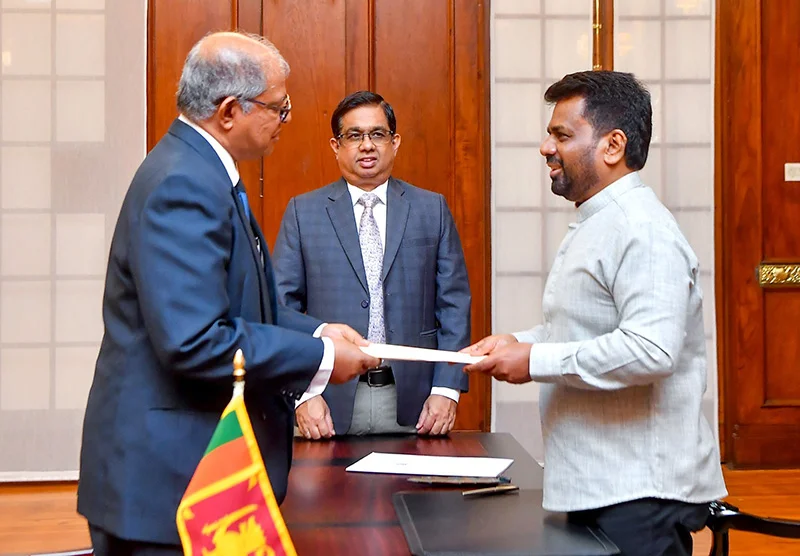
President Anura Kumara Dissanayake has appointed Court of Appeal Judge Mayadunna Sri Mevan Anthony Edirimannasuriya Corea as the Acting President of the Court of Appeal.
The appointment has been made as President’s Counsel Nalin Rohantha Abeysuriya, who currently serves as President of the Court of Appeal, will be overseas until the 24th.
Accordingly Justice Mayadunna Corea was sworn in as Acting President of the Court of Appeal before President Anura Kumara Dissanayake at the Presidential secretariat last morning (21).
Secretary to the President Dr Nandika Sanath Kumanayake was also present at the occasion.

High Court convicts 14 over deadly Easter bombings

Mandhana, Shafali and Ghosh lead dominant India to Asian Games gold

Fatima Sana and Umm-e-Hani secure bronze for Pakistan in Asian Games

India bat first in Asian games womens cricket final

Showers about 100mm will occur in the Western, Sabaragamuwa, Central and North-western provinces and in Galle and Matara Districts

Govt. confident of 2/3 majority despite NPP split speculation

‘Dates have the highest sugar content to fight Coronavirus’

Sunday Island 27 December – Headlines

#SundayIsland 17th December – Headlines

Sunday Island – 28th March

Sunday Island Headlines – 21 March

Sunday Island – 21st February – Headlines
-

 News6 days ago
US embassy won’t comment on IGP’s probe into joint drug raid
-

 News4 days ago
Shanakiyan urges urgent action over reported death sentence for Lankan in Saudi Arabia
-

 News5 days ago
Bid for Basil’s extradition nears final stage: Police
-

 Business6 days ago
All-new Bolero MaXX unveiled in Sri Lanka
-

 News3 days ago
Namal Rajapaksa Buddhist gambit fails, bail denied
-

 Opinion6 days ago
A journalist who wrote across the divide
-

 Editorial7 days ago
More fuel price shocks shrouded in secrecy
-

 Sports7 days ago
MAS Holdings, official clothing sponsor of Sri Lanka team at Aichi–Nagoya 2026 Asian Games