
Features
UNESCO, the Cultural Triangle and some forunate contacts in Paris

Excerpted from volume ii of the
Sarath Amunugama autobiography
UNESCO’s involvement with the Sri Lankan Cultural Triangle project was a milestone in our mutual relationship. It focused attention on the Sinhala cultural heritage, brought substantial funding from UN agencies to our culture sector, hastened the restoration of ancient monuments and conserved the visual heritage of the country.
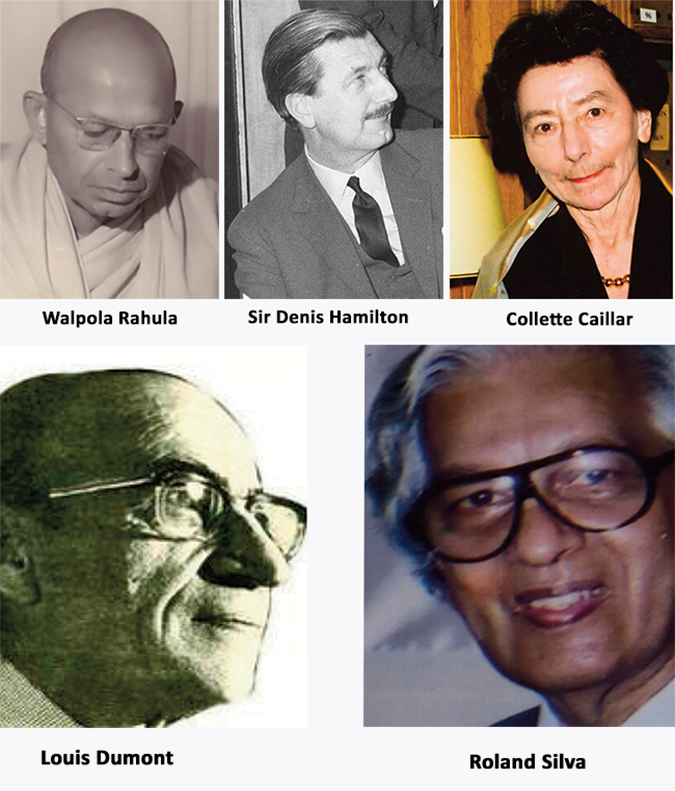
The single most important official in this monumental endeavour was Roland Silva, Commissioner of Archeology and a member of the high level UNESCO committee on cultural conservation. While there was direct UN investment in this project it, also attracted bi-lateral support from countries likeIndia, France and China. This project must be recognized as a singular achievement of the JRJ regime though many tend to overlook it now.
It gave me the opportunity to meet some of the, best international journalists who covered this story when I was the Secretary of the media ministry. The most memorable was my interaction with Sir Denis Hamilton, editor of the London Times and the Chairman of Reuters. Our High Commissioner in London at that time was Noel Wimalasena, a leading Kandy politician and a longtime friend of my father. Wimalasena wrote to me personally stressing the importance of Hamilton’s visit as he was a top class `mandarin’ in the British establishment.
After discussing Wimalasena’s letter with JRJ I decided to personally accompany Denis and his wife Olive on their Sri Lankan tour. Denis Hamilton was a pillar of the British establishment. During the second world war he had served as ADC to General (later, Field Marshall) Montgomery. He was the executor of Monty’s will and the custodian of his papers. Denis was recuperating from a bruising trade union battle with his print workers over changes introduced in the Times which was earlier a hidebound paper of the establishment.
He had to oversee the transfer of its printing works to Canary Wharf on the orders of Rupert Murdoch the owner of the newspaper. It was a bruising battle with the Trade Unions which had sapped his strength. A sackful of the latest literary offerings from London accompanied him on the holiday which began with a week’s relaxation at Bentota Beach hotel. At that time John Keells was the leading hotelier in the country and a tour was arranged through them.
After a week I went to Bentota and with Denis and his wife went on to Kandy. From there we went to Wilpattu circuit bungalow and were lucky to see many leopards. In Wilpattu while sleeping Denis had nightmares about the war and the killings in El Alamein. So we slept late and left for Anuradhapura where the work on the Cultural triangle was to be inaugurated by President JRJ.
It was an impressive ceremony and Denis was also invited to participate, by the UNESCO bigwigs who were overawed by the presence of the Editor of the London Times being on hand to launch the project. We had dinner with JRJ that night. The President after a discussion about his admiration for the Times asked Denis whether he wanted to know anything about the country from him. The answer amused him no end. Denis replied, “No, Sarath has told us everything”.
JRJ laughingly replied, “Surely there must be something more that the President of the country can tell you?” We all laughed and I was amazed at the civility and generosity of all concerned which was a characteristic of their cultured upbringing. It was ti memorable visit by two of the finest and gentlest human being I have ever encountered. On their returning to London I received the following cable; “Back in London and my office first time today. Most grateful thanks to you all from us both for a memorable stay and the friendship formed. Have written to your President and your Minister and looking forward seeing you in the spring; Denis Hamilton”.
When I next went to London they picked me up from my hotel and took me to dinner in the Cafe Royal. It was a wonderful friendship. They are both dead now, Denis from a stomach cancer, but I cherish the memory of them and the happy times we spent together both here and in London. The restoration of the Abhayagiriya or Jetawana dagoba which was inaugurated that day stands as a monument to all those who participated in the Cultural Triangle project which has given new life to our beliefs about the great ancient civilization of Anuradhapura which in its time influenced the whole of Asia and beyond.
It is a solid achievement of the JRJ administration which his successors have not had the imagination to improve upon and publicize to the world. When I was Secretary in charge of tourism I initiated a project with Japanese investors to build a hotel in Anuradhapura for Japanese reli
gious tourists. Land was earmarked for it but after July 1983 there were no takers for this project.
Sorbonne
Both Bhikkus Walpola Rahula and Kosgoda Sobhita had good relations with the Buddhist scholars of the Sorbonne. Among these savants were Andre Bareau and Jean Filliozat who were well renowned scholars of Theravada Buddhism. Most other Buddhist scholars had concerned themselves with Mahayana. This is not surprising since the French colonies in the east [‘Extreme Orient’ in their writings] like Vietnam, Cambodia and Laos were Mahayanistic in religion.
Many of the scholars I associated with in the Sorbonne had spent time in the French colonies as teachers, librarians and archivists. They were Sanskritists since Mahayanist literature was mostly in Sanskrit or in the local languages. The French colonial system encouraged research into archaeology and religion in their outposts.
For instance Andre Malreaux, the celebrated French writer and de Gaulle’s Minister of Culture, lived in China and the French colonies in the ‘Extreme Orient’ and wrote his early novels with an Asian background. Jacques Soustelle, de Gaulle’s first Minister of Information was an archaeologist who wrote the famous book ‘The Voice of Silence’. The Musee Guimet in the Trocadero which displays a fabulous collection of art and sculptures from the Extreme Orient was setup by two French brothers who did business in Cambodia and Vietnam.
One day I was visited in my home by Collette Caillart, the Sanskritist and other scholars from the Extreme Orient Department of the Sorbonne. The French educational bureaucrats had proposed the reduction of funds to their division in order to strengthen Arabic studies for which there was a great demand at that time. My visitors wanted me to intervene with UNESCO and the Sri Lankan government to save their field of study from emasculation.
I did take it up and just like in London University where the Sinhala department was saved, we managed to stave off trouble at least in the short term much to the satisfaction of my friends in academia. While the French University system is generally referred to as being related to the Sorbonne by the general public, in reality after the student riots in the time of de Gaulle it underwent drastic
angel. These reforms which are attributed to de Gaulle’s Prime Minister, and later successor, Georges Pompidou broke up the University of Paris into five successor Universities.
Thus students were attached to one of the five new Universities of Paris. This allowed for the absorption of a larger number of students and teachers who were earlier deprived of a stable engagement and were therefore violence prone. After the Pompidou reforms there have been no student riots for over half a century. Rahula and Sobhita were Sorbonne professors who with UNESCO and the CNRS formed an admired and respected academia on Buddhist studies which made Paris a center of interest in the Western world.
This was a far from the Sinhala Buddhist Vihare which tended to cater to the immediate ritualistic needs of the growing Sinhala expatriate community in Paris, especially their womenfolk and children. It a link in a chain of similar temples in all parts of Western Europe and the US. The monks themselves had established networks which allowed them to travel all over Europe and the US. So for every celebration like Wesak we played host several young monks who went sightseeing in Paris.
They we entertained by their kinsmen from their native villages who we now well settled in Paris. Time and again I was introduced to monks who had come from my friends’ respective villages. Both Rahula and Sobhita gave them a wide berth. One unfortunate aspect was that many of these young monks did not bother to learn western languages or the manner of delivering sermons that their seniors practiced. They were content to function as the did in their villages and often created conflicts in the expatriated community.
Of course this was not true of a few young monks who studied the dhamma and were held in high regard both by their worshippers and the academic community. However the respect that Rahula and Sobhita earned through their erudition has been lost and monks get by with local community services and seeking political patronage from home – a tendency which would have, horrified Walpola Rahula and those Sorbonne savants who did so much to profile Buddhism in Paris as an outstanding philosophic quest. Of late hardly any new works on Theravada has come from France which was once its European epicenter.
Ecole Des Hautes Etudes En Sciences Sociale
Another aspect of the French higher educational system was the establishment of ‘Ecoles’ of Advanced Studies. For the social sciences the most prestigious was the EHESS which was located in Boulevard Raspail. The Director of the EHESS when I enrolled in it for a doctorate in social anthropology was Louis Dumont who was one of the world’s outstanding anthropologists specializing in South Asian society and religion. The only other world class French anthropologist at that time was Claude Levi Strauss who was teaching at the College de France. By a strange coincidence I had become a friend of Louis Dumont even before I came to Paris and the EHESS.
When I was the Director of Information in Sri Lanka in about 1970, Dumont walked into my office in Colombo with a request. He was on an Asian tour on behalf of the fledgling EHESS, to collect fugitive material for its library in Paris. Since I was the officer responsible for the Government Publications Bureau he needed my consent to buy a stock of publications available in the Bureau. Dumont must have got a pleasant shock when I immediately recognized him as one of my academic heroes and quickly arranged to have the books sold to him.
It must have been a busy day for our sleepy Publications Bureau. He was staying at the Samudra Hotel and I invited him for drinks and dinner. We had a pleasant evening discussing academic matters and particularly talking about my teacher Tambiah whose essay on kinship and marriage was used by Dumont in support of his theory of ‘marriage alliances’. We became friends and I would visit him in his small apartment in Rue de Bac in the Latin Quarter when visiting Paris for UNESCO meetings.
He supported my application to register for a doctorate at his ‘Ecole’ and exempted me from some preliminary steps as I had a Master of Arts degree from the University of Regina. He helped me to get around the academic bureaucracy of the EHESS. When I met him last in his apartment he had retired and was getting ready to leave for his country residence away from Paris. Before that he introduced me to his chief disciple Jean-Claude Galay, a brilliant young anthropologist, who was to be my supervisor, together with Eric Meyer, the economic historian whose area of specialization was Sri Lanka.
My three year academic odyssey at the EHESS with its gathering of brilliant Young scholars of South Asia, is an unforgettable and pleasant episode in my life. By this time my family had arrived in Paris and I moved house from north Paris to Rue Jean Daudin in the most fashionable district of Paris which was only a stone’s throw away from my office in Rue Miollis. It saved me hours of travel time to office and EHESS.
My friend Dilip Padgoankar and wife Lotika were going back to India and their flat fell vacant. Dilip – a ‘bon vivant’ who later became the Editor of the Times of India and advisor to the Indian Government on Kashmir, had chosen well. As M’Bow’s media spokesman he was on call all, the time and had to live close to his boss’s office. Thanks to his recommendation I managed to secure that flat. It was spacious,,- enough to accommodate me, my wife and two children, and was close to good restaurants, cinemas and theatres.
Many children of UNESCO staff lived in the vicinity and they all went to the same schools so that the neighborhood was congenial. For instance, Varuni had a friend who was the daughter of a sister of the Shah of Iran who was in exile, living in a mansion close by. Another friend Mohammed Musa was the son of M’Bow’s advisor from Nigeria. Ramanika’s best friend was the daughter of a senior Indian professional in the science sector of UNESCO. All in all it was a stress free life wherein I could easily handle my official duties as well as academic pursuits with ease. From our Metro station Segur, it took me less than ten minutes to get to EHESS on the Boulevard Raspail.



 ‘Adapt, shrink or die’ – thus runs the warning issued by the Trump administration to UN humanitarian agencies with brute insensitivity in the wake of its recent decision to drastically reduce to $2bn its humanitarian aid to the UN system. This is a substantial climb down from the $17bn the US usually provided to the UN for its humanitarian operations.
Considering that the US has hitherto been the UN’s biggest aid provider, it need hardly be said that the US decision would pose a daunting challenge to the UN’s humanitarian operations around the world. This would indeed mean that, among other things, people living in poverty and stifling material hardships, in particularly the Southern hemisphere, could dramatically increase. Coming on top of the US decision to bring to an end USAID operations, the poor of the world could be said to have been left to their devices as a consequence of these morally insensitive policy rethinks of the Trump administration.
Earlier, the UN had warned that it would be compelled to reduce its aid programs in the face of ‘the deepest funding cuts ever.’ In fact the UN is on record as requesting the world for $23bn for its 2026 aid operations.
If this UN appeal happens to go unheeded, the possibilities are that the UN would not be in a position to uphold the status it has hitherto held as the world’s foremost humanitarian aid provider. It would not be incorrect to state that a substantial part of the rationale for the UN’s existence could come in for questioning if its humanitarian identity is thus eroded.
Inherent in these developments is a challenge for those sections of the international community that wish to stand up and be counted as humanists and the ‘Conscience of the World.’ A responsibility is cast on them to not only keep the UN system going but to also ensure its increased efficiency as a humanitarian aid provider to particularly the poorest of the poor.
It is unfortunate that the US is increasingly opting for a position of international isolation. Such a policy position was adopted by it in the decades leading to World War Two and the consequences for the world as a result for this policy posture were most disquieting. For instance, it opened the door to the flourishing of dictatorial regimes in the West, such as that led by Adolph Hitler in Germany, which nearly paved the way for the subjugation of a good part of Europe by the Nazis.
If the US had not intervened militarily in the war on the side of the Allies, the West would have faced the distressing prospect of coming under the sway of the Nazis and as a result earned indefinite political and military repression. By entering World War Two the US helped to ward off these bleak outcomes and indeed helped the major democracies of Western Europe to hold their own and thrive against fascism and dictatorial rule.
Republican administrations in the US in particular have not proved the greatest defenders of democratic rule the world over, but by helping to keep the international power balance in favour of democracy and fundamental human rights they could keep under a tight leash fascism and linked anti-democratic forces even in contemporary times. Russia’s invasion and continued occupation of parts of Ukraine reminds us starkly that the democracy versus fascism battle is far from over.
Right now, the US needs to remain on the side of the rest of the West very firmly, lest fascism enjoys another unfettered lease of life through the absence of countervailing and substantial military and political power.
However, by reducing its financial support for the UN and backing away from sustaining its humanitarian programs the world over the US could be laying the ground work for an aggravation of poverty in the South in particular and its accompaniments, such as, political repression, runaway social discontent and anarchy.
What should not go unnoticed by the US is the fact that peace and social stability in the South and the flourishing of the same conditions in the global North are symbiotically linked, although not so apparent at first blush. For instance, if illegal migration from the South to the US is a major problem for the US today, it is because poor countries are not receiving development assistance from the UN system to the required degree. Such deprivation on the part of the South leads to aggravating social discontent in the latter and consequences such as illegal migratory movements from South to North.
Accordingly, it will be in the North’s best interests to ensure that the South is not deprived of sustained development assistance since the latter is an essential condition for social contentment and stable governance, which factors in turn would guard against the emergence of phenomena such as illegal migration.
Meanwhile, democratic sections of the rest of the world in particular need to consider it a matter of conscience to ensure the sustenance and flourishing of the UN system. To be sure, the UN system is considerably flawed but at present it could be called the most equitable and fair among international development organizations and the most far-flung one. Without it world poverty would have proved unmanageable along with the ills that come along with it.
Dehumanizing poverty is an indictment on humanity. It stands to reason that the world community should rally round the UN and ensure its survival lest the abomination which is poverty flourishes. In this undertaking the world needs to stand united. Ambiguities on this score could be self-defeating for the world community.
For example, all groupings of countries that could demonstrate economic muscle need to figure prominently in this initiative. One such grouping is BRICS. Inasmuch as the US and the West should shrug aside Realpolitik considerations in this enterprise, the same goes for organizations such as BRICS.
The arrival at the above international consensus would be greatly facilitated by stepped up dialogue among states on the continued importance of the UN system. Fresh efforts to speed-up UN reform would prove major catalysts in bringing about these positive changes as well. Also requiring to be shunned is the blind pursuit of narrow national interests.

 Hi! Great to be back after my Christmas break.
Thought of starting this week with egg white.
Yes, eggs are brimming with nutrients beneficial for your overall health and wellness, but did you know that eggs, especially the whites, are excellent for your complexion?
OK, if you have no idea about how to use egg whites for your face, read on.
Egg White, Lemon, Honey:
Separate the yolk from the egg white and add about a teaspoon of freshly squeezed lemon juice and about one and a half teaspoons of organic honey. Whisk all the ingredients together until they are mixed well.
Apply this mixture to your face and allow it to rest for about 15 minutes before cleansing your face with a gentle face wash.
Don’t forget to apply your favourite moisturiser, after using this face mask, to help seal in all the goodness.
Egg White, Avocado:
In a clean mixing bowl, start by mashing the avocado, until it turns into a soft, lump-free paste, and then add the whites of one egg, a teaspoon of yoghurt and mix everything together until it looks like a creamy paste.
Apply this mixture all over your face and neck area, and leave it on for about 20 to 30 minutes before washing it off with cold water and a gentle face wash.
Egg White, Cucumber, Yoghurt:
In a bowl, add one egg white, one teaspoon each of yoghurt, fresh cucumber juice and organic honey. Mix all the ingredients together until it forms a thick paste.
Apply this paste all over your face and neck area and leave it on for at least 20 minutes and then gently rinse off this face mask with lukewarm water and immediately follow it up with a gentle and nourishing moisturiser.
Egg White, Aloe Vera, Castor Oil:
To the egg white, add about a teaspoon each of aloe vera gel and castor oil and then mix all the ingredients together and apply it all over your face and neck area in a thin, even layer.
Leave it on for about 20 minutes and wash it off with a gentle face wash and some cold water. Follow it up with your favourite moisturiser.

 Superlatives galore were used, especially on social media, to highlight R&B singer Ne-Yo’s trip to Sri Lanka: Global superstar Ne-Yo to perform live in Colombo this December; Ne-Yo concert puts Sri Lanka back on the global entertainment map; A global music sensation is coming to Sri Lanka … and there were lots more!
At an official press conference, held at a five-star venue, in Colombo, it was indicated that the gathering marked a defining moment for Sri Lanka’s entertainment industry as international R&B powerhouse and three-time Grammy Award winner Ne-Yo prepares to take the stage in Colombo this December.
What’s more, the occasion was graced by the presence of Sunil Kumara Gamage, Minister of Sports & Youth Affairs of Sri Lanka, and Professor Ruwan Ranasinghe, Deputy Minister of Tourism, alongside distinguished dignitaries, sponsors, and members of the media.
Shah Rukh Khan: Disappointed his fans in Sri Lanka
According to reports, the concert had received the official endorsement of the Sri Lanka Tourism Promotion Bureau, recognising it as a flagship initiative in developing the country’s concert economy by attracting fans, and media, from all over South Asia.
Nick Carter: His concert, too, was cancelled due to “Unforeseen circumstances
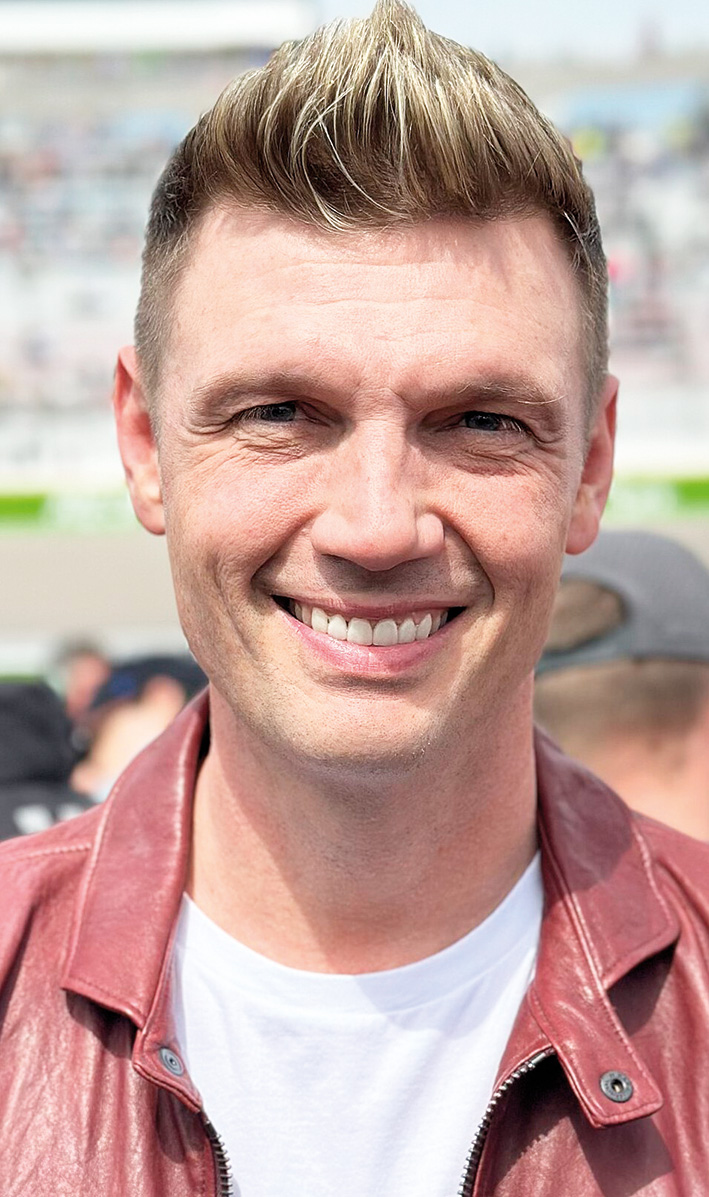
However, I had that strange feeling that this concert would not become a reality, keeping in mind what happened to Nick Carter’s Colombo concert – cancelled at the very last moment.
Carter issued a video message announcing he had to return to the USA due to “unforeseen circumstances” and a “family emergency”.
Though “unforeseen circumstances” was the official reason provided by Carter and the local organisers, there was speculation that low ticket sales may also have been a factor in the cancellation.
Well, “Unforeseen Circumstances” has cropped up again!
In a brief statement, via social media, the organisers of the Ne-Yo concert said the decision was taken due to “unforeseen circumstances and factors beyond their control.”
Ne-Yo, too, subsequently made an announcement, citing “Unforeseen circumstances.”
The public has a right to know what these “unforeseen circumstances” are, and who is to be blamed – the organisers or Ne-Yo!
Ne-Yo’s management certainly need to come out with the truth.
However, those who are aware of some of the happenings in the setup here put it down to poor ticket sales, mentioning that the tickets for the concert, and a meet-and-greet event, were exorbitantly high, considering that Ne-Yo is not a current mega star.
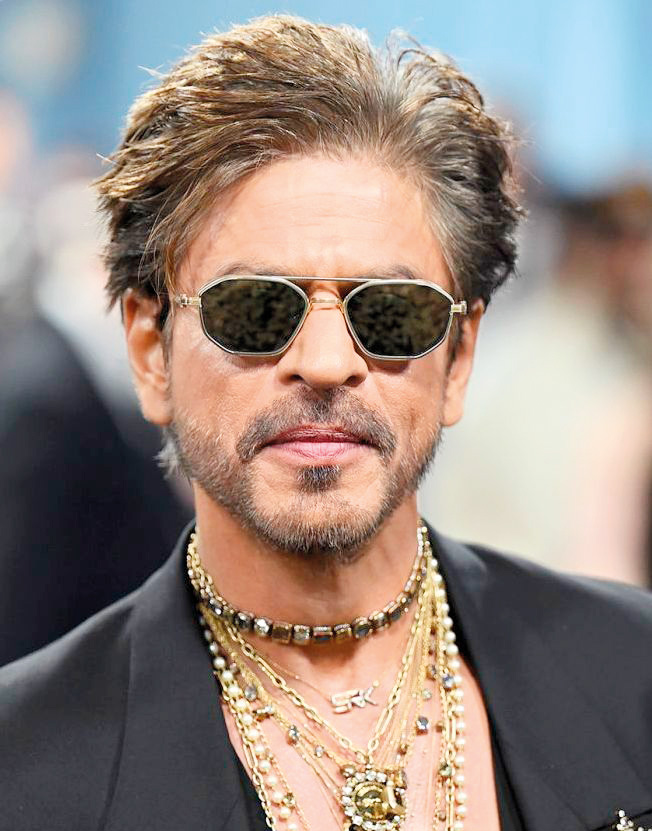
We also had a cancellation coming our way from Shah Rukh Khan, who was scheduled to visit Sri Lanka for the City of Dreams resort launch, and then this was received: “Unfortunately due to unforeseen personal reasons beyond his control, Mr. Khan is no longer able to attend.”
Referring to this kind of mess up, a leading showbiz personality said that it will only make people reluctant to buy their tickets, online.
“Tickets will go mostly at the gate and it will be very bad for the industry,” he added.

Machu Picchu train crash leaves one dead and dozens injured

I invite you to step into 2026 with renewed energy, hope, and determination – PM

Fairly heavy showers about 75 mm are likely at some places in the Central and Uva provinces and in Batticaloa and Ampara districts

National Audit Office reveals NHSL lapses

NPP’s CMC budget passed after four Opp. members switch allegiance

600MW hit to national grid as two Norochcholai units go offline

‘Dates have the highest sugar content to fight Coronavirus’

Sunday Island 27 December – Headlines

#SundayIsland 17th December – Headlines

Sunday Island – 28th March

Sunday Island Headlines – 21 March

Sunday Island – 21st February – Headlines
-
 News6 days ago
Street vendors banned from Kandy City
-

 Sports3 days ago
Gurusinha’s Boxing Day hundred celebrated in Melbourne
-

 News6 days ago
Lankan aircrew fly daring UN Medevac in hostile conditions in Africa
-
 News1 day ago
Leading the Nation’s Connectivity Recovery Amid Unprecedented Challenges
-

 Sports4 days ago
Time to close the Dickwella chapter
-

 Features6 days ago
Rethinking post-disaster urban planning: Lessons from Peradeniya
-

 Features2 days ago
It’s all over for Maxi Rozairo
-

 Opinion6 days ago
Are we reading the sky wrong?