
Business
UNDP, together with partners, brings together immersive insight into the cruel realities of SGBV

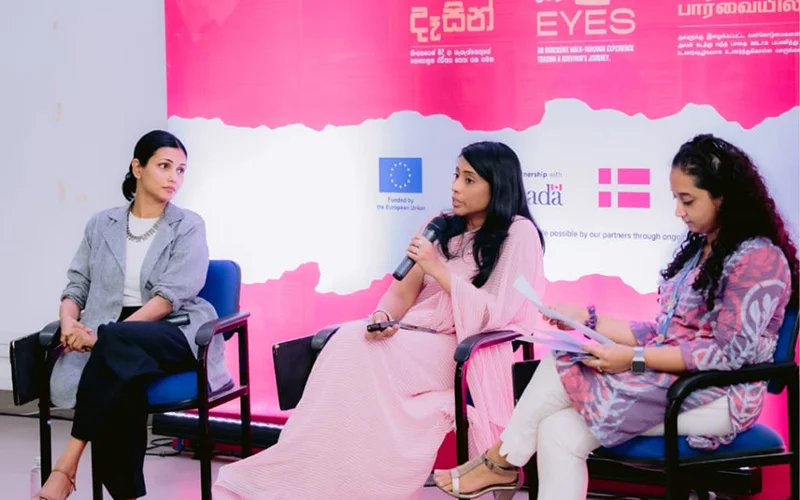
The 16 Days of Activism Against Gender-Based Violence is a global campaign observed annually from 25 November to 10 December, beginning on the International Day for the Elimination of Violence against Women and concluding on Human Rights Day. The campaign aims to raise awareness and inspire collective action to end all forms of violence against women and girls.
This year, in line with this, the United Nations Development Programme (UNDP), together with its key partners through ongoing flagship project initiatives, is taking a unique, never-before-seen approach to advocacy. ‘Through Her Eyes,
wef.aoEiska, அவளின் பார்வையில்’ narrates the heart-wrenching journey of ‘Sara’ in her search for justice through multi-medium storytelling that merges stage theatre, film and creative audio production techniques.
‘Through her eyes’ is in line with three UNDP Sri Lanka projects; Enabling Access to Justice for Victim-Survivors of SGBV in Sri Lanka funded by the Government of Canada and implemented together with UNFPA Sri Lanka; the Support to Justice Sector Project (JURE) funded by the European Union in partnership with the Ministry of Justice, and implemented together with UNICEF Sri Lanka; and the Action and Anticipation for The New Agenda for Peace (AAA) supported through UNDP’s Funding Windows with funding from the Governments of Denmark, Luxembourg and the Republic of Korea.
Commenting on the timeliness of such public activations, Azusa Kubota, Resident Representative, UNDP in Sri Lanka, stated, “As the country recovers from one of its worst natural disasters in its recent history, the focus on gender equality, inclusion, and structural change is more vital than ever. We all know SGBV leaves a deep scar in survivors, those around them and the society they live in. Yet, do we really know what it is like to live through that experience? In a crisis, how do we address root causes of SGBV that get exacerbated? We wanted to mark this year’s 16 days differently – by creating an experience where we, irrespective of our gender, culture, and all other differences, put ourselves in the shoes of those who live through the pain and hardships, and collectively think through ways in which we can tackle persistent challenges confronted by many. Our advocacy efforts aspire towards a nation and world free from SGBV- to achieve gender equality and empower. ‘Through Her eyes’ is a unique experience that is designed to bring this issue in front of a broad demographic audience, by bringing together stakeholders from across the Government, private sector, development partners, youth and CSOs, as we stand together to end SGBV and support Sri Lanka to build back better.”
Sharing the perspective from the Government of Sri Lanka, Minister of Justice Harshana Nanayakkara commented, “Through Her Eyes’ invites us to pause and truly understand the lived realities of survivors. It is a powerful reminder that every survivor who comes forward does so with immense courage. Their pathway to justice must be dignified, safe and free from fear. Ensuring the safety and empowerment of women and girls is not a task that can be achieved in isolation. A holistic approach is vital. Law enforcement, the judiciary, health services, social services, educators, civil society, the private sector and communities must stand together as allies.”
As a key partner, Kiril Iordanov, Head of Cooperation at the High Commission of Canada noted, “Addressing GBV is a shared responsibility. Canada continues to collaborate with partners to design and champion innovative solutions. Our approach is rooted in the belief that promoting gender equality and empowering women and girls has a multiplier effect on development. By placing women and girls at the centre, we contribute to building a more peaceful, inclusive, and prosperous world.”
The Safe Space of this immersive production also highlights the support and work being carried out by the projects, to support better access for justice for victim-survivors of SGBV, capacity building for relevant public sector institutions, media ethics when reporting SGBV and the promotion of male allyship and bystander intervention as a mechanism to eradicate SGBV in Sri Lanka.
Highlighting the priorities of the European Union, Carmen Moreno, Ambassador of the European Union to Sri Lanka and the Maldives, commented, “Gender-based violence endures when access to justice is made difficult by fear, stigma or indifference. This exhibition invites us to understand the experience through the eyes of the victim, and it forces us to question—and dismantle—the barriers that allow violence to continue without consequences. Justice systems Justice systems must act with determination in confronting this problem, but they cannot do so in isolation. Real change requires a society that supports women, recognises the realities of gender-based violence, and refuses to look away.”
In light of the current situation of the country, the event also hosted an interactive dialogue on the theme ‘Delivering Economic Independence for Survivors of Sexual and Gender-based Violence during Crises’ on the sidelines of the event. With participation from key individuals, including the Government, development partners, private sector leaders, civil society organisations and youth groups, the dialogue looked at key areas of Gender-responsive and intersectional crisis planning; protection, safety, and justice built into disaster preparedness and humanitarian response; safeguarding shelter design, ensuring access to health and reproductive services, psychosocial support, and safe reporting mechanisms.
The campaign aims to raise awareness and inspire collective action to end all forms of violence against women and girls. It calls on governments, organisations, and individuals to challenge harmful gender norms, support survivors, and demand accountability from perpetrators.
‘Through Her Eyes, wef.aoEiska, அவளின் பார்வையில்’ is open to the public from the 2nd to 7th of December from 10 AM to 7 PM at the Sri Lanka Foundation Institute.
To know more and engage in the immersive experience: https://go.undp.org/through-her-eyes



The Asian Development Bank (ADB) has approved a $100 million results-based loan to help Sri Lanka transform its technical and vocational education and training (TVET) system, equip more young people with industry-relevant skills, and strengthen the country’s competitiveness and inclusive growth.
The Skills Development System Transformation Program will support the Government of Sri Lanka’s efforts in improving the quality and relevance of skills training, strengthening links between training providers and industries, and expanding employment opportunities for youth. The program will increase women’s employment opportunities in nontraditional jobs in fields including automotive technology, engineering, information and communications technology, construction, and renewable energy.
“A skilled workforce is essential to Sri Lanka’s long-term economic transformation and competitiveness,” said ADB Country Director for Sri Lanka Shannon Cowlin. “This program will help create stronger pathways from education to employment by making training more responsive to industry needs, expanding opportunities for young people and women, and ensuring that graduates have the skills required by a modern and evolving economy.”
Though Sri Lanka’s economy is recovering, it faces skills shortages in priority sectors, high youth unemployment, and low female labor force participation. Many employers report difficulty finding workers with the skills needed in a changing economy.
Aligned with the Government of Sri Lanka’s Technical and Vocational Education and Training Sector Strategic Framework 2026–2035, the nationwide program will be implemented from 2027 to 2031 and is expected to directly benefit more than 100,000 young people through improved access to quality, employment-oriented training.
By Ifham Nizam
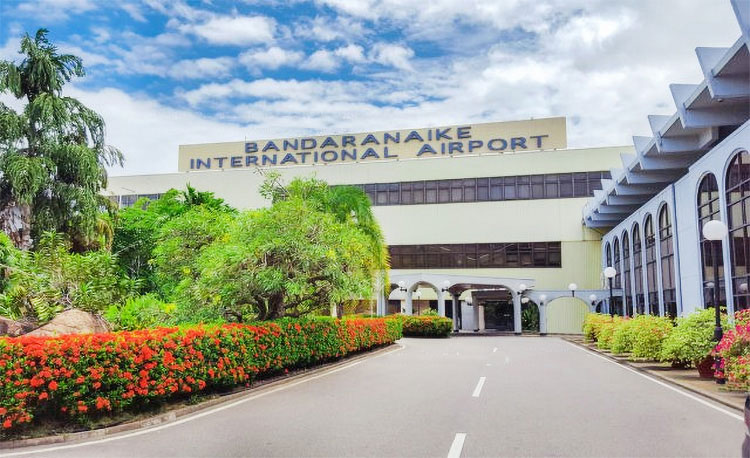
The government has cleared a USD 40.84 million and Rs. 8,548.75 million contract to build a dedicated aviation fuel pipeline from Muthurajawela to Bandaranaike International Airport (BIA), alongside a massive new fuel storage facility with a capacity of 92,000 cubic metres.
Energy Minister Anura Karunatilaka said the project represented a major investment in strengthening the infrastructure underpinning Sri Lanka’s aviation fuel supply and ensuring more reliable fuel availability at the country’s main international airport.
‘This project will provide the infrastructure required to strengthen the reliability and continuity of aviation fuel supplies to Bandaranaike International Airport, Karunatilaka said.
The contract has been awarded to China Petroleum Pipeline Engineering Company Limited, following an international competitive procurement process in which three bids were received.
The project will see a new aviation fuel storage tank complex constructed at Muthurajawela, together with the associated infrastructure required for handling and transferring aviation fuel.

By Hiran H Senewiratne
Trading activity on the Colombo Stock Exchange (CSE) gathered pace yesterday as global fuel prices began to show signs of easing, according to market analysts.In this context, both indices moved upwards. All Share Price Index up by 67.97 points while S and P SL20 up by 8.30 points.
Turnover stood at Rs 1.4 billion with seven crossings. Those crossings were reported in Sampath Bank 1.7 million shares crossed to the tune of Rs 238 million and its share price traded at Rs 140, Access Engineering two million shares crossed to the tune of Rs 159 million and its share price traded at Rs 79.50, LOLC one million shares crossed to the tune of Rs 129 million and its share price traded at Rs 129, HNB 100,000 shares crossed to the tune of Rs 38.4 million and its share price traded at Rs 384, JKH 1.9 million shares crossed to the tune of Rs 35 million and its share price traded at Rs 18.60, Hayleys 100,000 shares crossed to the tune of Rs 22.50 million and its share price traded at Rs 225 and Richard Pieris 847,000 shares crossed to the tune of Rs 22 million and its share price traded at Rs 25.50.
In the retail market top seven companies that have mainly contributed to the turnover were Sampath Bank Rs 114 million (813,000 shares traded), JKH Rs 100 million (5.3 million shares traded) LB Finance Rs 49 million (325,000 shares traded), HNB Finance Rs 30 million (27 million shares traded), HNB Rs 27 million (70000 shares traded), NTB Rs 25 million (82000 shares traded ) and Lanka IOC Rs 21 million (666,000 shares traded). During the day 65 million shares volumes changed hands in 10433 transactions.
The Banking and manufacturing sector counters performed well. In the banking sector Sampath Bank let the market while manufacturing sector especially JKH also significantly performed well. With the fuel revision Land IOC also a significant stock at the floor.
Meanwhile, First Capital Treasuries said that Ramesh Schaffter resigned as a Non-Independent Non-Executive Director with effect from October 1, to facilitate the restructuring of the company’s board.
Yesterday the Central Bank announced the US Dollar rate as against rupee. The rupee was quoted flat at Rs 330.65/80 to the US dollar in the spot market , while bond yields dropped, dealers said.

Showers or thundershowers will occur in most parts of the island after 1.00 p.m.

Unions resist tripartite EPF management plan

Two arrest warrants issued for Gnanasara thera

CA dismisses GR’s writ petition against arrest

ADB-backed virtual net metering project faces policy contradiction

Media action group flays NPP over new anti-terrorism law

‘Dates have the highest sugar content to fight Coronavirus’

Sunday Island 27 December – Headlines

#SundayIsland 17th December – Headlines

Sunday Island – 28th March

Sunday Island Headlines – 21 March

Sunday Island – 21st February – Headlines
-

 Editorial6 days ago
Birth of a bad law
-

 News4 days ago
Police remove Thileepan statue in Jaffna
-

 News6 days ago
TIN mandatory for key transactions from Nov. 1
-

 Features4 days ago
The 22nd Amendment, constitutional recovery and illiberal slippage
-

 Features4 days ago
Of foreigners as CEOs of Lankan ventures
-

 News4 days ago
Sajith rejects Jt. Opp. protest sabotage claim; SJB TU chief demands remedial action
-

 Latest News2 days ago
Gold winner Tharanga gets brand-new Honda Vezel from SLAAJ
-

 Features3 days ago
Thailand’s biggest new global star …