
News
Understanding listed sustainability bonds and how Bank of Ceylon positions itself for a changing capital market


Sustainability is reshaping global finance, tremendously. Over the past, sustainable bonds have become a defining feature of responsible investment, bridging the gap between capital markets and long-term environmental and social goals. Now, as Sri Lanka prepares to deepen its green finance ecosystem, the conversation around sustainable debt instruments is moving from policy to practice.
Unlike traditional bonds that raise funds for general corporate or government purposes, sustainable bonds are designed to channel capital toward projects that deliver measurable positive social or environmental benefits. Green, social, and sustainability bonds fall within this rapidly expanding asset class, guided by frameworks such as the International Capital Market Association (ICMA) Sustainability Guidelines and aligned with the United Nations Sustainable Development Goals (UN SDGs). Globally, such issuances surpassed US$ 1.1 trillion in cumulative value by 2024, according to the World Bank, and this indicates investor appetite for instruments that merge profit with purpose.
In essence, a sustainable bond allows issuers to raise funds for new and existing projects that advance both environmental and social outcomes, from green projects in sectors such as renewable energy, energy-efficient construction, waste management and clean transportation to financial inclusion, women empowerment, MSME development, and access to essential services such as healthcare, and education. Green bonds, social bonds and sustainability bonds constitute the three main sustainable bond types where green and social bonds aim to raise capital to fund projects with environmental or social benefits respectively, while sustainability bonds finance projects with both positive social and environmental outcomes. What differentiates these instruments from standard corporate or government bonds is their strict requirement for transparency, use-of-proceeds monitoring, and impact reporting. Investors are purchasing returns and also accountability, often verified by independent evaluators.
In Sri Lanka, the regulatory sector is gradually aligning with these international norms. With the approval of the Securities and Exchange Commission of Sri Lanka (SEC), the Colombo Stock Exchange (CSE) introduced frameworks to facilitate green and sustainable finance, building on the Sustainable Finance Roadmap developed by the Central Bank of Sri Lanka (CBSL) in collaboration with the International Finance Corporation (IFC) in 2019. That roadmap called on financial institutions to integrate environmental, social, and governance (ESG) considerations into credit and investment decisions while encouraging the creation of sustainable financial products.
Recognising the crucial role of finance in addressing environmental and social challenges, CSE introduced the ‘GSS+ Bonds’ Regulatory Framework in March 2025 to facilitate listing of green, social, sustainability and other related bond types. This initiative, developed in collaboration with the Asian Development Bank and the SEC, modernizes the previous listing rules, replacing the term “Sustainability Bonds” with an inclusive “GSS+ Bonds” category.
Today, the country’s capital market is better prepared than ever to host such instruments. The CSE’s debt securities board has seen growing investor interest in listed debentures, with several issuances in recent years attracting strong oversubscription. Although most have been conventional or Basel III-compliant debt instruments, the momentum hints at a wider shift. As ESG principles gain traction among institutional and high-net-worth investors, the market is beginning to recognize sustainable bonds as both a credible and necessary evolution.
In fact, recent debt IPOs on the CSE have shown that investors are increasingly seeking more than yield. They are seeking alignment with values. The oversubscription of multiple corporate bond issuances in the recent past, despite economic uncertainty, reflected a steady rebound in investor confidence. Analysts note that the next frontier for the domestic bond market will be sustainability-themed instruments, which can attract international participation and diversify Sri Lanka’s funding base while supporting the country’s environmental and social commitments.
Against this backdrop, Bank of Ceylon (BOC) has been strengthening the foundations for what could become a transformative chapter in its history. The Bank’s approach to sustainability is not limited to philanthropy or compliance. It is built on a structured 3P framework, People, Planet, and Profit, which guides every aspect of its strategic and operational decision-making.
Sustainability is the cornerstone of long-term resilience and national value creation of BOC. The Bank’s efforts include a comprehensive Environmental and Social Management System (ESMS) that screens lending activities for environmental and social impacts, ensuring compliance with the National Environmental Act No. 47 of 1980 and other local regulations. BOC has also aligned its strategy with the UN Sustainable Development Goals (SDGs), committing to embed ESG principles across its value chain.
This commitment is evident in tangible results, showcased in the Bank’s recognition by the Green Building Council of Sri Lanka, which presented BOC with the Green Business Leadership Award 2024 and the Green Commitment Excellence Award 2024 for its sustainable practices and environmental stewardship. The Bank’s own operational footprint is under transformation as well and it continues to pursue its target of becoming a carbon-neutral entity.
At the governance level, the Board of Directors provides oversight through a dedicated Sustainability Committee, ensuring that sustainability considerations are integrated into policy and performance targets. This structure allows the Bank to balance its commercial goals with its social and environmental mandate, an alignment increasingly demanded by regulators, investors, and international partners alike.
To meet the next stage of market evolution, BOC’s Investment Banking Division has been positioned as a bridge between the Bank’s core banking operations and the capital market. It liaises with the Bank’s sustainability division, lending divisions that serve corporate clients and retail segments and the ESMS unit to deliver customized financial solutions that align with emerging ESG standards. Leveraging its longstanding relationships and institutional credibility, the division is prepared to facilitate new types of financial instruments, linking purpose-driven investors with meaningful domestic projects.
The potential for sustainability bonds in Sri Lanka also aligns with national economic priorities. As the country rebuilds confidence after a challenging economic cycle, sustainable finance offers a pathway to attract concessional capital, strengthen fiscal discipline, and support green growth. The Central Bank’s Sustainable Finance Roadmap 2025 highlights the need for innovative financing to achieve low-carbon and inclusive development, while the Ministry of Finance’s ongoing work on a national climate finance strategy is expected to facilitate the financing of sustainable development initiatives and building resilience to climate challenges in the country.
For issuers, these developments create both opportunity and responsibility. The transparency requirements for sustainability bonds mean that borrowers must demonstrate measurable outcomes and continuous reporting. For institutions like Bank of Ceylon, which already operates under strong governance and disclosure practices, this regulatory rigor aligns well with existing frameworks. Its planned ESG Road Map, set to achieve compliance with IFRS S1 and S2 sustainability standards by 2025, portrays its readiness for the level of accountability that sustainable finance demands.
The emergence of sustainability bonds therefore represents a deeper evolution in how finance is understood and practiced. It challenges institutions to look beyond quarterly returns and toward the social contract embedded in their role as capital intermediaries. For Bank of Ceylon, this evolution is a natural extension of its national mission and decades-long legacy as Sri Lanka’s leading state-owned commercial bank.
As sustainable investments expand globally, the question is not whether Sri Lanka will follow, but how effectively it can position itself within this shift. The regulatory groundwork is being laid, investor sentiment is turning, and financial institutions are aligning their strategies with new expectations. In that sense, BOC’s steady build-up of sustainability frameworks, reinforced by external assurance and a strong internal audit function, together with its integrated investment banking capability, are precursors to what could become a landmark move in Sri Lanka’s financial market.
Bank of Ceylon’s enduring strength, security, and stability as the Banker to the Nation remain unmatched, with total assets exceeding Rs. five trillion. The Bank’s Investment Banking Division offers a comprehensive suite of services that extend beyond traditional banking, including financial advisory for listed and unlisted debt issues such as debentures, perpetual bonds, green, social, and sustainability bonds, as well as securitizations, corporate restructuring, and private equity transactions.
Over the years, the Investment Banking Division has raised more than Rs. 100 billion through listed and unlisted debt instruments for the Bank. In 2024, it successfully raised Rs. 15 billion through a Basel III debenture issue and is now preparing to offer sustainability bonds, reinforcing its commitment to sustainable financing. The Bank has also received in-principle approval from the Securities and Exchange Commission of Sri Lanka (SEC) to function as a Corporate Finance Advisor. The Division also provides underwriting services for initial public offerings (IPOs) and supports financing for large infrastructure and development projects.
Bank of Ceylon is a Professional Clearing Member of the Colombo Stock Exchange (CSE) and provides trustee and custodian services for unit trust funds and corporate clients, with funds exceeding Rs. 500 billion.
In addition, the Division operates a dedicated business unit for wealth management clients under the SEC’s Investment Manager license.
For more information:
Investment Banking: Chandima – 011 244 8348 / 076 781 3312
Wealth Management: Roshini – 011 244 0081 / 074 275 4931

News
Steps are taken to accelerate the recovery efforts following Cyclone Ditwah despite Global Economic Challenges


A discussion on accelerating recovery measures and providing relief to those affected by the Cyclone Ditwah was held on March 28 at Temple Trees, with the participation of Prime Minister Dr. Harini Amarasuriya and civil society organizations.
During the meeting, a brief report on the current status of government measures including compensation payments through District Secretariats and information related to safety camps was presented to the Prime Minister by the Chief of Staff to the President and Commissioner General of Essential Services, Prabath Chandrakeerthi.
Special attention was given to the concerns of the estate sector Estate sector Malaiyaha Tamil community affected by the cyclone, particularly those without legal land ownership, in accessing government relief and compensation. Attention was also drawn to the need for a policy decision in coordination with the Ministry of Plantation and Community Infrastructure regarding this matter.
It was further stated by the Secretary to the Ministry of Housing, Construction and Water Supply, Engineer L. Kumudu Lal Bogahawatta , that plans have been made to accelerate the recovery process related to damages caused by the disaster in 2025. These include the construction of 20,000 new houses, the renovation of 115,000 partially damaged houses, and the provision of financial assistance amounting to Rs. 5 million for individuals who already possess safe land to build a house. Additionally, there are plans to construct apartment complexes with public facilities in major urban areas.
Officials further emphasized that the physical, psychological, and social well-being of affected communities especially women, children, and persons with special needs will continue to assess through civil society organizations, special committees, and sub-committees.
The Prime Minister emphasized that the efforts to rebuild damaged housing have focused on constructing homes in locations that are more suitable and equipped with urban public facilities over the past four months, stressing the importance of maintaining continuous communication with communities and ensuring that reconstruction takes place in safer locations that are less vulnerable to future disasters.
The discussion was attended by Secretary to the Prime Minister Pradeep Saputhanthri, Chief of Staff to the President and Commissioner General of Essential Services Prabath Chandrakeerthi, Secretary to the Ministry of Housing, Construction and Water Supply Engineer L. Kumudu Lal Bogahawatta, Additional Secretary to the Ministry of Defence K.C. Dharmathilaka, and representatives from civil society organizations.
[Prime Minister’s Media Division]

Parliament yesterday (30) said the use of inferior quality coal at Norochcholai Lak Vijaya coal-fired power plant caused environmental pollution.
The Opposition has accused the Energy Ministry of importing low quality coal and the CEB has directly blamed the developing crisis in coal imported from South Africa.
The Parliament is scheduled to debate a no-confidence motion moved by SJB-led Opposition against Energy Minister Kumara Jayakody on 10 April.
The Sectoral Oversight Committee on Environment, Agriculture and Resource Sustainability has instructed officials to immediately prepare a plan for the environmentally friendly disposal of ash emitted from the Norochcholai Lak Vijaya Power Plant.
These instructions were given at a recent meeting of the Committee held in Parliament, under the Chairmanship of Member of Parliament Hector Appuhamy.
It was revealed during the meeting that due to issues related to the quality of coal imported to Sri Lanka for power generation, the volume of ash emitted during electricity generation had increased significantly. Officials were directed to formulate a plan under the leadership of the District Secretary of the Puttalam District, to take the necessary measures.
It was also proposed that the possibility of reusing the coal ash for production purposes be studied, and that any revenue generated from such products be utilised for welfare projects benefiting the communities affected by the power plant.
In addition, the Committee instructed the Central Environmental Authority to submit a comprehensive report on whether water and air pollution have occurred as a result of the Norochcholai Power Plant. Furthermore, the North Western Provincial Environmental Authority was also instructed to provide responses within two weeks regarding the questionnaire and related matters submitted by the Committee in connection with the Norochcholai Power Plant.
Officials of the North Western Provincial Environmental Authority stated that although the volume of ash emitted from the plant had increased, the filtration system in use at the plant was sufficient to absorb it. Several matters, including the issuance of environmental protection licenses for the power plant, were discussed at the committee meeting.
By Ifham Nizam
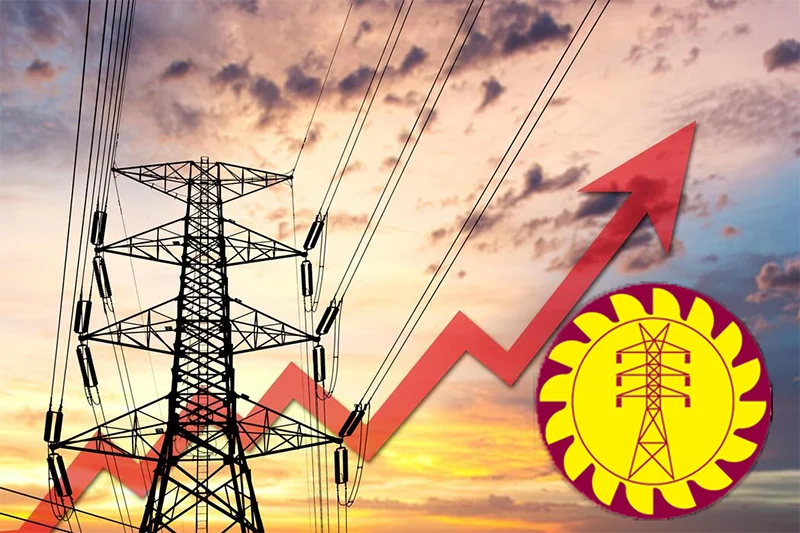
Electricity consumers will face a fresh financial jolt from 01 April, with the Public Utilities Commission of Sri Lanka (PUCSL) approving a countrywide tariff increase that will push up monthly bills across all consumption categories, with the heaviest burden falling on high-end users.
The decision follows a proposal by the Ceylon Electricity Board (CEB), which sought a 13.56 percent upward revision for the second quarter of the year, citing mounting operational costs and financial pressures within the power sector.
Under the new tariff structure, even the lowest-income households will not be spared, though the increases at the bottom tiers remain relatively modest. Consumers using between 0–30 units will see a 4.3 percent rise, adding approximately Rs. 15 to their monthly bill. Those in the 31–60 unit bracket will experience a 6.9 percent increase, translating to an additional Rs. 45.
For middle-tier users, the impact becomes more pronounced. Households consuming 61–90 units will pay around Rs. 120 more per month, following a 6.9 percent hike, while those in the 91–120 unit range will face a sharper increase of 7.1 percent, pushing their monthly costs up by about Rs. 420.
However, the steepest escalation is reserved for heavy electricity users. Consumers exceeding 180 units will be hit with a staggering 25 percent increase — the highest adjustment under the latest revision — raising serious concerns over affordability, particularly for urban households and small businesses already grappling with rising living costs.
Energy sector analysts warn that the latest revision signals deeper structural issues within the power sector, including reliance on costly thermal generation, currency pressures, and inefficiencies in energy procurement.
“The burden is gradually shifting toward consumers as the sector struggles to maintain financial stability,” a senior power sector analyst said, noting that repeated tariff adjustments could further strain public tolerance.
The PUCSL maintained that the revision was necessary to ensure the sustainability of electricity supply and to prevent a recurrence of crises that previously led to widespread outages and load shedding. The regulator has also indicated that cost-reflective pricing remains a key policy direction, particularly as global energy markets remain volatile.
The move comes at a time when many households are still adjusting to broader economic pressures, including high food prices and transport costs, raising fears that the tariff hike could have a cascading effect on the cost of living.
Small and medium enterprises, already operating on thin margins, are also expected to feel the pinch, with higher electricity costs likely to feed into production expenses and retail prices.
Despite the increases, questions remain over whether the tariff revision alone will be sufficient to stabilise the financially strained power sector, or if further adjustments — or reforms — may be inevitable in the months ahead.
With electricity demand steadily rising and generation costs remaining unpredictable, consumers now brace for yet another phase of higher utility bills, underscoring the fragile balance between energy security and economic resilience.

Steps are taken to accelerate the recovery efforts following Cyclone Ditwah despite Global Economic Challenges

Qalandars fine Afridi for violating security protocols

Sooryavanshi, Archer, Burger demolish Chennai Super Kings

Showers may occur at a few places in the Western and Sabaragamuwa provinces and in Galle and Matara districts after 2.00 pm

Burning of low-grade coal at N’cholai plant increases pollution: Parliament

Tariff shock from 01 April as power costs climb across the board

‘Dates have the highest sugar content to fight Coronavirus’

Sunday Island 27 December – Headlines

#SundayIsland 17th December – Headlines

Sunday Island – 28th March

Sunday Island Headlines – 21 March

Sunday Island – 21st February – Headlines
-

 News6 days ago
Senior citizens above 70 years to receive March allowances on Thursday (26)
-

 Features3 days ago
A World Order in Crisis: War, Power, and Resistance
-

 News4 days ago
Energy Minister indicted on corruption charges ahead of no-faith motion against him
-

 News5 days ago
US dodges question on AKD’s claim SL denied permission for military aircraft to land
-

 Business5 days ago
Dialog Unveils Dialog Play Mini with Netflix and Apple TV
-

 News6 days ago
CEB Engineers warn public to be prepared for power cuts after New Year
-

 Sports4 days ago
SLC to hold EGM in April
-
 Latest News5 days ago
A strong Technical and Vocational Education and Training (TVET) system equips individuals with practical, relevant, and future-oriented skills helping to innovate responsibly towards a greener and sustainable future – PM