
News
UK visa applications for some nations, including Lanka, could be restricted: Report


Visa applications from nationalities, thought most likely to overstay and claim asylum in the UK, could be restricted under a new government crackdown, BBC said yesterday.
Under Home Office plans, first reported in the London Times, people from countries such as Pakistan, Nigeria and Sri Lanka may find it more difficult to come to the UK to work and study.
Ministers believe there is a particular problem with those who come to the UK legally on work or study visas and then lodge a claim for asylum – which if granted, would allow them to stay in the country permanently.
A Home Office spokesperson said: “Our upcoming Immigration White Paper will set out a comprehensive plan to restore order to our broken immigration system.”
It is not clear which nationalities are most likely to overstay their visas as the Home Office has not published statistics on exit checks for people on visas since 2020, due to a review into the accuracy of the figures.
Many exits from the UK can go unrecorded, meaning those without a departure record were not necessarily still in the country.
Prof. Jonathan Portes, a senior fellow at the academic think tank UK in a Changing Europe, said the impact that restricting visas would have on the number of asylum applications was “likely to be quite small”.
“I think the impact here is not designed primarily to be about numbers overall, it’s designed to be about reducing asylum claims which are perceived to be abusive,” he told BBC Radio 4’s Today programme.
“When you have someone who comes here ostensibly as a student and then switches quickly to the asylum route… that is an abuse of the system – the government is trying to reduce that.”
Latest Home Office figures show that more than 108,000 people claimed asylum in the UK last year – the highest level since records began in 1979.
In total, 10,542 Pakistani nationals claimed asylum – the most of any nationality. Some 2,862 Sri Lankan nationals and 2,841 Nigerian nationals claimed asylum in the same period.
Latest figures for 2023/24 also show there were 732,285 international students in the UK, with most coming from India (107,480) and China (98,400).
The number of UK work and study visas dropped in 2024, compared to the year before.
Since becoming Prime Minister last year, Sir Keir Starmer has promised to reduce both illegal and legal migration – but has previously declined to offer a net migration target, saying an “arbitrary cap” has had no impact in the past.
Labour’s plans to reduce migration include making it a criminal offence to endanger the lives of others at sea, to target small boat crossings, and cutting demand for overseas hires by developing training plans for sectors that are currently reliant on migrant workers.
Sir Keir has criticised the previous Conservative government, saying it failed to deliver lower net migration numbers “by design, not accident”.
Net migration – the number of people coming to the UK, minus the number leaving – hit a record 906,000 in the year to June 2023, and then fell to 728,000 in the year to June 2024.
New rules introduced by former Prime Minister Rishi Sunak in a bid to reduce migration levels appear to have contributed to the fall.
The previous Conservative government increased the minimum salary for skilled overseas workers wanting to come to the UK from £26,200 to £38,700 and banned care workers from bringing family dependents to the UK.
Labour was already under pressure to make changes to the immigration system – but that pressure may have grown after Reform UK’s successes in last week’s local elections.
Reform won 677 of around 1,600 seats contested on Thursday across a clutch of mainly Tory-held councils last contested in 2021.
In its general election manifesto, Reform said it would implement a freeze on non-essential immigration. Those with certain skills – for example in healthcare – would still be allowed to come to the UK.
Reacting to the results last week, Sir Keir said he shared the “sharp edge of fury” felt by voters leaning away from the major parties, arguing that it would spur him on to “go further and faster” in delivering Labour’s promised changes to immigration and public services.
Enver Solomon, Chief Executive of the Refugee Council, said that “some people on work or study visas may find their lives at risk because the political situation in their home country has changed”, adding that it was right they were “protected from harm and given a fair hearing in the asylum system”.
Plans to tackle overstaying were already being worked on before the local elections.
Full details of the government’s plans are due to be published in a new immigration white paper later in May.
A Home Office spokesperson said: “To tackle abuse by foreign nationals who arrive on work and study visas and go on to claim asylum, we are building intelligence on the profile of these individuals to identify them earlier and faster.
“We keep the visa system under constant review and will where we detect trends, which may undermine our immigration rules, we will not hesitate to take action.
“Under our plan for change, our upcoming Immigration White Paper will set out a comprehensive plan to restore order to our broken immigration system.”

News
Steps are taken to accelerate the recovery efforts following Cyclone Ditwah despite Global Economic Challenges

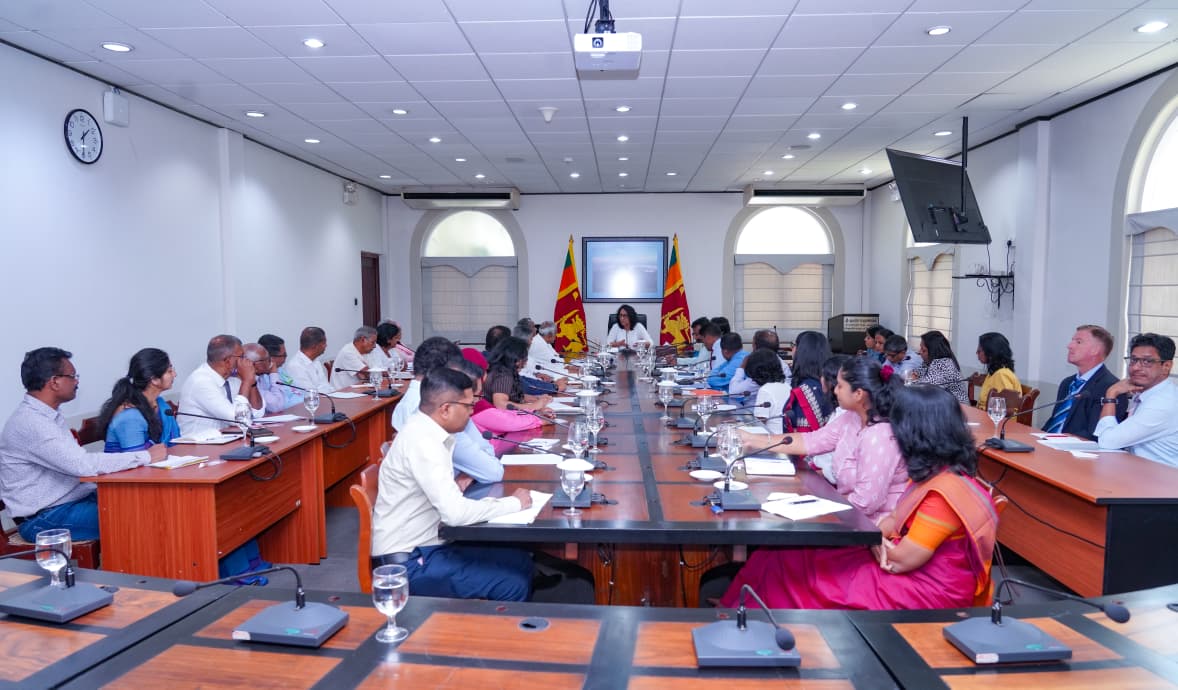
A discussion on accelerating recovery measures and providing relief to those affected by the Cyclone Ditwah was held on March 28 at Temple Trees, with the participation of Prime Minister Dr. Harini Amarasuriya and civil society organizations.
During the meeting, a brief report on the current status of government measures including compensation payments through District Secretariats and information related to safety camps was presented to the Prime Minister by the Chief of Staff to the President and Commissioner General of Essential Services, Prabath Chandrakeerthi.
Special attention was given to the concerns of the estate sector Estate sector Malaiyaha Tamil community affected by the cyclone, particularly those without legal land ownership, in accessing government relief and compensation. Attention was also drawn to the need for a policy decision in coordination with the Ministry of Plantation and Community Infrastructure regarding this matter.
It was further stated by the Secretary to the Ministry of Housing, Construction and Water Supply, Engineer L. Kumudu Lal Bogahawatta , that plans have been made to accelerate the recovery process related to damages caused by the disaster in 2025. These include the construction of 20,000 new houses, the renovation of 115,000 partially damaged houses, and the provision of financial assistance amounting to Rs. 5 million for individuals who already possess safe land to build a house. Additionally, there are plans to construct apartment complexes with public facilities in major urban areas.
Officials further emphasized that the physical, psychological, and social well-being of affected communities especially women, children, and persons with special needs will continue to assess through civil society organizations, special committees, and sub-committees.
The Prime Minister emphasized that the efforts to rebuild damaged housing have focused on constructing homes in locations that are more suitable and equipped with urban public facilities over the past four months, stressing the importance of maintaining continuous communication with communities and ensuring that reconstruction takes place in safer locations that are less vulnerable to future disasters.
The discussion was attended by Secretary to the Prime Minister Pradeep Saputhanthri, Chief of Staff to the President and Commissioner General of Essential Services Prabath Chandrakeerthi, Secretary to the Ministry of Housing, Construction and Water Supply Engineer L. Kumudu Lal Bogahawatta, Additional Secretary to the Ministry of Defence K.C. Dharmathilaka, and representatives from civil society organizations.
[Prime Minister’s Media Division]

Parliament yesterday (30) said the use of inferior quality coal at Norochcholai Lak Vijaya coal-fired power plant caused environmental pollution.
The Opposition has accused the Energy Ministry of importing low quality coal and the CEB has directly blamed the developing crisis in coal imported from South Africa.
The Parliament is scheduled to debate a no-confidence motion moved by SJB-led Opposition against Energy Minister Kumara Jayakody on 10 April.
The Sectoral Oversight Committee on Environment, Agriculture and Resource Sustainability has instructed officials to immediately prepare a plan for the environmentally friendly disposal of ash emitted from the Norochcholai Lak Vijaya Power Plant.
These instructions were given at a recent meeting of the Committee held in Parliament, under the Chairmanship of Member of Parliament Hector Appuhamy.
It was revealed during the meeting that due to issues related to the quality of coal imported to Sri Lanka for power generation, the volume of ash emitted during electricity generation had increased significantly. Officials were directed to formulate a plan under the leadership of the District Secretary of the Puttalam District, to take the necessary measures.
It was also proposed that the possibility of reusing the coal ash for production purposes be studied, and that any revenue generated from such products be utilised for welfare projects benefiting the communities affected by the power plant.
In addition, the Committee instructed the Central Environmental Authority to submit a comprehensive report on whether water and air pollution have occurred as a result of the Norochcholai Power Plant. Furthermore, the North Western Provincial Environmental Authority was also instructed to provide responses within two weeks regarding the questionnaire and related matters submitted by the Committee in connection with the Norochcholai Power Plant.
Officials of the North Western Provincial Environmental Authority stated that although the volume of ash emitted from the plant had increased, the filtration system in use at the plant was sufficient to absorb it. Several matters, including the issuance of environmental protection licenses for the power plant, were discussed at the committee meeting.

By Ifham Nizam
Electricity consumers will face a fresh financial jolt from 01 April, with the Public Utilities Commission of Sri Lanka (PUCSL) approving a countrywide tariff increase that will push up monthly bills across all consumption categories, with the heaviest burden falling on high-end users.
The decision follows a proposal by the Ceylon Electricity Board (CEB), which sought a 13.56 percent upward revision for the second quarter of the year, citing mounting operational costs and financial pressures within the power sector.
Under the new tariff structure, even the lowest-income households will not be spared, though the increases at the bottom tiers remain relatively modest. Consumers using between 0–30 units will see a 4.3 percent rise, adding approximately Rs. 15 to their monthly bill. Those in the 31–60 unit bracket will experience a 6.9 percent increase, translating to an additional Rs. 45.
For middle-tier users, the impact becomes more pronounced. Households consuming 61–90 units will pay around Rs. 120 more per month, following a 6.9 percent hike, while those in the 91–120 unit range will face a sharper increase of 7.1 percent, pushing their monthly costs up by about Rs. 420.
However, the steepest escalation is reserved for heavy electricity users. Consumers exceeding 180 units will be hit with a staggering 25 percent increase — the highest adjustment under the latest revision — raising serious concerns over affordability, particularly for urban households and small businesses already grappling with rising living costs.
Energy sector analysts warn that the latest revision signals deeper structural issues within the power sector, including reliance on costly thermal generation, currency pressures, and inefficiencies in energy procurement.
“The burden is gradually shifting toward consumers as the sector struggles to maintain financial stability,” a senior power sector analyst said, noting that repeated tariff adjustments could further strain public tolerance.
The PUCSL maintained that the revision was necessary to ensure the sustainability of electricity supply and to prevent a recurrence of crises that previously led to widespread outages and load shedding. The regulator has also indicated that cost-reflective pricing remains a key policy direction, particularly as global energy markets remain volatile.
The move comes at a time when many households are still adjusting to broader economic pressures, including high food prices and transport costs, raising fears that the tariff hike could have a cascading effect on the cost of living.
Small and medium enterprises, already operating on thin margins, are also expected to feel the pinch, with higher electricity costs likely to feed into production expenses and retail prices.
Despite the increases, questions remain over whether the tariff revision alone will be sufficient to stabilise the financially strained power sector, or if further adjustments — or reforms — may be inevitable in the months ahead.
With electricity demand steadily rising and generation costs remaining unpredictable, consumers now brace for yet another phase of higher utility bills, underscoring the fragile balance between energy security and economic resilience.

Steps are taken to accelerate the recovery efforts following Cyclone Ditwah despite Global Economic Challenges

Qalandars fine Afridi for violating security protocols

Sooryavanshi, Archer, Burger demolish Chennai Super Kings

Showers may occur at a few places in the Western and Sabaragamuwa provinces and in Galle and Matara districts after 2.00 pm

Burning of low-grade coal at N’cholai plant increases pollution: Parliament

Tariff shock from 01 April as power costs climb across the board

‘Dates have the highest sugar content to fight Coronavirus’

Sunday Island 27 December – Headlines

#SundayIsland 17th December – Headlines

Sunday Island – 28th March

Sunday Island Headlines – 21 March

Sunday Island – 21st February – Headlines
-

 News6 days ago
Senior citizens above 70 years to receive March allowances on Thursday (26)
-

 Features3 days ago
A World Order in Crisis: War, Power, and Resistance
-

 News4 days ago
Energy Minister indicted on corruption charges ahead of no-faith motion against him
-

 News5 days ago
US dodges question on AKD’s claim SL denied permission for military aircraft to land
-

 Business5 days ago
Dialog Unveils Dialog Play Mini with Netflix and Apple TV
-

 News6 days ago
CEB Engineers warn public to be prepared for power cuts after New Year
-

 Sports4 days ago
SLC to hold EGM in April
-
 Latest News5 days ago
A strong Technical and Vocational Education and Training (TVET) system equips individuals with practical, relevant, and future-oriented skills helping to innovate responsibly towards a greener and sustainable future – PM