
Latest News
Trump brings in new 10% tariff as Supreme Court rejects his global import taxes

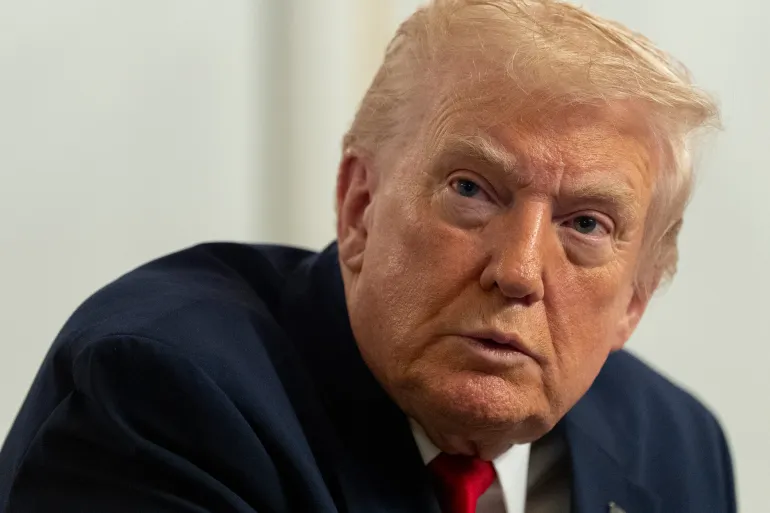
US President Donald Trump has imposed a new 10% global tariff to replace ones struck down by the Supreme Court, calling the ruling “terrible” and lambasting the justices who rejected his trade policy as “fools”.
The president unveiled the plan shortly after the justices outlawed most of the global tariffs the White House announced last year.
In a 6-3 decision, the court held that the president had overstepped his powers.
The decision was a major victory for businesses and US states that had challenged the duties, opening the door to potentially billions of dollars in tariff refunds, while also injecting new uncertainty into the global trade landscape.
Speaking from the White House on Friday, Trump indicated that refunds would not come without a legal battle, saying he expected the matter to be tied up in court for years.
He also said he would turn to other laws to press ahead with his tariffs, which he has argued encourage investment and manufacturing in the US.
“We have alternatives – great alternatives and we’ll be a lot stronger for it,” he said.
The court battle was focused on import taxes that Trump unveiled last year on goods from nearly every country in the world.
The tariffs initially targeted Mexico, Canada and China, before expanding dramatically to dozens of trade partners on what the president billed as “Liberation Day” last April.
The White House had cited a 1977 law, the International Emergency Economic Powers Act (IEEPA), which gives the president power to “regulate” trade in response to an emergency.
But the measures sparked outcry at home and abroad from firms facing an abrupt rise in taxes on shipments entering the US, and fuelled worries that the levies would lead to higher prices.
Arguing before the court last year, lawyers for the challenging states and small businesses said that the law used by the president to impose the levies made no mention of the word “tariffs”.
They said that Congress did not intend to hand off its power to tax or give the president an “open-ended power to junk” other existing trade deals and tariff rules.
In his opinion, Chief Justice John Roberts, a conservative, sided with that view.
“When Congress has delegated its tariff powers, it has done so in explicit terms and subject to strict limits,” he wrote.
“Had Congress intended to convey the distinct and extraordinary power to impose tariffs, it would have done so expressly, as it consistently has in other tariff statutes.”
The decision to strike down the tariffs was joined by the court’s three liberal justices, as well as two justices nominated by Trump: Amy Coney Barrett and Neil Gorsuch.
Three conservative justices, Clarence Thomas, Brett Kavanaugh and Samuel Alito, dissented.
At the White House, Trump said he was “absolutely ashamed” of the Republican appointees on the court who voted against his trade policy.
He said they were “just being fools and lap dogs” and were “very unpatriotic and disloyal to our Constitution”.
Shares on Wall Street rose after the announcement, with the S&P 500 closing up about 0.7%, as businesses across the US cautiously welcomed the ruling.
“I feel… like a thousand-pound weight has been lifted off my chest,” said Beth Benike, the owner of Busy Baby products in Minnesota, which manufactures products in China.
Nik Holm, chief executive of Terry Precision Cycling, one of the small businesses involved in the case, called the ruling a “relief”.
“Though it will be many months before our supply chain is back up and running as normal, we look forward to the government’s refund of these improperly-collected duties,” he said.
The anticipated refunds and relief from tariff costs may prove elusive, however.
On Friday, Trump imposed the new 10% tariff under a never-used law known as Section 122, which gives the power to put in place tariffs up to 15% for 150 days, at which point Congress must step in.
Analysts expect the White House to consider other tools, such as Section 232 and Section 301, which allow import taxes to address national security risks and unfair trade practices.
Trump has previously used those tools for tariffs, including some announced last year on sectors such as steel, aluminium and cars. Those were untouched by the court ruling.
A White House official said countries that struck trade deals with the US, including the UK, India and the EU, will now face the global 10% tariff under Section 122 rather than the tariff rate they had previously negotiated.
The Trump administration expects those countries to keep abiding by the concessions they had agreed to under the trade deals, the official added.
“Things have only gotten more complicated and more messy today,” said Geoffrey Gertz, senior fellow at the Center for a New American Security in Washington.
Reaction by major trade partners was relatively muted.
“We take note of the ruling by the U.S. Supreme Court and are analysing it carefully,” European Commission spokesman Olof Gill wrote on social media.
The US has already collected at least $130bn in tariffs using the IEEPA law, according to the most recent government data.
In recent weeks, hundreds of firms, including retailer Costco, aluminium giant Alcoa and food importers like tuna fish brand Bumble Bee, have filed lawsuits contesting the tariffs, in a bid to get in line for a refund.
But the decision by the majority does not directly mention refunds, likely handing back the question of how that process might work to the Court of International Trade.
In his dissent, Justice Brett Kavanaugh warned the situation would be a “mess”.
Diane Swonk, chief economist at KPMG US, warned that the cost of litigation could make recouping funds difficult for smaller firms.
“Unfortunately, I’d say curb your enthusiasm, although I understand the desire for relief,” she said.
Steve Becker, head of the law firm Pillsbury, said the “best thing” for businesses would be if the government created a procedure that did not require filing a lawsuit.
[BBC]
“I think companies can be fairly confident that they’ll get their money back eventually,” he added. “How long it will take really is up to the government.”

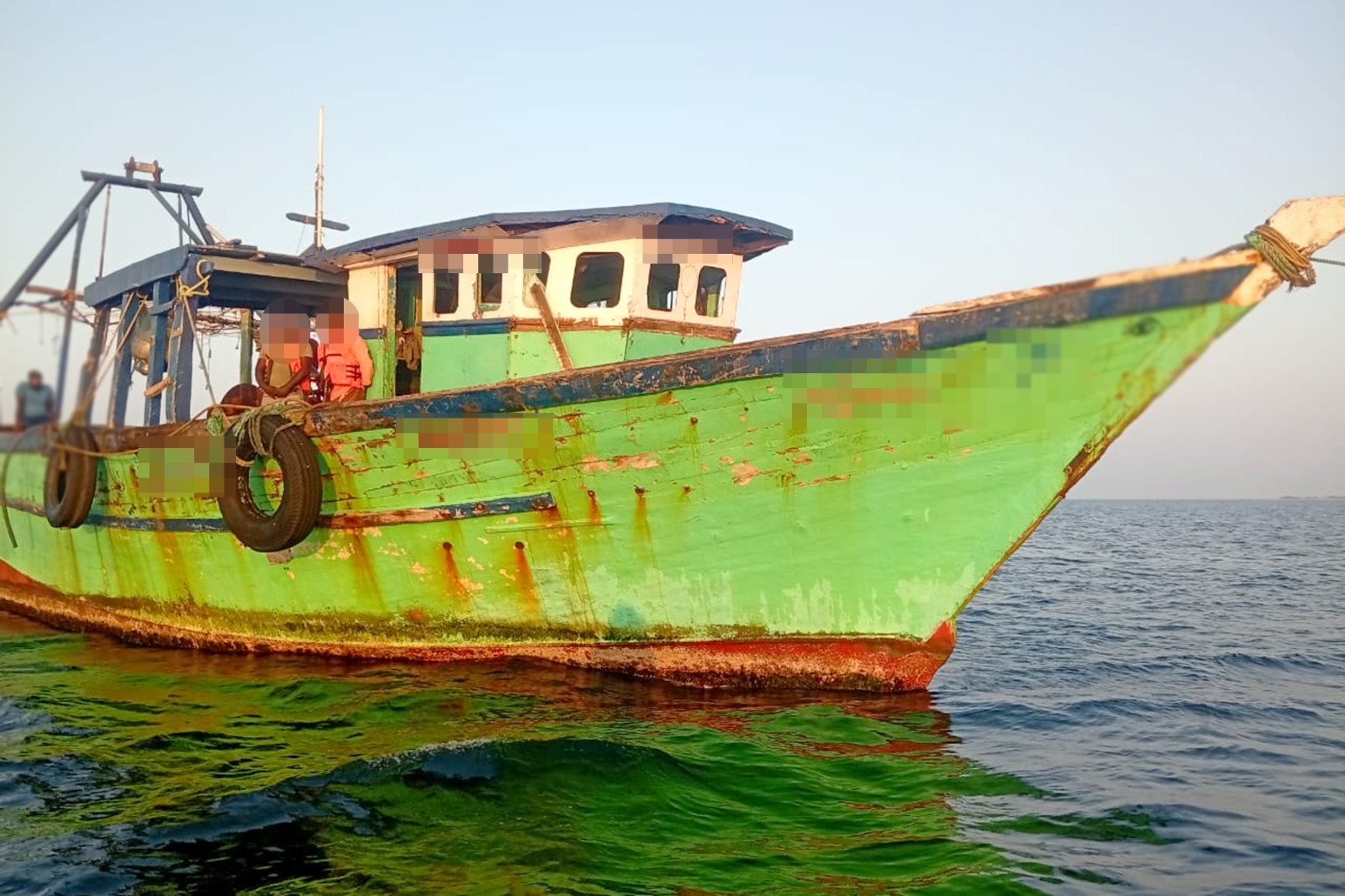
During an operation conducted in the dark hours of 11 Mar 26, the Sri Lanka Navy seized an Indian fishing boat and apprehended 02 Indian fishermen while they were poaching in Sri Lankan waters, in the sea area North of Mannar.
The North Central Naval Command spotted a group of Indian fishing boats engaging in illegal fishing, trespassing into Sri Lankan waters. In response, naval craft of the North Central Naval Command were deployed to drive away those Indian fishing boats from island waters off Mannar.
The seized boat (01) and Indian fishermen (02) were handed over to the Fisheries Inspector of Kilinochchi for onward legal proceedings.

The bodies of 84 Iranian sailors killed in a torpedo attack by a US submarine last week in the Indian Ocean are due to be flown home on Friday, Sri Lanka’s defence ministry has said.
The seamen were among 130 thought to be aboard the Iranian warship, the Iris Dena, when it was sunk on 4 March about 40km (25 miles) from Sri Lanka’s southern coastline.
A police escort transferred bodies to Mattala Rajapaksa International Airport on Friday morning for the repatriation to Iran, after they were stored in two freezers at Galle National Hospital.
Sri Lanka said 32 sailors rescued by its navy after the torpedo attack “will remain in Sri Lanka”, according to news agency AFP.
A magistrate in the Sri Lankan city of Galle ordered that the 84 bodies should be released to the Iranian embassy.
US Defense Secretary Pete Hegseth said shortly after the sinking that the Iranian warship had died a “quiet death”.
Iran’s Foreign Minister Abbas Araghchi said the US had “perpetrated an atrocity at sea, 2,000 miles away from Iran’s shores”, adding that “the US will come to bitterly regret precedent it has set”.
Video released by the US Department of Defense after the incident showed a ship being struck, causing the stern to rise up before exploding.
The Iris Dena had been returning from a military exercise hosted by India when it was attacked.
Its sinking in international waters came during the current US-Israeli war with Iran and marked a dramatic widening of the conflict.
Iran has since launched retaliatory strikes across the Middle East – targeting Gulf countries allied with the US.

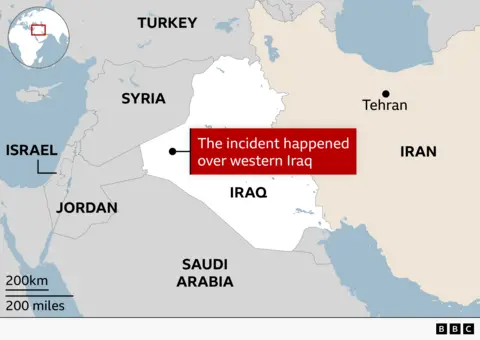
Four of six members of a US military refueling aircraft’s crew have been confirmed dead after it crashed in western Iraq, US Central Command (Centcom) says.
Rescue efforts continue after the loss of the KC-135, it said, having earlier said neither hostile nor friendly fire were involved in the downing of the aircraft.
The tanker had been involved in ongoing US operations against Iran and was one of two aircraft involved in the incident. The second landed safely.
The Boeing-manufactured aircraft are capable of refueling planes midair and typically play a major role in US military operations. They were used extensively in the first Gulf War to extend the range of fighter jets and bombers.
Centcom said the incident occurred around 14:00 ET (19:00 GMT) on Thursday and that the circumstances of the crash were now under investigation.
The US military command unit added that the identities of the personnel who had been killed were being withheld for 24 hours so their next of kin could be notified.
The KC-135 usually has a crew of at least a pilot, a co-pilot and a boom operator responsible for controlling the refuelling arm of the aircraft.
Centcom earlier described the crash as happening over friendly airspace – but this is a region of Iraq where pro-Iranian militias operate. Iran’s military claimed on state TV that an allied group had targeted the plane with a missile.
Thursday’s crash brings the official US military death toll in the US-Israel war with Iran, which began a fortnight ago, to 11.
The US military has now lost at least four aircraft during the current war.
Earlier this month, three F15s were shot down in “an apparent friendly fire incident” over Kuwait, officials said. All six crew members were able to safely eject.
Boeing manufactured the KC-135 Stratotanker for the US military in the 1950s and early 1960s.
It has been a backbone to the US military’s air refuelling fleet, and allow combat aircraft to carry out longer missions without needing to land.
[BBC]

Navy seizes an Indian fishing boat poaching in Mannar seas

Bodies of 84 Iranian sailors killed in US torpedo strike to be repatriated

Four crew members killed after US refuelling plane crashes in Iraq

Safeguarding linguistic heritage is not only a cultural responsibility, but also a shared commitment to preserving the diversity of our world – PM

This is not an ordinary scholarship programme. It defines the future vision of our country – PM

West Indies name unchanged squad for home T20Is against Australia

‘Dates have the highest sugar content to fight Coronavirus’

Sunday Island 27 December – Headlines

#SundayIsland 17th December – Headlines

Sunday Island – 28th March

Sunday Island Headlines – 21 March

Sunday Island – 21st February – Headlines
-

 News7 days ago
Peradeniya Uni issues alert over leopards in its premises
-
 News5 days ago
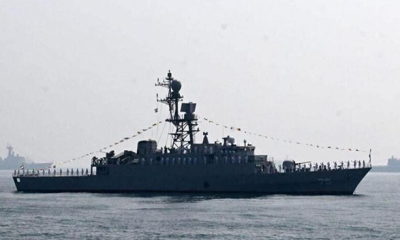
Repatriation of Iranian naval personnel Sri Lanka’s call: Washington
-

 News7 days ago
Wife raises alarm over Sallay’s detention under PTA
-

 Features5 days ago
Winds of Change:Geopolitics at the crossroads of South and Southeast Asia
-

 News4 days ago
Prof. Dunusinghe warns Lanka at serious risk due to ME war
-

 Sports3 days ago
Royal start favourites in historic Battle of the Blues
-

 Latest News7 days ago
Heat Index at ‘Caution Level’ in the Sabaragamuwa province and, Colombo, Gampaha, Kurunegala, Anuradhapura, Vavuniya, Hambanthota and Monaragala districts
-

 Features7 days ago
The final voyage of the Iranian warship sunk by the US