
News
Top academic calls for punitive measures against those abusing scholarships offered to govt.

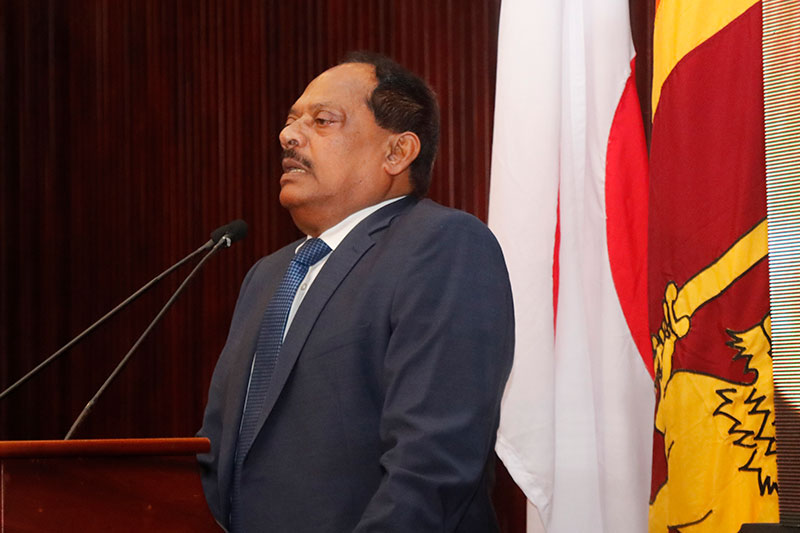
JaGAAS lifetime awards 2025:
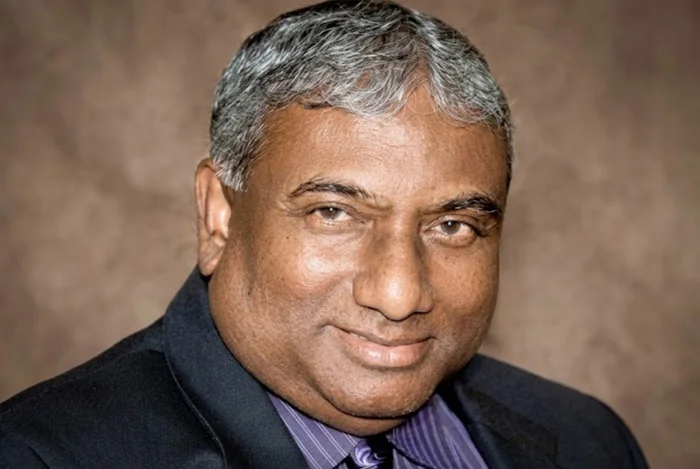
Vice Chancellor of the NSBM Green University, Prof. E. A. Weerasinghe, said that the government should take punitive measures against those chosen for foreign scholarships in case they violated bond conditions.
Tougher action was required to discourage public servants and academics from brazenly violating the trust placed on them, the top administrator said yesterday (23), in a brief interview with The Island after receiving Japanese Graduates’ Alumni Association of Sri Lanka (JaGAAS) lifetime awards 2025 at the BMICH on March 21. Prof. Weerasinghe received the award for exemplifying leadership and entrepreneurship in human capital development in higher education.
The other recipients were: Ms Baba Shigeko, Ito Yoshiaki, Koga Michio, Mikasa Jitsuo, Ogawa Kiyoko, Jagath Chandana Ramanayake, emeritus Prof. Yamada Yoshiaki, Prof. N.S. Cooray, Prof. Ranjith Dissanayake, retired IGP Chandra Fernando, Merrick Gooneratne, Dr. Nishantha Nanayakkara, Dr. OP.G. Rohan Pallewatta, Prof. Piyadasa Ratnayake, Ananda Shelton Thenuwara, Dayasiri Warnakulasooriya and Prof. E.A. Weerasinghe.
They received the coveted JaGAAS lifetime awards from Japanese Ambassador in Colombo Akio Isomata who, in his brief address, declared their dedication would inspire more people to pursue similar opportunities for study, collaboration and innovation.
Responding to The Island queries, Prof. Weerasinghe found fault with successive governments for failing to deal with wrongdoers. Alleging that academics were among the worst culprits, Prof. Weerasinghe said that along with him three others – a researcher with the National Dangerous Drugs Control Board and two University lecturers were chosen jointly by the governments of Japan and Sri Lanka. “We proceeded to Japan in 1990 and having obtained a doctorate in economics from Osaka City University I returned home in 1997. My colleagues decided against doing so. The researcher stayed in Japan while the remaining two migrated to Australia.”
Prof. Weerasinghe said that his former colleagues, now in Australia, once sought the opportunity to join the University. But they were told not to expect opportunities in the motherland after having betrayed the trust the country placed on them.
Prof. Weerasinghe said that though he could have easily migrated to New Zealand with his wife and two children, they decided to come back home. At the time Weerasinghe had received a Japanese scholarship he was serving the University of Sri Jayewardenapura as an assistant lecturer. “In terms of the bond conditions, I served the University for a period of seven years,” Prof. Weerasinghe said, adding that he never once regretted the decision to pursue a career here.
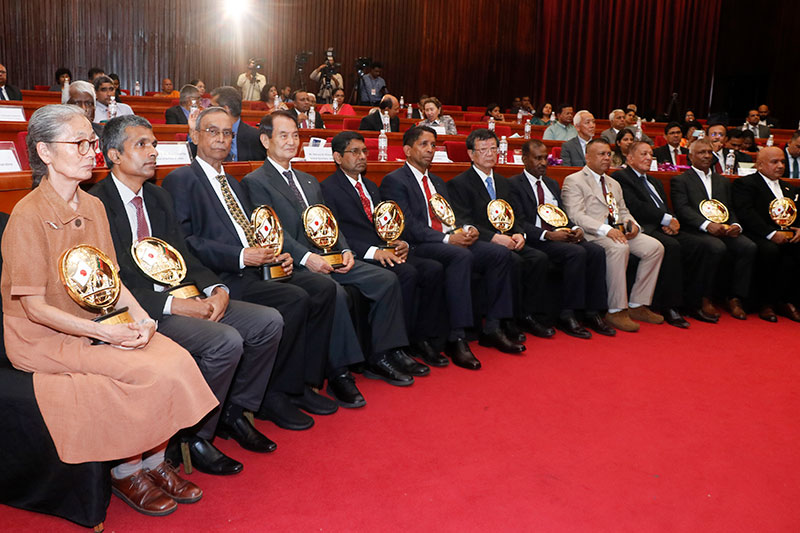
Recipients of JaGAAS lifetime awards
At the end of his sabbatical leave, Prof. Weerasinghe was offered the opportunity to serve as the Director General (DG) of the National Institute of Business Management (NIBM) in 2005. Prof. Weerasinghe emphasized that the NIBM had been in a much deteriorated state and restoration of the public faith in the Institution seemed a herculean task. “The University released me without pay,” a smiling Prof. Weerasinghe said, recalling his efforts to expand NIBM to other major towns, including Galle, Matara and Kandy, over the years.
The academic emphasised that in spite of the raging war in the Northern and Eastern regions and occasional terrorist attacks in the South the government sustained the NIBM. Sometime after the conclusion of the conflict in 2009, Prof. Weerasinghe, in his capacity as the DG, NIBM has proposed transforming the institute to a fully-fledged University. “Some were skeptical about my proposal. But, I pushed hard and finally managed to convince the powers that be that NIBM could be the foundation for a fully-fledged University,” Prof. Weerasinghe said.
Prof. Weerasinghe paid a glowing tribute to the Bank of Ceylon (BoC) for providing the wherewithal to launch the project in 2013. The BoC provided a staggering Rs 10 bn on a Treasury guarantee that made it possible for us to establish NSBM Green University in 2016, Prof. Weerasinghe said, declaring that his team ensured that the loan was paid on time. “There had never been an issue regarding the repayment of the loan and today we are a fully self-financed, state-of-the-art international-level University eyeing further expansion.’’
VC Weerasinghe said that recently they finalised a Rs 7.3 bn loan with the BoC in support of further expansion. Asked to explain the impact of the Covid-19 epidemic and the subsequent unprecedented economic crisis that compelled the government to declare bankruptcy in early 2022, Prof. Weerasinghe said that they received the maximum backing of the people who had faith in the University.
Emphasising the responsibility on the part of the government whoever is in power to ensure stability, Prof. Weerasinghe said that during the first phase of the project he had to work with 12 Ministers. The VC didn’t mince his words when he pointed out unnecessary difficulties caused by political appointments over the years. It would be easy to cause chaos, disrupt systems and undermine institutions that were managed without being a burden to the Treasury, Prof. Weerasinghe said. However, restoring public faith in such institutions would be extremely difficult, the Japanese scholar mentioned.
“NSBM Green University belongs to the government. Therefore, the University belongs to the people. Primary difference is we do not depend on government funds at all,” Prof. Weerasinghe said. According to him the University produced over 20,000 graduates and at the moment over 13,000 students were at five faculties, namely business, computing, engineering, science and postgraduate studies. “We have over 70 degree programmes to suit students,” Prof. Weerasinghe said, underscoring the pivotal importance of the government recognizing the contribution made by the University.
By Shamindra Ferdinando


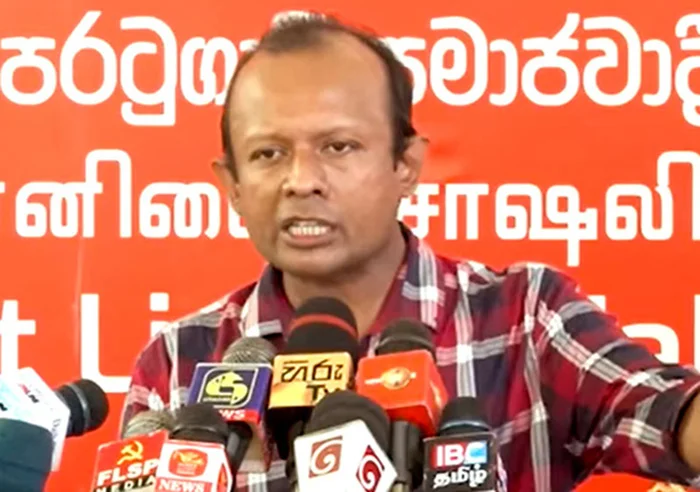
The Frontline Socialist Party (FSP) yesterday accused the government of seeking to use the proposed Protection of the State from Terrorism Act (PSTA) to suppress popular political activity, claiming that some of its provisions were more repressive than those of the Prevention of Terrorism Act (PTA).
FSP Education Secretary Pubudu Jayagoda told a media briefing, in Nugegoda, that the definition of terrorism in the Bill was so broad that it could be used to label almost any form of popular political activity as terrorism.
He said the Bill’s approach to defining terrorism was based largely on attempts to compel a government, or an international organisation, to do, or refrain from doing something, rather than on internationally recognised criteria, such as killings, causing serious bodily harm, kidnapping or acts intended to spread terror among the public.
Jayagoda also alleged that the Bill transferred substantial powers from the judiciary to the executive, while extending powers of arrest, investigation and detention to the armed forces, in addition to the police.
He claimed that the government had sought to portray the Bill as a replacement for the PTA while retaining or introducing provisions that could facilitate political victimisation and repression.
The FSP also questioned the government’s decision to proceed with the Bill, despite having previously sought public views on an earlier draft.
Jayagoda said a draft had been published earlier this year, with the period for public submissions ending on February 28, but the Bill subsequently gazetted was essentially the same draft with some provisions rearranged.
Jayagoda also referred to a letter reportedly sent by Attorney-at-Law Saliya Peiris, a member of a Committee, chaired by President’s Counsel Rienzie Arsecularatne, that had been appointed to draft the legislation. He said Peiris had stated, in the October 06 letter, that changes had been made to the draft prepared by the Committee.
“This means that even the Committee, appointed to prepare the Bill, was a deception,” Jayagoda alleged.
He said that the PSTA was fundamentally similar to the Anti-Terrorism Bill introduced by the previous government, in 2023, which the National People’s Power (NPP) opposed and challenged in court.
“If the NPP opposed that Bill then and is now bringing the same legislation before Parliament, the government must explain its position,” he said.
Jayagoda called on NPP MPs to oppose the PSTA in Parliament and urged trade unions and other groups to build a broad public movement against the legislation.
He challenged the government to an open debate on the Bill.
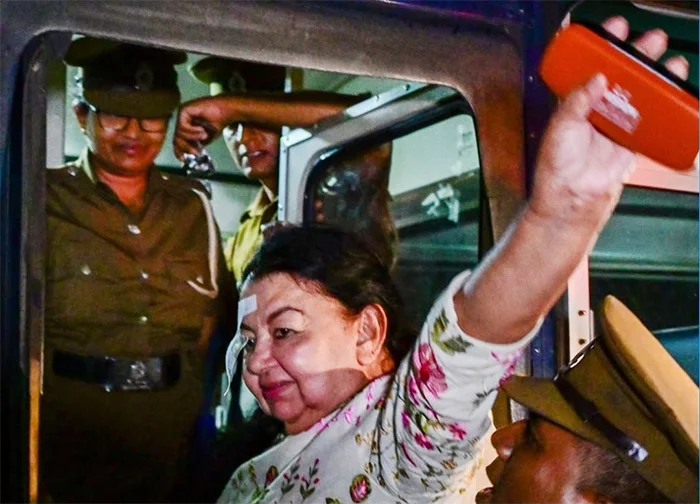
Former First Lady Shiranthi Rajapaksa was yesterday remanded until 13 October after being produced before the Colombo Magistrate’s Court following her arrest by the Commission to Investigate Allegations of Bribery or Corruption (CIABOC).
Shiranthi, wife of former President Mahinda Rajapaksa, was arrested at her residence on Poorwarama Road, Kirulapone, after CIABOC officers recorded a statement from her for nearly two hours.
According to the CIABOC, the arrest was made over allegations that Rs. 10 million obtained from the National Savings Bank through the Siriliya Saviya organisation was misappropriated.
The money was allegedly obtained to provide a Computed Tomography (CT) scanner to the children’s hospital. Investigators allege that the scanner was not provided and that the funds were instead unlawfully used.
CIABOC is investigating alleged offences under the Public Property Act and corruption-related provisions in connection with the transaction and other financial activities involving Siriliya Saviya, which was headed by Rajapaksa.
Rajapaksa returned to Sri Lanka on Monday night on a flight from Malaysia after travelling overseas for medical treatment. She left for Singapore on 16 September after being admitted to a private hospital in Colombo on 15 September following an illness.
She had been due to appear before the Financial Crimes Investigation Division (FCID) on 13 October in connection with its investigation into the financial affairs of Siriliya Saviya.
Meanwhile, her lawyers filed an anticipatory bail application before the Maligakanda Magistrate’s Court on Monday, seeking an order preventing her arrest in connection with the FCID investigation.
Former National Savings Bank (NSB) Chairman Pradeep Kariyawasam was yesterday granted bail by the Colombo Magistrate’s Court following his arrest by the Commission to Investigate Allegations of Bribery or Corruption (CIABOC).
Kariyawasam, husband of former Chief Justice Shirani Bandaranayake, was arrested in connection with the Bribery Commission’s investigation into the ‘Siriliya Saviya’ account linked to former First Lady Shiranthi Rajapaksa.
The investigation concerns financial activities involving the Siriliya Saviya initiative, which was headed by Rajapaksa, wife of former President Mahinda Rajapaksa.
CIABOC is continuing investigations into the alleged financial irregularities relating to the account.

Showers above 100 mm are likely at some places in the Western, Sabaragamuwa, Central, Uva and Southern provinces and in Anuradhapura district

PSTA worse than PTA: FSP

Shiranthi R remanded until 13 Oct.

Former NSB Chairman Kariyawasam granted bail

Katchatheevu row: India SC urges fishermen to avoid Sri Lankan waters

Remembering Juvenal, Coke, Acton and Machiavelli

‘Dates have the highest sugar content to fight Coronavirus’

Sunday Island 27 December – Headlines

#SundayIsland 17th December – Headlines

Sunday Island – 28th March

Sunday Island Headlines – 21 March

Sunday Island – 21st February – Headlines
-

 Editorial7 days ago
Colombo Port drug bust: The plot thickens
-

 Features5 days ago
The first woman in the foreign service or Ceylon Overseas Service it was then called
-

 Editorial6 days ago
Fuelling discontent and protest
-

 News4 days ago
Geneva takes up Sallay’s case and govt. ignores opportunity to answer accusations
-

 Foreign News5 days ago
Ten injured after car crashes into rugby supporters in Australia
-

 Latest News6 days ago
Tharindu Rathnayake, bowlers secure Asian Games Bronze for Sri Lanka
-

 News5 days ago
Nearly 20 Iranian tankers stranded off Lanka amid US sanctions
-

 Features4 days ago
Sri Lanka Cricket Bill: Governance reform is not yet a cricket strategy