
News
To the future through Digital Disruption


Today, we live in a very fast paced world which rapidly changes with the internet and technology. The significance of technology is as such, that if a nation, society or a company fails to adopt these evolving technologies for sure they’ll be left behind. In a way this scenario can be described from a biological viewpoint. In 1859 Charles Darwin published ‘Origin of species’ where he rejected the creationism and argued humans, animals, insects & all the living and nonliving things in the world were created through a process called evolution which took millions of years in the making. Darwin explained that “Natural selection acts by competition”, organisms or species who adapt to their environment and ecological factors to perform better than others and secure their survival through reproduction and increasing their numbers.
We can broadly apply this theory to many areas,
Today powerful technological advancements such as Machine Learning, Cloud Computing and Artificial Intelligence (AI) have spread from complex research based industries to perform simple day to day activities. Even in Sri Lanka, already there are companies which use such technologies to forecast future market activities, logistics supply and to conduct precise marketing campaigns. The impact of digital transformation is at that level where the biggest players in the market or industry do not hold the advantage, barriers to entry are so low or even cannot be seen in some areas. Small businesses with big ideas can turn the markets in quick time thanks to these advancements. It intensifies the competition and transfer the ultimate benefit to customers. If we refer to the Sri Lankan story, at the end of year 2022 there are 743 small tech savvy companies (some are industry leaders today) ‘Startups’ who directly involve to core operations of widespread multinational companies. Most of them are situated outside Colombo, which is proof that we are moving in the right direction.
Cutting edge technologies as AI & ML are widely used to analys trillions of consumer data to derive tailor made algorithms. Images captured by remote sensors are helping to train autonomous cars, patterns identified in financial markets are used to price insurance and place trades, access to patient data assesses healthcare providers to disease identification and to create solutions. Also, in the race against imminent Climate Crisis these high-tech applications are used to suggest how to cut down on greenhouse gas emissions and to recycle pollutants.
In the age of Digital evolution, success will lie with the nations or firms who adopt and apply new technological advancements to its operations not just with the intellectual capacity of people or employees. The best example for these applications are the reemergence of online market places and work from home initiative. Most of the traditional brick & mortar organisations had to get into the digital space to assure their survival. They had to offer goods and services via online platforms and to rely on AI based social media, search engine based promotional campaigns instead of costly ATL sources.
When you look at an economy from a macro point of view, it is like a large rive that flows, at some places branches connect to the river body carrying water in and out. When it comes across a barrier it either destroys them or changes its speed or changes its shape, but it’ll flow through.
Because of the Covid pandemic global economic growth rate came to a halt. Since we live in a highly globalised world the economic growth rates of US, China, Europa and Asia contracted at an alarming rate. The impact of the slowdown was felt across nations in every social stratum. Income levels dropped, businesses crashed resulting in mass layoffs, supply chains were blocked. At the height of the pandemic 50% of the global work force of 3.3 billion came near to the threat of getting unemployed. But things took a turn for the good by implementing touchless online sales platforms and by enabling employees do their job by working from home. These trends were evident in all the sectors of economy, education, healthcare, transportation, telecommunication and most prominently in the fintech industry. By reducing operational costs and gaining the trust of all the segments of society these technological improvements became close to ordinary people.
When we talk about the market adaptation to technology report by the CANTAR LMRB ‘Covid-19 Barometer Sri Lanka Report’ shows that when we compare the convergence of the e-commerce industry in SL there is a 245% growth. It lists what are the online activities our people engaged mostly, use of online facilities to do online payments, digital banking services, getting medical advice via video conferencing and to play online games. It further illustrates that money spent on average has increased from USD 11 to USD 38 compared to the pre Covid period. Therefore, as an individual with a progressive view to the future I believe we as a nation should invest heavily in new technologies when we sail the rough seas of economic crisis.
In our path to achive ultimate customer satisfaction we always believe in Digital Disruption, that is why we came up with our own Smart digital banking application the ‘NSB Pay’. Its available in Android and Apple store. It will empower you to experience the digital financial atmosphere at absolutely no charge, as at today we the NSB is the only bank to provide such high tech smart app for free to Sri Lankans. By using the app you can enjoy the ease of banking, settle the loan, transfer and get money to and from other banks in real time, settle your credit card, reload the phone, pay household bills, check your fixed deposit balances, sellte payments to selected governemnt entities etc.
As a responsible state bank we invest money to fine tune the efficiency and accuracy of our services to become more customer friendly hence, we think Machine Learning, Cloud Compting and use of AI is the future in achiving this ultimatum.
In a recent study by the ‘Economic Impact’ magazine it revealed that in US the post Covid e-commerce usage has increased from 17% to 33%. 70% Industry leaders have said that they experice the digital disruption and 85% of them forecasts that in the next five years the progress in this sector will exceed the expectations. Even if we do a similar survey in SL for sure we will get similar results.
By the end of 2022 60% of the world are connected to the world (in 2000 it was 5.8%) by usisng this connectivity our small island can go a long way. I know that the things are difficult and hard but these times shall pass too, nothing is for forever. Tough times comes to test our endurance, strength and capacity. When we look around I know it is easier said than done yet we as a nation cannot give up there’s lot more to achieve.
Banking sector is the backbone of our financial system, fruits of its success belongs to all of us and as the premiere specialized savings bank with RS. 1.6 trillion of asset base and Rs. 1.4 deposit base we the NSB strive towards future with optimisum and hope knowing that as a nation will come atop these difficult times for good.


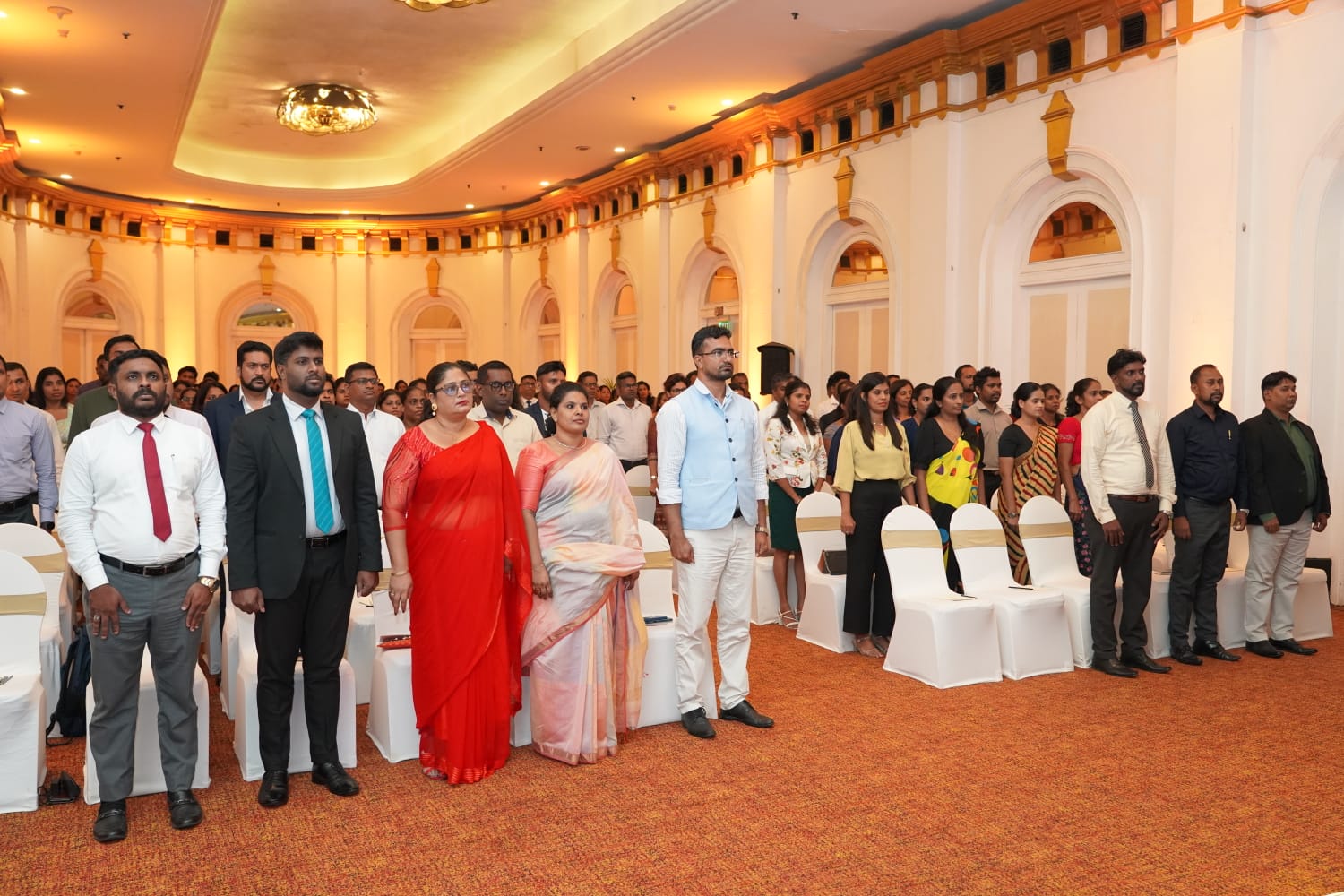
Sri Lankan professionals trained in India under the Indian Technical and Economic Cooperation (ITEC) programme have formed a national alumni association. The Sri Lanka ITEC Alumni Association was formally launched at its inaugural meeting on Thursday, 8 October 2026, at the Grand Crystal Ballroom of Hotel Taj Samudra, Colombo.
The Association is a unique initiative of the Education Wing of the High Commission of India in Sri Lanka. The Wing oversees India’s education and scholarship programmes for Sri Lanka, including the ITEC programme. The initiative was led by Sandeep Chaudhary, First Secretary (Education), High Commission of India. His vision and support were key to bringing Sri Lanka’s ITEC alumni together under one platform for the first time.
The Government of India launched ITEC in 1964, and it has since become one of the cornerstones of India’s development partnership with countries of the Global South. The programme is fully funded by the Government of India and offers civilian training in a wide range of fields, including public administration, finance, information technology, engineering, management, agriculture, health and the environment. Courses are delivered at leading Indian institutions. Over six decades, ITEC has trained officials and professionals from more than 160 partner countries. Sri Lanka has been one of its most active participants, and thousands of Sri Lankan public servants and professionals have benefited from the programme.
The new Association brings these alumni together from government, semi-government and private sector institutions. Its aims are to foster professional networking, knowledge sharing, capacity development and community service. It will also encourage collaboration among alumni and guide and support future Sri Lankan participants in ITEC programmes. In doing so, the Association seeks to deepen the long-standing friendship and people-to-people ties between Sri Lanka and India.
At the meeting, members elected an Executive Committee to lead the Association. Ms. Gayathri Suveendran was elected President. The other office-bearers are:
Vice Presidents: P.B. Hasith Sandaruwan and Leo Darshan
General Secretary: Anupa Weerarathne
Assistant Secretary: Vimukthi Dushantha
Treasurer: S. Rubadharshan
Assistant Treasurer: I. Ravikumar
Four sectoral committees will carry the Association’s work forward:
Establishment, Administration and Finance: Prof. M.I.M. Mujahid Hilal, M. Farwis, Milroy Aluthwatta, W.P. Suraweera, M.S. Thayaraj and Asinsala Senevirathne.
ICT, Digital Transformation and Innovation: Sujah Ameer, Danushka Diunugala, T.M.M. Perera, Tharanga, M.K.H.P. De Silva, Pubuditha Madushan and Arulkumaran Mahalingam.
Coordination, Organising and Legal Affairs: T. Srirajeevan, Theja Jayathilaka, Eng. A. Lingeswaran, Chaminda K. Uda, Kumuduni, S. Sinthujan and Ananda Arasu.
Media, Public Relations and Publications: Rahul Samantha Hettiarachchi, Dr. Gayani Kaushalya, Anandi Premarathne, Vimukthi Dushantha, R. Suhanthan and Shyam Nuwan Ganewatta.
The founding of the Association marks a significant milestone for the ITEC community in Sri Lanka. It turns individual training experiences in India into a shared national resource, and it adds a new professional dimension to the enduring partnership between the two neighbours.
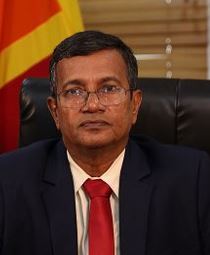
The government is taking all necessary measures to protect the Diyagama forest area located in Homagama within the Colombo District, Deputy Minister of Environment, Anton Jayakody,
stated on Friday (9) while delivering a special address in Parliament.
Originally an abandoned plot of land, it has regenerated naturally over the past two decades into a sensitive ecosystem bearing the characteristics of a rainforest. With rapid urbanization, numerous wildlife species displaced across
the Colombo District have now migrated to and found sanctuary in this ecological haven.
Citing field research conducted by a team of scholars from the University of Colombo—including Prof. S.W. Ranwala, Prof. Ileperuma, and Prof. Abeykoon—the Deputy Minister pointed out that nearly 120 species of flora and fauna have been identified in the area. Among them are species endemic to Sri Lanka, as well as rare wildlife such as the red slender loris and pregnant animals close to giving birth, clearly testifying to the rich biodiversity thriving within this habitat.
Located adjacent to the Mahinda Rajapaksa International Stadium and the Japan–Sri Lanka Friendship Baseball Ground, this green zone serves as a vital ecosystem for absorbing carbon
dioxide emitted by athletes and residents in the vicinity.
In addition to directly contributing toward Sri Lanka’s commitments under the Paris Agreement to achieve net-zero emissions by 2050, the forest also functions as a vital catchment area feeding into the Bolgoda water basin.
Accordingly, following the approval of the Colombo District Coordinating Committee (DCC) with the participation of the Divisional Secretary, government officials, and environmentalists, steps will be taken to submit a Cabinet paper to formally declare this valuable woodland a forest reserve, the Deputy Minister emphasized.
Stranded Iranian ships off SL:
Iran has reminded Sri Lanka that as a member of the UN the government is obligated to fulfil its responsibilities.
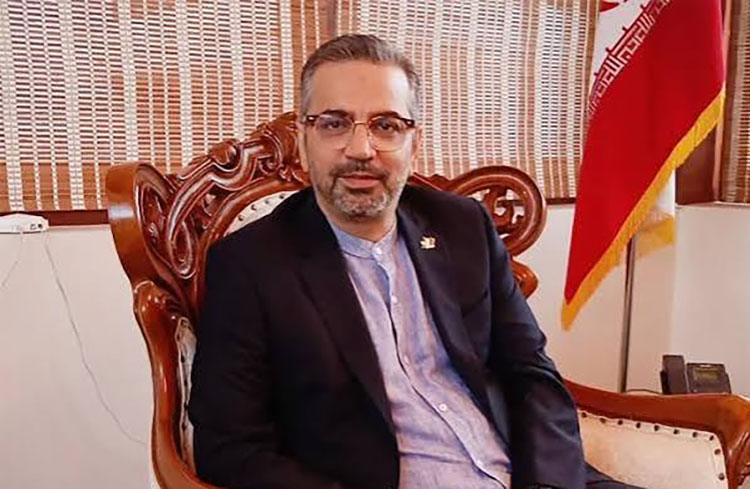
Iranian Ambassador Alireza Delkhosh in Colombo said that in terms of the Convention on the Law of the Sea (Article 98) as well as SOLAS and SAR Conventions, Sri Lanka couldn’t refrain from providing the needs of the Iranian vessels stranded in its Exclusive Economic Zone (EEZ).
Ambassador Delkhosh was responding to a recent Foreign Minister Vijitha Herath’s declaration that neither the government nor private companies would provide food, water and medicine to these ships.
The Ambassador questioned how Sri Lanka accepted illegal and unilateral US sanctions against Iran, contrary to the JVP’s much touted historic anti-imperialistic manifesto.
The Iranian vessels are believed to be under constant US surveillance to prevent any supplies from getting through.
The Iranian Embassy made these comments as USS Tulsa (LCS 16), an Independence-variant littoral combat ship arrived in Colombo where it received supplies. The US Embassy declared that; ” this goodwill visit provides an opportunity to strengthen ties between US and Sri Lankan sailors while the ship refuels and resupplies before continuing its mission in the Indo-Pacific.”
Ambassador Delkhosh said that even if the above-mentioned Conventions weren’t adhered to, there existed, what he called, unwritten yet binding conventions that compelled Sri Lanka to assist. “It is the Convention of not forgetting past friendship and Convention of Humanitarian Actions.”
The Iranian envoy emphasised that these conventions that exempt no country from extending humanitarian aid, especially Sri Lanka, which, throughout its recent history, has been a recipient of Iranian assistance.
A section of the international media reported that Sri Lanka faced the risk of secondary sanctions from the United States if Sri Lanka allowed supplies to reach the stranded Iranian vessels. Twenty vessels are believed to be stranded in EEZ.
Former Sri Lankan Ambassador in Tehran, M.M. Zuhair, recalled how the Iranian government swiftly and decisively provided assistance, amidst western efforts to jeopardise the military campaign, by undermining the national economy.
As the war entered a crucial stage, the government found itself in an extremely difficult situation. Following talks at the highest level, Iran provided Sri Lanka with an interest-free and concessionary oil credit facility worth $1.05 billion to help obtain crude oil requirements, President’s Counsel Zuhair said.
If not for the rolling credit line, easing severe foreign exchange pressures, the Rajapakasa government could have faced an insurmountable challenge, the former diplomat said, adding that, unfortunately, those in decision-making positions now have forgotten the past. (SF)

Sri Lanka ITEC Alumni Association formally launched

Measures underway to protect Diyagama Forest as a Reserve — Deputy Minister of Environment

Showers or thundershowers will occur in most parts of the island after 1.00 p.m.

NPP govt. reminded of its responsibilities as US warship leaves Colombo

CERT: Beware of foreign Uni. scams on social media

Shiranthi receives treatment at National Eye Hospital

‘Dates have the highest sugar content to fight Coronavirus’

Sunday Island 27 December – Headlines

#SundayIsland 17th December – Headlines

Sunday Island – 28th March

Sunday Island Headlines – 21 March

Sunday Island – 21st February – Headlines
-

 Features7 days ago
The first woman in the foreign service or Ceylon Overseas Service it was then called
-

 News6 days ago
Geneva takes up Sallay’s case and govt. ignores opportunity to answer accusations
-
 News7 days ago
Nearly 20 Iranian tankers stranded off Lanka amid US sanctions
-

 Features5 days ago
Preventing grievances from becoming communal
-

 Sports3 days ago
Nissanka absence opens door for Sri Lanka’s young guns
-

 News4 days ago
Gnansara Thera to be assigned to prison printing section: Officials
-

 Features6 days ago
Sri Lanka Cricket Bill: Governance reform is not yet a cricket strategy
-

 News7 days ago
Lanka enters new phase of prosecutions as hurdles clear