
Features
The world welcomes senior home buyers while Sri Lanka shuts the door at 60


 Imagine you are 58 years old, financially stable with a decent pension plan, and finally ready to build your dream home in the suburbs of Colombo. You walk into a bank, application in hand, only to be told: “Sorry, your repayment period would extend past 60. We can’t help you”. In Sri Lanka, this scenario plays out daily, leaving thousands of mature, creditworthy citizens locked out of homeownership. But, step outside our shores, you’ll find a drastically different story.
From the gleaming towers of Singapore to the countryside cottages of the United Kingdom, older borrowers aren’t just tolerated; they’re actively courted by lenders who understand that age doesn’t determine creditworthiness. While Sri Lankan banks remain trapped in outdated policies that effectively discriminate against anyone over 50, the rest of the world has moved on, creating flexible, dignified pathways for seniors to access home loans.
Role of the Central Bank and the Government
The Central Bank of Sri Lanka has failed in its fiduciary duty by not directing financial institutions to refrain from arbitrarily denying home loans, solely on the basis of age. The Ministry of Finance, therefore, the government, is equally responsible for this failure.
This regulatory vacuum enables systematic discrimination against creditworthy older citizens, contradicting modern banking principles and harming an ageing population desperately needing progressive, not punitive, financial policies.
The Global Picture: Where Age is Just a Number
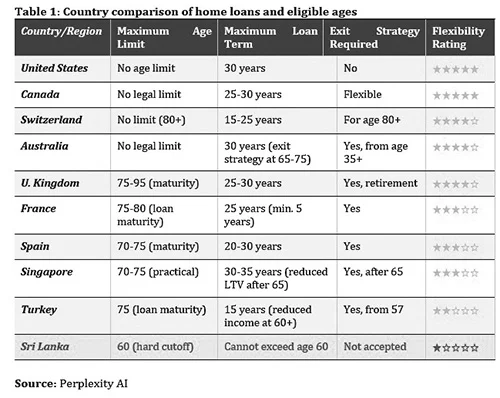
Many advanced economies, such as the United States and Canada, etc., there is no maximum age limit, whatsoever, for obtaining a 30-year mortgage. The Equal Credit Opportunity Act explicitly prohibits age discrimination, meaning an 80-year-old American can walk into a bank and apply for the same three-decade loan term as a 30-year-old, provided they meet income and credit requirements. Lenders evaluate based on current financial stability, not birth certificates. A 65-year-old Canadian with a solid pension can secure a mortgage extending well into their seventies, with the understanding that income, not age, determines repayment capacity.
Australia sets the typical retirement age benchmark at 65-75, and borrowers, over 65, can still obtain mortgages by demonstrating an exit strategy; a credible plan for repayment that might include downsizing, superannuation funds, or ongoing retirement income. The system acknowledges that life doesn’t end at 60, and neither should financial opportunity.
Global Home Loan Conditions:
A Comparative Analysis
The following table ranks countries from most to least affordable for older home loan applicants, based on maximum age limits, flexibility of terms, and accessibility of financing (Table 1).
What Makes These Systems Work?
The countries at the top of our affordability ranking share several key characteristics. First, they recognise that retirement doesn’t mean financial incapacity. Banks in these countries evaluate total financial health, not just employment status.
Second, they embrace the concept of exit strategies, in Australia, for instance, acceptable exit strategies include downsizing property, selling investment assets, or using superannuation (retirement) funds. These strategies are actually considered and evaluated, not dismissed out of hand. Australian lenders assess whether someone’s superannuation balance is sufficient to clear the debt, or if their investment property provides adequate cash flow. It’s a conversation, not a closed door.
Third, many of these countries offer specialised products for older borrowers. The UK, for example, has retirement interest-only mortgages where borrowers pay only interest during their lifetime, with the principal cleared when the property is eventually sold.
Australia provides reverse mortgages for those aged 60 and above. Under this arrangement, the bank pays the homeowner, rather than the homeowner paying the bank, using the house as security. The full outstanding balance is then recovered when the property is eventually sold.
These may not be perfect solutions, but they represent creative thinking about how to serve an ageing population’s housing needs.
The Hidden Cost of Age Discrimination
Sri Lanka’s rigid age-60 cutoff carries consequences that ripple far beyond individual borrowers. In a nation where life expectancy now exceeds 77 years, we’re telling people they are 17 years of ‘too old’ to be trusted ahead of them. This isn’t just unfair; it’s economically counterproductive.
Consider the broader impact. Sri Lanka has one of Asia’s fastest-aging populations. By 2050, one in four Sri Lankans will be over 60. These aren’t economic liabilities; many are professionals with decades of experience, stable incomes, and substantial assets. A 58-year-old doctor with thriving practice and pension security poses less default risk than a 28-year-old in an uncertain job market, yet our banking system treats them as if the opposite were true.
Learning from Singapore: A Regional
Success Story
We don’t need to look to distant Western nations for alternatives. Singapore, our regional neighbour facing similar demographic challenges, has crafted a more balanced approach. While Singapore’s Monetary Authority hasn’t imposed a hard age limit, banks do apply careful scrutiny to loans extending past age 65.
A Singaporean borrower, over 65, can still obtain financing, but with reduced loan-to-value ratios. If you’re buying a property worth one million dollars and you’re under 65, you might borrow up to 75 percent. Over 65, that drops to 60 percent. It’s more conservative, certainly, but it preserves opportunity.
This approach acknowledges risk without eliminating possibility. It says to older borrowers: Yes, we’ll lend it to you, but we need you to have more equity in the game. Compare this to Sri Lanka’s approach, which effectively says: “We don’t care how much equity you have or how stable your income is, you’re too old”.
A Path Forward for Sri Lanka
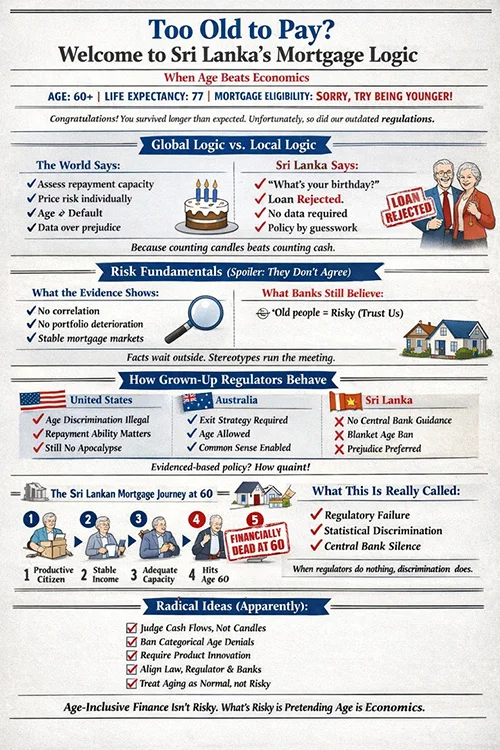 The Central Bank of Sri Lanka could issue guidelines similar to Singapore’s loan-to-value adjustments. For borrowers whose loan terms extend past 65, reduce the maximum LTV from 90 percent to 70 or 75 percent.
This protects banks from excessive risk while allowing creditworthy older borrowers to access financing. It’s a middle ground that respects both prudent lending standards and individual dignity.
Additionally, Sri Lanka could develop specialised products for its ageing population. Retirement interest-only loans, similar to those in the UK, could serve retirees who have substantial home equity but limited monthly income. Reverse mortgages, properly regulated with strong consumer protections, could help elderly Sri Lankans tap into home equity without monthly payments.
Beyond Banking: A Cultural Shift
Ultimately, changing Sri Lanka’s approach to older borrowers requires more than policy adjustments; it demands a cultural reckoning with how we value our ageing citizens. The countries that lead in age-friendly lending, the United States, Canada, Australia, share a broader commitment to recognising that people can remain economically active and financially responsible well into their later years.
These nations have moved beyond viewing retirement as an endpoint and recognised it as a transition. A 65-year-old today might have 20 or more active years ahead, years in which they’ll continue working part-time, managing investments, drawing stable pensions, and yes, making mortgage payments. Our banking sector needs to catch up to this reality.
Conclusion: Time for Change
As our table demonstrates, Sri Lanka stands alone at the bottom of the global ranking for age-friendly home lending. We’re more restrictive than Turkey with its 15-year maximum terms, more inflexible than Singapore with its sliding loan-to-value scales, and incomparably more rigid than the United States, Canada, or Switzerland, where age barely factors into lending decisions at all.
This isn’t about being soft on risk or abandoning prudent lending standards. Countries with no age limits still assess income, evaluate debt-to-income ratios, and verify creditworthiness. They simply don’t use age as a crude proxy for financial competence. The initiative lies with the Ministry of Finance, which must direct the Central Bank accordingly.
For Sri Lanka’s 58-year-old aspiring homeowner, the current system isn’t just frustrating; it’s a form of systematic discrimination that would be illegal in most developed economies. As our population ages and life expectancy increases, maintaining this policy becomes increasingly untenable. The question isn’t whether Sri Lankan banks will change their approach to older borrowers, but when and how many dreams will be deferred or destroyed in the meantime.
The world has shown us better ways forward. It’s time Sri Lanka joined the 21st century in recognising that 60 isn’t the end of financial opportunity for many, it’s just the beginning.
(The writer, a senior Chartered Accountant and professional banker, is Professor at SLIIT, Malabe. The views and opinions expressed in this article are personal.)


Dr B. J. C. Perera
MBBS(Cey), DCH(Cey), DCH(Eng), MD(Paediatrics), MRCP(UK),
FRCP(Edin), FRCP(Lond), FRCPCH(UK), FSLCPaed, FCCP,
Hony. FRCPCH(UK), Hony. FCGP(SL)
Specialist Consultant Paediatrician and Honorary Senior Fellow,
Postgraduate Institute of Medicine, University of Colombo, Sri Lanka.
An independent freelance medical correspondent.
Quo Vadis? Where are you going?
It is a vexed and troubling question I have increasingly found myself asking after working in the Ministry of Health and engaging in concurrent Private Practice for three decades, followed by nearly two decades working exclusively in Sri Lanka’s private health sector, after I retired from the Sri Lankan Government Health Service. It took a lot of soul-searching to write this article. Finally, I felt that if I kept it bottled inside, it would amount to blatant dishonesty and a total lack of empathy towards suffering humanity, even in the face of possible consequences for me following this attempt.
At the outset, this is not a total indictment of private medicine, nor an attack on the many excellent doctors, nurses, technicians, and other healthcare workers who serve patients in private institutions. There are innumerable numbers of doctors in the private sector who continue to practise with dedication, empathy, compassion and a deep sense of professional responsibility. Many go out of their way to accommodate even patients who cannot afford expensive investigations or prolonged treatment. The same applies to other healthcare workers in the private sector, too. However, a healthcare system cannot be judged only by the integrity of its individual practitioners. It must also be judged by the operational structures within which they work. That is where I believe we have a real major problem.
We should acknowledge something else as well. It is ever so true to say that some of the finest people in Sri Lankan medicine work in the State sector, often under extraordinarily difficult circumstances. They cope with enormous patient loads, shortages, administrative frustrations and, many a time, having to manage with totally inadequate resources. Yet for all that, even in the face of many obstacles, the services they provide are often nothing short of remarkable and magnificent. Why, then, does a substantial section of the population turn to private medicine? Quite honestly, the answer is not all that difficult to find.
A patient who has been waiting for months for a consultation, an investigation or an operation may decide that he or she simply cannot wait any longer. A working person may not be able to spend an entire day at a crowded government clinic. A working mother, with a sick child, may understandably prefer to see a paediatrician at a convenient time. A patient may have experienced a shortage of a particular medicine or a diagnostic facility in a Government Hospital. Industrial action, long queues, delays and the sheer pressure on government hospitals can all influence such decisions.
Private medicine, therefore, fulfils a genuine need. Yet for all that, the problem is that the patient who walks into a private hospital is not merely entering a place of healing. Increasingly and perhaps most unfortunately, he or she is entering a commercial environment. Regrettably, such a patient would be in some danger when the patient is regarded primarily as a commercial customer.
When treatment becomes a business transaction
There is nothing inherently wrong with a private hospital making a reasonable profit. Hospitals have to pay doctors, nurses, technicians, pharmacists, cleaners, engineers and administrative staff. They have to maintain buildings, laboratories, operating theatres, intensive-care units, ambulances and sophisticated equipment. Modern medicine could be quite expensive.
But there is a fundamental difference between reasonable remuneration for providing a service and extracting every possible cent from a patient because the patient is vulnerable and has little or no ability to question the bill. In a most disturbing situation seen over the recent past, quite a few private hospitals, in Colombo, have increased their hospital charges on Channelled Consultations to the same as, or even to an amount more than, the Consultation Charge levied by the Consultant. These prohibitive charges are for providing an air-conditioned waiting area, chairs to sit, wash-room facilities and the services of hospital staff that manage the channelling services. When this writer first started seeing channelled patients, 48 years ago, in the remote underdeveloped area of Badulla, in Sri Lanka, the Consultant’s Channelling Fee was Rs. 25 and the Hospital charges were Rs. 5. That was a reasonable and most justifiable levy, one fifth of the charges made by the Consultant. By the financial standards prevalent during that time, these were so fair.
This distinction between reasonable charges and extortion appears to be getting increasingly blurred in recent times. Patients frequently complain about laboratory charges which are terribly excessive by any reasonable standard. Radiological investigations can be extraordinarily expensive. In-patient bills can contain a bewildering variety of charges that the ordinary patient is simply incapable of understanding.
Then there are the less obvious charges. A patient admitted to a private hospital may find “Medical Officer Charges” appearing on the bill. Another may see “Nursing Charges” or various institutional fees. The patient naturally assumes that these amounts are going to the medical officers or nurses who actually provided the service. Are these workers, like doctors and nurses, really getting the monies charged to the account of the patient? We have yet to hear of instances where these reach these service providers. In the case of this anomaly, the terminology deserves scrutiny.
The principle should be extraordinarily simple: No surprise charges or non-justifiable charges in healthcare.
Sri Lanka already possesses a regulatory framework for private medical institutions. The Private Medical Institutions (Registration) Act No. 21 of 2006 established the legal basis for registration and regulation, while the Private Health Services Regulatory Council (PHSRC) states that its responsibilities include monitoring standards, quality assurance and patient-care services in registered private medical institutions.
The PHSRC has also issued regulations and notifications concerning consultation charges, hospital charges and laboratory tariffs. Indeed, regulations, dating from 2007, require medical practitioners to inform patients of their fees and to display a complete table of professional fees at their premises.
So, the issue is not that Sri Lanka has no regulatory mechanism. The structure is already there, but it is a different matter to see whether they are genuinely operational. The important question is also to see whether the existing mechanisms are sufficiently comprehensive, transparent and effectively enforced.
The bill that the patient cannot understand.
Consider the ordinary family. The father may earn a modest salary. The mother may be a teacher. They have two children. One child develops a persistent fever. They decide to consult a specialist privately because they cannot afford to lose an entire day in a government hospital. The consultation is manageable.
Then come the investigations. A blood test, an X-ray, perhaps an ultrasound scan and even a CT or MRI. There may be another blood test and, perhaps, admission “for observation”. By the time the family receives the final bill, the original consultation fee may be the smallest component.
This is where the private health sector needs to examine its conscience. The Ministry of Health itself recognises laboratory testing as an area requiring attention. The PHSRC publishes tariffs for commonly performed laboratory investigations, with ranges specified for various tests.
Why, then, should a patient have difficulty obtaining a clear answer to the most basic question: “How much will this cost me?” Before a major investigation, the patient should be given the price. Before admission, the patient should be given an estimate of the daily institutional cost. Before surgery, the patient should receive a written estimate covering hospital charges, professional fees, theatre charges, anaesthesia cost and the likely additional expenses. If complications arise, the family should be informed before costs escalate whenever circumstances permit. This is not anti-private-sector rhetoric. It is ordinary ethical behaviour. The consultant is not necessarily the culprit.
There is another point that must be made clearly. It would be unfair to blame consultants collectively. There are doctors in the private sector who charge reasonable fees and who will even waive or reduce their charges for those in need. There are specialists who deliberately avoid unnecessary investigations. There are doctors who tell patients that a particular scan or blood test is not necessary. There are consultants who spend far more time with patients than the fee would justify. There are doctors who participate in government service as well as private consultation practice and continue to uphold the same professional standards in both places.
Naturally, there are exceptions. No profession is immune from individuals who put personal financial gain before professional ethics. Where such behaviour occurs, it must be addressed. But we should not confuse the behaviour of a minority of doctors with the behaviour of an entire profession.
The larger problem may actually lie elsewhere; in the commercial architecture surrounding medical practice. A consultant may recommend an investigation because it is clinically indicated. But the patient has a right to know whether the institution has any financial relationship with the service being recommended.
Similarly, when hospitals belong to large corporate groups, with multiple subsidiaries and affiliated businesses, the public is entitled to expect robust transparency concerning related-party transactions and incentives. A hospital exists primarily to treat sick people. It must never allow the financial interests of an associated enterprise to become more important than the interests of the patient.
The danger of vertical integration
Modern business has a perfectly respectable concept known as vertical integration: different parts of a business are owned or controlled within the same corporate structure. To the unperceptive naïve eye, there is nothing automatically wrong with this.
However, healthcare is different. If the same corporate family has interests in hospitals, laboratories, pharmacies, imaging services, as well as insurance or other health-related enterprises or even totally unrelated commercial pursuits, there is an obvious need for transparency. A patient should not have to wonder whether an investigation is being recommended because it is medically necessary or because it generates revenue to be used elsewhere within the corporate family. It means that the system should be designed so that the patient does not have to guess. Transparency is the obvious answer. Declarations of ownership and related interests, independent clinical governance, external auditing, published tariffs and proper patient grievance mechanisms would go a long way towards restoring confidence.
What should the State do?
The answer is not to destroy private medicine. Nor should the State attempt to make every private hospital charge the same price for every service. Costs may legitimately differ according to technology, staffing, infrastructure and quality. However, there should not be exorbitant differences between institutions providing the services to patients. What the state can do is to specify the maximum that can be charged for a given service. Then it might even set up a healthy competition in private medicine with some smaller institutions able to offer the same service at a lower cost.
But there are certain things the State should insist upon. Some of them are listed below:
First – Complete transparency of charges.
Every private hospital should publish an easily accessible schedule of all standard charges. Not merely professional fees. Everything.
Second – Itemised bills.
A patient should be able to identify precisely what was charged, why it was charged and, where appropriate, who received the professional fee.
Third – Advance estimates.
For planned admissions, procedures and major investigations, patients should receive written estimates.
Fourth – Independent complaints mechanisms.
A patient who believes he or she has been unfairly charged should not have to complain to the very institution that issued the bill. There should be a genuinely independent mechanism for investigation and redress.
Fifth – Regular audits.
Hospitals and diagnostic institutions should be subject to meaningful audits of billing practices, clinical governance and patient safety.
Sixth – Clear separation of professional and institutional charges.
The patient should know what belongs to the consultant, what belongs to the hospital and what relates to ancillary services.
Seventh – Stronger public reporting.
The regulatory authority should publish meaningful information about registered institutions, standards, complaints, inspections and enforcement actions, while protecting patient confidentiality.
Finally, we need a national conversation and a tangible discussion and assessment about the relationship between public and private medicine.
The beneficial concept of two arms of one health system
The public and private sectors should not be enemies. Indeed, they are already deeply interconnected. Many specialists serving in private hospitals have spent most of their professional lives in the government system. Private hospitals depend upon doctors trained by the State. The private sector benefits from nurses, pharmacists, laboratory personnel and other professionals educated within Sri Lanka’s public educational system.
The private sector is therefore not an alien appendage to the national health system. It is a part of it, and precisely because it is a part of the national health system, it must accept a corresponding degree of public accountability.
Sri Lanka’s reliance on out-of-pocket spending makes this particularly important. WHO data indicate that out-of-pocket expenditure accounted for about 40% of current health expenditure in Sri Lanka in 2022. Earlier Sri Lankan National Health Accounts data showed an even higher household share: around 49% in 2018. These are not merely accounting figures. Behind every rupee paid out of pocket is a family, someone’s salary, someone’s savings, someone’s children’s education, someone’s mortgage, sometimes, someone’s entire life’s savings.
Healthcare is totally unlike purchasing a television or a motor car. The patient cannot walk away from the transaction simply because the price has risen. A person with chest pain cannot bargain over the cost of an ECG. A parent with a desperately ill child cannot shop around for three quotations before agreeing to admission. That vulnerability imposes a special moral responsibility on everyone involved in healthcare.
Quo vadis?
So, where are we going?
If private medicine becomes increasingly commercialised without adequate regulation, we risk creating a two-tier system in which access to timely treatment depends not merely on clinical need but increasingly on purchasing power.
That would be quite a significant tragedy. However, the answer is not to abolish private medicine. The answer is to make private medicine worthy of the trust that patients place in it. Whether we like it or not, it would need the state to bring in controls on it.
Sri Lanka’s Free Health Service is one of our national treasures. We should protect it, strengthen it and properly finance it. We should address the reasons that drive people unnecessarily towards private care. At the same time, we should recognise that private medicine is here to stay and can make an important contribution to national healthcare.
But private medicine must also remember one thing. A hospital is not a supermarket. A patient is not a customer in the ordinary commercial sense, and illness is not a commodity. Profit is legitimate. Professional remuneration is justified. Investment in healthcare is valid. But none of these can be allowed to supersede the first obligation of medicine: to place the welfare of the patient at the centre of the enterprise.
The time has come for the State, the regulators, the medical profession and the private hospital industry to sit down together and establish clear rules of engagement. That endeavour should not be to punish private medicine. It should not be to protect public medicine from competition. It should be to unequivocally protect the public.
If that requires the Government to tighten regulation, publish tariffs, scrutinise hospital billing, strengthen the PHSRC and introduce effective avenues for patients to challenge unfair charges, then so be it. It will need to be done. The private sector should welcome such measures. After all, an honest bill, a transparent system and a satisfied patient are not enemies of good business. They are the foundations of trust. Without that all-important trust, medicine, whether public or private, loses something much, much more valuable than money. It most definitely loses its soul and a service-oriented conscience of a healthcare system that protects the patient.
Features
Monument to H.C.P. Bell and Bell Party: Unsung Labour Force of early archaeology surveys – I

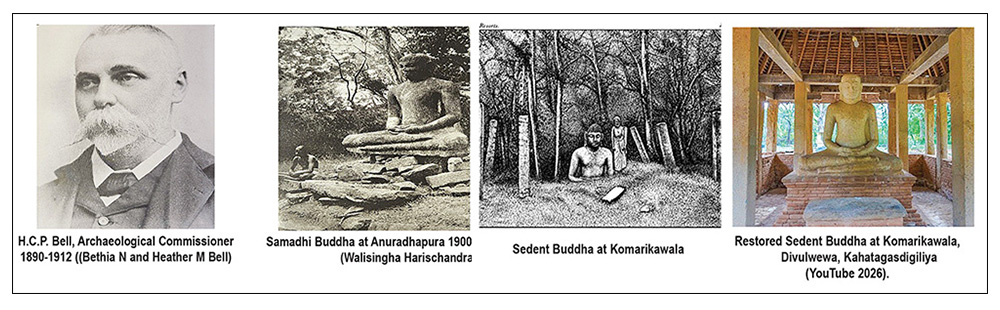
by Lokubanda Tillakaratne
H.C.P. Bell, the first Archaeological Commissioner of modern Sri Lanka and his team of men and women, a motley collection of villagers in Nuwarakalaviya, commonly known as Bell Party, have unearthed restored our lost civilisation, extending over two millennia. Except for the remarkable volume, written 30 years ago by his two granddaughters, Bethia N and Heather M Bell, H.C.P. Bell, Archaeologist of Ceylon and the Maldives (1993), there is not much written by Sri Lankans about him and his inconspicuous but untiring work-force.
Now, every time we visit the old city of Anuradhapura, pride and disbelief wash over us as we see the brick and stone monuments and structures our ancestors built and brought back to life by the Bell Party.
But many of us have not given thought to these men and women who, over a century ago, help Bell to resurrect our history – stone statues, pillars, brick stupas (seven of them in the old city), some easily surpassing the Great Pyramids in Egypt, and underpinnings of Sri Lankan past that had been in a ruined state for ages.
The Team
Men and women of the Bell Party were hired long before archaeological work in Sri Lanka was sanctioned by Ordinance 15 of 1900. This Party consisted of Tamils, Moors, and Sinhalese. In the second season of work, at Sigiriya, the colossal rock fortress, rising 600 ft in the middle of velvety green country, bordering Nuwarakalaviya, some men from Anuradhapura brought their wives, as the pay was higher there because of the difficult working conditions.
In Bell’s writings, the official designation of the Bell Party was “coolies,” the lowest title a government bureaucracy had ever invented. At Sigiriya, they were called “basket men,” after the earth they removed to revive the moats and walkways. They were unnamed entities but toiling in the unforgiving jungles and deserted vistas, under the equatorial sun.
Among them was a subgroup of workers Bell called the “Earth Party,” employed mainly to dig and move earth around these sites. But they were at the bottom of the Archaeological Survey hierarchy, though they symbolised the mettle and drive of the survey establishment and the spirit of their ancestors. The only thing they lacked was the chisel and hammer to carve out new stone masterpieces, like the ones buried all over Sri Lanka. They complemented it with their unalloyed character – the will to work hard. So Bell often called them “warriors.”
At first, only 30 of them were hired. Except for Kegalle District, Sigiriya, and Hambantota, the majority of them worked in the North Central Province (NCP). As work progressed, the Bell Party grew to over 100, and multiple units worked in several places, simultaneously. In 1896, at Sigiriya, the Bell Party had 115 people, including 20 Tamils, all recruited from Anuradhapura. At work sites, they lived in lines of leaf-and-thatch huts.
There were times and sites where Bell built a Party in loco. He went to a nearby village, called upon the Vel Vidane, and got help to “hunt” for workers. Some villagers found the work was hard. Then, as the day dragged on, one by one, some quit and quietly sneaked into the jungle, as happened at Medirigiriya once.
Bell Party had no experience in archaeological work. Neither did Bell, who came to Sri Lanka in 1873, as a young Ceylon Civil Servant (CCS), without any training in anything old. But in Bell, the Party found its inspiration.
Bell is the father of Archaeology surveys in Sri Lanka. A blue-blooded Irishman, he was born in British India, and studied in England. He proved to be a man of all trades, starting as a writer for the CCS, then as a customs officer, district judge, and finally, in 1890, the inaugural Archaeological Commissioner. The moment he stepped off the ship, he fell in love with the island so much that he chose to live here after retirement. After his death, he was cremated at Kanatta, in Borella. He still has descendants in this country. The treatise about him by his granddaughters, noted earlier, proves his transactional legacy, and love for this country runs in the family.
He worked for 23 years in Anuradhapura and left an indelible legacy through his and his Party’s early work in the archaeological surveys. In the recesses of my memory, I remember some old Bell Party members in the 1960s who worked for Bell Mahattaya, evoking nostalgic memories of him. They proudly claimed, “We worked in the Bell Party.”
These men did not have CCS appellation to their names. Many scarcely knew how to write or read. But they had something primal – they knew the pulse of the jungle and the size of the earth where things Bell looked for were hidden.
Their stories are like travels in wonderland – walking into clearing the wooded area where serene statues are surrounded by granite columns with carved capitals veiled in eternal quietness, many half-buried in earth, others in recumbent position, apropos to decorate a meditation hall. Yet the full story of the raw history of these men and women has been absent from conversations related to archaeological work in our country.
Bell Party members, some of whom could well be descended from those who worked on these granite wonders, were the first to see after an interregnum of centuries what their ancestors had done in this corner of the earth, now in a land ruled by His or Her Majesties living oceans away.
Bell knew he was getting a very disciplined bunch, and working with them was easier. Besides being tireless workers, the Nuwarakalaviya people were known for their good behaviour. L.F. Liesching, a one-time Magistrate at Anuradhapura, wrote, in 1870, about the orderly conduct of about 20,000 people, gathered in Anuradhapura for Poson Poya, without a single policeman present because no one thought to disturb the peace. Government Agent J. F. Dickson wrote that these men came from the “Oriental Village”, which remained as a pure and simple type.
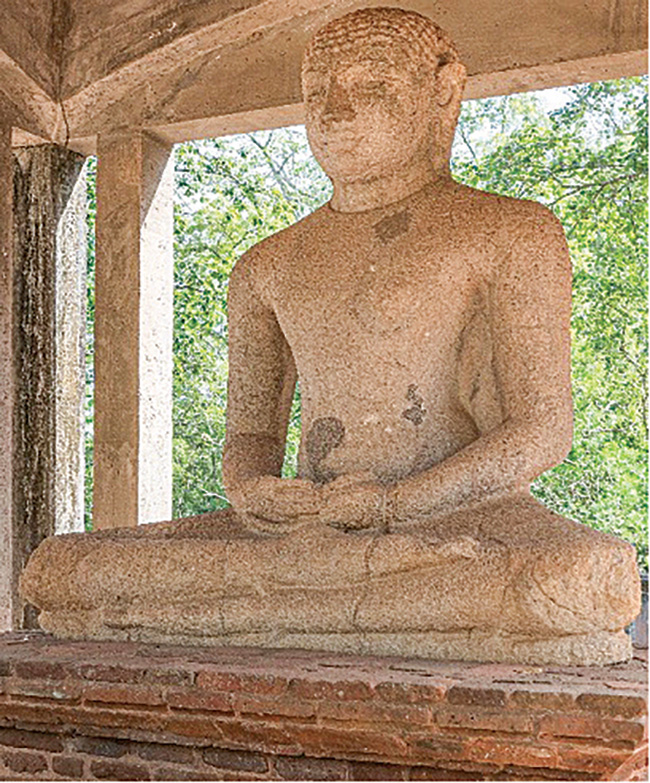
Samadhi Buddha at Anuradhapura after restoration. (Wikipedia)
Bell Party’s mantra was honesty and love for their work. They were in vogue in their original form, proud to be among the first workers on the NCP payroll. It gave them stability because it was the only mass-scale paid employment programme available at the time in this province. At the beginning, there were more of them than teachers.
And as long as ancient items kept sticking out of the earth, in the province, the Bell Party had guaranteed employment. Their salary was 30 to 50 cents a day, when a seer (සේරුව) of rice cost 12–20 cents. During pre-rupee and cents days, at Sigiriya, because the task was more difficult, workers received a panam more than those at Anuradhapura.
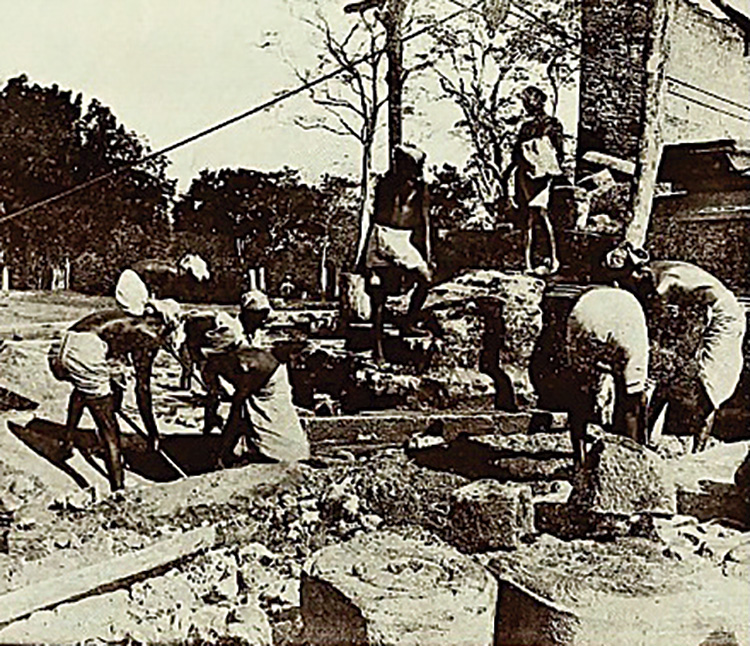
Bell Party at work, Watadage South Stairs
Bell fought for housing for his staff, draughtmen, clerks, and photographers in the department; they also received pension perks. His ‘Party’ members, meanwhile, had no such luck. They were disbanded without any retirement benefits! Their names were not even a footnote in the reports Bell filed.
We now know the Party was on the fringe of the team, even though they did the hardest work.
But the Party men were hardened, unnamed entities, equally dedicated to the work assigned to them. They did it drenched in sweat, dust, and mud. Their work was not rajakariya, or corvée duty, which the colonial rulers abolished in 1832.
Nuwarakalaviya villagers knew Bell Party was not as sophisticated as those sitting behind a desk in the old Kachcheri. Nevertheless, they were self-made historians and geologists, digging trenches in treacherous conditions and finding gems of our past. Wrinkled skins, baked, and hardened, and palms with calluses imitating tortoise shells were rewards of their labour.
I was a teenager when they were in their 70s and 80s. I listened in awe as they talked about fallen stonework they raised and treasures they unearthed for Bell Mahattaya. They worked with fervent devotion and care; they were treasure hunters of a sort, but it never crossed their mind to desecrate their finds or enrich themselves with them. Instead, they cheered each find, not surreptitiously like today’s treasure-hunting midnight goons.
Difficulties They Worked Under
Written accounts show that the Bell Party had few supporters in government. Therefore, in the beginning, the Royal Asiatic Society, in Colombo and England, provided funds for Bell’s work. The government’s stingy attitude toward establishing an archaeological survey and restoration, and Bell’s proprietorial tone in his letters to the government, were evident in the friction over requests for additional funds to restore two stupas: Abhayagiriya and Mirisawetiya. In one letter, the government went low, describing Bell as “morbidly sensitive when ‘his ruins‘ (italics mine) are in any way affected.” In one instance, when Bell asked for appropriation of Rs. 10,983, the government approved only Rs. 2800!
Bell and Bell Party also faced dissent from some sections of the native community. In the early 1900s, the Anuradhapura Buddhist Defence Committee charged that the Bell Party’s work was “experimental exploration”. But Bell had all the cards; the government had declared all archaeological sites as crown land. The Ceylon Morning Leader published an editorial charging that sacred sites were being unnecessarily invaded.
His deliberate epistolary style touched every edge of expression. But he sometimes got into trouble for how he described the ruins he unearthed. A writer in The Buddhist, a publication at the time, once took Bell to task for his offhand language describing a fallen and half-buried Pankuliya Buddha statue near Anuradhapura with “insinuating and odious comparisons.” In the Legislative Council, S.N.W. Hulugalle suggested the “excavations were acts of sacrilege.” After experiencing four centuries of brutal colonial rule, anyone at the time would have understood such anxiety.
Then there were the health concerns. Bell once got sick with fever three times in a month. In the 19th and early 20th centuries, no doubt the Bell Party also suffered from measles, pneumonia, malaria, smallpox, and usual worksite accidents.
Danger lurked in the dark bowels of caves when these men had to search them for archaeological evidence. An angry bear could come crashing to greet them without a warning. A swarm of hornets once got irritated and came after the Party while they were busy excavating the Erala Sohona in Anuradhapura. At another time, a bullock cart carrying supplies turned over trying to negotiate the embankment of a stream.
Out in Africa, Howard Carter’s work on pyramids, mountains of three-wheeler-sized stone blocks rising from the barren desert for the whole world to see, was easy.
But by nature, Bell Party’s work sites were buried in deep forest. Their peregrinations in search of signs of ancient works across verdurous Sri Lanka spanned hundreds and hundreds of square miles.
On one continuous circuit of 50 days, from September 5 to October 25, Bell Party covered five Koralés in the NCP — Kanadara, Uddiyan-kulam, Maha-potana, Kalpé, and Kunchittu. Bell wrote that in 1896 he started with the Party, northwest from Anuradhapura and crossed the Wilpattu jungle to reach the Western Coast, then an isolated part of the country. After walking from August 30 to October 4, they encountered only one village! But there was no shortage of wild elephants and bears, which were common as herds of buffaloes. For example, in 1899, at an elephant kraal held for Governor Sir West Ridgeway at Nikaweratiya, some 50-odd elephants were captured in one roundup.
By 1905, the Party had cleared over 200 sites in Anuradhapura alone. These sites were called Bell Kálla (Bell’s work site). That was in addition to over 500 acres a year they cleared beyond the city limits, costing Rs. 3–6 an acre. Some inscribed stone slabs were carted from Polonnaruwa to the first makeshift museum at Anuradhapura – a corridor at the hospital in the Old City. A few times, an Elephant Cart was used to transport a few moonstones. In 1907, 125 cartloads of stone relics were transported from Anuradhapura to the Colombo Museum. By 1900, Bell Party had found 691 inscriptions from caves, rocks, pillars and slabs!
(To be continued)
By Sanja de Silva Jayatilleka
On the 3rd October 2025, at the 80th Session of the United Nations General Assembly in New York, Sri Lanka made clear to the world in no uncertain terms, its stand against Unilateral Sanctions, also known by its official term, Unilateral Coercive Measures (UCM).
Unilateral Coercive Measures are economic, trade, financial, or investment restrictions imposed by one state on another, without authorisation from the UN Security Council. The UN defines it as follows:
“Unilateral Sanctions usually refers to economic measures taken by one State to compel a change in the policy of another State. Examples of such measures include trade sanctions in the form of embargoes and the interruption of financial and investment flows between sender and target countries. More recently, so-called “smart” or “targeted” sanctions, such as asset freezing and travel bans have been employed by individual States in order to influence persons who are perceived to have political influence in another State”. https://www.un.org/en/observances/day-against-unilateral-coercive-measures
‘Secondary sanctions’ are intended to prevent third parties – States, commercial entities and individuals from trading with countries that are subject to sanctions unilaterally imposed by another country.
In her report titled “Secondary sanctions, civil and criminal penalties for circumvention of sanctions regimes and overcompliance with sanctions” dated October 2022, the UN Special Rapporteur on the Negative Effects of UCM says:
“…the Special Rapporteur laments the proliferation of means to enforce unilateral sanctions against States or key economic sectors, or to target foreign companies, organizations or individuals. Secondary sanctions are also applied to entities or individuals for their presumed cooperation or association with sanctioned parties or for helping them to circumvent sanctions.
Foreign companies subject to secondary sanctions can be blocked from doing business in the sanctioning State, be banned from using its financial markets or be prohibited from transactions involving its currency…Secondary sanctions may also take the form of financial penalties in some circumstances.” (https://docs.un.org/en/A/HRC/51/33)
In June 2025, the General Assembly proclaimed 4th December as the International Day against Unilateral Coercive Measures.
The UN considers Unilateral Sanctions and Secondary Sanctions as contrary to International Law, the UN Charter and the principles of state sovereignty.
On October 3rd last year, Sri Lanka agreed with the UN’s stand on UCM and was a signatory to a Joint Statement with 27 other countries presented to the 3rd Committee of the United Nations General Assembly, the text of which included the following:
“Today’s world is plagued with rampant unilateralism and raging unilateral coercive measures. History has proven that UCMs are one of the culprits for international turbulence and disarray in world order… the international community must remain clear-headed, strengthen unity and cooperation, and firmly curb and stop such unlawful practices. Developing countries and their populations continue to fall victim to unilateral coercive measures, which violate the principle of sovereign equality and cooperation, intervene in other countries’ internal affairs, disregard the purposes and principles of the Charter of the United Nations and undermine the foundation of multilateralism and international rule of law.
… Regrettably, despite the global call to urgently lift UCMs, the imposition of these illegal measures continues to cause devastating, sometimes even life-threatening consequences, to targeted countries and their peoples. UCMs, coupled with secondary sanctions and over-compliance, exacerbate existing humanitarian and economic challenges, gravely affect the stability of the global production and supply chains, as well as food, energy, and financial security, and seriously undermine the world economic order and the efforts of the countries concerned to achieve SDGs.
…Moreover, UCMs severely violate the basic human rights, including the right to life, health, development, and education and impede the ability of targeted countries to realize those rights.
… We also call upon Member States, the UN system, and other international organizations to jointly oppose such unlawful practices and help targeted countries mitigate their plight.”
(https://un.china-mission.gov.cn/eng/hyyfy/202510/t20251004_11722993.htm)
Not So Principled Now?
A few days ago, Sri Lanka came face to face with this issue, not for the first time since this government took office, when sanctioned Iranian ships sailed close to its waters.
The last time Iranian ships sailed close to our waters was when our Navy Commander invited fellow Iranian Naval trainees aboard an unarmed ship at a joint exercise in India to swing by on their way home to visit us. When they did, we had them sitting outside our territorial waters without granting permission to enter our waters –until the problem was ‘resolved’ by a US submarine which blew up the ship and double-tapped it to ensure its unarmed sailors drowned. Evidently, this was the first sinking of an enemy vessel by torpedo by the U.S. since World War II.
The second distressed Iranian ship with another lot of unarmed Iranian sailors, by then doubtless in mortal dread of being torpedoed and drowned, got lucky when our President finally decided to bring the sailors minus the ship to shore, and send them home to Iran by air.
A few days ago, it was reported, including in the Wall Street Journal and local newspapers, that several sanctioned Iranian ships, now empty after being used to transport oil to China, were stranded close to Sri Lanka’s territorial waters.
The WSJ report titled “U.S. Pressure Campaign Leaves Iranian Tankers Stranded in Asian Waters” said:
“Some 15 miles off the southwest coast of Sri Lanka, around 20 empty Iranian oil tankers are stranded, drifting with their engines idled as food, fuel and fresh water run short.
They are the most visible consequence of the new pressure campaign by the U.S. to bring Iran to heel. Dozens of Iranian or Iranian-linked tankers that had participated in the shadowy trade of getting sanctioned oil to China have been stuck in the waters near Asian countries like Sri Lanka and Malaysia since July, when the U.S. reimposed its blockade of the Strait of Hormuz.”
The UN Special Rapporteur’s report specifically stated: “In no circumstances should a sanctioning State intentionally encourage overcompliance through the design of its sanctions or through threats or any other means adopted to enforce them.”
The Jaffna Monitor reports that after the WSJ story and local media inquiries about pressure on Sri Lanka, Sri Lanka’s Foreign Ministry said this week that “American warnings against servicing sanctioned Iranian tankers anchored off the island apply to every country.”
Obviously feeling compelled to issue a clarification of its stand on the stranded Iranian ships running out of food, fuel and fresh water, the Foreign Ministry circulated a statement to the media.
Issued by Foreign Ministry spokesman Thushara Rodrigo, its primary purpose seemed to be to emphasise that US pressure wasn’t specifically applied to Sri Lanka but was applicable globally.
“..these secondary sanctions have been announced by America on 24 August and it says that if any individual or entity provides services to US sanctioned vessels risks losing access to the US financial system.”
“…these kinds of vessels are not only in Indian Ocean and loitering in some other oceans as well due to the current conflict situation and these secondary US sanctions are commonly apply [sic] across the world.”
The Foreign Ministry seemed keen to underscore that these things happen all over the world’s best oceans, not only in the Indian Ocean where we had no choice but to comply with the sanctions as in all other oceans.
Grandstanding at UN, Overcompliance at home
The Jaffna Monitor reports that on Sept. 8, “Foreign Minister Vijitha Herath said the U.S. Embassy had contacted his ministry to ask whether the authorities knew about several Iranian vessels in international waters and were tracking them.” He was quick to point out also that the ships were not in Sri Lankan waters.
Quoting WSJ, the Jaffna Monitor also reported that Sri Lanka had got instructions from the US Embassy on the risks of secondary sanctions:
“The embassy urged officials to instruct local port service providers to refuse the ships support or risk U.S. secondary sanctions, the newspaper reported. It also reported that when two Iranian-flagged container ships anchored inside Colombo’s port limits in early September, the Sri Lanka Ports Authority wrote that servicing them was not “prudent” because of the sanctions risk. Shipping companies told the Journal that permission to deliver food, drinking water, fuel and repair services to Iranian vessels had become increasingly hard to obtain.”
Jaffna Monitor adds that both Minister Herath and the Foreign Ministry spokesperson said that the ships were nowhere as near Sri Lankan waters as the Wall Street Journal placed them:
“Mr. Rodrigo and Mr. Herath both placed the ships about 24 nautical miles away. The Journal’s figure of 15 miles is about 13 nautical miles, just outside the territorial limit. Sri Lanka’s territorial sea extends 12 nautical miles from its baseline. The navy has said the vessels were near the country’s exclusive economic zone but outside its sovereign waters, and therefore beyond its direct jurisdiction.”
The Foreign Ministry spokesperson, in his ‘Clarification’ responding to inquiries about US pressure on Sri Lanka regarding Iranian Ships, urges journalists to “kindly do your reporting carefully and accurately with better understanding into the context.”
Here are some facts.
Sri Lanka is a very small, economically vulnerable country, and cannot by any stretch of the imagination stand up to “Operation Economic Outcast”, the US Treasury Department’s campaign which has authorized secondary sanctions covering Iran’s shipping among other things in what it boasts are the tightest sanctions in history.
But Sri Lanka can still stand up for and defend the right thing in principle, even if we are constrained from operationalizing it, as are many others. That is what Sri Lanka did at the UNGA’s 3rd Committee in New York, which deals with Human Rights, last year.
The Foreign Ministry spokesperson could have included in his ‘Clarification’, our already declared (2025) stand on Unilateral and Secondary Sanctions, and expressed the government’s regret at the inability to supply food and water to sailors from a friendly country that helped us during our troubles, because of the secondary sanctions which neither we nor the international community represented by the UN, approve of.
Could the Ministry not have used this opportunity to reiterate our position, so that we add to, not subtract from, international efforts to end the resort to unilateral sanctions which the UN considers unlawful, and in many cases, violates International Humanitarian Law? Did we not owe it to those sailors who died just outside our territorial waters?
Instead, we are at pains to deny any specific pressure on us by the sanctioning state. The UN Special Rapporteur uses the term ‘overcompliance’ through fear, by third countries, in relation to secondary sanctions.
Recently, according to a report on the US Embassy website, Sri Lanka seems to have taken ‘overcompliance’ to the next level.
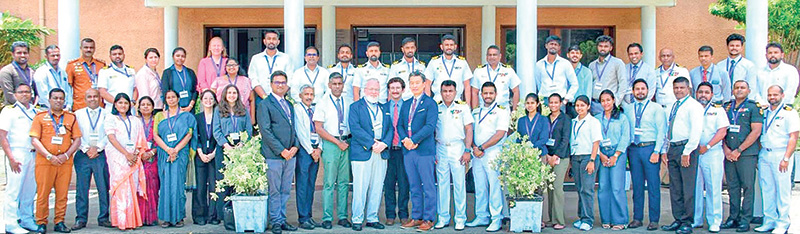
40 Sri Lankan officials were trained this month by the U.S. Embassy in Sri Lanka, through the U.S. Department of State’s Office of Cooperative Threat Reduction and in partnership with the Atlantic Council to “detect and respond to maritime sanctions evasion that threatens U.S. security interests…”
Hopefully, Sri Lanka’s participation in this training is only to learn how to effectively evade secondary sanctions, and not to become part of an implementation task force of unilateral coercive measures, which Sri Lanka has already condemned at the UN.

Showers or thundershowers will occur at several places in the most part of the island after 1.00 p.m

Geneva takes up Sallay’s case and govt. ignores opportunity to answer accusations

Section of wartime KKS High Security Zone vacated to facilitate economic development in the area

Lawyer lodges complaint against Govt. Printer, Media Ministry Secy.

Sri Lankan troops in joint anti-terrorist exercise in Russia

Nine Indian poachers brought to KKS with their boat

‘Dates have the highest sugar content to fight Coronavirus’

Sunday Island 27 December – Headlines

#SundayIsland 17th December – Headlines

Sunday Island – 28th March

Sunday Island Headlines – 21 March

Sunday Island – 21st February – Headlines
-

 Latest News6 days ago
Gold winner Tharanga gets brand-new Honda Vezel from SLAAJ
-

 Features6 days ago
Why Sri Lanka needs an Inclusive Civic Nationalism – urgently
-

 News5 days ago
US-assisted ‘Ice’ detection: NPC to examine IGP’s move to transfer drug-busting team
-

 Features7 days ago
Thailand’s biggest new global star …
-

 News7 days ago
First cases taken up by SC after enactment of 22A dismissed
-

 News6 days ago
Civil society activist accuses govt. of favouring Ven. Gnanasara
-

 Editorial4 days ago
Colombo Port drug bust: The plot thickens
-

 Editorial7 days ago
Aftershocks of 22A