
Features
The World after Gorbachev and Sri Lanka after JR Jayewardene

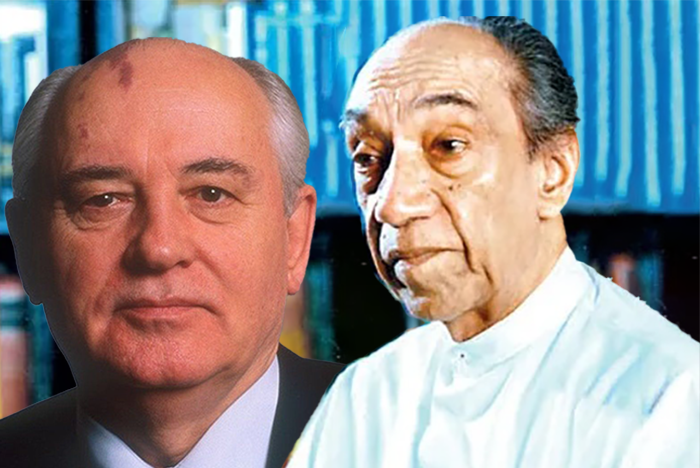
Mikhail Sergeyevich Gorbachev who died last Tuesday was hardly known outside the Soviet Union when JR Jayewardene made himself Sri Lanka’s President in 1978. Seven years later, on March 11, 1985, Gorbachev would be become the General Secretary of the Soviet Communist Party. He was 54 years old and was the first leader of the Soviet Union born after the October 1917 Bolshevik Revolution that turned Tsarist Russia into the Union of Socialist Soviet Republics (USSR).
He was also the one to preside over the dissolution of both the Communist Party and the Soviet Union. He announced his resignation as Soviet President and Commander Chief on Christmas Day 1991. The changes he unleashed in little over six years are still reverberating throughout the world and more so in the attritive war between Russia and the Ukraine, the two largest republics of the old USSR.
Sri Lankans have had a split attitude towards the October revolution and the Soviet Union thereafter. There were those who were fascinated and inspired by the October revolution, and others who felt threatened and were fearful of its ripples reaching the shores of feudal Sri Lanka. Such fears were not unwarranted.
The Sri Lankan Left movement that emerged in the 1930s was both inspired by the example of the Soviet Union and also vigorously carried into Sri Lanka the bitter ideological disputes among Russian Bolsheviks. The UNP governments after independence were markedly pro-western and anti-Soviet in their foreign policy. The SLFP governments after 1956 took a much friendlier attitude towards the Soviet Union as part of their non-aligned approach to international relations.
The Third World exuberance over global decolonization in the 1960s further augmented the Soviet-Sri Lankan relationship. The Soviet Union and other East European socialist countries became new destinations and scholarship sources for young Sri Lankan students and professionals seeking university education and qualifications.
New cross-sections of Sri Lankan society benefited from the new foreign openings, which until then had been limited to students from traditional elite circles going to western, mostly British, universities. Literary connections were established through translations of writings between the Russian and Sinhala and Tamil languages.
The economic nationalism of the era led to the opening of several industrial corporations directly based on Soviet financial and technological support, in areas where import substitution had become necessary and for which there has been no private sector interest despite years of trying. What no one remembers now is that state industrial corporations were first established by GG Ponnambalam, the self-acknowledged “unrepentant opponent of socialism,” but a brilliant Minister (of Industries) in the DS Senanayake (UNP) government after independence.
Some of them were against the recommendations of World Bank experts, which were equally expertly rejected by Ponnambalam. Ponnambalam’s ministry even delicensed failing private industries, so much so that Pieter Keuneman, a young Communist MP at that time, mockingly called Ponnambalam the “vitriolic minister” for ‘dissolving’ small private industries.
The highpoint of Sri Lankan economic nationalism in the 1960s was the nationalization of the petroleum industry and the setting up of the Ceylon Petroleum Corporation (CPC) to take over what was then the monopoly of three global multinationals, Shell, Esso and Caltex. Interestingly, it was the UNP government (1965-70) of Dudley Senanayake that built the oil refinery in Sapugaskanda for the state petroleum corporation to refine crude oil from Iran for local consumption and potential exports.
Through all the economic crisis and shortcomings of industrial corporations that marked the 1970-77 United Front government, the CPC’s performance at Sapugaskanda was steady and even a new urea plant was built next door (by the State Fertilizer Manufacturing Corporation) to produce urea (for fertilizer for domestic agriculture) using naphtha, a byproduct from the refinery.
However, the economic changes after 1977 hugely increased the demand for petroleum products, and for electricity, and the CPC and CEB were stretched virtually overnight beyond their production capacities. The UNP government decided to export naphtha, shut down the new fertilizer factory, and hand it over to a private business for producing nails!
As I wrote a few weeks ago, it is now poetic justice for Ranil Wickremesinghe to be called upon as President to put Sri Lanka’s petroleum and electricity houses in order after they were neglected and mismanaged over 17 years (1977-94) by the UNP government of JR Jayewardene in which he (RW) was a cabinet apprentice.
From Gorbachev to Putin
It was during the same 17 years that President Jayewardene introduced fundamental changes to Sri Lanka’s political and economic systems. And over six years (1985-91) midway through that period, General Secretary Gorbachev launched far reaching changes within the Soviet Communist Party on the then famous planks of glasnost (openness) and perestroika (restructuring), hoping for the inner-party changes to spill over into the broader Soviet society and institutions. Gorbachev pursued both political and economic restructuring, in contrast to China which focused on a thoroughgoing economic restructuring while maintaining the Communist Party’s stranglehold over the political system and society. The changes worked in China but failed in the Soviet Union.
China did not have the burdens that Gorbachev had to unload off the Soviet Union: a complex and multi-ethnic federal system under the control of a single Party; the costly system of political and military control over Warsaw Pact countries; and the blood sucking war in Afghanistan. In addition, the Soviet economy that recorded impressive strides in the pre-war and post-war periods (a fact now acknowledged by mainstream economists) had irretrievably fallen to the pits during the long, soporific tenure of Leonid Brezhnev (generally attributed to Cold War military budgets and poorly advised resource allocations and production priorities). The Soviet political system was also not easily amenable to radical changes because of its entrenched bureaucracy, depleted institutions and a stunted civil society.
At the same time, Gorbachev’s changes created far reaching effects in Europe and worldwide. He pulled Soviet Union out of the Afghan quagmire. He successfully forced nuclear disarmament treaties on the US and on NATO. And he let the Berlin Wall fall, which many consider to be the beginning of the post-colonial phase of globalization. East European countries broke free of the Warsaw Pact and the Soviet Union itself, much to Gorbachev’s mortification, imploded leaving Russia alone in its winter of discontent without a Tsar and without a Politburo. He was reviled in Russia but was celebrated in the west. For all their public adulations, however, western leaders, especially the US, did not purposefully and sincerely support Gorbachev achieve his perestroika goals.
While Prime Minister Thatcher and President Reagan publicly warmed up to the man, they did not persistently overrule the hawks in their administrations and in NATO who resisted change on the grounds that they could not trust Gorbachev. The American Right believed that it was America’s economic strength and military might that forced the Soviet Union to accept ‘defeat’ in the Cold War and adopt glasnost and perestroika changes. This thesis has been consistently debunked by western historians, most notably by Oxford University’s Archie Brown who has reminded that Gorbachev’s emergence in the Soviet had nothing to do with any US policy.
The West’s biggest betrayal has been over its unwritten undertaking to Gorbachev that NATO will not expand into Eastern Europe following the dissolution of the Soviet Union and the Warsaw agreements. NATO and the West went ahead expanding and collecting new members regardless of Gorbachev’s protestations from retirement. The NATO expansion is the most weighted single factor behind the emergence of Putin and now his war in Ukraine.
Nina Khrushcheva, a Professor at New York’s New School and the great-granddaughter of Khrushchev who ordered the Berlin wall built in 1961, has recalled in her obituary what Gorbachev told her when she asked him why he did not send tanks to Germany in 1989 to protect the wall: “We shouldn’t dictate to sovereign countries their way of life.” Gorbachev stood by that principle all through his six years in office, and has lived by it for over thirty years after retirement.
On the other hand, Gorbachev’s principle of non-interference has been repudiated not only by Russia’s Putin but also by the West and NATO. To wit, the dismemberment of Yugoslavia, two invasions of Iraq, another long distance war in Afghanistan, and continuing imbroglios in the Middle East and North Africa. And the Western countries that fomented and cheered disruptions in Eastern Europe as democratic revolutions, are now having democracy threatened in their own countries by new populist manifestations of the old forces of race, bigotry and fascism.
The emergences of Boris Johnson in Britain and of Donald Trump in America are not accidental aberrations. While Britain has been able to get rid of Johnson without too much fuss thanks to the parliamentary system, the US with its presidential system is stuck with Trump even after getting him out of office after a single term.
From JRJ to Ranil-Rajapaksa
For the rest of the world, the collapse of the Soviet Union and the emergence of China as a market economy powerhouse have meant the removal of the Socialist Second World from the world order. The Left Parties in the Third World lost their external reference points for the argument for socialism in developing countries or emerging economies. In Sri Lanka, the 1977 victory of JR Jayewardene was an electoral repudiation of the people’s experience of what was politically bandied as socialism over nearly two decades. But President Jayewardene’s agenda went beyond more than reviving the economy and relieving people of their scarcities.
While Gorbachev’s reforms in the Soviet Union were intended to open up politics and facilitate power sharing, Jayewardene’s agenda was to centralize and personalize executive power behind the facades of the old parliamentary system. Where Gorbachev failed, President Jayewardene succeeded almost perfectly by his expectations. But 45 years on, what was once celebrated as calculated political success has turned out to be a wholesale disaster for the country. Both economically and politically.
If the emergence of the Rajapaksas exposed the faults of the presidential system, the failed presidency of Gotabaya Rajapaksa has made everyone sick and tired of it. Enter Ranil Wickremesinghe, the apprentice in 1977 and now the elder statesman – first as Gotabaya’s Prime Minister, then as Acting President, and now as interim President, but actually carrying himself as if he is a new President elected by the people. It is not clear if President Wickremesinghe is now intending to get rid of the executive presidency, or if he will try to keep it at least a term longer so that he can make one last electoral go at it.
In addition to being President, Mr. Wickremesinghe is also his Minister of Finance. On Tuesday he presented the interim budget replacing Basil Rajapaksa’s non-budget for 2022. It was really a precursor to the IMF’s statement a day later that the IMF Team in Colombo and government officials have reached staff-level agreement to support the authorities’ economic adjustment and reform policies with a new US$2.9 billion funding facility over a 48-month period. The agreement is subject to ratification by the IMF Board in Washington.
The expectation is that the IMF agreement would help Sri Lanka obtain debt relief from Sri Lanka’s creditors along with additional financing from multilateral partners to help ensure debt sustainability and additional funding support. The infamous ‘haircuts’ that creditors should agree to bear are yet to come and the discussions around it are reportedly being facilitated by Japan. China remains non-committal even as its agreement is essential for reaching agreements with other bilateral creditors and private lenders. Haircuts can be significant and varying arrangements have been used for different countries in the past. The Russian experience in 1998-99 involved a rather ‘tough haircut’ (50-70%) for external creditors and more favourable treatment in dealing with domestic debt.
There are already calls against delaying and using different mechanisms for domestic debt restructuring to prevent the Employees’ Provident Fund going bankrupt and significant losses to domestic banks. A related political question that is bound to arise will be about the ‘haircuts’ that Sri Lanka’s parliamentarians, especially SLPP MPs, are willing to take for themselves. Already, many MPs are known to be against early elections to secure their pensions, and SLPP MPs are not looking for any haircut but prioritized compensation for damage to their properties during the May 9 violence that was in fact provoked by their own leaders. The President will have his handsful in determining who in parliament will get haircut and who will get compensation and in which order.
Mr. Wickremesinghe had it easy lecturing helpless government clerks in Anuradhapura that they should either work or go home. His words will carry far greater weight if he were to say to Nivard Cabraal that he is not entitled to extra pension, or to former Presidents that they are not entitled to government pensions and retirement residences if they continue to be active in politics and remain lawmakers in parliament. Mikhail Gorbachev lived for over 30 years after his retirement on meagre government support to which he was entitled. He did not look for any American Green Card but chose to remain in Russia, occasionally defending his legacy even though his legacy was already dead.









 At a time when Sri Lanka’s foreign policy is coming under intense scrutiny by some local sections it is only right that impartial and independent commentators shed some clarity on what fundamental foreign policy directions Sri Lanka ought to take. The extremely fluid and complex nature of current international politics renders such an understanding crucially important.
Given its vulnerabilities in a number of spheres Sri Lanka has no choice but to persist in broadly following the path of Non-alignment. That is, it should be ‘a friend of all and an enemy of none’, to the extent possible. However, it does not follow that in the process it could compromise what is seen as its national interest.
The latter point needs stressing against the backdrop of the criticisms the Sri Lankan government has been attracting from some quarters over what is made out to be some opaqueness in security and defence cooperation agreements it has entered into with India. It remains advisable for the Sri Lankan government to enter into pacts of this nature with India, but the government is obliged to disclose the contents of these agreements to the Sri Lankan people without undue delay in consideration of the uncompromisable sovereign rights of a people in a democracy.
However, there is no denying that the government should make it a central foreign policy premise to always work in cooperation with India. A consideration of what it cost Sri Lanka in the past to be in a disharmonious relationship with India and how such policy missteps worked against Sri Lanka’s best interests ought to dictate to Sri Lanka the advisability of maintaining uninterrupted cordial ties with India. Moreover, common sense ought to drive home to a country the costs of being at loggerheads with one’s closest neighbour who has also proved a ‘ready friend in deed.’
That said, it is the bounden duty of Sri Lanka’s diplomatic community or establishment to ensure that such cooperation does not degenerate into a policy of subservience towards India. That is, finesse and farsightedness in local diplomacy become prime requirements.
While India’s geographical location and physical size, besides her other strengths, contribute towards her centrality in regional and world affairs, her neighbours would be thinking and acting far-sightedly if they not only focus on India and her legitimate interests but also ensure continuous friction-free intra-South Asian relations. That is, for them collective South Asian well being should be of fundamental importance.
Much more than for India perhaps, such harmonious ties are of inestimable importance to India’s neigbours who are up against multiple vulnerabilities which are to a great extent regionally rooted. The latter could never, that is, afford to take their minds off the region’s collective development prospects.
The above are some of the reasons why it could prove highly counter-productive and self-defeating for the ‘South Asian Eight’ to render dormant and ineffective the historic SAARC organization. Rather than ‘dead’ SAARC has been allowed to drift into the ‘Limbo of Forgotten Things.’
The growing inter-dependence of the ‘SAARC Eight’ ought to impress on the collectivity the need to step-up regional cooperation in multiple areas which impinge on its members’ legitimate interests. For instance, the youth-led ‘Cockroach’ revolts, first in India and subsequently outside, should convince South Asia that it is continuing to be plagued in a major way by poverty and equity-linked issues. That is, West-inspired, largely market economics-dictated ways to see an end to poverty are simply not working completely.
Likewise climate-related questions are ravaging South Asia in unimaginable ways; Nepal being just one case in point. The rationale for regional cooperation remains valid and undefeated. It is time for revived and stepped-up SAARC cooperation. That is, the solutions to the region’s development dilemmas need to be found in mainly the region.
This amounts to making a case for a continued sense of ‘Southasianness’ among the SAARC countries. That is the conviction should be firm that they know their developmental challenges best and that answers to these issues must be primarily evolved by the grouping itself in cooperation with concerned sections.
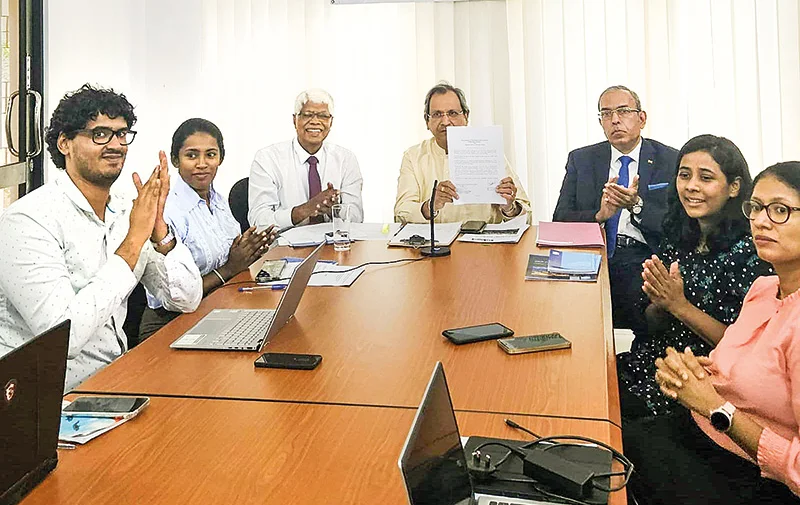
From the above viewpoints the Regional Centre for Strategic Studies (RCSS), Colombo did very well to tie-up with the South Asian University (SAU), India, to increase public awareness on the developmental problems affecting South Asia and for initiating a number collaborative measures that aim at ameliorating them. The relevant agreement was formalized in early September at the RCSS. The sealing of the pact took place under the aegis of SAU President Prof. K.K. Aggarwal and RCSS Executive Director Ambassador Ravinatha Aryasinha.
A press release issued by the organizations said the collaboration aims ‘to foster research networks, partnerships and collaborations for transformative change across South Asia.’ It also mentioned that the partnership marked the first agreement to be signed by SAU with an independent think tank in Sri Lanka.
Among other things, pacts such as the above are bold moves in the direction of fostering a spirit of intellectual independence in those areas of the South facing some of the stiffest developmental challenges. Rather than ‘import’ solutions to these challenges from outside the region, the SAU-RCSS initiative aims at fostering fresh approaches to evolving solutions to problems that are uniquely South Asian.
It is hoped that the SAU and RCSS initiative while leading a to a greater degree of Southern intellectual independence in the area of development thinking would also help in kick-starting the SAARC process all over again in a major way.
What ought to lend fresh urgency to the latter undertakings are fast-breaking current developments in international politics. It ought to be perceived by the most underdeveloped regions of the South that going forward their well being would matter least or not at all to the major powers of both East and West.
For example at the time of writing the foremost among US and Chinese political leaders are meeting in the US in what is made out to be a historic coming together of sorts to address issues of common concern. It is highly unlikely that the parties would be addressing the economic preoccupations of the least developed countries. The same goes for other states that matter from the East and West.
Essentially, the US and China would be looking at ways of strengthening business ties that matter majorly for them. The South and its issues would prove to be of peripheral interest, if at all they happen to matter to the protagonists. Such developments ought to be fresh reminders to the South and their collaborative organizations that there is no escaping self-help and joint solidarity.

by Prof. M.W. Amarasiri de Silva
Adult literacy has for a long time been one of Sri Lanka’s greatest sources of pride, serving as a social indicator that has set the country apart from several of its neighbours in the region. For many years Sri Lanka has been recognised for keeping its literacy rates at a level like those of middle-income countries and even some high-income ones, even though it has faced economic difficulties and political instability. However, since new global research has now shown an unexpected and concerning decline in adult literacy in several high-income countries, it is important to consider what this means for Sri Lanka.
The phenomenon described by Jishnu Das, Yash Dhuldhoya and Ethan Sager, the unexplained fall in functional literacy among adults in wealthy nations. calls for a more thorough examination of the nature of literacy, the pressures exerted by the modern information environment, and the vulnerabilities that Sri Lanka might encounter as it moves towards a more digital, ageing and complex society. Even though Sri Lanka’s basic literacy rates remain high and steady, the global trend acts as a warning that literacy is not a fixed accomplishment but a dynamic capability which must be continually fostered, safeguarded and adapted to changing circumstances.
Decline in functional literacy
The drop in literacy rate in high-income countries is not due to people losing the ability to read or write in the ordinary way. On the contrary, it reflects a decline in functional literacy, which is the capacity to deal with, understand, and apply information in real-life situations. This kind of literacy involves following instructions, comprehending official documents, using digital interfaces, interpreting medical information, and making sense of complicated texts that demand continuous attention.
Researchers stress that the decline cannot be attributed merely to disruptions caused by COVID-19 or the increasing use of smartphones; instead, there is going on something more fundamental: a weakening of the cognitive and informational bases that adults need to function properly in modern society. In countries such as the United States, the percentage of adults regarded as functionally illiterate has increased significantly, indicating that even highly educated societies are having difficulty in keeping up the skills required to handle ever more complex streams of information.
Sri Lanka immune?
At first sight, Sri Lanka seems to be immune from this trend. The country’s adult literacy rate is still above 92 per cent and youth literacy is even higher. According to the 2024 Census, literacy rates exceed 97 per cent among people aged ten and over, with nearly equal levels between the sexes. These figures show the continued strength of Sri Lanka’s system of free education, a system which in the past has guaranteed widespread access to school and has produced generation after generation of citizens who could read and write at a basic level.
There has also been a steady improvement in educational attainment, with an increasing number of adults finishing secondary education and a larger proportion going on to tertiary institutions. Unlike the mysterious drops observed in rich countries, Sri Lanka’s literacy figures demonstrate stability and even a slight improvement.
However, although the surface appearance is reassuring, an even more complicated reality exists. The literacy figures for Sri Lanka only record basic literacy, that is, the ability to read and write simple sentences, and they do not include measures of functional literacy. It is impossible to tell from these statistics whether adults can interpret a bank statement, understand a medical prescription, use an online government portal, or critically assess information that is spreading on social media. As is shown by the global trend, having a high level of basic literacy does not ensure a strong degree of functional literacy. On the contrary, functional literacy can fall even if basic literacy stays the same. This difference is important for Sri Lanka, particularly since the country is currently experiencing rapid digitalization, demographic ageing, and social change.
Major risk factor
A major risk factor is the move towards digital information environments. In high-income countries, researchers believe that the prevalence of smartphones and short-form digital content may be diminishing people’s ability to engage in deep reading. Nowadays, individuals take in information in short, rapid segments by scrolling through social media feeds, quickly reading headlines, and viewing short videos. Such behaviour decreases the opportunity for sustained reading, which is necessary for keeping comprehension, critical thinking, and the capacity to deal with complex information intact.
Sri Lanka is going through a comparable change. There has been a sharp increase in the number of people using smartphones, and social media sites have become the main sources of news, leisure, and communication. Although there are many advantages to having digital access, it also results in a situation where superficial reading becomes the standard approach and could therefore lead to a decline in functional literacy over time.
Demographic ageing as challenge
A further challenge that is coming up is demographic ageing. Sri Lanka is rapidly moving towards becoming an ageing society, with an increasing number of older people who might experience cognitive decline, have less exposure to new information, and enjoy few opportunities for further learning. In high-income countries, ageing populations have led to a fall in functional literacy since older individuals have had difficulty adapting to digital systems and complicated bureaucratic procedures.
The older generation in Sri Lanka, many whom were educated many decades ago under different curriculum standards, could end up becoming increasingly vulnerable in a world in which essential services, such as banking and healthcare, are being moved online. If appropriate support is not provided, the country may witness a growing gap between basic literacy and functional literacy among older adults.
In Sri Lanka, the way in which administration and the workplace are organised has in the past placed greater trust in personal communication and on basic forms of documentation. What in high-income countries would require complex reading is instead carried out through face-to-face contact in Sri Lanka. Nevertheless, this situation is now changing. Government services are becoming available online, banks are introducing digital systems, and in workplaces there is an increasing need for employees to use electronic systems. Since these changes are happening at a faster rate, the demand for functional literacy will increase. Should adults not be able to meet these new demands, Sri Lanka might start to see the kind of decline in literacy that has been seen in other places.
Misinformation and disinformation
Another worry is the spread of misinformation and disinformation. In Sri Lanka, there has already been the quick dissemination of false information via social media, with this having an impact on public health, politics, and social cohesion. Since functional literacy is essential for allowing people to assess sources, doubt the claims made, and tell the difference between reliable information and falsehoods, a lack of functional literacy causes societies to be more open to manipulation, polarisation, and confusion.
The fact that there has been a global drop in functional literacy at the same time as misinformation has increased points to a dangerous feedback cycle: when literacy is low people become more prone to misinformation, and the misinformation in turn damages their ability to think critically about information. Given that the country has a high level of social media use and a lack of digital literacy training, Sri Lanka should take this risk seriously.
Even though there are these risks, Sri Lanka has several advantages which can assist in avoiding a drop in functional literacy. The country’s system of basic education is still strong, showing high enrolment figures and good results in basic literacy.
Families in Sri Lanka still place a great deal of importance on education and reading is still a respected cultural activity. Furthermore, because of its relatively small size and the fact that it has a centralized form of government, it is more efficient than in bigger countries to carry out nationwide literacy campaigns. These strengths offer a firm basis for developing new strategies for protecting and improving functional literacy.
Literacy a process
It should be realised by Sri Lanka that attaining literacy is not a single accomplishment achieved in childhood. In the modern world, literacy must be a skill that is constantly put into practice, kept up to date and adapted to changing circumstances. The fact that adult literacy is declining worldwide shows that even in wealthy countries with well-developed education systems deterioration can occur if adults are not supported in keeping their cognitive and informational abilities. Sri Lanka cannot afford to be careless.
It is necessary for the country to invest in adult education, in programmes concerning digital literacy and in the development of cognitive skills for all age groups. It also needs to establish ways of measuring functional literacy rather than just basic literacy so that policymakers can detect emerging weaknesses and act in advance.
A vital measure is to increase the opportunities for adult learning. Although Sri Lanka has effective literacy programmes based in schools, the country’s infrastructure for adult education is limited. Community centres, libraries, universities, and vocational institutes should take on a more significant role by providing courses, workshops, and reading programmes which are tailored for adults. The programmes should place an emphasis not just on reading and writing but also on digital navigation, critical thinking, and information processing. Adults should be given the chance to practise the skills that are necessary for them to function effectively in a rapidly changing world.
Importance of digital literacy programmes
It is just as important to have digital literacy programmes. Since an increasing number of services are being offered online, adults need to learn how to use digital tools with confidence and in a safe manner. This involves knowing how to fill out online forms, moving around on government websites, using banking apps, and being able to spot misinformation. The digital literacy courses available should be accessible, affordable, and adapted to different age groups, especially older adults who might feel put off by technology. Schools can also contribute by incorporating digital literacy into their curriculum so that future generations acquire good functional literacy skills from an early age.
Sri Lanka should also investigate introducing policies which promote cognitive health among older people. Since cognitive decline can lead to a deterioration of functional literacy, it becomes more difficult for older individuals to deal with information. It is possible to help keep cognitive function by setting up programmes that promote reading, social interaction, physical activity, and continued learning. During regular medical visits, healthcare professionals should include cognitive assessments so that any problems affecting literacy-related skills can be picked up early.
Sri Lanka needs to create tools for measuring functional literacy, since the figures available on basic literacy give an incomplete account of the country’s capabilities. By using assessments of functional literacy like those employed in high-income countries, Sri Lanka would be able to monitor how well its adults can apply their literacy skills in real-life situations.
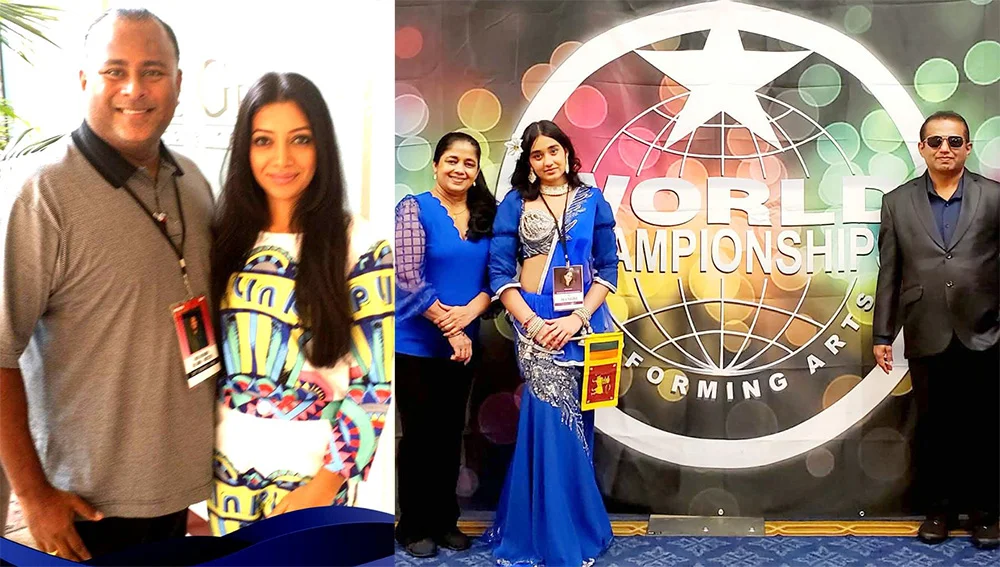
 The World Championships of Performing Arts (WCOPA) is known globally as the Olympics of performing arts, but Sri Lankans came to know of it more closely when Natharie Wickramasinghe, representing Team Sri Lanka at WCOPA 2026, in Las Vegas, earned a Bronze Medal in the Ethnic/Folklore Dance category.
Behind Sri Lanka’s WCOPA journey is Sri Lanka-born Chris Rajendra, who migrated to the United States in 2007, and deserves special congratulations.
Passionate about discovering and promoting talent, Chris has been actively involved in the pageant and performing arts, industry since 2002.
A major milestone came in 2015, when he introduced WCOPA, to Sri Lanka, for the first time, creating an international platform for Sri Lankan performers.
Sachini Ayendra became the very first candidate to represent Sri Lanka at WCOPA, in 2015, marking the beginning of Team Sri Lanka’s journey.
Chris served as National Director for Team Sri Lanka from 2015 to 2018, and has returned to the role for the 2026–2027 term, continuing his commitment to identifying, developing and promoting Sri Lankan talent internationally.
His involvement in pageantry and performing arts includes:
Recruiter, Miss Nevada United States – 2014

Chris Rajendra: National Director – WCOPA Team Sri Lanka
Manager, Miss Colombia Las Vegas – 2013 to 2017
Director for the West Coast and International Divisions of Ms. Latina International and Ms. International World – 2017
National Director for Team Sri Lanka – WCOPA, 2015–2018 and 2026–2027
Co-National Director for Team USA – WCOPA 2026
In the USA, Chris began his career in retail before transitioning into insurance and financial services, where he built extensive experience in sales, marketing, leadership and business development.
He owned and operated a brokerage, affiliated with multiple insurance companies, and later served as Marketing Director with Transamerica and World Financial Group.
As his business expanded across Las Vegas and California, he continued to hone his expertise in sales, marketing and client relations. He now works as a Sales Executive at Hilton Grand Vacations.
Looking ahead, Chris will shortly launch the application process for Team Sri Lanka 2027, giving talented Sri Lankan performers another opportunity to represent the country on the world stage.
The 2027 World Championships of Performing Arts will take place in Las Vegas, USA, in July or August 2027.
Through his work in both the corporate and performing arts worlds, Chris Rajendra continues to combine leadership, networking and talent development — creating opportunities for Sri Lankan performers to showcase their abilities on a global platform.

Showerss above 100 mm are likely at some places in the Western, Sabaragamuwa, Central and North-western provinces and in Galle and Matara Districts

Mirabai Chanu wins Asian Games silver as Ri breaks weightlifting record

Trump greets China’s Xi Jinping on arrival for three-day US

BASL calls for conscience vote on 22nd Amendment

IMF: Sri Lanka on course for 2027 market return

President appoints three new judges to High Court

‘Dates have the highest sugar content to fight Coronavirus’

Sunday Island 27 December – Headlines

#SundayIsland 17th December – Headlines

Sunday Island – 28th March

Sunday Island Headlines – 21 March

Sunday Island – 21st February – Headlines
-

 News6 days ago
Shanakiyan urges urgent action over reported death sentence for Lankan in Saudi Arabia
-

 News7 days ago
Bid for Basil’s extradition nears final stage: Police
-

 News5 days ago
Namal Rajapaksa Buddhist gambit fails, bail denied
-

 Features5 days ago
Why the spelling Sri Lankan names in English vary
-

 Features5 days ago
Three bands, a new identity: Sri Lankan wolf snake recognised as distinct species
-
 Business5 days ago
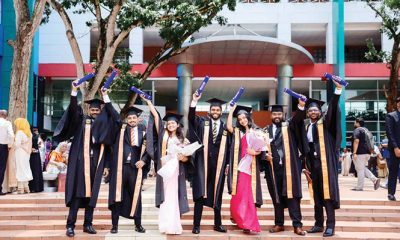
SLIIT holds largest-ever convocation
-

 News5 days ago
Govt monitors reported Saudi death sentence – Foreign Ministry
-

 Business5 days ago
All-new Bolero MaXX Pik-Up unveiled in Lanka