
Features
The VFS Visa Deal – The Anatomy of a Scam


by Rohan Pethiyagoda
In 2012, the Department of Immigration & Emigration (DIE) contracted Mobitel, which is in effect a state-owned enterprise, to establish and operate an online gateway for foreigners wishing to apply for visas to Sri Lanka. For the next twelve years, from 2012 to 2024, the system operated flawlessly. Better still, Mobitel offered the service free of charge to the DIE while recovering part of its costs from advertising and promoting its services to tourists. In all those 12 years, Mobitel didn’t receive a single letter from DIE complaining that the service was in any way less than perfect.
By 2018, however, it became clear to Mobitel that in order to keep up with technology and also the growing number of tourists, both the hardware and software of the system needed upgrading. Finally, after protracted negotiations with DIE, on December 14, 2020, Mobitel submitted a proposal offering to invest in upgrading the system as required by DIE. All it asked in return was US$ 1 per applicant. Thereafter, Mobitel and DIE engaged in technical discussions to precisely define the new system and finally, on August 23, 2023, submitted a final, comprehensive proposal. Meanwhile, the system continued to work perfectly, entirely for free.
Divorce Proceedings
At 3.07 p.m. on April 5, 2024, Mobitel’s management was astonished to receive an email from the Assistant Director (Information Technology) of DIE, a junior fourth-rung officer, directing Mobitel to cease processing applications from 11:59 pm on 5 April 2024. No reason was given. However, at 3.30 pm the same day, Mobitel received another email from DIE cancelling the former email. Again, no explanation. To this day, despite repeated requests from Mobitel, DIE has never explained what was going on.
Finally, at 2:32 pm on 16 April 2024, DIE’s Assistant Controller (IT) sent a further email directing Mobitel to switch of the system at midnight. Mobitel responded by asking for a written direction from the Commissioner General of DIE, which was received shortly thereafter. At midnight on April 16, the 12-year collaboration between Mobitel and DIE came to an end. The reasons for the termination remained a mystery until finally, on July 12, Harsha de Silva, the chairman of the Parliamentary Committee on Public Finance issued a damning 640-page report: “Outsourcing Online Visa and Passport Application Services between the Consortium and the Department of Immigration and Emigration of Sri Lanka”. By ‘consortium’, it meant GBS Technology Services & IVS Global-FZCO (IVS-GBS) and VF Worldwide Holdings LTD (VFS Global). While the beneficial owners of these companies remain shrouded in mystery, the companies themselves are located in Dubai, notoriously a tax haven. Here, for short, I will refer to these entities collectively as VFS, which is the largest and best known among them.
Opaque Process
Unknown to Mobitel, in June 2023 a Dubai-based entity known as IVS-GBS Global Services had submitted to the Ministry of Public Security an unsolicited proposal titled “Comprehensive Proposal on E-Visa, Consular Services, Visa Services, Biometric Services and Tourism Promotion”.
VFS’s unsolicited proposal gave the fee structure as $30 for the ETA plus a $25 fee for IVS-GBS-VFS, basically for providing the same service that Mobitel provided free of charge from 2012 to 2024. What is surprising is that the service fee demanded by IVS was staggering 83% of the revenue that the government would get from visa fees.
Cabinet Approval
Nevertheless, Tiran Alles, the Minister of Public Security, submitted the IVS-GBS proposal to cabinet on September 8, 2023, noting “I observe that this Institution is an internationally renowned company” even though, for practical purposes, it essentially services only India. By way of justification for abandoning the $1 Mobitel system and transferring to the very expensive IVS system, the Minister provided several ‘justifications’. First is that because the IVS user interface is “designed in the languages of each country, foreigners may provide more opportunities to apply for visa to visit this country”. This, however, is not true: the site operates entirely in English. You can check for yourself: https://online.srilankaevisa.lk/
The Minister goes on to state, without any justification, that IVS will charge a service fee of USD 18.50 from each visa applicant. Finally, he adds, “the Government does not have to bear any cost in implementing this Programme”. However, given that the USD 18.50 paid to IVS is a mandatory condition of applying for a Sri Lankan visa, it is in effect a levy made by the government and paid to IVS, though bypassing the Consolidated Fund and without any transparent procurement procedure. This is arguably a violation of Article 148 of the Constitution.
$200 million ‘evaporates’
The cabinet memorandum continues, “IVS -GBS global Services has proposed to invest a sum of 200 million USD to provide the relevant technical equipment, software and knowledge for the system integration to be made with the Department of Immigration and Emigration in rendering the relevant services by this Company.” Nowhere in the final Outsourcing Agreement signed between Controller General of DIE and IVS-GBS-VHS is this $200 million mentioned. It has simply evaporated.
Amazingly, on 11 September 2023, the Cabinet passed the proposal through on the nod, appointing an Evaluation Committee comprising of five individuals drawn from the administrative service who evidently have no background in IT. They were T.V.D. Damayanthi S. Karunaratne (Additional Secretary, Development & Planning of the Ministry of Public Security); I.S.H.J. Ilukpitiya, Commissioner General of Immigration & Emigration; Mr Champika Ramawickrema, Senior Assistant Secretary, Ministry of Public Administration, Home Affairs, Provincial Councils and Local Government; M.P.D.P. Pathirana, Chief Financial Officer, Ministry of Public Security; and Mr M.R.G.A. Muthukuda, Additional Director General, Department of Fiscal Policy (representing the Secretary to the Treasury). Given that none of these people is a software expert (this is, after all, a software services procurement), it is astonishing that no Technical Committee was appointed. Neither was there a Cabinet Appointed Negotiating Committee, to assess whether the $18.50 fee was reasonable. It was simply passed through on the nod.
It seems astonishing that President Ranil Wickremesinghe did not suggest that before farming this massive project out to a foreign entity who had submitted an unsolicited bid, a local tender should be floated. After all, Mobitel had already demonstrated its ability to design and operate the necessary system not just flawlessly but at just $1 per applicant. Besides, Sri Lankan software companies are outstanding by even world standards. It is their software that drives the stock exchanges of London, Italy and South Africa, among others. More importantly, perhaps, the president himself has been endlessly touting the need to “enrich, empower and enable” Sri Lankans to develop local IT capacity, going on and on about “the importance of digitalization”, the “digital public economy”, “creating a Digital Transformation Agency” with a budget of Rs 1 billion, etc etc (see this release by the President’s Media Division: https://pmd.gov.lk/news/president-wickremesinghe-pledges-digital-transformation-for-poverty-reduction-and-educational-reform/). Clearly, Wickremesinghe is better at talking the talk than walking the walk.
The ‘Evaluation’
Amazingly for an ‘evaluation committee’, the committee made no evaluation of the most crucial factor in the VFS proposal, namely, the $18.50 service fee. How was this calculated? Was it justified? Was it competitive? No comment. With 1.4 million tourists coming into Sri Lanka, this adds up to a staggering $26 million, or Rs 8 billion per year. And the contract is for 16 years, with provision for 10% hike every two years. Someone is laughing all the way to the bank.
As it happened, the Evaluation Committee made no comment on, or comparison of Mobitel’s $1 offer against VFS’s $18.50 price. It acted purely as a rubber stamp. Indeed, it is open to question as to whether its members had the technical or negotiating skills needed to effectively evaluate VFS’s unsolicited offer.
Attorney General
Agreements signed by government agencies are usually vetted by the Attorney General, and this one was no exception. On 15.11.2023, the AG’s observations, signed by Senior Deputy Solicitor General Mahen Gopallawa, were issued. These were confined to purely semantic issues, with no recommendations on process. A disclaimer at the end makes this explicit: “It is assumed that the financial and technical implications of the agreement have been carefully considered and that all necessary approvals have been or will be obtained prior to its execution.” That, however, was an assumption too far. Neither the cabinet nor the Evaluation Committee had paid the slightest attention to the biggest financial implication, namely, the exorbitant fee of $18.50 being charged by IVS-GBS-VFS. In fact, there is no mention in any document that the USD 18.50 service charge was ever justified or even queried.
Cabinet Approval
Then, with the reports of the Evaluation Committee and the Attorney General in hand, on 4 December 2023 the Minister of Public Security sought cabinet approval to sign the contract with the consortium. In his capacity as Minister of Finance, President Wickremesinghe endorsed the Evaluation Committee’s report, noting only that “Prior to entering into an Agreement, the Ministry of Public Security must ensure strict compliance with all the recommendations made by the Attorney General’s Department on the Agreement.” Astonishingly, he made no mention of the USD 18.50 service charge, which both the Evaluation Committee and the Attorney General had deftly sidestepped. Thus it was that the elephant sneaked into the room with the Evaluation Committee, the Attorney General, the minister and the president all studiously looking the other way even as $18.50 per tourist came to be siphoned into an offshore account. This is money that should properly come into the Consolidated Fund.
Tourism on the Rocks
What is more, the activity of promoting inbound tourism to Sri Lanka has now been awarded to this consortium on an exclusive basis, in effect making the Sri Lanka Tourism Promotion Bureau and its staff redundant. DIE Controller General Harsha Ilukpitiya, with no authority from cabinet, with no consultation with the tourism industry, and possibly without the consent of Tourism Minister Harin Fernando, signed away the rights to tourism promotion in Sri Lanka for the next 16 years to GBS-IVS-VFS, which has no known capacity in this highly specialized field. In this context, it is noteworthy that a co-owner of VFS is the giant tourism operator Kuoni, with immediate conflict-of-interest issues. So much for the zeal of the Evaluation Committee.
The Outsourcing Agreement also notes that VFS’s service fee of USD 18.50 per visa application “will be exclusive of any payment gateway, local taxes as applicable and other transaction fees”. All these are unspecified, and the consortium is therefore open to fleece tourists coming to Sri Lanka for as much as they want for the next 16 years.
AG vs COPF
On 9 May 2024, the Parliamentary Committee on Public Finance (COPF) requested the Attorney General to clarify whether the fees of USD 18.50 was a levy that would have to be authorised by Parliament under Article 148 of the Constitution. That is, whether like visa fees, this fee requires approval by parliament. The AG responded that no such parliamentary approval was needed. In doing so, the AG, no doubt unwittingly, misled COPF, writing, “The fee charged by the Service Providers (i.e. IVSGBS and VFS) is a “service fee” charged from applicants for on line visas for the service provided to them by the Service Provider and does not form part of the Visa Fees that are approved by Parliament. In the circumstances, Parliamentary approval for them does not arise”. The question then arises, if parliament does not approve the $18.50 fee, who does? It is entirely arbitrary.
The AG further justified this stance on the basis that it is not compulsory for foreigners to obtain their visas from IVS-GBS-VFS (if it were compulsory, the USD 18.50 would be a compulsory fee and hence subject to parliamentary approval), writing: “According to the Controller General, after the Outsourcing Agreement, an applicant has the following options: (a) Apply to the respective Sri Lankan Embassies; (b) Obtain visas through IVSGBS and VFS; (c) Obtain “on arrival” visas for 30 day tourist and business visas”.
Sadly, it appears that the Controller General of DIE had misled the AG. Any foreigner wishing to get a tourist visa to Sri Lanka and viewing the web portal of the Department of Immigration & Emigration (https://www.immigration.gov.lk/pages_e.php?id=14) gets the following message, in bold red letters: “IMPORTANT NOTICE: With effect from 17th April 2024, all Tourist or Business travelers to Sri Lanka must have e-Visa for entering in to Sri Lanka. Please visit https://www.srilankaevisa.lk for more information.” Nowhere on this site does it say that “on arrival” visas are available, or that Sri Lanka missions or embassies issue visas. In fact, nowhere on the page does the word ‘embassy’ even appear. Therefore, as far as tourists are concerned, it is compulsory that they get their visas from the IVS-GBS-VFS site https://www.srilankaevisa.lk/. What’s more, that site itself boldly announces, “ALL visitors MUST complete an eVisa application prior to their arrival in the country”. No doubt, after reading this article, DIE may seek to hastily amend their web page. If so, too late: I see that the entire DIE website has already been archived at https://web.archive.org/web/20240713021620/https://www.immigration.gov.lk/pages_e.php?id=14
It is now incontrovertible that, presumably because he himself was misled by the Controller General of DIE, the AG misled parliament.
Public Interest
Why should anyone care that VHS pockets a hefty $18.50 from every tourist who visits Sri Lanka? After all, it isn’t ‘our’ money. First off, it SHOULD be our money. This is money that the government of Sri Lanka forces every person wishing to visit Sri Lanka to pay to VFS. In fact, as the DIE and VFS websites make clear, if you don’t pay it, you can’t get a visa. Therefore, it is a levy charged by the government and siphoned off to VFS in Dubai without going through the Consolidated Fund and being subject to parliamentary oversight as required by Article 148 of the Constitution.
Second, the so-called service fee of $18.50 is arbitrary. It was not negotiated or evaluated by the Evaluation Committee, the Cabinet, the DIE or the Ministry of Public Security. What, if instead of $18.50 it was $1000? Whose job was it to say, ‘Hang on a minute, that’s too much’? No one, not the Evaluation Committee, the Cabinet or the DIE have said anywhere that that figure is reasonable.
COPF Chairman Harsha de Silva is already on record as saying that the Auditor General’s report on this matter should be handed over to the CID and the Bribery Commission. This is particularly apt because VFS is partly owned by Blackstone, a New York based financial giant. And thus, VFS falls under the purview of the US FCPA or Foreign Corrupt Practices Act. The FCPA requires companies whose securities are listed in the USA to meet stringent accounting and anti-bribery provisions. It remains to be seen whether COPF will forward the Auditor General’s report to the US Department of Justice, requesting an FCPA investigation. Who knows, Sri Lanka might just get enough compensation to pay off its national debt.


 It would not be particularly revelatory to say that the US is plagued by ‘gun violence’. It is a deeply entrenched and widespread malaise that has come in tandem with the relative ease with which firearms could be acquired and owned by sections of the US public, besides other causes.
However, a third apparent attempt on the life of US President Donald Trump in around two and a half years is both thought-provoking and unsettling for the defenders of democracy. After all, whatever its short comings the US remains the world’s most vibrant democracy and in fact the ‘mightiest’ one. And the US must remain a foremost democracy for the purpose of balancing and offsetting the growing power of authoritarian states in the global power system, who are no friends of genuine representational governance.
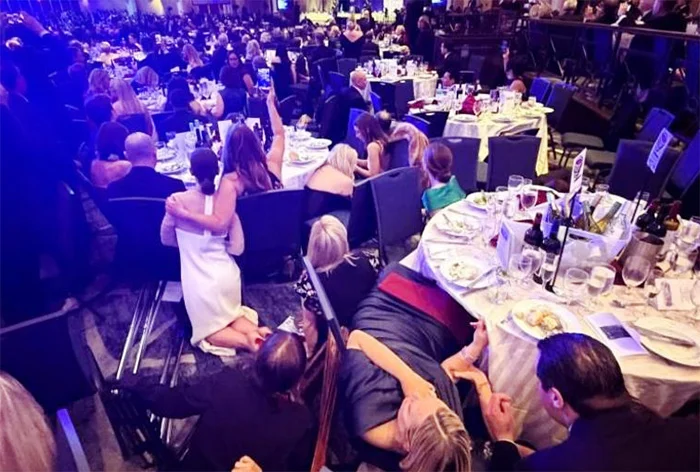
Therefore, the recent breaching of the security cordon surrounding the White House Correspondents’ Dinner in Washington at which President Trump and his inner Cabinet were present, by an apparently ‘Lone Wolf’ gunman, besides raising issues relating to the reliability of the security measures deployed for the President, indicates a notable spike in anti-VVIP political violence in particular in the US. It is a pointer to a strong and widespread emergence of anti-democratic forces which seem to be gaining in virulence and destructiveness.
The issues raised by the attack are in the main for the US’ political Right and its supporters. They have smugly and complacently stood by while the extremists in their midst have taken centre stage and begun to dictate the course of Right wing politics. It is the political culture bred by them that leads to ‘Lone Wolf’ gunmen, for instance, who see themselves as being repressed or victimized, taking the law into their own hands, so to speak, and perpetrating ‘revenge attacks’ on the state and society.
A disproportionate degree of attention has been paid particularly internationally to Donald Trump’s personality and his eccentricities but such political persons cannot be divorced from the political culture in which they originate and have their being. That is, “structural” questions matter. Put simply, Donald Trump is a ‘true son’ of the Far Right, his principal support base. The issues raised are therefore for the President as well as his supporters of the Right.
We are obliged to respect the choices of the voting public but in the case of Trump’s election to the highest public position in the US, this columnist is inclined to see in those sections that voted for Trump blind followers of the latter who cared not for their candidate’s suitability, in every relevant respect, and therefore acted irrationally. It would seem that the Right in the US wanted their candidate to win by ‘hook or by crook’ and exercise power on their behalf.
By making the above observations this columnist does not intend to imply that voting publics everywhere in the world of democracy cast their vote sensibly. In the case of Sri Lanka, for example, the question could be raised whether the voters of the country used their vote sensibly when voting into office the majority of Executive Presidents and other persons holding high public office. The obvious answer is ‘no’ and this should lead to a wider public discussion on the dire need for thoroughgoing voter education. The issue is a ‘huge’ one that needs to be addressed in the appropriate forums and is beyond the scope of this column.
Looking back it could be said that the actions of Trump and his die-hard support base led to the Rule of Law in the US being undermined as perhaps never before in modern times. A shaming moment in this connection was the protest march, virtually motivated by Trump, of his supporters to the US Capitol on January 6th, 2021, with the aim of scuttling the presidential poll result of that year. Much violence and unruly behaviour, as known, was let loose. This amounted to denigrating the democratic process and encouraging the violent take over of the state.
In a public address, prior to the unruly conduct of his supporters, Trump is on record as blaring forth the following: ‘We won this election and we won by a landslide’, ‘We will stop the steal’, ‘We will never give up. We will never concede. It doesn’t happen’, ‘If you don’t fight like hell, you’re not going to have a country anymore.’
It is plain to see that such inflammatory utterances could lead impressionable minds in particular to revolt violently. Besides, they should have led the more rationally inclined to wonder whether their candidate was the most suitable person to hold the office of President.
Unfortunately, the latter process was not to be and the question could be raised whether the US is in the ‘safest pair of hands’. Needless to say, as events have revealed, Donald Trump is proving to be one of the most erratic heads of state the US has ever had.
However, the latest attempt on the life of President Trump suggests that considerable damage has been done to the democratic integrity of the US and none other than the President himself has to take on himself a considerable proportion of the blame for such degeneration, besides the US’ Far Right. They could be said to be ‘reaping the whirlwind.’
It is a time for soul-searching by the US Right. The political Right has the right to exist, so the speak, in a functional democracy but it needs to take cognizance of how its political culture is affecting the democratic integrity or health of the US. Ironically, the repressive and chauvinistic politics advocated by it is having the effect of activating counter-violence of the most murderous kind, as was witnessed at the White House Correspondents’ Dinner. Continued repressive politics could only produce more such incidents that could be self-defeating for the US.
Some past US Presidents were assassinated but the present political violence in the country brings into focus as perhaps never before the role that an anti-democratic political culture could play in unraveling the gains that the US has made over the decades. A duty is cast on pro-democracy forces to work collectively towards protecting the democratic integrity and strength of the US.

 The Editor-in-Chief of The Sri Lankan Anchorman, a Toronto-based monthly, celebrating Sri Lankan community life in Canada, is none other than veteran Sri Lankan journalist Dirk Tissera, who moved to Canada in 1997. His wife, Michelle, whom he calls his “tower of strength”, is the Design Editor.
According to reports coming my way, the paper has turned out to be extremely popular in Toronto.
In fact, The Sri Lankan Anchorman won a press award in Toronto for excellence in editorial content and visual presentation.
However, the buzz in the air in Canada, right now, is The Sri Lankan Anchorman’s 22nd Anniversary Gala, to be held on Friday, 12 June, 2026, at the J&J Swagat Banquet Convention Centre, in Toronto.
An action-packed programme has been put together for the night, featuring some of the very best artistes in the Toronto scene.
The Skylines, who are classified as ‘the local musical band in Toronto’, will headline the event.
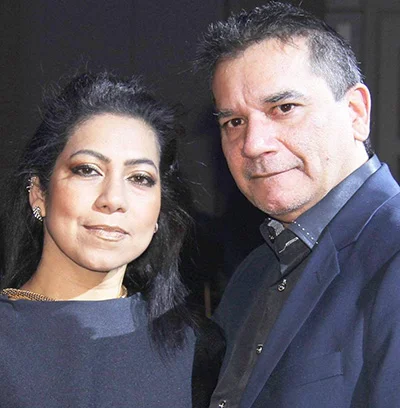
Dirk Tissera and wife Michelle: Supporting Sri Lanka-Canada community events, in Toronto, since launching The Anchorman
in 2002
They have performed and backed many legendary Sri Lanka singers.
According to Dirk, The Skylines can belt out a rhythm with gusto … be it Western, Sinhala or Tamil hits.
Also adding sparkle to the evening will be the legendary Fahmy Nazick, who, with his smooth and velvety vocals, will have the crowd on the floor.
Fahmy who was a household name, back in Sri Lanka, will be flying down from Virginia, USA.
He has captivated audiences in Sri Lanka, the Middle East and North America, and this will be his fourth visit to Toronto – back by popular demand,
Cherry DeLuna, who is described by Dirk as a powerhouse, also makes her appearance on stage and is all set to stir up the tempo with her cool and easy delivery.
“She’s got a great voice and vocal range that has captivated audiences out here”, says Dirk.
Chamil Welikala, said to be one of the hottest DJs in town, will be spinning his magic … in English, Sinhala, Tamil and Latin.

Both Jive and Baila competitions are on the cards among many other surprises on the night of 12 June.
This is The Anchorman’s fifth annual dance in a row – starting from 2022, 2023, 2024 and 2025 – and both Dirk and Michelle, and The Anchorman, have always produced elegant social events in Toronto.
“We intend to knock this one out of the park,” the duo says, adding that Western music and Sinhala and Tamil songs is something they’ve always delivered and the crowd loves it.
“We have always supported Sri Lanka-Canada community events, in Toronto, since launching The Anchorman, in 2002, and we intend to keep it that way.”
No doubt, there will be a large crowd of Sri Lankans, from all communities, turning up, on 12 June, to support Dirk, Michelle and The Anchorman.

 * Apple and Orange:
Blend a few apple and orange pieces together. Add to it a pinch of turmeric and one tablespoon of honey. Apply it to the face and neck and rinse off after 30 minutes. This face pack is suitable for all skin types.
According to experts, apple is one of the best fruits for your skin health with Vitamin A, B complex and Vitamin C and minerals, while, with the orange peel, excessive oil secretion can be easily balanced.
* Mango and Curd:
Ripe mango pulp, mixed with curd, can be rubbed directly onto the skin to remove dirt and cleanse clogged pores. Rinse off after a few minutes.
Yes, of course, mango is a tasty and delicious fruit and this is the mango season in our part of the world, and it has extra-ordinary benefits to skin health. Vitamins C and E in mangoes protect the skin from the UV rays of the sun and promotes cell regeneration. It also promotes skin elasticity and fights skin dullness and acne, while curd, in combination, further adds to it.
* Grapes and Kiwi:
Take a handful of grapes and make a pulp of it. Simultaneously, take one kiwi fruit and mash it after peeling its skin. Now mix them and add some yoghurt to it. Apply it on your face for few minutes and wash it off.
Here again experts say that kiwi is the best nutrient-rich fruit with high vitamin C, minerals, Omega-3 fatty acids and vitamin E, while grapes contain flavonoids, which is an antioxidant that protects the skin from free radical damage. This homemade face pack acts as a natural cleanser and slows down the ageing process.

Food Security is vital to ensuring a Nation’s Sovereignty and National Security – Prime Minister

Showers or thundershowers will occur in the most parts of the island after 1.00 pm

Explanation sought from AKD on ‘Russian energy supplies’

US reiterates its commitment to enhancing relations with Northern Sri Lanka

Rooftop Solar at Crossroads as Sri Lanka Shifts to Distributed Energy Future

Indonesia-SL agreement on Visa Exemption for Diplomatic and Official passports soon

‘Dates have the highest sugar content to fight Coronavirus’

Sunday Island 27 December – Headlines

#SundayIsland 17th December – Headlines

Sunday Island – 28th March

Sunday Island Headlines – 21 March

Sunday Island – 21st February – Headlines
-
 News6 days ago
Whistleblowers ask Treasury Chief to resign over theft of USD 2.5 mn
-

 News6 days ago
No cyber hack: Fintech expert exposes shocking legacy flaws that led to $2.5 million theft
-

 News3 days ago
BIA drug bust: 25 monks including three masterminds arrested
-
 Business4 days ago
Nestlé Lanka Announces Change in Leadership
-
 News1 day ago
Treasury chief’s citizenship details sought from Australia
-

 News3 days ago
Banks alert customers to phishing attacks
-
 News4 days ago
Hackers steal $3.2 Mn from Finance Ministry
-
 Business6 days ago
Dialog Enterprise partners Star Garments: Pioneering 5G innovation in Sri Lanka’s apparel industry