
Features
The Tiger Moth Story


by Capt. Elmo Jayawardena
elmojay1@gmail.com
De Haviland Tiger Moth
In my fifty-plus years of association with aviation, the best aeroplane I ever flew was undoubtedly the De Haviland Tiger Moth. As a young student pilot, I used to regularly fly the ‘Tiger’, operating off the old grass strip which was the runway we used to take-off and land. The reason for using the grass for the operation was simply a matter of safety. The ‘Tiger’ had two wheels like in a handcart and instead of a rear wheel to complete a triangular undercarriage, it had only a tail-skid with tough leather covering. The ‘Tiger’ had no brakes, the dragging tail-skid was what stopped it after landing. As for the take-off, we opened the Gypsy Major engine and it powered a long beautiful wooden propeller and with the gathering of speed, the tail lifted, and the Tiger Moth rolled majestically to reach its lift-off speed of 55 knots.
As the old biplane flew into the air with her quadruple wings synergizing the lift against the airflow, she converted herself into a fabulous flying machine. The ‘Tiger” climbed away like an albatross, taking her place in a clear blue sky where she belonged. Out of the grass patch of runway 22, she flew towards the sea and at 1,000 ft. made a gentle turn to port to cruise over the picturesque Bolgoda Lake at 3,000 ft.
The morning was cool in the open cockpit, and the sun on the eastern rim would crawl up colouring the clouds with marmalade skies, just as John Lennon sang. I can recall the exhilaration of flying a Tiger Moth in such magnificent surroundings as if it happened yesterday.
Yes, it is on my bucket list to do it again. But I know that is simply wishful thinking. Such times were great and memorable and filled with nostalgia. I know they would never return, maybe only in dreams. But I am so glad I had them in the Ratmalana skies when I was a two-bit trainee pilot collecting pennies to fly aeroplanes.
The Tiger Moth had its birth in the UK around 1931. It certainly became the most popular training aircraft at that time. The records show that there were almost 9,000 Tiger Moths built. This was also the time aero clubs mushroomed all over the colonial empire and Ceylon too had an Aero Club in the late 1920s. There was no airport on the island, and the Colombo Racecourse was used as a landing strip when light aeroplanes came from Madras Aero Club to do demonstration flights.
-

- Capt. Elmo – training Tiger Moth pilots in 1975
-

- Private Pilot’s License of Mr. Dunstan de Silva, the first Ceylonese to obtain the Ceylonese PPL
The first plane the Ceylon Aero Club acquired was a Gypsy Moth, and the second was a Tiger Moth that arrived on March 4, 1937. This was the first Tiger Moth that was acquired by the Ceylon Aero Club. With the opening of the Ratmalana International Airport, the landing strip in the Colombo Racecourse became the secondary location. The third plane to join the Aero Club fleet was a Taylor Cub followed by the second Tiger Moth which arrived in Ratmalana on December 17, 1938. The two Tiger Moths were registered as VP-CAC and VP-CAE. By then, the Aero Club was functioning well with three expatriates who had learned to fly elsewhere being given Ceylon Private Pilot Licenses (PPL) numbered 1, 2 and 3. The three gentlemen who had previous experience in flying Tiger Moths were appointed as instructors by the governing authority. PPL No. 4 was issued to Dunstan de Silva of Panadura, who obtained his Private Pilot’s License on a Tiger Moth. He was the first Ceylonese to obtain a PPL in Ceylon.
The Tiger Moth story doesn’t end with the late 30s. The Ceylon Aero Club members steadily increased in number, and it would have been a daily spectacle to see the Ratmalana sky get filled up with bobbing and weaving light aeroplanes waltzing away as if dancing to the beat of their Gypsy engines. Most took off and flew south following the coastline to Kalutara where the Kalu Ganga emptied into the sea. They would turn around at the Kalutara town and head north easing to the right to fly over the bucolic Bolgoda Lake. From there they would have joined the circuit at Ratmalana to land on the Ratmalana grass strip. The Aero Club also organized enjoyable picnic flights on the Tiger Moths to go from Ratmalana to Puttalam via Colombo, Negombo and Chilaw. They landed on a designated grass strip in Puttalam which had a windsock to identify the direction of the wind. The said strip was opened as an airport on June 3, 1939.
The picnicking pilots had lunch at the Puttalam Rest House and flew back in the evening to Ratmalana. It all ended with a drink at the Airport Club which was a prominent water hole for Aero Club members.
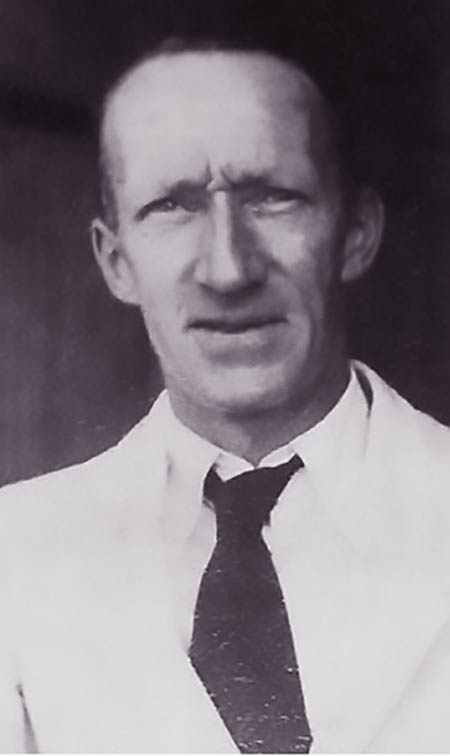
Flight Lieutenant Robert Duncanson
One of the most prominent aviators who flew Tiger Moths in the skies of Ceylon was Flight Lieutenant Robert Duncanson. He was appointed as Chief Flying Instructor of the Ceylon Aero Club on June 1, 1938. He taught Tiger Moth flying for more than a decade at Ratmalana. I never met him. I was only two years old when he died. But I can categorically say that Duncanson was the name I heard most in my young days as a pilot. It was quite common to hear older pilots talk of Flight Lieutenant Duncanson and such conversations always highlighted how good a pilot he was. They said he was a rare master of the Tiger Moth and an excellent instructor, the best they had ever seen.
The list is long of pilots who praised him and among them was my own father, Captain Emil Jayawardena, who was a Spitfire pilot in the Second World War. He had known Duncanson well and always spoke highly of this Tiger Moth expert. In my own home, I would hear these war veterans talking about Duncanson and I distinctly remember such conversations were full of praise for Flight Lieutenant Duncanson. The conversations always ended on a sad and sombre note when it came to how and where Duncanson met his tragic death. They said, “he was part bird and part man”, implying that the Tiger Moth and Duncanson were inseparable to the very end.
On May 21, 1949, Duncanson flew out in the morning in his favourite Tiger Moth. He had three hours of fuel endurance. Simply said, he never came back. They found pieces of his plane washed ashore near Mount Lavinia the next day. The body was found two days later, drifting with the waves near Wadduwa. What happened to the Tiger Moth Ace and his beloved aeroplane no one knows. Of course, the grapevine had its own varied interpretations. All I know is that a wonderful aviator died under tragic circumstances. We only know that one sunny morning Flight Lieutenant Duncanson flew his Tiger Moth into a clear blue sky and never returned.
The Ceylon Aero Club stopped operations in 1950 and the private flying and training of new pilots was taken over by the Civil Aviation Department which opened its own flying academy in Ratmalana. They took over all the aeroplanes that were in the Aero Club and among them were two Tiger Moths which were registered as 4R-AAA and 4R-AAB. Light aeroplanes started flying out of Ratmalana once again and two old Tiger Moths proudly led the parade.
I came back to fly Tiger Moths in 1975. There was 4R-AAB in operation and the other was grounded for lack of spare parts. I taught students to fly in that last remaining Tiger Moth for a grand payment of Rs 10 per hour. The sheer thrill of flying this grand old aeroplane could not be equated to any payment whatsoever. The people I taught are still around, and they would remember the old Tiger Moth days.
It was a tandem operation where the instructor sat in the front seat and the student sat in the rear. Communication was through a ‘talk tube’ which never worked. Whatever that had to be taught had to be done on the ground, and after that, it was all hand signals made from the front seat by the instructor which were followed by the student sitting behind. If the instructor wanted to take over controls, he moved the flying controls sideways and forward and the student let go of his control stick. The best was how we flew the approach speed.
The Tiger Moth had auto-operated wing slats. We had to fly the approach for landing at 55 knots. The airspeed indicator at most times was inaccurate. The trick then was to fly the approach glancing at the slats. This wonderful aeroplane was designed and built in the 1930s. The slats were magical; they went in and out relative to the airflow. At 60 knots they were in and at 50 knots they were fully out and if the Tiger Moth was approaching at 55 the slats kept moving in and out. That was how we flew almost perfect approach speeds in the Tiger Moth.
One morning when I came to fly the Tiger Moth the engineer in charge, Brian Christy (who in later years became a top engineer for Emirates) gave me the bad news. “The Tiger is grounded. There is a crack in the prop”. Before he could finish the sentence, I knew that was the end of the Tiger Moth. The hand-starting big wooden propeller driven by a Gypsy Major engine was the heart and soul of the aeroplane. This was 1975, people were queuing to buy ‘jumping fish’ to make dresses. Nobody had dollars to order a propeller from the USA. Also, no one knew whether it was available.
Brian Christy was an engineer, the kind that made aeroplanes fly. Such men rarely got defeated. “Captain, I have a solution,” he whispered. The Ratmalana Airport had a Tiger Moth propeller fixed majestically at the main hall of its entrance. A real wooden Tiger Moth prop. “I can check that and if good we can get permission and swap our cracked prop and fix the wall prop if you are willing to fly?”
That is exactly what engineer Brian did. He removed the propeller from the wall and placed the cracked prop there. Then he carried the wall-mounted prop to the hangar and fixed it on the Tiger Moth. We started the engine, and it sang like a song. But we still had to test it on flight. I was ready to go, and Brian said, “Captain, I am coming with you.” That was it. Brian, the brilliant engineer, was willing to sit with me when I taxied the Tiger Moth with the previously wall-mounted propeller.
We lined up on the glass patch opened the engine to full power and took off. We flew three circuits, and the old beautiful Tiger was simply magical on flight. The 4R-AAB Tiger was back in business. That wall prop served the Tiger Moth fliers of Ratmalana till the school closed and everything including the Tiger Moth was moved out.
Today, that once upon a time Tiger Moth is there in the Air Force Museum. I do not think it flies anymore, but the Air Force is taking good care of it, and it is on display. Sometimes I go there, especially to show the planes I flew to my grandchildren.
I always stop by the Tiger Moth and reminisce about the romance I had with this wonderful flying machine. Sometimes I even ask permission from the Air Force staff and sit on the pilot’s seat and play with the throttle and move the control stick. I am sure any onlooker would have wondered who this old fool is sitting on an old aeroplane that is perhaps older than himself.
What would they know? The fact remains that this old man and the old aeroplane have skimmed the yonder blue in a scintillating adventure which perhaps was the best flying they had done while it lasted. It is a good reminder that we should make the best use of every opportunity that comes our way as nothings lasts forever.


 ‘Adapt, shrink or die’ – thus runs the warning issued by the Trump administration to UN humanitarian agencies with brute insensitivity in the wake of its recent decision to drastically reduce to $2bn its humanitarian aid to the UN system. This is a substantial climb down from the $17bn the US usually provided to the UN for its humanitarian operations.
Considering that the US has hitherto been the UN’s biggest aid provider, it need hardly be said that the US decision would pose a daunting challenge to the UN’s humanitarian operations around the world. This would indeed mean that, among other things, people living in poverty and stifling material hardships, in particularly the Southern hemisphere, could dramatically increase. Coming on top of the US decision to bring to an end USAID operations, the poor of the world could be said to have been left to their devices as a consequence of these morally insensitive policy rethinks of the Trump administration.
Earlier, the UN had warned that it would be compelled to reduce its aid programs in the face of ‘the deepest funding cuts ever.’ In fact the UN is on record as requesting the world for $23bn for its 2026 aid operations.
If this UN appeal happens to go unheeded, the possibilities are that the UN would not be in a position to uphold the status it has hitherto held as the world’s foremost humanitarian aid provider. It would not be incorrect to state that a substantial part of the rationale for the UN’s existence could come in for questioning if its humanitarian identity is thus eroded.
Inherent in these developments is a challenge for those sections of the international community that wish to stand up and be counted as humanists and the ‘Conscience of the World.’ A responsibility is cast on them to not only keep the UN system going but to also ensure its increased efficiency as a humanitarian aid provider to particularly the poorest of the poor.
It is unfortunate that the US is increasingly opting for a position of international isolation. Such a policy position was adopted by it in the decades leading to World War Two and the consequences for the world as a result for this policy posture were most disquieting. For instance, it opened the door to the flourishing of dictatorial regimes in the West, such as that led by Adolph Hitler in Germany, which nearly paved the way for the subjugation of a good part of Europe by the Nazis.
If the US had not intervened militarily in the war on the side of the Allies, the West would have faced the distressing prospect of coming under the sway of the Nazis and as a result earned indefinite political and military repression. By entering World War Two the US helped to ward off these bleak outcomes and indeed helped the major democracies of Western Europe to hold their own and thrive against fascism and dictatorial rule.
Republican administrations in the US in particular have not proved the greatest defenders of democratic rule the world over, but by helping to keep the international power balance in favour of democracy and fundamental human rights they could keep under a tight leash fascism and linked anti-democratic forces even in contemporary times. Russia’s invasion and continued occupation of parts of Ukraine reminds us starkly that the democracy versus fascism battle is far from over.
Right now, the US needs to remain on the side of the rest of the West very firmly, lest fascism enjoys another unfettered lease of life through the absence of countervailing and substantial military and political power.
However, by reducing its financial support for the UN and backing away from sustaining its humanitarian programs the world over the US could be laying the ground work for an aggravation of poverty in the South in particular and its accompaniments, such as, political repression, runaway social discontent and anarchy.
What should not go unnoticed by the US is the fact that peace and social stability in the South and the flourishing of the same conditions in the global North are symbiotically linked, although not so apparent at first blush. For instance, if illegal migration from the South to the US is a major problem for the US today, it is because poor countries are not receiving development assistance from the UN system to the required degree. Such deprivation on the part of the South leads to aggravating social discontent in the latter and consequences such as illegal migratory movements from South to North.
Accordingly, it will be in the North’s best interests to ensure that the South is not deprived of sustained development assistance since the latter is an essential condition for social contentment and stable governance, which factors in turn would guard against the emergence of phenomena such as illegal migration.
Meanwhile, democratic sections of the rest of the world in particular need to consider it a matter of conscience to ensure the sustenance and flourishing of the UN system. To be sure, the UN system is considerably flawed but at present it could be called the most equitable and fair among international development organizations and the most far-flung one. Without it world poverty would have proved unmanageable along with the ills that come along with it.
Dehumanizing poverty is an indictment on humanity. It stands to reason that the world community should rally round the UN and ensure its survival lest the abomination which is poverty flourishes. In this undertaking the world needs to stand united. Ambiguities on this score could be self-defeating for the world community.
For example, all groupings of countries that could demonstrate economic muscle need to figure prominently in this initiative. One such grouping is BRICS. Inasmuch as the US and the West should shrug aside Realpolitik considerations in this enterprise, the same goes for organizations such as BRICS.
The arrival at the above international consensus would be greatly facilitated by stepped up dialogue among states on the continued importance of the UN system. Fresh efforts to speed-up UN reform would prove major catalysts in bringing about these positive changes as well. Also requiring to be shunned is the blind pursuit of narrow national interests.

 Hi! Great to be back after my Christmas break.
Thought of starting this week with egg white.
Yes, eggs are brimming with nutrients beneficial for your overall health and wellness, but did you know that eggs, especially the whites, are excellent for your complexion?
OK, if you have no idea about how to use egg whites for your face, read on.
Egg White, Lemon, Honey:
Separate the yolk from the egg white and add about a teaspoon of freshly squeezed lemon juice and about one and a half teaspoons of organic honey. Whisk all the ingredients together until they are mixed well.
Apply this mixture to your face and allow it to rest for about 15 minutes before cleansing your face with a gentle face wash.
Don’t forget to apply your favourite moisturiser, after using this face mask, to help seal in all the goodness.
Egg White, Avocado:
In a clean mixing bowl, start by mashing the avocado, until it turns into a soft, lump-free paste, and then add the whites of one egg, a teaspoon of yoghurt and mix everything together until it looks like a creamy paste.
Apply this mixture all over your face and neck area, and leave it on for about 20 to 30 minutes before washing it off with cold water and a gentle face wash.
Egg White, Cucumber, Yoghurt:
In a bowl, add one egg white, one teaspoon each of yoghurt, fresh cucumber juice and organic honey. Mix all the ingredients together until it forms a thick paste.
Apply this paste all over your face and neck area and leave it on for at least 20 minutes and then gently rinse off this face mask with lukewarm water and immediately follow it up with a gentle and nourishing moisturiser.
Egg White, Aloe Vera, Castor Oil:
To the egg white, add about a teaspoon each of aloe vera gel and castor oil and then mix all the ingredients together and apply it all over your face and neck area in a thin, even layer.
Leave it on for about 20 minutes and wash it off with a gentle face wash and some cold water. Follow it up with your favourite moisturiser.

 Superlatives galore were used, especially on social media, to highlight R&B singer Ne-Yo’s trip to Sri Lanka: Global superstar Ne-Yo to perform live in Colombo this December; Ne-Yo concert puts Sri Lanka back on the global entertainment map; A global music sensation is coming to Sri Lanka … and there were lots more!
At an official press conference, held at a five-star venue, in Colombo, it was indicated that the gathering marked a defining moment for Sri Lanka’s entertainment industry as international R&B powerhouse and three-time Grammy Award winner Ne-Yo prepares to take the stage in Colombo this December.
What’s more, the occasion was graced by the presence of Sunil Kumara Gamage, Minister of Sports & Youth Affairs of Sri Lanka, and Professor Ruwan Ranasinghe, Deputy Minister of Tourism, alongside distinguished dignitaries, sponsors, and members of the media.
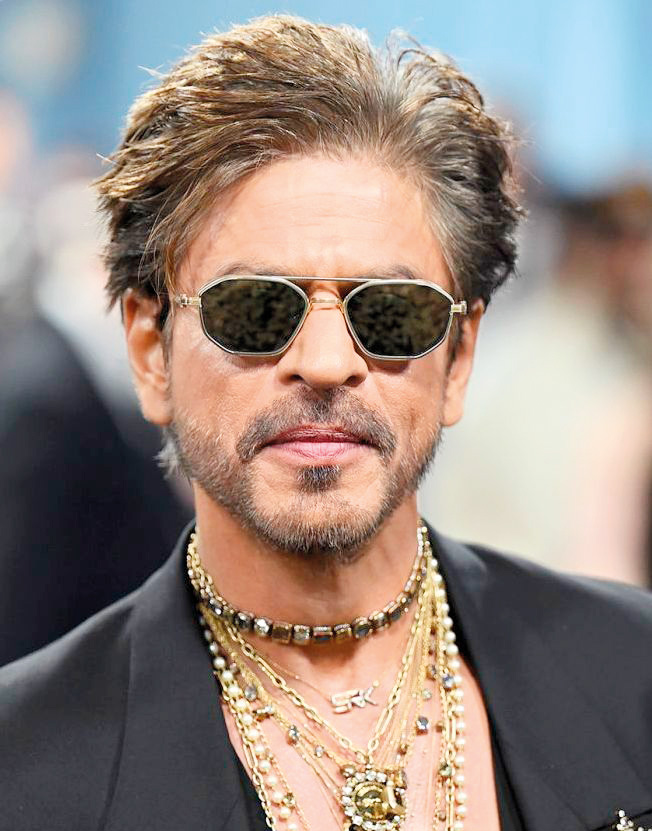
Shah Rukh Khan: Disappointed his fans in Sri Lanka
According to reports, the concert had received the official endorsement of the Sri Lanka Tourism Promotion Bureau, recognising it as a flagship initiative in developing the country’s concert economy by attracting fans, and media, from all over South Asia.
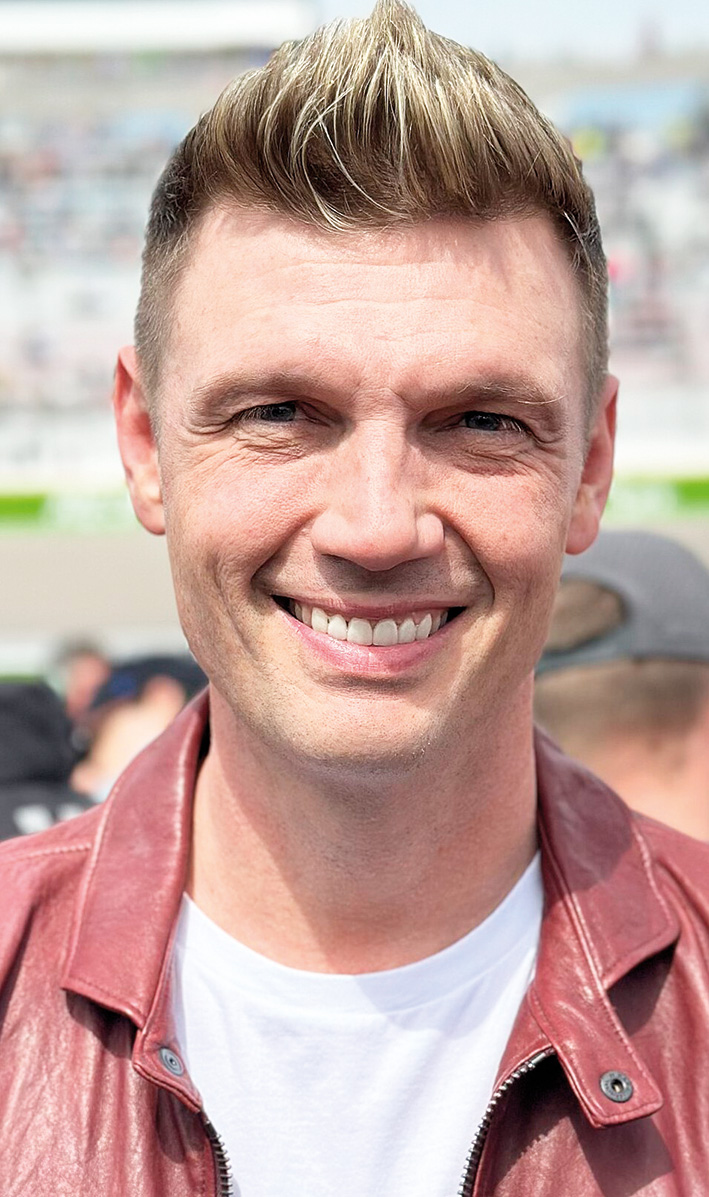
Nick Carter: His concert, too, was cancelled due to “Unforeseen circumstances
However, I had that strange feeling that this concert would not become a reality, keeping in mind what happened to Nick Carter’s Colombo concert – cancelled at the very last moment.
Carter issued a video message announcing he had to return to the USA due to “unforeseen circumstances” and a “family emergency”.
Though “unforeseen circumstances” was the official reason provided by Carter and the local organisers, there was speculation that low ticket sales may also have been a factor in the cancellation.
Well, “Unforeseen Circumstances” has cropped up again!
In a brief statement, via social media, the organisers of the Ne-Yo concert said the decision was taken due to “unforeseen circumstances and factors beyond their control.”
Ne-Yo, too, subsequently made an announcement, citing “Unforeseen circumstances.”
The public has a right to know what these “unforeseen circumstances” are, and who is to be blamed – the organisers or Ne-Yo!
Ne-Yo’s management certainly need to come out with the truth.
However, those who are aware of some of the happenings in the setup here put it down to poor ticket sales, mentioning that the tickets for the concert, and a meet-and-greet event, were exorbitantly high, considering that Ne-Yo is not a current mega star.
We also had a cancellation coming our way from Shah Rukh Khan, who was scheduled to visit Sri Lanka for the City of Dreams resort launch, and then this was received: “Unfortunately due to unforeseen personal reasons beyond his control, Mr. Khan is no longer able to attend.”
Referring to this kind of mess up, a leading showbiz personality said that it will only make people reluctant to buy their tickets, online.
“Tickets will go mostly at the gate and it will be very bad for the industry,” he added.

Zohran Mamdani sworn in as New York City mayor

In pictures: New Year welcomed around the world

Foreign warships commended for their assistance during weather disaster in Sri Lanka

Machu Picchu train crash leaves one dead and dozens injured

I invite you to step into 2026 with renewed energy, hope, and determination – PM

Fairly heavy showers about 75 mm are likely at some places in the Central and Uva provinces and in Batticaloa and Ampara districts

‘Dates have the highest sugar content to fight Coronavirus’

Sunday Island 27 December – Headlines

#SundayIsland 17th December – Headlines

Sunday Island – 28th March

Sunday Island Headlines – 21 March

Sunday Island – 21st February – Headlines
-
 News7 days ago
Street vendors banned from Kandy City
-

 Sports4 days ago
Gurusinha’s Boxing Day hundred celebrated in Melbourne
-

 News7 days ago
Lankan aircrew fly daring UN Medevac in hostile conditions in Africa
-
 News2 days ago
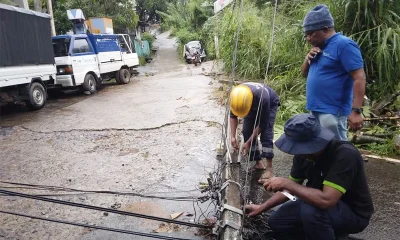
Leading the Nation’s Connectivity Recovery Amid Unprecedented Challenges
-

 Sports5 days ago
Time to close the Dickwella chapter
-

 Features3 days ago
It’s all over for Maxi Rozairo
-

 Features7 days ago
Rethinking post-disaster urban planning: Lessons from Peradeniya
-

 Opinion7 days ago
Are we reading the sky wrong?