
Features
The Sick Man of Europe

By Michael Patrick O’Leary
According to The Economist, “Britain has endured a grim decade during which perhaps a quarter of a million people died younger than expected.”
Declining Life Expectancy
Between 1980 and 2011 life expectancy in the UK rose at a steady pace of nearly three months every year. After 2011, the rise slowed. If Britain’s life-expectancy gains continued as the long-term trend, then life expectancy in 2022 would have been 2.2 years longer than it actually was. Those 26 months represent around 700,000 additional people that have died sooner than might have been expected in the early 2010s.
Academics from the University of Oxford and the London School of Hygiene and Tropical Medicine examined global life expectancy ratings between 1952 and 2021. In a league table of life expectancy, 70 years ago, the UK ranked seventh in the world, following closely behind Norway, Sweden, and Denmark. Now, the UK performs worse than all G7 countries except the US.
The UK dropped from seventh place to 29th in global life-expectancy rankings. Life expectancy for males in the UK between 2018 and 2020 was 79, for females 82.9. Norway’s life expectancy is 80.9 years for men and 84.4 years for women. The number in Sweden was 83.18 years, marking a 0.18 per cent increase from 2021. Seventy years ago, Britons had longer life expectancy than anywhere in the G7. Now people in France, Germany, Italy, Canada and Japan live longer than Britons. Ireland also has higher life expectancy than the UK. Japan has the highest life expectancy at birth – 85 years. (Although , Monaco is at the top of the UN’s league table with 87 median).
The Economist
says, “something has gone badly wrong in the past decade, and large numbers of Britons have lived shorter lives as a result. That raises two big questions. How much of this is specific to Britain? And why?” This is not just because places such as South Korea, Taiwan, Hong Kong and Macau have got richer. The pandemic cannot be blamed for a quarter of a million early deaths since 2011. Britain had already slipped in the ranking before Covid-19 hit and has since returned to its pre-pandemic trajectory. More middle-aged and younger people are dying than otherwise would have. Girls born in 2020 are now expected to die 4.8 years earlier than was expected in 2012, and boys, 4.5 years earlier.
Variations
Analysis by the Health Foundation shows that, compared to life expectancy overall in OECD countries in 2018, only Mexico is lower than the UK. Women in the poorest 10% of areas in England can expect to live on average 78.7 years – significantly below the average of 83.2 years for the whole of England and less than the overall life expectancy for women in countries including Colombia (79.8 years), Latvia (79.7 years) and Hungary (79.6 years).
The shocking thing is that the decline in life expectancy is not evenly spread over the UK. As The Economist put it: “the uncomfortable truth is that the 250,000 do not die in places like the London borough of Westminster (where life expectancy surpasses that in the Swiss canton of Geneva). They die in poorer towns and cities.” Glasgow has the lowest life expectancy in the UK. According to the National Records of Scotland, life expectancy in Glasgow was 78.3 years for females and 73.1 years for males. At the national level, Scotland’s life expectancy was the lowest among UK countries at 76.8 years for males and 81.0 for females.
Life expectancy is 18 years higher for men in the richest part of Kensington (92) than it is in New Cross Gate (74), a poor part of London only six miles to the east. Even within the Borough of Kensington and Chelsea itself there are wide variations in socio-economic circumstances. An area best known for royal and Russian oligarch and Saudi residents (or non-resident owners ) also has pockets, particularly in the north end of the borough, of severe deprivation. The lowest life expectancy in Greater London for both men (77.0 years) and women (81.7 years) is found in Barking and Dagenham.
Healthy life expectancy means the average number of years that a person can expect to live in “full health” by taking into account years lived in less than full health due to disease and/or injury. The Healthy Life Years indicator, also known as disability-free life expectancy or Sullivan’s Index, is a European structural indicator computed by Eurostat. Healthy life expectancy for men in Tower Hamlets is 65.3 years whereas for women it is only 57.8 years.
Poverty
Severe socio-economic deprivation tends to lead to poor health. Poverty is damaging to health in many ways — through mental illness, a lack of education about nutrition and healthy ways of living and inadequate housing. Awaab Ishak was a two-year-old who died because of the fungal mould in the flat in which his family lived.
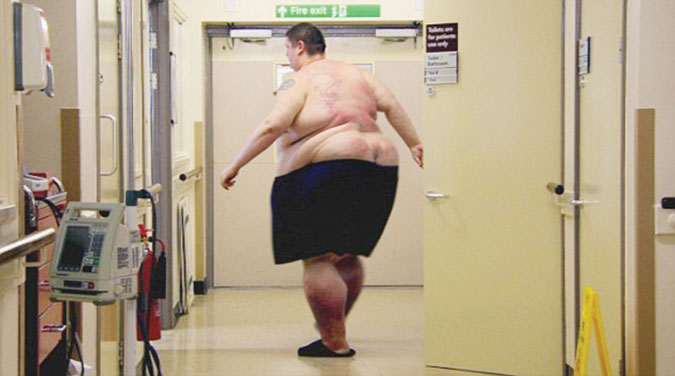
I spent a year in the UK, after becoming an exile 25 years ago. One can see every day on the streets how unhealthy so many people are. So many people look shabby, downtrodden and depressed. The most striking thing is how many grossly obese people are walking (with difficulty) the streets. Some of them are in wheelchairs. One sees a lot of wheelchairs. Obesity is one league table on which Britain ranks highly, beating all other Europeans except the Maltesers. Obesity used to be a sign of affluence, now it is a disease of poverty. Around one in every four adults and around one in every five children aged 10 in the UK are overweight. The prevalence of reception-aged children living with obesity in 2021-22 was highest in the North East (11.4%) and the West Midlands (11.3%). It was lowest in the South East (8.7%), South West (8.9%) and East of England (9.2%).
Politics of Poor Health
From the 1940s to 2010 the state pension age was 60 for women and 65 for men. Since then, the pension age for women has been equalized with men’s, and both raised to 66. Two further increases are due to follow: to 67 by 2027, and to 68 in 2046. The government was hoping it could bring that second date forward in order to improve its fiscal position. Raising the pension
age has caused riots on the streets of France. Tory MPs have urged a delay, arguing that ordinary voters would resent having to work longer at a time when the government has just relaxed tax rules on pensions for the wealthy.
One senior Tory MP warned of the “critical juxtaposition” of scrapping the £1mn lifetime allowance for pension savings while asking ordinary voters to work until 68 for a not very generous state pension. Prime Minister Rishi Sunak has released his tax returns. They show that he has made large sums outside politics and only paid tax at a rate of 22%.
Many people, including myself, have written about the downsides of economic growth. Whatever about all that, those who are supposed to be running the UK are pinning all their hopes on economic growth without having any clear plan about how to achieve it. Liz Truss was toppled by her madcap schemes to boost growth. All she did was give more money to the already rich. Hunt and Sunak seem more sensible but in reality are just mouthing optimistic platitudes.
The British malaise goes back a long way and Johnson, Truss, Kwarteng, Sunak and Hunt have done nothing but kick problems into the long grass hoping that they will solve themselves. In The Atlantic, Derek Thompson pithily summarizes the UK today: “Britain is pretty poor for a rich place. UK living standards and wages have fallen significantly behind those of Western Europe. By some measures, in fact, real wages in the UK are lower than they were 15 years ago and will likely be even lower next year.”
Thompson continues: “In the past 30 years, the British economy chose finance over industry, Britain’s government chose austerity over investment, and British voters chose a closed and poorer economy over an open and richer one. The predictable results are falling wages and stunningly low productivity growth.” Another pithy summary from Thompson: “The UK is now an object lesson for other countries dealing with a dark triad of de-industrialization, de-growth, and denigration of foreigners.”
Austerity was the Cameron (remember him coming to Sri Lanka telling us how to run our country?) government’s response to the 2008 global financial crisis. That meant cutting public services even further which means there is less support for poor people to care for elderly and sick people. Brexit was supposed to bring an extra £350 million to the NHS every week. That was a lie. Brexit brought staff shortages to the NHS as foreign workers were made unwelcome. There are food shortages today because there are no foreign seasonal workers to pick the crops and no foreign HGV drivers to deliver to the supermarkets. Imports and exports of food are stymied by hellish bureaucracy.
NHS
The days have probably gone when the NHS was revered. A study of 37.5 million patients in 2018 suffering four different sorts of cancer showed that British cancer survival rates were worse, not just than EU neighbours, but worse even than China’s. China’s breast cancer survival rate is about the same as Britain’s, its prostate cancer survival rate is worse and its lung and stomach cancer survival rates are better. China is a country in which only half of doctors have university degrees.
Municipal Heroes
Most improvements in infant mortality and life expectancy in Britain came not as a result of experiments on animals or investment by drug companies but because of public health measures implemented by local government. Successive Conservative governments have cut public spending, starving local authorities of funds to give social support to local communities. Improvements in nutrition, hygiene, housing, sanitation, control of infectious diseases and other public health measures historically reduced mortality rates. Very old people were rare 100 years ago. Less than one in 150 people was aged 80 and over in the 1920s. By 1920, life expectancy was 56 years for males and 59 years for females. Males born in 1841 could expect to live to only 40.2 years and females to 42.3 years, mainly because of high mortality rates in infancy and childhood.
The Great Stink of London
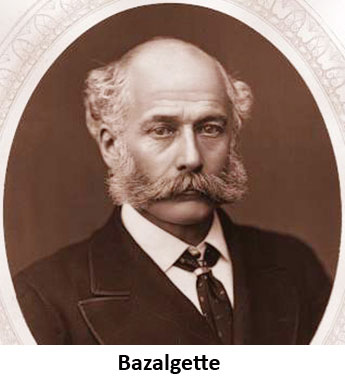
by Stephen Halliday is a fascinating read. It recounts how civil engineer Joseph Bazalgette built London’s first sewer network (still in use today), which helped to wipe out cholera in the capital. The summer of 1858 was particularly hot and humid. For centuries, the Thames had been the city’s main thoroughfare as well as a dumping ground for human, animal and industrial waste. London’s population more than doubled between 1800 and 1850, making it by far the largest in the world. By 1858, the stench overwhelmed Parliament and the politicians decided to do something about it. Bazalgette produced a network of 82 miles of new sewers, great subterranean boulevards that in places were larger than the underground train tunnels then under construction.
In 2023, Britain’s rivers are again full of shit plus a lot of chemicals and microplastics that were unknown in Bazalgette’s time. Untreated sewage released by privatized water companies is responsible for 35% of the pollution of British rivers. Pollution by water companies is particularly high in the south and southwest of England. Excessive use of fertilizer and pesticides in agriculture is responsible for 40% of river pollution. Run-off from roads and towns which contains pollutants such as oil is responsible for 18%.
Professor Steve Ormerod, an ecologist at Cardiff University, warns of other threats. He says: “We need to understand the risks which come with emerging pollutants – pharmaceuticals, microplastics. We don’t know, at this stage how big a problem they’re going to be.” The Environment Agency says, “people in deprived and heavily populated urban areas were more likely to live within 600m of a river with poor chemical or biological quality”.
The Environmental Audit Committee’s inquiry uncovered “multiple failures in the monitoring, governance and enforcement on water quality,” carried out by England’s Environment Agency. Since 1993, the number of water quality samples taken annually by the Environment Agency and Natural Resources Wales has dropped by 57%, which the committee says is a result of budget cuts.
On Wednesday March 17, 2023, the Chancellor of the Exchequer, Jeremy Hunt, presented his budget to the House of Commons, a budget that needed to restore economic health to the UK after the disastrous budget of his predecessor Kwasi Kwarteng. Economic health is an important factor in the physical health of the people of Britain. The physical health of the population in turn affects the health of the economy. Disturbing statistics are emerging which indicate that the health of people living in the UK is declining. A relative worsening of population health has historically been an early sign of severe political and economic problems. The crisis is here for the UK, the sick man of Europe.


 ‘Adapt, shrink or die’ – thus runs the warning issued by the Trump administration to UN humanitarian agencies with brute insensitivity in the wake of its recent decision to drastically reduce to $2bn its humanitarian aid to the UN system. This is a substantial climb down from the $17bn the US usually provided to the UN for its humanitarian operations.
Considering that the US has hitherto been the UN’s biggest aid provider, it need hardly be said that the US decision would pose a daunting challenge to the UN’s humanitarian operations around the world. This would indeed mean that, among other things, people living in poverty and stifling material hardships, in particularly the Southern hemisphere, could dramatically increase. Coming on top of the US decision to bring to an end USAID operations, the poor of the world could be said to have been left to their devices as a consequence of these morally insensitive policy rethinks of the Trump administration.
Earlier, the UN had warned that it would be compelled to reduce its aid programs in the face of ‘the deepest funding cuts ever.’ In fact the UN is on record as requesting the world for $23bn for its 2026 aid operations.
If this UN appeal happens to go unheeded, the possibilities are that the UN would not be in a position to uphold the status it has hitherto held as the world’s foremost humanitarian aid provider. It would not be incorrect to state that a substantial part of the rationale for the UN’s existence could come in for questioning if its humanitarian identity is thus eroded.
Inherent in these developments is a challenge for those sections of the international community that wish to stand up and be counted as humanists and the ‘Conscience of the World.’ A responsibility is cast on them to not only keep the UN system going but to also ensure its increased efficiency as a humanitarian aid provider to particularly the poorest of the poor.
It is unfortunate that the US is increasingly opting for a position of international isolation. Such a policy position was adopted by it in the decades leading to World War Two and the consequences for the world as a result for this policy posture were most disquieting. For instance, it opened the door to the flourishing of dictatorial regimes in the West, such as that led by Adolph Hitler in Germany, which nearly paved the way for the subjugation of a good part of Europe by the Nazis.
If the US had not intervened militarily in the war on the side of the Allies, the West would have faced the distressing prospect of coming under the sway of the Nazis and as a result earned indefinite political and military repression. By entering World War Two the US helped to ward off these bleak outcomes and indeed helped the major democracies of Western Europe to hold their own and thrive against fascism and dictatorial rule.
Republican administrations in the US in particular have not proved the greatest defenders of democratic rule the world over, but by helping to keep the international power balance in favour of democracy and fundamental human rights they could keep under a tight leash fascism and linked anti-democratic forces even in contemporary times. Russia’s invasion and continued occupation of parts of Ukraine reminds us starkly that the democracy versus fascism battle is far from over.
Right now, the US needs to remain on the side of the rest of the West very firmly, lest fascism enjoys another unfettered lease of life through the absence of countervailing and substantial military and political power.
However, by reducing its financial support for the UN and backing away from sustaining its humanitarian programs the world over the US could be laying the ground work for an aggravation of poverty in the South in particular and its accompaniments, such as, political repression, runaway social discontent and anarchy.
What should not go unnoticed by the US is the fact that peace and social stability in the South and the flourishing of the same conditions in the global North are symbiotically linked, although not so apparent at first blush. For instance, if illegal migration from the South to the US is a major problem for the US today, it is because poor countries are not receiving development assistance from the UN system to the required degree. Such deprivation on the part of the South leads to aggravating social discontent in the latter and consequences such as illegal migratory movements from South to North.
Accordingly, it will be in the North’s best interests to ensure that the South is not deprived of sustained development assistance since the latter is an essential condition for social contentment and stable governance, which factors in turn would guard against the emergence of phenomena such as illegal migration.
Meanwhile, democratic sections of the rest of the world in particular need to consider it a matter of conscience to ensure the sustenance and flourishing of the UN system. To be sure, the UN system is considerably flawed but at present it could be called the most equitable and fair among international development organizations and the most far-flung one. Without it world poverty would have proved unmanageable along with the ills that come along with it.
Dehumanizing poverty is an indictment on humanity. It stands to reason that the world community should rally round the UN and ensure its survival lest the abomination which is poverty flourishes. In this undertaking the world needs to stand united. Ambiguities on this score could be self-defeating for the world community.
For example, all groupings of countries that could demonstrate economic muscle need to figure prominently in this initiative. One such grouping is BRICS. Inasmuch as the US and the West should shrug aside Realpolitik considerations in this enterprise, the same goes for organizations such as BRICS.
The arrival at the above international consensus would be greatly facilitated by stepped up dialogue among states on the continued importance of the UN system. Fresh efforts to speed-up UN reform would prove major catalysts in bringing about these positive changes as well. Also requiring to be shunned is the blind pursuit of narrow national interests.

 Hi! Great to be back after my Christmas break.
Thought of starting this week with egg white.
Yes, eggs are brimming with nutrients beneficial for your overall health and wellness, but did you know that eggs, especially the whites, are excellent for your complexion?
OK, if you have no idea about how to use egg whites for your face, read on.
Egg White, Lemon, Honey:
Separate the yolk from the egg white and add about a teaspoon of freshly squeezed lemon juice and about one and a half teaspoons of organic honey. Whisk all the ingredients together until they are mixed well.
Apply this mixture to your face and allow it to rest for about 15 minutes before cleansing your face with a gentle face wash.
Don’t forget to apply your favourite moisturiser, after using this face mask, to help seal in all the goodness.
Egg White, Avocado:
In a clean mixing bowl, start by mashing the avocado, until it turns into a soft, lump-free paste, and then add the whites of one egg, a teaspoon of yoghurt and mix everything together until it looks like a creamy paste.
Apply this mixture all over your face and neck area, and leave it on for about 20 to 30 minutes before washing it off with cold water and a gentle face wash.
Egg White, Cucumber, Yoghurt:
In a bowl, add one egg white, one teaspoon each of yoghurt, fresh cucumber juice and organic honey. Mix all the ingredients together until it forms a thick paste.
Apply this paste all over your face and neck area and leave it on for at least 20 minutes and then gently rinse off this face mask with lukewarm water and immediately follow it up with a gentle and nourishing moisturiser.
Egg White, Aloe Vera, Castor Oil:
To the egg white, add about a teaspoon each of aloe vera gel and castor oil and then mix all the ingredients together and apply it all over your face and neck area in a thin, even layer.
Leave it on for about 20 minutes and wash it off with a gentle face wash and some cold water. Follow it up with your favourite moisturiser.

 Superlatives galore were used, especially on social media, to highlight R&B singer Ne-Yo’s trip to Sri Lanka: Global superstar Ne-Yo to perform live in Colombo this December; Ne-Yo concert puts Sri Lanka back on the global entertainment map; A global music sensation is coming to Sri Lanka … and there were lots more!
At an official press conference, held at a five-star venue, in Colombo, it was indicated that the gathering marked a defining moment for Sri Lanka’s entertainment industry as international R&B powerhouse and three-time Grammy Award winner Ne-Yo prepares to take the stage in Colombo this December.
What’s more, the occasion was graced by the presence of Sunil Kumara Gamage, Minister of Sports & Youth Affairs of Sri Lanka, and Professor Ruwan Ranasinghe, Deputy Minister of Tourism, alongside distinguished dignitaries, sponsors, and members of the media.
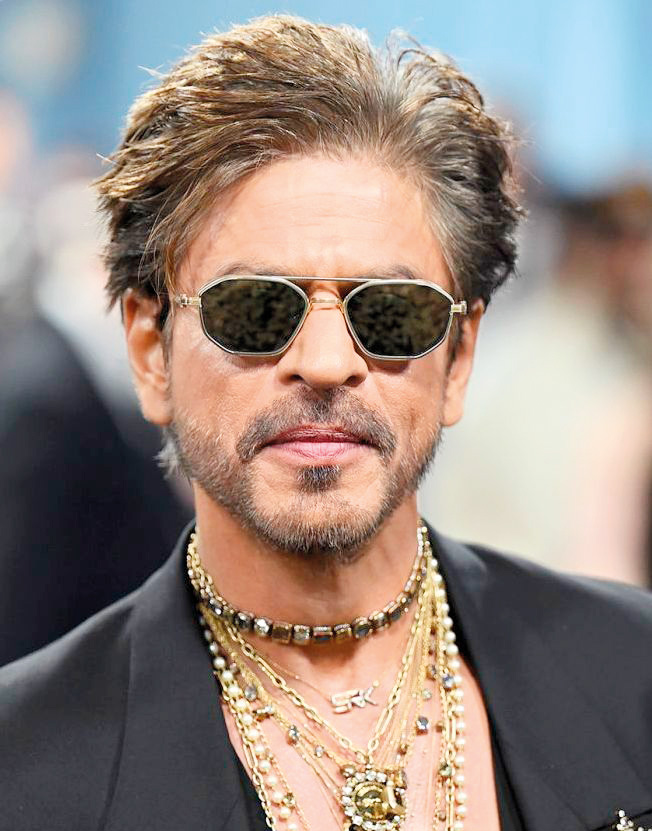
Shah Rukh Khan: Disappointed his fans in Sri Lanka
According to reports, the concert had received the official endorsement of the Sri Lanka Tourism Promotion Bureau, recognising it as a flagship initiative in developing the country’s concert economy by attracting fans, and media, from all over South Asia.
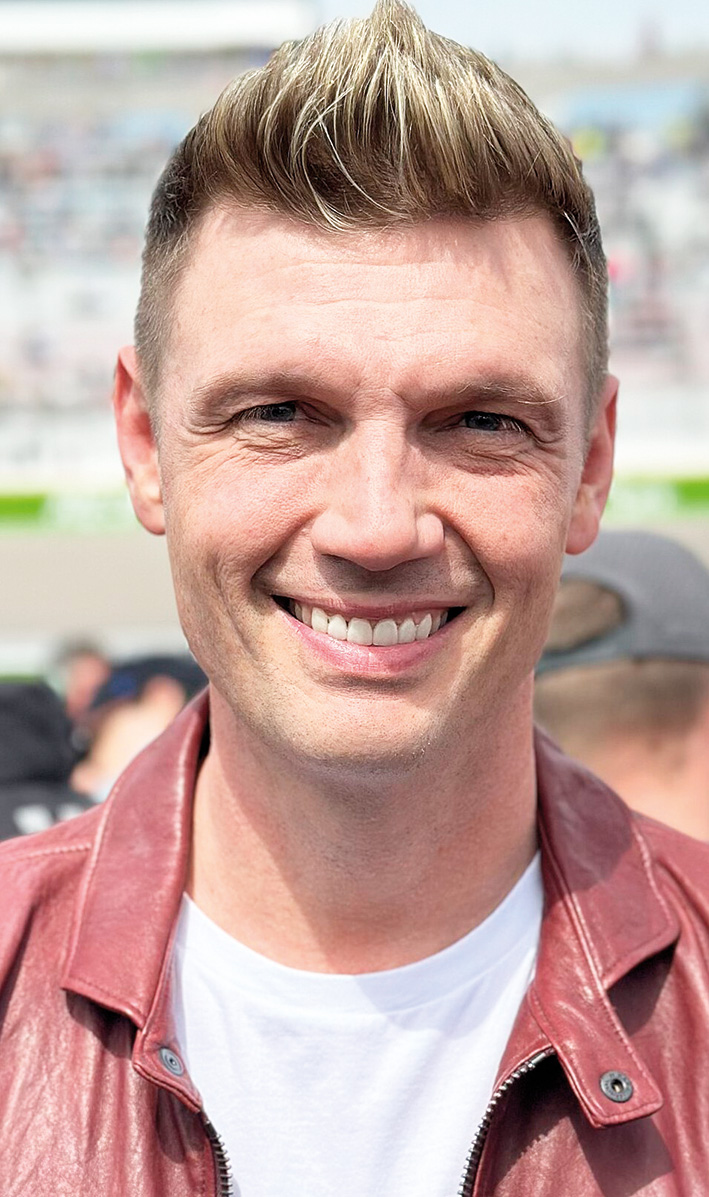
Nick Carter: His concert, too, was cancelled due to “Unforeseen circumstances
However, I had that strange feeling that this concert would not become a reality, keeping in mind what happened to Nick Carter’s Colombo concert – cancelled at the very last moment.
Carter issued a video message announcing he had to return to the USA due to “unforeseen circumstances” and a “family emergency”.
Though “unforeseen circumstances” was the official reason provided by Carter and the local organisers, there was speculation that low ticket sales may also have been a factor in the cancellation.
Well, “Unforeseen Circumstances” has cropped up again!
In a brief statement, via social media, the organisers of the Ne-Yo concert said the decision was taken due to “unforeseen circumstances and factors beyond their control.”
Ne-Yo, too, subsequently made an announcement, citing “Unforeseen circumstances.”
The public has a right to know what these “unforeseen circumstances” are, and who is to be blamed – the organisers or Ne-Yo!
Ne-Yo’s management certainly need to come out with the truth.
However, those who are aware of some of the happenings in the setup here put it down to poor ticket sales, mentioning that the tickets for the concert, and a meet-and-greet event, were exorbitantly high, considering that Ne-Yo is not a current mega star.
We also had a cancellation coming our way from Shah Rukh Khan, who was scheduled to visit Sri Lanka for the City of Dreams resort launch, and then this was received: “Unfortunately due to unforeseen personal reasons beyond his control, Mr. Khan is no longer able to attend.”
Referring to this kind of mess up, a leading showbiz personality said that it will only make people reluctant to buy their tickets, online.
“Tickets will go mostly at the gate and it will be very bad for the industry,” he added.

Zohran Mamdani sworn in as New York City mayor

In pictures: New Year welcomed around the world

Foreign warships commended for their assistance during weather disaster in Sri Lanka

Machu Picchu train crash leaves one dead and dozens injured

I invite you to step into 2026 with renewed energy, hope, and determination – PM

Fairly heavy showers about 75 mm are likely at some places in the Central and Uva provinces and in Batticaloa and Ampara districts

‘Dates have the highest sugar content to fight Coronavirus’

Sunday Island 27 December – Headlines

#SundayIsland 17th December – Headlines

Sunday Island – 28th March

Sunday Island Headlines – 21 March

Sunday Island – 21st February – Headlines
-
 News7 days ago
Street vendors banned from Kandy City
-

 Sports4 days ago
Gurusinha’s Boxing Day hundred celebrated in Melbourne
-
 News2 days ago
Leading the Nation’s Connectivity Recovery Amid Unprecedented Challenges
-

 News7 days ago
Lankan aircrew fly daring UN Medevac in hostile conditions in Africa
-

 Sports5 days ago
Time to close the Dickwella chapter
-

 Features3 days ago
It’s all over for Maxi Rozairo
-

 Features7 days ago
Rethinking post-disaster urban planning: Lessons from Peradeniya
-

 Opinion7 days ago
Are we reading the sky wrong?