
Opinion
The need of a new paradigm in agriculture

Agriculture, or the production of food, has framed the history of social development through millennia. Honed over centuries of tending to a land and its soils, a traditional understanding of a crop and its needs is what the phenomenon of agriculture produced. Sri Lanka provides a good example. Here, irrigated rice production demonstrates a sophisticated system of water collection and control. The rice farming landscape maintained a high biodiversity component, that had co-evolved with the management cycles of the land. The grain itself was not only a source of carbohydrate, but also a source of selected minerals and nutritional compounds, as seen in the variety and composition of the grain. At the last reckoning (1950), there were 500 named varieties, each with different, colour, shape and texture complexes, that were recorded. This diversity was the first victims to the industrialisation of agriculture. Today it is difficult to find more than 20 that remain within the farming communities. In traditional farming systems, farming demanded a knowledge of the environment. A farmer to be successful required an intimate knowledge of the land and the changes that seasonality brought to it. There was always the drive to produce more but productivity of the traditional system, was limited to the optimal biological energy. In terms of energy, it was always internal, the soil, farm livestock and the farmers’ energy to produce food. In Rice production, this system was recorded to have a yield of about 2000 kg per hectare around 1960. With the onset of agricultural development, focused on productivity, this level of yield was seen to be insufficient and an agricultural development programme that focused on crop intensification began. The changes began with the introduction of hybrids and artificial fertiliser. Under this approach, crop plants were bred to have smaller leaf and root biomass and the production was concentrated in harvestable biomass. One problem with this approach is that while it takes a smaller root mass to absorb the fertiliser efficiently, there are no other roots extending outwards, providing root exudates into the soil microbial community to keep the soil alive. The fossil based fertiliser are salts that are taken by the plant to create rapid growth. But such growth is at the expense of its natural defences, bringing about attacks by pests which then have to be controlled using pesticides. It is a downward spiral.
The gain in crop yield, using the industrial approach, is impressive; by 2025 it was at 4700 kgs. But there was a significant cost to attain this level of productivity. In terms of energy, roughly 6.4 MJ of energy is required to produce 1.0 kg of rice all of this energy is fossil based. This change, from traditional agriculture to industrial agriculture meant moving from having no need of fossil energy to provide 1MJ of food, to needing over 6.4 MJ of fossil energy to do the same with industrial agriculture. Further, the toxic nature of many of these inputs have been clearly demonstrated by the decline of the health and well-being of our farming population. Thus, if agricultural productivity keeps on depending on fossil inputs, the decline of public health will become a fact. But, the international agro-industrial complex defends their market by promoting the ‘safety’ of these toxins. Public statements questioning banning of proven toxic compounds claiming them to be ‘benign pesticides like glyphosate ‘suggesting, that they do not cause kidney disease and cancer’. Having been a personal participant in the battle to protect the health of our people by maintaining the ban on Glyphosate, I have witnessed the hypocrisy around the use and safety of such toxins in our agricultural environment, biologists claiming conservation goals, suddenly become cheerleaders for Glyphosate. The insensitivity and cruelty of such people becomes clear, when they state that they would see our farmers suffer and die, with poisoning today, because of a hypothetical possibility of a famine tomorrow. As a defender of such poison stated publicly, “If the hybrids and their chemicals disappear tomorrow, many more people would die of starvation than the number who die of poisoning now. Reality is a hard thing.” What a bitter, tragic, statement. In a more sensitive world, we should strive towards addressing the current tragedy and reducing the number of people dying today from agricultural toxins, while looking for alternatives that can help us maintain productivity without toxins into the future.
Then there is the reality of climate change. It was in 2015 at the Paris COP on biodiversity that the Sri Lankan position paper was presented stating that: “We are aware that the optimum operating temperature of chlorophyll is at 37 deg C. In a warming world where temperatures will soar well above that, food production will be severely impacted. We would request the IPCC to address responses to this phenomenon.”
Up till today, the agricultural establishment has carefully ignored this reality. We needed a strong programme of adaptation where crop seeds would be bred for heat resistance. Why is a heat wave so dangerous? Apart from the heat stress in human and animals, it could exceed the threshold for enzymatic activity. All of agriculture depends on the good growth of plants, all plants rely on their chlorophyll to grow and produce. Chlorophyll is a molecule that functions to an optimum at about 37degrees, above that their performance falls. In heat waves exceeding 39 degrees, plant productivity will be impacted and yields drop. A brutal spring heat wave in Australia, reduced farmers’ yields and demonstrated the oncoming danger. This reality is now with us and we still do not have heat resistance bred into the seeds.
To compound the ambient heat problem, landscape considerations in the current trend is to simplify the cropping area so that machines can work more efficiently. But this style of management just compounds the problem. In an industrial monoculture, all trees and shrubs in a cropping land are removed for efficiency of operation. To change the landscape in this manner is to remove all the cooling elements on it. A large tree, for instance produces the cooling equivalent of 9 room size air conditioners working non-stop, all day. A group of trees around a farm could make a difference to its level of productivity.
It has become obvious that the current approach to agriculture with its total dependency on fossil energy to provide food places us in a path of dangerous dependency, it is also evident that our traditional methods of production also have a limit in productivity. So how do we proceed? One way might be to adopt the approach of a successful neighbour; earlier this year the President of Viet Nam addressed the Sri Lankan Parliament where he stated the way that Viet Nam approached the challenges. They faced their development challenges with a philosophy of ‘Doi Moi’. Doi Moi means a new way of thinking and that the direction of growth ‘must stem from national realities’. Can we build a modern, scientific, agricultural system which is rooted in the reality of our traditions.? Can we wean our agricultural system away from fossil dependency? Can we adapt our agriculture to be resilient to the changing climate ? Can we build modern farmers who can interact with the environment and not just agricultural labourers dependent external input ?
by Dr. Ranil Senanayake

This article examines whether Sri Lanka faces the risk of once again moving towards a situation similar to the 2022 economic crisis. The 2022 crisis was not the result of a single cause, but a multidimensional crisis created by the combined effects of fiscal weaknesses, foreign exchange shortages, debt burdens, policy mistakes, and the weakening of the productive economy. Although foreign exchange reserves, the exchange rate, and the fiscal position have now stabilized to some extent, that stability remains fragile.
The continuity of the IMF programme, debt sustainability, investor confidence, and policy discipline are decisive factors in this regard. At the same time, poverty, the quality of employment, pressures on the SME sector, price levels, and income inequalities remain serious socio-economic challenges. Therefore, while it may not be accurate to say that the 2022 crisis will immediately recur, abandoning the reform path and failing to correct structural weaknesses could once again push Sri Lanka towards a crisis-prone path.
Recently, the Chief Executive Officer of the Advocata Institute issued an important warning regarding Sri Lanka’s economic future. That statement also received wide attention across various media platforms. His central argument was that if Sri Lanka moves away from the current path of economic reforms, there is a risk that a situation similar to the severe economic crisis experienced in 2022 could re-emerge.
This statement cannot be dismissed merely as a political or ideological remark. It is an important warning that deserves deeper consideration in relation to the country’s economic stability, policy continuity, and the future of the reform process. Therefore, the purpose of this note is to examine the strength and validity of that statement through selected macroeconomic indicators and structural economic factors.
A particularly important point to remember is that the 2022 economic crisis was not caused by a single factor or a single policy mistake. It was a complex economic crisis created by the accumulation of fiscal imbalances, excessive debt, foreign exchange shortages, weak export and investment growth, the decline of the productive economy, policy uncertainty, and weak institutional governance over many years.
Therefore, in assessing whether Sri Lanka could once again move towards such a situation, it is not sufficient to rely on a single indicator or a short-term trend. Instead, it is essential to consider a broad macroeconomic range, including the fiscal position, foreign exchange reserves, debt sustainability, investment and export performance, unemployment, poverty levels, the condition of small and medium-sized enterprises, price levels, interest rates, and the overall path of economic growth.
Our main question should not be whether the 2022 crisis will return tomorrow. The more important question is whether the fundamental structural weaknesses that caused that crisis have truly been corrected, or whether they have only been temporarily managed. Sri Lanka’s economic future will be determined by the answer to this question.
1. Foreign Exchange Reserves
By early 2022, Sri Lanka’s usable foreign exchange reserves had fallen to extremely low levels, making even payments for fuel, medicine, and other essential imports a serious challenge.
At present, foreign exchange reserves have recovered significantly, providing a stronger protective buffer compared with the situation in 2022. However, this stability could once again be weakened by a breakdown in the continuity of the IMF programme, a slowdown in foreign direct investment flows, a decline in tourism earnings or remittances, or disruptions to the debt restructuring process.
2. Exchange Rate Stability
In 2022, the rapid depreciation of the rupee was a major factor that increased import prices, production costs, and the cost of living.
Today, the exchange rate shows relative stability, but that stability depends on foreign exchange inflows, market confidence, and policy credibility. Therefore, if the IMF programme is disrupted, foreign exchange earnings decline, or investor confidence weakens, the rupee could once again come under severe pressure.
3. Fiscal Position
Among the root causes of the 2022 crisis were the collapse of government revenue, dependence on excessive borrowing, and the long-term weakening of fiscal discipline.
Under the IMF programme, the fiscal position has been strengthened to some extent through increased tax revenue and expenditure control. However, reversing tax reforms for political popularity, failing to reform loss-making state-owned enterprises, or losing control over public expenditure could once again widen fiscal imbalances.
4. Debt Sustainability
In 2022, Sri Lanka was forced to suspend external debt servicing for the first time in its history.
Although the debt restructuring process has now made considerable progress, debt sustainability depends on continuous economic growth, maintaining a primary budget surplus, and policy discipline. If these conditions weaken, concerns over debt stability could re-emerge.
5. Employment Conditions
Although the official unemployment rate appears to be under some control, problems relating to the quality of the labour market remain unresolved.
Many people have moved into low-income informal employment, while the shortage of employment opportunities among educated youth remains significant. In addition, the migration of skilled and educated workers has placed pressure on the country’s human capital and long-term productive capacity.
6. Poverty and Living Standards
With the 2022 crisis, poverty increased significantly. Although inflation has declined, the cost of living still remains a heavy burden for many families.
A large number of households continue to struggle to meet expenses related to food, transport, education, and health. Therefore, it is still difficult to say that the benefits of macroeconomic stability have adequately reached lower- and middle-income groups.
7. Small and Medium-Sized Enterprises
SMEs, which are a central source of employment and income generation in Sri Lanka, were severely affected by the crisis.
High interest rates, energy costs, raw material prices, and weak consumer demand forced many enterprises to close down, downsize, or become burdened with debt. The pace of economic recovery will depend heavily on the revival of this sector.
8. Weakness of the Productive Economy
A deeper structural cause of the 2022 crisis was the limited base of Sri Lanka’s productive economy.
Even today, the country remains heavily dependent on tourism earnings, remittances, and the services sector. High value-added industries, technology exports, knowledge-based services, and innovation-driven sectors have not grown at the expected pace. Without a structural transformation of the economy, long-term stability cannot be guaranteed.
9. Income and Distributional Inequalities
Although some economic groups recovered quickly after the crisis, a large section of the population has still not escaped economic pressure.
The gap between urban and rural areas, as well as between high- and low-income groups, appears to have widened. If the benefits of economic growth are not distributed more broadly, macroeconomic stability will not translate into social and political stability.
10. Price Levels and Inflation
Inflation has declined, but people are still facing price levels that have already risen and become entrenched.
A decline in inflation does not mean a decline in prices. If income growth does not keep pace with price levels, the real purchasing power and living standards of households will remain weak.
11. Interest Rates and Investment
Although interest rates have declined, private investment and new business activity have not yet grown at the expected pace.
Investment decisions are influenced not only by interest rates, but also by policy stability, legal clarity, the protection of property rights, market expectations, and investor confidence. Therefore, sustained investment growth requires broader institutional and policy stability.
12. What Could Happen If IMF Conditions Are Not Implemented?
The IMF programme is not merely a loan facility. It is a key foundation of the confidence that the international financial community places in Sri Lanka’s economic policies.
programme breaks down:
* IMF disbursements could be suspended.
* Support from development partners, including the World Bank and the Asian Development Bank, could weaken.
* Confidence among creditors and international markets could deteriorate.
* Foreign direct investment could slow down.
* Pressure on the rupee could increase.
* Interest rates could rise.
* Inflation could accelerate again.
* Fiscal crises could re-emerge.
* Economic growth could slow down.
* Jobs, incomes, and living standards could be adversely affected.
This does not mean that Sri Lanka would return to the 2022 situation overnight. However, it could gradually weaken the protective buffers required for economic stability and significantly increase the risk of the country being drawn back into a crisis-prone path.
by Prof. Ranjith Bandara, PhD (Qld.,)

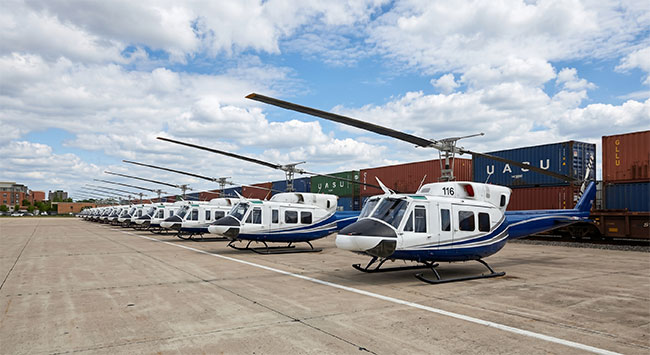
The US Government has gifted 10 Bell 206, Sea Ranger Helicopters to the SLAF for Training and Humanitarian Assistance and Disaster Relief (HADR) purposes. The full specifications are as follows.
Contractor:
Bell Helicopter Textron
Date Deployed: First flight: 1961; Operational: 1968
Propulsion: One Allison 250-C20BJ turbofan engine
Length: Fuselage – 31 feet (9.44 meters); Rotors turning – 39 feet (11.9 meters)
Height: 10 feet (3.04 meters)
Rotor Diameter: 35 feet 4 inches (10.78 meters)
Weight: 1595 pounds (725kg) empty, 3200 pounds (1455 kg) maximum take-off
Airspeed: 138 miles (222 km) per hour maximum; 117 miles (188 km) per hour cruising
Ceiling: 18,900 feet (5,761 meters)
Range: 368 nautical miles (420 statute miles, 676 km)
Crew: One pilot, four students
While they are good for training, I have my serious doubts whether these helicopters are ideal for HADR. As they have only a single engine and They can’t even operate into high rise helipads in hospitals and hotels in Colombo. The law requires twin engine helicopters! What happens if there is an engine failure while operating over the sea or in a mountainous area? There will be hell to pay!
Three twin engine versions would have been better.
How many helicopter pilots does the SLAF require anyway?
Will we be stuck with junk? Like two Russian KA -26’s during the Sirimavo Government and French Aerospatiale Dauphins SLAF acquired. which were not ‘tropicalised’, during the JRJ Government.
Will the Sea Ranger Spares support be available, free of charge?
I doubt it.
There will also be other Geopolitical strings attached. There is no such thing as a free lunch.
Guwan Seeya

Global warming policies were expected to drive a rapid shift toward a renewables-based energy system dominated by wind and solar. While growth in these sources did occur, it has not matched the pace that was widely anticipated. In the United States, the rise of cheap and abundant shale natural gas significantly reshaped the energy mix, displacing coal and limiting the relative share of wind and solar in electricity generation. In China and India, the situation has been different.
Coal remains dominant because it is widely available domestically, while natural gas is more limited or expensive to secure at scale. As a result, coal has retained its central role in both countries’ power systems. Solar and wind always provide intermittent, variable power. It was widely assumed that a cost-effective, utility-scale electricity storage solution would emerge to solve this problem, but that has not yet happened at the scale originally expected. In the pre-AI era, solar and wind were typically integrated into power systems alongside more reliable sources such as coal, natural gas, and nuclear energy.
For example, if the sun was shining on a Monday, electricity demand could be met largely by solar power during the day. At night, coal, natural gas, or nuclear plants would supply the required electricity. If the following Tuesday was cloudy or gloomy, generation would shift back toward coal, gas, or nuclear to maintain supply. AI introduces a new and more demanding challenge. AI data centers require continuous, high-quality, always-on electricity, which solar and wind alone struggle to guarantee without large-scale storage or back-up systems. In addition, they require very large amounts of power.
As a result, the AI industry is now actively searching for new and expanded sources of reliable electricity. One of the major challenges in powering AI systems is electricity transmission. High-voltage transmission lines are expensive, slow to build, and often face regulatory and land-use constraints. As a result, some companies are exploring more localized power solutions, sometimes referred to as microgrids. These are self-contained energy systems that can operate independently from the main electricity grid. Technologies such as small modular nuclear reactors are an example of such microgrids.
In such isolated systems, the focus is on highly reliable, always available power generated close to the point of use. In this context, solar and wind are expected to play a limited role because their output is variable and depends on weather conditions, making them less suited as primary sources in fully self-contained AI-focused microgrids. The pace of AI infrastructure development is extremely rapid in both the United States and China. AI systems are widely seen as transformative technologies that promise significant new wealth creation, which is driving aggressive and sustained investment. As a result, development is moving quickly, without waiting for long-term solutions such as large-scale energy storage to mature alongside renewable energy systems.
In this environment, electricity demand is rising faster than new infrastructure can be built. In the United States, this reinforces the role of natural gas as the dominant source of reliable power. In China and India, where coal remains more established and readily available, it is likely to continue playing a central role in meeting growing demand. In India, AI data centers have not yet been built at the scale seen in the United States and China. When India does reach that stage, it will need to supply large amounts of reliable electricity. India has placed strong emphasis on solar energy in particular and has had some success in meeting the needs of ordinary consumers through renewable expansion. However, the key question is what choices will be made when large-scale AI data centers begin to arrive.
Will India rely more on coal generation, which is relatively cheap, widely available, and highly reliable, or on solar power, which is intermittent, variable, and often more expensive when reliability is taken into account? My view is that India is more likely to turn to coal to meet this demand, given its existing infrastructure and the need for dependable electricity supply. Then there is an overall question. Solar and wind were already struggling in the pre-AI days to displace coal and natural gas at the system level, despite strong expectations that they would become dominant sources of electricity. Now that AI is here and electricity demand is rising rapidly, will they push solar and wind further behind in the energy mix? (The Statesman)
(The writer is an expert on energy and contributes regularly to publications in India and overseas.)
by SUNIL SHARAN

Showers or thundershowers will occur at times in the Western, Sabaragamuwa and North-western provinces and in Galle, Matara, Kandy and Nuwara-Eliya districts.

Sallay refuses to end hunger strike unless probe is taken out of CID led by Shani

Lanka joins US-led Indo-Pacific Ports Forum

Vehicle imports remain steady despite surcharge – Customs

EU supports launch of Sri Lanka’s Revised National Green Reporting System Guidelines in partnership with UNIDO

Former Intelligence Colonel files petition to prevent his arrest in connection with 2019 Easter attacks

‘Dates have the highest sugar content to fight Coronavirus’

Sunday Island 27 December – Headlines

#SundayIsland 17th December – Headlines

Sunday Island – 28th March

Sunday Island Headlines – 21 March

Sunday Island – 21st February – Headlines
-

 Latest News5 days ago
Kusal Mendis, Pathum Nissanka, bowlers put Sri Lanka 1-0 up
-
 News5 days ago
New US tariffs proposed on 60 countries, including Sri Lanka
-

 Features4 days ago
Power crept into the Sangha and is now tearing it apart
-
 Features4 days ago
Kondachchi wind farm and battery storage project to boost energy security, says Power Ministry Secretary
-

 Features4 days ago
Saudi Arabia sets new benchmark in Hajj management as 1.7 million pilgrims complete sacred journey
-

 News3 days ago
Asst. Manager, security officer arrested over Rs 30 mn snatch at Horana PB branch
-

 News2 days ago
Women’s T20 World Cup 2026 warm-up: Chamari Athapaththu’s 94 helps Sri Lanka beat Pakistan
-

 Editorial1 day ago
Probe Sallay’s complaint