
Business
The MMCA Sri Lanka partners with the George Keyt Foundation


The Museum of Modern and Contemporary Art Sri Lanka showcases work of George Keyt, documenting and creating awareness on select paintings by the Sri Lankan artist The Museum of Modern and Contemporary Art Sri Lanka (MMCA Sri Lanka) works with many lenders and private collectors to curate its exhibitions, with the objective of helping the public to learn more about modern and contemporary Sri Lankan art. In 2021, the museum was given access to the George Keyt Foundation Collection (GKF) which is installed in various offices of the John Keells Holdings Group. It was during this research visit that Chief Curator Sharmini Pereira and Curator Sandev Handy found inspiration for the MMCA Sri Lanka’s second exhibition ‘Encounters’, which places four paintings by Keyt at the centre of four displays of art.
Speaking about the partnership Pereira said, “It was a great opportunity to have a guided tour of George Keyt’s works by Chair of the GKF, Mike Antoniasz, and to see physical works by Keyt because there are no paintings by him on public display that are easily accessible seven days a week.” This observation was a key factor that led Pereira and Handy to consider the inclusion of works by Keyt in ‘Encounters’ which opened to the public in February 2022 and is free of charge.
“The GKF was established in 1988 in the lifetime of the artist and was founded on the principles of promoting the works of emerging artists and Sri Lankan art. We are thrilled to work with an organisation such as the MMCA Sri Lanka, that creates knowledge and documents the works of Sri Lankan artists.” said the Chairperson of the George Keyt Foundation Mike Antoniasz.
Speaking about the works displayed Handy commented, “George Keyt is such a well known name in Sri Lanka – yet the public have limited knowledge of his actual works, due to a lack of access to them other than through publications. With the ‘Encounters’ exhibition we want to familiarise audiences with specific paintings by Keyt, choosing to look closely at four of his paintings namely ‘The Friends’ (1982) and ‘Pounding Paddy’ (1952) which were exhibited from 11 February to 22 May as part of ‘Encounters’ Rotation 1, and ‘The Offering (1949) and ‘Kandyan Bride’ (1951), which will be displayed as part of ‘Encounters’ Rotation 3 from 13 November 2022 until 19 March 2023.”
“Each of the four paintings provided Sharmini and I with the starting points for ‘Encounters’. We have created a conversation or ‘encounters’ with other artist’s works,” Sandev further noted. The juxtapositioning of artworks that explore similar subject matter from artists of different generations has been championed by the MMCA Sri Lanka.
One of the ongoing problems faced by the GKF is the costs for looking after their collection, which includes the conservation of the paintings and drawings by Keyt. As part of ‘Encounters’, four paintings by Keyt were successfully conserved. Speaking about the conservation work Udaya Hewawasam from ConsArt, commented “The biggest damage was to the wooden stretchers which were almost totally infected by insects (wood worms) thus providing no mechanical stability. In such cases there is no option other than to replace all the stretchers.”
One of the highlights of the conservation process was the discovery of information at the back of the paintings, including details from past exhibitions, and information on the paintings’ titles. Following standard conservation practises, Udaya confirmed how “After these labels were safely detached, they were de-acidified and then relocated to the back side of the painting in safe acid free sealed transparent cases.”
‘Encounters’ is generously supported by the European Union, Foundation for Arts Initiatives, John Keells Foundation, and the Nations Trust Bank. The Museum of Modern and Contemporary Art Sri Lanka (MMCA Sri Lanka) is an education-led initiative that aims to establish a public museum dedicated to the display, research, collection, and conservation of modern and contemporary art for the benefit and enjoyment of the general public, schools, and tourists.For more information, visit www.mmca-srilanka.org or follow them on Facebook at www.facebook.com/mmcasrilanka and Instagram at https://www.instagram.com/mmcasrilanka/









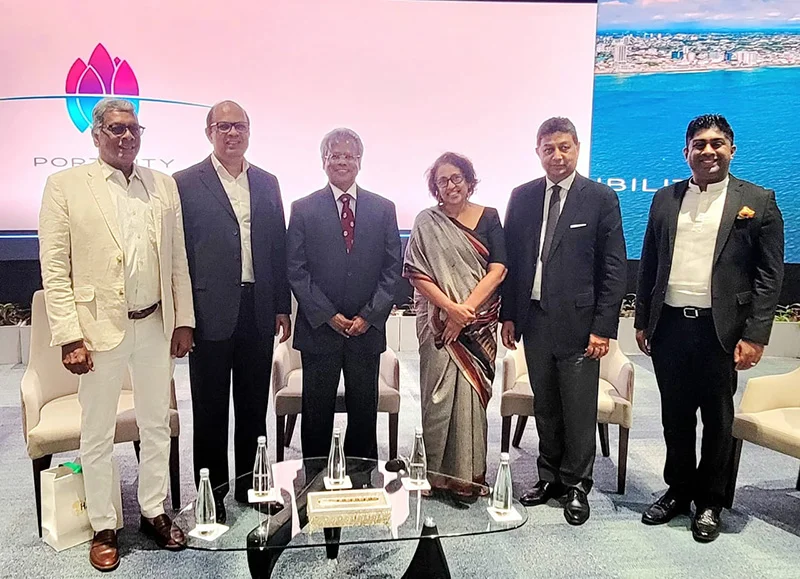
Sri Lanka must urgently strengthen policy consistency, accelerate investment reforms and fully leverage Colombo Port City as a global financial and services hub if it is to emerge as South Asia’s premier destination for foreign direct investment (FDI), business leaders and policymakers said at a high-level Public Relations Association of Sri Lanka (PRASL) forum on Monday.
The discussion, themed “Taking Sri Lanka to the World,” followed an address by internationally renowned scholar Prof. Patrick Mendis, who called for a foreign policy anchored in Sri Lanka’s own identity under what he termed the “Mahaweli Doctrine.”
Delivering the keynote business perspective, Colombo Port City Economic Commission chairman, President’s Counsel Harsha Amarasekara described the Port City as Sri Lanka’s largest public-private partnership and one of the country’s most significant economic transformation projects.
He stressed that unlike many large infrastructure developments, the Port City had not added a single dollar to Sri Lanka’s sovereign debt, with ownership of the reclaimed land remaining entirely with the government of Sri Lanka.
“The Port City is designed to compete globally in high-value services, finance, technology, tourism and innovation. It is not another industrial zone—it is a gateway connecting Sri Lanka to international markets, Amarasekara said.
He said that nine land parcels had already been leased, five major projects were under construction and several additional investments were expected before the end of the year.
The Port City, operating as a Special Economic Zone with transactions permitted in 14 foreign currencies, is targeting multinational corporations seeking regional headquarters, Global Capability Centres (GCCs) and innovation hubs.
Amarasekara said the project’s greatest long-term value would be knowledge transfer, international expertise and high-quality employment opportunities for Sri Lankan professionals.
Former Board of Investment chairman Arjuna Herath warned that Sri Lanka risked losing its long-standing competitive advantage unless it rapidly upgraded its logistics and investment ecosystem.
He noted that nearly 80 percent of Colombo Port’s business depended on transshipment, with India accounting for almost half that volume while aggressively expanding its own port capacity.
“If Sri Lanka fails to invest and improve efficiency, competitors will overtake us, Herath cautioned.
He argued that attracting FDI was no longer simply about offering incentives but about creating a predictable business environment built on policy consistency, regulatory certainty, efficient institutions and investor confidence.
Herath also highlighted Sri Lanka’s global strengths in apparel manufacturing, tyre exports and logistics, saying these industries demonstrated the country’s ability to compete internationally.
International investment strategist Lakshan Madurasinghe, Chief Executive Officer of SolutionsGround (Pvt.) Ltd and former president of the American Chamber of Commerce in Sri Lanka, said Sri Lanka must fundamentally rethink the way it markets itself to global investors.
While welcoming the country’s ambitious investment targets, he noted that actual inflows remained well below expectations.
“The first investment is important. The second, third and fourth investments are what truly measure investor confidence, he said.
Madurasinghe proposed a three-point framework—Positioning, Showing Up and Disruption (PSD)—to reposition Sri Lanka in the global investment marketplace.
He called for a single national investment brand backed by the President, government institutions, overseas missions, the private sector and the Sri Lankan diaspora.
“Every stakeholder must communicate one consistent message to the world. Investors must clearly understand why Sri Lanka is different and why they should choose us, he said.
He also urged authorities to improve investor facilitation, strengthen aftercare services and pursue innovative investment channels, including family offices, strategic partnerships and non-traditional FDI sources.
The forum concluded that Sri Lanka possesses significant structural advantages—including its strategic location, skilled workforce and expanding Port City—but these strengths must be supported by consistent policies, transparent governance and coordinated national promotion if the country is to achieve its ambition of becoming a leading regional investment, financial and services hub.
By Ifham Nizam
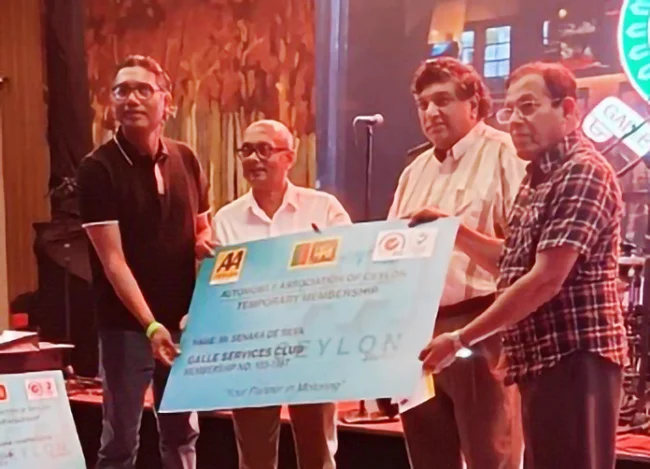
The Automobile Association of Ceylon (AAC), the oldest motoring organization established in 1904 and the Galle Services Club (GSC), which is an old sports and recreational body established in 1946, recently entered into a Reciprocal Membership Agreement for the use of facilities of the clubs reciprocally by members on days / hours when the clubs are open for business.
The rationale for the agreement is to enhance members’ benefits of both clubs and to enable them to access a broader range of services, discounts and facilities while encouraging greater participation in community engagement.
It is also intended to explore joint events, training programmes, road safety campaigns and travel related activities that leverage the strengths of each organization.
The Reciprocal Membership Agreement was duly signed and shared between Dhammika Attygalle, President – AAC; Senaka De Silva, President – GSC, at Radison Blue Hotel on July 4, during a sing along programme organized by GSC.
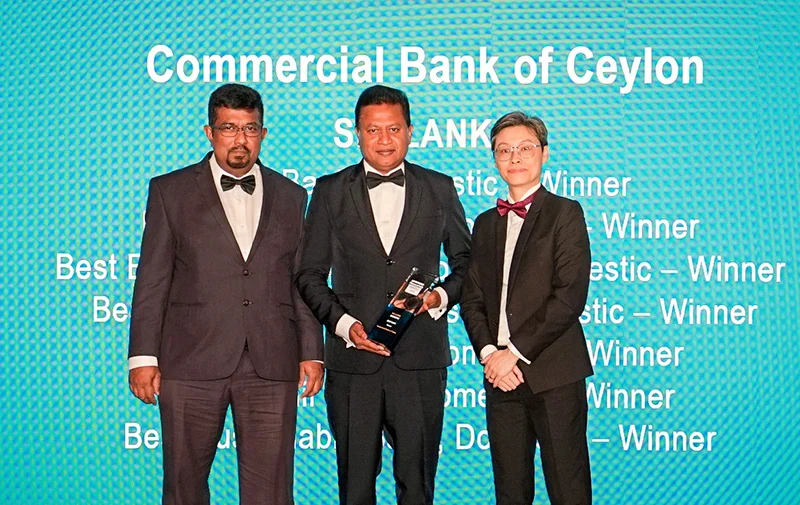
Reaffirming its unmatched leadership and excellence in Sri Lanka’s banking sector, the Commercial Bank of Ceylon has been named Best Bank in Sri Lanka for the 15th consecutive year at the FinanceAsia Awards 2026, while also winning six other prestigious accolades across key areas of banking, the most by Sri Lankan bank.
In addition to being named the country’s Best Bank, Commercial Bank was also honoured as Best Bank for SMEs, Best Bank for Use of Technology, Best Islamic Finance House, Best Sustainable Bank, Best Private Bank and Best Retail Bank in Sri Lanka. Collectively, these accolades underscore the Bank’s leadership across key areas of the financial services spectrum.
Widely regarded as one of the most respected benchmarks in the Asia-Pacific financial services industry, the FinanceAsia Awards recognise institutions that demonstrate excellence in performance, innovation, leadership, customer service and resilience. The 2026 edition marks the 30th edition of these flagship awards, which evaluate banks on financial strength, strategic growth, digital transformation, sustainability initiatives and overall contribution to their respective economies.
“Recognition at globally respected award programmes such as the FinanceAsia Awards further strengthens our standing among leading regional and international peers, while affirming our performance in financial strength, innovation, customer service and sustainability,” said Sanath Manatunge, Managing Director/CEO of Commercial Bank. “This success also enhances stakeholder confidence and reinforces customer trust in the Bank’s ability to deliver consistent value across multiple areas of banking.”
The awards were accepted on behalf of Commercial Bank by Chinthaka Dharmasena, Assistant General Manager – Services, and Krishan Gamage, Deputy General Manager – Information Technology (Operations), at the gala ceremony held on 24th June 2026 in Hong Kong.
Explaining the basis for its selections, FinanceAsia noted that the 2026 awards celebrate institutions that demonstrated determination to deliver desirable outcomes during 2025 through strong commercial and technical acumen, despite operating in complex and evolving market conditions.
The first Sri Lankan bank with a market capitalisation exceeding US$ 1 Bn., and the first bank in the country to be listed among the Top 1000 Banks of the World, Commercial Bank has the highest capital base among all Sri Lankan banks, is the largest private sector lender in Sri Lanka, and the largest lender to the country’s SME sector. Ranked No. 1 in the Business Today Top 40, the Bank is recognised as the most respected and most-awarded bank in Sri Lanka, is a leader in digital innovation and is the country’s first 100% carbon-neutral bank.
Commercial Bank operates more than 270 strategically-located branches and an extensive network of automated machines island-wide, and has the widest international footprint among Sri Lankan banks, with 21 branches in Bangladesh.

President chairs 2027 Pre-Budget talks on Agriculture Ministry

Committee Appointed to investigate unrest at Negombo Prison

Archer, Tongue hand India their biggest T20I defeat

“Badhu Shakthi 2026” National Tax Week begins

Renovated Narahenpita Railway Station reopens to the public under the ‘Dream Destination’ initiative

High-scoring draw gives West Indies rare series win

‘Dates have the highest sugar content to fight Coronavirus’

Sunday Island 27 December – Headlines

#SundayIsland 17th December – Headlines

Sunday Island – 28th March

Sunday Island Headlines – 21 March

Sunday Island – 21st February – Headlines
-

 News3 days ago
Singapore-based Buddhist monk marks nearly four decades of humanitarian service
-

 News4 days ago
Freedom 250: US Embassy celebrates America’s 250th Independence Day through magic of American cinema
-

 News5 days ago
CIABOC to question Harak Kata on Rs. 200 mn bribery allegation
-
 News5 days ago
SLAF conducts successful rescue mission under UN command in Central African Republic
-

 News2 days ago
AI concerned over proposed SL military deployment in Haiti
-
 News5 days ago
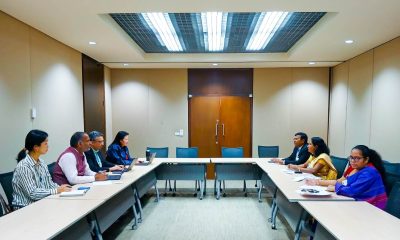
UNEP support pledged to strengthen Sri Lanka’s Environmental Priorities
-

 Business5 days ago
‘Dialog Air Fibre powers a new era of Ultra Fast Home WiFi’
-

 Features3 days ago
The NPP’s New Challenge: Balancing Easter Lawfare and Economic Welfare