
Life style
The ‘living canvas’ – that is Galle Fort

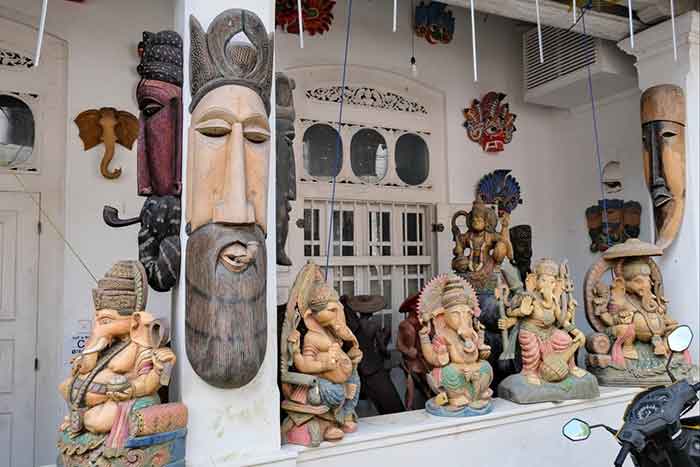
By Zinara Rathnayake
Galle Literary Festival’s Art Trail features
exhibitions, open houses and artists’ tours and turns Sri Lanka’s Galle Fort into ‘living canvas’
Staged alongside the Galle Literary Festival in Sri Lanka, the Art Trail has art shows, open houses and artists’ tours and makes a ‘living canvas’ of Galle FortGalle is a gateway to explore the island’s south coast, with its lavishly decorated homes, resorts and hotels designed by eminent Sri Lankan architects
“No other place in the whole island represents the trouser-wearing, cricket-watching modern Sri Lankan like Galle Fort,” says tour guide Shanjei Perumal, founder of Galle Fort Walks.
Perumal leads his guests along the ramparts of the 17th-century UNESCO Heritage site, which overlooks the Indian Ocean in southern Sri Lanka, and through its narrow, cobblestone streets, past sun-dappled, bougainvillea-draped walls and serendipitously placed bicycles that make for irresistible photo opportunities.
Perumal says that the fort, with its art deco spaces and mix of European and Moorish architecture, continues to inspire the art and design of contemporary Sri Lanka.
That influence will be in focus this month along the Art Trail, which is being hosted alongside the Galle Literary Festival (January 25 to 28) and turns Galle Fort into a “living canvas”.
The trail will take in hotels, Dutch-era mansions and residential homes hosting exhibitions by local and international artists, workshops and meet-and-greet events.
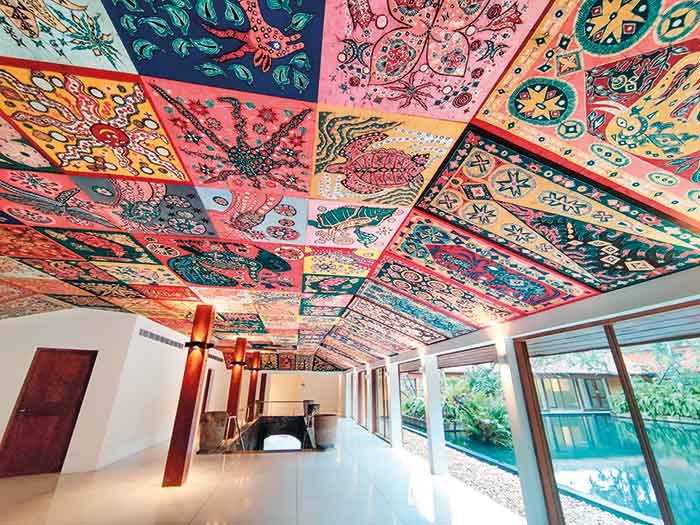
The ceiling tapestry inside Cinnamon Bentota Beach hotel was designed by batik artist Ena de Silva
The trail shows how art creates an “alternative experience for tourists to explore the country in a more exciting manner”, says Azara Jaleel, editor-in-chief of Sri Lanka’s Artra Magazine, which is a co-host of the event.
Jaleel says the Art Trail aims to capture the resilience of Sri Lankans, who have had a lot to contend with, including deadly Easter 2019 bombings and a devastating economic collapse.
“We want to show how within the place of pain and paranoia, you can see emerging artists who are resilient, capturing the beauty of the country,” Jaleel says.
And there are few better venues in Sri Lanka in which to display art that not only survives, but also thrives, than Galle Fort.
The Galle peninsula was an important trading hub, ruled by the Portuguese in the 16th century and in the 17th century by the Dutch, who built a fortified city, housing 500 families and administrative buildings.
The British took over the island’s coastal belt in the late 18th century.
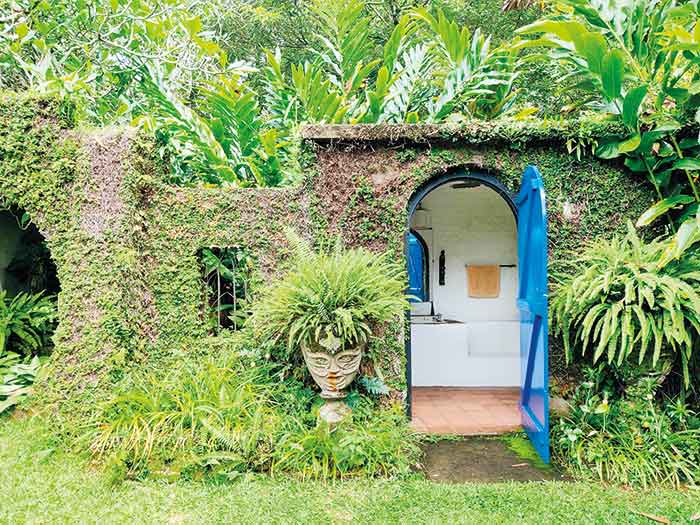
Brief Garden, home and estate of the late landscape architect Bevis Bawa, in Sri Lanka.
Much of the fortified city remains, within which are hotels and restaurants with charming courtyards sandwiched between residential buildings, schools, banks, jeweller’s shops and century-old family-run breakfast restaurants.
“I find Galle Fort very significant because of how it’s taken meaning over the years,” says Jaleel, explaining the influences bestowed by colonial powers and Arab traders, and how the district shelters a small but harmonious community, with churches, Buddha images, Hindu temples and mosques standing side by side within its walls.
“And today, it’s also home to antique shops and jewellers, and the expat community conducting interesting art galleries,” she says.
One of the latter is Stick No Bills, a producer of stylized poster art representing various cities and countries. The company’s flagship store has been housed in the Fort since 2011.
Co-founder Meg Gage Williams explains that Stick No Bills was born during the years of recovery that followed the devastating Indian Ocean tsunami in 2004 and a nearly three-decade-long civil conflict on the island.
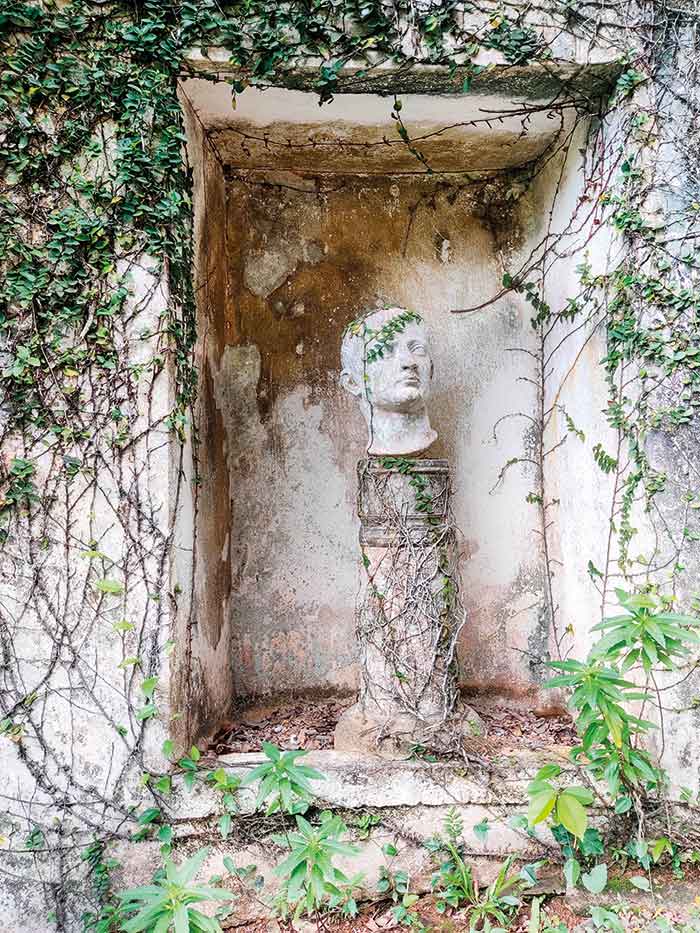
Lunuganga, on the banks of Sri Lanka’s Dedduwa Lake, was the country residence of architect Geoffrey Bawa.
“Our image library speaks of natural beauty, hope, playfulness, and of overcoming adversity, which are a part of every Sri Lankan,” says Williams.
One of the boutique’s bestselling posters is called Enfield Ride, Island Wide and features a motorcycle rider racing down a winding road with an Indiana Jones-style map in one corner charting his route from “Ceylon’s” tea plantations to the paddy fields and on to the coast.
As integral as Galle Fort is, where art and design are concerned the island’s southern coastal region – the “multicultural powerhouse of Sri Lanka”, as Williams describes it – has a lot more to offer.
A stay here is as close as one gets to Sri Lanka’s architectural soul.
About 60km up the west coast from Galle is the town of Bentota, which was home to the late Geoffrey Bawa, Sri Lanka’s most celebrated architect.
Here Bawa (1919-2003) turned a dilapidated six-hectare (15-acre) rubber estate on the banks of Dedduwa Lake into his country residence, Lunuganga, with intimate nooks, frangipani gardens, muraled walls and decorative antiques.
Today Lunuganga, where Bawa lived for four decades, is a boutique hotel. Guided tours of the estate pass through Bawa’s original suite, with its private courtyard and a plunge pool.
“Every corner here unveils an insight into [Bawa’s] design philosophies and mastery,” says Johanna Jameel, group operations manager at Teardrop Hotels, which operates the hotel.
“Lunuganga was his passion, but most important, a place where his work continued, and in many ways continues to this day. A stay here is as close as one gets to Sri Lanka’s architectural soul.”
Villa No 5 was the former home of late artist Ena de Silva, which was dismantled in Colombo and re-assembled in the grounds of Lunuganga.
Further north, visitors can tour Brief Garden. Designed by the late landscape architect Bevis Bawa, Geoffrey’s brother, the estate includes the artist’s former residence and garden, with bathing spaces enclosed in ivy-covered walls, ponds and culs-de-sac.
A 20-minute ride away, past paddy fields and country gardens, is Cinnamon Bentota Beach, another Geoffrey Bawa-designed hotel that makes an eye-catching first impression; in this case with a large, vivid ceiling tapestry of Ena de Silva’s batik art, completed with wax-resist dyeing.
Elsewhere, spaces are dedicated to the works of home-grown artists such as the late Barbara Sansoni, who designed a handloom ceiling for the hotel’s bar, and Ismeth Raheem, a writer and architect who also paints panels.
Early 2023 saw the opening of Kayaam House, a boutique beachside resort to the east of Galle. The work of local architect Sudesh Nanayakkara, the house mimics a sanctuary with the concept of “space” as the core design philosophy, with many nooks and crannies offering guests immersion into the surroundings.
With Dutch and Portuguese architectural influences, the house blends modern Sri Lankan aesthetics with open arches, cane lights and Persian blue-painted window panes.
While coconut palms frame the hotel’s large pool against the backdrop of the Indian Ocean, open spaces are adorned with antiques from all over the island; the spa entrance, for example, is flanked by a vibrant antique temple door from Jaffna.
With its nuanced history, legacy buildings and contemporary-design-led art galleries, the south coast of Sri Lanka makes for a perfect art and design getaway.
(South China Morning Post)
Pics by Zinara Rathnayake

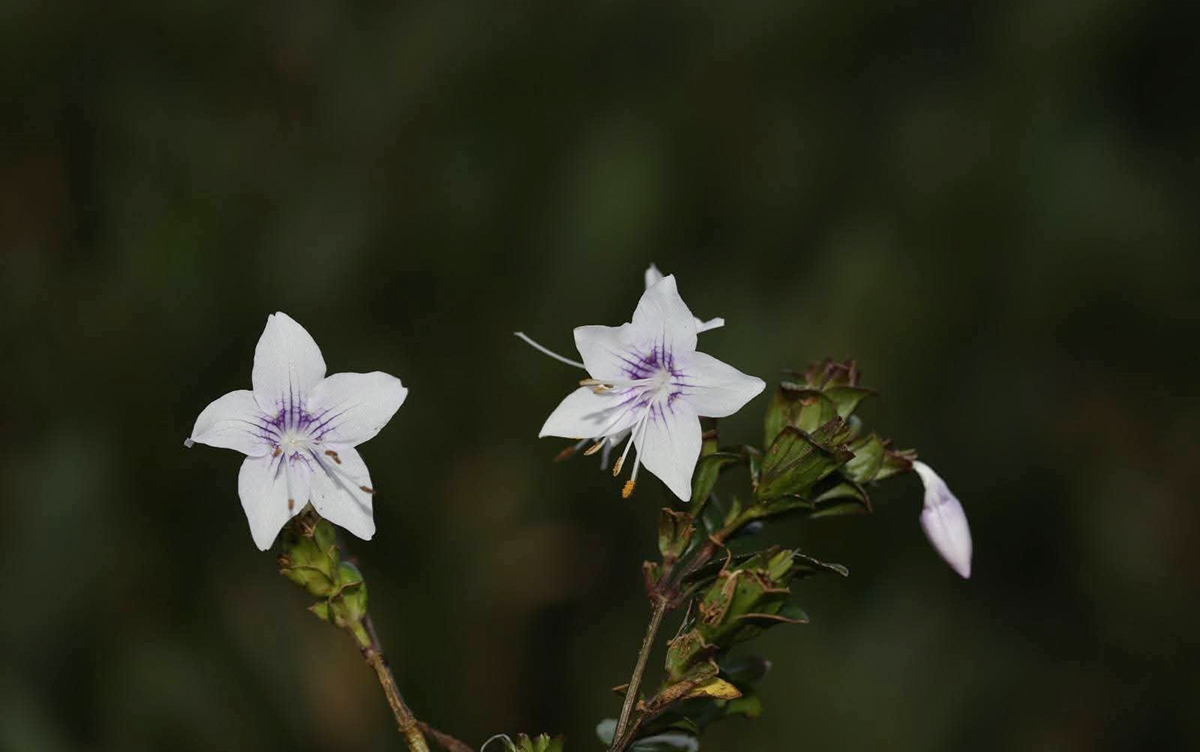
A Flower Returns From Silence:
Nearly half a century after it slipped into botanical silence, a ghost flower of Sri Lanka’s misty highlands has returned—quietly, improbably, and beautifully—from the folds of the Knuckles mountain range.
In a discovery that blends patience, intuition and sheer field grit, Strobilanthes pentandra, one of Sri Lanka’s most elusive endemic flowering plants, has been rediscovered after 48 years with no confirmed records of its existence in the wild. For decades, it lived only as a name, a drawing, and a herbarium sheet. Until now.
This rare nelu species was first introduced to science in 1995 by renowned botanist J. R. I. Wood, based solely on a specimen collected in 1978 by Kostermans from the Lebnon Estate area. Remarkably, Wood himself had never seen the plant alive. The scientific illustration that accompanied its description was drawn entirely from dried herbarium material—an act of scholarly faith in a plant already vanishing from memory.
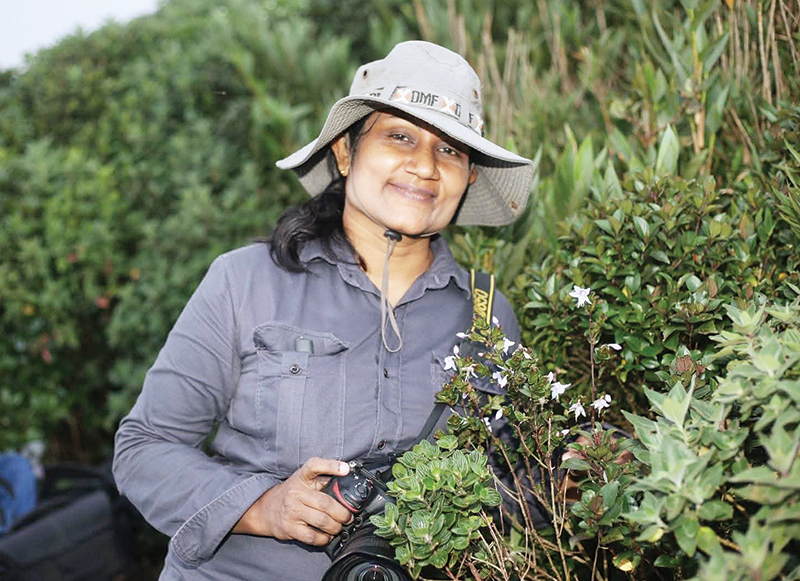
Renuka
From then on, Strobilanthes pentandra faded into obscurity. For 47 long years, there were no sightings, no photographs, no field notes. By the time Sri Lanka’s 2020 National Red List was compiled, the species had been classified as Critically Endangered, feared by many to be lost, if not extinct.
The turning point came not from a planned expedition, but from curiosity.
In October 2025, Induwara Sachinthana, a fourth-year medical student at the University of Peradeniya with a sharp eye for plants, stumbled upon an unfamiliar flowering shrub while trekking in the Knuckles region.
Sensing its importance, he photographed the plant and sent the images for verification, asking a simple but crucial question: Could this be the recently described Strobilanthes sripadensis, discovered from the Sri Pada sanctuary in 2022?
At first glance, the resemblance was striking. But something didn’t quite add up.
Based on the location, morphology, and subtle floral traits, the initial response was cautious: it was neither S. sripadensis nor S. pentandra—or perhaps something entirely new. Yet, as the pieces slowly aligned, and as the habitat details became clearer, the possibility grew stronger: this long-lost species had quietly persisted in the rugged heart of Knuckles.
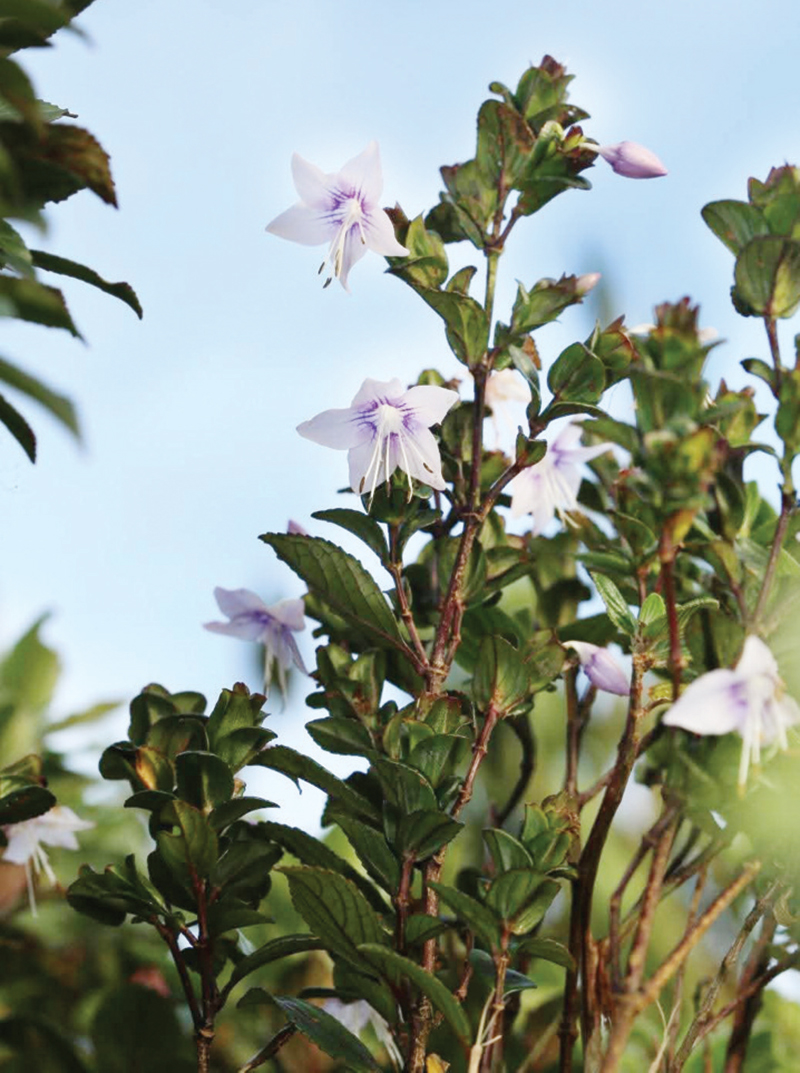
Strobilanthes pentandra
The confirmation followed through collaborative expertise. Leading Strobilanthes specialist Dr. Renuka Nilanthi Rajapakse, together with Dr. Himesh Dilruwan Jayasinghe and other researchers, carefully examined the evidence. After detailed comparison with historical descriptions and herbarium material, the verdict was clear and electrifying: this was indeed Strobilanthes pentandra.
What followed was not easy.
A challenging hike through unforgiving terrain led to the first live confirmation of the species in nearly five decades. Fresh specimens were documented and collected, breathing life into what had long been a botanical myth.
Adding further weight to the rediscovery, naturalist Aruna Wijenayaka and others subsequently recorded the same species from several additional locations within the Knuckles landscape.
The full scientific credit for this rediscovery rightfully belongs to Induwara Sachinthana, whose curiosity set the chain in motion, and to the dedicated field teams that followed through with persistence and precision.
Interestingly, the journey also resolved an important taxonomic question. Strobilanthes pentandra bears a strong resemblance to Strobilanthes sripadensis, raising early doubts about whether the Sri Pada species might have been misidentified.
Detailed analysis now confirms they are distinct species, each possessing unique diagnostic characters that separate them from each other—and from all other known nelu species in Sri Lanka. That said, as with all living systems, future taxonomic revisions remain possible. Nature, after all, is never finished telling her story.
Although the research paper is yet to be formally published, the team decided to share the news sooner than planned. With many hikers and locals already encountering the plant in Knuckles, its existence was no longer a secret. Transparency, in this case, serves conservation better than silence.
This rediscovery is more than a scientific milestone. It is a reminder of how much remains unseen in Sri Lanka’s biodiversity hotspots—and how easily such treasures can vanish without notice. It also highlights the power of collaboration across generations, disciplines and institutions.
Researchers thanked the Department of Wildlife Conservation and the Forest Department for granting research permissions, and to the many individuals who supported fieldwork in visible and invisible ways.
After 48 years in the shadows, Strobilanthes pentandra has stepped back into the light—fragile, rare, and reminding us that extinction is not always the final chapter.
Sometimes, nature waits.
By Ifham Nizam ✍️

 A conversation about intimacy, belonging and relationships with Dr Yasuni Manikkage
In an age where relationships are shaped as much by emotional awareness as by digital connection, conversations about sexual health are finally stepping out of the shadows.
As Dr. Yasuni Manikkage explains, sexual health is not just a medical issue but a lived experience woven through communication, consent, mental wellbeing and self-respect. Many couples share a home, a bed, even children, yet still feel like “Roommates with responsibilities” rather than lovers, which often signal a lack of emotional safety rather than a lack of physical contact. When desire shifts, they may panic, blame themselves or fear the relationship is dying, instead of recognising that changes in desire are common, understandable, and often transformable with knowledge, honest dialogue, and small daily acts of connection.
Q: Why did you decide to talk about sexual desire and connection now?
A: Because so many couples quietly suffer here. They love each other, share a home, raise children, but feel like “roommates with responsibilities” rather than lovers. They rarely talk about sex openly, so when desire changes, they panic, blame themselves, or assume the relationship is dying. I want people to know shifts in desire are common, understandable, and often treatable with knowledge, communication, and small daily changes.
Q: You say there is an “education gap” in sexual health. What do you mean by that?
A: Most women have never been properly taught about their own sexual anatomy, especially where and how they feel pleasure. Many men, on the other hand, have been left to “figure it out” from pornography, jokes, and guesswork. That’s a terrible training manual for real bodies and real emotions. This gap affects how easily women reach orgasm, how safe they feel in bed, and how satisfied both partners feel in the relationship.
Q: We hear about the “orgasm gap.” Is it really not biological?
A: There are biological factors, yes, but the main gap we see between men’s and women’s orgasm rates in heterosexual relationships comes from communication, knowledge, and what I call “pleasure equity.” In many bedrooms, the script is focused on penetration, speed, and the man’s climax. Women’s pleasure is often treated as optional or “extra.” When couples learn anatomy, slow down, focus on both bodies, and talk about what feels good, that gap narrows dramatically.
Q: Most people think desire should be spontaneous. Is that a myth?
A: It’s one of the biggest myths. Movies show desire as a spark that appears out of nowhere: one glance across the room and suddenly you’re tearing each other’s clothes off. That kind of spontaneous desire does happen, especially early in a relationship. But for many people, especially women, desire is often “responsive”. That means they start feeling desire after some warmth, touch, emotional closeness, or stimulation, not before.
So, if you’re waiting to “feel like it” before you touch or connect, you may wait a very long time. For many, desire comes “after” they start, not before.
Q: How would you scientifically describe sexual desire?
A: Desire is not just a physical urge. It’s a blend of attraction to your partner’s body and personality, emotional connection and feeling cared for, a sense of self-expansion or growth, learning, feeling alive with them, trust and safety, both emotionally and physically. It’s contextual: it changes with stress, health, life stages, and relationship quality. It’s relational: it lives between two nervous systems, not just in one body. And for many, it’s responsive: you get in the mood “after” a hug, a joke, a shower together, not randomly at 3 p.m. on a Tuesday.
Q: You mentioned an “updated sexual response cycle.” What does that look like in real life?
A: Older models suggested a straight line: desire, arousal, orgasm and resolution. That’s tidy, but human beings are messy and complex. Modern understanding is more like a circle or loop. You can enter the cycle at different points: maybe you start with touch, or a feeling of closeness, or even just a decision to connect. Desire doesn’t always come first; sometimes it shows up halfway through.
For example, you may feel tired and not “in the mood,” but you agree to cuddle and share some gentle touch. As you relax and feel appreciated, arousal builds, and then desire appears. That’s normal, not fake.
Q: Are there real gender differences in how desire works?
A: There are common patterns, though individuals vary a lot. Many women tend to enter through emotional intimacy: feeling heard, understood, and safe. Physical touch then wakes up arousal, and desire follows.
Many men more often start with physical attraction or arousal. They may feel desire quickly in response to visual or physical cues, and emotional intimacy can deepen later.
Both patterns are healthy and normal. The problem starts when each partner assumes the other should work exactly like them, and if they don’t, they must be “cold” “needy” or “broken.” Understanding these differences turns conflict into curiosity.
Q: How does desire change as a relationship ages?
A: Think of three broad stages.
stage 1 – Early Attraction (0-6 months): High novelty, strong chemistry, lots of dopamine. You’re discovering each other; desire often feels effortless. stage 2 – Deepening Intimacy (6 months-2 years): You know each other better. The high settles. Desire becomes more linked to emotional closeness. Frequency may drop, and that is “normal”.
stage 3 – Maintenance and Maturity (2-10+ years): Life arrives -work, kids, money, health. Desire usually doesn’t feel automatic. It needs conscious attention, novelty, and emotional safety.
A common mistake is comparing stage 3 desire to Stage 1 and assuming, “we’ve failed.” Actually, you’ve just moved into a different phase that requires new skills.
Q: What are some main things that influence desire?
A:We can think in three layers.
Biological: hormones (testosterone, estrogen), brain chemicals (dopamine, serotonin), medical conditions like diabetes, heart disease, cancer, chronic pain, sleep problems, menopause, and genital issues such as vaginal dryness or pelvic floor pain.
Psychological: negative early sexual experiences, trauma or abuse, body image concerns, low self-esteem, anxiety, depression, and certain mental health conditions.
Relational and social: how safe and respected you feel, attachment style, quality of communication, power imbalances, work and financial stress, caregiving burdens, privacy, and cultural messages that centre on penetration over pleasure. Desire is never “just in your head” or “just in your hormones” – it’s all three interacting.
Q: What tends to kill desire in long-term relationships?
A: Several patterns show up again and again:
Resentment and unresolved conflict – small hurts that never get repaired.
Lack of emotional safety – fear of being judged, rejected, or punished for being vulnerable.
Poor communication – avoiding difficult topics, sarcasm instead of honesty.
Body image shame – feeling unattractive, “too old,” “too fat,” or “not enough.”
Power imbalance -one partner controlling decisions, money, or sex.
Sexual guilt or religious shame messages that sex is dirty, selfish, or only for reproduction.
Stress, burnout, depression -when your nervous system is in survival mode, it doesn’t prioritise pleasure.
You can’t expect desire to flourish in an environment that feels unsafe, unfair, or constantly tense.
Q: And what actually builds desire?
A: Desire thrives in a combination of safety and aliveness.
Emotional intimacy: feeling seen, heard, and valued.
Nervous system calm: your body is relaxed enough to feel pleasure, not just guard against danger.
Open communication: you can talk about wants, limits, and fantasies without mocking or shutting each other down.
Continued growth: doing new things together, seeing new sides of each other, evolving as a team.
I often say: stagnation is desire’s enemy; growth is its ally. Even small adventures -trying a new cafe, dancing in the living room, travelling a different route-can reawaken curiosity.
Q: Can you give couples a simple framework to reconnect?
A: Yes, I often share a six-step framework that’s practical and gentle.
1. Check in: Ask, “How connected do we feel lately?” Not just “How often are we having sex?”
2. Non-sexual touch: Hugs, stroking hair, holding hands – without expecting sex at the end.
3. Novelty: Try something new together: a class, a walk in a different place, a game, a shared hobby.
4. Appreciation: Tell your partner what you notice and value about them, including non-sexual qualities.
5. vulnerability: Share one fear, one hope, or one truth you usually hide.
6. Initiation: Don’t wait for desire to fall from the sky. Gently invite connection; sometimes the mood follows the movement.
You don’t need to do all of this perfectly. Even one or two steps, done consistently, can shift the energy between you.
Q: How can someone tell if their desire problem needs more attention or professional help?
A: some warning signs include:
You feel emotionally distant, even though you still love each other.
Desire has dropped sharply and is tied to stress, shame, or unspoken conflict.
You feel unable to talk about sex without fighting or shutting down.
sex is used to avoid real intimacy, or to keep the peace, rather than to connect.
You feel afraid or ashamed to say what you truly want-or what you don’t want. In these situations, talking to a doctor, a sexual medicine specialist, or a therapist can be very helpful. You are not “broken” for needing support.
Q: Many couples say, “We love each other but there’s no spark.” What do you tell them?
A: I often say, “Let’s first normalise where you are.” If you’ve been together for years, maybe raising children and navigating financial pressures, it’s normal that your desire doesn’t look like the early days. That doesn’t mean your relationship is dying.
usually, you’re in the maintenance phase. Desire is quieter but can be reawakened with intentional effort: scheduling time for each other, bringing in novelty, and rebuilding emotional safety. It’s less about chasing fireworks and more about tending a fire so it doesn’t go out.
Q: what about couples with mismatched desires – one wants sex often, the other rarely?
A: This is extremely common. The mistake is to frame it as “the pursuer is demanding” and “the less-desiring partner is rejecting.” underneath, there are often two different nervous systems trying to feel safe.
one partner might use physical closeness to feel secure and loved. The other might need emotional safety first before their body can relax into physical intimacy. When couples understand this, they stop seeing each other as enemies and start cooperating: “How can we meet ‘both’ our needs, instead of arguing about who is right?”
Q: Many people, especially women, say sex feels like an obligation. What does that signal to you as a doctor?
A: It’s a red flag – not that the person is broken, but that something important is missing. sex should be about connection, pleasure, and mutual choice. when it becomes a duty, I look for:
Emotional disconnection or resentment.
Fear of conflict or abandonment if they say no.
Lack of felt safety or freedom to express preferences.
The solution is not to “force yourself more.” It is to rebuild emotional safety, renegotiate consent and expectations, and often to have very honest conversations about what feels missing or painful.
Q: If you could leave couples with a few key messages about desire and connection, what would they be?
A: I’d highlight four truths:
Desire and emotional intimacy are deeply connected. When you feel safe, loved, and seen, desire has space to grow.
Desire changes across life and relationship stages. That’s normal, not evidence of failure.
Safety is the foundation. without trust and a calm nervous system, no technique or position will fix desire.
You have agency. Through communication, intentional connection, and sometimes professional help, it is possible to revive and reshape your sexual relationship. If you are reading this and thinking, “This sounds like us,” my invitation is simple: start with one honest conversation. Ask your partner, “Where do you naturally enter the cycle -through emotions, touch, or arousal? What helps you feel desire? What do you need from me to feel safe and wanted?”
Those questions, asked with kindness and curiosity, can quietly change the entire trajectory of a relationship.
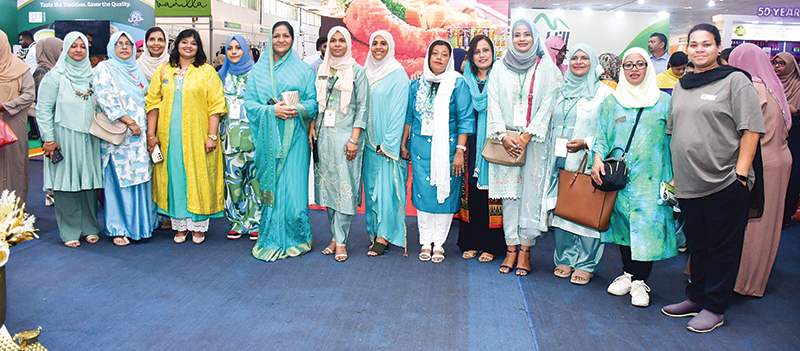
At Muslim Ladies College
The spirit of Ramadan came alive at the Muslim Ladies as the much-awaited pre-Ramadan sale “Marabha” organised by MLC PPA unfolded at SLEC the event drew students, parents and old girls to a colourful celebration filled with the aromas of traditional delicacies and the buzz of excitement from the buzzling stalls
Behind the seamless flow and refined presentation were Feroza Muzzamil and Zamani Nazeem. Whose dedication and eye for detail elevated the entire occasion. Their work reflected not only efficiency but a deep understanding of the institution’s values. It was an event, reflected teamwork, vision and a shared commitment to doing things so beautifully. The shoppers were treated to an exquisite selection of Abayas, hijabs and modern fashion essentials, carefully curated to blend contemporary trends with classic elegance. Each stall offered unique piece from intricately embroidered dresses to chic modern designs. The event also highlighted local entrepreneurs a chance to support homegrown talent. Traditional Ramazan goods and refreshment added a delighted touch, making it as much a cultural celebration as a shopping experience.
-

- Endless deals,endless possibilities
-
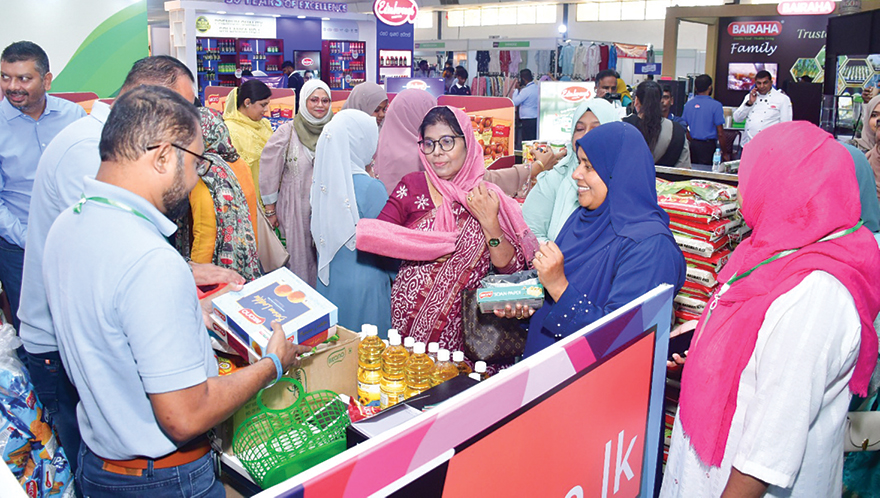
- Goods at reasonable prices
-
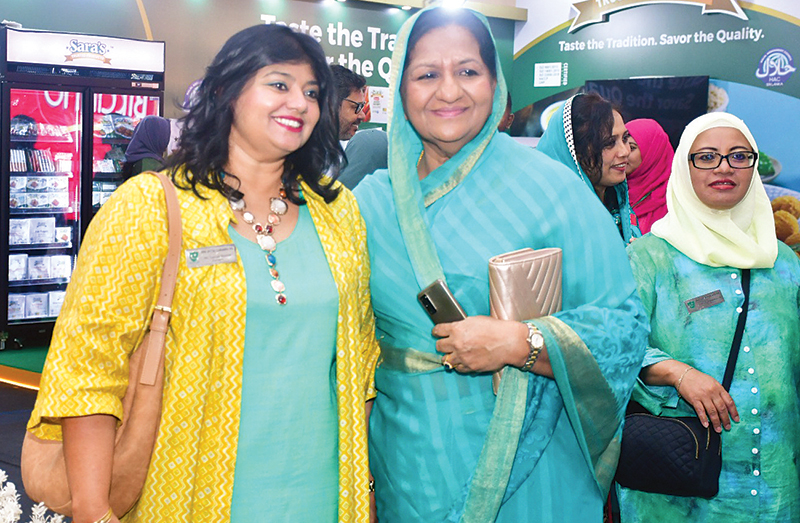
- Zamani and Feroza setting the bar high

Pilot praised after crash-landing faulty Somali passenger plane on seashore

Except for a few showers in the Ampara, Batticaloa, Monaragala and Hambantota districts, mainly fair weather will prevail over the island.

Spinners, Farhan seal comfortable win for Pakistan

Police open fire on speeding van in Jaffna: 17-year-old driver killed

HRCSL employee protests demanding justice, takes swipe at Presidential Secretariat

SL-EU Jt. Commission meeting tomorrow

‘Dates have the highest sugar content to fight Coronavirus’

Sunday Island 27 December – Headlines

#SundayIsland 17th December – Headlines

Sunday Island – 28th March

Sunday Island Headlines – 21 March

Sunday Island – 21st February – Headlines
-

 Features3 days ago
My experience in turning around the Merchant Bank of Sri Lanka (MBSL) – Episode 3
-

 Business4 days ago
Zone24x7 enters 2026 with strong momentum, reinforcing its role as an enterprise AI and automation partner
-

 Business3 days ago
Remotely conducted Business Forum in Paris attracts reputed French companies
-

 Business3 days ago
Four runs, a thousand dreams: How a small-town school bowled its way into the record books
-

 Business3 days ago
ComBank and Hayleys Mobility redefine sustainable mobility with flexible leasing solutions
-

 Business4 days ago
HNB recognized among Top 10 Best Employers of 2025 at the EFC National Best Employer Awards
-

 Editorial6 days ago
All’s not well that ends well?
-

 Business4 days ago
GREAT 2025–2030: Sri Lanka’s Green ambition meets a grid reality check