
Midweek Review
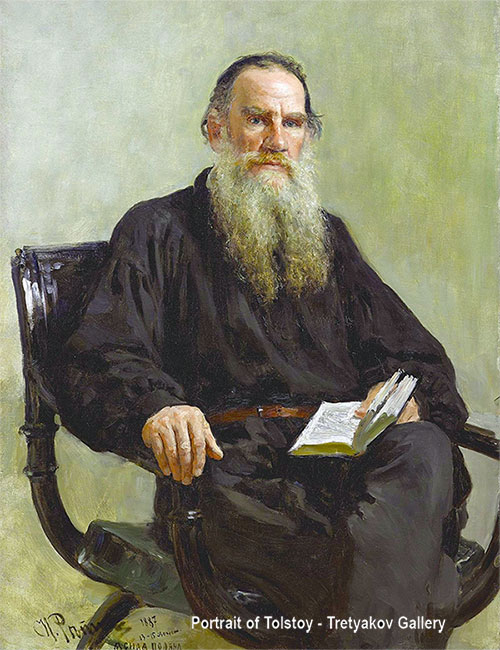
The life and works of Leo Tolstoy

By Dr. SIRI
GALHENAGE
Retired Psychiatrist
[The following is an abbreviated and a modified version of a presentation to the History, Philosophy and Ethics Section of the Royal Australian and New Zealand College of Psychiatrists – WA Branch, on 15 June 2021]
“Tolstoy serves to justify all the hopes and aspirations invested in literature”
– Anton Chekov [1860 -1904]
The Russian literary artist, Lev Nikolayevich Tolstoy [1828–1910], better known in the world over as Leo Tolstoy, is generally regarded as one of the most potent creative forces of world literature. He was primarily a novelist and a short-story writer, and was considered to be the master of realism – having written ‘War and Peace’ and ‘Ana Karenina’, the high peaks of realist fiction occupying the foreground of his rich literary landscape. Tolstoy was also a philosopher, social reformer and a religious activist who blended his ideology into prose fiction.
Through this essay, I wish to track the journey of self discovery of the great novelist that shaped his personal philosophy and in turn his literary artistry.
JOURNEY of SELF DISCOVERY
The story of the great story teller is as enthralling as the stories he wrote. It was so dramatic that a Tolstoy biographer, referred to his life as ‘more war than peace!’ As the drama of his life unfolded, he wore, consecutively, the mask of aristocrat, land owner, soldier, social reformer, religious activist, moral crusader, pacifist and wandering ascetic, against a backdrop of Imperial [Tsarist] Russia in transition from a feudal to an industrial society. His life is intricately linked to the evolving socio-cultural and political developments of his era.
Tolstoy was born in 1828 to an aristocratic family of landowners in the ancestral property of Yasnaya Polyana, hundred kilometres south west of Moscow.
Death was a regular visitor throughout his formative years. He lost his mother at the age of two years, followed by his father and his grandmother when he was nine. He was then taken away [along with his sister and his three brothers] to Kazan, a regional city to live with his aunt, who too died when he was fourteen. The emotional impact of the series of losses on young Leo is not clearly known.
What is known is that, due to a lack of structure and guidance, Leo entered a life of youthful debauchery during his adolescence and early adulthood. He was attracted to the brothels and gypsy cabarets of Moscow, and ‘sowed his wild oats on peasant and gypsy women’. He abused alcohol, gambled and fell into debt, and was forced to sell off some of his inherited property to pay his gambling debts.
But Leo’s intellectual potential was never in doubt. He joined the University of Kazan to study Law and Languages. He read Oriental as well as Arabo-Turkic languages and was also conversant with French, German and English. Unfortunately, his restlessness made him leave the University, before graduating.
Tolstoy was strongly influenced by the philosophical concepts of Jean-Jacques Rousseau [1712-78], the French-Swiss thinker and social reformer. Rousseau believed in an inherent goodness in man which is corrupted as he gathers power and wealth in a so-called sophisticated society, leading to unhappiness. Man’s salvation is to be found in returning to a primary culture and leading a life of simplicity and selflessness. Rousseau’s thoughts on greater social equality, rejection of organised religions in favour personal conscience, promotion of child-based education etc. had a particular impact on moulding Tolstoy’s personal philosophy and in turn his literary offerings.
In an attempt at reforming himself Tolstoy had a shot at being a model farmer and a scholar, at the same time, but failed miserably in his endeavour.
Perhaps needing external control, he headed off to the Caucasus to join his brother who was posted as an officer with the Russian army in a Cossack village, bordering Chechnya, fighting the local rebels. After a period of idling, gambling and sexual misdemeanours, he joined the army as a cadet and started writing! It was during this period, recuperating from Venereal Disease, that he wrote his first literary piece, ‘Childhood, Boyhood and Youth‘– semiautobiographical – gaining a reputation as a writer of promise.
Tolstoy then joined the Russian forces in Crimea defending the strategic Black Sea port of Sevastopol against an invasion of allied forces of the British, French and the Ottomans [1854-55]. Here he adopted a dual role as combatant and war reporter. In his latter role, accompanying the reader to the theatre of war, he portrayed a plethora of emotions in the faces and in the hearts of civilians and combatants alike – sadness, cowardice, terror, hatred and even an admiration for the enemy. He gained acclaim as the first war correspondent and was credited for his descriptive precision. ‘At Sevastopol…. there was a camera with intelligence called Tolstoy’. His dispatches to the Journal, ‘The Contemporary’, which came to be known as the ‘Sevastopol Sketches’ became part of his literary canon. He wrote, “The hero of my tale, whom I love with all the strength of my soul, whom I have tried to set forth in all his beauty, and who has been, is, and always will be most beautiful, is – The Truth”.
The experience of living through the horrors of the hostilities in Crimea made him change his attitude towards war, as reflected in his writing – from a patriotic fervour to futility, leading to a lifelong doctrine of ‘pacifism’.
On returning home from Crimea, Tolstoy identified himself with the peasants, developed an affinity for the rural landscape and felt deeply about the social inequity that existed between aristocracy and peasantry – attitudes strongly reflected in his later writing. He wore peasant clothes, grew a beard and ‘gave up the pen for the plough’. He fell in love with a peasant woman, Axinya, who bore him a son, Timofei, in 1858 – a matter that haunted him for the rest of his life.
At this stage there was increasing pressure from the family for him to get married and settle down. In 1862, having reached the age of 34, he married Sofia Behrs – half his age – the daughter of a respected doctor. Few days before the wedding, in an act which could be described as brutal, Tolstoy forced his fiancé, young and tender, to read his diaries with sordid details about his past – his drunken episodes, sexual encounters, gambling sessions, venereal disease and his relationship with the peasant woman who bore him a son. In return, he demanded the truth about her past. Nevertheless, the marriage went ahead with a grand ceremony at the Kremlin as he was seen as a promising young man – a wealthy, land-owning aristocrat with literary potential. A suitable boy!
There was relative harmony during the first decade of marriage. It was during this period that Tolstoy wrote his masterpiece ‘War and Peace”. But there was not much intimacy between husband and wife: they communicated their feelings through each other’s diaries! He believed that sexual intercourse was purely for procreation. Sofia bore 13 children in all; four of them died during childhood. He did not believe in the emancipation of women. This was in marked contrast to the sensitivity he has shown towards the female sex in his literary expression, exemplified in the characterisation of Marsha in the novella, ‘Family Happiness’ [in which he occupies the role of Marsha, the protagonist, and narrates the story in the first person] and in other great works such as ‘Anna Karenina’ and ‘Kreutzer Sonata’.
Despite the tenuous relationship, Sofia remained loyal to her husband. She was unable to pursue her own intellectual development she longed for. Instead she performed the thankless task of copying and recopying voluminous manuscripts in preparation for publication, in addition to attending to her husband’s needs, looking after the children, running the estate and keeping accounts.
But with the escalation of domestic unhappiness, Sofia became preoccupied with physical ailments and death, entertained thoughts of suicide, with a wish to join her dead children. She started abusing opium, at times was incoherent in her speech, became suspicious of her husband and harboured thoughts of killing Axinya, the peasant woman who bore him the illegitimate child. But she persevered!
There was a fundamental change in the life of Tolstoy in the final quarter of the 19th century with a spiritual awakening. He challenged what he thought was the hypocrisy of the Russian Orthodox Church for moving away from the central tenets of Christianity, aligning itself with the authoritative administrative machine. His religious activism resulted in his excommunication from the church. He was influenced by the eastern religions of Hinduism, Buddhism and Confucianism, and advocated a synthesis of all faiths, highlighting man’s desire for love as reflected in all religions.
Embarking on a spiritual quest, he campaigned for universal love and pacifism, gave up hunting and alcohol and stopped eating meat. He advocated celibacy, stating that he had no pity for the extinction of the human race. He depicted celibacy as the central theme in his novella, ‘Father Sergius’.
Tolstoy protested against the continuing gulf between the land-owning aristocracy and the peasantry, acting as a catalyst for the revolutionary change taking place – harbingers of the Russian Revolution [1917 – 23]. The Tsar imposed a ban on his writings. The Bolsheviks saw him as a guide.
 Tolstoy brought about a synthesis of thoughts on spirituality, morality, social justice and art, a form of Christian Socialism, in an attempt at establishing a new social order. His doctrine came to be known as Tolstoysm. He was held in high regard as a sage and a prophet, and his cult attracted a large following. His pacifist ideology influenced the thinking of Mahatma Gandhi [1869 – 1948] and Martin Luther King Jr. [1929-68]. Gandhi came across a letter written by Tolstoy to Taraknath Das, a Bengali scholar and anti-colonial activist, based in Vancouver, supporting his struggle for independence. The letter which was called ‘A Letter to a Hindu’ made a deep impression on Gandhi who considered Tolstoy as a mentor, and adopted his principle of non-violent resistance in the struggle for independence from British colonial rule. Gandhi communicated with Tolstoy until the latter’s death and set up an institution called the Tolstoy Farm [in South Africa where Gandhi was living at the time] to propagate the doctrine of the Russian philosopher.
At home, Sofia resented what she thought was the hypocrisy of her husband’s transformation – preaching universal brotherhood while showing no empathy towards her! In the meantime, Vladimir Chertkov, Tolstoy’s main proponent, confidant and secretary, in a sinister move, planned to alter Tolstoy’s will in his favour with the intention of gaining copyright of his literary wealth. He encouraged Tolstoy to leave Sofia at a time when his leader was considering moving on and letting go of his material and literary wealth and his family.
In an autobiographical essay, titled, ‘A Confession’, Tolstoy revealed his vulnerability – that he had undergone a ‘spiritual crisis’ and that he had entertained thoughts of suicide ‘by means of a noose or a bullet’. Rational thinking, he wrote, made him realise that life had no meaning, and that he had wanted to do away with his self, but faith provided the meaning of life and the possibility of living – in psycho-social terminology he was facing an ‘Existential Crisis’.
In 1910, aged 82, Tolstoy left home accompanied by his youngest daughter, Sasha, and his doctor, intending never to return. He was forced to break journey at a remote station – Astopovo – with a severe bout of pneumonia, and took refuge at the station master’s lodge. He died, few days later, on 7th November 1910, surrounded by some of his followers, few family members, government officials and the world’s press. Sofia rushed to her husband’s death bed but was prevented from seeing him by Chertkov, until the legendary author lapsed into a coma. This final episode has been brilliantly presented in the movie, ‘The Last Station’, featuring Christopher Plummer and Helen Mirren.
LITERARY ARTISTRY
There are several distinctive features of Tolstoy’s literary artistry that have contributed to its potency.
Tolstoy, as stated above, was a master of Realism with an exceptional ability to incorporate real life into his imaginative construct. He presented reality in a lyrical art form. He incorporated real life figures of his era and representations of individuals in his community, and projected his own biographical experiences in his art of characterisation. He was skilful in depicting the evolving inner life of a character in its depth and paradox. Tolstoy’s powers of creativity were borne out of his intuitive grasp of human nature with a remarkable ability to investigate conscious and unconscious states and their behavioural correlates, ‘by creeping into the deep crevices of the human psyche’, unearthing psychological insights. To echo the words of the French novelist, Gustave Flaubert [1821-1880] about Tolstoy: “What an Artist and what a Psychologist!”
Tolstoy is renowned for his descriptive precision based on his deep penetrating powers of observation. He created ‘word pictures’ of characters, situations such as war, landscape and nature with clarity and exactitude, not to diminish his skill in aesthetics.
The aesthetic features of his work are not limited to a mere exposition of beauty but to the deployment of a wide array of literary devices that evoke a range of emotional and critical responses – imagery, irony, symbolism, metaphor, simile, satire, to mention a few.
Tolstoy was an inspiring moral thinker. In a monograph titled, ‘What is Art?’ [1898], he asserted that Art, including literary art, should carry a moral message, transcending any aesthetic value, for it to be of benefit to mankind. His moral wisdom was based on his deep social conscience and his spiritual awakening developed throughout the latter part of his life.
Tolstoy’s writing carries a historical critique of his era by targeting several aspects of society such as social inequity [between the aristocracy and the peasantry], depravity and falsity of the aristocracy and the ruling elite, the church’s complicity with the state and the ineptitude and corruption of the administrative machine.
Above all, as reflected in his clever manipulation of plot and the vitality of his narratives, Tolstoy was a gifted story-teller with extraordinary narrative skill.
His power of creativity, built out of the above ingredients along with his intuitive grasp of human nature, has appealed directly to the sensibilities of the reader, resulting in works of enduring value.
“When you read Tolstoy, you read because you cannot stop”….”He was the greatest artist in Russian prose”
—Vladimir Nabokov [1899-1977, renowned Russian literary critic.
LITERARY ENDOWMENT
With his creative activity spanning over half his lifetime, Tolstoy endowed the world with an abundance of literary wealth. It includes 3 novels – War and Peace, Anna Karenina and Resurrection, the least known and the last to be written by Tolstoy; half a dozen ‘provests’ [Russian equivalents of novellas], for example, The Death of Ivan Ilych, The Cossacks, Kreutzer Sonata etc; and a multitude of short stories.
NOVELS
‘War and Peace’, the magnum opus of Leo Tolstoy, written over a period of seven years, runs into 587,000 words. It is a novel that many people aspire to read but only a few get round to reading it due to its enormity and complexity. It is more than a novel: an embodiment of a socio-political landscape, historical critique, philosophical reflections, moral teaching and psychological insights, with different readers viewing it from their own vantage points. It is a powerful and complex narrative set against the broad canvas of the French Invasion of Russia at the dawn of the 19th century, depicting its impact on contemporary Russian life, with myriads of characters – real and fictional – entering and leaving the pages.
From my perspective, Tolstoy, by a clever manipulation of plot, takes five prominent families of the Moscow aristocracy through the ravages of war. He recounts the challenges they face, the coping strategies they adopt, resolve their crises and consolidate their psychological and spiritual gains – individually and collectively – in building inner peace. Those who survive the crises are brought together, symbolically, in a country residence, getting them to reflect on issues such as developing a moral relationship with their peasants, family unity, a simple way of life, generosity and love. Pardon me for my impertinence in offering a simple formulation to an extremely complex narrative!
‘Anna Karenina’, considered by many to be one of the best novels ever written, is an epitome of realistic fiction. Skilfully crafted with two parallel plots with pleating strands of narrative, it is set against a background of Tsarist Russia, tying up at the end with a moral message. It provides a contrast between aristocracy and peasantry, city and country life, and between happy and unhappy families with a memorable stating line, ‘Happy families are all alike; every unhappy family is unhappy in its own way’.
The main plot represents decadence, decline and death, while the parallel plot illustrates stability, harmony and progress. The main plot depicts the inner struggle of a woman who takes up a challenge at her own peril against the prevailing social norms and succumbs to the forces within and outside her soul. Tolstoy demonstrates his deep understanding of the female psyche through the character of Anna Karenina. The parallel plot that grows out as an offshoot of the main narrative is the shoot that bears the blossoms of love, humanity and spirituality. Tolstoy’s philosophy of life is represented through the characters of Levin and Kitty in this plot.
NOVELLAS
I have chosen three of Tolstoy’s popular novellas for a brief overview.
‘The Death of Ivan Ilych’ depicts the ascent, descent and death of a fiercely ambitious lawyer preoccupied with climbing the social ladder. In a masterly display of character construction Tolstoy takes his protagonist to the top of the social ladder, and makes him fall off it, both literally and metaphorically. The crisis that leads to a terminal illness makes him re-evaluate his life: that he has lived a life of falsity [‘a huge deception that had hidden both life and death’]; that life is a series of escalating suffering with no escape. Realisation of that truth about life brings Ivan the freedom to face death. [‘In place of death there was light’].
In this popular novella, apart from its spiritual theme, Tolstoy raises interesting issues regarding ‘the doctor-patient relationship’ and the ‘illness behaviour’ of patients, which may be of interest to the medical profession.
The theme of ‘Kreutzer Sonata’ resonates with what the German Psychiatrist Ernst Kretschmer [1888-1964] postulated regarding the aetiology of paranoia: the cumulative influence of a noxious social environment, sensitivity of personality and an experience meaningful to the individual. The novella tracks the motivational path and the psychological processes leading to paranoia [morbid jealousy] with a disastrous consequence, reminiscent of Shakespeare’s Othello.
“Trukhachevski’s talent for music; the nearness that came of playing together; the impressionable nature of music, especially of the violin and his apparent lustful gaze towards his wife; tormented Pozdnychev and heightened his suspicion and jealousy. He began to suspect that the sound of the piano was purposely made to drown their voices and probably their kisses, as they practiced”.
Pozdnychev’s paranoia was brought to a head at a concert when Trukhachevski and his wife played Beethoven’s Kreutzer Sonata. During a surprise appearance at a subsequent practice session, Pozdnychev stabs his wife to death. The court decided that the accused was a wronged husband who killed his wife defending his outraged honour! Tolstoy raises awareness of a range of contemporary societal values and of the criminal justice system.
Depicting the ideology of Rousseau, that man’s salvation is to be found in returning to a primary culture and leading a life of simplicity and selflessness, and drawing heavily on his experience in the scenic Caucus Mountains and its inhabitants, Tolstoy wrote the novella, ‘The Cossacks’, which gained acclaim as his ‘mini-masterpiece’. Tolstoy re-lives his experience by sending his fictional representative, Olenin, a young nobleman of the Moscow elite, disillusioned by the falsity and depravity of his urban lifestyle, on a journey of self-discovery, seeking contentment among the Cossacks who inhabit the foothills of the scenic Caucasus. The Cossacks, renowned for their military prowess, sustain themselves by farming, fishing and hunting. Olenin befriends Eroshka, a stereotypical wise old man, who engages him on enthralling conversations; narrates folk tales and rhymes; introduces him to nature; and instils in him a sense of social conscience. The young aristocrat falls in love with a Cossack girl but his affection towards her is not reciprocated as she is betrothed to an injured Cossack warrior giving him an opportunity to re-evaluate love, in contrast to the carnal pleasures he indulged in Moscow. He returns home with a wealth of experience.
SHORT STORIES
The following is a sample of the many Tolstoyan short stories: ‘How Much Land Does a Man Need’ is about a man driven by greed that leads him to his downfall. ‘The Coffee House of Surat’ reflects the need for mankind to unite in one faith under a universal temple. ‘The Bear Hunt’: [semiautobiographical] the protagonist on a hunting expedition shoots a bear which falls at his feet resulting in a major emotional impact on him. He gives up hunting and becomes a vegetarian. ‘Little Girls Wiser than Men’ depicts the innocence of childhood: a children’s story that should be read by adults! ‘Three Deaths’ is a portrayal of our common humanity with a brilliant display of symbolism.
CONCLUSION
Leo Tolstoy, the Great Russian Novelist, has endowed us with an enormous literary wealth replete with philosophical concepts, moral wisdom, psychological insights and historical critique; and not without aesthetic value. With his extraordinary literary skill and descriptive precision he has turned real life into an art form with the development of characters in all their complexity, against a contemporary socio-political background. The life of one of the greatest storytellers of all time is an extraordinary story in itself that outshines the stories he wrote. His contribution to humanity has been made at a great cost to himself and his family, especially to his wife sofia, whose commitment towards his work has remained sadly unrecognised.
[sirigalhenage@gmail.com]


Sri Lanka’s alignment with US-Indian combine/Quad alliance should be discussed, taking into consideration the declaration of bankruptcy, USD 2.9 bn IMF bailout package, US-Indian role in ousting President Gotabaya Rajapaksa and installation of a new virtually handpicked government by the US and India, additional financial burden of Cyclone Ditwah and the developing crisis in West Asia. The US and India exploited the situation to influence hapless Sri Lanka. Sri Lanka’s ban on foreign research vessels during 2024 is a case in point. Over a year and three months after the lapse of that ban, imposed at the behest of US and India, the NPP is still unable to state its position on the ban originally imposed by President Wickremesinghe.
By Shamindra Ferdinando
The 10th Synergia foundation’s conclave, a three-day strategic affairs forum, commenced in New Delhi on 11 March, 2026, 12 days after the joint Israeli-US attack on Iran. The meeting at the Manekshaw Centre Auditorium, New Delhi, took place a week after the US sunk an unarmed Iranian frigate just outside Sri Lanka’s territorial waters, in India’s backyard.
That calculated destruction placed India in an extremely embarrassing position as the ill-fated vessel was returning home after participating in International Fleet Review (IFR) and Milan 2026 that ended on 25 February with a closing ceremony conducted onboard India’s indigenous aircraft carrier, INS Vikrant, off the coast of Visakhapatnam.
The March conclave was the second such scene since the launch of the unprovoked Israeli-US air offensive meant to trigger a massive public-led regime change operation, which proved to be wishful thinking of the West and remnants and ardent followers of the ousted Shah Pahlavi family dynasty. The first was the 11th edition of the Raisina Dialogue, India’s flagship geopolitics and geo-economics conference that was held from 5-7 March, 2026, in New Delhi.
The Bangalore-based think tank founded in 1989 held its 9th conclave in Nov. 2023.
Over 200 persons, representing political and defence fields, participated in the Synergia conclave that took place as the unpalatable reality dawned on the aggressors and their allies that the anticipated regime change couldn’t be achieved.
The Narendra Modi government that failed at least to express concern over Israel-US action, displayed to the world the state of actual facts when Modi rushed to Israel, on the eve of the launch of the dastardly sneaky war, as if to give his blessings to it. But when the conflagration did not go as planned by the US and Israel, with a quick military knockout blow, that decapitated much of its leadership, but Iranian fight back capabilities, with increased vigour, coupled with the failure of an expected civilian revolt in the streets to materialise to bring about a regime change, New Delhi had no other option than to reach out to Tehran. Prime Minister Modi’s call to Iranian President Masoud Pezeshkian, on 12 March, amidst political turmoil at home, in the wake of crude oil and gas supply breakdown, badly exposed India. Pocketing their pride, the desperate call by the Indian PM paved the way for ships carrying crude oil and gas to pass the Hormuz Strait unharmed once again, as by that time up to 18 India bound vessels were held up there, underscoring New Delhi’s vulnerability.
The reportage of the Synergia conclave failed to pay adequate attention to the ongoing developments in West Asia that undermined economic-political-social stability in many parts of the world. Their failure to blame the developing crisis on the Israeli-US actions is understandable though not justifiable. India, against the backdrop of its strategic partnerships with Israel and US, found itself in an unenviable position as the deteriorating situation raised questions as New Delhi perceived position as the regional leader.
The new West Asia war should be examined taking into consideration the ongoing Russia-Ukraine conflict as they impacted gravely on the global economy. The crises proved that the North Atlantic Treaty Organisation (NATO), the world’s most powerful military alliance, cannot adopt a collective stand on two raging conflicts.
Against the backdrop of NATO’s predicament, our region should be fully aware of the vulnerability of regional alliances in the face of a global crisis. Quad comprising the US, Australia, Japan and India, is a case in point. Built to counter China, Quad leader US realised that it cannot, under any circumstances, receive military backing for the re-opening of the Hormuz Strait. The crisis, and the challenge faced by the US is so overwhelming, President Donald Trump ended up seeking Chinese Naval deployment in support of Hormuz re-opening.
At the time this piece went to print, the US had declared a 15-day pause on attacks on Iranian oil infrastructure in a bid to re-open Hormuz.
The Russia-Ukraine conflict and the West Asia war proved that whatever the alliances, and regardless of their leadership, such major conflicts caused irreparable damages and placed countries in unwinnable situations.
EX-CDS perspective
Retired General Shavendra Silva, former Chief of Defence Staff (CDS) of the war-winning Sri Lankan armed forces, discussed the regional issues on the basis that South Asia remained one of the least economically integrated regions in the world that limited its collective potential. Silva asserted that this gap is not just an economic issue but a strategic vulnerability as underdevelopment and instability in one country could swiftly spill over into other countries.
It would be pertinent to mention that the NPP government abolished the post of CDS.
Underscoring the pivotal importance in recognising the failure of the region to achieve meaningful economic and political integration, Silva warned against unilateral approaches, while declaring that cooperation among the countries would be essential.
The failure on the part of the decision-makers to address the issues, at hand, could fuel instability, unemployment, inequality and lack of development, and can even lead to migration pressures, crime and extremism, General Silva warned.
Stressing the importance of, what he called, military diplomacy to overcome challenges, the wartime General Officer Commanding (GoC) the celebrated 58 Division, expressed confidence that militaries could contribute to regional stability
In his concluding remarks, Silva made reference to the Colombo Security Conclave, shared challenges and the strategic necessity among countries in the region.
Unfortunately, elected leaders of so-called advanced countries, like the USA and Israel, are now behaving more like petty gangsters, launching brutal strikes on enemies, while ostensibly conducting peaceful negotiations to settle turf disputes. The US sinking of an unarmed Iranian frigate that claimed the lives of well over 100 officers and men caused excruciating diplomatic pressure as both countries struggled to cope up with the fallout.
The US could have targeted the Iranian vessel in international waters or at a point considerable distance away from India and Sri Lanka. Yet, the US submarine that had been tasked with the first such operation, after the end of the Second World War, struck seven nautical miles outside Sri Lanka’s territorial waters. The US action can be safely described as an attempt to test Indian and Sri Lankan reactions at a time of a major crisis and their loyalty to the sole superpower. Both countries struggled to cope up with the daunting challenge of reaching consensus with the US regarding the fate of two Iranian vessels namely Bushehr (auxiliary) and frigate Lena that respectively received refuge in Colombo and Cochin harbors.
The Iranian ship affair overwhelmed little Sri Lanka as the US sought to move the Djibout-based anti-ship missile carrying aircraft, via the Mattala Mahinda Rajapaksha International Airport, to a base tasked with mounting attacks on Iran. The request made on 26 February, two days before Israel-US initiated action placed Sri Lanka in a quandary. (Djibouti, in the horn of Africa hosts both US and Chinese military bases. In addition to French, Japanese, Italian and Saudi Arabian forces. Djibouti appears to have consolidated in security by having China and competing military powers on its territory).
President Anura Kumara Dissanayake disclosed his decision to deny the US request, along with Iranian wish to undertake a goodwill visit to Colombo from 9 to 13 March. Dissanayake sought to stress the country’s neutrality by denying both US and Iranian requests.
However, Dr. Alireza Delkhosh, has, in no uncertain terms, stressed that the three-member group of Iranian ships was invited by the Commander of the Sri Lanka Navy, Vice Admiral Kanchana Banagoda,when he met the Rear Admiral Shahram Irani during IFR/Milan 2026 in Visakhapatnam. That revelation, if true, underscored Sri Lanka’s responsibility as regards the well-being of the Iranians, though the government cannot be held accountable for the reckless US action in the Indian Ocean.
When The Island sought the US Embassy response to President Dissanayake’s refusal, a mission spokesperson said: “The United States and Sri Lanka maintain a longstanding defence partnership, grounded in transparency, mutual respect, and shared interests.” The Embassy refrained from commenting on the existing Acquisition and Cross-Servicing Agreement (ACSA), signed in 2007, and extended in 2017 for another 10-year period. ACSA will be extended next year.
That response revealed that the US understood the difficulties experienced by Dissanayake’s administration in dealing with the situation. The West Asia war, in a truly global sense, is perhaps the worst direct threat on the oil market and if not resolved within a week or two can cause a massive fallout. Sri Lanka hasn’t experienced a similar challenging situation in the post-Second World War era, since obtaining independence, in 1948, from the United Kingdom.
Whether President Dissanayake likes it or not, his government cannot deviate from the US-India led chosen path that may contradict often repeated claims of neutrality. In fact, India, too, seems to be trapped in Israel-US machinations as President Trump daringly used Islamabad in a bid to reach Iranian leadership. New Delhi may find the US move offensive, particularly against the backdrop of its repeated accusations that Islamabad backed terrorism directed at India.
Sri Lanka’s predicament
General Silva’s predicament highlights the daunting challenge faced by the Sri Lankan military in clearing its name. Having commanded the 58 Division that played a significant role in the destruction of the Liberation Tigers of Tamil Eelam (LTTE) in May 2009, Silva, in February 2020, suffered a devastating slap in the face when the US sanctioned him over unsubstantiated war crimes accusations.
Out of all the GoCs of frontline fighting divisions that fought in the Vanni theatre of operations (2007-2009) to defeat the Tigers, designated by the American FBI as the most ruthless terrorist organisation in the world, the US singled out Shavendra Silva for demeaning the sanctions regime. The February 2020 US declaration deprived the distinguished commander of an opportunity to visit some parts of the world. Hence the opportunities offered by India are of importance.
However, it would be pertinent to mention that India can never absolve itself of the responsibility for sponsoring terrorism in Sri Lanka in the ’80s. That despicable Indian project caused quite significant death and destruction in Sri Lanka over a period of three decades and also resulted in the assassination of one-time Prime Minister Rajiv Gandhi, in May 1991, in South India, and an abortive bid to assassinate Maldivian President Maumoon Abdul Gayoom in November, 1988.
The UN, notorious for its double standards, ignored the Indian terrorism project but adopted a hardline approach in respect of the Sri Lankan military that paid a very heavy price to bring terrorism to an end. Seven years after the eradication of the LTTE, Sri Lanka co-sponsored the US-led accountability resolution that condemned one’s own country for the killing of over 40,000 civilians on the basis of an unsubstantiated UN report, released in March, 2011, though it contradicted another UN report prepared by its Colombo office, with the support of other NGOs/INGOs operating in the Vanni during the war.
Sri Lanka simply lacked the courage to properly defend the armed forces at the Geneva-based United Nations Human Rights Council (UNHRC) or any other forum as we were more or less led at the time by traitors.
Gen. Silva received another blow, in March, 2025, when the UK sanctioned him, along with Admiral of the Fleet Wasantha Karannagoda, retired General Jagath Jayasuriya, and former LTTE commander Karuna Amman, obviously for turning against Tiger Supremo Velupillai Prabhakaran. When the writer inquired about sanctions imposed by various foreign governments, ex-Foreign Minister Ali Sabry, PC, declared that not only individuals but entire fighting divisions have been sanctioned. That was in early September, 2022, soon after President Ranil Wickremesinghe negotiated a USD 2.9 bn loan facility with the International Monetary Fund (IMF) to stabilise the national economy.
Sri Lanka never adopted a tangible action plan to counter lies propagated by interested parties. Hounded by the West and their fellow travellers, since the crushing of the Tigers in the battlefield, even the war-winning Mahinda Rajapaksa lacked a clear strategy. In the absence of a cohesive post-war action plan, interested parties, both here and abroad, pursued narratives that demonised Sri Lanka. Successive governments neglected their responsibility to the armed forces. They were so pathetic that significant opportunities, presented by the disclosures made by wartime US Defence Attache here Lt. Colonel Lawrence Smith, in June, 2011, and Lord Naseby, in October, 2017, on the basis that UK High Commission dispatches weren’t used. Their treacherous response facilitated a high profile campaign against Sri Lanka. Instead of mounting a proper defence, political parties exploited post-war developments to reach political alliances meant to promote agendas inimical to the country.
The decision to field the then retired General Sarath Fonseka as the common Opposition candidate at the 2010 presidential election delivered a knockout blow to war crimes allegations. The Tamil National Alliance (TNA), that served the LTTE’s interests from 2001 until the very end of the war, joined the UNP and the JVP in fielding the war-winning Army Chief. That political move, within a year after the decimation of the LTTE, should have paved the way for a national campaign to counter accusations of genocide perpetrated by the Sri Lankan military. Against the backdrop of Fonseka securing all predominately Tamil speaking northern and eastern districts ,as well as Nuwara Eliya, though he lost the election by a staggering 1.8 mn votes, genocide claims were no longer tenable after the Tamils response to Fonseka. If they were serious about war crimes accusations, Fonseka couldn’t have won those districts.
Impact on military
Mahinda Rajapaksa’s defeat at the 2015 presidential election brought in the Yahapalana government that betrayed the war-winning military at the UNHRC in October, 2015. The treacherous UNP-SLFP combine had no qualms in co-sponsoring accountability resolution in line with a secret tripartite understanding reached with the US and the TNA. However, for some reason TNA bigwig M.A. Sumanthiran disclosed the agreement in Washington while having the then Sri Lanka’s Ambassador to the US, top career diplomat Prasad Kariyawasan by his side.
Action taken against the Sri Lankan military should be discussed taking into consideration the Yahapalana political strategy that weakened the military. In fact, successive governments either facilitated external actions or neglected their profound moral responsibility to safeguard the interests of the military.
Political-economic-social security agenda pursued by a particular country largely depends on its military strength and the alliances and groupings it belongs to. Although Sri Lanka signed the ACSA during the last phase of the war, it gradually tilted towards the US with the arrival of Yahapalanaya, a year after Narendra Modi led the Bharatiya Janata Party (BJP) to a historic victory. Since then, both India and Sri Lanka gradually transformed themselves as regional US allies with India pursuing its own agenda in respect of Sri Lanka.
Actually, the US project to end the Rajapaksa rule really began in 2010 with the fielding of Fonseka as the common candidate as previously mentioned. The US and India perceived the Rajapaksas’ relationship with China a serious threat to them.
In June ,2016, former Foreign Secretary and the country’s Permanent Representative at the UN in New York, H.M. G.S. Palihakkara, cautioned the Yahapalana government over its policy towards China.
Responding to the late Bandula Jayasekera on Sirasa ‘Pathikada,’ Palihakkara commended the Yahapalana government for restoring relations with the US and other western countries, following the January 2015 presidential election. Having said so, Palihakkara warned the government against undermining the country’s relations with other countries, particularly China. In no uncertain terms, he advised that Sri Lanka couldn’t, under any circumstance, antagonise any particular country or a group of countries. That advice is even applicable today as the NPP tries to deal with the developing situation caused by the reckless US President.
Obviously referring to the halting of the China funded Colombo Port City project and the controversy over accusations directed at China, regarding costly loans, the soft spoken Palihakkara asserted that the government handled the issue ‘roughly’ at the expense of longstanding relationship between Sri Lanka and China.
During Yahapalanaya, the US made an abortive bid to force Sri Lanka to sign the Status of Forces Agreement (SOFA) and Millennium Challenge Corporation (MCC) Compact. The signing of SOFA would have paved the way for positioning of US forces here. In spite of their failure to finalise SOFA and MCC, Sri Lanka gradually enhanced military cooperation with Quad countries (US, Australia, Japan and India) and today receives major assistance by way of ships, surveillance aircraft, helicopters and drones. The government has enhanced defence cooperation by signing a defence MoU with the US in November 2025. That move should be examined against the backdrop of Sri Lanka entering into a defence MoU with India in April, 2025, and the transfer of controlling shares of the Colombo Dockyard Limited to a business enterprise, directly affiliated to the Indian Defence Ministry.
Sri Lanka has now gone a step further by seeking Saudi support to enhance the capabilities of the Navy and Air Force, an unprecedented and unexpected development but seems in line with the overall US backed policy. Saudi Arabia that had been at the receiving end of Iranian counter attack, following joint Iran-US air offensive, is the major beneficiary of US armament sales outside Israel.
Sri Lanka is finding it difficult to maintain neutrality (friends of all and enemy of none policy) as West Asia conflict drags the world on a perilous path.

The recent verdict delivered in Los Angeles in the landmark case K.G.M. v. Meta et al. has sent shockwaves far beyond the United States, carrying profound implications for societies across the globe, including Sri Lanka. In this historic ruling, a jury found Meta Platforms and Google legally responsible for designing social media platforms that contributed to the addiction and psychological harm of a young user. The case, in which Mark Zuckerberg appeared as a central figure, represents a turning point in how the world understands the relationship between technology, corporate responsibility, and the mental health of young people.
For many years, social media platforms such as Instagram and YouTube have been widely embraced as tools of communication, education, and entertainment. In countries like Sri Lanka, they have become deeply embedded in everyday life, especially among the youth. From online learning during and after the COVID-19 pandemic to social interaction and self-expression, these platforms now play a central role in shaping the experiences of a generation. Yet, the Los Angeles verdict has forced a global reconsideration of a crucial question: are these platforms merely tools, or are they powerful systems deliberately designed to capture and hold human attention?
The court’s decision makes it clear that the issue goes far beyond individual behavior. The jury concluded that certain design features such as infinite scrolling, auto play videos, and algorithm-driven content recommendations are not accidental but intentional mechanisms aimed at maximizing user engagement. In doing so, these platforms may foster compulsive use, particularly among children and adolescents whose cognitive and emotional capacities are still developing. This recognition marks a shift away from blaming individuals for “lack of self-control” and instead highlights the structural power of digital platforms.
In Sri Lanka, this message is particularly significant. The country is experiencing rapid digital growth, with increasing smartphone penetration and widespread internet access, especially in urban areas such as Colombo. Young people are spending more time online than ever before, often without sufficient awareness of the potential risks. While comprehensive national data on social media addiction remains limited, anecdotal evidence from teachers, parents, and mental health professionals suggests a worrying trend. Students are increasingly distracted, sleep patterns are disrupted, and issues such as anxiety, low self-esteem, and social comparison are becoming more visible.
What makes the situation in Sri Lanka even more complex is the gap between technological advancement and social preparedness. Sociologists often describe this as a “cultural lag,” where material changes such as the rapid adoption of smartphones and social media outpace the development of social norms, regulations, and awareness. Unlike in the United States, where this case has sparked legal and policy debates, Sri Lanka still lacks a comprehensive framework to address issues such as algorithmic accountability, child online protection, and digital well-being. As a result, Sri Lankan users, particularly children, are exposed to the same powerful technologies without the same level of institutional safeguards.
The verdict also carries a deeply personal and urgent message for parents. In many Sri Lankan households, giving a smartphone to a child has become almost routine, often justified by educational needs or social convenience. However, the Los Angeles case demonstrates that early and unregulated exposure to social media can have long term consequences. The young plaintiff in the case began using these platforms at a very early age, and the court recognised that this early exposure played a significant role in her subsequent mental health struggles. This should serve as a wake-up call for Sri Lankan families.
Parents can no longer afford to view social media as a harmless pastime. Instead, they must recognise it as a powerful environment that actively shapes behavior and emotions. This does not mean that technology should be rejected altogether; rather, it calls for a more conscious and balanced approach. Parents need to be actively involved in their children’s digital lives, setting boundaries, monitoring usage, and encouraging alternative activities such as sports, reading, and face-to-face interaction. Equally important is the need for open communication, where children feel comfortable discussing their online experiences without fear of punishment or misunderstanding.
At the same time, the strength of Sri Lankan society may offer a unique advantage in addressing this challenge. Unlike many Western societies, Sri Lanka traditionally emphasizes strong family bonds and collective values. Research has shown that supportive family environments can significantly reduce the negative impacts of excessive social media use. This suggests that the solution is not only technological or legal but also social. By strengthening family relationships and fostering meaningful offline interactions, Sri Lankan society can build resilience against the pressures of the digital world.
Beyond the household, the implications of the verdict extend to policymakers, educators, and the broader community. There is an urgent need for public awareness campaigns that educate citizens about the risks of excessive screen time and the importance of digital well-being. Schools should incorporate digital literacy into their curricula, teaching students not only how to use technology but also how to use it
responsibly. Mental health services must also adapt to address the emerging challenges associated with digital addiction, particularly among young people.
Critically, the Los Angeles verdict challenges the long-standing assumption that technology companies bear little responsibility for how their products are used. By holding corporations accountable for the design of their platforms, the court has opened the door for a new era of digital governance. For Sri Lanka, this presents both a challenge and an opportunity. The challenge lies in developing appropriate policies and regulations in a rapidly changing technological landscape. The opportunity, however, is to learn from global experiences and take proactive steps before the problem becomes more severe.
The broader lesson of this case is that technology is not neutral. It reflects the values and priorities of those who create it, and it has the power to shape the societies that adopt it. In the context of Sri Lanka, where young people represent a significant portion of the population, the stakes are particularly high. The choices made today by parents, educators, policymakers, and individuals will determine how this generation navigates the digital world.
As the world reflects on the implications of this historic verdict, one message stands out with clarity and urgency. The responsibility for protecting children in the digital age cannot be left to chance. It requires awareness, engagement, and collective action. For Sri Lankan parents, the message is simple but profound: technology must be guided, not left to guide.
In conclusion, the landmark verdict in Los Angeles serves as a powerful global warning that the digital environments shaping today’s children are neither neutral nor harmless. For a society like Sri Lanka, which is rapidly embracing technology without equally strong systems of awareness and regulation, the lessons are both urgent and unavoidable. The ruling against Meta Platforms and Google highlights a critical shift in thinking: the responsibility for the well-being of young users must be shared among corporations, governments, communities, and, most importantly, families.
Sri Lanka now stands at a crossroads. It can either continue to adopt digital technologies without question, allowing global platforms to shape the behaviors and mental health of its younger generation, or it can take a more thoughtful and proactive path. This includes developing policies that protect children, integrating digital literacy into education, and encouraging open national conversations about screen use and mental health. The absence of immediate action may not produce visible consequences overnight, but over time, it risks creating a generation increasingly dependent on screens, socially isolated, and psychologically vulnerable.
For parents, the message is especially clear and deeply personal. Raising children in the digital age requires more than providing access to devices; it demands guidance, supervision, and emotional connection. Technology should never replace human relationships, nor should it become the primary source of comfort, validation, or identity for children. Instead, families must actively cultivate balanced lifestyles where digital engagement is complemented by real world interaction, creativity, and critical thinking.
Ultimately, this verdict is not just about a court decision in a distant country it is about the future of children everywhere. For Sri Lanka, it is an opportunity to reflect, to act, and to ensure that technological progress does not come at the cost of human well-being.
by Milinda Mayadunna
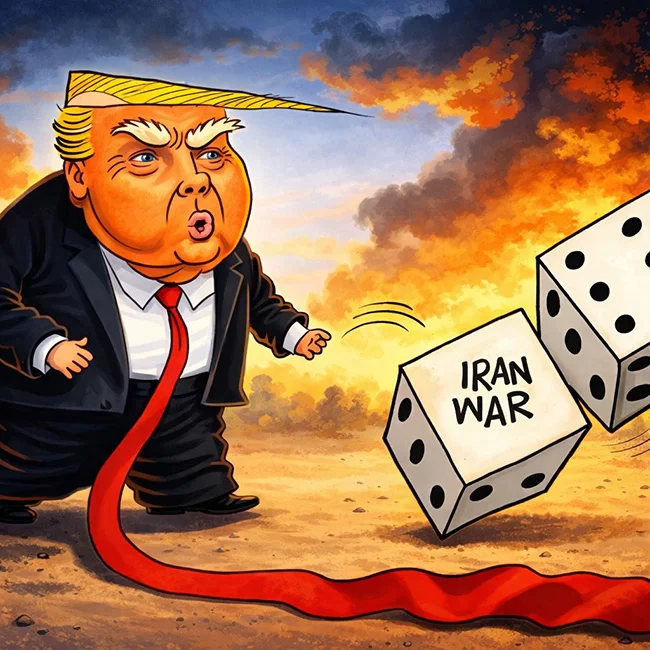
The world today is in turmoil. The killing of innocent people, the destruction of property, and the spread of hatred among fellow human beings have become distressingly common. Acts of dishonesty- such as corruption, the misuse of public funds, and the exploitation of state resources for personal gain by those in power, are no longer rare occurrences, but troubling patterns seen across both developed and developing nations.
What is particularly striking is the contradiction within many so-called developed and democratic countries. Their leaders frequently lecture poorer nations on the principles of democracy and moral responsibility yet often fail to uphold these very values when it conflicts with their own interests. This hypocrisy raises difficult but necessary questions about the true state of global leadership and accountability.
At the same time, we rightly condemn authoritarian regimes and one-party systems, where power is concentrated in the hands of a few, often at the expense of millions of lives. Such systems have caused immense suffering, as leaders cling to power at any cost.
Having been born and raised in the “democratic” world, I find myself, in later years, reflecting on a Sri Lankan folk tale which I learnt in my early years in Sri Lanka, one that carries a powerful moral about the dangers of placing great power in the hands of the unwise and the power-hungry. For readers who may not be familiar with this story, I would like to share it as a lens through which we might better understand and reflect upon the precarious state of our world today.
The Monkey Story
Once upon a time, a barber in a village would travel from house to house shaving men who sat outdoors, with his razor-sharp blade. One day, after finishing his work near the forest, he rested under a tree. A curious monkey, who had been watching him closely, was fascinated by how carefully the barber used the shining blade. When the barber got up to leave, he accidentally dropped the razor.
The monkey quickly climbed down, grabbed it, and began examining it. It had seen the barber glide the blade across faces and thought, “That looks easy! I can do that too.”
The monkey found a few sleeping fellow monkeys and decided to imitate the barber.
It pressed the blade against the monkeys’ skin. But unlike the barber, the monkey had no skill, patience, or understanding. With a few careless motions, it cut too deeply.
The monkeys woke up in pain, bleeding badly.
Startled and frightened, the monkey panicked. Still holding the razor, it began jumping wildly from branch to branch. In its fear and confusion, it injured more animals, slashing blindly as it moved. What began as curiosity turned into danger and destruction. Eventually, the monkey dropped the blade and fled. The forest was left in chaos, and the animals learned a painful lesson.
The story ends with a moral often expressed like this:
“A sharp tool in the hands of the unskilled is more dangerous than helpful.”
or “Knowledge without understanding leads to harm.”
World Today The United States of America (USA) is widely regarded as one of the most powerful and economically influential countries in the world. On 20 January 2025, Donald Trump was inaugurated as the 47th President after winning a majority of votes in the election. As President, he holds significant executive authority, although the Constitution provides checks and balances through Congress and the Supreme Court to limit potential abuses of power.
A potential concern in this system arises when the majority in Congress aligns with the President’s party and a significant number of Supreme Court justices were appointed by presidents of the same party. In such circumstances, decisions may be more likely to favour the President’s agenda, raising questions about the effectiveness of institutional checks.
During his early months in office, President Trump introduced a series of tariffs affecting multiple countries. These measures were presented as efforts to address trade imbalances and protect domestic industries. However, they drew criticism from several nations and analysts, who argued that the tariffs disrupted global trade and contributed to financial uncertainty in some markets.
As international opposition grew, adjustments were made to tariff levels for certain countries. Nevertheless, the policy strained relationships with some allies and raised concerns about the future of global economic cooperation.
In the last few months, there have been reports suggesting that President Trump expressed interest in expanding U.S. influence over certain territories. For example, discussions surrounding Greenland have drawn international attention, particularly after suggestions of potential economic or strategic arrangements. These ideas were met with strong opposition from European nations, and no formal action has been taken yet.
Reports and footage have circulated suggesting that U.S. forces detained Venezuela’s president and his wife and transported them to the United States. It has also been reported that the appointment of the country’s vice President as the President of Venezuela with the consent of President Trump, to govern the country. No one knows when the people in Venezuela will erupt against this interference by a foreign leader in the internal affairs of their country which is against the international law.
A few months ago, President Trump repeatedly suggested that he wanted Canada to become part of the U.S., openly discussing the idea of annexation. Canada opposed this proposal, which strained relations and led the country to distance itself from the USA.
USA / Israel Vs Iran
American representatives including President Trump’s son-in-law, Jarrd Kushner, reportedly engaged in negotiations with the Iranian counterparts mediated under the auspices of Oman to negotiate a settlement for nuclear disarmament by the Iranians. The negotiations were halted for a week to resume to discuss further. It has been reported in the UK and international media that before they could resume negotiations, on 28 February 2026, the USA and Israel launched missiles strikes against Iranian targets without provocation from the Iranian regime. This would constitute a violation of the processes and procedures of the negotiations which would represent a serious breakdown in diplomatic protocol and trust.
Reports indicate that USA and Israel have bombed Iranian army and civilian properties killing Iranian supreme leader together with some leading political, military personnel, and innocent civilians. If confirmed, this could indicate an unprovoked attack led Iran to retaliate by firing missiles to Israel and Iranian’s Arabic neighbours who are having American and Western military bases in their countries. The war escalated killing thousands of Iranian and Lebanese civilians and unprecedent damage to both military and civilian infrastructure.
Rhetoric and Risk
The President of the USA warns Iran that he would obliterate the Iran if they did not surrender immediately.
He also stated that he would get rid-of the Iranian leaders and he would nominate an Iranian leader of his choice to lead the country. Rather than weakening the regime, foreign intervention tends to unify the population against a common external adversary. By bombing and murdering innocent civilians and their properties, the Iranian public who were previously against the Iranian regime, rallied behind their government, strengthening the very structures the external forces wanted to undermine. Haven’t the leaders of USA and Israel learnt lessons from the wars in Iraq and Afghanistan?
President Trump and the Israeli Leader Benjamin Netanyahu have found that it is not that easy to obliterate Iran, as Iranians are united against the Americans and Israelis. Iranians have blocked the Hormuz Strait stopping the path to deliver oil and gas to the rest of the world as most of global oil passes through the Strait of Hormuz.
Although President Trump has stated that American Navy and Airforce have destroyed the Iranian capabilities, still the Iranians are firing missiles to Israel and neighbouring countries who have American and European military bases. This discrepancy raises questions about the accuracy of battlefield assessments. The assumption that military superiority guarantees swift outcomes is frequently challenged in asymmetric conflicts. Despite claims of weakened Iranian capabilities, continued missile activity suggests a more complex reality.
Currently the USA and Israel are unable to open the Hormuz Strait as Iranians have claimed that they have planted mines both in the water and in the vicinity. The current situation is affecting the whole world economically, politically, and socially due to increased energy prices and reduced global oil and gas supply.
Power and Judgement
These episodes echo the Sri Lankan story of the Monkey and the Razor Blade, mentioned at the very beginning of this article. The moral of the story offers several lessons that resonate with the actions taken thus far by the President of the United States and the Prime Minister of Israel. It is hoped that these lessons are recognised by those in positions of power who may be misusing their authority:
· Misusing something powerful can lead to harm, both to others and to oneself.
· A lack of wisdom and self-control often leads to downfall.
· Imitation without understanding can create significant danger.
· True intelligence lies in sound judgement, not merely in power or cleverness.
· Absolute or exaggerated statements should be avoided unless they are supported by evidence.
The challenge for global leadership is not merely the existence of power, but the wisdom of knowing when to act, and when to stand down.
Sri Lankan Situation
During the 2014 election, a broad coalition led by the late Ven. Maduluwawe Sobhitha Thero, along with the UNP, JVP, breakaway SLFP members, and various civic organisations, campaigned tirelessly to abolish the Executive Presidency. Their efforts contributed to the defeat of then President Mahinda Rajapaksa and the establishment of the Yahapalana government in 2015.
However, despite this mandate, the “Yahapalana” leadership failed to introduce or pass legislation to abolish the Executive Presidency after coming to power. Prior to that, two Executive Presidents from the SLFP governed the country from 1994 to 2015, and both also failed to fulfil similar promises made during their election campaigns.
Sri Lanka has endured nearly fifty years of endemic deception, fraud, bribery, and corruption. Political loyalty, rather than merit, has dictated appointments to positions of power, including within the judiciary, ensuring decisions serve the interests of the ruling elite. These abuses were enabled by the unchecked exercise of executive authority, protected by the immunity afforded to the Executive President while in office. The concentration of such powers, combined with legal immunity, has been a principal factor behind the economic, social, and legal crises that have plagued the country over the past fifty years.
The National People’s Power (NPP) government came to power on an anti-corruption, reform agenda, promising to reduce traditional patronage politics. However, critics across the political spectrum argue that some recent appointments reflect a continuation of the same practices rather than a break from Sri Lanka’s historical governance models.
Some of these politically motivated appointments appear to continue under the present government as well. Examples include the appointments of the Auditor General, Director of the CID, Secretary to the Ministry of Public Security, Commissioner General of Excise, several Ambassadors and High Commissioners, and the Secretary to the President all of which bypassed career diplomats, undermining professional merit.
The current administration, led by NPP leader Anura Kumara Dissanayake (AKD), previously aligned with opposition movements that strongly advocated for the abolition of the Executive Presidency. His election manifesto also included this pledge. Yet, after more than a year and a half in office as Executive President, the government has remained largely silent on the issue.
Considering recent global discussions on executive power, including developments in the United States, it is timely and necessary for President AKD to clearly state his position on this matter. Without decisive action, the continued existence of the Executive Presidency may pose long-term challenges to democratic governance in Sri Lanka.
by Gamini Jayaweera

Seven Eritrean players fail to return home after international match

Artemis II crew head for home after travelling further from Earth than anyone before

Washout gives Kolkata Knight Riders first point after Bartlett’s new-ball burst

Hasaranga, Pathirana yet to undergo SLC-mandated fitness tests

Sun directly overhead Dehiwala, Maharagama, Pannipitiya, Padukka, Eheliyagoda, Maskeliya, Siyambalanduwa and Pottuvil at about 12:13 noon. today (07th)

Showers will occur at several places in the Northern, North-central, Central, Sabaragamuwa, Uva and Southern provinces after 1.00 p.m.

‘Dates have the highest sugar content to fight Coronavirus’

Sunday Island 27 December – Headlines

#SundayIsland 17th December – Headlines

Sunday Island – 28th March

Sunday Island Headlines – 21 March

Sunday Island – 21st February – Headlines
-

 Features3 days ago
Ranjith Siyambalapitiya turns custodian of a rare living collection
-

 News6 days ago
2025 GCE AL: 62% qualify for Uni entrance; results of 111 suspended
-

 News3 days ago
Global ‘Walk for Peace’ to be held in Lanka
-
 Business7 days ago
Hour of reckoning comes for SL’s power sector
-

 Editorial6 days ago
Search for Easter Sunday terror mastermind
-
 Opinion5 days ago
Hidden truth of Sri Lanka’s debt story: The untold narrative behind the report
-
Editorial7 days ago
Ideological confusion and identity crisis
-

 Opinion6 days ago
Is there hope for Palestine?