
Features
The failure of political leadership

Dr. Nihal Jayawickrema
(Continued from last week)
If the health of the nation has been seriously compromised, it is principally due to the failure of its political leadership, all of whom represent, or have represented predominantly Sinhalese electorates. For them, the constituency is essentially Sinhalese in race, Buddhist in religion, and Mahawamsa in mindset. Under pressure from the Tamil political leadership or faced with the threat of satyagraha or civil disobedience campaigns, or occasionally when driven to seek the support of the Tamil members of parliament to form an administration, successive Sinhalese political parties have entered into formal or informal agreements with representatives of the Tamil people. These were rarely honoured. The responses were determined purely by political expediency.
For example, in 1957, the Bandaranaike – Chelvanayakam Pact provided for the establishment of Regional Councils and for the use of Tamil in the northern and eastern provinces. Nine months later, under pressure from the Eksath Bhikku Peramuna and from the UNP led by J.R. Jayewardene which organized a 72-mile march from Colombo to the Temple of the Tooth “to save the Sinhala race”, S.W.R.D. Bandaranaike announced that the pact which bore his signature as Prime Minister was incapable of being implemented.
In 1958, Mr Bandaranaike enacted the Tamil Language (Special Provisions) Act but failed in his lifetime to make the regulations which would have made that law operative. When in 1966, Dudley Senanayake attempted to make these regulations, Opposition parties led by Mrs Bandaranaike demonstrated against that move on the streets of Colombo and took an oath at the statue of Vihara Maha Devi to oppose the division of the country. Dudley Senanayake, fortified by a state of emergency, proceeded to make the regulations, but did not implement them in the remaining four years of his government.
In 1965, Dudley Senanayake signed an agreement with S.J.V. Chelvanayakam in which he promised to establish District Councils. A Bill for this purpose was prepared but was never introduced in Parliament. Meanwhile, a White Paper on the subject, promising less than what Mr Bandaranaike had offered in 1957, was publicly and ceremonially burnt on the steps of parliament building by members of the SLFP and other Opposition parties.
In 1970, Mrs Bandaranaike invited the Federal Party members to the Constituent Assembly to help draft a new constitution which would “serve to build a nation ever more strongly consciousness of its oneness amidst the diversity imposed upon it by history”. When they responded positively and suggested that that goal be reached through federalism, they were ruled out of order and left with no alternative but to withdraw from the exercise.
In 1977, the UNP manifesto promised to summon an All-Party Conference to consider the problems of non-Sinhala speaking people, but conveniently forgot that promise once the general election was won, and it took several years of terrorist activity and military reprisals, hundreds of deaths, the burning of the Jaffna public library, and the events of July 1983, to convince the government that that promise ought to be kept. When that All-Party Conference eventually met (but without the SLFP leader on whom civil disabilities had been imposed and expelled from parliament), the much-maligned Annexure C, which the Tamil political leadership claimed contained the agenda they had been invited to discuss, continued to lie on the table in the manner of an illegitimate child abandoned by its mother.
Meanwhile, the Sixth Amendment to the Constitution, which required all members of parliament to take a loyalty oath to an indivisible Sri Lanka, which the TULF refused to do, resulted in the moderate political wing of the Tamil community losing their political influence and becoming irrelevant in any negotiations. That, in brief and in outline, is a case study of the failure of political leadership.
HEALING THE NATION
Transitional justice
The problem of healing the nation today is two-fold. On the one hand, there is the issue of governance which our political leaders have failed to resolve for nearly 60 years. On the other hand, there is the issue of justice, reparation, and reconciliation, which has been brought to the fore through the actions of a succession of Presidents who set out to resolve a political and human rights problem, conveniently dubbed “the terrorist problem”, through the application of military firepower. It was President Jayewardene who, in October 1979, directed the Army Commander to proceed to the north with absolute authority to eliminate by any means whatsoever all forms of terrorism he may encounter; the final solution was to be achieved by Christmas of that year. For decades thereafter, a daily sacrificial offering was made of thousands of idealistic young Sinhalese men in the prime of their lives who journeyed to the north and the east in the confident hope that before they laid down their own lives, they would be able to kill a few equally idealistic young Tamil men and women, and thereby make this thrice blessed isle a safer, happier, and more righteous place for all of us to live in.
The poet John Donne reminds us that ‘No man is an island, entire of itself. Every man is piece of the continent, a part of the main’. How a nation treats its nationals is no longer a matter exclusively within its own concern. There are now norms and standards which form part of a growing body of international law. Therefore, a government’s behaviour towards its own nationals is now regulated by international treaties. In 1981, the Government of Sri Lanka brought itself within the jurisdiction of international human rights law when it subscribed to, and ratified, the two international human rights covenants.
Sri Lanka is believed to have one of the highest rates of reported cases of enforced disappearances in the world, and yet no tangible steps have been taken for several years even in respect of the much-publicised Ekneligoda disappearance. Over 300 political killings in 2005, and over 700 extra-judicial executions in the next two years have been recorded, with no action being taken to investigate them. The high-profile killings of Lakshman Kadirgamar in August 2005 in circumstances that are still classified and shrouded in mystery; of Joseph Pararajasingham at a Christmas Eve church service in Batticaloa in 2005; of five Tamil university students in Trincomalee in January 2006; of 17 ACF workers in Muttur in August 2006; and of Lasantha Wickrematunge within a high security zone in January 2009; have all remained uninvestigated or not effectively investigated. Some military personnel have been charged with the killing of Nadarajah Raviraj in Colombo in November 2006, but has it been ascertained why they committed that crime? The Rajapaksa Government clearly demonstrated that it lacked the will or the desire to hold persons who have perpetrated such serious crimes accountable for their actions. Even if the present Government wishes to reverse this culture of impunity, does it have at its disposal the expertise to successfully investigate several thousand cases of enforced disappearance and extra-judicial execution?
In 2015, the Human Rights Council published the findings of the investigation on Sri Lanka conducted by three distinguished legal experts, the former President of Finland, the former Governor-General of New Zealand and the former President of the Human Rights Commission of Pakistan. That commission had gathered information of unlawful killings of civilians by security forces and paramilitary groups; extrajudicial execution of identified LTTE cadres and unidentified individuals at the very end of the fighting, including those who were known to have surrendered to the Sri Lankan military; arbitrary arrests and abductions; enforced disappearances; torture and other forms of cruel, inhuman and degrading treatment; sexual and gender-based violence; forced recruitment of children for use in hostilities; denial of humanitarian assistance; and the deprivation of liberty of internally displaced persons.
The government has announced its intention to establish a Truth Commission, which is a healing process that offers victims and perpetrators an opportunity to outline details of past crimes. It is a mechanism that has been attempted, with some degree of success, in South Africa and in several Latin American countries such as Argentina, Chile, El Salvador and Guatemala. I once witnessed the proceedings of a truth commission in Nigeria. It is based on the Christian concept of confession. Whether it would be appropriate for Sri Lanka is an open question. The government is reportedly taking steps to provide restitution, compensation, and rehabilitation. However, a pre-condition for reconciliation is accountability. Without accountability, there can be no reconciliation in any society.
The UN High Commissioner for Human Rights recommended the establishment of a hybrid court which is a unique element in the human rights-based approach to transitional justice in a post-conflict situation. By including international judges, prosecutors, lawyers and investigators, a hybrid court is designed to deal with those who bear the greatest responsibility for serious crimes arising from or during the conflict, such as war crimes or crimes against humanity, including sexual crimes and crimes against children. President Sirisena has repeatedly asserted that, under no circumstances, will he agree to the participation of foreigners in the accountability process in Sri Lanka. He has claimed that Sri Lanka has an independent judiciary which is quite capable of addressing the issues of accountability without any foreign assistance. It is perhaps time that his advisers briefed him on the real position.
In many significant respects, the Sri Lankan legal and judicial system has, in the past few decades, failed its multi-ethnic and multi-religious population, and has demonstrated that it lacks the will and the capacity to address such serious crimes. War Crimes and Crimes against Humanity, as well as Enforced Disappearances, have not been criminalized in Sri Lanka. Neither the International Covenant on Civil and Political Rights (which the Jayewardene Government acceded to) and its Optional Protocol (which the Kumaratunge Government ratified), nor the International Covenant on Economic, Social and Cultural Rights, have yet been incorporated in our law. No effective mechanism has yet been established for the protection of witnesses and victims of crime. In 2006, Chief Justice Sarath Silva suspended the application to Sri Lanka of international human rights treaties, holding that their ratification was an infringement of the Constitution. His judgment was described by a world-renowned jurist as “an example of judicial waywardness” or “judicial eccentricity”. Another referred to it as “Alice in Wonderland reasoning”. Therefore, we lack the legal framework within which accountability can be established for such crimes. The process of remedying that deficiency may benefit from expertise, whether international or otherwise.
The judicial culture of the Supreme Court, especially evident in the past decade, has been one of extreme deference to the presidential executive. Whenever fundamental rights were invoked, the court, composed as it was of judges appointed by President Rajapaksa, often from among his contemporaries at Law College, would, more often than not, capitulate to executive assertions of state security. Political opponents of the previous government and members of ethnic minorities, and indeed civil society, have rarely, if ever, obtained any relief. The judgments of the Supreme Court, especially in matters affecting individual rights, reveal an astounding ignorance or unfamiliarity with contemporary developments in the law in other jurisdictions.
The Attorney-General’s Department, which remained embedded in the Presidential Secretariat from 2011 to 2015, did not possess the capacity or the inclination to view, with independence and impartiality, the crimes allegedly committed with the knowledge or connivance of those at the highest levels of the then government. Instead, its senior officers travelled annually to Geneva to deny before the international community that any such crimes had ever been committed. An Attorney General himself uttered what was later proved to be a lie regarding a disappeared journalist. Is it being seriously suggested that these same officers should now be entrusted with the task of presenting the evidence which the OHCHR claims it has, and which they have so strenuously repudiated for decades? The apparent indifference with which investigations that commenced after the change of government are being handled by those in the commanding heights of that department suggests that the culture in that department remains the same.
Sri Lanka’s inability to conduct credible investigations through quasi-judicial bodies has also been demonstrated by the performance of a succession of commissions of inquiry headed by retired judicial officers. The Udalagama Commission lost its credibility very early in its proceedings. The Paranagama Commission keeps rolling along, from month to month, year to year, signifying the urgency it attaches to Enforced Disappearances. The performance of the previous Human Rights Commission, which had the duty to investigate infringements of fundamental rights, was so abysmal that the United Nations downgraded its status for lack of balance and objectivity.
The question which the government will need to address is whether it has, with the resources available to it, the capacity to effectively investigate, prosecute and try the serious allegations referred to in the report of the OHCHR investigation on Sri Lanka, including war crimes and crimes against humanity. To admit that we cannot undertake these tasks alone is not an admission of weakness. On the contrary, it will be a sincere and genuine commitment to achieving the objective of accountability on behalf of those who laid down their lives and the families who continue to live in grief. In respect of war crimes and crimes against humanity, the expertise of lawyers skilled in dealing with such crimes, military analysts, crime scene investigators, trauma experts, psychological counsellors, and a host of others who are competent to address issues of victim needs and rights, witness preparation and protection, are essential, and international assistance in that regard ought to be welcomed.
Power sharing at the centre
One inescapable fact that emerges from the post-Independence history of Sri Lanka is that the Sinhalese political leadership is unwilling to share political power with the Tamil political leadership. For the past fifty years, since the emergence of the Federal Party, negotiations between Sinhalese and Tamil political leaders have focused on the unit of devolution. Should it be district, provincial or regional? Fear has been created in Sinhalese minds that any such form of devolution would eventually lead to a separate state. In this connection, I wish to refer to two principles of international human rights law which now regulate the relationship between the government and the different ethnic groups living in Sri Lanka. These are the principles of non-discrimination and self-determination.
The principle of non-discrimination means that as between the citizens of Sri Lanka, neither law nor executive action may discriminate on the basis of race, religion, language, sex, political or other opinion, national or social origin, birth or other status. The principle of self-determination is contained in both human rights covenants to which the Government of Sri Lanka has committed itself. It means that cohesive ethnic groups have the right to choose for themselves a form of political organization, and through such organization to freely pursue their economic, social, and cultural development. That choice may take one of several forms. It could be independence as a separate state; or association with other ethnic groups in a federal state; or autonomy or assimilation in a unitary state. However, if the ethnic group concerned already has a home within territorial boundaries of a sovereign and independent state, (which the Tamil community has); and if that state has a government which is representative of all the people irrespective of race, (which the Sri Lankan government is not}; and if that government respects the twin principles of non-discrimination and self-determination, (which Sri Lankan governments have not}; the choice of that ethic group does not extend to the creation of a separate state.
Therefore, it seems to me that, whatever agreement may be reached regarding governance at the periphery, it is vital and fundamental that there should be power sharing at the centre. This is not a matter that should be left for negotiation at the conclusion of a general election. That has led in the past to the inclusion of Colombo-based token Tamils in the Cabinet, such as C. Kumarasuriar and Lakshman Kadirgamar, who represented none but themselves. Power sharing at the centre is a requirement that should be incorporated in the Constitution. Whichever political party forms the government, it should be mandatory for the different ethnic groups to be represented in the Cabinet, at least in proportion to the number of such members elected to Parliament. Thereby, the minority communities will be constitutionally guaranteed not of token but of genuine representation, both in the legislature and in the government. Policy formation will thereafter be by consensus of the different ethnic groups, which is how it should be in a multi-ethnic, multi-religious and multi-linguistic country as Sri Lanka.
Entering the global community
After almost 60 years of isolationist policies, it is time that we entered the global community. We cannot do that if we are unable to communicate with others outside our island home. Lee Kuan Yew had the foresight to retain the use of the English language in Singapore, as did many of Africa’s national leaders. At a meeting in Thailand last year, the Thai Foreign Secretary informed me that his country had begun using English as the medium of instruction in schools. When I expressed some surprise, he explained that Thailand did not want to send its citizens out as menial workers. By retaining, or adopting, English – now the acknowledged international language, these countries have ensured that their peoples can communicate with the world beyond their geographical boundaries and acquire the new knowledge that now emerges as rapidly as the old is debunked and equip themselves to serve the global community in capacities other than as domestic helpers and semi-skilled workers. I think it would be a reality check for our politicians if they were to ask the youth of this country which language they wish to be educated in. Language is not only a mode of communication; it is also the medium through which knowledge is acquired. It is unfortunate, but true, that Sinhala does not serve either purpose adequately.
Conclusion
I do not wish to conclude my presentation by leaving the impression that Sri Lanka has been devoid of any manifestation of leadership. Of course, not. In the 1920s, A.E. Goonesinha provided the leadership for the working people to organize themselves, and for the youth to agitate for the immediate relief of social problems. In the 1930s, a group of young Ceylonese intellectuals on their return from universities abroad, influenced deeply by the ideas of Karl Marx – Dr S.A. Wickremasinghe, Dr N.M. Perera, Dr Colvin R de Silva, Leslie Goonewardene and Philip Gunewardene – provided the leadership to the formation of the left movement in Ceylon. In the 1940s, D.S. Senanayake and Sir Oliver Goonetilleke provided the leadership to the negotiations with the British Government that secured self-government for Ceylon without shedding a single drop of blood. On the long night of January 27, 1962, Felix Dias Bandaranaike, almost single-handedly, saved not only a great many lives, but also the social and political fabric of our society by aborting the first ever attempt to overthrow the lawfully established government of this country.
In April 1971, barely two weeks into the JVP insurgency, with the military ready to launch an offensive, Mrs Bandaranaike called upon combatants to surrender at check points manned by public servants, guaranteeing them safe conduct, an appeal to which nearly 10,000 young persons responded. In 1978, J.R. Jayewardene gave a whole new direction to our economy, lifting it out of the shackles of outmoded socialism. In 2002, Ranil Wickremasinghe had the courage and the vision to enter into a ceasefire agreement with the LTTE to bring an end to the hostilities as a means to establishing a positive atmosphere in which steps towards negotiations on a lasting solution could be taken. These were all examples of leadership.
In conclusion, may I adopt and adapt the words of the present Chief Justice of Kenya in reminding ourselves that we must fully discharge our obligations to each other as individuals who are part of a common polity.
These obligations start from the basic requirements: respect for each other as individuals, as well as respect for communities and other identity groups. It is socially obnoxious, politically reckless, and economically ignorant to cheapen the presence of any community in this country. It is only the weak-minded people incapable of comprehending the origins of the modern state, its philosophy, its instruments, and its edicts, that resort to such approaches in managing the expression of disagreement. Just as a fish that grows in a pond may consider itself the king of the sea until it is introduced into the ocean, we too must also awaken to the reality that our ethnic and sectarian interests may only matter if we are disconnected from the rest of the world. Unless we all recognize that we are a confederation of cultures, languages and interests, we shall never be able to cultivate the sensitivity and respect for one another that is necessary to hold us together. We might never live up to true greatness as a member of the community of nations because we overstayed our welcome in the pond when the ocean beckoned. The things that are seen to divide us – ethnicity, religion, race, class, clan, region, occupation, sexual identity, generation, disability – are also the raw materials needed to create the mosaic of one nation.
(Concluded)







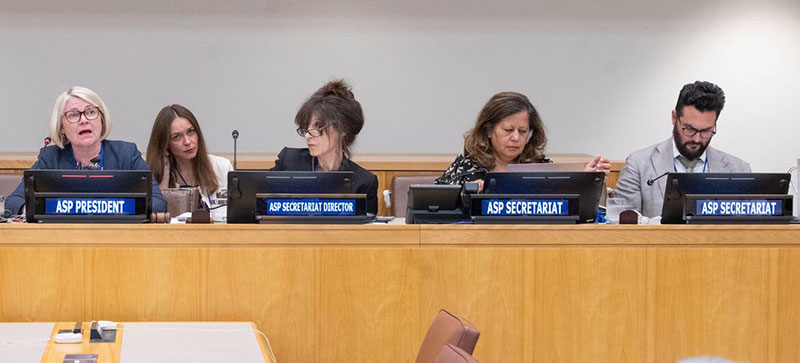
 US Secretary of State Marco Rubio’s warning to the International Criminal Court (ICC) was stark: ‘Either the ICC will end its threats, or we will end the ICC.’ It followed US central administration accusations that the court was unfairly targeting Americans on the basis of trumped-up war crimes charges.
However, a new plethora of sanctions has been clamped on the ICC by the US, which in turn has spurred accusations by sections of the world that the latter has unleashed an ‘assault’ on the international legal order.
What some of the sanctions would mean for the ICC was outlined by Rubio: ‘We will ban transactions with this rogue court, cutting off their resources and crippling their ability to operate against us.’
The ICC has shown consistency of purpose over the years. Despite some operational constraints it has indicted a large number of political strongmen from around the world, accused of war crimes and other governance excesses that come under its purview. Two such recent figures are: Russian President Vladimir Putin and Israeli Prime Minister Benjamin Netanyahu.
Rather than enjoy a mere nominal presence in the world community, the ICC has proved its effectiveness by detaining and bringing to justice scores of VIP politicians and others of their ilk who have been found guilty of human rights abuses and kindred excesses that come within the terms of reference of the ICC.
Accordingly, the international justice system would be stymied considerably as a result of the ICC being dis-empowered, particularly financially. Needless to say, potential and real perpetrators of the species of crime coming under the jurisdiction of the ICC would stand to gain most from such anarchic tendencies. That is, political repression globally would be enabled to enjoy a new lease of life.
A detailing of the types of crime coming under the purview of the ICC provides an idea of what it would cost the international community if the ICC’s operations are gravely hampered. They are mainly: genocide, war crimes, crimes against humanity and the crime of aggression.
That is, the part of the world to be worst affected would be the global South, since the latter is awash with the mentioned crimes. Needless to say, a chronically-disaffected South will sooner rather than later undermine the well being of the world dangerously. The world is already being put through these paces.
At the time of writing, ‘illegal migrants’ from the South, for example, are aggravating many a Western economy’s woes, besides creating for them acute law and order issues. The fact that these migrants’ presence goes on to become a virtual test of the migrant receiving states’ ability to forge domestic social inclusion in the face of jingoistic protests by mainly white supremacist groups is evidence of the latter. As is known, the US, to take just one example, has been up against this crisis for quite a while.
Accordingly, it will be in the best interests of the West if ‘illegal’ migrant arrivals on their shores are stemmed. If the socio-political and economic problems assailing the South are effectively managed through North-South collaborative, ‘trouble-shooting’ efforts the causes leading to ‘illegal’ migration and connected issues could be resolved at source as it were. For, it is the aggravation of the South’s material questions that lays the basis for the emergence of repressive and anti-democratic regimes in the hemisphere.
Until such time that the aforementioned issues in North-South relations are visited afresh and addressed urgently, a vibrantly functioning ICC would be needed. For, the latter would prove a deterrent to Southern political and military strongmen, highly prone to power abuse and like excesses, from coming into being in the wake of the South’s chronic material woes and the wars and conflicts that result from them.
It stands to reason then that the US would be acting in its own interests by enabling the ICC to perpetuate its mandate without hindrance. For a crop of issues that impinges negatively on internal law and order would be defused.
Meanwhile, there needs to be a meeting of minds among the rest of the West to put back in place a North-South dialogue process aimed at reducing some of the economic pressures that are weighing on the South.
Since economics usually drives politics it will be in the interests of the world community to scrutinizingly re-visit North-South issues of the past and put in place economic relief packages for Southern publics that would enable them to tide over their material hardships rather than permit the latter to aggravate into social disaffection and eventually armed militancy. It is the latter juncture that paves the way for the emergence of authoritarian rulers in the South who then go on to be a blight on their publics.
Accordingly, the Southern-based global development thinking of the past that envisaged a more equitable world economic order needs to be seen as an urgent need. That is, NAM’s international development paradigms need to be resuscitated to the extent possible.
It is unlikely that rightist governments of the West, such as the current Republican administration in the US, would find these projects feasible, but democratic states of Europe, led by perhaps the UK, are likely to think otherwise. For it would not be beneficial for the democratic world to be having on their hands repressive governments in the South who would be gravitating towards the major military and economic actors of the South, such as Iran and North Korea, who tend to be in constant power struggles with the West.
However, until such time that the mentioned, pro-people initiatives are given serious thought the ICC would need to be enabled by the international community to be in place comfortably and carry on with its mandate of bringing repressive rulers to book. Besides the ICC should pave the way for the peoples of the developing world to enjoy some substantial respite from the political repression and even terror which tend to be their lot.
Meanwhile, the wars of West Asia are relentlessly aggravating the economic hardships of people everywhere, driving the point home to enlightened sections that there is no alternative to peacemaking. A challenge is to convert the US under President Trump to this line of thinking.

 This week, I give you five simple, time-tested homemade remedies that help reduce the appearance of blemishes, control excess shine and leave your skin feeling softer and smoother.
The Honey and Lemon Brightening Dab:
For stubborn blemish marks, this is a classic. Mix one teaspoon of pure bee honey with three to four drops of fresh lemon juice. Apply gently, only on the affected spots, and leave for 10 minutes before rinsing with lukewarm water. While honey soothes and softens, lemon helps to brighten naturally. Use twice a week in the evening.
Besan and Rose Water Oil-Control Pack:
An ideal remedy to combat shine, especially on the T-zone. Take two teaspoons of besan (gram flour) and mix with sufficient rose water to form a smooth paste. Add a pinch of turmeric for its antiseptic goodness. Apply evenly, keep for 15 minutes and wash off. It absorbs excess oil without over-drying, leaving a beautiful matte finish.
Aloe Vera and Cucumber Ice Soother:
Blend fresh aloe vera gel with the juice of a grated cucumber and freeze the mixture in an ice tray. Each morning, wrap one cube in a soft muslin cloth and gently rub over a cleansed face for 30 seconds. It calms, tightens pores and imparts a baby-soft smoothness.
Oatmeal and Curd Gentle Polish:
Roughness and old blemish marks need gentle exfoliation. Combine one tablespoon of finely powdered oatmeal with one tablespoon of fresh curd (yoghurt). Massage very gently, in circular motions, for one minute, leave for five minutes and rinse. It removes dead cells and unveils softer, clearer skin.
Multani Mitti and Green Tea Magic Mask:
Brew some green tea and allow it to cool completely. Mix one and a half teaspoons of Multani Mitti (Fuller’s Earth) with the tea water to make a fine paste. Apply for 10 to 12 minutes – do not let it dry and crack completely – and wash off. It draws out impurities, fades blemishes and bestows a fresh, shine-free glow.
A Gentle Reminder:
As with any natural remedy, always do a patch test on your inner arm first. For those with oily or combination skin, avoid heavy coconut oil application and harsh scrubbing, as they tend to aggravate shine and blemishes.

 Dream of performing on a world stage? Well, here is your unique, golden opportunity!
The World Championships of Performing Arts (WCOPA) — the one and only official “Talent Olympics” — is the world’s premier global platform for aspiring singers, dancers, actors, models, instrumentalists, etc., to compete, shine and be discovered!
And, yes, this world stage is open to YOU, Sri Lankans living in Sri Lanka and overseas!
Held annually in glittering Las Vegas, WCOPA brings together over 70 countries, all competing for Gold, Silver and Bronze Medals, just like the traditional Olympics.

Lakisha Bernard: Will represent Team Sri Lanka at WCOPA 2027
Outstanding performers vie for the coveted titles of Junior and Senior Grand Champion Performer of the World, with winners and standout participants awarded over $500,000 in scholarships, cash awards and prizes to catapult their education and careers!
Sri Lanka is already making waves! At WCOPA 2026, Natharie Wickramasinghe, representing Team Sri Lanka, made the nation proud by winning a Bronze Medal in the Ethnic/Folklore Dance category!

Lakisha: Accomplished freelance Model and Fashion Design graduate
Recruitment for this prestigious competition is handled through a system of scouts and licensed National Directors — and this is where our very own Chris Rajendra, now based in Las Vegas, and National Director for Team Sri Lanka, comes into the scene.
If you are a singer, dancer, actor, model, instrumentalist — if you have talent burning inside you — contact Chris Rajendra today for registration and, who knows, you may find yourself in Las Vegas, and proudly draped in the Sri Lankan flag, at WCOPA 2027!
The contact address is: Chris Rajendra, wcopa.nationaldirector.sl@gmail.com
or chris.rajendra@gmail.com
Meanwhile, a star is born for 2027, in the form of Lakisha Bernard who is all set to represent Team Sri Lanka at WCOPA 2027.
Originally hailing from the sun-drenched coastal city of Colombo and now carving out her creative career in Canada, 22-year-old Lakisha is stepping into the international spotlight.
This accomplished freelance Model and Fashion Design graduate has officially been appointed as the Team Sri Lanka Promoter for Canada as she prepares to represent Team Sri Lanka at WCOPA in Las Vegas.
Lakisha brings a unique blend of high-fashion sensibility, captivating camera presence and expert garment design to the Team.
Having built her career, from local college shoots to high-glamour concepts, Lakisha’s inspiring journey embodies the true spirit of cultural bridge-building and creative resilience, bringing immense pride and recognition to Sri Lanka on the global stage.
WCOPA 2027 will be held at the legendary Westgate Hotel & Casino, Las Vegas, from 12th to 20th July – the very same iconic arena where the late, great Elvis Presley himself performed!
Your moment is now. Your stage is Las Vegas, so hurry and contact Chris Rajendra.

Prison rules to be revised over monks’ attire

AC President recuses himself from hearing prison attire case pertaining to Gnanasara Thera

Court orders steps to obtain INTERPOL Red Notice against Basil

CID informs Fort Magistrate’s Court investigation into money laundering case against Namal completed

No force used to make Gnanasara Thera wear prison garb – Prisons

Saudi SC sets aside death sentence imposed on Lankan

‘Dates have the highest sugar content to fight Coronavirus’

Sunday Island 27 December – Headlines

#SundayIsland 17th December – Headlines

Sunday Island – 28th March

Sunday Island Headlines – 21 March

Sunday Island – 21st February – Headlines
-

 News6 days ago
NDB fraud Rs 60mn more than reported
-

 News6 days ago
Removing monk’s robes matter for Sangha to decide: Mahanayake Theras
-

 News4 days ago
Sri Lanka escalates anti-graft drive with Shiranthi’s jailing
-

 News5 days ago
NPP govt. reminded of its responsibilities as US warship leaves Colombo
-

 Latest News5 days ago
Farhan, Sadaqat help Pakistan ace 183 chase to go 1-0 up
-

 News6 days ago
BHC, Colombo: “LTTE remains a proscribed org. in the UK”
-

 News4 days ago
Iranian ships stranded, Lanka fears US sanctions
-

 Latest News3 days ago
Farhan and Sadaqat help Pakistan seal series in style