
News
The Deadly Delta Wave Must Be Overcome For The Vaccine Program To Succeed Prof. Tissa Vitarana


It is with great sorrow that I write this article due to the sudden death of my friend Suresh Perera, News Editor of the Sunday Island. He was a victim of the present wave of the deadly Covid19 Delta virus which is sweeping to all parts of Sri Lanka, and the world. He was 59 years of age and at the height of his career. I extend my deepest sympathies to his wife, daughter and the rest of his family and colleagues who are in a state of shock after his sudden death. Like many Sri Lankans he took little care about his safety, and had he exercised more care he would still have been with us. But the same can be said of all the other thousands who have died and are yet to die from the Delta virus.
Those who died and the many seriously ill patients who have taken up every available Intensive care unit (ICU) bed in the hospitals, and have filled the other beds, and are even forced to sleep under them were all careless. Why? Because the fact that the health rules were for their own safety had not been instilled into their minds. They treated them as Government regulations that had to be observed. On TV we have seen jostling crowds of people all wearing the masks below the chin, and immediately a policeman is sighted they cover the nose as well. A new mindset has to be developed nation wide, with a new behavior pattern, if we are to survive.
An important solution is getting immunized through vaccination. The Government, with the President and PM giving the lead, have done well to procure a maximum amount of vaccines from abroad, in the face of a heavy demand worldwide. The health and military personnel have expended their energies and done a great number of vaccinations. Unfortunately there does not appear to be a good plan and the population groups selected do not conform to any thought out risk- based priority list. There are still a significant number of over 60s to be vaccinated. The same for those with relevant co-morbidities e.g. diabetes, heart and lung disease etc. Outside this vulnerable group, there should be ‘a drop according to age’ selection process giving preference to those working in crowded locations e.g. garment factories etc.
But a problem is that both immunity after infection and after vaccination appears to be low , six months to one year. So that repeated boosters at least once a year may be required, a costly exercise. If I may suggest why not start our own Covid 19 vaccine production factory. It can save forex and also earn it. The use of mRNA vaccines ( like Pfizer and Moderna) is better avoided, as they are gene material which has not been used in the preparation of vaccine ever before. The European Union has banned the import of GM foods as they contain added or modified genetic material. That is food which gets processed in the bowel, but in the case of a vaccine there is direct injection into our tissues. Finally recipients of vaccines must be made aware of the delay in developing protection till about two weeks after the second dose.
They must not lower their guard even after that because of the large number of infected people in society and the relatively short period of immunity. The danger of more virulent and infectious variants can arise at any time and cause problems when immunity is dropping. Everyone must take the vaccine as it helps to build up herd immunity, so that with time resistance in the community to new variants will keep on increasing. But the vaccine defence of the community takes time.
But a short term solution is required for the present Delta pandemic tragedy which is going to lead to more and more severe cases with no ICU facilities available, more deaths and suffering for the people of Sri Lanka. If we have a spark of humanity left in us we must act positively to end transmission of the virus, as far as possible. At this moment the most effective action would be a LOCKDOWN for two weeks. Depending on how well this is done it will be at least be a partial success reducing the number of cases and deaths. Every day that we delay more the deaths.
The only time I met the Health Minister about seven months ago at the Health Advisory Committee I said that the virus is no longer in containable clusters. It is spreading in the community to several people mainly in the Western Province, from one unknown person to another. No traceable connections have been found. It is now a case of community spread. The two main points I made were (1) to set up a Covid Committee of Party leaders in Parliament that could interact with the Minister. They too can get to know your plans and progress. With their input it becomes a national campaign. This can be extended down to village and slum level. This Clovid committee at village level will ensure that everyone observes the four health regulations. The whole village will have to be educated on why the observance of those rules will protect each one. There are many asymptomatic cases. They will not be able to infect the others. Transmission should stop if effective. The virus will have no access to the live cells of the human respiratory tract where it takes over each cell and gets it to produce thousands of viral replicas. When that stops the virus which is unable to multiply on its own will just die out.
(2) the village Clovid Committee will besides health education and enforcement of the health rules, will spot likely cases as soon as they arise and get them seen by a doctor and PCR tested.



Several ex-Cabinet ministers questioned; Ranil, Sajith, too likely to be summoned
The Commission to Investigate Allegations of Bribery or Corruption (CIABOC) has initiated an inquiry into the shifting of the Agriculture Ministry situated at Rajamalwatte, to a building belonging to the D. P. Jayasinghe Group of Companies, at Rajagiriya, during the Yahapalana government.
The building was rented for a five-year period at a cost of over Rs 1 bn by the yahapalana government within months after the then President Maithripala Sirisena declared opened the 10-storey building complex.
The CIABOC yesterday morning recorded former yahapalana minister Gayantha Karunatilleke’s statement in connection with the investigation. Later in the day, CIABOC recorded the statement of SJB General Secretary Ranjith Maddumabanadara. Earlier CIABOC summoned former ministers Thalatha Atukorale, Wajira Abeywardena and Lakshman Kiriella. At the time of the finalisation of the deal, KIriella was in the UNP.
Sources said that former PM and President Ranil Wickremesinghe, too, was likely to be questioned in this regard. Responding to The Island queries, sources pointed out even SJB leader Sajith Premadasa was expected to be questioned.
The then Speaker Karu Jayasuriya is on record as having said that the building was rented in keeping with a decision taken by the government and not Parliament.
The UNP-SLFP coalition shifted the Agriculture Ministry to accommodate 16 Sectoral Oversight Committees therein.
Although the government paid as much as Rs. 21.5 mn monthly rent to D.P.A. Jayasinghe Company, the Agriculture Ministry failed to move in for over a year. The then Agriculture Minister Duminda Dissanayake sought Cabinet approval on Dec 1, 2015 to rent the building.
According to inquiries conducted earlier by the Presidential Commission appointed to probe state sector corruption, the Agriculture Ministry sought Cabinet approval for a new building after the then Prime Minister Wickremesinghe submitted a cabinet proposal on 21 September, 2015, to use the Agriculture Ministry building for Parliament’s sectoral oversight committees.
PM Wickremesinghe’s Secretary Saman Ekanayake has told the Commission that public funds could have been saved if the several vacant floors of Suhurupaya belonging to the Defence Ministry had been made available to the Agriculture Ministry.
By Shamindra Ferdinando ✍️
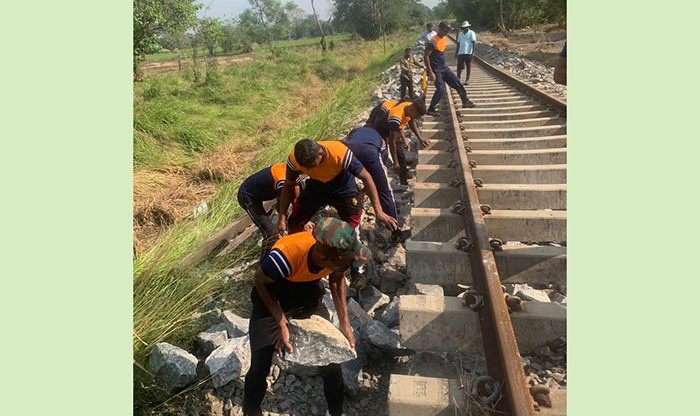
Railway sources said that the damages caused to railway tracks could be more than USD 300 mn.
According to UNDP Rapid Crisis Assessment Sri Lanka’s railroad system, over 278 km of railways were exposed to cyclone-related flooding, including 35 railroad bridges nationwide. This figure reflects flooding only, but other hazards (such as localised debris, landslides, or damage to a single bridge) can also disrupt operations, meaning that even relatively small obstructions can render long stretches of railway non-operational. Like road exposure, railway exposure limits mobility and the capacity of affected populations to access key services and infrastructure.
At the level of divisional secretariats, Colombo and Thimbirigasyaya in Colombo District, Ja Ela in Gampaha District, as well as Mannar Town and Nanaddan in Mannar District all registered over 10 km of exposed railways each.
Commissioner-General of Essential Services B.K. Prabath Chandrakeerthi is on record as having said that only 478 kilometers of Sri Lanka’s 1,593-km railway network were currently usable following extensive damage caused by the recent cyclone.
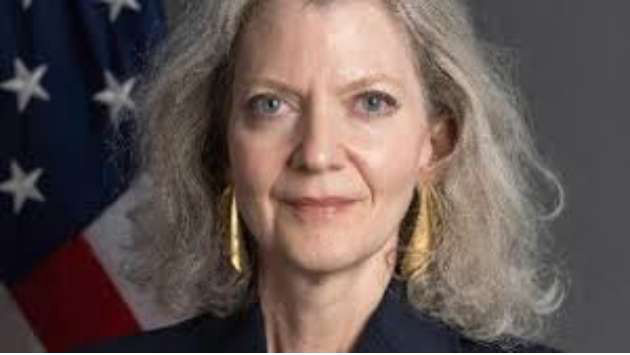
Under Secretary of State for Political Affairs Allison Hooker arrived in Colombo yesterday (11) to underscore US interest in defence, trade and maritime security in line with their Indo-Pacific strategy.
The US embassy here issued the following statement: “Under Secretary Hooker will meet with Sri Lankan counterparts to discuss a wide range of bilateral issues, focused on deepening economic and commercial ties, strengthening defence cooperation, and supporting Sri Lanka’s economic and maritime sovereignty.
The United States and Sri Lanka share a strong and enduring partnership rooted in our mutual commitment to regional security, economic growth, and prosperity for our peoples. Through close cooperation on defence, trade, and maritime security, we are working together to advance a free, open, and resilient Indo-Pacific region.
As we continue to build on our strategic partnership, the United States also stands with the people of Sri Lanka as they respond to the devastating impacts of Cyclone Ditwah. We remain committed to working together to address both immediate challenges and long-term opportunities for our two nations, reflecting our ongoing commitment to the U.S.-Sri Lanka partnership.”

Rs 1. 3 bn yahapalana building deal under investigation

SL Railways suffers staggering losses; more than 2/3 of rail tracks out of service

US, SL advancing free, open, and resilient Indo-Pacific region: Embassy

Vetaran lankan artistes domiciled in UK felicitated in London ceremony

Forced disappearances, a contentious issue warranting NPP’s attention – FSP

Indian Army restores essential communication infrastructure near Kandy

‘Dates have the highest sugar content to fight Coronavirus’

Sunday Island 27 December – Headlines

#SundayIsland 17th December – Headlines

Sunday Island – 28th March

Sunday Island Headlines – 21 March

Sunday Island – 21st February – Headlines
-

 News4 days ago
Over 35,000 drug offenders nabbed in 36 days
-

 Features2 days ago
Finally, Mahinda Yapa sets the record straight
-
 News3 days ago
Cyclone Ditwah leaves Sri Lanka’s biodiversity in ruins: Top scientist warns of unseen ecological disaster
-

 Business6 days ago
LOLC Finance Factoring powers business growth
-

 News6 days ago
CPC delegation meets JVP for talks on disaster response
-
 News6 days ago
A 6th Year Accolade: The Eternal Opulence of My Fair Lady
-

 News4 days ago
Rising water level in Malwathu Oya triggers alert in Thanthirimale
-
 Features5 days ago
The Catastrophic Impact of Tropical Cyclone Ditwah on Sri Lanka: