
News
The Camel, the Needle– and the UN’s first Woman Secretary-General

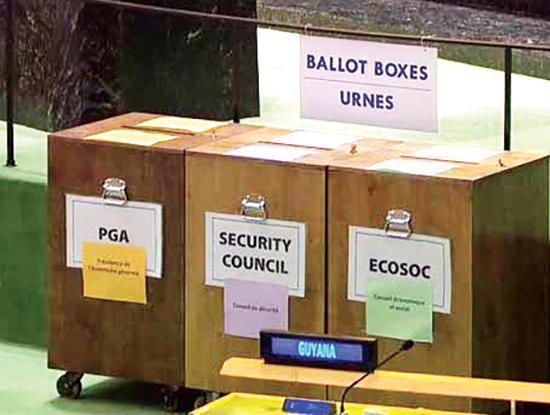
By Thalif Deen
UNITED NATIONS, Jul 6 2022 (IPS) – A 2.0 version of an ancient Biblical saying reads: It is easier for a camel to pass through the eye of a needle than for a woman to become the Secretary-General of the United Nations.
The male/female ratio for the Secretary-General stands at 9 vs zero. And the Presidency of the General Assembly (PGA), the highest policy-making body at the UN, is not far behind either.
“Out of its 193 Member States, only four women were elected as the Assembly President,” Ambassador Anwarul K. Chowdhury, a former Permanent Representative of Bangladesh to the UN, told IPS.
The score stands at 73 men and 4 women as PGAs– even as the General Assembly elected another male candidate, as its 77th President last month, and who will serve his one-year term beginning September 2022.
The General Assembly last month adopted a resolution—by consensus– to commemorate every June 24 as “International Day of Women in Diplomacy” (IDWD).
But how significant is this resolution? And will it help usher in the UN’s first woman SG or trigger more women PGAs? Or is this resolution another exercise in political futility?
Introducing the resolution, the Maldives Ambassador Thilmeeza Hussain stressed that “women’s participation in decision making is absolutely vital”.
She also added that yet, far too often, as women climb the diplomatic ranks, they are outnumbered by their male peers, including at United Nations Headquarters, where they represent only one fifth of the Permanent Representatives.
Currently, there are only 44 women Permanent Representatives compared to 149 men holding that post.
All permanent representatives are nominated by their respective governments—and each member state takes it turn, in geographical rotation, to field a candidate, mostly permanent representatives and occasionally foreign ministers.
A former UN diplomat told IPS that PGAs are some of the strongest advocates of gender empowerment— while in office.
But none of them, he pointed out, were politically generous enough to decline their nominations and convince their respective governments to nominate a woman for the post.
Meanwhile, in a letter to President of the International Association of Permanent Representatives (IAPR), Ambassador Chowdhury said: “I recall proudly that in September 2012, I and the IMPACT Leadership 21, issued a joint “Call to Action” to world leaders gathering at the UN asking for urgent action in four areas:
1. Appointment of a Woman as the Next UN Secretary-General. In its 77 years of existence, the world body has failed miserably to elect a woman to that post. It is truly an embarrassment.
2. Nominations of Women as Future Presidents of the General Assembly. Out of its 193 Member States, only four women were elected as the Assembly President.
3. Election of More Women as Heads of Various UN Governing Bodies, and,
4. Appointment by Member States of More Women as Ambassadors to the UN in New York and Geneva.
On the first International Day of Women in Diplomacy, he said last month, “let us commit to achieving these objectives to make the observance of the IDWD truly meaningful and worthwhile.”
“Reflecting the unfortunate reality, not much attention has been given to those so far,” said Ambassador Chowdhury, a former Senior Special Adviser to the President of the UN General Assembly (2011-2012).
Purnima Mane, a former UN Assistant Secretary-General (ASG) and Deputy Executive Director of the UN Population Fund (UNFPA)., told IPS a UN General Assembly (UNGA) resolution which acknowledges the contribution of women globally in any sector is always a major milestone and to be applauded especially when it is unanimously passed by consensus by the UNGA.
That the Maldives which proposed the resolution had 191 co-sponsors is laudable and is apparently a record for the current session of the UNGA, she pointed out.
“While this acknowledgement of women in diplomacy is more than welcome, many will wonder at the timing of this acknowledgement especially because the UN is grappling with a multiplicity of crises on the global scene.”
Clearly the world will have to unpack what exactly this celebration of women in diplomacy means and what the aspirational goals are in the current scenario of the many challenges the UN is facing and in the context of UN reform, said Mane, an internationally respected expert on sexual and reproductive health who also served as the President and CEO of Pathfinder International.
She said the language used to explain this celebration states that it is to celebrate women at all levels of decision making who work for the achievement of sustainable development, peace, and democracy.
“Women are currently under-represented at most levels among national delegations and in the UN diplomatic corps but especially so in the senior levels,’ she said.
While the representation of women ambassadors is said to have gone up from 16 to 22 percent since 2018, the numbers are appallingly low to begin with and women continue to be grossly under-represented in diplomatic positions in most countries.
Canada and Sweden, she pointed out, have achieved equality of representation in the diplomatic corps and as per available records, UK, Norway and South Africa are not far behind but there is extensive catching up to do for most countries.
To that extent, this commemoration might wake up countries to take the matter of representation of women in diplomatic roles more seriously and also focus on providing them an enabling environment in which to work, a matter in which significant lacunae are known to exist, she declared.
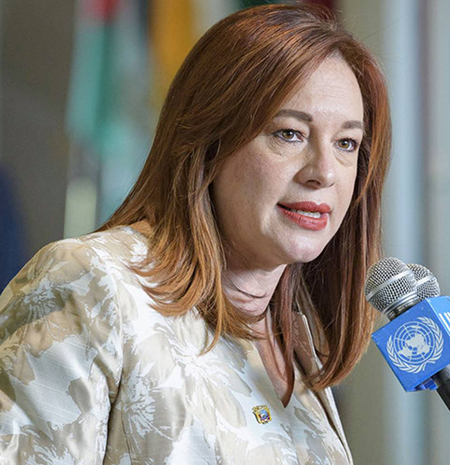
Ambassador Chowdhury said the burst of applause that followed the adoption of the resolution proclaiming the annual observance of this very meaningful day in the UN’s calendar was very energizing in view of the priority accorded to the global objective of ensuring “active participation of women, on equal terms with men, at all levels of decision-making…”.
Given its energy and relevance as well as the high-level support of the UN’s top echelons, he said, it was very disappointing to accept in any case, the inclusion of a sentence in the same resolution stressing that the cost of all activities by the UN that may arise from the observance of the Day “should be met from voluntary contributions”.
For the paltry sum of resources needed for the observance, the relevant department of the UN is always in a position to accommodate the expenses from its existing budgets.
“Also, I believe that the regular budget of the Department of Global Communication should always include the observance of the international days as proclaimed by the General Assembly,” said Ambassador Chowdhury, a former UN High Representative.
Referring to the new GA resolution declaring IDWD, Mane said “this brings us back to the question why women in diplomacy was seen as a relevant priority at this point of time in the UN’s history”.
Is the major motivator of this resolution the push to alter the reality that one of the highest positions in the UN, that of the Secretary General, has never been occupied by a woman and that only 4 women have held the position of the President of the General Assembly as compared to 73 men?, Mane asked.
“Or does it come from a desire to acknowledge the vast and significant contributions of women in all diplomatic processes and an aspiration to push all parts of the UN and governments to do more?”.
Hopefully the inspiration comes from both these motivators and will lead to visible change and greater accountability within governments and the UN to pay even more serious attention to the representation and role of women in diplomacy, she declared.
Meanwhile, at a news briefing in March last year, US ambassador to the UN Linda Thomas-Greenfield was asked by a reporter about American support for a future woman candidate for Secretary-General.
“You represent an administration which is pledging a need for diversity and change and gender rights and a whole panoply of different things. You have arrived in time for the selection of a Secretary-General, whether it will be a renewal or a new candidate”.
“Speaking in your national capacity and speaking as a woman, don’t you think after 76 years it’s time for more than half the population in the world to be represented at the United Nations by a woman as Secretary-General?,” the reporter asked.
Ambassador Thomas-Greenfield: That’s a loaded question, and I will take it as a loaded question (Laughter). We will support the most qualified candidate for the job, but we absolutely believe in and support diversity”.
“We want to support gender balance, and we will look at the candidates who are presented to us and review them accordingly,” she declared.



Admiral of the Fleet Wasantha Karannagoda said that he is still waiting for the government’s response to the UK sanctions imposed on three ex-military officers, including him, and a former member of the LTTE.
The former Navy Chief said so in response to The Island query whether he was aware of the position taken by a three-member ministerial committee, consisting of Foreign Minister Vijitha Herath, Justice and National Integration Minister Harshana Nanayakkara and Deputy Defence Minister Maj. Gen (retd) Aruna Jayasekera.
The government named the committee in the wake of the UK declaration of travel bans and asset freezes in respect of Karannagoda, General Shavendra Silva, General Jagath Jayasuriya and Vinayagamoorthy Muralitharan, also known as Karuna. Maj. Gen. Jayasekera said that they inquired into the issue at hand.
Karannnagoda said that he would like to know the government’s recommendations if the ministerial committee briefed the Cabinet as per a decision taken by the Cabinet of Ministers. Karannagoda said that the issue should have been taken at the highest level as various interested parties continue to humiliate the war-winning military by targeting selected individuals.
Other sources, familiar with the issues at hand, told The Island that the government was yet to announce its stand.
Sources pointed out that the Opposition has been silent on what they called a matter of utmost national importance.
Cabinet spokesman Dr. Nalinda Jayathissa is on record as having described the UK move as a unilateral move and that committee was formed to examine the developments and recommend appropriate measures to the Cabinet.
Foreign Minister Herath told The Island the government was not successful in getting the British to withdraw sanctions. Describing the UK decision as unilateral, the Miniser said that the government conveyed its concerns but the UK didn’t change its stand.
The Island raised the issue with Minister Herath and Admiral Karannagoda in the wake of British MP of Sri Lankan origin, Uma Kumaran requesting the UK Foreign Secretary Yvette Cooper to expand on the government’s sanctions imposed on the four above-mentioned persons.
During a Foreign Affairs Committee meeting on 16 December, the MP for Stratford and Bow highlighted the lack of accountability and political will from the current Sri Lankan government to address war crimes and mass atrocities committed in Sri Lanka.
Sources said that David Lammy, who served as Secretary of State for Foreign, Commonwealth and Development Affairs at the time of the declaration of sanctions, had no qualms in declaring that the action taken against four Sri Lankans was in line with a commitment he made during the election campaign to ensure those responsible wouldn’t be allowed impunity. The UK government statement quoted Lammy as having said that this decision ensured that those responsible for past human rights violations and abuses were held accountable.
By Shamindra Ferdinando
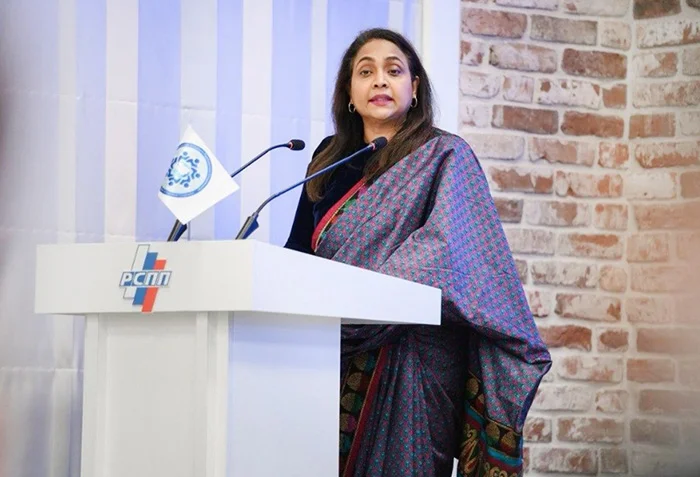
Sri Lankan Ambassador to the Russian Federation, Shobini Gunasekera recently presented a conceptual framework of seven key vectors that defined contemporary international relations and facilitated dialogue among States. She made the presentation at XI Moscow International Financial and Economic Forum held under the theme “Building Bridges: Partnership without Borders”.
In her address, the Ambassador emphasised that these vectors represent the channels through which ideas circulate, trade expands, and peace is strengthened, serving as guiding principles for cooperation amid global uncertainties. The seven key vectors highlighted were economic ties as a foundation for long-term stability; political choice and diplomacy through dialogue and multilateral engagement; security cooperation to address cross-border threats; cultural linkages through education, tourism, and professional exchanges; technological advancement, particularly in digital systems and artificial intelligence; environmental stewardship through collective action on renewable energy and climate change; and humanitarian obligations, including disaster relief and development cooperation.
Drawing on Sri Lanka’s experience, the Ambassador illustrated the practical application of these principles by highlighting the country’s strategic location in the Indian Ocean, its role as a trade and logistics hub, and its active engagement in regional groupings such as BIMSTEC and the Indian Ocean Rim Association, where the Russian Federation serves as a Dialogue Partner.
The potential for enhanced Sri Lanka–Russia bilateral cooperation was underscored, particularly through complementarities between Russia’s technological and energy expertise and Sri Lanka’s logistical capabilities and maritime infrastructure. She noted that such synergies could support joint initiatives in trade, innovation, tourism, and logistics, while cultural and scientific exchanges would further strengthen mutual understanding between the two countries.
Concluding her remarks, the Ambassador stated that sustained progress requires dialogue, mutual respect, and forward-looking partnerships capable of shaping a shared and stable future.
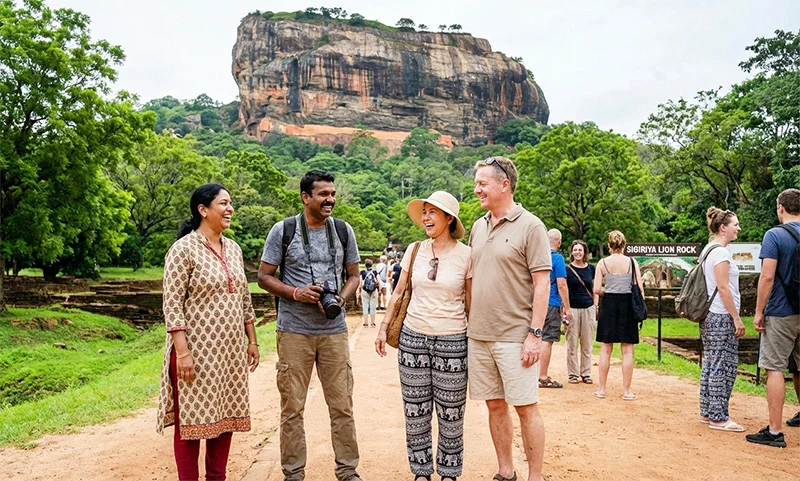
Thailand takes top place
Travel website Make My Trip has named Sri Lanka as the third most booked international destination by Indian travellers for the festive period, following Thailand and the United Arab Emirates (UAE).
According to a report released by MakeMyTrip, an analysis of booking trends between 20 December and January 2026 compared to the same period last year, highlighted a growing interest in Sri Lanka as a preferred destination.
Thailand ranked first, while the UAE secured second place. Vietnam recorded a notable rise, moving from seventh position last year to fourth this year, followed by Malaysia, Indonesia, Singapore, the UK, the US, and Hong Kong.

Delay in govt. response to UK sanctions on ex-military chiefs, and others causes concern

Sri Lanka outlines seven key vectors of international cooperation at Moscow forum

Sri Lanka third most preferred destination for Indians

Ondansetron controversy: Health Minister explores interim measures to address growing concerns

Post-Ditwah tourism: Govt. to retain UK interest in SL as key destination

Gurusinha’s Boxing Day hundred celebrated in Melbourne

‘Dates have the highest sugar content to fight Coronavirus’

Sunday Island 27 December – Headlines

#SundayIsland 17th December – Headlines

Sunday Island – 28th March

Sunday Island Headlines – 21 March

Sunday Island – 21st February – Headlines
-

 News6 days ago
Members of Lankan Community in Washington D.C. donates to ‘Rebuilding Sri Lanka’ Flood Relief Fund
-

 News4 days ago
British MP calls on Foreign Secretary to expand sanction package against ‘Sri Lankan war criminals’
-

 Features6 days ago
General education reforms: What about language and ethnicity?
-
 News6 days ago
Suspension of Indian drug part of cover-up by NMRA: Academy of Health Professionals
-

 Sports4 days ago
Chief selector’s remarks disappointing says Mickey Arthur
-
 News3 days ago
Street vendors banned from Kandy City
-

 News6 days ago
US Ambassador to Sri Lanka among 29 career diplomats recalled
-

 Editorial6 days ago
A very sad day for the rule of law