
News
The Camel, the Needle– and the UN’s first Woman Secretary-General

By Thalif Deen
UNITED NATIONS, Jul 6 2022 (IPS) – A 2.0 version of an ancient Biblical saying reads: It is easier for a camel to pass through the eye of a needle than for a woman to become the Secretary-General of the United Nations.
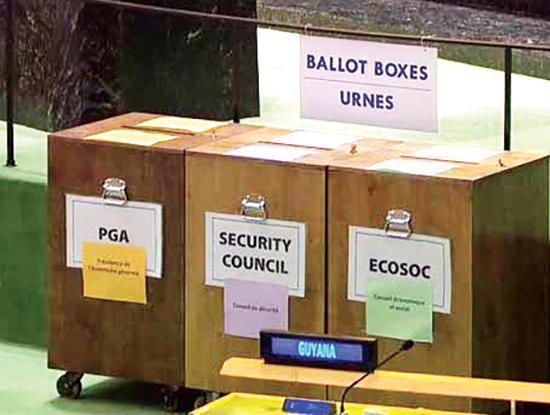
The male/female ratio for the Secretary-General stands at 9 vs zero. And the Presidency of the General Assembly (PGA), the highest policy-making body at the UN, is not far behind either.
“Out of its 193 Member States, only four women were elected as the Assembly President,” Ambassador Anwarul K. Chowdhury, a former Permanent Representative of Bangladesh to the UN, told IPS.
The score stands at 73 men and 4 women as PGAs– even as the General Assembly elected another male candidate, as its 77th President last month, and who will serve his one-year term beginning September 2022.
The General Assembly last month adopted a resolution—by consensus– to commemorate every June 24 as “International Day of Women in Diplomacy” (IDWD).
But how significant is this resolution? And will it help usher in the UN’s first woman SG or trigger more women PGAs? Or is this resolution another exercise in political futility?
Introducing the resolution, the Maldives Ambassador Thilmeeza Hussain stressed that “women’s participation in decision making is absolutely vital”.
She also added that yet, far too often, as women climb the diplomatic ranks, they are outnumbered by their male peers, including at United Nations Headquarters, where they represent only one fifth of the Permanent Representatives.
Currently, there are only 44 women Permanent Representatives compared to 149 men holding that post.
All permanent representatives are nominated by their respective governments—and each member state takes it turn, in geographical rotation, to field a candidate, mostly permanent representatives and occasionally foreign ministers.
A former UN diplomat told IPS that PGAs are some of the strongest advocates of gender empowerment— while in office.
But none of them, he pointed out, were politically generous enough to decline their nominations and convince their respective governments to nominate a woman for the post.
Meanwhile, in a letter to President of the International Association of Permanent Representatives (IAPR), Ambassador Chowdhury said: “I recall proudly that in September 2012, I and the IMPACT Leadership 21, issued a joint “Call to Action” to world leaders gathering at the UN asking for urgent action in four areas:
1. Appointment of a Woman as the Next UN Secretary-General. In its 77 years of existence, the world body has failed miserably to elect a woman to that post. It is truly an embarrassment.
2. Nominations of Women as Future Presidents of the General Assembly. Out of its 193 Member States, only four women were elected as the Assembly President.
3. Election of More Women as Heads of Various UN Governing Bodies, and,
4. Appointment by Member States of More Women as Ambassadors to the UN in New York and Geneva.
On the first International Day of Women in Diplomacy, he said last month, “let us commit to achieving these objectives to make the observance of the IDWD truly meaningful and worthwhile.”
“Reflecting the unfortunate reality, not much attention has been given to those so far,” said Ambassador Chowdhury, a former Senior Special Adviser to the President of the UN General Assembly (2011-2012).
Purnima Mane, a former UN Assistant Secretary-General (ASG) and Deputy Executive Director of the UN Population Fund (UNFPA)., told IPS a UN General Assembly (UNGA) resolution which acknowledges the contribution of women globally in any sector is always a major milestone and to be applauded especially when it is unanimously passed by consensus by the UNGA.
That the Maldives which proposed the resolution had 191 co-sponsors is laudable and is apparently a record for the current session of the UNGA, she pointed out.
“While this acknowledgement of women in diplomacy is more than welcome, many will wonder at the timing of this acknowledgement especially because the UN is grappling with a multiplicity of crises on the global scene.”
Clearly the world will have to unpack what exactly this celebration of women in diplomacy means and what the aspirational goals are in the current scenario of the many challenges the UN is facing and in the context of UN reform, said Mane, an internationally respected expert on sexual and reproductive health who also served as the President and CEO of Pathfinder International.
She said the language used to explain this celebration states that it is to celebrate women at all levels of decision making who work for the achievement of sustainable development, peace, and democracy.
“Women are currently under-represented at most levels among national delegations and in the UN diplomatic corps but especially so in the senior levels,’ she said.
While the representation of women ambassadors is said to have gone up from 16 to 22 percent since 2018, the numbers are appallingly low to begin with and women continue to be grossly under-represented in diplomatic positions in most countries.
Canada and Sweden, she pointed out, have achieved equality of representation in the diplomatic corps and as per available records, UK, Norway and South Africa are not far behind but there is extensive catching up to do for most countries.
To that extent, this commemoration might wake up countries to take the matter of representation of women in diplomatic roles more seriously and also focus on providing them an enabling environment in which to work, a matter in which significant lacunae are known to exist, she declared.
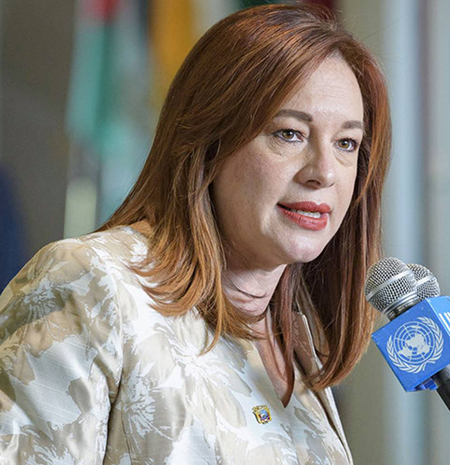
Ambassador Chowdhury said the burst of applause that followed the adoption of the resolution proclaiming the annual observance of this very meaningful day in the UN’s calendar was very energizing in view of the priority accorded to the global objective of ensuring “active participation of women, on equal terms with men, at all levels of decision-making…”.
Given its energy and relevance as well as the high-level support of the UN’s top echelons, he said, it was very disappointing to accept in any case, the inclusion of a sentence in the same resolution stressing that the cost of all activities by the UN that may arise from the observance of the Day “should be met from voluntary contributions”.
For the paltry sum of resources needed for the observance, the relevant department of the UN is always in a position to accommodate the expenses from its existing budgets.
“Also, I believe that the regular budget of the Department of Global Communication should always include the observance of the international days as proclaimed by the General Assembly,” said Ambassador Chowdhury, a former UN High Representative.
Referring to the new GA resolution declaring IDWD, Mane said “this brings us back to the question why women in diplomacy was seen as a relevant priority at this point of time in the UN’s history”.
Is the major motivator of this resolution the push to alter the reality that one of the highest positions in the UN, that of the Secretary General, has never been occupied by a woman and that only 4 women have held the position of the President of the General Assembly as compared to 73 men?, Mane asked.
“Or does it come from a desire to acknowledge the vast and significant contributions of women in all diplomatic processes and an aspiration to push all parts of the UN and governments to do more?”.
Hopefully the inspiration comes from both these motivators and will lead to visible change and greater accountability within governments and the UN to pay even more serious attention to the representation and role of women in diplomacy, she declared.
Meanwhile, at a news briefing in March last year, US ambassador to the UN Linda Thomas-Greenfield was asked by a reporter about American support for a future woman candidate for Secretary-General.
“You represent an administration which is pledging a need for diversity and change and gender rights and a whole panoply of different things. You have arrived in time for the selection of a Secretary-General, whether it will be a renewal or a new candidate”.
“Speaking in your national capacity and speaking as a woman, don’t you think after 76 years it’s time for more than half the population in the world to be represented at the United Nations by a woman as Secretary-General?,” the reporter asked.
Ambassador Thomas-Greenfield: That’s a loaded question, and I will take it as a loaded question (Laughter). We will support the most qualified candidate for the job, but we absolutely believe in and support diversity”.
“We want to support gender balance, and we will look at the candidates who are presented to us and review them accordingly,” she declared.


MONETABRIEF –The prosecution of high-profile individuals from the former Rajapaksa administrations is set to escalate this month with the clearing of legal hurdles and administrative bottlenecks, according to officials involved in the process.
Former president Gotabaya Rajapaksa’s attempt to secure an order preventing his arrest in connection with the Easter Sunday massacre was turned down by the Court of Appeal on Thursday.
An overseas travel ban has been in operation against Rajapaksa since June, but the Criminal Investigations Department made no move to question him. He instead filed a writ application seeking an order preventing his possible arrest.
President of the Court of Appeal Rohantha Abeysuriya noted that the court would not interfere with the investigative process. Any attempt by the court would amount to an obstruction of the investigation.
In an unrelated case, the same court rejected an application by opposition legislator Dilith Jayaweera seeking the quashing of a contempt charge filed against him by the Fort magistrate. The charges against Jayaweera and a few other opposition politicians are expected to be taken up in the coming week.
Jayaweera and other opposition politicians — Wimal Weerawansa, Udaya Gammanpila, Sugeeshwara Bandara, and Asanka Navaratne
— were hauled up over their remarks relating to the arrest of Suresh Sallay, the former head of the State Intelligence Service.
SLPP academic Mahinda Pathirana is also charged over his public comments about Sallay’s arrest in February under the draconian Prevention of Terrorism Act.
Former president Mahinda Rajapaksa’s son, legislator Namal Rajapaksa, is already in remand custody following his arrest in connection with three cases of bribery and money laundering relating to the 2013 Airbus deal and the Krrish property development in Colombo.
Although Namal has been granted bail in the Airbus money laundering charge, he is in custody until October 13 over the bribery charge relating to the same Airbus transaction. His arrest is under a provision of the Anti-Corruption Act that does not allow a magistrate to grant bail unless under exceptional circumstances.
Meanwhile, his mother Shiranthi Rajapaksa, who had been asked to report to the Financial Crimes Investigations Division on September 24, was a no-show and was yet to return from Singapore.
She had travelled overseas on September 16, and a family spokesman said she was handed the FCID summons at the departure lounge of Bandaranaike International Airport just before she boarded a flight to Singapore.
At the time, the family spokesman said she was due to return in three days.
“We will see greater momentum in the legacy cases in the coming weeks,” an official involved in the prosecutions said.
“We have cleared the legal hurdles to press ahead with more arrests,” he said.
“We are working on a few administrative issues which will be resolved very soon.”
The controversial prosecution of former President Ranil Wickremesinghe is dragging on without him being formally indicted since his arrest in August last year. The Fort magistrate has listed the case again for November 11, when the Attorney-General is expected to report on his decision regarding action against Wickremesinghe.
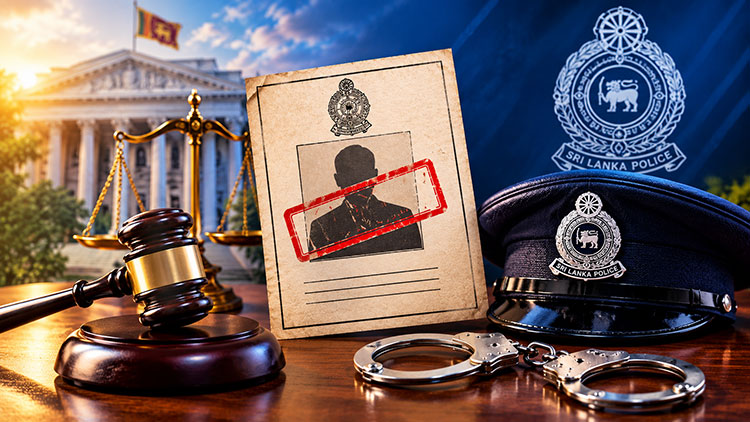
Police have reminded the public that courts have the power to take legal action against individuals who evade arrest or remain in hiding after warrants have been issued against them.
Police said that under Section 60 of the Code of Criminal Procedure Act No. 15 of 1979, a court could issue a written proclamation requiring a person evading arrest under a warrant to appear at a specified place and time.
The proclamation must allow the person at least 30 days to appear before court, Police said.
If the person fails to appear even after the proclamation has been issued, the court may take further action under Section 61 of the Act.
This includes issuing an order for the attachment of the movable or immovable property belonging to the person concerned.Police issued the reminder highlighting the legal measures available against persons who deliberately evade arrest and remain in hiding after warrants have been issued.

Around 20 Iranian oil tankers are reportedly stranded about 15 nautical miles off Sri Lanka’s southwestern coast, with several vessels facing shortages of food, fuel and fresh water amid tightening US sanctions and maritime restrictions, The Wall Street Journal reported.
According to the report published on Thursday (1), US officials have in recent weeks urged Sri Lanka to prevent local vessels from supplying essential provisions to the tankers and their crews.
The report, citing Sri Lankan Government documents and companies involved in supplying the vessels, said the US had raised concerns over assistance being provided to the sanctioned tankers.
The situation follows the United States’ decision to reimpose a maritime blockade of the Strait of Hormuz in July, which has reportedly left dozens of Iranian and Iran-linked tankers involved in transporting sanctioned oil to China stranded near Asian countries, including Sri Lanka and Malaysia.
Most of the vessels are reportedly empty tankers that had previously transported Iranian crude to Asia, often through ship-to-ship transfers, before preparing to return to Iran for additional cargo.
The WSJ reported that the US Embassy had warned Sri Lanka in August that it was monitoring 19 Iranian tankers off the country’s western coast and had raised the possibility of secondary sanctions against companies providing services to sanctioned vessels.
Sri Lankan authorities have maintained that the vessels are located outside the country’s 12-nautical-mile territorial waters and that the Government is not providing them with logistical assistance.
Meanwhile, shipping companies told the WSJ that obtaining approval to supply essential items, including food, drinking water and fuel, as well as repair services, to the Iranian vessels had become increasingly difficult.
Separately, Reuters reported in late August that 27 sanctioned Iran-linked tankers were waiting off Sri Lanka without cargo.
The Trump administration has also imposed additional sanctions on Iran and warned countries and companies trading with Tehran of potential consequences, as Washington seeks to pressure Iran to make concessions amid the ongoing conflict.
Similar concentrations of Iranian-linked tankers have been reported off Malaysia, where waters have historically been used for ship-to-ship transfers of Iranian crude destined mainly for China.

Landslide Early Warnings issued to the Districts of Kandy, Kegalle, Matale and Ratnapura

No handshakes and a delayed ceremony as India beat Pakistan at Asian Games

Showers or thundershowers will occur in most parts of the island after 1.00 p.m

Lanka enters new phase of prosecutions as hurdles clear

Police warn: Court evaders face property seizure

Nearly 20 Iranian tankers stranded off Lanka amid US sanctions

‘Dates have the highest sugar content to fight Coronavirus’

Sunday Island 27 December – Headlines

#SundayIsland 17th December – Headlines

Sunday Island – 28th March

Sunday Island Headlines – 21 March

Sunday Island – 21st February – Headlines
-

 News6 days ago
Police remove Thileepan statue in Jaffna
-

 Features6 days ago
The 22nd Amendment, constitutional recovery and illiberal slippage
-

 Features6 days ago
Of foreigners as CEOs of Lankan ventures
-

 Latest News4 days ago
Gold winner Tharanga gets brand-new Honda Vezel from SLAAJ
-

 News6 days ago
Sajith rejects Jt. Opp. protest sabotage claim; SJB TU chief demands remedial action
-

 Features4 days ago
Why Sri Lanka needs an Inclusive Civic Nationalism – urgently
-

 News3 days ago
US-assisted ‘Ice’ detection: NPC to examine IGP’s move to transfer drug-busting team
-

 Features5 days ago
Thailand’s biggest new global star …