
Editorial
The brainless and brain drain


Friday 29th September, 2023
The Rajapaksa-Wickremesinghe government continues to be at loggerheads with irate professionals, who are demanding solutions to their problems. Many of them have already left the country never to return thanks to the government’s callous disregard for their grievances.
University teachers staged a protest in Colombo the other day in a bid to jolt the government into addressing the various issues that affect the education sector, but it is doubtful whether they succeeded in their endeavour. Instead of heeding the voice of the educated Sri Lankans on the warpath, the government has chosen to unleash its propaganda hounds on them.
One of the main issues that drive resentful professionals to street protests is the unbearable personal taxes. They have made it abundantly clear that they are not refusing to pay taxes; they are only demanding some relief, given the unexpected circumstances that have left them struggling to make ends meet. They are also demanding that the country’s tax revenue be properly utilised.
The government does not care to curtail the waste of state resources, as can be seen from the sheer number of politicians and officials junketing overseas at the expense of the public. Why should millions of dollars be spent on their pleasure trips which are made out to be official visits? The Health Ministry has become a metaphor for corruption, but the government continues to defend the Health Minister and corrupt officials. The same goes for all other ministries.
The government is sure to use the IMF’s recent statement that Sri Lanka’s tax revenue is very low to justify its refusal to grant any relief to the protesting professionals. But if it streamlines tax collection, it may be able to increase its tax revenue without squeezing the fixed-income earners dry.
Parliament has reportedly decided to take up the multi-faceted problem of brain drain for debate––at last. The fact that it has not already had an extensive discussion on brain drain, much less striven to find a solution thereto, is proof of the appallingly low priority it has assigned to this vital issue, which will have a bearing on the country’s future.
Regrettably, some government members do not seem to have realised the gravity of brain drain. If their unintelligent utterances in Parliament are anything to go by, they are labouring under the misconception that the exodus of Sri Lankan professionals is not something bad; they have said it will help boost the country’s inward remittances! They have mistakenly equated the mass emigration of the country’s best brains for good with the migration of unskilled workers. Figuring out the gravity of a problem is half the battle in finding a solution.
The worst that can happen to a country is for its educated youth to think they have no future at home, for their disillusionment manifests itself in brain drain, reduced innovation and socio-political unrest. True, brain drain is a global phenomenon that affects all countries to varying degrees, but it becomes a crisis when it assumes exodus proportions, as has been Sri Lanka’s experience. The ever-increasing human capital flight, which has adversely impacted all sectors here, is bound to make the task of resolving the country’s economic crisis even more uphill.
The task of having a comprehensive debate on so complex an issue as brain drain, with emphasis on its causes, consequences and a potential solution, requires brains.
What the so-called people’s representatives on both sides of the House, maintained with public funds, ought to do is to have a decent debate on the issue, confess collectively to having ruined the economy, show some remorse for their wrongful actions and dereliction of duty, resolve to avoid their past mistakes and make a concerted effort to sort out the economy.
If they are going to play the blame game once again, resort to slanging matches replete with invectives and raw filth, and drag one another’s names through the mud, as they often do, they might as well forget about the debate they are scheduled to have on brain drain.









Tuesday 31st March, 2026
Irate Americans are pouring into the streets to pressure President Donald Trump to step down. Ironically, their “No Kings” protests have erupted while Trump, ably assisted by Israeli Prime Minister Benjamin Netanyahu, is striving to engineer a regime change in Tehran. Protesters are saying, “Regime Change must begin at home”. Has Trump been hoist with his own petard? Trump has called the protesters a bunch of fools who do not realise the importance of his efforts to seize control of Iran’s oil resources. Is he trying to “make America great again” by plundering the wealth of other countries?
Iran has upended modern warfare and military theories by standing up to the US and Israel. By carrying out devastating retaliatory attacks, unveiling new military capabilities, such as the Mach 15 hypersonic missiles, and altering the dynamics of the Middle East conflict, Iran has triggered a paradigm shift in asymmetric warfare. Its approach to US-Israeli aggression has made military experts in Washington and Tel Aviv rethink their strategies and cast doubt on intelligence assessments and modern theories of war. Iran’s modus operandi has come under severe criticism, but its allies have pointed out that the world powers resorted to far worse things in previous conflicts, such as atomic bomb attacks, massacres, genocide and chemical warfare. As Cicero has observed, inter arma enim silent leges—in war, the laws fall silent. War is hell, as General Sherman said. This is why no country should start military conflicts.
Like a golfer going for a spectacular hole-in-one on the 18th, President Trump, who perhaps knows golf better than statecraft or warfare, egged on by Netanyahu, sent US warplanes to attack Iran. He obviously expected to make short work of the Iranian government, engineer a regime change, install a puppet government, as he did in Venezuela, and gain unrestricted access to Iran’s oil resources. But his strategy, driven by instinct rather than careful planning or expert advice, has turned out to be the geopolitical and military equivalent of a shank, if not an outright duff.
It is not possible to predict how the Iran war is going to end, much less who will win, but Trump and Netanyahu have their work cut out to steer it in the direction they desire. They are reportedly faulting their intelligence chiefs for wrong predictions about a regime collapse in Iran. Teheran’s resilience and obduracy stem from some key factors, which include an ideology of martyrdom, the current regime’s reliance on institutions rather than individuals, and a formidable axis of resistance Iran has built painstakingly for decades.
Hezbollah has opened a new front against Israel. The Houthis have started attacking Israel with missiles and threatened to close the Bab el-Mandeb Strait, which lies on the same sea route as the Suez Canal, connecting the Mediterranean Sea with the Indian Ocean. The geographical location of this chokepoint has made it extremely vulnerable to Houthi attacks. In fact, the Houthis carried out a spate of attacks on this vital shipping route from 2023 to 2025, causing massive losses to the global economy.
Iran has been able to broaden the war and make the world economy scream. The West is blind to war crimes committed by its allies and realises the need to stop wars only when it reels from severe economic shocks. The world is also facing the threat of global connectivity being disrupted. Iran has not ruled out the possibility of targeting the submarine Internet cables in the Red Sea, if push comes to shove.
A ground invasion of Iran by the US and Israel or even by a larger coalition would be extremely difficult for several military, geographic, and political reasons. Analysts often point to several major obstacles: geography and terrain making Iran a natural fortress; Iran’s size and its military and asymmetric capabilities, including a large numbers of ballistic missiles and drones; mobile missile launchers and underground facilities; proxy forces across the Middle East; naval mines and anti-ship missiles that threaten shipping; a risk of regional escalation, and severe blows to the global economy.
While the US is deploying more troops to the Middle East, Chief of the General Staff of the Israel Defence Forces Eyal Zamir has reportedly warned that the Israeli military is “going to collapse on itself” due to severe manpower shortages. He raised these concerns during a recent security Cabinet meeting chaired by PM Netanyahu. Has Israel indicated to the US that it is not in a position to deploy a large number of troops for a ground war in Iran? Sending troops to the Middle East is one thing but deploying them in Iran for combat is quite another. The White House says Trump has made no final decision on a ground assault in Iran. The US and Israel find themselves in a situation their leaders did not bargain for. Trump’s predecessors were wise enough not to take on Iran and risk a full-blown war. While trying to work out an exit strategy in the Iran war, Trump now has protests at home to contend with.

Monday 30th March, 2026
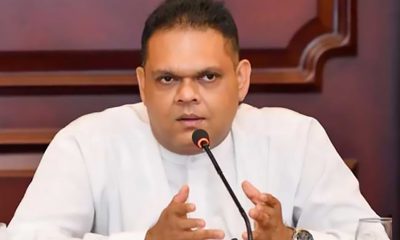
No sooner had Energy Minister Kumara Jayakody been indicted for corruption than he was released on bail last Friday. The Commission to Investigate Allegations of Bribery or Corruption (CIABOC), which filed charges against him, has alleged that in 2016, while serving as the Manager of the Procurement and Import Division of the Ceylon Fertiliser Company, he committed an act of corruption, causing a loss of Rs. 8,859,708 to the state; he influenced a procurement process related to the refurbishment of the company’s Hunupitiya warehouse to confer an undue benefit on a private contractor.
The JVP/NPP leaders have made a mockery of their much-touted commitment to good governance by shielding tainted ministers and officials. One can only hope that the government will not try to use Minister Jayakody’s indictment as a pretext to delay the parliamentary debate on the no-faith motion against him, scheduled for 10 April. It knows more than one way to shoe a horse, and has no sense of shame. It is in a dilemma over the no-faith motion against Jayakody. All MPs who defend him in Parliament will be lumped together with him. Having shielded him all along, they cannot now leave him to his fate.
In handling Minister Jayakody’s case, the CIABOC has acted faster than Iran’s hypersonic Fattah-2 missile, which travels at Mach 15. This is in sharp contrast to the manner in which it deals with Opposition politicians, their family members and cronies. They are arrested and made to languish in remand prison for months on end. The CIABOC continues to be an appendage of the government in power. The same is true of the police, who are also notorious for their partiality to the ruling party and selective efficiency. They have not arrested two ministers and a mayor involved in a forgery case. They swing into action and make arrests only when the suspects happen to be political rivals of the JVP-NPP government.
This is a country where even children are arrested and hauled up before court over minor offences. One may recall that three girls from a children’s home in Kalutara were arrested several weeks ago for breaking into a canteen and making off with some confectionery. A few years ago, a little girl was taken into custody for stealing a five-rupee coin, of all things, from a neighbour in Kalutara. The police recently arrested a person with four litres of petrol he had kept in a can for a weed-whacker to cut the grass in his garden ahead of a religious ceremony in memory of his parents. He was fined and jailed for 21 days. No such stringent action has been taken regarding the Opposition’s complaint that Minister Jayakody has caused staggering losses amounting to billions of rupees to the state through a corrupt coal procurement deal. It has been revealed that substandard coal imports have led to a huge drop in the coal-fired electricity generation at Norochcholai, and tens of thousands of litres of diesel have to be burnt daily to meet that power generation shortfall.
Legal and judicial processes have never been free from political interference in this country, and the current leaders who came to power, promising to depoliticise them are emulating previous regimes. Given this reality, one wonders whether the image of Justitia should be localised with a double-pocketed blouse over her Greco-Roman robe a la the two-pocket shirts of the ruling party leaders.
Most of those who voted for the JVP/NPP, helping bring about the 2024 regime change in the hope of creating a clean society based on equality and freedom must now be as disappointed and disillusioned as the animals that, inspired by the pigs, rebel and get rid of their owner in the Orwellian political fable, Animal Farm. Like the pigs, the incumbent rulers have made themselves ‘more equal than others’ while claiming to uphold the rule of law. They are testing the patience of the public. They are seen burning rubber in fuel-guzzling SUVs while urging the ordinary people to restrict travel and save energy.
The government is reportedly planning to launch a project to clean Beira Lake, which is stinking. A wag says it should do so expeditiously for the sake of its members rather than the public, for at this rate, their turn to swim in that polluted lake, as some SLPP politicians did in 2022, after being plunged there by angry mobs, may come sooner than expected. Politics is full of surprises.

Teachers’ trade unions are protesting against what they describe as a political witch-hunt against some of their members who did not attend a meeting chaired by Prime Minister and Minister of Education Dr. Harini Amarasuriya in Tangalle on Sunday, 15 March, 2026. Many seats in the Tangalle Municipal Council auditorium, where the meeting was held, were left empty by no-shows. The trade unions have taken exception to a letter sent by the Tangalle Zonal Education Office to the school principals in the area, asking them to explain why their staff members did not attend the aforesaid meeting. Their consternation is understandable. When the show cause letter, dated 24 March 2026, became public and got bad press, some trade unionists speculated that the government politicians might try to dissociate themselves from it. There is reason to believe that the letter at issue would not have been issued if the absence of teachers had not become a matter of concern to the government, and therefore it is unlikely that the Zonal Education Director who called for explanation from the school principals has done so unbeknownst to her superiors in the Education Ministry.
Teachers or other state workers should be free to decide whether to attend meetings, etc., held outside their regular working hours, especially during weekends, and they must not be penalised for skipping such events. In a way, the above-mentioned show cause letter can be considered a kind of comeuppance for the state-sector teachers who, together with their trade union leaders, went out of their way to bring the JVP/NPP to power. So did other state employees and their trade unions, as evident from the postal vote results in 2024. Now, it is mandatory for them to attend even unofficial meetings chaired by the ruling party politicians!
Why should government politicians travel all the way from Colombo to faraway places to chair meetings while the country is facing a crippling energy crisis, which has prompted the ruling party politicians to urge the public to reduce fuel consumption. Shouldn’t they practise what they preach?
VIP motorcades consist of dozens of vehicles, some which operate undercover, blending into traffic at present as the current leaders came to power, promising to disband VIP security divisions and do away with huge security contingents. Whenever they travel, one can see lead cars, pilot vehicles, decoy cars and many other vehicles carrying counter-assault teams. They ought to travel less and help save state funds and precious fuel these days. They must follow the energy-saving guidelines issued by the Commissioner General of Essential Services to the state sector. Almost all the meetings attended by the government leaders can be held online. State officials also have to travel long distances in official vehicles to attend the events ‘graced’ by politicians in power. Nothing usually comes of such meetings, which only help politicians wax eloquent and say very little in many words.
In Pakistan, fuel allocation for the state sector has been halved as an energy crisis management measure; 60% of the state-owned vehicles have been taken off the roads, and, most of all, fuel quotas for ministers have been abolished. Sri Lanka must adopt such austerity measures, and ensure that the politicians share in the hardships faced by the public. After all, the present-day leaders came to power, promising to use public transport. This is the best time for them to make good on their election promises, and travel with the ordinary people in crowded buses and trains. They claim to be very popular, and a research organisation would have the public believe that the approval rating of the incumbent government has increased to a whopping 65%. So, there is no reason why the ruling party politicians should hesitate to travel with hapless commuters.
About two months ago, President Anura Kumara Dissanayake went out for a constitutional with only a single security officer, in Jaffna, and the government released a video of his famous walk to gain political mileage. If the former war zone is safe for the Head of State and Commander-in-Chief to move about without heavy security, why can’t other government politicians travel in buses and trains or cycle to work? Above all, they insist in Parliament and elsewhere that the law-abiding citizens do not have to worry about frequent shooting incidents, which they describe as turf wars among drug dealers. They need not worry about their safety at all, for they say they have no underworld links. Shouldn’t they set an example to the public at least during the current fuel crisis by cancelling meetings and using public transport?

Steps are taken to accelerate the recovery efforts following Cyclone Ditwah despite Global Economic Challenges

Qalandars fine Afridi for violating security protocols

Sooryavanshi, Archer, Burger demolish Chennai Super Kings

Showers may occur at a few places in the Western and Sabaragamuwa provinces and in Galle and Matara districts after 2.00 pm

Burning of low-grade coal at N’cholai plant increases pollution: Parliament

Tariff shock from 01 April as power costs climb across the board

‘Dates have the highest sugar content to fight Coronavirus’

Sunday Island 27 December – Headlines

#SundayIsland 17th December – Headlines

Sunday Island – 28th March

Sunday Island Headlines – 21 March

Sunday Island – 21st February – Headlines
-

 News6 days ago
Senior citizens above 70 years to receive March allowances on Thursday (26)
-

 Features3 days ago
A World Order in Crisis: War, Power, and Resistance
-

 News4 days ago
Energy Minister indicted on corruption charges ahead of no-faith motion against him
-

 News5 days ago
US dodges question on AKD’s claim SL denied permission for military aircraft to land
-

 Business5 days ago
Dialog Unveils Dialog Play Mini with Netflix and Apple TV
-
 News6 days ago
CEB Engineers warn public to be prepared for power cuts after New Year
-

 Sports4 days ago
SLC to hold EGM in April
-
 Latest News5 days ago
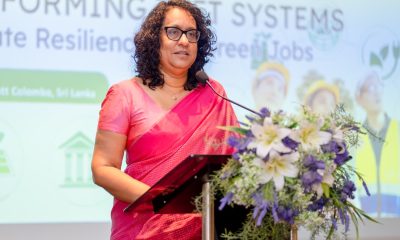
A strong Technical and Vocational Education and Training (TVET) system equips individuals with practical, relevant, and future-oriented skills helping to innovate responsibly towards a greener and sustainable future – PM