
Features
THE BIG FOUR OF OLD COLOMBO

In this series of interviews on Colombo’s heritage, we cover the Great Department Stores of Old Colombo. Historian Asiff Hussein, the Author of The Great Days of Colombo.
by Ifham Nizam
Q: In your book ‘The Great Days of Colombo’ you had mentioned that by the 1950s Colombo Fort had four well known department stores in the best European tradition. These were Cargills, Millers, Whiteaways and Colombo Apothecaries. Could you tell us what were the reasons that led to their emergence and why they were so popular at the time?
A:
Yes, I would call them Colombo’s Big Four. All of them emerged in the early 1900s and had their heyday in the 1950s and 1960s. These were all based on the British model of a Department Store, in the fashion of Harrods of London.
In fact, they may have even been inspired by Harrods whose wedge-shape is reminiscent of Cargills, the biggest of our department stores. Harrods apparently had humble beginnings, having been founded as a grocery store by Henry Charles Harrod in the mid-1800s before expanding in the late 1800s when many new departments were added. The Harrods building we are familiar with was constructed in 1905 and housed about 300 departments. So my guess is that it served as a model for others in the English-speaking world and in the British colonies.
A shopping complex with various departments, under one roof, was of course, a great convenience to shoppers. Department stores of this nature also had a reputation to maintain and stocked only products of the highest quality and some even extended credit to more loyal customers. In one-time colonies like Sri Lanka, then Ceylon, patronising these high-end stores were a status symbol as well.
For instance, we have a Ceylonese writer, J.Vijayatunga stating in his book Isle of Lanka (1955): “It is the hour of shopping. To those not familiar with the ritual of the Cinnamon Gardens housewives, the scene would strike one as a scene after a Hundred Days’ Siege. There are two big department stores on York Street- they were known as European shops but the controlling interest is now in the hands of Jaffna Tamils and Burghers, though the floor managers and managers are still white men, and the saleswomen are as a rule Eurasian while the lesser salesmen and their assistants are Ceylonese and Malayalees. There are two more such shops on Prince Street”
Vijayatunga refers to a lady from Cinnamon Gardens breathlessly ordering fresh Australian butter to be delivered. ‘Account, Madam?’ the counter assistant asks, and no satisfaction he says is greater to Madam than that of being able to say “Account” and sign.
He adds “At these counters an ordinary mortal must be very careful – for he may unwittingly jostle a Ladyship or Knighthood or an O.B.E.-ship or a Chevaliership. These honours are nowadays lavishly strewn in Ceylon and are to be encountered in the most unlikely places”.
What is also interesting about Vijayatunga’s account is the glimpse he gives us what these stores offered back then-Australian beef, Australian cheese, Oxford sausages, tinned meats and fish, meat pastes and fish pastes, peas and asparagus and peaches and jams- anything that has a label stuck on a bottle or tin indicating that it was manufactured in Australia, New Zealand, or in Great Britain, all of which had “a hypnotic effect upon Colombo’s society ladies”.
Q: Cargills was obviously the biggest of these. Could you tell us something about how it looked like in the good old days?
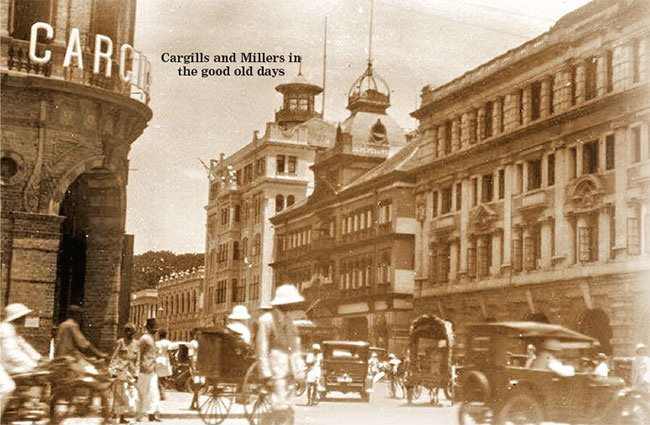
Cargills was built on the site of Captain Pieter Sluysken’s bungalow at the junction of Prince Street and York Street. This Dutchman’s residence was in the corner of a block occupied by high ranking Dutch officials. History tells us that he was a gentle soul and had a Kaffir band comprising of black musicians who played sweet music on the lawn in front of his house.
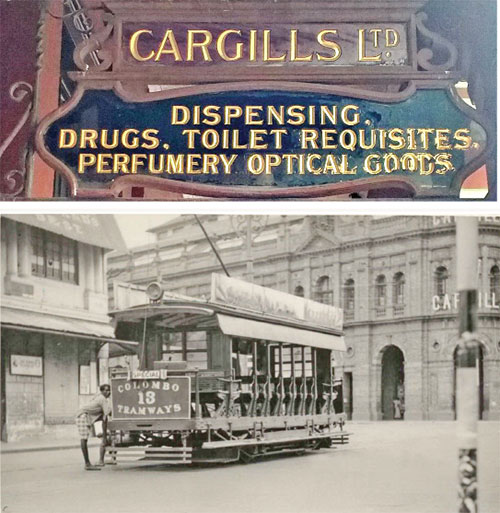
Cargills that emerged in its place in 1906 was a much more grander edifice with its beautiful burnt sienna façade. The company was founded by D.S.Cargill and enjoyed the distinction of being the oldest departmental store in Asia at the time it was founded in Kandy in 1844 before moving into its purpose-built premises in Colombo Fort where it thrived. Even back then it was fitted with electric fans and hydraulic lifts. Arnold Wright in his monumental book Twentieth Century Impressions of Ceylon (1907) observed of it a year after it had moved to the big city “These premises are deservedly considered the finest of their kind east of Suez”.
Cargills eventually added to itself as many as 40 departments that sold everything from basic household needs to very many luxurious items got down from the industrial powerhouses of the West. Its main departments, in the early 1900s, included groceries, furniture, dressmaking, gentlemen’s tailoring, horse feed, wines and spirits and drugs and dispensary.
By 1948 when the country gained independence, it had added many more departments, including Photo and Optical, Sports, Toys, Stationery and even a Book Department upstairs where a good many books could be purchased. The children of the post-war years who may well be called our very own baby boomers had their favourite books, many of which must have been got from Cargills. These included June Girls Annuals, Enid Blyton’s storybooks and Little Lulu and Dell comic books.
Cargills were agents for many a foreign brand. The long list included Arnott’s Australian Biscuits, Beehive Brand Australian Butter, Blue Band and Golden Mountain Margarine, Fray Bentos Corned Beef, Riverstone Tinned Meats and Sausages, Regal Chocolates, Del Monte Fruits, John West’s Salmon and Huntley’s and Palmer’s 4 O Clock Afternoon Tea Biscuits. They also sold HMV Radiogram, Singer Sewing Machines, Dinky brand miniature die-cast vehicles and Hornby Dablo trains produced by the Mechano Toy Company.
I was told that during Christmas time, that is until about the 1970s or so, Cargills kept a Santa to entertain children and had seasonal events like ‘Lucky Dip’ which involved shoppers having to pay a small sum of money to try their luck with brown paper bags filled with little toys and such things. The dozen or so bags would be kept in a wooden box and participants had to use a hooked pole to fish out the bags, each of which had a loop at its top.
Q: Millers was another major player at the time. What was it they offered that was different from what Cargills had to offer?
Millers Ltd was based in York Street and dealt in foreign goods as well though much of it differed from what Cargills dealt in. It sold among other things Cow & Gate Milk Food, J.Terry & Sons Chocolates, Kodak photographic products, Marconiphone Radios, Tunstalite Electric Bulbs, Tarzan’s Grip Paste, Magic Hoodoo anti-ant tape, Partridge & Sons Cigars and a variety of liquers such as Smith & Sons Yalumba Wines among other things. Around the time we gained independence, they were dealing in Elaine Chocolates, Walters’ Palm Toffees, Elizabeth Arden’s toilet preparations, Jean Valjean Manilla cigars, Austin Reeds Shirts, Mangold shoes, Columbia gramophones, Tungstalite electric bulbs and Brolac and Murac paints and enamels. In the 1950s we hear of Millers offering large Bedroom, Drawing Room and Dining Room Suites, Slumberland Matresses and Lampshades in Crenothine with Trimmings.
Q: Whiteaways was yet another well known department store of the time. What had it to offer its customers?
Whiteways or to give its full name Whiteaway, Laidlaw & Co had its department store in a three-storeyed building in Prince Street (Present Sir Baron Jayatilleke Mawatha). It was topped by a dome, painted white or silver and is said to have had cargo hatches on its sides where the goods arriving from the harbour could be unloaded and conveyed to the basement or stores.
Whiteaway admittedly had fewer departments than Cargills or Millers and were mainly agents for British brands. Among these were grocery, tailoring, men’s wear, footwear, glass and china, confectionary, pharmacy, haberdashery and millinery. From what we gather they also had a toys department on its third floor where there was a model railway layout with running toy trains demonstrating Tri-Ang trains of British origin for which they were apparently the agents. They were also agents for Barb garments, Ciro Pearls, Snow White Sheets and Helena Rubinstein beauty products.
Q: Apothecaries is also said to have been a department store. So what did they offer their customers?
Colombo Apothecaries was at the corner of York and Prince Street and was housed in a four-storeyed building. It had got its name of Apothecaries from its humble beginnings as a little chemists shop that opened its doors in 1883 in the De Soysa buildings in Slave Island.
The later building, built in 1915 housed all its departments which were added as the years went by and included confectionary, grocery, pharmacy, photography, books, tailoring, furniture, watches, fancy goods, toys and games, clocks and jewellery, boots and shoes and even ladies outfitting which attracted many fashionable young women since it had the latest styles from the fashion centres of Paris and London. Apothecaries offered only a few exclusive brands like Rayner’s Essences, Leica Cameras and Frister & Rossmann’s Sewing Machines. ( Pictures courtesy Asiff Hussein)






During a recent panel discussion titled “Security Environment in the Indo-Pacific and Sri Lankan Diplomacy”, organised by the Embassy of Japan in collaboration with Dr. George I. H. Cooke, Senior Lecturer and initiator of the Awarelogue Initiative, the keynote address was delivered by Prof Ken Jimbo of Kelo University, Japan (Ceylon Today, February 15, 2026).
The report on the above states: “Prof. Jimbo discussed the evolving role of the Indo-Pacific and the emergence of its latest strategic outlook among shifting dynamics. He highlighted how changing geopolitical realities are reshaping the region’s security architecture and influencing diplomatic priorities”.
“He also addressed Sri Lanka’s position within this evolving framework, emphasising that non-alignment today does not mean isolation, but rather, diversified engagement. Such an approach, he noted, requires the careful and strategic management of dependencies to preserve national autonomy while maintaining strategic international partnerships” (Ibid).
Despite the fact that Non-Alignment and Neutrality, which incidentally is Sri Lanka’s current Foreign Policy, are often used interchangeably, both do not mean isolation. Instead, as the report states, it means multi-engagement. Therefore, as Prof. Jimbo states, it is imperative that Sri Lanka manages its relationships strategically if it is to retain its strategic autonomy and preserve its security. In this regard the Policy of Neutrality offers Rule Based obligations for Sri Lanka to observe, and protection from the Community of Nations to respect the territorial integrity of Sri Lanka, unlike Non-Alignment. The Policy of Neutrality served Sri Lanka well, when it declared to stay Neutral on the recent security breakdown between India and Pakistan.
Also participating in the panel discussion was Prof. Terney Pradeep Kumara – Director General of Coast Conservation and Coastal Resources Management, Ministry of Environment and Professor of Oceanography in the University of Ruhuna.
He stated: “In Sri Lanka’s case before speaking of superpower dynamics in the Indo-Pacific, the country must first establish its own identity within the Indian Ocean region given its strategically significant location”.
“He underlined the importance of developing the ‘Sea of Lanka concept’ which extends from the country’s coastline to its 200nauticalmile Exclusive Economic Zone (EEZ). Without firmly establishing this concept, it would be difficult to meaningfully engage with the broader Indian Ocean region”.
“He further stated that the Indian Ocean should be regarded as a zone of peace. From a defence perspective, Sri Lanka must remain neutral. However, from a scientific and resource perspective, the country must remain active given its location and the resources available in its maritime domain” (Ibid).
Perhaps influenced by his academic background, he goes on to state:” In that context Sri Lanka can work with countries in the Indian Ocean region and globally, including India, China, Australia and South Africa. The country must remain open to such cooperation” (Ibid).
Such a recommendation reflects a poor assessment of reality relating to current major power rivalry. This rivalry was addressed by me in an article titled “US – CHINA Rivalry: Maintaining Sri Lanka’s autonomy” ( 12.19. 2025) which stated: “However, there is a strong possibility for the US–China Rivalry to manifest itself engulfing India as well regarding resources in Sri Lanka’s Exclusive Economic Zone. While China has already made attempts to conduct research activities in and around Sri Lanka, objections raised by India have caused Sri Lanka to adopt measures to curtail Chinese activities presumably for the present. The report that the US and India are interested in conducting hydrographic surveys is bound to revive Chinese interests. In the light of such developments it is best that Sri Lanka conveys well in advance that its Policy of Neutrality requires Sri Lanka to prevent Exploration or Exploitation within its Exclusive Economic Zone under the principle of the Inviolability of territory by any country” ( https://island.lk/us- china-rivalry-maintaining-sri-lankas-autonomy/). Unless such measures are adopted, Sri Lanka’s Exclusive Economic Zone would end up becoming the theater for major power rivalry, with negative consequences outweighing possible economic gains.
The most startling feature in the recommendation is the exclusion of the USA from the list of countries with which to cooperate, notwithstanding the Independence Day message by the US Secretary of State which stated: “… our countries have developed a strong and mutually beneficial partnership built on the cornerstone of our people-to-people ties and shared democratic values. In the year ahead, we look forward to increasing trade and investment between our countries and strengthening our security cooperation to advance stability and prosperity throughout the Indo-Pacific region (NEWS, U.S. & Sri Lanka)
Such exclusions would inevitably result in the US imposing drastic tariffs to cripple Sri Lanka’s economy. Furthermore, the inclusion of India and China in the list of countries with whom Sri Lanka is to cooperate, ignores the objections raised by India about the presence of Chinese research vessels in Sri Lankan waters to the point that Sri Lanka was compelled to impose a moratorium on all such vessels.
CONCLUSION
During a panel discussion titled “Security Environment in the Indo-Pacific and Sri Lankan Diplomacy” supported by the Embassy of Japan, Prof. Ken Jimbo of Keio University, Japan emphasized that “… non-alignment today does not mean isolation”. Such an approach, he noted, requires the careful and strategic management of dependencies to preserve national autonomy while maintaining strategic international partnerships”. Perhaps Prof. Jimbo was not aware or made aware that Sri Lanka’s Foreign Policy is Neutral; a fact declared by successive Governments since 2019 and practiced by the current Government in the position taken in respect of the recent hostilities between India and Pakistan.
Although both Non-Alignment and Neutrality are often mistakenly used interchangeably, they both do NOT mean isolation. The difference is that Non-Alignment is NOT a Policy but only a Strategy, similar to Balancing, adopted by decolonized countries in the context of a by-polar world, while Neutrality is an Internationally recognised Rule Based Policy, with obligations to be observed by Neutral States and by the Community of Nations. However, Neutrality in today’s context of geopolitical rivalries resulting from the fluidity of changing dynamics offers greater protection in respect of security because it is Rule Based and strengthened by “the UN adoption of the Indian Ocean as a Zone of peace”, with the freedom to exercise its autonomy and engage with States in pursuit of its National Interests.
Apart from the positive comments “that the Indian Ocean should be regarded as a Zone of Peace” and that “from a defence perspective, Sri Lanka must remain neutral”, the second panelist, Professor of Oceanography at the University of Ruhuna, Terney Pradeep Kumara, also advocated that “from a Scientific and resource perspective (in the Exclusive Economic Zone) the country must remain active, given its location and the resources available in its maritime domain”. He went further and identified that Sri Lanka can work with countries such as India, China, Australia and South Africa.
For Sri Lanka to work together with India and China who already are geopolitical rivals made evident by the fact that India has already objected to the presence of China in the “Sea of Lanka”, questions the practicality of the suggestion. Furthermore, the fact that Prof. Kumara has excluded the US, notwithstanding the US Secretary of State’s expectations cited above, reflects unawareness of the geopolitical landscape in which the US, India and China are all actively known to search for minerals. In such a context, Sri Lanka should accept its limitations in respect of its lack of Diplomatic sophistication to “work with” such superpower rivals who are known to adopt unprecedented measures such as tariffs, if Sri Lanka is to avoid the fate of Milos during the Peloponnesian Wars.
Under the circumstances, it is in Sri Lanka’s best interest to lay aside its economic gains for security, and live by its proclaimed principles and policies of Neutrality and the concept of the Indian Ocean as a Zone of Peace by not permitting its EEC to be Explored and/or Exploited by anyone in its “maritime domain”. Since Sri Lanka is already blessed with minerals on land that is awaiting exploitation, participating in the extraction of minerals at the expense of security is not only imprudent but also an environmental contribution given the fact that the Sea and its resources is the Planet’s Last Frontier.
by Neville Ladduwahetty

Far beneath the waters surrounding Sri Lanka lies a largely unseen frontier, a deep seabed that may contain cobalt, nickel and rare earth elements essential to modern technologies, from smartphones to electric vehicles. Around the world, governments and corporations are accelerating efforts to tap these minerals, presenting deep-sea mining as the next chapter of the global “blue economy.”
For an island nation whose ocean territory far exceeds its landmass, the question is no longer abstract. Sri Lanka has already demonstrated its commitment to ocean governance by ratifying the United Nations High Seas Treaty (BBNJ Agreement) in September 2025, becoming one of the early countries to help trigger its entry into force. The treaty strengthens biodiversity conservation beyond national jurisdiction and promotes fair access to marine genetic resources.
Yet as interest grows in seabed minerals, a critical debate is emerging: Can Sri Lanka pursue deep-sea mining ambitions without compromising marine ecosystems, fisheries and long-term sustainability?
Speaking to The Island, Prof. Lahiru Udayanga, Dr. Menuka Udugama and Ms. Nethini Ganepola of the Department of Agribusiness Management, Faculty of Agriculture & Plantation Management, together with Sudarsha De Silva, Co-founder of EarthLanka Youth Network and Sri Lanka Hub Leader for the Sustainable Ocean Alliance, shared findings from their newly published research examining how Sri Lankans perceive deep-sea mineral extraction.
The study, published in the journal Sustainability and presented at the International Symposium on Disaster Resilience and Sustainable Development in Thailand, offers rare empirical insight into public attitudes toward deep-sea mining in Sri Lanka.
Limited Public Inclusion
“Our study shows that public inclusion in decision-making around deep-sea mining remains quite limited,” Ms. Nethini Ganepola told The Island. “Nearly three-quarters of respondents said the issue is rarely covered in the media or discussed in public forums. Many feel that decisions about marine resources are made mainly at higher political or institutional levels without adequate consultation.”
The nationwide survey, conducted across ten districts, used structured questionnaires combined with a Discrete Choice Experiment — a method widely applied in environmental economics to measure how people value trade-offs between development and conservation.
Ganepola noted that awareness of seabed mining remains low. However, once respondents were informed about potential impacts — including habitat destruction, sediment plumes, declining fish stocks and biodiversity loss — concern rose sharply.
“This suggests the problem is not a lack of public interest,” she told The Island. “It is a lack of accessible information and meaningful opportunities for participation.”
Ecology Before Extraction
Dr. Menuka Udugama said the research was inspired by Sri Lanka’s growing attention to seabed resources within the wider blue economy discourse — and by concern that extraction could carry long-lasting ecological and livelihood risks if safeguards are weak.
“Deep-sea mining is often presented as an economic opportunity because of global demand for critical minerals,” Dr. Udugama told The Island. “But scientific evidence on cumulative impacts and ecosystem recovery remains limited, especially for deep habitats that regenerate very slowly. For an island nation, this uncertainty matters.”
She stressed that marine ecosystems underpin fisheries, tourism and coastal well-being, meaning decisions taken about the seabed can have far-reaching consequences beyond the mining site itself.
Prof. Lahiru Udayanga echoed this concern.
“People tended to view deep-sea mining primarily through an environmental-risk lens rather than as a neutral industrial activity,” Prof. Udayanga told The Island. “Biodiversity loss was the most frequently identified concern, followed by physical damage to the seabed and long-term resource depletion.”
About two-thirds of respondents identified biodiversity loss as their greatest fear — a striking finding for an issue that many had only recently learned about.
A Measurable Value for Conservation
Perhaps the most significant finding was the public’s willingness to pay for protection.
“On average, households indicated a willingness to pay around LKR 3,532 per year to protect seabed ecosystems,” Prof. Udayanga told The Island. “From an economic perspective, that represents the social value people attach to marine conservation.”
The study’s advanced statistical analysis — using Conditional Logit and Random Parameter Logit models — confirmed strong and consistent support for policy options that reduce mineral extraction, limit environmental damage and strengthen monitoring and regulation.
The research also revealed demographic variations. Younger and more educated respondents expressed stronger pro-conservation preferences, while higher-income households were willing to contribute more financially.
At the same time, many respondents expressed concern that government agencies and the media have not done enough to raise awareness or enforce safeguards — indicating a trust gap that policymakers must address.
“Regulations and monitoring systems require social acceptance to be workable over time,” Dr. Udugama told The Island. “Understanding public perception strengthens accountability and clarifies the conditions under which deep-sea mining proposals would be evaluated.”
Youth and Community Engagement
Ganepola emphasised that engagement must begin with transparency and early consultation.
“Decisions about deep-sea mining should not remain limited to technical experts,” she told The Island. “Coastal communities — especially fishers — must be consulted from the beginning, as they are directly affected. Youth engagement is equally important because young people will inherit the long-term consequences of today’s decisions.”
She called for stronger media communication, public hearings, stakeholder workshops and greater integration of marine conservation into school and university curricula.
“Inclusive and transparent engagement will build trust and reduce conflict,” she said.
A Regional Milestone
Sudarsha De Silva described the study as a milestone for Sri Lanka and the wider Asian region.
“When you consider research publications on this topic in Asia, they are extremely limited,” De Silva told The Island. “This is one of the first comprehensive studies in Sri Lanka examining public perception of deep-sea mining. Organizations like the Sustainable Ocean Alliance stepping forward to collaborate with Sri Lankan academics is a great achievement.”
He also acknowledged the contribution of youth research assistants from EarthLanka — Malsha Keshani, Fathima Shamla and Sachini Wijebandara — for their support in executing the study.
A Defining Choice
As Sri Lanka charts its blue economy future, the message from citizens appears unmistakable.
Development is not rejected. But it must not come at the cost of irreversible ecological damage.
The ocean’s true wealth, respondents suggest, lies not merely in minerals beneath the seabed, but in the living systems above it — systems that sustain fisheries, tourism and coastal communities.
For policymakers weighing the promise of mineral wealth against ecological risk, the findings shared with The Island offer a clear signal: sustainable governance and biodiversity protection align more closely with public expectations than unchecked extraction.
In the end, protecting the ocean may prove to be not only an environmental responsibility — but the most prudent long-term investment Sri Lanka can make.
By Ifham Nizam
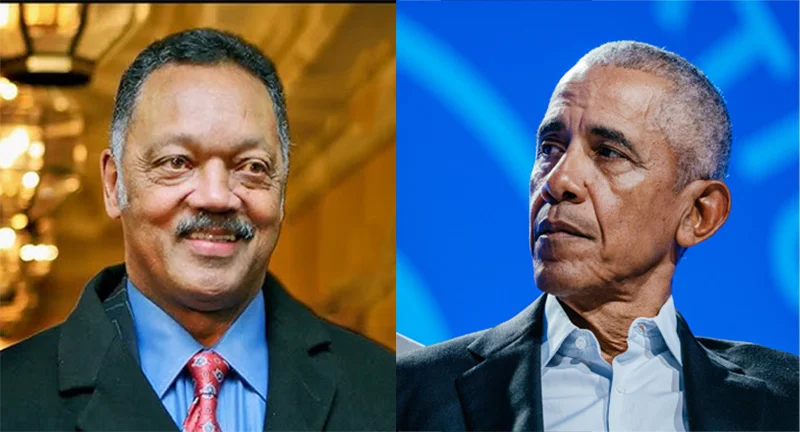
 On being elected US President in 2008, Barack Obama famously stated: ‘Change has come to America’. Considering the questions continuing to grow out of the status of minority rights in particular in the US, this declaration by the former US President could come to be seen as somewhat premature by some. However, there could be no doubt that the election of Barack Obama to the US presidency proved that democracy in the US is to a considerable degree inclusive and accommodating.
If this were not so, Barack Obama, an Afro-American politician, would never have been elected President of the US. Obama was exceptionally capable, charismatic and eloquent but these qualities alone could not have paved the way for his victory. On careful reflection it could be said that the solid groundwork laid by indefatigable Black Civil Rights activists in the US of the likes of Martin Luther King (Jnr) and Jesse Jackson, who passed away just recently, went a great distance to enable Obama to come to power and that too for two terms. Obama is on record as owning to the profound influence these Civil Rights leaders had on his career.
The fact is that these Civil Rights activists and Obama himself spoke to the hearts and minds of most Americans and convinced them of the need for democratic inclusion in the US. They, in other words, made a convincing case for Black rights. Above all, their struggles were largely peaceful.
Their reasoning resonated well with the thinking sections of the US who saw them as subscribers to the Universal Declaration of Human Rights, for instance, which made a lucid case for mankind’s equal dignity. That is, ‘all human beings are equal in dignity.’
It may be recalled that Martin Luther King (Jnr.) famously declared: ‘I have a dream that one day this nation will rise up, live out the true meaning of its creed….We hold these truths to be self-evident, that all men are created equal.’
Jesse Jackson vied unsuccessfully to be a Democratic Party presidential candidate twice but his energetic campaigns helped to raise public awareness about the injustices and material hardships suffered by the black community in particular. Obama, we now know, worked hard at grass roots level in the run-up to his election. This experience proved invaluable in his efforts to sensitize the public to the harsh realities of the depressed sections of US society.
Cynics are bound to retort on reading the foregoing that all the good work done by the political personalities in question has come to nought in the US; currently administered by Republican hard line President Donald Trump. Needless to say, minority communities are now no longer welcome in the US and migrants are coming to be seen as virtual outcasts who need to be ‘shown the door’ . All this seems to be happening in so short a while since the Democrats were voted out of office at the last presidential election.
However, the last US presidential election was not free of controversy and the lesson is far too easily forgotten that democratic development is a process that needs to be persisted with. In a vital sense it is ‘a journey’ that encounters huge ups and downs. More so why it must be judiciously steered and in the absence of such foresighted managing the democratic process could very well run aground and this misfortune is overtaking the US to a notable extent.
The onus is on the Democratic Party and other sections supportive of democracy to halt the US’ steady slide into authoritarianism and white supremacist rule. They would need to demonstrate the foresight, dexterity and resourcefulness of the Black leaders in focus. In the absence of such dynamic political activism, the steady decline of the US as a major democracy cannot be prevented.
From the foregoing some important foreign policy issues crop-up for the global South in particular. The US’ prowess as the ‘world’s mightiest democracy’ could be called in question at present but none could doubt the flexibility of its governance system. The system’s inclusivity and accommodative nature remains and the possibility could not be ruled out of the system throwing up another leader of the stature of Barack Obama who could to a great extent rally the US public behind him in the direction of democratic development. In the event of the latter happening, the US could come to experience a democratic rejuvenation.
The latter possibilities need to be borne in mind by politicians of the South in particular. The latter have come to inherit a legacy of Non-alignment and this will stand them in good stead; particularly if their countries are bankrupt and helpless, as is Sri Lanka’s lot currently. They cannot afford to take sides rigorously in the foreign relations sphere but Non-alignment should not come to mean for them an unreserved alliance with the major powers of the South, such as China. Nor could they come under the dictates of Russia. For, both these major powers that have been deferentially treated by the South over the decades are essentially authoritarian in nature and a blind tie-up with them would not be in the best interests of the South, going forward.
However, while the South should not ruffle its ties with the big powers of the South it would need to ensure that its ties with the democracies of the West in particular remain intact in a flourishing condition. This is what Non-alignment, correctly understood, advises.
Accordingly, considering the US’ democratic resilience and its intrinsic strengths, the South would do well to be on cordial terms with the US as well. A Black presidency in the US has after all proved that the US is not predestined, so to speak, to be a country for only the jingoistic whites. It could genuinely be an all-inclusive, accommodative democracy and by virtue of these characteristics could be an inspiration for the South.
However, political leaders of the South would need to consider their development options very judiciously. The ‘neo-liberal’ ideology of the West need not necessarily be adopted but central planning and equity could be brought to the forefront of their talks with Western financial institutions. Dexterity in diplomacy would prove vital.

How photography helped the British empire classify India

Atmospheric conditions are favorable for thundershowers over most parts of the island

Trump brings in new 10% tariff as Supreme Court rejects his global import taxes

Ravi demands full disclosure on Lanka’s usable reserves, flags forex leakages

Sajith exposes highly questionable coal imports from South Africa in 25 vessels; calls for independent probe

Ex-TRCSL Chairman Palpita enlarged on bail

‘Dates have the highest sugar content to fight Coronavirus’

Sunday Island 27 December – Headlines

#SundayIsland 17th December – Headlines

Sunday Island – 28th March

Sunday Island Headlines – 21 March

Sunday Island – 21st February – Headlines
-
 Life style6 days ago
Marriot new GM Suranga
-

 Business5 days ago
Ministry of Brands to launch Sri Lanka’s first off-price retail destination
-
 Features6 days ago
Monks’ march, in America and Sri Lanka
-

 Features6 days ago
The Rise of Takaichi
-
 Features6 days ago
Wetlands of Sri Lanka:
-
 News6 days ago
Thailand to recruit 10,000 Lankans under new labour pact
-
 News6 days ago
Massive Sangha confab to address alleged injustices against monks
-

 Sports2 days ago
Old and new at the SSC, just like Pakistan