
Features
That Midnight Knock on the Door:Sundarampuram: Janel Piyanpath


English name: ‘Jaffna Doors and Windows’
Concept, Design, Editing: Sarath Chandrajeeva
Layout: Kanishka Vijayapura
Printed and bound by Neo Graphics Pvt (Ltd)
Sales points: Barefoot Book shop Galle road Colombo 03, Sarasavi Book shops, Sakura agencies Colombo 04, Plate Pvt. (Ltd) Colombo 03.
Selling price: Rs.10,000.00 (below cost)
by Laleen Jayamanne
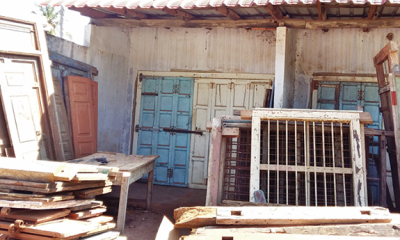
Jaffna Doors and Windows is the blunt English title of a large book of multilingual poems, each written in relation to a specific photograph of bomb-blasted buildings of Jaffna during the civil war. Each poem is printed on the partnered photographic image which covers an entire page or two. At a glance the Jaffna ruins feel like a vast overgrown archaeological site, intertwined with wild creepers, tangled roots, green foliage, trees, teeming with vitality.
The project was born on the 31st January 2021 when the Sinhala poet Lal Hegoda sent his friend Hiniduma Sunil Senevi a poem and the latter responded with one himself, within 45 minutes! (I love this innate skill and impulse, which I have observed on FaceBook as well, among Sinhala poets). Then, Lal sent both poems to several friends, including Sarath Chandrajeewa.
Sarath, in turn, then decided to send a photograph from his collection of destroyed buildings of Jaffna and asked each recipient to write a poem (in any of our three languages), in relation to the image. While there are wonderful Muslim, Tamil and Sinhala poets among them, many are not poets but have felt impelled to write a poem when the request came with an image that moved them, spoke to them, perhaps even with a ‘foreign’ script like Brahmi. As the project expanded, many other photographers contributed their own images of destroyed buildings, houses, kovils, mosques, churches, etc. Fourteen photographers and 86 writers participated in the project creating 108 poems.
Thus was born, not quite a Kavi Maduwa (poetry-shed), nor exactly a Raga Mala (garland of melody), but what I like to imagine as an electronic, wild Mycelial Network (a fungal web), growing under the rubble, entwined with human bones in that blood-soaked earth of Jaffna, emerging into the sunlight like fungi (mushrooms, hathu), in all their colourful variety of shapes and sizes. Such was the chance beginnings of this interethnic, networked collective project of friendship and solidarity, expressed in this singular book, coordinated and edited by Sarath and published by The Contemporary Art & Crafts Association of Sri Lanka in October 2022.
It’s been launched in Jaffna but not in Colombo, nor even reviewed as yet. The Jaffna Doors and Windows have stories to tell, stories of fear, terror, death and destruction and systematic, well-planned theft, during the civil war years, of these valued, detachable artefacts from Tamil and Muslim homes. The Tamil title, ‘Displaced Doors and Windows’, captures this history precisely. It is this aspect of war profiteering that has galvanised many to reflect and write a poem, even though some have never done that before.
This carefully crafted ‘Artists’ Book’, must surely be of interest to institutions such as the International Centre for Ethnic Studies, Museum of Modern and Contemporary Art and the Geoffrey Bawa Foundation, in particular. A book launch and a moderated discussion at any of these institutions (at the forefront of work on the cultural intersection of ethnicity with photography, poetry, art & crafts, art history and architecture), could provide a hospitable forum for ‘Truth-Telling’, enhancing the ongoing processes of ‘Reconciliation,’ after the long civil war (1983-2009).
These Doors and Windows are booty, and might well haunt the conscience of the good folk sleeping in houses well secured with them, if they did know the full story. A Southern book launch would be something of an exorcism I imagine, leading to reparation through a return of the looted precious objects, laden with generational family memories and scarred with historical trauma, varnished and polished over no doubt.

The looted Jaffna Doors and Windows are made of hardwood and crafted with traditional decorative patterns such as I have not seen in the South. Some are painted. They are palpable evidence of traditions of craft practices of Jaffna. Who were these craftsmen? Are they still alive? Are they both Muslim and Tamil? I imagine Geoffrey Bawa would have been interested in answers to these questions. I heard a formal discussion at an exhibition of Bawa’s architectural drawings once (accessed on YouTube), where Channa Daswatte mentioned pointedly that Bawa hired Muslim builders for his projects.
Clearly, these doors and windows were made to last generations, like Kandalama. And no doubt, these sturdy antique artefacts must now grace architect-designed houses in the South, especially in Colombo. These items, along with the sturdy cross beams (uluwahu), were wrenched out and transported to Colombo during the war, openly sold at a brisk pace and bought by eager architects and other middle-class folk with antiquarian interest in craft, for their cool new houses. There is a recorded instance where shop owners prevented Hegoda from photographing a stack of these doors on display at a store front, on the outskirts of Colombo with the signage, ‘Jaffna Doors and Windoors’. This was to be the impetus for Hegoda’s inaugural poem sent to Sunil, which then led to the long process of creating this collaborative and moving book.
Sundarampuram Janel Piyanpath
, the poetic title in Sinhala, is taken from Hegoda’s own poem called Hogana Pokuna (a beautiful vernacular phrase for the ocean, to those from inland who have never heard the ‘roaring’ ocean and imagine it to be a ‘pond’!). The poet muses, where the doors and windows of Jaffna might have gone to, and responds, perchance to see the Hogana Pokuna in Colombo!

sarath
Restitution of Stolen Artefacts
It would be an interesting art-historical based activist project of reclamation of a lost tradition, to try to find these doors and windows and photograph them if visible from outside. The photographs can then be components of an installation and/or the matrix for another book of trilingual poetry. Such a project would excite poets and others keen to work across the three languages and cultures and media, to create robust networks of exchange across wounding divides. Perhaps, even, the owners can be persuaded to return the stolen artefacts, which is now global best practice in art institutions and among respectable ethical collectors.
This issue reminds me of the paintings stolen by the Nazis from wealthy Jewish homes and the struggles to reclaim them by the descendants. There was a film recently about one of Klimt’s most famous paintings which, after a legal drama, was finally given to its rightful inheritor. Of course, these beautifully crafted or even purely functional solid doors don’t share the aesthetic and monetary values of high modernist European art, but given the revival of Lankan arts & crafts in the wake of Bawa’s visionary, celebrated project, those astute architects who formulated and activated the idea of ‘Tropical Modernism’ might take up this activist project as a challenge in Lanka now. It could take the once radical idea out of its comfort zone of South Asian cool and give it a further ethical resonance for the region too.
When flicking through the book full of colour, with the profuse green foliage, the splashes of abstract colours on the pages, the intensity of sun- light, the blue sky and randomly reading a stanza or two that caught my eye, one sees the empty holes on walls, a recurring visual motif. Then, the memory of reading accounts of how Richard de Zoysa, the Lankan journalist, was taken away by government law enforcement officials, from his home one night, never to return, came to mind. Was there a knock on his door late that night? I wondered. Richard’s abduction, torture and murder brought home to the Sinhala middle classes in Colombo and those of us living outside the country, what had in fact been happening to countless unknown young persons, right across the country. Many knew Richard as a charismatic actor and fearless journalist.
I remember hearing Richard’s mother, Dr Manorani Saravanamuttu, talk about the state of terror in Sri Lanka (that of the state, the LTTE and JVP), and also about Richard’s death, at an Amnesty International meeting in Sydney in 1991 perhaps. I still remember Richard and his mother playing as mother and son in Aeschylus’s Agamemnon in Colombo, in the late 70s, in the open, perhaps at the British Council. Manorani was Clytemnestra and Richard Orestes, duty bound to kill his mother, because she killed his father, because he killed their daughter, so as to placate the wind god to set sail to sack Troy. This cycle of relentless mythic violence the mother and son enacted in the Greek tragedy, appeared to have gripped Lanka too. But the play is a part of a trilogy, which concludes with the establishment of trial by jury where the principle of Justice, rather than vengeance, is established in Athens, through argument and a spirit of reconciliation led by Athena, governed by reason. This too appears relevant to Lanka now where the state enacts vengeful violence on peaceful protestors and journalists and the independence of the judiciary is eroded.
Sundarampuram
is dedicated to Dr Rajani Thiranagama, Professor of Anatomy at the University of Jaffna, also a well-known human rights activist, who was gunned down by a member of the LTTE. There is an image in the book of her smiling at us and her long poem ‘Letter from Jaffna’, printed beside it in the three languages. Her poem describes the quotidian, ceaseless mass violence and sense of terror they all experienced caught between the IPKF, LTTE and the Lankan Army. She speaks on behalf of the nameless victims. Her sister Sumathy writes of the mass eviction of Muslims from Jaffna by the LTTE, and of their abandoned homes then subject to acts of vandalism.
Hiniduma Sunil’s poem describes the interior of a posh Colombo home where a Tamil servant-girl finds herself alone in the living room where one of those Jaffna windows and doors have landed. Her silent thoughts are given poetic expression. Priyantha Fonseka apostrophises a Jaffna window in happier times, when it opened on its intact hinges, to let in a gentle breeze in a moonlit night and the beloved. Readers will no doubt pick up poems that appeal to them from its large selection and the images themselves will lure us despite all, because they have become allegorical, like all ruins, and as such, have the power to address us with the injunction, ‘Read Me!’ ‘Say something,’ they whisper to our ears. (To be continued)


A Strategic Assessment of a Conflict Still Unresolved
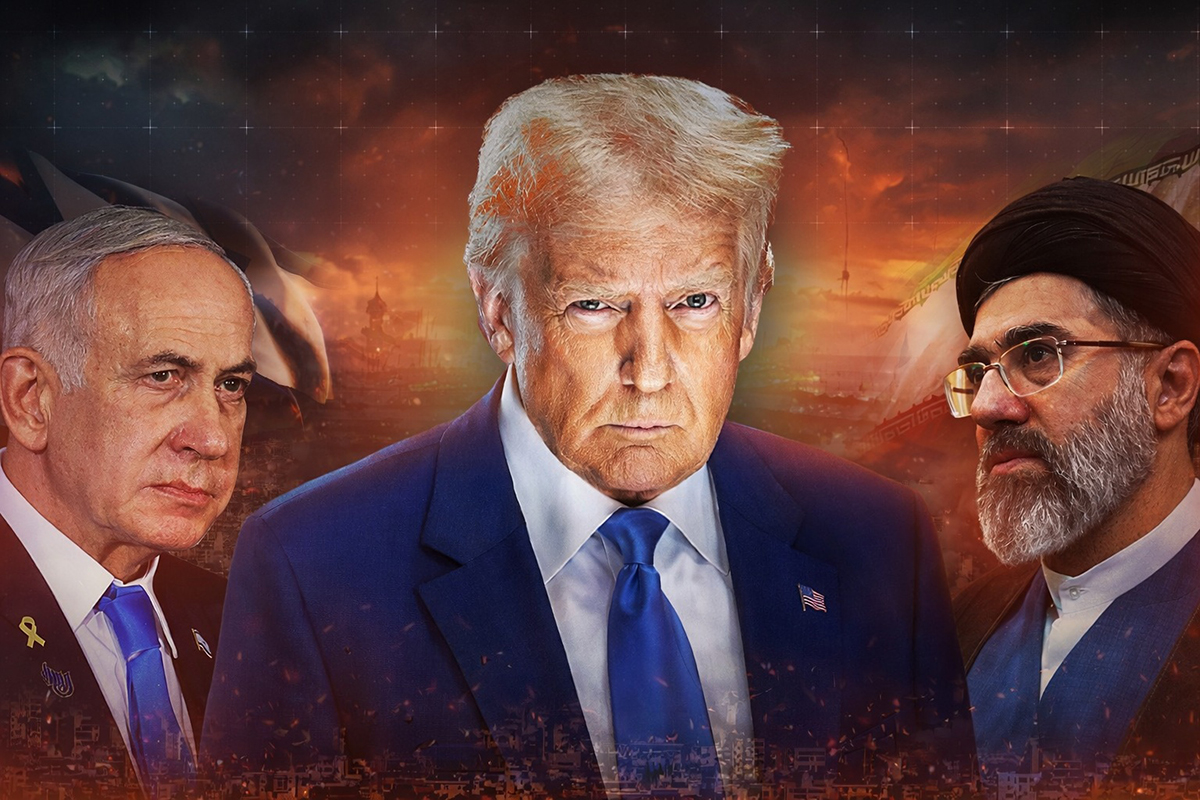
The Unites States of America and its ally, Israel attacked Iran on 28 February, or the 10th day of the month of Ramadan. More than a month of intense fighting has passed since, and the Ramadan War has settled into a grinding, attritional struggle that defies early declarations of victory. Despite sustained U.S. and Israeli air and naval bombardment, Iran remains standing, and continues to strike back with a level of resilience that has surprised many observers. The conflict has evolved into a contest of endurance, adaptation, and strategic innovation, with each side attempting to impose costs the other cannot bear.
Iran’s response to the overwhelming airpower of its adversaries has been both simple and devastatingly effective: saturate enemy defences with swarms of inexpensive drones and older ballistic missiles, forcing them to expend costly interceptors and reveal radar positions, and then follow up with salvos of its most advanced precisionguided missiles. This layered approach has inflicted severe physical damage on Israel and has shaken its national morale. The country has endured repeated missile barrages from Iran and rocket fire from Hezbollah, straining its airdefence network and pushing its civilian population to the limits of endurance.
The United States, meanwhile, has been forced to evacuate or reduce operations at several bases in the Gulf region due to persistent Iranian drone and missile attacks. For both the U.S. and Israel, the war has become a test of strategic credibility. For Iran, by contrast, victory is defined not by territorial gains or decisive battlefield outcomes, but by survival, and by continuing to impose costs on its adversaries.
The central strategic objective for the U.S. has now crystallised: reopening the Strait of Hormuz to secure global energy flows. Ironically, the Strait was open before the war began; it is the conflict itself that has rendered it effectively closed. Air and naval power alone cannot achieve this objective. The geography of the Strait, combined with Iran’s layered defences, means that any lasting solution will require ground forces, a reality that carries enormous risks.
U.S. Strategic Options
The United States faces five broad operational options, each with significant drawbacks.
1. Seizing Kharg Island
Kharg Island handles roughly 90% of Iran’s oil exports, making it an attractive target. However, it lies only a short distance from the Iranian mainland, where entrenched Iranian forces maintain dense networks of missile batteries, drones, artillery, and coastal defences. Any attempt to seize Kharg would require first neutralising or capturing the adjacent coastline, a costly amphibious and ground operation.
Even if successful, this would not reopen the Strait of Hormuz. It would merely deprive Iran of export capacity, which is not the primary U.S. objective. At least ostensibly not; there are those who argue that the U.S. simply wants to take over Iran’s petroleum (see below).
2. Forcing the Strait of Hormuz by Naval Power
Sending U.S. naval forces directly through the Strait is theoretically possible but operationally hazardous. Iran has mined all but a narrow channel hugging its own shoreline. That channel is covered by overlapping fields of antiship missiles, drones, artillery, and coastal radar. Clearing the mines would require prolonged operations under fire. Attempting to push through without clearing them would risk catastrophic losses.
3. Capturing Qeshm, Hengam, Larak, and Hormuz Islands
These islands dominate the Iranian side of the Strait and host radar, missile, and drone installations. Capturing them would degrade Iran’s ability to close the Strait, but the islands are heavily fortified, and the surrounding waters are mined. Amphibious assaults against defended islands are among the most difficult military operations. Even success would not guarantee the Strait’s longterm security unless the mainland launch sites were also neutralised.
4. Invading Southern Iraq and Crossing into Khuzestan
This option would involve U.S. forces advancing through southern Iraq, crossing the Shatt alArab waterway, and pushing into Iran’s Khuzestan province — home to most of Iran’s oilfields. The terrain is difficult: marshes, waterways, and narrow approaches. Iranian forces occupy the high ground overlooking the plains.
While this route would allow Saudi armoured forces to participate, it would also expose U.S. and allied logistics to attacks by Iraqi Shia militias, who have already demonstrated their willingness to target U.S. assets. The political and operational risks are immense.
5. Capturing Chabahar and Advancing Along the Coast
The most strategically promising — though still costly — option is seizing the port of Chabahar in southeastern Iran and advancing roughly 660 kilometres along the coast toward Bandar Abbas. This approach offers several advantages:
· Distance from Iran’s core population centres complicates Iranian logistics.
· Chabahar’s deepwater port (16m draught)
would provide a valuable logistics hub.
· U.S. carriers could remain at safer standoff distances
, supporting operations without entering the Strait.
· The coastal route allows naval gunfire and missile support
to assist advancing ground forces.
· Local Baluchi insurgents
could provide intelligence and limited support.
· Capturing Bandar Abbas would
outflank Iran’s island defences and effectively reopen the Strait.
This option is likely to form the backbone of any U.S. ground campaign, potentially supplemented by diversionary attacks by regional partners to stretch Iranian defences.
The Limits of U.S. Superiority
The United States retains overwhelming superiority in naval power and manned airpower. But whether this advantage translates into dominance in unmanned systems or ground combat is far from certain.
The 2003 invasion of Iraq is often cited as a model of U.S. military prowess, but the comparison is misleading. Iraq in 2003 had been crippled by a decade of sanctions. Its forces lacked modern mines, antitank missiles, and effective air defences. Tank crews had little training; some could not hit targets at pointblank range. RPG teams were similarly unprepared. The U.S. enjoyed numerical superiority in the theatre and total control of the air, allowing it to isolate Iraqi units and prevent reinforcement.
Even under those favourable conditions, Iraqi forces managed to delay the U.S. advance. At one point, forward U.S. units nearly ran out of ammunition and supplies, forcing the diversion of forces intended for the assault on Baghdad to secure the lines of communication.
Iran is not Iraq in 2003. Its armed forces and industrial base have adapted to nearly half a century of sanctions. It produces its own drones, missiles, artillery, and armoured vehicles. It has built extensive underground facilities, hardened command posts, and redundant communication networks.
Moreover, the battlefield itself has changed. The RussoUkrainian war demonstrated that deep armoured penetrations – once the hallmark of U.S. doctrine – are now extremely vulnerable to drones, loitering munitions, and precision artillery. The result has been a return to attritional warfare reminiscent of the First World War, with front lines stabilising into trench networks.
Yet, as in the First World War, stalemate has been broken not by massed assaults but by small, highly trained teams infiltrating thinly held lines, identifying targets, and guiding drones and artillery onto enemy positions deep in the rear. Iran has studied these lessons closely.
Mosaic Defence and Transformational Warfare
Iran’s military doctrine has evolved significantly over the past two decades. Its “mosaic defence” decentralises command and control, ensuring that even if senior leadership is targeted, local units can continue operating autonomously. This structure proved resilient during the initial waves of U.S. and Israeli strikes.
Iran has also absorbed lessons from U.S. “shock and awe” operations. The botched U.S. invasion of Grenada in 1983 exposed weaknesses in joint operations, prompting the development of “effectsbased operations,” “rapid dominance” and the broader concept of “transformational warfare.” These doctrines (better known colloquially as “Shock and Awe”), influenced by Liddell Hart and Sun Tzu, emphasised simultaneous strikes on strategic targets to paralyse the enemy’s decisionmaking.
While the U.S. struggled to apply these concepts effectively in Iraq and Iran, Tehran has adapted them for asymmetric use. Its drone and missile campaigns have targeted not only military assets but also economic infrastructure and psychological resilience. Israel’s economy and morale have been severely tested, and the United States finds itself entangled in a conflict that offers no easy exit.
Iran has also pursued a broader strategic objective: undermining the petrodollar system that underpins U.S. financial dominance. By disrupting energy flows and encouraging alternative trading mechanisms, Iran seeks to weaken the economic foundations of U.S. power.
Will the USA Achieve Its War Aims?
The United States’ core objective appears to be securing control over global energy flows by reopening the Strait of Hormuz and limiting China’s access to Middle Eastern oil before it can transition to alternative energy sources. Whether this objective is achievable remains uncertain.
A ground campaign would be long, costly, and politically fraught. Iran’s defences are deep, layered, and adaptive. Its drone and missile capabilities have already demonstrated their ability to impose significant costs on technologically superior adversaries. Regional allies are cautious, and global support for a prolonged conflict is limited.
The United States retains overwhelming military power, but power alone does not guarantee strategic success. Iran’s strategy is simple: survive, adapt, and continue imposing costs. In asymmetric conflicts, survival itself can constitute victory.
In Frank Herbert’s Dune, the protagonist, Paul Muad’dib says “he who can destroy a thing, controls a thing.” This is the essence of Iranian strategy – they have a stranglehold on petroleum supply, and can destroy the world economy. Trump has had to loosen sanctions on both Iran’s and Russia’s oil, simply to prevent economic collapse.
The Ramadan War has already reshaped regional dynamics. Whether it reshapes global power structures will depend on how the next phase unfolds, and whether the United States is willing to pay the price required to achieve its aims.
by Vinod Moonesinghe

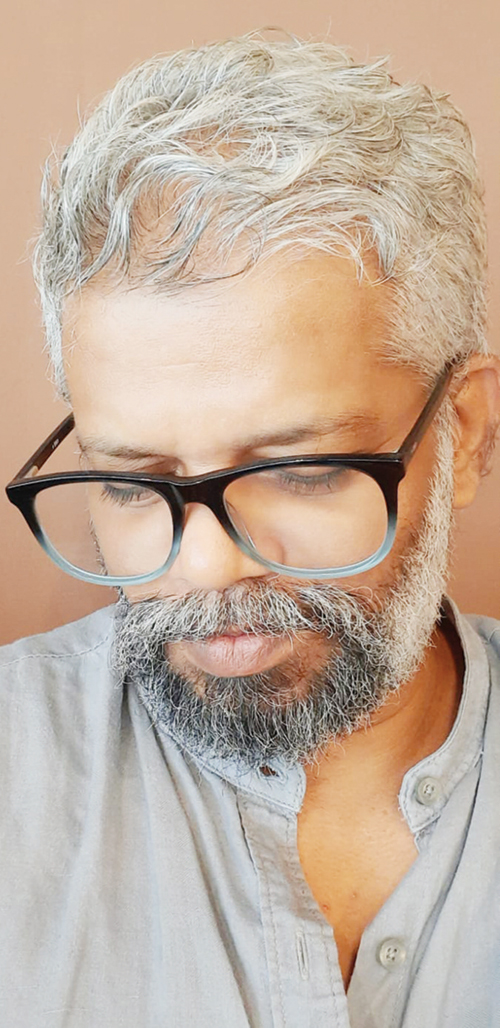
“Nayanandaya,” meaning the enchantment of indebtedness, is Surath de Mel’s latest novel. True to his reputation as a maximalist writer, de Mel traverses the labyrinth of middle-class struggles; poverty, unemployment, the quest for education, through a father’s fragile dreams. The novel unfolds around Mahela, his son, his friendships, and the fragile relationships that keep him tethered to life.
“Happiness is not a destination; it is a journey. There are no shortcuts to it. At some point, the path you thought was right will be wrong. You have to make sacrifices for it.”
These words, uttered by the protagonist Mahela to his ten-year-old son, is the silent mantra of every middle-class parent. A common urban middle-class father’s yearning for his child to climb the ladder he himself could not ascend.
A Socio-Political Mirror
Sri Lanka’s middle class remains trapped in paradox. They are educated but underemployed, salaried but indebted, socially respected yet politically invisible. Structural inequalities, economic volatility and populist politics inclusively contribute to keep them “forever middle”.
Through protagonist Mahela, who is sometimes a graphic designer, sometimes a vendor and always a failure Surath de Mel sketches the deficiencies of an education system that does not nurture skills of the students. Sri Lanka boasts about high literacy rates, yet the economy cannot absorb the thousands of graduates produced into meaningful work. Underemployment becomes the inheritance of the middle class. With political connections often the stories can be transformed. De Mel pens it in dark humour to expose these truths:
“Some notorious writer once sneered in a newspaper, ‘Give your ass to the minister, and you’ll earn the right to keep it on a bigger chair.’ Countless people waiting in ministers’ offices, pressing
their backsides to seats, carrying the weight of their own lives.”
Childhood Trauma and Its Echoes
Surath de Mel frequently weaves psychoanalysis into his fiction. In Nayanandaya, he captures the lingering shadows of childhood trauma. Mahela, scarred by a loveless and fractured youth, suffers phobic anxiety and depression, apparently with a personality disorder as an adult. His confession at the psychologist reveals it out:
“Childhood? I didn’t have one. I was fifteen when I was born.”
Here, Mahela marks his true birth not at infancy, but at the death of his parents. This statement itself reveals the childhood trauma the protagonist had gone through and the reader can attribute his subsequent psychological struggles as the cause of it.
Surath de Mel
From a Lacanian perspective, trauma is not just something that happens to a child; it is a deep break in how the child understands the world, themselves, and others. Some experiences are too painful to be put into words. Lacan calls this the Real — what cannot be fully spoken or explained. This pain does not disappear but returns later in life as anxiety, fear, or obsessive compulsive disorder.
This trauma disturbs the child’s sense of self and their place in society. When language fails to make sense of loss, the mind creates fantasies to survive. These fantasies quietly shape adult desires, relationships, and choices.
In Nayanandaya, childhood trauma of the protagonist does not stay buried — it lives on, shaping the adulthood in unseen ways. In the narrative, Mahela’s struggles are not just personal failures but the result of a past that was never given words.
Tears of Fathers – Forgotten in Sri Lankan Literature
Sri Lankan literature has long been attentive to suffering — especially rural poverty, social injustice, and the silent endurance of women and single mothers. Countless novels, poems, and songs have given voice to maternal sacrifice, female resilience, and women’s oppression.
Yet, within this rich narratives, the quiet grief of the urban middle-class father remains mostly unseen. Rarely does fiction pause to examine the emotional lives of men who shoulder responsibility without language for their pain. These masculine tears are private, swallowed by routinely and masked by humour or silence. Definitely never granted literary space.
In Nayanandaya, Surath de Mel breaks this silence. Through Mahela, he lends voice to these overlooked men — fathers whose love is expressed through sacrifice rather than speech. However, de Mel does not romanticise the tears. Rather he humanises them. He allows their vulnerabilities, anxieties, and quiet despair to surface with honesty and compassion. In doing so, Nayanandaya fills a striking gap in Sri Lankan literature, reminding us that fathers, too, carry invisible wounds.
Literary value
With Nayanandaya, Surath de Mel reaches a new pinnacle in his literary craft. His language is dense yet lyrical, enriched with similes, metaphors, irony, and a full range of literary tools deployed with confidence and control.
One of the novel’s most touching narrative choices is the personification of Mahela’s son’s soft toy, Wonie. Through personified Wonie, de Mel captures the two most touching incidents in the entire novel . This simply reveals the author’s artistic maturity, transforming a simple object into a powerful emotional conduit that anchors the novel’s tenderness amidst its despair.
At a deeper symbolic level, Mahela himself can be read as more than an individual character, but a metaphor for Sri Lanka — a nation struggling under economic hardship, clinging to impractical dreams, witnessing the migration of its people, and drifting towards a slow, painful exhaustion. His personal failures could mirror the broader decay of social and economic structures. This symbolic reading lends Nayanandaya a haunting national resonance.
Today, many write and many publish, but only a few transform language into literature that lingers in the reader’s mind long after the final page. Surath de Mel belongs to that rare few. In a literary landscape crowded with voices, he remains devoted to art rather than popularity or trend. As a scholar of Sinhala language and literature, de Mel writes with intellectual depth, dark humour, and deep human empathy.
In conclusion, Nayanandaya is not merely a story; it is social commentary, psychoanalytic reflection, and tragic poetry woven into richly textured prose. With this novel — a masterful interlacing of love, debt, and fragile dreams — Surath de Mel engraves a distinctly Dostoevskian signature into Sinhala literature.
Reviewed by Dr. Charuni Kohombange

Around 40 percent of the annual energy we use is consumed in domestic activities. Energy is costly, and supply is not unlimited. Unfortunately, we realize the importance of energy – saving only during the time of a crisis.
If you adopt readily affordable energy-saving strategies, you will cut down your living expenditure substantially, relieving the energy burden of the nation. Here are some tips.
Cooking:
Cooking consumes a good portion of domestic energy demand and common practices, and negligence leads to 30 – 40 percent wastage. A simple experiment revealed that the energy expenditure in boiling an egg with the usual unnecessary excess water in an open pan is nearly 50 percent higher than boiling in a closed lid pan with the minimal amount of water. In an open pan, a large quantity of heat is lost via convection currents and expulsion of water vapor, carrying excessive amounts of heat energy (latent heat of vaporisation). Still, most of us boil potatoes for prolonged intervals of time in open receptacles, failing to realise that it is faster and more efficient to boil potatoes or any other food material in a closed pan. About 30 – 40 percent of domestic cooking energy requirements can be cut down by cooking in closed-lid pans. Furthermore, food cooked in closed pans is healthier because of less mixing with air that causes food oxidation. Fat oxidation generates toxic substances. In a closed- lid utensil (not tightly closed), food is covered with a blanket of water vapor at a positive pressure, preventing entry of air and therefore food oxidation.
Overcooking is another bad habit that not only wastes energy but also degrades the nutritional value of food.
Electric kettle:
For making morning or evening tea or preparing tea to serve a visitor. Do not pour an unnecessarily large quantity of water into the electric kettle. Note that the energy needed to make 10 cups of tea is ten times that of one cup.
Electric Ovens:
Avoid the use of electric ovens as far as possible. Remember that foods cooked at higher temperatures are generally unhealthy, and even carcinogens are formed when food is fried at higher temperatures in an oven. If ever you need to bake something in an oven, limit the number of times you open the door. Use smaller ovens adequate for the purpose and not larger ones just for fashion.
Refrigerators:
Refrigerators consume lots of energy. Do not use over-capacity refrigerators just for fashion. Every time you open the fridge, more electricity is used to reset the cooling temperature. Plan your access to the appliance accordingly. Check whether the doors are properly secured and there are no leakages. Keep the fridge in a cooler location, not hit by direct sunlight and away from warmer places in the kitchen. Remember that turning off the fridge frequently will not save energy, instead it draws more energy.
Use of gas burners:
Do not use oversized utensils. Keep the lid closed as far as possible to prevent the escape of heat. Remember that excessive amounts of heat energy are carried away by a large surface-area conducting utensil. Do not open the gas vent to allow the flame to flash outside the vessel. A flame not impinging on the pan would not heat it, and gas is wasted. Ensure that the flame is blue. Frequently check whether gas vents are clogged with rust and carbon. Frequently, cooking material in the pan drops into the gas vents, and salt there corrodes the gas vents. Cleaning and washing would be necessary. Do not prolong cooking, taking time to prepare ingredients and adding them to the pan intermittently. Add ingredients at once and before switching the burner. If the preparation of a dish is prolonged to slow the cooking, use earthenware pots rather than metallic ones. An earthenware pot, being thermally less conducting retain heat.
Firewood for cooking:
Do not attempt to eliminate the use of firewood in cooking. If you are living in a village area, the exclusive use of LPG gas is an unnecessary expenditure. Large smoke-free, efficient oven designs are now available. If you are compelled to use gas, keep the option of firewood ovens, especially for prolonged cooking. Admittedly, there are locations, especially in cities, where the use of firewood is unsuited.
Hot water showers:
Before installing hot water showers, reconsider whether they are really necessary in a hot tropical climate. Go for solar water heaters, although the installation cost is high. Instant water heaters consume much less electricity compared to geysers with water tanks. Now, cheap and safe instant water heaters are available.
Lighting:
Arrange and design your residence to optimise daytime illumination until late evening. If you are constructing a new house, take this issue into account. Use LED lamps, which provide the same illumination for 85 percent less energy. In study rooms and areas that require prolonged illumination, paint the walls white. Angle – poised LED lamps with very low voltage are available. Use them for reading and studies. Routinely clean the surfaces of all lamps. Dust deposition cuts off light.
Air conditioning and ventilation:
Air conditioning consumes prohibitively large quantities of electrical energy. You can avoid air conditioning by optimising ventilation. The principle is to have air entry points (windows) in the house near the ground level and exit points (vents or windows) near the roof. Ground level is cooler, and the region near the roof is warmer. Thus, a cool air current enters the house near the ground level and hot air is drawn by the vents near the roof. The region near the ground can be rendered cooler by planting trees. Architectural designs are available to optimise this effect. You can sense the direction of air motion by holding a thin strip of paper near the windows at the ground and near the roof level. In addition to ceiling fan, install exhaust fans in the upper points of the house to remove hot air and draw cooler air through windows near the ground. Reduce the amount of sunlight hitting the roof by shading with trees. There are techniques for increasing the reflectance of the roof with paints and other designs.
Transportation:
A good portion of your budget is drained by transportation. Irrespective of who you are, use public transport if convenient and available. As much as possible, use the telephone and email to get your things done. If the officers do not comply for no valid reason, complain. Plan your trips to the town to do several things at the same time. Whenever possible, plan to share transport. Buy energy – efficient small vehicles. Routinely examine your vehicle for energy efficiency, i.e. correct tire pressure etc.
Charge electric vehicles off peak hours. Slow charging reduces heat generation in the circuit, reducing energy loss.
Energy is costly and limited in supply. Everything you do consumes energy. Be energy conscious in all your deeds. That attitude will reduce your expenditure, lessen the environmental degradation and financial burden of the nation in importing fuel.
Educating the general public is the most effective way of implementing energy-saving strategies.
By Prof. Kirthi Tennakone
(kenna@yahoo.co.uk)

Iran executes two convicted members of banned opposition group

Afghanistan earthquake kills eight members of same family

Breakdown of the teams and groups of the FIFA World Cup in Canada, Mexico and the US after the final playoffs

365 US service members injured since start of Iran war – Pentagon

World Cup 2026: Italy’s football chief resigns after qualifying failure

Iran says it downed two US jets as search for one pilot continues

‘Dates have the highest sugar content to fight Coronavirus’

Sunday Island 27 December – Headlines

#SundayIsland 17th December – Headlines

Sunday Island – 28th March

Sunday Island Headlines – 21 March

Sunday Island – 21st February – Headlines
-

 News2 days ago
2025 GCE AL: 62% qualify for Uni entrance; results of 111 suspended
-

 News4 days ago
Tariff shock from 01 April as power costs climb across the board
-
 News5 days ago
Inquiry into female employee’s complaint: Retired HC Judge’s recommendations ignored
-
 Features6 days ago
When seabed goes dark: The Persian Gulf, cable sabotage, and race for space-based monopoly
-
 Features5 days ago
New arithmetic of conflict: How the drone revolution is inverting economics of war
-

 Business3 days ago
Hour of reckoning comes for SL’s power sector
-

 Editorial2 days ago
Search for Easter Sunday terror mastermind
-

 Sports5 days ago
Sri Lanka’s 1996 World Cup heroes to play exhibition match in Kuala Lumpur