
Business
Taxation dynamics: Deloitte panel deciphers implications of Sri Lanka’s 2024 budget


Deloitte Sri Lanka, part of the international auditing, consulting, and financial advisory giant, Deloitte Global, held a special “Budget Night” panel discussion on Sri Lanka’s Government Budget 2024, on the 13th of November 2023, soon after the Budget was presented to parliament by President Ranil Wickremasinghe, as the Minister of Finance.
The panel comprised Dr. Gunawardane, co-founder and Chief Investment Officer of LYNEAR; Bingumal Thewarathanthri, Chief Executive Officer of Standard Chartered Bank Sri Lanka since January 2019; Yohan Lawrence, Secretary General of the Joint Apparel Association Forum since 2022; Channa Manoharan, Country Managing Partner – Deloitte Sri Lanka; and Charmaine Tillekeratne, Partner and Tax Lead at Deloitte Sri Lanka. The Panel discussion was moderated by Ruvini Fernando, Head of Financial Advisory Services of Deloitte Sri Lanka. Together, the panel provided an in-depth look at the Government Budget for 2024 and its implications for individuals and businesses in Sri Lanka, particularly from the perspective of taxation.
In his opening remarks, Bingumal stated that the economy has significantly progressed compared to a year ago, with debt restructuring now being the key challenge. He spoke on the importance of policy consistency, good governance, and transparency, state-owned enterprise (SOE), and labour reforms.
Commenting on the overall policies, Naveen emphasized that we now have a very narrow path to travel in our journey to economic recovery. There is no room for populist polices or room to deviate from the fiscal and macro-economic targets that have been given. The country must maintain the current structural reform it has adopted and commit to the completion of these reforms.
Yohan Lawrence highlighted the importance of enhancing exports through digitization and improved transaction traceability. Noting a global decrease in demand, he emphasized Sri Lanka’s competitiveness challenges. Market access, a conducive environment, and cost competitiveness were underscored, but he flagged higher utility costs in Sri Lanka compared to other nations. He also crucially pointed out the budget’s lack of focus on monitoring cost-effectiveness and controls, which are vital for ensuring the country’s economic growth and stability.
Channa Manoharan stressed the importance of aligning human capital with a technology enabled economy for Sri Lanka’s progress. Manoharan highlighted the missed opportunity of completing the introduction of Digital ID by September 2023, which is likely to have a potentially negative impact on tax revenue.
Access the Sri Lanka Budget 2024 Report by Deloitte: https://shorturl.at/gzEWY
For additional details and to explore further insights and articles related to the Sri Lanka Budget 2024, please visit the Deloitte website: https://shorturl.at/lSZ47


As geopolitical tensions in the Middle East continue to unsettle global energy and trade flows, Sri Lanka appears to be finding a degree of resilience by deepening economic engagement with partners such as Russia and the United Kingdom.
Recent diplomatic and trade developments suggest Colombo is positioning itself to benefit from both energy cooperation with Moscow and expanded export opportunities in the British market, potentially softening the impact of external shocks on its fragile economy.
During talks in Colombo last week, Foreign Minister Vijitha Herath met visiting Russian Deputy Foreign Minister Andrey Rudenko, with both sides reaffirming their commitment to strengthening bilateral ties.
Rudenko has described the island as a long-standing friend of Russia and pledged support in several key areas, including oil supplies, investment promotion, and tourism cooperation.
The assurance of energy support comes at a time when global oil markets remain volatile due to geopolitical tensions and shifting sanctions regimes. Russia indicated it was prepared to assist Sri Lanka with oil supplies if needed, though Rudenko earlier clarified at a policy discussion that Moscow prefers long-term contractual supply arrangements rather than short-term spot deals arising from temporary market disruptions.
For Sri Lanka, which has faced severe fuel shortages in the recent past, such arrangements could offer greater stability in energy procurement during periods of global uncertainty.
Russia also signalled interest in encouraging its investors to explore opportunities in Sri Lanka and increasing tourist arrivals, while expressing readiness to provide compensation for Sri Lankan war veterans who lost their lives while serving in Russia’s war against Ukraine.
Colombo, in turn, emphasized the historic nature of the relationship. Herath noted that the two countries share nearly seven decades of diplomatic ties, adding that the current moment presents an opportunity to expand cooperation through longer-term trade and economic agreements.
While Russia offers potential relief on the energy front, Sri Lanka is simultaneously gaining a competitive edge in exports through new trade arrangements with Britain.
Under the revised Developing Countries Trading Scheme (DCTS) introduced by the United Kingdom in January 2026, Sri Lanka’s apparel sector – the country’s largest export industry – stands to benefit significantly.
The scheme eases rules of origin requirements, allowing exporters greater flexibility in sourcing raw materials while still maintaining preferential access to the UK market. For Sri Lankan manufacturers, particularly small and medium-sized enterprises, this change addresses a longstanding constraint that had limited their ability to compete with larger regional producers.
Industry participants say the reform could improve pricing competitiveness, shorten production lead times, and allow exporters to respond more effectively to the fast-moving demands of global apparel buyers.
Apparel exporter Joe Jayawardena noted that while the scheme provides duty concessions for developing economies, its most valuable feature is the commercial flexibility it offers producers. With more freedom in sourcing fabrics and inputs, Sri Lankan exporters can negotiate more effectively on price, delivery schedules and product specifications – factors that often determine whether orders are secured in the global fashion supply chain.
For Sri Lanka’s economy, the convergence of these developments could provide a modest but important buffer against global turbulence.
Energy cooperation with Russia may help stabilise supply during volatile periods, while enhanced access to the British market could strengthen export momentum in one of Sri Lanka’s most important trading sectors.
An independent economic analyst told this reporter that the offers coming from both countries would be widely welcomed in Sri Lanka, as they are driven primarily by mutual trade interests rather than by deeper strategic or political considerations.
By Sanath Nanayakkare
Business
John Keells Foundation marks its 21st anniversary with a redesigned website and new Volunteer App

John Keells Foundation (JKF), the Corporate Social Responsibility (CSR) entity of the John Keells Group, announced the unveiling of its redesigned website and plans to launch a new Volunteer App as it marked its 21st anniversary of incorporation on 28th March 2026.
The redesigned website was symbolically launched by Krishan Balendra, Chairperson of the John Keells Group, in the presence of the JKF’s Management Committee comprising the Group Head of CSR, JKF Project Champions, Sector CSR Coordinators, the JKF team and associated Centre functions personnel.
Speaking at the website launch, Krishan Balendra said, “I am happy to note features in the redesigned website which amplify the voices of beneficiaries and partners and ease overall navigation, strengthening how JKF connects with our multiple stakeholders. Meanwhile, the new Volunteer App has potential to reach our 15,000+ employees through a dynamic and personalised interface and critically enhance Group-wide data collation and reporting on volunteerism. Both these innovations are meaningful ways of marking JKF’s 21st year, demonstrating how JKF continues to evolve strategically.”
Established in 2005 as a pioneer CSR entity in Sri Lanka, JKF has over the past 21 years, evolved as a dominant force in corporate responsibility, demonstrating how corporates can play a pivotal role in social development through a multi-stakeholder approach. JKF’s dedicated website has since its launch in 2016 served as a vital platform to communicate its wide‑ranging initiatives implemented under the John Keells CSR vision of `Empowering the Nation for Tomorrow’.
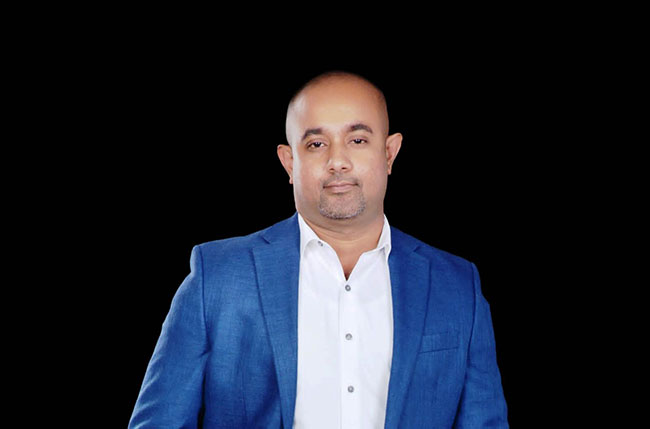
IBH Real Estate marks six years in business this year, having grown from a modest venture founded in 2020 by Romesh Abeysekera into a trusted name in Sri Lanka’s property sector.
The company has built a reputation for serving high-net-worth individuals and investors, particularly in the luxury segment, while offering advisory and legal support beyond standard brokerage.
Abeysekera said the firm’s progress has been driven by trust and long-term client relationships. IBH has also attracted growing international interest in Sri Lanka’s real estate market, bridging local expertise with global investor expectations. The company aims to further strengthen its industry position moving forward.

Trump threatens ‘hell’ for Iran over Hormuz Strait as deadline approaches

Tim David, Rajat Patidar inflict bruising defeat on Chennai Super Kings

Shami sets up Lucknow Super Giants victory before Pant fifty takes them home

Showers or thundershowers will occur at several places in the Northern, Eastern, North-central, Central and Sabaragamuwa provinces and in Puttalam, Galle and Matara districts after 2.00 p.m.

Sun directly overhead Beruwala, Gurulubadda, Rakwana, Godakawela, Udawalawe and Thanamalwila at about 12:13 noon today (06)

Heat Index at Caution Level in the Western, Sabaragamuwa, Southern, Eastern, North-western, Northern and North-central provinces and in Monaragala district

‘Dates have the highest sugar content to fight Coronavirus’

Sunday Island 27 December – Headlines

#SundayIsland 17th December – Headlines

Sunday Island – 28th March

Sunday Island Headlines – 21 March

Sunday Island – 21st February – Headlines
-

 News5 days ago
2025 GCE AL: 62% qualify for Uni entrance; results of 111 suspended
-

 Features2 days ago
Ranjith Siyambalapitiya turns custodian of a rare living collection
-

 News2 days ago
Global ‘Walk for Peace’ to be held in Lanka
-

 News7 days ago
Tariff shock from 01 April as power costs climb across the board
-
 Business6 days ago
Hour of reckoning comes for SL’s power sector
-

 Editorial5 days ago
Search for Easter Sunday terror mastermind
-

 Opinion7 days ago
Sri Lanka has policy, but where is the data?
-

 Features7 days ago
Seychelles … here we come