
Features
Sustainable economic development in Sri Lanka: Role of mass media in transforming public beliefs and attitudes


By Dr. A K M R Bandara
Head/Department of Agricultural Systems
Faculty of Agriculture
Rajarata University of Sri Lanka
Sri Lanka has been facing an economic crisis like never before. This crisis emerged with the COVID-19 pandemic mainly due to a drop in external earnings from tourism and foreign employment which are common to almost all countries in the region, including Bangladesh and India. However, those countries were able to recover due to the maintenance of external earnings reserves (buffer of dollars). Sri Lanka never gave much thought to reserving foreign earnings to face disasters, like COVID. The situation becomes acute with the incidence of repayment of interest and shares of foreign borrowings. Sri Lanka drew foreign loans substantially, after 2010, to develop highways, Mattala airport, and Nelum Pokuna which did not generate dollars to repay the loans. In this context, successive governments continued to borrow foreign loans to repay existing loans. Since the information on dollar inflows and outflows is not available to the public and the exchange rate is artificially controlled by the government, the dollar problem was not visible to the public until it has become a crisis.
There are lots of articles explaining the reasons for the economic problems, but no adequate information is available to resolve the problems. Factors affecting economic development have been discussed for over two centuries in the development literature in economics. Adam Smith, the father of economics, pointed out that low taxes, peace, and justices are the main factors that determine the economic development in 1776. However, evidence shows that economic development cannot be achieved by ensuring these three factors anymore, and it is more complicated when countries are struggling to achieve economic development that comprises of both quantitative and qualitative development. Quantitative development means an increase in quantity and value of the products and services of a country known as Gross Domestic Product (GDP) while qualitative development is the improvement of the quality of life of the people. When examining the development of many countries, including developed countries, economic development has been achieved mainly by changing the behaviour of the people. During the last 74 years, after independence, Sri Lanka has not given due attention to human aspects of economic development. Hence, the game of conflict instead of the game of cooperation, has grown in the country over the years and continues until now. The game of cooperation is necessary for economic development in which all individuals, politicians, and members of the society alike are searching for cooperative solutions for issues related to economic development.
Social transformation
In the case of social transformation, mass media can play a bigger role by increasing awareness. With the development of information and communication technology (ICT), passing information through media is very fast and effective. The media has already made a big impact on controlling corruption and changing political ideology from time to time through increasing awareness. Similarly, media can play a bigger role in economic development in the country. Today extensive awareness is going on highlighting who is wrong but not what should be done. Past is the past and it is not good to linger in the past. This article focuses on the role of mass media in economic development.
Performance (P) of a person depends on three factors: 1) knowledge (K), 2) skills (S) and 3) attitudes (A) known as KSA. Knowledge is to know things. It links with the brain. Skills are the ability to apply knowledge to do things and are linked with parts of the body because skills develop through doing things using hands, observing things through eyes, and hearing things through the ears. Attitudes are feelings, ideas, and thoughts and they link with the heart. There are two models explaining the relationship between performance and its determinants of knowledge, skills, and attitudes. One is the additive model (P= K+S+A) and another is the multiplicative model (P=K x S x A). The additive model is an old one and it says the performance of the person depends on three factors separately. For example, if the person has no skills, they will perform to some extent due to the other two factors but not to a great extent. Alternatively, the multiplicative model says that performance depends on three factors collectively. For example, if the person has no skills the performance is zero. In other words, performance and determinants work together and they are equally impotent to determine the performance of a person. This model has further improved giving more weight to the attitudes. Accordingly, the new performance model has the square of the attitudes (P = K x S X A2) illustrating that attitudes play a significant role person’s performance. Since economic development depends on the summation of individual performance, the highest priority should be given to the attitudinal changes in society. Mass media is the most effective tool in this regard. The following attitudinal changes are required for economic development.
Negative mindset
Society, especially public sector employees, has a negative mindset about privatization. This is mainly due to fear of losing jobs and benefits. It is necessary to highlight success stories in Sri Lanka and other countries through printed and electronic media. The best example is the privatization of the Department of Telecommunication in Sri Lanka. Before privatization people had to wait more than six months to get a connection even after payments. Similarly, repairing a breakdown took days and weeks. Now, the situation has completely changed. Also, employees are better off. Another negative attitude is setting up private entities. This is due to fear of competition. The principle is competition creates efficiency and efficiency leads to development. The best example is the banking sector. At the time of government monopoly with the presence of only the Bank of Ceylon and People’s Bank, customers were in the queue for a long time to deposit and withdraw money.
The situation completely changed with the establishment of the private banks.The society also has a negative attitude toward foreign direct investment. The most popular argument against foreign direct investments is the sale of national assets. Most countries, such as India, Malaysia, Thailand, and Singapore, have developed with foreign direct investments. Countries need foreign investments to develop their economies because domestic savings are inadequate for investments which generate returns, such as foreign earnings, employment, and technologies. Competition is now high for foreign investments as many countries are encouraging foreign direct investments by providing facilities such as low-rent land, and tax reliefs. India established free trade zones to attract foreign investments. The principal objective of foreign investment is obtaining foreign money. One of the reasons for the current foreign currency crisis is negative attitudes regarding foreign direct investments.
Need for attitudinal change
Changing the attitude of the employees in the government sector is urgently required for economic development. Both local and foreign investors complained about the long process of getting things done through government organizations. Studies found that Turkey needs 6 hours for start-ups; Thailand needs 7 days and Sri Lanka needs more than 6 months. Moreover, employee productivity is low in Sri Lanka. In the garment sector, three people require getting the work done by one person in Pakistan. It is required to inculcate among employees that taxpayers’ money is spent on their salaries. The situation is more crucial in Sri Lanka because over 80 percent of the tax comprises indirect tax paid by the public. Government sector employees are the servants of the public, not the masters or puppets of politicians. The public should respect those who provide better services, not the title of the position. In the recent past, the government introduced a luxury bus service to travel from the railway station to government offices to reduce traffic in Colombo city. It failed because of attitude problems. High-ranking officials wish to come to the office by vehicle and have somebody to take their bags to the office. The situation is the same or worst with politicians.
The expenditure pattern of the households also needs to be changed for economic development. In Sri Lanka, unnecessary expenditure is high compared to income whereby the domestic saving ratio is low. It is less than 25% of the DGP whereas in India the figure is 35%. Sri Lankans spend huge amounts of money on house construction and purchasing vehicles because they have social value. There is a slogan in India that is “be Indians, act Indians”. The life of the Indian people is simple. They mainly depend on things produced in India. Also, they do not spend money unnecessarily. University lecturers use motorcycles to travel short distances including travel to university. The use of bicycles is common in Japan though it produces vehicles in large quantities.
The government is planning to declare the year 2023 as the year of agriculture. The success of this programme hinges on a change in the attitudes of the participants of the agricultural value chain. At present, farmers do not plan production based on the market requirements while traders are reluctant to provide information to farmers on market requirements. Also, traders hide pricing information and they do not like to establish relationships with farmers. Hence, the agricultural value chain in Sri Lanka is fragmented and disorganised resulting in high transaction costs, severe price fluctuations, low farm income, high consumer price, poor quality, and high post-harvest losses. It is an accepted fact that a sustainable agricultural value chain is required for agricultural development. Donor-funded projects such as Agricultural Modernisation Project, Smallholder Agribusiness Partnership Project, and Climate Smart Agriculture are developing agricultural value chains, but success is in question due to the lack of business discipline. In business, the customer is the king. There is no business without customers. Customers need quality, convenient and safe food at an affordable price.
Price control
In Sri Lanka, the popular mechanism used to stabilise food prices is price control. It is now an outdated tool that creates artificial shortages in the market resulting from the inability to supply products. The government does not have buffer stocks and no adequate foreign currency to import any more to solve this issue. Hence, the measures should be made to increase production in the country rather than controlling the price. For instance, India introduced a three crops programme to control vegetable price hikes. Under this, the most popular short terms crops were selected. Another issue in the value chain is low prices at the harvest time causing hardship to the farmers who are mainly depending on farming income. The farmers think that the government should purchase the products at a reasonable price. This is also an old concept and is not given priority at present because of huge financial losses incurred by the Treasury. This issue can be solved by delayed selling from time to time rather than selling the entire stocks at harvest time. The government’s role is to provide financial and technical facilities to set up farm-level storage facilities. There is no country where guaranteed prices are stipulated for perishables and prices are determined by market-led production planning.
Attitudinal changes are required in the decision-making process. Evidenced-based decisions are lacking. A scientific decision-making process should be adopted. It includes five steps: 1) identification of the problem, 2) finding alternative solutions, 3) evaluation of each alternative 4) selection of the best alternative, and 5) implementation of the best alternative. Also, proactive decisions are required instead of reactive decisions which are taken after the problem happened and provide solutions to the effect of the problem rather than the root causes of the problem.
In Sri Lanka, it is necessary to raise awareness of four management functions: planning, organising, directing, and controlling. Planning includes the formulation of vision, mission, objectives, strategies, and activities. Organizing is the allocation of resources and staff to implement the plan. Directing means the provision of instructions necessary to undertake activities. Controlling includes monitoring the project activities in line with the plan. Most of the projects formulated, especially in agriculture, are limited to the planning function and monitoring is poor in many foreign funded projects. Many countries in the region have established, long-term continuous plans one after another that does not alter with the change of ruling party of the government. For example, India is implementing the 12th five-year plan after independence. Also, monitoring reports are submitted every year to the parliament. Educating all the stakeholders including the community is essential for the success of government projects such as home gardening. Past projects such as home gardening and tree planting fail due to poor management. The media should be alert in these areas.
Youth participation in agriculture
Youth participation in agriculture is poor and there is a need to motivate the youth to return to this vital sector. There are success stories here as well as abroad. The global trend now is the promotion of high-tech agriculture such as precision agriculture and digital agriculture. In these fields, youth entrepreneurs are urgently required.
All in all, the necessary condition for economic development is attitudinal changes in the society. The role of mass media is to raise the evidence-based awareness to facilitate the attitudinal changes. Priority should be given to making awareness of how developed countries such as Japan recovered from their crisis after the World War II by changing attitudes. Print media can provide opportunities to publish articles while electronic media can provide opportunities for discussions. At present, the media is engaged in such activities, but those efforts are not adequate to change the mindset of the Sri Lankan society.

Features
Monument to H.C.P. Bell and Bell Party: Unsung Labour Force of early archaeology surveys – I
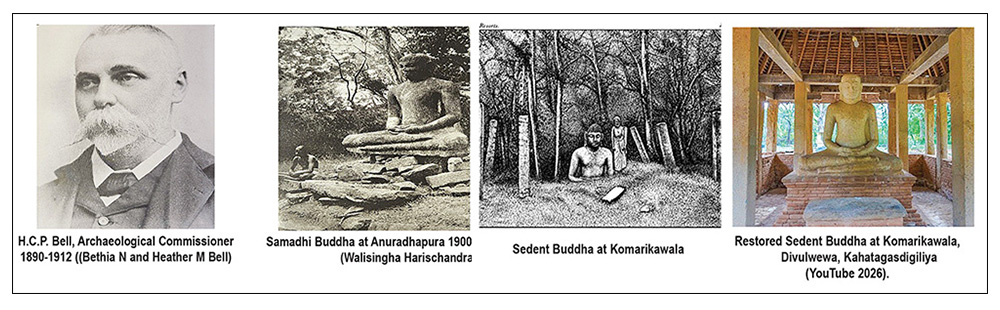
by Lokubanda Tillakaratne
H.C.P. Bell, the first Archaeological Commissioner of modern Sri Lanka and his team of men and women, a motley collection of villagers in Nuwarakalaviya, commonly known as Bell Party, have unearthed restored our lost civilisation, extending over two millennia. Except for the remarkable volume, written 30 years ago by his two granddaughters, Bethia N and Heather M Bell, H.C.P. Bell, Archaeologist of Ceylon and the Maldives (1993), there is not much written by Sri Lankans about him and his inconspicuous but untiring work-force.
Now, every time we visit the old city of Anuradhapura, pride and disbelief wash over us as we see the brick and stone monuments and structures our ancestors built and brought back to life by the Bell Party.
But many of us have not given thought to these men and women who, over a century ago, help Bell to resurrect our history – stone statues, pillars, brick stupas (seven of them in the old city), some easily surpassing the Great Pyramids in Egypt, and underpinnings of Sri Lankan past that had been in a ruined state for ages.
The Team
Men and women of the Bell Party were hired long before archaeological work in Sri Lanka was sanctioned by Ordinance 15 of 1900. This Party consisted of Tamils, Moors, and Sinhalese. In the second season of work, at Sigiriya, the colossal rock fortress, rising 600 ft in the middle of velvety green country, bordering Nuwarakalaviya, some men from Anuradhapura brought their wives, as the pay was higher there because of the difficult working conditions.
In Bell’s writings, the official designation of the Bell Party was “coolies,” the lowest title a government bureaucracy had ever invented. At Sigiriya, they were called “basket men,” after the earth they removed to revive the moats and walkways. They were unnamed entities but toiling in the unforgiving jungles and deserted vistas, under the equatorial sun.
Among them was a subgroup of workers Bell called the “Earth Party,” employed mainly to dig and move earth around these sites. But they were at the bottom of the Archaeological Survey hierarchy, though they symbolised the mettle and drive of the survey establishment and the spirit of their ancestors. The only thing they lacked was the chisel and hammer to carve out new stone masterpieces, like the ones buried all over Sri Lanka. They complemented it with their unalloyed character – the will to work hard. So Bell often called them “warriors.”
At first, only 30 of them were hired. Except for Kegalle District, Sigiriya, and Hambantota, the majority of them worked in the North Central Province (NCP). As work progressed, the Bell Party grew to over 100, and multiple units worked in several places, simultaneously. In 1896, at Sigiriya, the Bell Party had 115 people, including 20 Tamils, all recruited from Anuradhapura. At work sites, they lived in lines of leaf-and-thatch huts.
There were times and sites where Bell built a Party in loco. He went to a nearby village, called upon the Vel Vidane, and got help to “hunt” for workers. Some villagers found the work was hard. Then, as the day dragged on, one by one, some quit and quietly sneaked into the jungle, as happened at Medirigiriya once.
Bell Party had no experience in archaeological work. Neither did Bell, who came to Sri Lanka in 1873, as a young Ceylon Civil Servant (CCS), without any training in anything old. But in Bell, the Party found its inspiration.
Bell is the father of Archaeology surveys in Sri Lanka. A blue-blooded Irishman, he was born in British India, and studied in England. He proved to be a man of all trades, starting as a writer for the CCS, then as a customs officer, district judge, and finally, in 1890, the inaugural Archaeological Commissioner. The moment he stepped off the ship, he fell in love with the island so much that he chose to live here after retirement. After his death, he was cremated at Kanatta, in Borella. He still has descendants in this country. The treatise about him by his granddaughters, noted earlier, proves his transactional legacy, and love for this country runs in the family.
He worked for 23 years in Anuradhapura and left an indelible legacy through his and his Party’s early work in the archaeological surveys. In the recesses of my memory, I remember some old Bell Party members in the 1960s who worked for Bell Mahattaya, evoking nostalgic memories of him. They proudly claimed, “We worked in the Bell Party.”
These men did not have CCS appellation to their names. Many scarcely knew how to write or read. But they had something primal – they knew the pulse of the jungle and the size of the earth where things Bell looked for were hidden.
Their stories are like travels in wonderland – walking into clearing the wooded area where serene statues are surrounded by granite columns with carved capitals veiled in eternal quietness, many half-buried in earth, others in recumbent position, apropos to decorate a meditation hall. Yet the full story of the raw history of these men and women has been absent from conversations related to archaeological work in our country.
Bell Party members, some of whom could well be descended from those who worked on these granite wonders, were the first to see after an interregnum of centuries what their ancestors had done in this corner of the earth, now in a land ruled by His or Her Majesties living oceans away.
Bell knew he was getting a very disciplined bunch, and working with them was easier. Besides being tireless workers, the Nuwarakalaviya people were known for their good behaviour. L.F. Liesching, a one-time Magistrate at Anuradhapura, wrote, in 1870, about the orderly conduct of about 20,000 people, gathered in Anuradhapura for Poson Poya, without a single policeman present because no one thought to disturb the peace. Government Agent J. F. Dickson wrote that these men came from the “Oriental Village”, which remained as a pure and simple type.
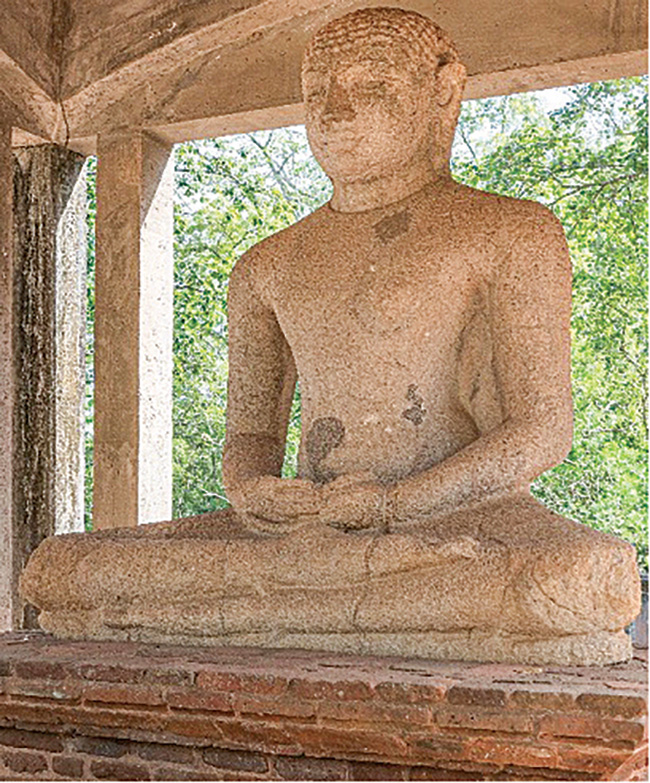
Samadhi Buddha at Anuradhapura after restoration. (Wikipedia)
Bell Party’s mantra was honesty and love for their work. They were in vogue in their original form, proud to be among the first workers on the NCP payroll. It gave them stability because it was the only mass-scale paid employment programme available at the time in this province. At the beginning, there were more of them than teachers.
And as long as ancient items kept sticking out of the earth, in the province, the Bell Party had guaranteed employment. Their salary was 30 to 50 cents a day, when a seer (සේරුව) of rice cost 12–20 cents. During pre-rupee and cents days, at Sigiriya, because the task was more difficult, workers received a panam more than those at Anuradhapura.
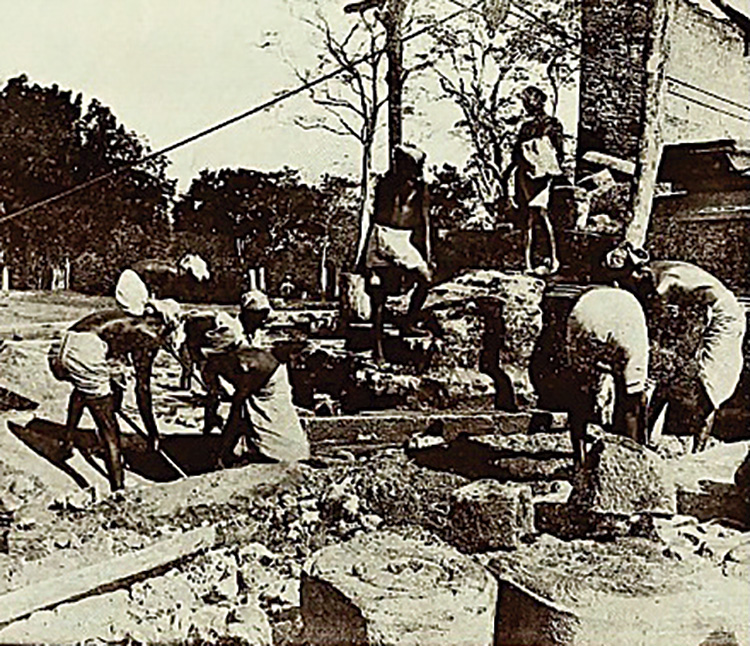
Bell Party at work, Watadage South Stairs
Bell fought for housing for his staff, draughtmen, clerks, and photographers in the department; they also received pension perks. His ‘Party’ members, meanwhile, had no such luck. They were disbanded without any retirement benefits! Their names were not even a footnote in the reports Bell filed.
We now know the Party was on the fringe of the team, even though they did the hardest work.
But the Party men were hardened, unnamed entities, equally dedicated to the work assigned to them. They did it drenched in sweat, dust, and mud. Their work was not rajakariya, or corvée duty, which the colonial rulers abolished in 1832.
Nuwarakalaviya villagers knew Bell Party was not as sophisticated as those sitting behind a desk in the old Kachcheri. Nevertheless, they were self-made historians and geologists, digging trenches in treacherous conditions and finding gems of our past. Wrinkled skins, baked, and hardened, and palms with calluses imitating tortoise shells were rewards of their labour.
I was a teenager when they were in their 70s and 80s. I listened in awe as they talked about fallen stonework they raised and treasures they unearthed for Bell Mahattaya. They worked with fervent devotion and care; they were treasure hunters of a sort, but it never crossed their mind to desecrate their finds or enrich themselves with them. Instead, they cheered each find, not surreptitiously like today’s treasure-hunting midnight goons.
Difficulties They Worked Under
Written accounts show that the Bell Party had few supporters in government. Therefore, in the beginning, the Royal Asiatic Society, in Colombo and England, provided funds for Bell’s work. The government’s stingy attitude toward establishing an archaeological survey and restoration, and Bell’s proprietorial tone in his letters to the government, were evident in the friction over requests for additional funds to restore two stupas: Abhayagiriya and Mirisawetiya. In one letter, the government went low, describing Bell as “morbidly sensitive when ‘his ruins‘ (italics mine) are in any way affected.” In one instance, when Bell asked for appropriation of Rs. 10,983, the government approved only Rs. 2800!
Bell and Bell Party also faced dissent from some sections of the native community. In the early 1900s, the Anuradhapura Buddhist Defence Committee charged that the Bell Party’s work was “experimental exploration”. But Bell had all the cards; the government had declared all archaeological sites as crown land. The Ceylon Morning Leader published an editorial charging that sacred sites were being unnecessarily invaded.
His deliberate epistolary style touched every edge of expression. But he sometimes got into trouble for how he described the ruins he unearthed. A writer in The Buddhist, a publication at the time, once took Bell to task for his offhand language describing a fallen and half-buried Pankuliya Buddha statue near Anuradhapura with “insinuating and odious comparisons.” In the Legislative Council, S.N.W. Hulugalle suggested the “excavations were acts of sacrilege.” After experiencing four centuries of brutal colonial rule, anyone at the time would have understood such anxiety.
Then there were the health concerns. Bell once got sick with fever three times in a month. In the 19th and early 20th centuries, no doubt the Bell Party also suffered from measles, pneumonia, malaria, smallpox, and usual worksite accidents.
Danger lurked in the dark bowels of caves when these men had to search them for archaeological evidence. An angry bear could come crashing to greet them without a warning. A swarm of hornets once got irritated and came after the Party while they were busy excavating the Erala Sohona in Anuradhapura. At another time, a bullock cart carrying supplies turned over trying to negotiate the embankment of a stream.
Out in Africa, Howard Carter’s work on pyramids, mountains of three-wheeler-sized stone blocks rising from the barren desert for the whole world to see, was easy.
But by nature, Bell Party’s work sites were buried in deep forest. Their peregrinations in search of signs of ancient works across verdurous Sri Lanka spanned hundreds and hundreds of square miles.
On one continuous circuit of 50 days, from September 5 to October 25, Bell Party covered five Koralés in the NCP — Kanadara, Uddiyan-kulam, Maha-potana, Kalpé, and Kunchittu. Bell wrote that in 1896 he started with the Party, northwest from Anuradhapura and crossed the Wilpattu jungle to reach the Western Coast, then an isolated part of the country. After walking from August 30 to October 4, they encountered only one village! But there was no shortage of wild elephants and bears, which were common as herds of buffaloes. For example, in 1899, at an elephant kraal held for Governor Sir West Ridgeway at Nikaweratiya, some 50-odd elephants were captured in one roundup.
By 1905, the Party had cleared over 200 sites in Anuradhapura alone. These sites were called Bell Kálla (Bell’s work site). That was in addition to over 500 acres a year they cleared beyond the city limits, costing Rs. 3–6 an acre. Some inscribed stone slabs were carted from Polonnaruwa to the first makeshift museum at Anuradhapura – a corridor at the hospital in the Old City. A few times, an Elephant Cart was used to transport a few moonstones. In 1907, 125 cartloads of stone relics were transported from Anuradhapura to the Colombo Museum. By 1900, Bell Party had found 691 inscriptions from caves, rocks, pillars and slabs!
(To be continued)
By Sanja de Silva Jayatilleka
On the 3rd October 2025, at the 80th Session of the United Nations General Assembly in New York, Sri Lanka made clear to the world in no uncertain terms, its stand against Unilateral Sanctions, also known by its official term, Unilateral Coercive Measures (UCM).
Unilateral Coercive Measures are economic, trade, financial, or investment restrictions imposed by one state on another, without authorisation from the UN Security Council. The UN defines it as follows:
“Unilateral Sanctions usually refers to economic measures taken by one State to compel a change in the policy of another State. Examples of such measures include trade sanctions in the form of embargoes and the interruption of financial and investment flows between sender and target countries. More recently, so-called “smart” or “targeted” sanctions, such as asset freezing and travel bans have been employed by individual States in order to influence persons who are perceived to have political influence in another State”. https://www.un.org/en/observances/day-against-unilateral-coercive-measures
‘Secondary sanctions’ are intended to prevent third parties – States, commercial entities and individuals from trading with countries that are subject to sanctions unilaterally imposed by another country.
In her report titled “Secondary sanctions, civil and criminal penalties for circumvention of sanctions regimes and overcompliance with sanctions” dated October 2022, the UN Special Rapporteur on the Negative Effects of UCM says:
“…the Special Rapporteur laments the proliferation of means to enforce unilateral sanctions against States or key economic sectors, or to target foreign companies, organizations or individuals. Secondary sanctions are also applied to entities or individuals for their presumed cooperation or association with sanctioned parties or for helping them to circumvent sanctions.
Foreign companies subject to secondary sanctions can be blocked from doing business in the sanctioning State, be banned from using its financial markets or be prohibited from transactions involving its currency…Secondary sanctions may also take the form of financial penalties in some circumstances.” (https://docs.un.org/en/A/HRC/51/33)
In June 2025, the General Assembly proclaimed 4th December as the International Day against Unilateral Coercive Measures.
The UN considers Unilateral Sanctions and Secondary Sanctions as contrary to International Law, the UN Charter and the principles of state sovereignty.
On October 3rd last year, Sri Lanka agreed with the UN’s stand on UCM and was a signatory to a Joint Statement with 27 other countries presented to the 3rd Committee of the United Nations General Assembly, the text of which included the following:
“Today’s world is plagued with rampant unilateralism and raging unilateral coercive measures. History has proven that UCMs are one of the culprits for international turbulence and disarray in world order… the international community must remain clear-headed, strengthen unity and cooperation, and firmly curb and stop such unlawful practices. Developing countries and their populations continue to fall victim to unilateral coercive measures, which violate the principle of sovereign equality and cooperation, intervene in other countries’ internal affairs, disregard the purposes and principles of the Charter of the United Nations and undermine the foundation of multilateralism and international rule of law.
… Regrettably, despite the global call to urgently lift UCMs, the imposition of these illegal measures continues to cause devastating, sometimes even life-threatening consequences, to targeted countries and their peoples. UCMs, coupled with secondary sanctions and over-compliance, exacerbate existing humanitarian and economic challenges, gravely affect the stability of the global production and supply chains, as well as food, energy, and financial security, and seriously undermine the world economic order and the efforts of the countries concerned to achieve SDGs.
…Moreover, UCMs severely violate the basic human rights, including the right to life, health, development, and education and impede the ability of targeted countries to realize those rights.
… We also call upon Member States, the UN system, and other international organizations to jointly oppose such unlawful practices and help targeted countries mitigate their plight.”
(https://un.china-mission.gov.cn/eng/hyyfy/202510/t20251004_11722993.htm)
Not So Principled Now?
A few days ago, Sri Lanka came face to face with this issue, not for the first time since this government took office, when sanctioned Iranian ships sailed close to its waters.
The last time Iranian ships sailed close to our waters was when our Navy Commander invited fellow Iranian Naval trainees aboard an unarmed ship at a joint exercise in India to swing by on their way home to visit us. When they did, we had them sitting outside our territorial waters without granting permission to enter our waters –until the problem was ‘resolved’ by a US submarine which blew up the ship and double-tapped it to ensure its unarmed sailors drowned. Evidently, this was the first sinking of an enemy vessel by torpedo by the U.S. since World War II.
The second distressed Iranian ship with another lot of unarmed Iranian sailors, by then doubtless in mortal dread of being torpedoed and drowned, got lucky when our President finally decided to bring the sailors minus the ship to shore, and send them home to Iran by air.
A few days ago, it was reported, including in the Wall Street Journal and local newspapers, that several sanctioned Iranian ships, now empty after being used to transport oil to China, were stranded close to Sri Lanka’s territorial waters.
The WSJ report titled “U.S. Pressure Campaign Leaves Iranian Tankers Stranded in Asian Waters” said:
“Some 15 miles off the southwest coast of Sri Lanka, around 20 empty Iranian oil tankers are stranded, drifting with their engines idled as food, fuel and fresh water run short.
They are the most visible consequence of the new pressure campaign by the U.S. to bring Iran to heel. Dozens of Iranian or Iranian-linked tankers that had participated in the shadowy trade of getting sanctioned oil to China have been stuck in the waters near Asian countries like Sri Lanka and Malaysia since July, when the U.S. reimposed its blockade of the Strait of Hormuz.”
The UN Special Rapporteur’s report specifically stated: “In no circumstances should a sanctioning State intentionally encourage overcompliance through the design of its sanctions or through threats or any other means adopted to enforce them.”
The Jaffna Monitor reports that after the WSJ story and local media inquiries about pressure on Sri Lanka, Sri Lanka’s Foreign Ministry said this week that “American warnings against servicing sanctioned Iranian tankers anchored off the island apply to every country.”
Obviously feeling compelled to issue a clarification of its stand on the stranded Iranian ships running out of food, fuel and fresh water, the Foreign Ministry circulated a statement to the media.
Issued by Foreign Ministry spokesman Thushara Rodrigo, its primary purpose seemed to be to emphasise that US pressure wasn’t specifically applied to Sri Lanka but was applicable globally.
“..these secondary sanctions have been announced by America on 24 August and it says that if any individual or entity provides services to US sanctioned vessels risks losing access to the US financial system.”
“…these kinds of vessels are not only in Indian Ocean and loitering in some other oceans as well due to the current conflict situation and these secondary US sanctions are commonly apply [sic] across the world.”
The Foreign Ministry seemed keen to underscore that these things happen all over the world’s best oceans, not only in the Indian Ocean where we had no choice but to comply with the sanctions as in all other oceans.
Grandstanding at UN, Overcompliance at home
The Jaffna Monitor reports that on Sept. 8, “Foreign Minister Vijitha Herath said the U.S. Embassy had contacted his ministry to ask whether the authorities knew about several Iranian vessels in international waters and were tracking them.” He was quick to point out also that the ships were not in Sri Lankan waters.
Quoting WSJ, the Jaffna Monitor also reported that Sri Lanka had got instructions from the US Embassy on the risks of secondary sanctions:
“The embassy urged officials to instruct local port service providers to refuse the ships support or risk U.S. secondary sanctions, the newspaper reported. It also reported that when two Iranian-flagged container ships anchored inside Colombo’s port limits in early September, the Sri Lanka Ports Authority wrote that servicing them was not “prudent” because of the sanctions risk. Shipping companies told the Journal that permission to deliver food, drinking water, fuel and repair services to Iranian vessels had become increasingly hard to obtain.”
Jaffna Monitor adds that both Minister Herath and the Foreign Ministry spokesperson said that the ships were nowhere as near Sri Lankan waters as the Wall Street Journal placed them:
“Mr. Rodrigo and Mr. Herath both placed the ships about 24 nautical miles away. The Journal’s figure of 15 miles is about 13 nautical miles, just outside the territorial limit. Sri Lanka’s territorial sea extends 12 nautical miles from its baseline. The navy has said the vessels were near the country’s exclusive economic zone but outside its sovereign waters, and therefore beyond its direct jurisdiction.”
The Foreign Ministry spokesperson, in his ‘Clarification’ responding to inquiries about US pressure on Sri Lanka regarding Iranian Ships, urges journalists to “kindly do your reporting carefully and accurately with better understanding into the context.”
Here are some facts.
Sri Lanka is a very small, economically vulnerable country, and cannot by any stretch of the imagination stand up to “Operation Economic Outcast”, the US Treasury Department’s campaign which has authorized secondary sanctions covering Iran’s shipping among other things in what it boasts are the tightest sanctions in history.
But Sri Lanka can still stand up for and defend the right thing in principle, even if we are constrained from operationalizing it, as are many others. That is what Sri Lanka did at the UNGA’s 3rd Committee in New York, which deals with Human Rights, last year.
The Foreign Ministry spokesperson could have included in his ‘Clarification’, our already declared (2025) stand on Unilateral and Secondary Sanctions, and expressed the government’s regret at the inability to supply food and water to sailors from a friendly country that helped us during our troubles, because of the secondary sanctions which neither we nor the international community represented by the UN, approve of.
Could the Ministry not have used this opportunity to reiterate our position, so that we add to, not subtract from, international efforts to end the resort to unilateral sanctions which the UN considers unlawful, and in many cases, violates International Humanitarian Law? Did we not owe it to those sailors who died just outside our territorial waters?
Instead, we are at pains to deny any specific pressure on us by the sanctioning state. The UN Special Rapporteur uses the term ‘overcompliance’ through fear, by third countries, in relation to secondary sanctions.
Recently, according to a report on the US Embassy website, Sri Lanka seems to have taken ‘overcompliance’ to the next level.
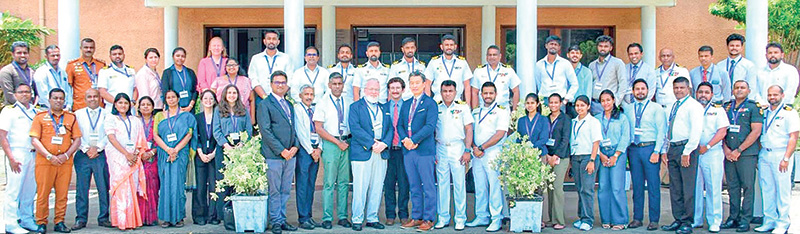
40 Sri Lankan officials were trained this month by the U.S. Embassy in Sri Lanka, through the U.S. Department of State’s Office of Cooperative Threat Reduction and in partnership with the Atlantic Council to “detect and respond to maritime sanctions evasion that threatens U.S. security interests…”
Hopefully, Sri Lanka’s participation in this training is only to learn how to effectively evade secondary sanctions, and not to become part of an implementation task force of unilateral coercive measures, which Sri Lanka has already condemned at the UN.
By Sarath S. Kodithuwakku
President, Institute of Management of Sri Lanka; Senior Professor,
University of Peradeniya
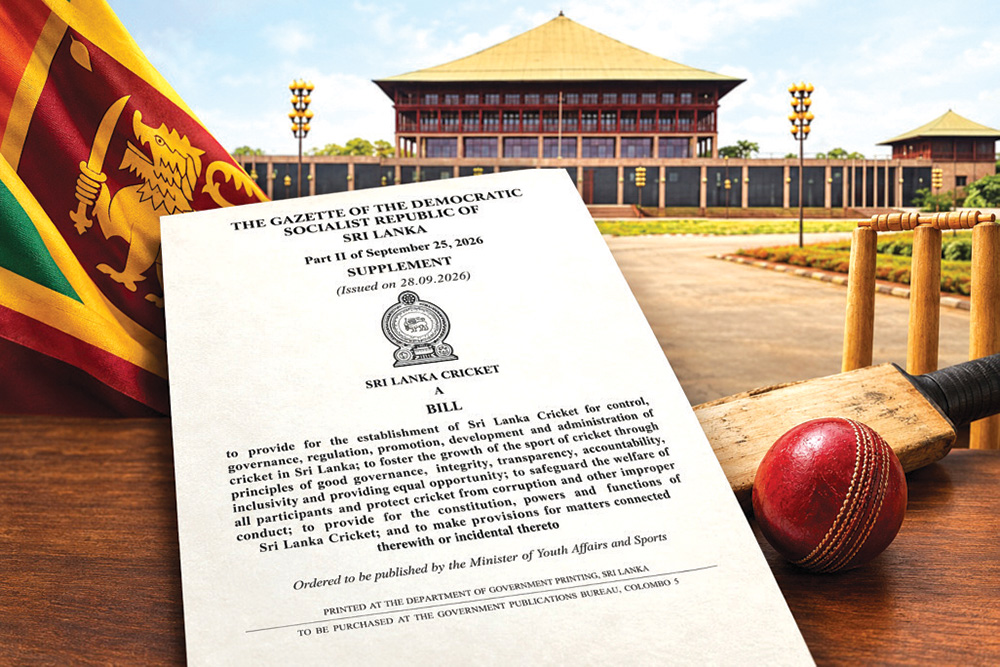
The proposed Sri Lanka Cricket Bill addresses an important question: how can Sri Lanka Cricket (SLC) be governed without making its Board overly dependent on the politics of its membership-based electoral system? Its answer is a 14-member Board: seven Elected Directors chosen by SLC voting members and seven Independent Directors nominated through a separate committee. The Bill also sets eligibility and disqualification requirements and establishes specialist committees. These are substantial governance proposals.
The harder question is whether these arrangements will improve the decisions that shape Sri Lankan cricket over several seasons. On that test, the Bill establishes a governance framework, but leaves much to be designed and implemented.
This review assesses the Bill as a management reform, not as a prediction of match results. No constitution can guarantee a successful national team. It can, however, determine whether the people responsible for cricket strategy have the necessary capabilities, whether technical decisions are protected from inappropriate interference, and whether SLC has the mechanisms to evaluate its investments and learn from their results.
Governance Reform and Cricket Development Are Different Questions
The Bill is principally a governance-reform instrument. It deals with SLC’s constitution, Board composition and eligibility, the appointment of Independent Directors, committee structures, financial and compliance oversight, and the relationship between the Board and executive management. At the same time, it gives SLC broad responsibilities for promoting, developing and administering cricket at international, national, provincial, district and school levels, including coaching, training and high-performance programmes.
That distinction matters. A governance framework determines how authority is organised and exercised. A cricket-development strategy determines what kind of cricket system Sri Lanka intends to build, what constraints it must overcome, which capabilities deserve priority, how resources should be allocated, and how progress will be evaluated over time. The Bill provides the institutional architecture within which such a strategy may be developed, but it does not itself constitute that strategy.
Board skills beyond credentials
The proposed Independent Director positions deliberately bring together expertise in accountancy, law, international cricket, information technology, marketing and other relevant fields. The Bill also requires at least two Independent Directors to be women. These are strengths.
A more important question, however, is whether the Bill’s provision for cricket expertise is sufficient to give the Board the collective strategic capability required to develop the sport. The inclusion of a former international cricketer brings playing experience to the Board, but playing at that level does not, by itself, establish the ability to govern or strategically develop the sport.
The Board also needs people who can understand international cricket as an interconnected system. Grassroots investment, school programmes and domestic competitions are inputs into the development of high-performance talent. Board-level strategic capability therefore requires directors who can connect these elements and translate that understanding into decisions about competitions, talent pathways, high performance and resource allocation.
Such capability may be gained through international playing, officiating, administration, development, coaching or umpiring roles. But it should be demonstrated against explicit criteria rather than presumed from a title or past position.
The Bill recognises information technology as a Board-level competency. However, it does not expressly identify data science, advanced analytics or artificial intelligence as distinct areas of expertise. In a data-intensive sporting environment, this distinction matters. Access to technology is not the same as the capability to generate, interpret and apply data-driven insight. A person with a postgraduate qualification in computer science or information systems may possess such capability, but the qualification alone does not establish it.
Nor should this be interpreted to mean that a director must personally perform data-science tasks. The governance requirement is that SLC has access to credible analytical capability and that the Board contains sufficient understanding to question, interpret and use evidence intelligently when making strategic decisions about player development, performance, resource allocation and organisational priorities.
Without such a requirement, the Bill risks improving the process by which Board members are chosen without ensuring that the Board collectively possesses the conceptual and technical capabilities needed to guide Sri Lankan cricket. Candidates should also be able to demonstrate how their relevant experience contributes to a coherent strategy for Sri Lankan cricket, while eligibility and conflicts of interest are assessed independently.
I would therefore add a requirement for a published and periodically reviewed Board skills matrix. It should assess the Board collectively, including both Elected and Independent Directors, against SLC’s actual needs: strategic planning, cricket-development systems, finance, integrity, organisational leadership, data interpretation, data and analytics capability, and stakeholder management.
The Nomination Committee is a useful safeguard, but its work could be strengthened by using the skills matrix to assess candidates against the Board’s collective needs. Candidates should be able to demonstrate the ability to connect domestic competitions, coaching, player incentives, budgets and international performance. This does not mean that every director must be a cricket tactician. It means directors should be able to understand the strategic choices before the Board and critically evaluate the evidence presented in support of them.
This approach aligns with Sport New Zealand’s governance guidance, which recommends that a Board identify its future strategic challenges and maintain a needs matrix covering the skills, experience and attributes its directors collectively need.
Nomination Committee: Independent from SLC, but not beyond institutional influence
The Bill makes an important structural choice by not placing the Nomination Committee under the SLC Board. Its seven members are drawn from professional and business institutions, together with the Sports Ministry administration and the National Sports Council. SLC office bearers and Board directors are disqualified from serving on the Committee. This gives the nomination process a degree of separation from the organisation whose Board is being constituted.
The Committee also has considerable collective discretion. It invites applications, publishes its procedure and may select and nominate any person it considers fit and proper, subject to the statutory eligibility requirements. There is no statutory one-to-one allocation under which a professional-body representative selects the Independent Director associated with that profession. The Committee acts collectively.
Even so, the design raises a legitimate governance question. Several Committee members represent institutions from professional fields that overlap with the expertise specified for the Independent Director positions. The Bill does not expressly set out a discipline-specific recusal rule for situations in which a Committee member’s institutional or professional connection materially overlaps with a candidate or the field from which a candidate is being considered.
The concern is therefore not that institutional representatives are incapable of making independent decisions. The question is whether the process contains enough safeguards to ensure that professional representation broadens the talent pool without allowing institutional interests, relationships or professional networks to shape the outcome without adequate scrutiny.
A stronger process would combine an open competitive call with institutional nominations, a published competency and skills matrix, structured assessment or interviews, conflict declarations, mandatory recusal where a material connection exists, collective decision-making, and a documented record of the reasons supporting the final nominations. Such safeguards would strengthen both the reality and the public credibility of independence.
Meritocracy Should Be a Governing Principle
The Bill expressly refers to good governance, integrity, transparency, accountability, inclusiveness and equal opportunity. It also requires expertise, experience and skills for committee appointments and provides eligibility and disqualification criteria for directors. It does not expressly establish merit as an overarching principle governing advancement throughout the cricket system.
A meritocratic cricket ecosystem should provide opportunities for players, selectors, coaches, umpires, match officials, administrators, and technical specialists based on demonstrated ability, knowledge, competence, performance, and potential. This does not mean reducing cricket decisions to mechanical numerical thresholds. It means processes for appointment, selection, promotion and resource allocation should be explainable in terms of relevant criteria and evidence.
That principle is particularly important because governance reform will affect more than the Board. The quality of the cricket system ultimately depends on the people who operate beneath it and on whether talented individuals can progress through the system without unnecessary dependence on relationships, institutional affiliation or arbitrary preferences. The objective should be a culture in which competence is identifiable, opportunity is reasonably accessible, and decisions are open to informed scrutiny.
The Performance Decision Chain
The Bill goes beyond reconstituting the Board. It provides for specialist committees, including National Men’s and National Women’s Selection Committees and a Cricket Committee, creating a structure through which cricket expertise could inform decisions.
But structure is only the first step in a decision chain. Consider national selection:
1. The Board appoints the selectors.
2. The selectors assess players and choose squads within their assigned authority.
3. Coaches and development staff help prepare the pool from which those choices are made.
4. SLC’s domestic competitions, development systems and resource-allocation decisions shape that pool over many years.
The Bill identifies the Board as the appointing authority for selectors. The more important management question is whether the process for making those appointments, and the subsequent exercise of their technical responsibilities, is sufficiently transparent and accountable.
A sound selection framework should combine measurable evidence with cricket judgement. It should consider sustained performance, the role required in the side, fitness, fielding, playing conditions and development potential. It should also establish who has final authority and require reasons when a selection departs materially from established criteria.
A rigid batting-average threshold would be poor policy; an unexplained decision would be poor accountability. Evidence-based management does not mean mechanical management.
The same logic applies further upstream. If SLC wants stronger Test cricket, the Board must ask whether the domestic schedule gives players sufficient opportunities to develop long-format skills, whether coaching and contracts support that objective, and what may need to be funded differently. Selectors cannot choose skills that the system has not adequately developed. Conversely, an investment in domestic four-day cricket should be evaluated over an appropriate period, rather than presumed successful merely because the programme was announced.
This is fundamentally a question of strategic accountability: the Board should establish the direction and monitor outcomes, while professional management should be responsible for implementation.
A Clearer Board and Management Model
The approach should retain Board oversight while establishing a professional cricket-management function beneath it. The Board would approve a multi-year cricket strategy and its budget, appoint and evaluate executive leadership, and require regular reporting against agreed outcomes.
Cricket-management specialists would develop and implement competition, coaching, pathway and high-performance plans. Selection committees would exercise their technical mandate within a clear policy and be accountable for the quality and integrity of their processes, without Board members directing them to select particular players.
Cricket South Africa provides a useful comparative example. Its current governance framework distinguishes strategic Board oversight from executive management through a formal delegation-of-authority framework and written committee terms of reference. Its structure includes both a Cricket Committee and a Cricket Pipeline Committee, with the latter responsible for strategically overseeing talent development from grassroots to elite levels. That is a useful design reference, not evidence that copying its structure would produce the same results in Sri Lanka.
The Bill reinforces the governance-management boundary by establishing a statutory Chief Executive Officer (CEO) and Compliance Officer. The CEO is responsible for administration, transactions and implementation of Board decisions, subject to the general or special direction and control of the Board. To make this effective in management terms, the framework should explicitly position the CEO as the primary bridge between strategy and execution, with delegated authority clear enough to support accountability.
The Board’s role is not to manage operations, but to hold the CEO accountable through predefined Key Performance Indicators (KPIs) covering areas such as high-performance pathways, financial sustainability, administrative integrity, organisational capability and strategic implementation. When a Board moves beyond oversight into day-to-day operations, executive accountability can quickly become blurred.
Sport New Zealand’s governance guidance makes the same distinction: the Board sets strategic direction, defines performance expectations, and monitors results, while the CEO manages operations within formally defined delegations. The central governance challenge, therefore, is not simply to determine who has authority, but to determine where authority resides, how it is delegated, and how the exercise of that authority is held accountable. (To be continued)

Dons’ frustration and rulers’ nonchalance

The internationally acclaimed play ‘Every Brilliant Thing’ comes to Sri Lanka

JXG’s Spartans I graduates step forward to forge their futures

Public Relations Association of Sri Lanka completes a successful educational initiative

High value and export-oriented agribusiness: Unlocking agrifood sector potential in Sri Lanka

Akram Cassim re-elected SLGJA president for third term

‘Dates have the highest sugar content to fight Coronavirus’

Sunday Island 27 December – Headlines

#SundayIsland 17th December – Headlines

Sunday Island – 28th March

Sunday Island Headlines – 21 March

Sunday Island – 21st February – Headlines
-

 News7 days ago
Police remove Thileepan statue in Jaffna
-

 Features7 days ago
The 22nd Amendment, constitutional recovery and illiberal slippage
-

 Latest News5 days ago
Gold winner Tharanga gets brand-new Honda Vezel from SLAAJ
-

 News7 days ago
Sajith rejects Jt. Opp. protest sabotage claim; SJB TU chief demands remedial action
-

 Features5 days ago
Why Sri Lanka needs an Inclusive Civic Nationalism – urgently
-

 News4 days ago
US-assisted ‘Ice’ detection: NPC to examine IGP’s move to transfer drug-busting team
-

 Features6 days ago
Thailand’s biggest new global star …
-

 Editorial7 days ago
Kolombota kiri, gamata kekiri