
Sports
Susantha reveals key to success of Ratnayake Central

by Reemus Fernando
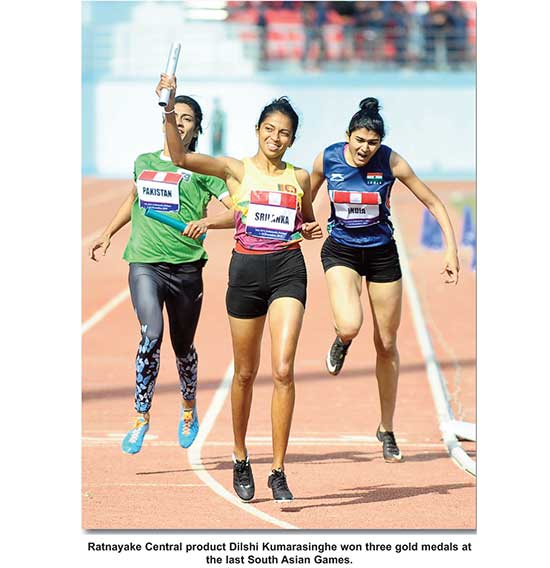
Dilshi Kumarasinghe, the golden girl of the last South Asian Games had been permitted to stay in the hostel of Sports School Ratnayake Central College, Walala for months after completing her education until she found employment, because of the far-sightedness of Central Province authorities, both past and present, Susantha Fernando, who trained her to win three Golds at the regional event, revealed in an interview with The Island. That was a decision the authorities of other Sports Schools or seats of learning, bound by various rules and regulation, would hesitate to take, he said.
With the restructuring and reinvigorating of Sports Schools in the country being discussed by the Ministry of Education and the Ministry of Sports, The Island interviewed Susantha Fernando, the coach behind the success story of Ratnayake Central Walala, the most successful Sports School of the country.
Fernando who culminated his three decades long coaching stint with t
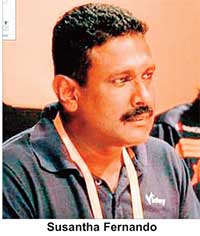
he Sports School recently, revealed that the special place of prominence given to sports by the Central Province education authorities and the individualized training plans were among the reasons behind the unprecedented success of Ratnayake Central.
Ratnayake Central dominated track and field sports for more than two decades. If title victories are of any indication to the success of a Sports School, then there was no school that could even come closer to beat the records set by Ratnayake Central. There are three major Schools Athletics Championships conducted yearly, namely the Sir John Tarbet Senior, All Island Schools Relay and the All Island Schools Games Athletics. They won both the Boys and Girls titles together in these championships on an unprecedented 19 occasions. Under Fernando’s stewardship Ratnayake Central athletes have gone on to win at Junior Asian Athletics Championship (seven medals), Asian Youth Games, Youth Olympic (1000m B grade 3rd), South Asian Junior Athletics Championships (7 medals at the last meet), Asian Athletics Championships, Asian Schools Games, South Asian Games (four goalds at the last edition) and many regional international events apart from representing the country at many World Youth, World Junior, Asian Championship, World Championships, Commonwealth Games and Asian Games. Here are the excerpts from the interview The Island had with Fernando.
What makes Ratnayake Central different from other Sports School?
“Ratnayake Central was selected as a Sports School because we performed better than any other school in the Central Province. We are the only Sports School that is run by Provincial administration. When the school was established Palitha Elkaduwa, the former Secretary of Education of the Central Province played a special role. The central province circular on the Sports School was a very strong one. There were two other sports schools in the Central Province (Poramadulla Central and Weera Keppetipola NS, Akuramboda). But they were taken over by the Ministry of Education later. The officials who made the school a Sports School understood the importance of sports. Even today the Department of Education of the Central province has no hesitation in going out of the way to help Sports programmes. We were also lucky to have a sports loving Director of Education in Thilak Ekanayake,” said Fernando.
Asked to be more specific Fernando compared and contrasted Ratnayake Central with other sports schools.
“Generally Sports Schools provide scholarships and recruit athletes for grade eight. But if we identify a future prospect who is in a higher grade we could take the athlete for that higher grade if there is a vacancy. That is not so with the Sports Schools that are under the Ministry of Education. They are strict. Dilshi’s case is another example. We knew that she is a future prospect. We could keep her in the hostel for months after she finished her Advance Level until she found employment in the Army. She went on to win three golds at the South Asian Games. We could do that because the Central Province Education authorities understood the need. I don’t think that would be possible with any other Sports School.”
Media had been highlighting the absence of a 400 metres track at Ratnayake Central for years. How could the school still perform better than the schools which had facilities.
“I had a plan for every athlete. At the school we maintained files for every athlete. There were over 70 files every year. The individual training plans were the secret. When others take leave for three months during school vacations we continued training. We conduct special training. Go for high altitude training. We send home sports scholarship holders for only ten days during vacation. My recommendation for other Sports Schools too is to continue training with probably ten days of leave during the school vacation. True we did not have a proper track. Not even a proper 200 metres track. The 200 metres track at Ratnayake Central has a 55% bend which is harmful for athletes. From 2018 we could take athletes for training to Digana where there is a good 400 metres track.
How do you compare the financial support Ratnayake Central received with other Sports Schools?
“The Central Province department of education has been good enough to understand the need for funds to run a proper programme. We’ll just take the case of competitions. You have to spend a lot of money on transport and food during competitions. There was no restriction on funds for Ratnayake Central in meeting expenses on transport or food for athletes. The other Sports Schools are given only rupees 25,000.00 for the entire year for transport and food to take part in meets. You have to travel to three or four national meets per year. It is important that the athletes we train take part in these meets and they are provided proper transportation, food and lodgings. I have seen sports officials of Sumana Balika (Sports School) preparing meals for their athletes when they go for national meets to save funds. That is pathetic.”
Central Province also increased the allowance paid to sports instructors to encourage them and provide a substantial scholarship money for athletes, when the sports instructors under the Ministry of Education receive a meager amount of rupees 1,000.00 monthly as an allowance.”
The Central Province education authorities promoted Fernando to the Assistant Director of Education – Sports and Physical Education post of the Wattegama Zonal in 2003 and was also responsible for monitoring sports progress of the zone which became one of the best zones of the country. Here are his views on the monitoring process of Sports Schools.
“There should be a proper monitoring system for Sports Schools. Some of the Sports Schools in the country became defunct because there was no proper monitoring system. There should also be qualified individuals to do that. Qualified officials who can advise the coaches of the Sports School and who could make recommendations on their coaching programmes. At present I don’t think that the Ministry of Education has enough qualified individuals to do that part.”
Many scholar athletes passing out from Ratnayake Central have gone on to become physical education teachers. How did Ratnayake Central looked after the education of scholar athletes.
“We provided free tuition to athletes after school when it was necessary. And there was continuous monitoring of the progress they made in education. We hardly had disappointments when results of exams came. Many have become Physical Education teachers. Currently there are over 400 physical education teaches who had their education at Ratnayake Central. They are serving at different schools. There are also good number of athletes who have gone on to become bank managers, Assistant Directors of Education to managers of leading private firms. For those who persevere a career in athletics there should be a system to look after them after they leave Sports Schools. The future prospects who are identified at Sports Schools should be looked after. The Sports Ministry should take the responsibility of these athletes after they leave schools.”
Often there are administration deadlocks between sports officials and principals leading to sports being given secondary status at schools. Fernando said that there were no such impasses at Walala but insisted that sports instructors should have some authority at Sports Schools. “In my opinion the head or the sports instructor of a Sports School should have some authority for him to run a successful programme.”
Fernando had a long stint (30 years) at Walala with the school and the old students association continuing to insist on acquiring his service. He continued as the head coach of Ratnayake Central while also functioning as the Assistant Director of Education – Sports at Wattegama Zone. This is his opinion on transfers.
“Teacher service requires teachers to be transferred according to vacancies that exist. There should be some leniency with regard to sports instructors. You cant change heads and expect good results in sports. There should be continuity for a training programme to be successful.”
He also insisted on the need to recognise the achievements of coaches and the need to provide suitable jobs for those passing out from would be Sports Universities as there is lack of suitable jobs even for those passing out from Universities with Sports Science and Physical Education Degrees at present.
While he has received praise for the yeoman service he has rendered to the field of sports, some national coaches have directed criticism at him citing that his trainees who had excelled at school level had not replicated those performances at senior national level.
“A coach can only help an athlete improve 30% of his performance level. Good performances are a combination of natural ability and proper coaching. A wast majority of athletes Ratnayake Central recruited were average athletes. Ratnayake Central is not situated in a town. Parents will opt for schools in Kandy when there is a choice between Ratnayake Central and a famous school in Kandy. Most athletes when they first came to the Sports School, were just winners at inter house meets, Divisional or Zonal meets. Inoka (many time marathon champion and first South Asian Games marathon medalist for SL) was just an inter house meet winner. She competed at national level for 20 years. I can give many examples. If there were special talents they had been trained accordingly to reach international level. For example Dilshi Kumarasinghe is a special talent and I am working on to help her reach top level. Indunil Herath (current national 800 metres record holder) was a long jump winner at Handaganawa when he was recruited. All athletes who came to Ratnayake Central underwent talent identification tests and later introduced to suitable disciplines which they had not even witnessed before. Herath had to leave the school for reasons beyond my control. Hadnt he successful? Raju (Geethani Rajasekara- first Sri Lankan marathoner at Olympics, trained by Sajith Jayalal after she left for Colombo) went to Colombo after marriage. Numbers will answer the critics. If those critics can tell of a single school which had produced more athletes to Senior National Athletics teams than Ratnayake Central then there should be some truth in their criticism. Ratnayake Central is the school that has produced the highest number of athletes to National Teams.”

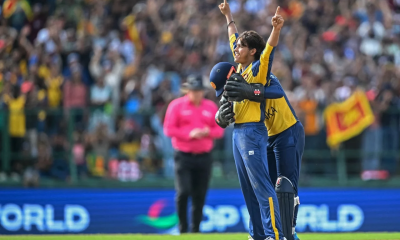
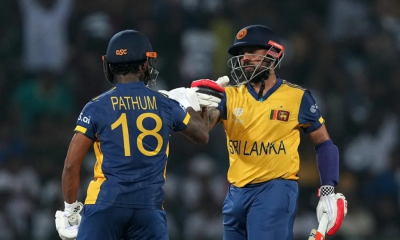

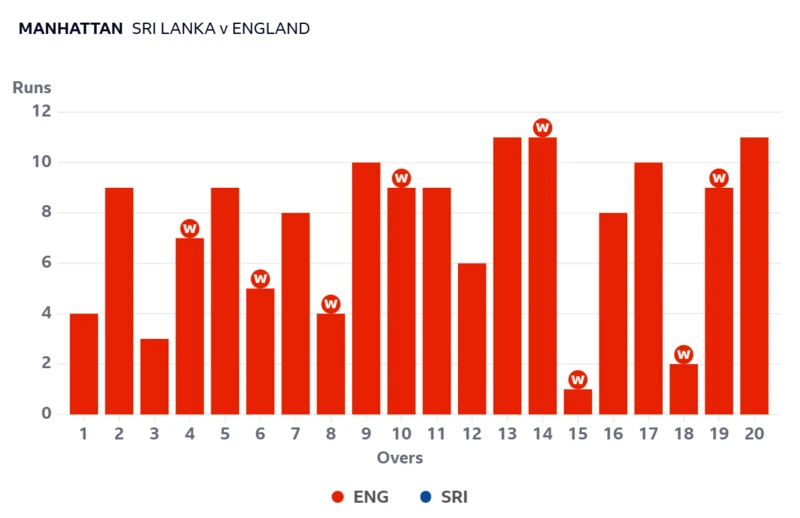
England stagger to 146‑9 at the end of their 20 overs as they failed to build any sustained partnerships.
This might just be well short of a truly competitive total but they will hope the pitch does them some favours when they come out to bowl.
Brief score:
England 146/9 in 2o overs [Phil Salt 62, Harry Brook 14, Sam Curran 11,Will Jacks 21, Jamie Overton 10*; Dilshan Madushanka 2-25, Dunith Wellalage 3-26, Maheesh Theekshana 2-21, Dushmantha Chameera 1-34] vs England
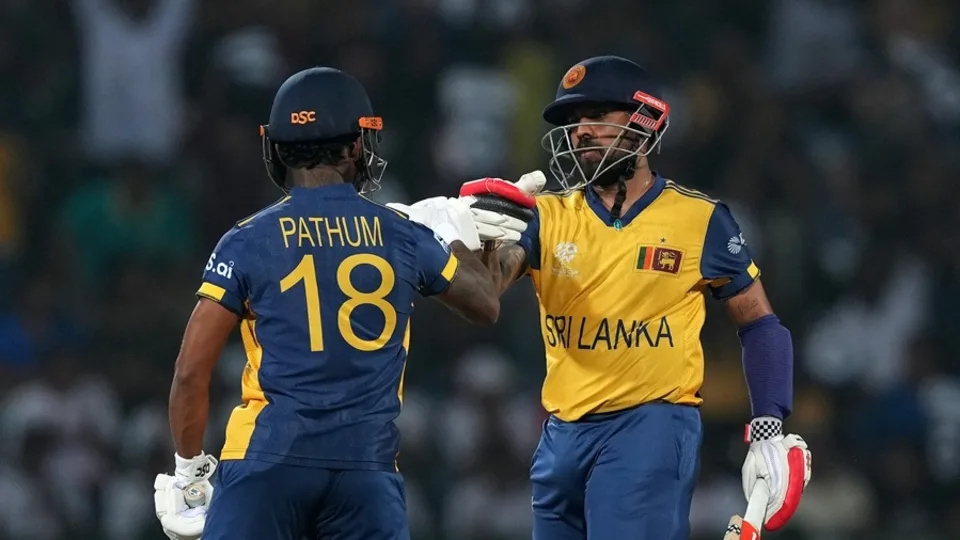
Sri Lanka have opted to chase against England at Pallekele, hoping to replicate their dominance victory over Australia here to kickstart their Super Eight campaign.
It was six days ago that Pathum Nissanka’s unbeaten 100 saw the hosts chase down Australia’s total of 181 with eight wickets and two overs to spare. And with home skipper Dasun Shanaka is looking to utilise that confidence in this Group 2 encounter.
“We’ve been chasing well in the past few occasions and happy to chase again,” said Shanaka at the toss. “The boys are very confident playing here.”
England skipper Harry Brook – on his 27th birthday – again called for bravery after his side stumbled into the second stage of this tournament. The two-time champions have gone in with an unchanged team for the fourth match in a row, with Jamie Overton retaining his place as the allrounder. Brook’s only slight worry is a cut to Jacob Bethell’s bowling hand (sustained during the match against West Indies), which is likely to prevent him from bowling due to the strapping on his finger.
Sri Lanka meanwhile make two changes to their XI, with Dushmantha Chameera returning in place of Pramod Madushan, having been rested for the defeat to Zimbabwe. Kamil Mishra comes back in for the man who replaced him, Kusal Perrera, as the hosts shuffle once more in an attempt to find a functional opening partnership.
These two squads know each other very well, having only concluded a three-match T20I series against one another at the start of the month, which took place entirely in Pallekele. England secured a 3-0 scoreline, capping things off with a professional 12run win in a low scoring encounter.
As for the outfield, both sides are primed for a different evening of ground-fielding on patchy grass. Heavy rains have punctuated the five das leading into this clash. Overnight precipitation has sodden the edges of the field, though the middle parts of the ground had been well-covered.
Sri Lanka: Pathum Nissanka, Kamil Mishara, Kusal Mendis (wk), Pavan Rathnayake, Kamindu Mendis, Dasun Shanaka (capt), Dunith Wellelage, Dushan Hemantha, Maheesh Theekshana, Dilshan Madushanka, Dushmantha Chameera
England: Phil Salt, Jos Buttler (wk), Jacob Bethell, Tom Banton, Harry Brook (capt), Sam Curran, Will Jacks, Liam Dawson, Jamie Overton, Jofra Archer, Adil Rashid
[Cricinfo]
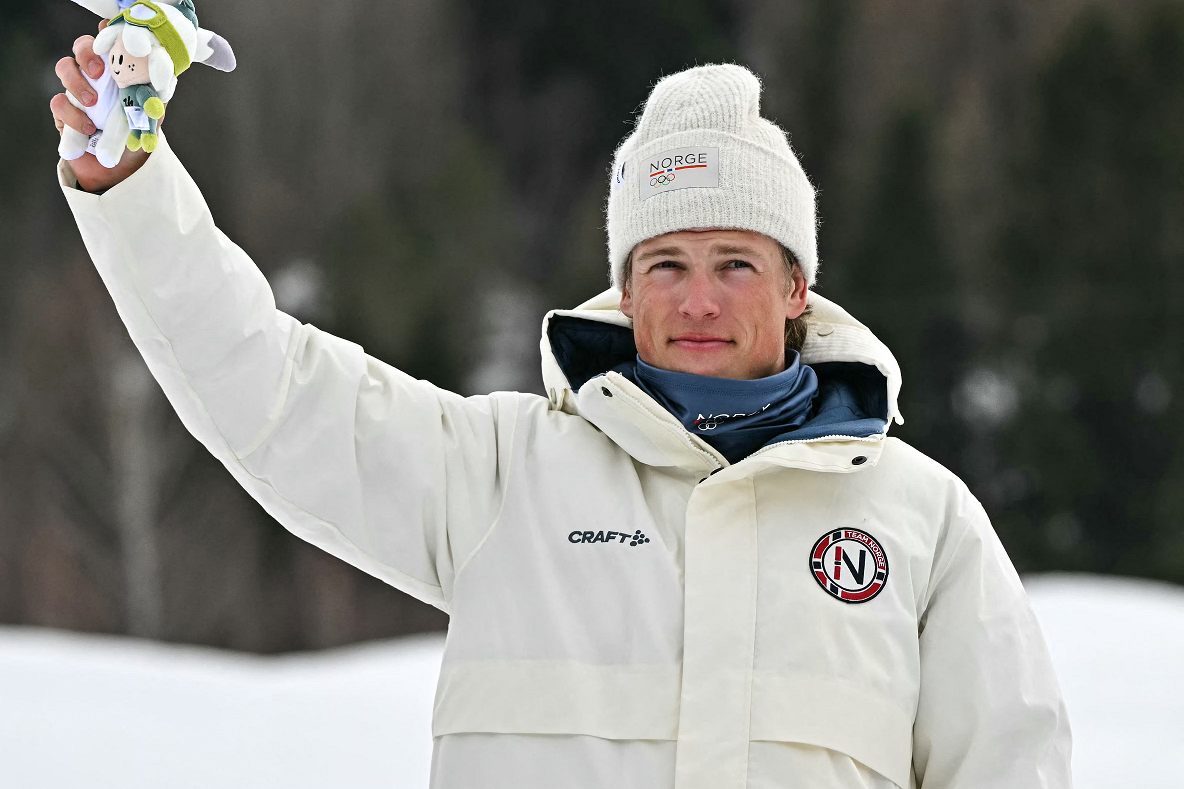
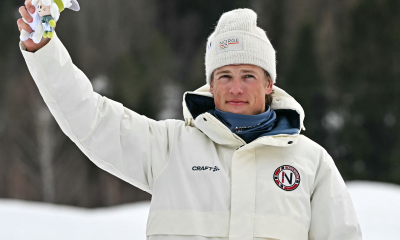
Johannes Hoesflot Klaebo, Norway’s king of cross-country skiing, broke the record for the most gold medals won at a single Winter Olympics with his sixth of the Games.
Klaebo led a Norwegian sweep of the podium in the 50km mass start classic, with team-mates Martin Loewstroem Nyenget and Emil Iversen taking silver and bronze respectively.
The 29-year-old finished the brutal distance in two hours six minutes 44.8 seconds, 8.9secs ahead of Nyenget who takes his third medal of the Games.
“It’s been crazy, it’s a dream come true,” Klaebo told BBC Sport.
“I really think this Olympics has been perfect. Being able to crown the Olympics with the 50km was unbelievable.”
Klaebo breaks the previous record of five golds from a single Games, held by American speed skater Eric Heiden since the Lake Placid Olympics of 1980.
It also extends his own record for most Winter Olympic golds to 11, while he becomes the first athlete to win all six cross-country events at one Games.
Only US swimming great Michael Phelps, who won 23 gold medals, has more Olympic titles to his name.
Born in Oslo, Klaebo moved to Trondheim – a haven of cross-country skiing trails – as a young child, a move that has seen him become the greatest to ever do the sport.
No other man, active or retired, comes close to his record of 116 World Cup wins, while he is also a 15-time world champion, winning all six titles at last year’s edition on home snow in Trondheim.
“After the world championships last year, we knew that it was possible, but to be able to do it, it’s hard to find the right words,” he told reporters.
“[There were] so many emotions when I’m crossing the finish line.”
His sixth Olympic gold at Milan-Cortina adds to the titles he had won earlier in the Games in the skiathlon, sprint classic, 10km interval start free, 4×7.5km relay and the team sprint.
[BBC]

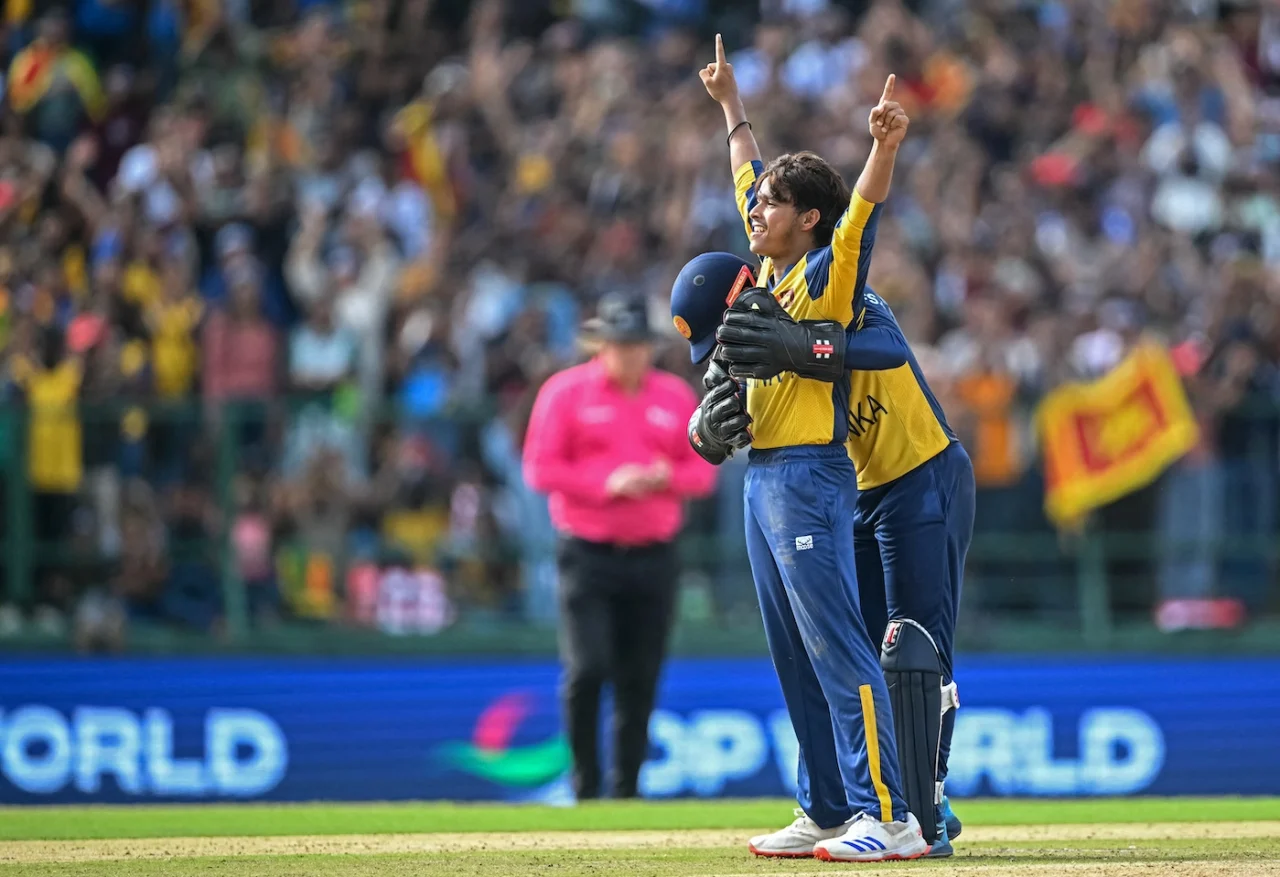
England limp to 146-9 against Sri Lanka

Advisory for Heavy Rain issued for the Central, Uva, Sabaragamuwa, Eastern and North-central provinces and in Galle and Matara districts

Sri Lanka opt to chase against England in Pallekele

More than 1,500 Venezuelan political prisoners apply for amnesty

Six races, six golds – Klaebo’s historic Olympics

India, South Africa meet in the final before the final

‘Dates have the highest sugar content to fight Coronavirus’

Sunday Island 27 December – Headlines

#SundayIsland 17th December – Headlines

Sunday Island – 28th March

Sunday Island Headlines – 21 March

Sunday Island – 21st February – Headlines
-

 Features18 hours ago
Why does the state threaten Its people with yet another anti-terror law?
-

 Business7 days ago
Ministry of Brands to launch Sri Lanka’s first off-price retail destination
-

 Features18 hours ago
Victor Melder turns 90: Railwayman and bibliophile extraordinary
-
 Features18 hours ago
Reconciliation, Mood of the Nation and the NPP Government
-
 Latest News2 days ago
New Zealand meet familiar opponents Pakistan at spin-friendly Premadasa
-

 Latest News2 days ago
Tariffs ruling is major blow to Trump’s second-term agenda
-
 Latest News2 days ago
ECB push back at Pakistan ‘shadow-ban’ reports ahead of Hundred auction
-
 Features18 hours ago
Victor, the Friend of the Foreign Press