
News
Successive governments’ budgetary operations caused financial instability

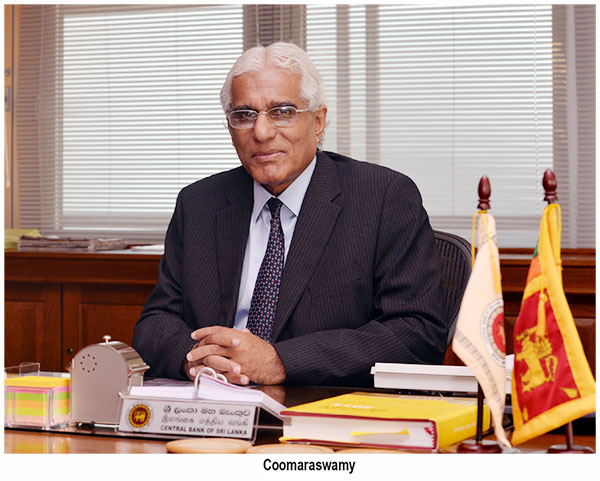
Ex-CBSL Governor Dr. Coomaraswamy:
‘My generation has failed the country…’
By Shmaindra Ferdinando
Former Governor of the Central Bank Dr. Indrajit Coomaraswamy says the failure on the part of successive governments to manage expenditure since the country gained Independence has caused the current economic instability.
Throughout Sri Lanka had been plagued by a toxic combination of populist politics and an entrenched entitlement culture among the people, Dr. Coomaraswamy told The Island. “Time and again, the electoral calendar has undermined fiscal discipline,” Dr. Coomaraswamy, who had served as the Governor (July 2016 to Dec. 2019) said.
Dr. Coomaraswamy said so when he was asked to explain why he had advised the electorate to be extremely cautious in exercising their franchise during the yahapalana administration at a time when the national economy was in a much better shape.
Dr. Coomaraswamy was testifying before a Presidential Commission of Inquiry (PCoI) probing rampant corruption in the public sector.
President Maithripala Sirisena brought in Dr. Coomaraswamy as the Central Bank Governor in the wake of the second Treasury bond scam. Dr. Coomaraswamy who had previously served the CBSL for a period of 15 years in its Departments of Economic Research, Statistics and Bank Supervision. He had also worked at the Finance and Planning Ministry from 1981 – 1989 during the UNP administration.
The Island
raised the issues at hand with Dr. Coomaraswamy close on the heels of one-time Auditor General Gamini Wijesinghe lashing out at the Parliament for its failure to ensure fiscal discipline. Wijesinghe, who served as the AG (2015-2019) alleged that the country was paying a huge price today for electing those who pursued destructive agenda. Wijesinghe said that he felt the electorate lacked the political sense to elect sensible people.
Dr. Coomaraswamy explained that for many decades, Sri Lankans had lived beyond their means and got away with it due to generous inflows of concessional loans and grants. However, the situation had changed though those elected seemed bent on following the same policies, he said.
Sri Lanka should not forget that the country had graduated to middle-income country status and was no longer eligible for concessional assistance, the former Central Bank Governor said. “At the same time, there has also been a reduction in the availability of long-term lending from official sources. As a result, since then there has had to be greater reliance on more expensive borrowing from international capital markets. This is an entirely different paradigm. Increased exposure to capital markets and rating agencies requires far greater discipline in macroeconomic policy-making.”
The former CB Governor emphasised that the much-needed discipline could be achieved only if politicians understood the parameters within which macroeconomic policies should be set. “They should also have sufficient understanding to provide leadership in raising the awareness of the people regarding the most urgent need for fiscal discipline. So, it is important that Sri Lankans exercise their franchise judiciously to make sure the right people are in Parliament.”
Commenting on the responsibility of those who manage the economy especially at a time the country was in turmoil, Dr. Coomaraswamy stressed that large budget deficits led to what he called excessive aggregate demand, which fuelled inflation and exerted balance of payments pressure. It would be pertinent to stress that large budget deficits ultimately undermined the value of the currency.
Those were the main negative impacts on the people as a result of politicians not exercising parliamentary oversight of public finance in a responsible manner, Dr. Coomaraswamy said.
“There are challenges on many fronts. My generation has failed the country. It is now up to the young people to chart a new course for the country. I hope a sufficient number of the talented ones remain in the country to do so,” he said.
Dr. Coomaraswamy however expressed confidence in talented youth remaining in the country amidst reports of many seeking to migrate.
Dr. Coomaraswamy and Gamini Wijesinghe demanded immediate remedial measures to restore financial discipline as President Gotabaya Rajapaksa finally confirmed negotiations with the International Monetary Fund (IMF) to overcome the financial crisis.
Former Deputy Governor of the Central Bank Dr. W.A. Wijewardena has recently said that Sri Lanka should have sought the IMF’s intervention in April 2021 during Prof. W.D. Lakshman’s tenure as the Governor of the CBSL. The government compelled Prof. Lakshman to quit in September 2021 to bring in the incumbent Governor Ajith Nivard Cabraal.






Latest News
Heat Index at Caution Level in the Western, Sabaragamuwa, Southern, Eastern, North-western, Northern and North-central provinces and in Monaragala district


Warm Weather Advisory
Issued by the Natural Hazards Early Warning Centre
Issued at 3.30 p.m. on 31 March 2026, valid for 01 April 2026.
The Heat index, the temperature felt on human body is likely to increase up to ‘Caution level’ at some places in the Western, Sabaragamuwa, Southern, Eastern, North-western, Northern and North-central provinces and in Monaragala district.
The Heat Index Forecast is calculated by using relative humidity and maximum temperature and this is the condition that is felt on your body. This is not the forecast of maximum temperature. It is generated by the Department of Meteorology for the next day period and prepared by using global numerical weather prediction model data.

Effect of the heat index on human body is mentioned in the above table and it is prepared on the advice of the Ministry of Health and Indigenous Medical Services.
ACTION REQUIRED
Job sites: Stay hydrated and takes breaks in the shade as often as possible.
Indoors: Check up on the elderly and the sick.
Vehicles: Never leave children unattended.
Outdoors: Limit strenuous outdoor activities, find shade and stay hydrated.
Dress: Wear lightweight and white or light-colored clothing.
Note:
In addition, please refer to advisories issued by the Disaster Preparedness & Response Division, Ministry of Health in this regard as well. For further clarifications please contact 011-7446491.

Govt. rations stocks as imports falter
By Ifham Nizam
The government faces a looming fertiliser crisis ahead of the 2026 Yala season, with a sharp shortfall in urea threatening paddy yields and food security.
Experts have warned that the fertiliser shortage will take its toll on the yala harvest.
With just over 100,000 tonnes of fertiliser in stock by early March—barely enough for paddy cultivation alone—and more than half of expected imports either cancelled or delayed, the government has moved to ration supplies through Agrarian Service Centres, based on last year’s consumption.
Leading crop scientist Professor Buddhi Marambe has warned that while rationing is unavoidable, it will reduce productivity. “Even last season we applied below recommended levels. This year, the gap will be worse,” he said.
Authorities are prioritising paddy, followed by maize and tea, as limited stocks are stretched across crops.
However, experts estimate yields could fall by 15–20% if nutrient shortages persist—raising the risk of higher food prices in the months ahead.
The crisis has been worsened by global disruptions, including Gulf conflict affecting fertiliser shipments and precautionary export restrictions by key suppliers, such as China.
Although the Government is pursuing deals with countries like Russia, supplies remain uncertain.
With global urea prices surging and production costs rising, smallholder farmers are expected to be the hardest hit.
“This is a wake-up call,” Prof. Marambe said, urging urgent steps to build buffer stocks and strengthen Sri Lanka’s long-term food security strategy.
By Shamindra Ferdinando
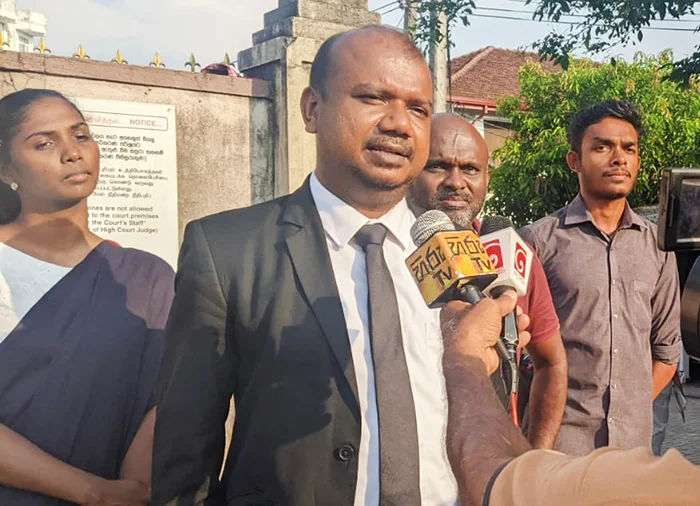
Frontline Socialist Party (FSP) spokesman Pubudu Jayagoda says the Gampaha Magistrate’s Court order that the ruling JVP hand back the FSP’s Kirindiwela office, grabbed by a group of JVP politicians on 02 September, 2025, has shown that the government cannot undermine the law.
Jayagoda said that the FSP had been compelled to move the court against the JVP as the Gampaha police refused to intervene due to political pressure. “They probably thought we were going to give up that office. Perhaps, the ruling party felt they could forcibly occupy other FSP offices,” Jayagoda said.
FSP’s Administrative Secretary Chamira Koswatta and trade unions, which operated from the Salmal Garden office, sought the court intervention to confirm the ownership of that building in the FSP. The court initially transferred the building to the police and issued a directive to law enforcement authorities to remove the JVP/NPP from that building.
Among the 20 respondents was Tilvin Silva, General Secretary of the JVP. Those now identified themselves as FSP quit the JVP in 2011 and later formed their own party.
Gampaha Additional Magistrate Shilani Perera on Monday ruled that the legitimate owner was the FSP. The Magistrate ruled that the FSPers had been forced out of that office, illegally.
Jayagoda said that the FSP considered the court ruling a victory for democracy and a devastating blow to the increasingly authoritarian JVP/NPP rule.

Amelia Kerr hits 139-ball 179* as New Zealand pull off record chase to level series

Punjab Kings fined for slow over-rate

Ice-cool Connolly leads nervy Punjab Kings home on IPL debut

Showers expected in the Western, Sabaragamuwa and Southern provinces in the evening or night

Heat Index at Caution Level in the Western, Sabaragamuwa, Southern, Eastern, North-western, Northern and North-central provinces and in Monaragala district

Urea shortage threatens Yala harvest: Experts

‘Dates have the highest sugar content to fight Coronavirus’

Sunday Island 27 December – Headlines

#SundayIsland 17th December – Headlines

Sunday Island – 28th March

Sunday Island Headlines – 21 March

Sunday Island – 21st February – Headlines
-

 Features5 days ago
A World Order in Crisis: War, Power, and Resistance
-

 News6 days ago
Energy Minister indicted on corruption charges ahead of no-faith motion against him
-

 News7 days ago
US dodges question on AKD’s claim SL denied permission for military aircraft to land
-

 Business7 days ago
Dialog Unveils Dialog Play Mini with Netflix and Apple TV
-

 Sports6 days ago
SLC to hold EGM in April
-

 Opinion6 days ago
When elephants fight, it is the grass that suffers
-
 Latest News6 days ago
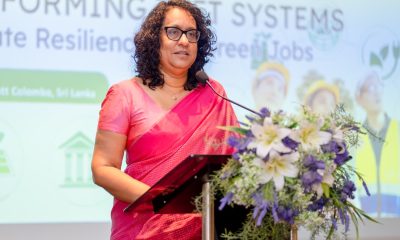
A strong Technical and Vocational Education and Training (TVET) system equips individuals with practical, relevant, and future-oriented skills helping to innovate responsibly towards a greener and sustainable future – PM
-
 Features6 days ago
Lest we forget