
News
‘Structural constraints on SA media undermined prospects for regional amity – Himal Southasian Editor

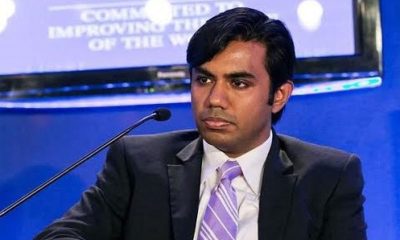
Himal Southasian Editor Roman Gautam has said that despite many journalists’ best intentions to foster regional cooperation, structural constraints within which South Asian media operates have significantly undermined prospects for regional amity. While acknowledging continued journalistic intent across the region, some which have managed to prevail, he identified financial dependence, political subordination, and the growing gap between intent and outcome as central challenges facing regional media.
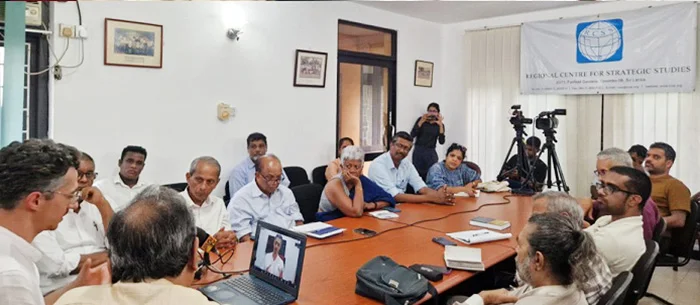
Gautam made these observations when he addressed the RCSS Strategic Dialogue – 3 on the theme “Where does the media stand in connecting (or dividing) Southasia?”, on 2 February 2026 at the Board Room of the RCSS in Colombo. Moderated by the Executive Director of the RCSS Amb. (Retd.) Ravinatha Aryasinha, it brought together serving and retired senior public servants, diplomats, academics, and civil society representatives, and journalists, with additional participation via Zoom of members of the recently formed ‘RCSS Alumni Network’ spread across the globe. ED Aryasinha highlighted the longstanding common vision shared between Himal Southasian founded in 1987 and the RCSS founded in 1992, at a time there were real possibilities for South Asian regionalism and collaboration. He noted that despite the turbulence over the years, both Himal Southasian and the RCSS retained its ‘South Asian Regional Spirit’ enabling scholars and writers in South Asian, and also focussing on South Asia to collaborate on issues of shared concern, retaining a foundation of trust and cross-border engagement.
Gautam opened his remarks by acknowledging the historical role of journalists in South Asian regionalism, noting that journalists have always been involved in informing regional populations about each other and, particularly during the heyday of track-two diplomacy, actively working toward reconciliation across borders. However, he questioned whether fostering state-to-state connections should be the journalists’ role and responsibility, even through track-two channels. More critically, despite continued intent among many journalists across initiatives in the region, a realistic assessment shows severe limitations in fostering genuine regional spirit. The answer, he emphasized, lies in examining the structures within which journalists work today, rather than questioning their motivations or commitment.
He presented cases from recent upheavals in Nepal and Bangladesh to illustrate how media coverage served domestic political interests at the cost of regional goodwill. In each case, stray opinions voiced by a few participants were seized upon and fed to audiences in sensational fashion, with no effort to canvass broader opinion or extensively research issues. Selective coverage that pandered to domestic political interests ignored ground realities and broader contexts. Gautam traced these patterns as pandering to structural realities: reliance on government advertising, corporate capture creating vulnerabilities to state pressure, and ideological alignment. The need for financial survival prompted media to subscribe to official narratives, as failure to abide by the official line could spell financial ruin. Gautam who characterized social media as enabling understanding but also extremism, suggested regional platforms could help bring journalists together, and acknowledged the dire situation faced by persecuted journalists, with no real support mechanisms.
Gautam also discussed SAARC’s past contributions and constraints. Though designed to promote regional collaboration, the organisation’s impact has been limited by political friction, especially between India and Pakistan. However, he noted that programs such as RCSS’s workshops and fellowships prove that non-governmental actors, particularly journalists, can facilitate mutual understanding across borders, even if on a smaller scale. He underscored that such modest initiatives are crucial for building dialogue and knowledge-sharing traditions in South Asia.
During the discussion, participants explored social media’s impact, SAARC revitalization, generational shifts in media consumption, press freedom, disinformation and journalist persecution. Participants debated whose ‘South Asia’ is being discussed, with Gautam emphasizing it as a common cause built on synergies rather than belonging to any single conception. The power-based nature of the current global order was highlighted, with observations that even brave journalists find themselves let down by institutions, and that both external and internal factors limit media’s role in regionalism.
A principal question raised was whether this critique referred to the totality of media or to specific divisive elements. Gautam clarified that all media is not a monolithic and that independent journalists continue working outside these structures across the region, some successfully. He highlighted the efforts being made by Himal Southasian and others to preserve that space. However, an overall point made was that as a result of these structural constraints and negative media practices, South Asian regionalism has suffered badly. He acknowledged that as matters stand currently, there is a very real information gap about South Asian realities among South Asian publics. This was a huge problem that needs to be managed reflectively, and the region’s more enlightened media could play a constructive role in taking up this challenge.



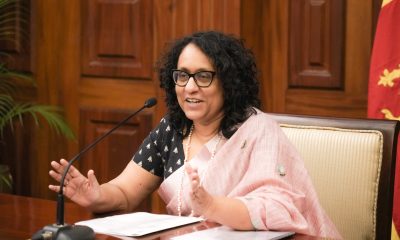



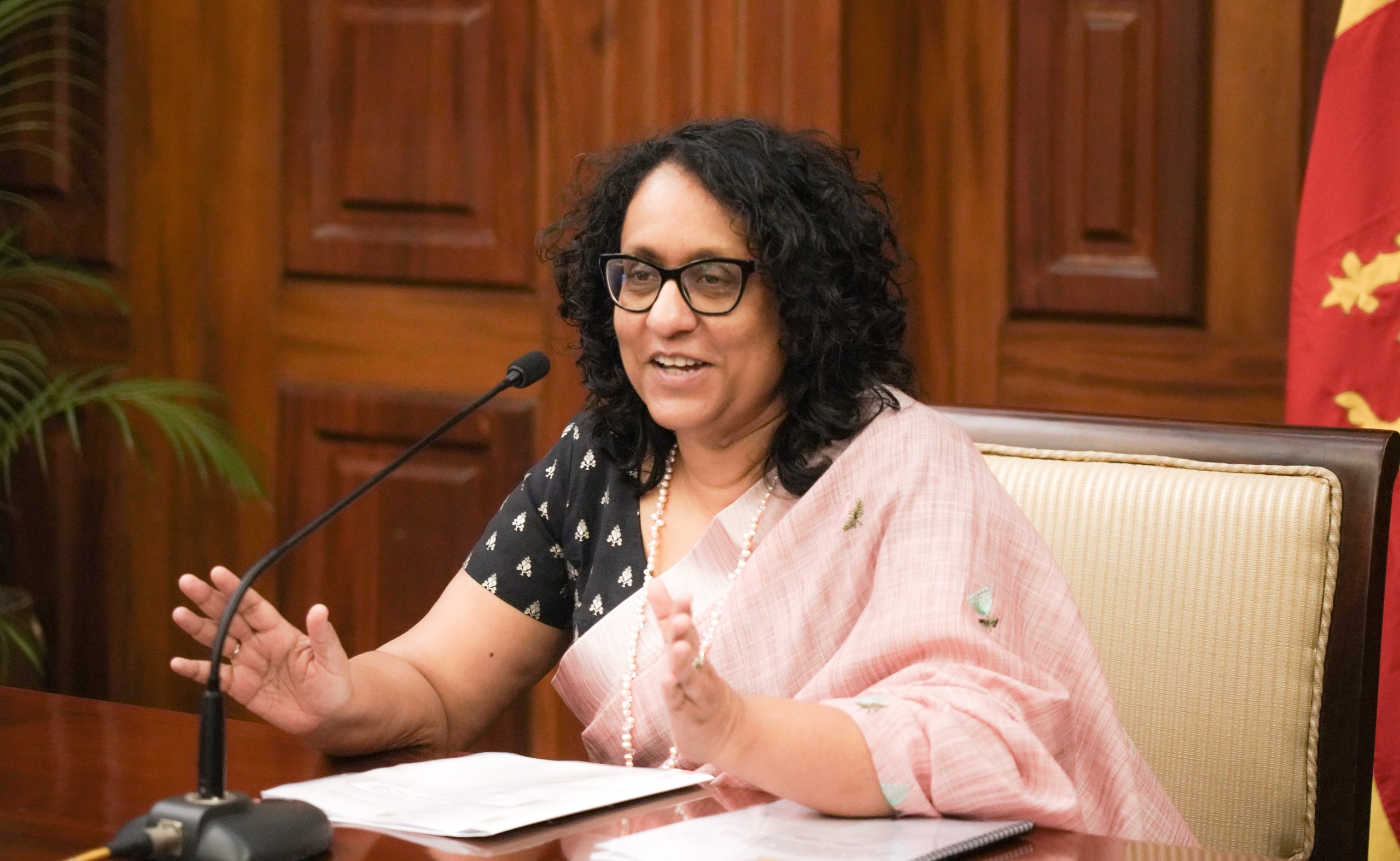
Prime Minister Dr. Harini Amarasuriya emphasized that addressing the drug issue in the country must be treated as a national priority, highlighting that it must deliver results at the ground level.
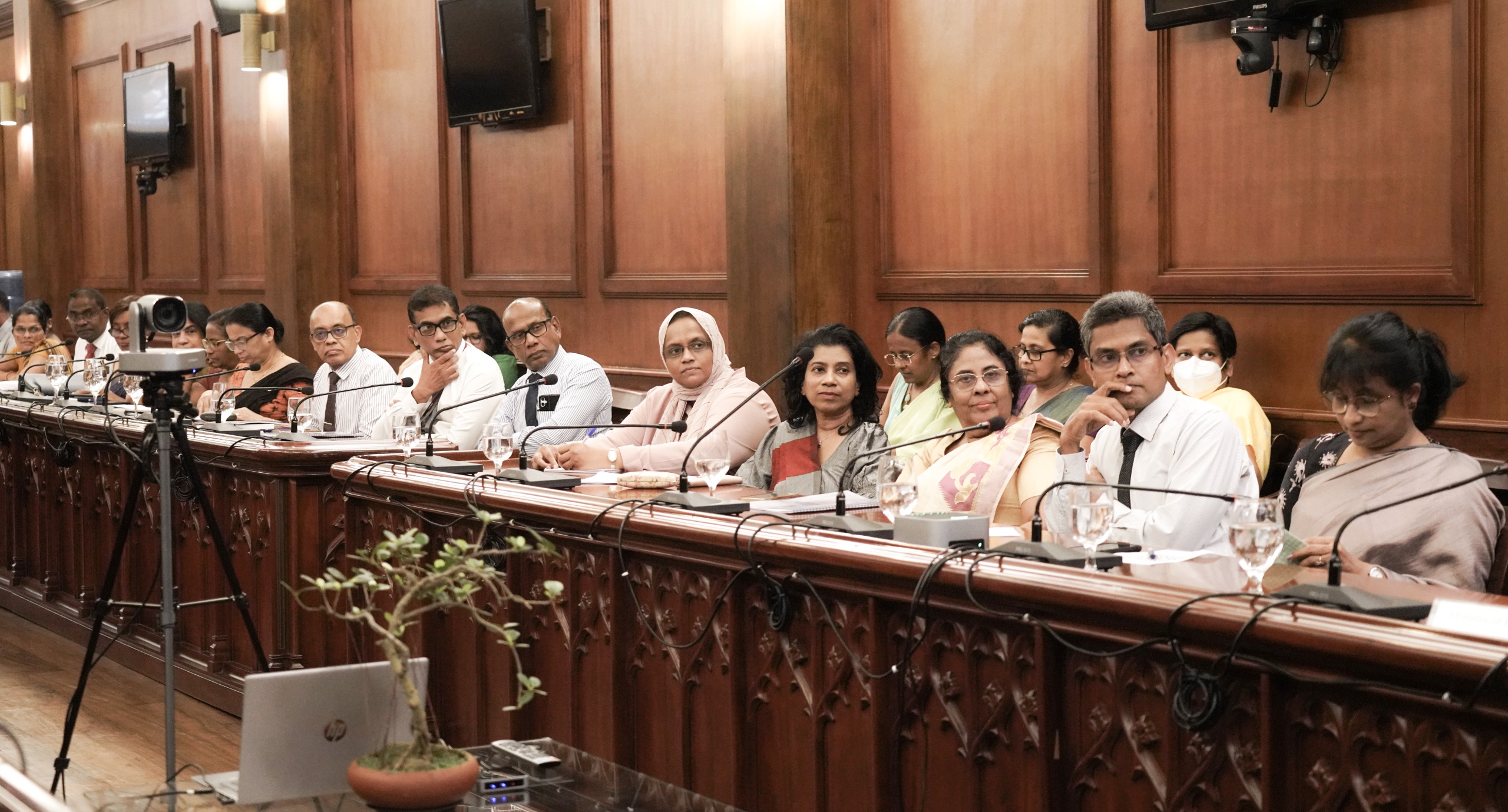
A meeting to brief the Prime Minister on the National Strategic Plan for the Management, Treatment and Rehabilitation of Persons with Substance Use Disorders (SUD) 2026–2030 was held with the participation of officials from the Ministry of Health and Mass Media and other key stakeholders on 13th of March at the Temple Trees.
The discussion focused on the proposed national strategy developed to address the growing health, social and economic challenges associated with substance use disorders in Sri Lanka. The strategic plan aims to strengthen prevention, treatment, rehabilitation and reintegration services through a coordinated and evidence-based national approach.
During the meeting, attention was drawn to existing gaps in early identification of substance use disorders, continuity of care, community-based follow-up and reintegration of recovering individuals into society. The plan proposes several key interventions, including strengthening screening and symptomatic treatment at primary healthcare and outpatient levels, improving hospital-based treatment and follow-up services, expanding residential rehabilitation facilities, and enhancing community-based rehabilitation and relapse prevention programmes.
Special emphasis has also been placed on providing targeted support for vulnerable groups, including children and adolescents, pregnant women, mothers with children and prison inmates.
Speaking on the importance of strengthening the national response to drug issues, the Prime Minister Dr. Harini Amarasuriya noted that the drug menace has evolved into a serious social crisis that threatens social stability and security of families and the nation as a whole highlighting that law enforcement and rehabilitation in this regard must be given equal priority.
The Prime Minister further underscored the importance of including public awareness initiatives and responsible media reporting as key components of the national strategy.
The meeting was attended by the Secretary to the Prime Minister Pradeep Saputhanthri, Secretary to the Ministry of Health Dr. Anil Jasinghe, officials from the Department of Prisons, Bureau of Rehabilitation, Sri Lanka Police Ministry of health, Ministry of Public Security and Parliamentary Affairs, Ministry of Justice and National Integration ,Ministry of Defense, Ministry of Education, Ministry of Women and Child Affairs and other relevant department and ministries.
[Prime minister’s Media Division]


The National Water Supply and Drainage Board (NWSDB) on Friday said the largest groundwater source discovered in Sri Lanka so far had been identified during tube-well drilling near the Pitabeddara Police Station.
Indrajith Gamage, geologist in charge of the Southern Province, said the source recorded a continuous flow of about 10,000 litres (10 cubic metres) per minute, marking the first instance in the country where a groundwater source of that magnitude had been found.
He noted that the previous largest groundwater source was discovered in the Madhu area, which recorded a flow of about 7,000 litres per minute.
According to the NWSDB, the tube well was drilled following geological studies of rock layers and the identification of underground water through fractures in rock strata using specialised technical instruments.
The Board said steps would be taken to distribute water from the newly discovered source to residents facing shortages in Pitabeddara, Morawaka and surrounding areas.

The Ceylon Chamber of Commerce has formally handed over its historical records to the National Archives Department, entrusting over a century of the nation’s commercial history to the country’s official custodians of heritage.
The archive, spanning from the CCC’s founding in 1839 to 1973, includes correspondence, meeting minutes, reports, ledgers, and publications that chronicle the development of trade, enterprise, and industry in Sri Lanka. Together, the records provide a rare and detailed account of the island’s economic evolution and the role of its business community in shaping national progress.

Three more Iran football team members change minds over asylum

Trump urges UK and other nations to send warships to Strait of Hormuz

Addressing the drug issue in the country must be treated as a national priority – PM

Showers will occur at several places in the Western, Sabaragamuwa, Central, North-western and Uva provinces and in Galle, Matara, Mannar and Anuradhapura districts after 2.00 pm.

Lanka discovers largest groundwater source

Lanka’s commercial legacy preserved in National Archives

‘Dates have the highest sugar content to fight Coronavirus’

Sunday Island 27 December – Headlines

#SundayIsland 17th December – Headlines

Sunday Island – 28th March

Sunday Island Headlines – 21 March

Sunday Island – 21st February – Headlines
-

 News6 days ago
Repatriation of Iranian naval personnel Sri Lanka’s call: Washington
-
 Features6 days ago
Winds of Change:Geopolitics at the crossroads of South and Southeast Asia
-

 News5 days ago
Prof. Dunusinghe warns Lanka at serious risk due to ME war
-

 Sports4 days ago
Royal start favourites in historic Battle of the Blues
-

 Sports3 days ago
The 147th Royal–Thomian and 175 Years of the School by the Sea
-

 News3 days ago
Historic address by BASL President at the Supreme Court of India
-

 Business4 days ago
BOI launches ‘Invest in Sri Lanka’ forum
-

 News4 days ago
CEBEU warns of operational disruptions amid uncertainty over CEB restructuring