
News
‘Structural constraints on SA media undermined prospects for regional amity – Himal Southasian Editor

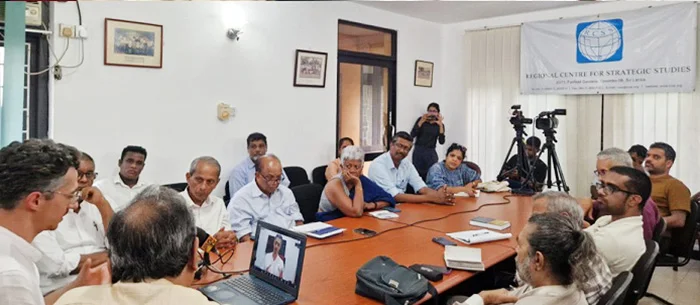
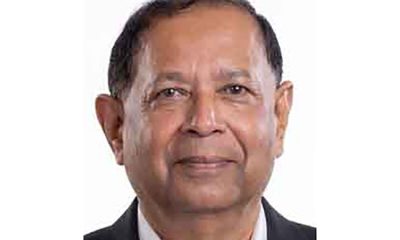
Himal Southasian Editor Roman Gautam has said that despite many journalists’ best intentions to foster regional cooperation, structural constraints within which South Asian media operates have significantly undermined prospects for regional amity. While acknowledging continued journalistic intent across the region, some which have managed to prevail, he identified financial dependence, political subordination, and the growing gap between intent and outcome as central challenges facing regional media.
Gautam made these observations when he addressed the RCSS Strategic Dialogue – 3 on the theme “Where does the media stand in connecting (or dividing) Southasia?”, on 2 February 2026 at the Board Room of the RCSS in Colombo. Moderated by the Executive Director of the RCSS Amb. (Retd.) Ravinatha Aryasinha, it brought together serving and retired senior public servants, diplomats, academics, and civil society representatives, and journalists, with additional participation via Zoom of members of the recently formed ‘RCSS Alumni Network’ spread across the globe. ED Aryasinha highlighted the longstanding common vision shared between Himal Southasian founded in 1987 and the RCSS founded in 1992, at a time there were real possibilities for South Asian regionalism and collaboration. He noted that despite the turbulence over the years, both Himal Southasian and the RCSS retained its ‘South Asian Regional Spirit’ enabling scholars and writers in South Asian, and also focussing on South Asia to collaborate on issues of shared concern, retaining a foundation of trust and cross-border engagement.
Gautam opened his remarks by acknowledging the historical role of journalists in South Asian regionalism, noting that journalists have always been involved in informing regional populations about each other and, particularly during the heyday of track-two diplomacy, actively working toward reconciliation across borders. However, he questioned whether fostering state-to-state connections should be the journalists’ role and responsibility, even through track-two channels. More critically, despite continued intent among many journalists across initiatives in the region, a realistic assessment shows severe limitations in fostering genuine regional spirit. The answer, he emphasized, lies in examining the structures within which journalists work today, rather than questioning their motivations or commitment.
He presented cases from recent upheavals in Nepal and Bangladesh to illustrate how media coverage served domestic political interests at the cost of regional goodwill. In each case, stray opinions voiced by a few participants were seized upon and fed to audiences in sensational fashion, with no effort to canvass broader opinion or extensively research issues. Selective coverage that pandered to domestic political interests ignored ground realities and broader contexts. Gautam traced these patterns as pandering to structural realities: reliance on government advertising, corporate capture creating vulnerabilities to state pressure, and ideological alignment. The need for financial survival prompted media to subscribe to official narratives, as failure to abide by the official line could spell financial ruin. Gautam who characterized social media as enabling understanding but also extremism, suggested regional platforms could help bring journalists together, and acknowledged the dire situation faced by persecuted journalists, with no real support mechanisms.
Gautam also discussed SAARC’s past contributions and constraints. Though designed to promote regional collaboration, the organisation’s impact has been limited by political friction, especially between India and Pakistan. However, he noted that programs such as RCSS’s workshops and fellowships prove that non-governmental actors, particularly journalists, can facilitate mutual understanding across borders, even if on a smaller scale. He underscored that such modest initiatives are crucial for building dialogue and knowledge-sharing traditions in South Asia.
During the discussion, participants explored social media’s impact, SAARC revitalization, generational shifts in media consumption, press freedom, disinformation and journalist persecution. Participants debated whose ‘South Asia’ is being discussed, with Gautam emphasizing it as a common cause built on synergies rather than belonging to any single conception. The power-based nature of the current global order was highlighted, with observations that even brave journalists find themselves let down by institutions, and that both external and internal factors limit media’s role in regionalism.
A principal question raised was whether this critique referred to the totality of media or to specific divisive elements. Gautam clarified that all media is not a monolithic and that independent journalists continue working outside these structures across the region, some successfully. He highlighted the efforts being made by Himal Southasian and others to preserve that space. However, an overall point made was that as a result of these structural constraints and negative media practices, South Asian regionalism has suffered badly. He acknowledged that as matters stand currently, there is a very real information gap about South Asian realities among South Asian publics. This was a huge problem that needs to be managed reflectively, and the region’s more enlightened media could play a constructive role in taking up this challenge.

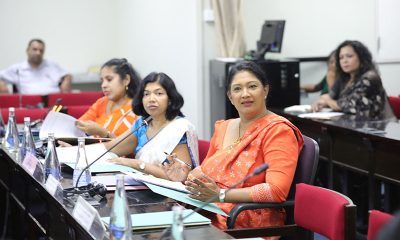
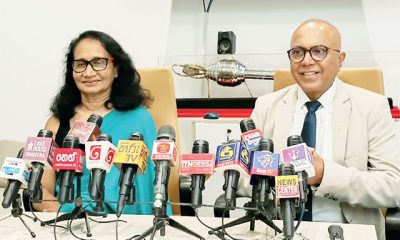



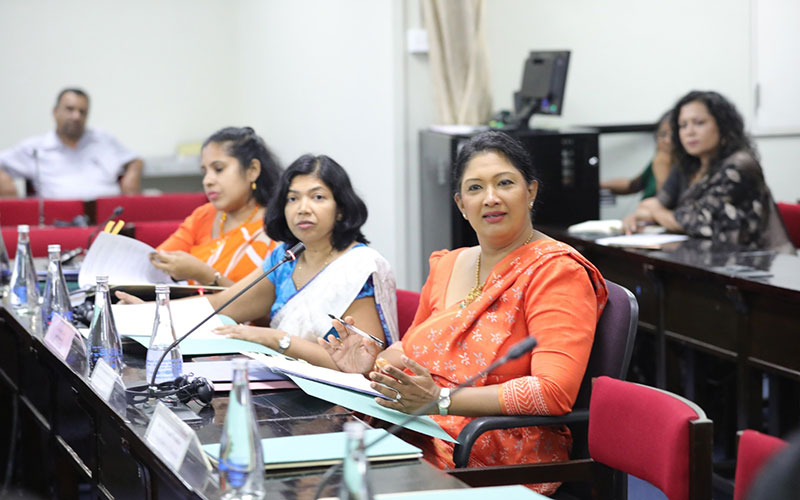
Proposals to amend the Prevention of Domestic Violence Act, No. 34 of 2005, to ensure its more effective implementation were considered at a meeting of the Parliamentary Women’s Caucus.
The matter was discussed at length when the caucus met recently in Parliament. As its Chairperson, Minister Saroja Savithri Paulraj, was absent, the meeting was chaired by Deputy Co-Chairs Chamindrani Kiriella and Samanmali Gunasinghe.
The primary objective of the Act is to prevent domestic violence and provide prompt legal remedies to those affected by it.
The Muslim Women’s Research and Action Forum (MWRAF) presented several proposals regarding a proposed new Bill to replace the existing legislation.
Among the proposals were expanding the range of persons and officials who could initiate legal action on behalf of adults and children subjected to violence, simplifying the application process, making interim protection orders more effective and strengthening follow-up mechanisms relating to protection orders.
It was also stressed that legal and institutional reforms should not be confined to legislation but should take into account the actual experiences of women facing domestic violence.
Meanwhile, Chrysalis Sri Lanka conducted an awareness programme on increasing women’s political participation and representation. Attention was drawn to the importance of expanding women’s participation in decision-making processes, including policymaking, beyond economic empowerment.
The participants agreed to continue considering measures to strengthen legal protection against domestic violence and increase women’s rights and participation in decision-making.
Members of the Parliamentary Women’s Caucus and other invitees attended the meeting.
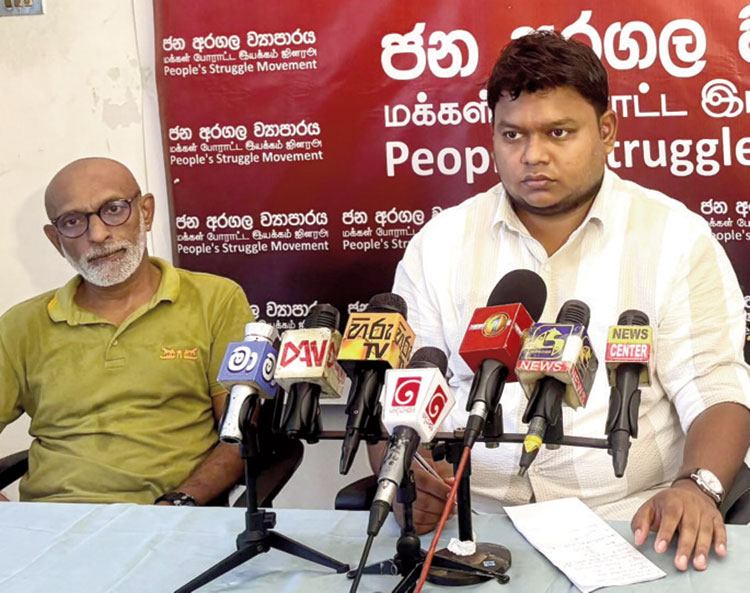
The Frontline Socialist Party-backed People’s Struggle Movement is set to stage a protest march in Colombo today (03) against what it describes as the growing tax burden on the public and the rising cost of living.
The organisers are due to commence the “Colombo March Against Unjust Taxes” at noon from Campbell Park, Borella. The FSP has also been mobilising support for the protest in Colombo and its suburbs in the run-up to the event.
People’s Struggle Movement National Executive Council member Wasantha Mudalige, speaking at a media briefing in Nugegoda yesterday (02), called on the public to join the protest, saying the movement intended to bring the tax burden faced by ordinary people to the forefront.
Mudalige alleged that successive tax measures had placed an excessive burden on households, particularly through taxes on food and educational items. He also criticised the Government over what he described as the high cost of basic food items and the difficulties faced by parents in meeting their children’s educational expenses.
He accused the Opposition of failing to adequately address the issue, claiming that opposition parties raised such concerns, mainly during election periods.
Mudalige also criticised the Government for what he described as a departure from promises made before the 2024 presidential election regarding taxes on educational equipment.
He questioned the tax burden on food items, citing figures of Rs. 100 per kilogramme on dried sprats, Rs. 310 per kilogramme on chicken and Rs. 11 per egg.
He further alleged that while ordinary people were bearing a heavy tax burden, wealthy groups were receiving tax concessions. He also criticised the Government’s economic programme and its implementation of measures associated with the International Monetary Fund (IMF).
The movement has framed today’s protest as part of a broader campaign over the cost of living and taxation. The People’s Struggle Alliance has separately announced that the Campbell Park demonstration will be the first in a series of public actions, with further protests planned in November.
Mudalige said the movement would continue to take the issue to the streets and urged the public to participate in today’s demonstration.
People’s Struggle Movement National Executive Council member Jayantha Amarasinghe also addressed the press.
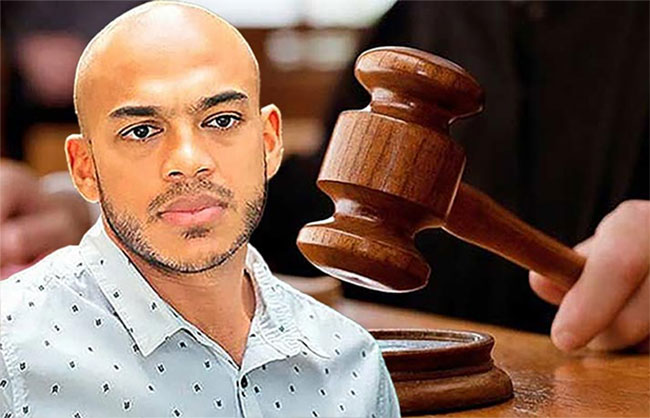
The Colombo High Court yesterday postponed the trial in the case filed under the Prevention of Money Laundering Act against Yoshitha Rajapaksa, son of former President Mahinda Rajapaksa.
The case was taken up before Colombo High Court Judge Udesh Ranatunga, with Yoshitha Rajapaksa, who is currently out on bail, appearing in court.
The trial was postponed as the President’s Counsel appearing for the defence was indisposed.
The Attorney General has filed the case against Rajapaksa, alleging that he committed an offence under the Prevention of Money Laundering Act by purchasing five plots of land in Dehiwala and Ratmalana, worth more than Rs. 73 million.

Proposals considered to amend Prevention of Domestic Violence Act

IIHS expands global nursing pathways

Sampath Bank launches Sri Lanka’s first community-powered book discovery platform at Colombo International Book Fair

CEAT expands premium retail network with Kurunegala outlet

STC General launches three new products

Reliance Consumer Products CEO to Deliver Keynote at SLEIS 2026

‘Dates have the highest sugar content to fight Coronavirus’

Sunday Island 27 December – Headlines

#SundayIsland 17th December – Headlines

Sunday Island – 28th March

Sunday Island Headlines – 21 March

Sunday Island – 21st February – Headlines
-

 News6 days ago
Police remove Thileepan statue in Jaffna
-

 Features6 days ago
The 22nd Amendment, constitutional recovery and illiberal slippage
-

 Features6 days ago
Of foreigners as CEOs of Lankan ventures
-

 Latest News4 days ago
Gold winner Tharanga gets brand-new Honda Vezel from SLAAJ
-

 News6 days ago
Sajith rejects Jt. Opp. protest sabotage claim; SJB TU chief demands remedial action
-

 Features4 days ago
Why Sri Lanka needs an Inclusive Civic Nationalism – urgently
-

 Features5 days ago
Thailand’s biggest new global star …
-

 News3 days ago
US-assisted ‘Ice’ detection: NPC to examine IGP’s move to transfer drug-busting team