
Business
Sri Lanka foreign currency debt obligations due between now and 2026 amount to about US$ 29bn

External liquidity pressures have eased somewhat in recent months
Planned IMF SDR allocation would also add US$780 million to reserves
Authorities have yet to specify foreign-currency debt-servicing plans for the medium term
Sri Lanka’s ‘CCC’ rating reflects a challenging foreign-currency sovereign external debt repayment burden over the medium term, low foreign-exchange reserves and high and rising government debt that give rise to sustainability risks, Fitch Ratings said on Monday.
External liquidity pressures have eased somewhat in recent months following bilateral loan disbursements, and our expectation of a forthcoming IMF special drawing rights (SDR) allocation. Nevertheless, Sri Lanka’s medium-term debt service challenges are substantial and pose risks to the sovereign’s debt repayment capacity, in Fitch’s view. A total of about USD 29 billion in foreign-currency debt obligations are due between now and 2026, against foreign-exchange reserves of USD4.5 billion as of end-April 2021, Fitch said.
The report further said: The authorities have recently secured project financing through various multilateral and bilateral channels, including the Asian Development Bank (AAA/Stable), Asian Infrastructure Investment Bank (AAA/Stable), China Development Bank (A+/Stable) and The Export-Import Bank of Korea (AA-/Stable), as well as swap facilities under the South Asian Association for Regional Cooperation (SAARC) currency framework and the People’s Bank of China, equivalent to USD400 million and USD1.5 billion, respectively. The planned IMF SDR allocation would also add USD780 million to reserves. These resources should enable Sri Lanka to meet its remaining debt maturities through the rest of this year, including a USD1 billion International Sovereign Bond maturing in July. However, the authorities have yet to specify their plans for meeting the country’s foreign-currency debt-servicing needs for 2022 and the medium term. They have consistently indicated that they do not plan to seek programme financing from the IMF.
We project foreign-exchange reserves to remain at about USD 4.5 billion by end-2021 before declining to USD3.9 billion by end-2022. Under our baseline, the current account deficit is likely to widen to 2.8% in 2021 and narrow to 2.1% of GDP in 2022. Our forecasts assume remittances will remain resilient in 2021-2022 and tourism is likely to recover only from 2022.
Sri Lanka’s economy contracted by 3.6% in 2020 as a result of the Covid-19 pandemic. We project growth of 3.8% in 2021, down from an earlier forecast of 4.9%, in light of a recent surge in virus cases. We expect the economy to grow by 3.9% in 2022. There remains a high degree of uncertainty associated with our forecasts in light of the evolution of new Covid-19 cases in the country. The authorities plan to inoculate 60% of the population by end-2021, but this target could be hampered by vaccine supply shortages.
Travel and tourism, an important driver of the economy, have been hit hard and the outlook for recovery remains uncertain, particularly given the recent surge in virus cases. The direct contribution of tourism to pre-pandemic GDP was about 4%, but the indirect contribution was much higher. Tourist arrivals in the first five months of 2021 were 97% lower than the same period last year.
The general government deficit widened to 11.1% of GDP in 2020, from 9.6% in 2019, as the economic contraction led to a sharp fall in fiscal revenue. We expect the deficit to remain elevated in 2021 and 2022 at 11.1% and 10.4%, respectively. Our deficit projections are wider than those presented by the government under its growth-oriented strategy of 9.4% and 7.5%, respectively. Under our forecasts, the revenue-to-GDP ratio in 2021 would rise to 10.9% in 2021 and 11.1% in 2022, compared with the authorities’ projections of 11.9% and 13.0%, respectively.
The government’s fiscal consolidation strategy is based on a planned acceleration in GDP growth, underpinned by tax cuts, as opposed to direct revenue-raising or expenditure measures, albeit supported by planned improvements in tax administration. The interest-to-revenue ratio remains high, at around 71% as of 2020, well above the ‘CCC’ median of 13%. The government expects to achieve primary surpluses from 2023, supported by annual GDP growth of 6%, which appear optimistic in our view as we anticipate growth that is closer to 4%, still above the pace in the immediate pre-pandemic period.
General government debt reached 101% of GDP by end-2020, broadly in line with our forecast at our last review in November. Our baseline forecasts suggest this ratio will rise further to 108% by 2022. Fitch does not think the government will meet its 2025 targets of reducing government debt to 70% of GDP and narrowing the fiscal deficit to 4% of GDP.







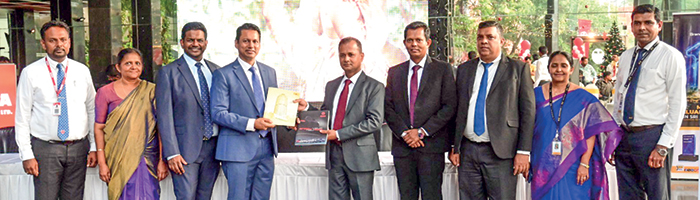
Indra Traders recently introduced a special programme titled “Athwela” in collaboration with the Bank of Ceylon (BOC).
The programme was designed with a primary focus on customer convenience, aiming to provide essential support by simplifying the financial challenges often associated with vehicle purchasing and servicing. This initiative is regarded as a further strengthening of the trust and relationships Indra Traders has built over its decades of service excellence.
The partner for this program, the Bank of Ceylon (BOC), is Sri Lanka’s largest state bank and a premier financial institution. It offers an extensive island-wide branch network, exceptional customer service, and some of the most competitive interest rates in the market.
Speaking at the event, Rushanka Silva, Managing Director of Indra Traders, said: “Today is a very special day for us. As Indra Traders, a company engaged in business for over five decades, it is a great honor to enter into the ‘Athwela’ agreement with Sri Lanka’s largest bank. Through this program, we are working to provide various financial and service facilities, including leasing. As a company that imports everything from the smallest to the largest vehicles, we provide customers the opportunity to purchase any vehicle they need through our six yards located across the island. Even if a specific vehicle is not in our current stock, we are prepared to import it according to the customer’s requirement. I invite all customers to join hands with ‘Athwela’.”
Y. A. Jayathilaka, General Manager of Bank of Ceylon, added “At a time when restrictions on vehicle imports have been relaxed, it is a great pleasure for Bank of Ceylon, the strongest bank in the country, to partner with Indra Traders – a company with over 50 years of trusted history. Our goal is to provide a comprehensive and convenient service to leasing customers across the island by combining BOC’s extensive branch network with Indra Traders’ expertise.”

The Sri Lankan Embassy in Beijing together with Beijing Capital Airlines last week organized a destination promotion event and announced the launch the Capital Airlines direct flights from Beijing to Colombo.
While congratulating Beijing Capital Airlines for expanding the connectivity between Beijing and Colombo, the Sri Lanka Ambassador Majintha Jayesinghe highlighted the longstanding bilateral relations between the two countries and the significance of strengthening connectivity in line with the Joint Statement issued following the meeting in January 2025 between President Xi Jinping and President Anura Kumara Disanayaka, a news release from the embassy said.
The President of the Beijing Capital Airlines Liu Jun expressed appreciation and stated that the new route is an important milestone in expanding the airline’s South Asian network while strengthening the Air Silk Route. He also highlighted that this is the only direct flight connecting Northern China with Sri Lanka and a key Capital-to-Capital air link, it added.
There was no word about the flight frequency and when the service will begin.
Ambassador Jayesinghe reiterated that Sri Lanka is more than a holiday destination and is positioned as an exotic, experienced-rich, year-round travel destination offering warm and pleasant weather. He emphasized that Sri Lanka, as a stand-alone destination, provides a blend of rich history, eight UNESCO heritage sites, diverse landscapes, pristine beaches, dense forests, and scenic mountains, inviting Chinese travellers to explore and enjoy Sri Lanka.
The commencement of the Beijing – Colombo route will contribute to the social and economic development of both countries. The Beijing- Colombo service has filled a longstanding gap in the aviation market and will further promote the economic, trade, cultural and tourism development, while offering more convenient travel options, the news release said.

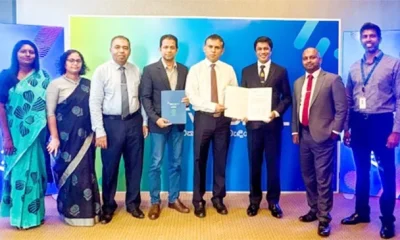
SLT-MOBITEL Mobile, in collaboration with Fintelex (Pvt) Ltd, has launched ‘Yaya Agro’, an exclusive all-in-one smart agriculture app designed to empower Sri Lankan farmers with the tools they need to grow smarter, safer, and more sustainably.
Yaya Agro represents a new era of digital farming in Sri Lanka combining technology, expert knowledge, and community empowerment to provide farmers the confidence to make smarter decisions, improve productivity, and build a sustainable future.
Developed with support from GIZ and Hatch and validated by leading academic and professional institutions including the University of Colombo, Institute for Agrotechnology and Rural Sciences, and the Sri Lanka Red Cross Society, Yaya Agro combines agricultural expertise, real-time weather updates, first aid support, and AI-powered assistance into a single, easy-to-use platform.
The launch of Yaya Agro positions SLT-MOBITEL as an innovative, inclusive, and collaborative technology leader. Partnering technology and academic institutions, the company extends its role outside the sector into agriculture, empowering farmers with AI-driven tools, multilingual access, and market connectivity. The initiative also strengthens SLT-MOBITEL’s image as a champion of digital empowerment and sustainable development in Sri Lanka.
Functioning as a comprehensive digital companion, Yaya Agro is positioned as a digital farming companion, bringing precision agriculture, real-time support, and market access to the fingertips of every Sri Lankan farmer.
Whether managing a small home garden or a large commercial farm, the app equips farmers with vital insights to improve crop yield, reduce risks, and connect directly with buyers through the integrated online marketplace.
Yaya Agro offers farmers daily crop information with expert tips on management, pest control, and best practices, all validated by the University of Colombo. It provides accurate, location-based weather forecasts to help plan farming activities more effectively. The app also delivers life-saving first aid tutorials and safety information verified by the Sri Lanka Red Cross Society, ensuring farmers are prepared for emergencies. With the AI chatbot assistant, farmers can access instant, personalized advice around the clock, with smart notifications delivering timely alerts and reminders tailored to crop cycles.
To make learning inclusive and accessible, Yaya Agro is available in Sinhala, Tamil, and English, offering interactive educational content such as videos, voice guides, and infographics. The app also integrates an online marketplace, developed in partnership with GIZ and Hatch, enabling farmers to connect directly with buyers and expand their reach.
Prime Minister launches Zahira College, Puttalam Website

Pretoria Capitals recover from 7/5 to beat Joburg Super Kings

Dry weather will prevail in most parts of the island

Premadasa: Grade 6 syllabus fiasco signals deeper issues

Sri Lankan Airlines launches Intl branding initiative for Colombo Nawam Maha Perahera 2026

Reports on Grade 6 module adult website link due next week

‘Dates have the highest sugar content to fight Coronavirus’

Sunday Island 27 December – Headlines

#SundayIsland 17th December – Headlines

Sunday Island – 28th March

Sunday Island Headlines – 21 March

Sunday Island – 21st February – Headlines
-

 Editorial18 hours ago
Illusory rule of law
-

 News2 days ago
UNDP’s assessment confirms widespread economic fallout from Cyclone Ditwah
-

 Business4 days ago
Koaloo.Fi and Stredge forge strategic partnership to offer businesses sustainable supply chain solutions
-

 Editorial2 days ago
Crime and cops
-

 Editorial3 days ago
The Chakka Clash
-

 Features19 hours ago
Daydreams on a winter’s day
-
 Business4 days ago
SLT MOBITEL and Fintelex empower farmers with the launch of Yaya Agro App
-

 Features3 days ago
Online work compatibility of education tablets