
News
Sri Lanka: Families of ‘Disappeared’ Persecuted – HRW

Renewal of UN Human Rights Council Mandate crucial to counter Impunity, Abuse
The Lankan Government continues to persecute the families of victims of enforced disappearance who seek to enforce their rights, Human Rights Watch said on Saturday. It said: Security forces persistently harass families through surveillance, intimidation, false allegations, violence, and arbitrary arrests.
On 29 August, 2024, a court, in Trincomalee, granted a request by police to ban relatives of the disappeared from holding a procession to mark the International Day of the Victims of Enforced Disappearance on 30 August.
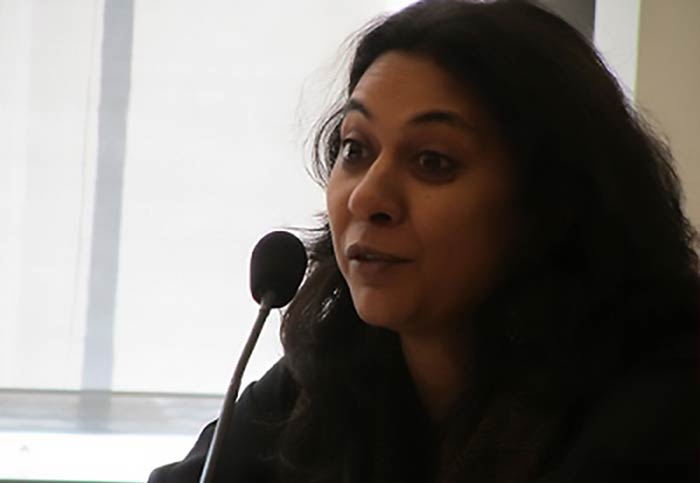
“The relatives of the disappeared experience the daily torment of not knowing what happened to their family members, which state agencies have cruelly compounded by trying to silence them,” said Human Rights Watch Deputy Asia Director Meenakshi Ganguly. “Hundreds of mothers, wives, and others have passed away without learning what happened to their loved ones, and many more express fear they might not live to see justice done.”
Sri Lanka has one of the world’s highest rates of enforced disappearance, including those who disappeared during the leftist Janatha Vimukthi Peramuna (JVP) insurgency (1987-89) and the civil war between the Government and the separatist Liberation Tigers of Tamil Eelam (LTTE,1983-2009). Sri Lankan authorities have for decades refused to reveal the fate of the disappeared or to prosecute those responsible, leading the United Nations human rights office to call for international prosecutions.
In this 22 August annual report on Sri Lanka to the UN Human Rights Council, the UN High Commissioner for human rights Volker Türk described “a persistent trend of surveillance, intimidation and harassment of journalists and civil society actors, especially those working on enforced disappearances … and reprisals against family members of the disappeared engaging with the UN or international actors, including members of the diplomatic community.” The High Commissioner also examined allegations of abduction, arbitrary detention, torture, and sexual violence by Sri Lankan security forces carried out as recently as January. The victims in these cases, whom they said were primarily men, had been involved in protests over issues such as enforced disappearances.
In May, Human Rights Watch met with relatives of disappeared people throughout the North and East Sri Lanka, mostly the wives or mothers of victims. They described a pattern of ongoing abuses. Several are facing court proceedings after being arrested at protests, including three who had been hospitalised as a result of police violence against protesters.
One woman in the Eastern Province, campaigning to know the fate of her husband, who surrendered to the military in 2009, said she believes she is under regular surveillance by security agencies, including the police Criminal Investigation Department, Terrorism Investigation Division, Special Task Force, and the Army. She said they offer to pay her neighbours for information about her, in tactics apparently designed to isolate her from her community.
“We can’t raise our voices, we have no freedom to move,” said a woman in the Northern Province, whose husband has not been seen since his arrest in 2008. “They [security agencies] threaten us, and even take action against our family members. We have no freedom to do anything.”
The women said that police officers habitually deliver stay orders – prohibiting them from attending memorialisation events or protests – in the middle of the night when they are dressed in their nightclothes and take photographs. “If my gate is locked, police climb over the wall or cut the fence to deliver a stay order,” one said. Another showed a pile of eight stay orders, although she said she had received more. “If anything is happening in the Northern or Eastern Provinces I get a stay order,” she said.
Several mothers of the disappeared said the most frightening threats were directed at their other children. One said that when she attends protests the police tell her, “You have to look after your child who is still alive.” Another said that days after she was arrested at a protest in 2023, her son was arrested in an allegedly fabricated drugs case and sent for custodial “rehabilitation.” Criminal cases against both her and her son are ongoing.
In December, the authorities launched an abusive anti-narcotics campaign called “Yukthiya,” which the UN says had resulted in over 121,000 arrests five months later. Families of the disappeared said the authorities are increasingly using false drug cases to harass them. The mother of a disappeared man said that police – including anti-narcotics officers – began making inquiries about her surviving son in December, leading her to fear that they would plant drugs in her home. “I have already lost a son,” she said. “He is now the only one I have left. I sent him to India [for his safety].”
Relatives of the disappeared said they have little or no recourse to domestic avenues for redress. In 2017 the Government established the Office of Missing Persons (OMP), which is supposed to establish the whereabouts or fate of the disappeared but has resolved almost no cases. Relatives accused the OMP of pressuring them to agree to receive compensation payments that they fear will lead to their cases being closed without further investigation.
One relative said, “The OMP says ‘take this certificate, get Rs. 200,000 [$ 665], don’t support this movement [for truth and justice].” Another, whose daughter disappeared in 2009, said, “When I went to the OMP I noticed that they were pressing many families like us. They said to the families, ‘we don’t want any documents, we just want the details of the [disappeared] person.’ Some people took compensation, and some refused.”
“Earlier we trusted the OMP but after they recruited certain commissioners, we lost our faith,” said the mother of a disappeared person from Mannar, in northwest Sri Lanka, referring to the appointment of former senior security forces officials to the body. She said she has refused offers of compensation because “I need to know what happened to my son.”
Many relatives of the disappeared are also skeptical of the current Government’s proposal for a new domestic truth and reconciliation commission, following numerous similar bodies that have previously failed to deliver truth or accountability. “We don’t accept it. We don’t have faith in it,” one said. They emphasised the importance of international involvement, including in criminal investigations.
The UN Human Rights Council, concerned Governments, and other UN bodies should implement the recommendations in the UN High Commissioner’s report, including:
Investigating and prosecuting alleged perpetrators of international crimes committed in Sri Lanka under the principle of universal jurisdiction.
Imposing targeted sanctions on alleged perpetrators.
Carrying out enhanced vetting of Sri Lankan officials, including those involved in UN peacekeeping missions.
Renewing the Human Rights Council’s mandate for UN monitoring, reporting, and work on accountability for human rights violations and related crimes in Sri Lanka.
“Successive Sri Lankan Governments have resisted any progress to address the terrible legacy of enforced disappearances, and instead compounded the anguish of victims’ families,” Ganguly said. “While the Sri Lankan Government commits these abuses, the Human Rights Council and governments around the world need to stand with the families of the disappeared.”


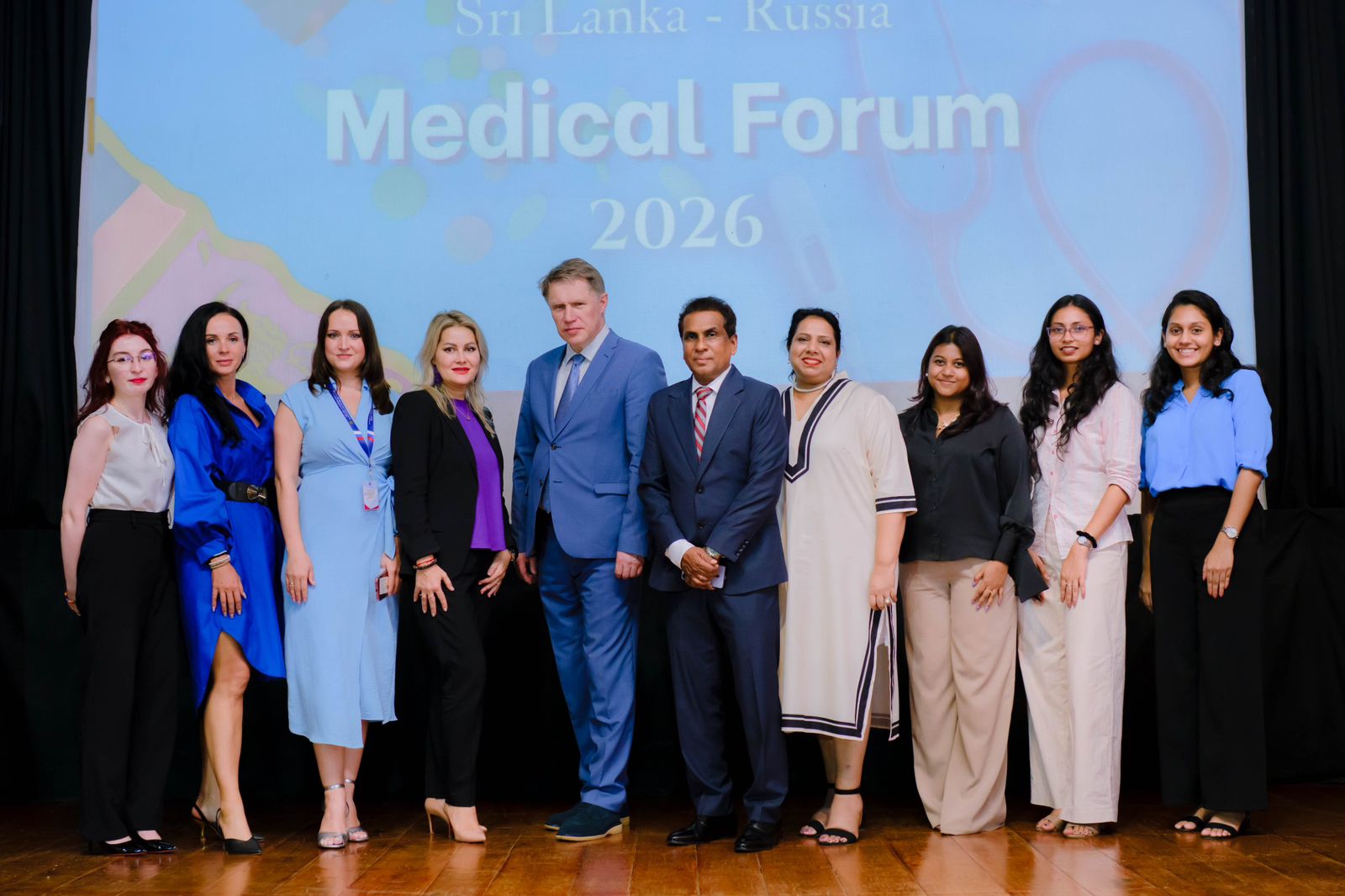
Mikhail Murashko, Minister of Health of the Russian Federation, officially visited the Russian House in Colombo to attend the Sri Lanka–Russia Medical Forum, where members of the Sri Lanka Russia Business Council and graduates from the Association of Sri Lankan Graduates from Socialist countries (ASLGSC) attended.
This historic gathering was graced by rectors and representatives from several world-class Russian medical institutions, including Kursk State Medical University, Sechenov First Moscow State Medical University, and Tver State Medical University, among others.
The forum commenced with an address by Minister Murashko, during which Russian medical graduates in attendance raised pertinent questions regarding medical and pharmaceutical sector opportunities in Sri Lanka.
Levan Dzhagaryan, Ambassador of the Russian Federation to Sri Lanka and the Maldives, together with Madam Maria L. Popova, Counsellor of the Embassy of the Russian Federation in Sri Lanka & the Maldives and Director of the Russian House in Colombo, graced the occasion. Both officials expressed strong support for continued collaboration and future initiatives between the two nations.
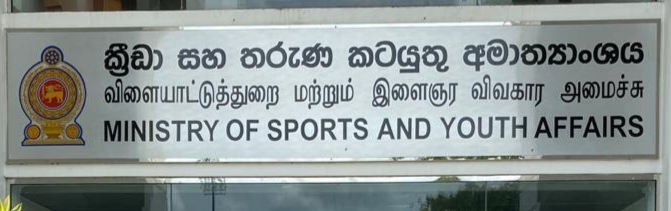
The official appointment letters for the members of the newly established “Cricket Transformation Committee” (CTC) were handed over on Monday (04) by the Minister of Youth Affairs and Sports, Sunil Kumara Gamage.
The following members received their letters of appointment at the Ministry premises:
Sidath Wettimuny
Thushira Radella
Prakash Schaffter
Ms. Avanthi Colombage
The Ministry also noted that veteran cricketers Roshan Mahanama and Kumar Sangakkara, who are key members of the committee, are currently overseas. Their official appointments will be formalised immediately upon their arrival in Sri Lanka.
The Cricket Transformation Committee has been mandated to oversee the administration and drive structural reforms within Sri Lanka Cricket (SLC) in accordance with the powers vested in the Minister under the Sports Act No. 25 of 1973.
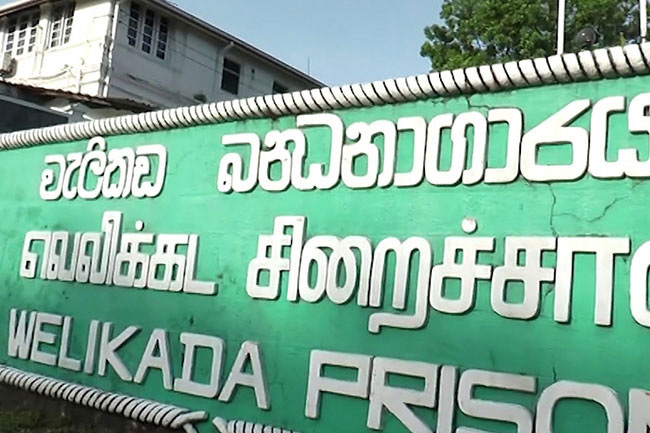
Three prison guards attached to the Welikada Prison have been arrested by Borella Police following the death of an inmate on Monday (04).

Minister of Health of the Russian Federation attends the Sri Lanka–Russia Medical Forum

Members of Sri Lanka Cricket Transformation Committee Officially Appointed

Three prison guards arrested following the death of an inmate

Showers or thundershowers will occur at most places of the island after 1.00 pm.

CJ urged to inquire into AKD’s remarks on May 25 court verdict

ITAK MPs representing East take their woes to Canadian HC

‘Dates have the highest sugar content to fight Coronavirus’

Sunday Island 27 December – Headlines

#SundayIsland 17th December – Headlines

Sunday Island – 28th March

Sunday Island Headlines – 21 March

Sunday Island – 21st February – Headlines
-
 News7 days ago
Treasury chief’s citizenship details sought from Australia
-

 News6 days ago
Rooftop Solar at Crossroads as Sri Lanka Shifts to Distributed Energy Future
-
 News5 days ago
“Three-in-one blood pressure pill can significantly reduce risk of recurrent strokes”
-

 News7 days ago
Central Province one before last in AL results
-

 Sports7 days ago
Well done AKD!
-
 News2 days ago
USD 3.7 bn H’tota refinery: China won’t launch project without bigger local market share
-

 News5 days ago
Alarm raised over plan to share Lanka’s biometric data with blacklisted Indian firm
-
 News15 hours ago
CJ urged to inquire into AKD’s remarks on May 25 court verdict