
News
Sri Lanka being fleeced through debt restructuring, says Economic Analyst


There isn’t a significant difference between the debt restructuring proposals made by private bondholders and the government of Sri Lanka, Economic Analyst Dhanusha Gihan Pathirana told The Island.
On 16 April 2024, the Sri Lankan government announced that the country’s debt restructuring process with private bondholders had hit a roadblock and that despite “constructive discussions”, the two sides did not come to an agreement on “restructuring terms.” The Ministry said that the Steering Committee comprises 10 of the largest bondholders and that the Ad Hoc Group controls “approximately 50 percent of the aggregate outstanding amount of ISBs.” These bondholders represent about 12 billion U.S dollars of the country’s total debt.
“When one looks at the announcement, one would feel that there is a significant difference in the proposals by private bondholders and the government of Sri Lanka. Verite Research has found that there isn’t a significant difference between the proposals made by private bondholders and the government of Sri Lanka,” he said.
The average interest rates for commercial loans are about 5 to 6 percent. The Ad Hoc Group of Bondholders, which consists of some of the country’s biggest private holders of debt, in its proposal has called the South Asian nation to issue a “Macro-Linked Bond” (MLB) as a part of new securities that will be offered to those who hold existing bonds.
“The Ad Hoc Group has suggested Sri Lanka pays an interest rate of 9.75 percent for the MLBs if Sri Lanka grows, on average by 5.3 percent, in the coming five years. The government has agreed to go up to 9 percent. You can see the difference here is minute,” he said.
He said that if Sri Lanka has to pay private bondholders over 9 percent interest when the average growth rate is around 5.3 percent from 2024 to 2028, the interest rate is almost double that of growth rate.
“One of the economic principles is that growth rate and interest rates must be roughly equal. If the profit rate is significantly higher than the growth rate, there will be significant inequality. Thus, the proposals of the bondholders and the government is a violation of basic economic principles,” he said.
Sri Lanka is trying to restructure about 25 billion dollars of its debt, although the total foreign debt is about 50 billion dollars. Sri Lanka continues to pay about 11 billion dollars of debt from multilateral organizations.
“But we are paying them. This is one of the points China raises. What the Chinese ask is why aren’t the multilateral agencies taking a haircut for the loans they have given,” he said.
The bond holders have agreed to give a 28 percent haircut to the debt they hold. However, in 2001 Argentina imposed a roughly 75 percent haircut on its creditors while Greece received a 64 percent haircut in 2012. Sri Lanka is trying to restructure about 25 billion dollars of its debt, although the total foreign debt is about 50 billion dollars. Sri Lanka continues to pay about 11 billion dollars of debt from multilateral organizations.
“Look at what has happened to Greece and Argentina even after such a large haircut. The debt to GDP ratio of Greece was about 160 percent in 2012. Even with a haircut which was over 50 percent of its GDP, Greece again has a debt to GDP ratio of about 160 percent,” he said.
On the other hand, if the GDP of the country picks up and goes above 98.9 billion dollars in 2028, Sri Lanka will virtually get no haircut from private bond holders.
“Imagine if we continue to grow at 5.3 percent, the haircut for private creditor debt will drop to about six to seven percent. The IMF says our GDP will be at about 80 billion by 2028. The Ad Hoc Group says, if the GDP is over 96 billion, they want Sri Lanka to pay an interest rate of 9.75 percent. This is simple,” he said.
Pathirana said the Sri Lankan government, too, has asked for a very small haircut, with a proposal that is identical with the one presented by the debt holders.
“The government wants to show us that it’s bargaining. Unfortunately for us, this is all very performative. What I want people to understand is, if Greece and Argentina are still in trouble despite massive haircuts, what is the fate of Sri Lanka that is asking for a very small haircut?” he asked.
When countries restructure, the concept of net present value is used, he said. The country will probably get a five-year period where we won’t have to repay debt from private creditors. However, once Sri Lanka starts to pay back loans it will have to pay 1.3 billion dollars as interest for the loans, which is subjected to another four percent interest.
“This is what we call ‘poli pita poli gahanawa’ (interest on top of interest). They are fleecing us,” he said.

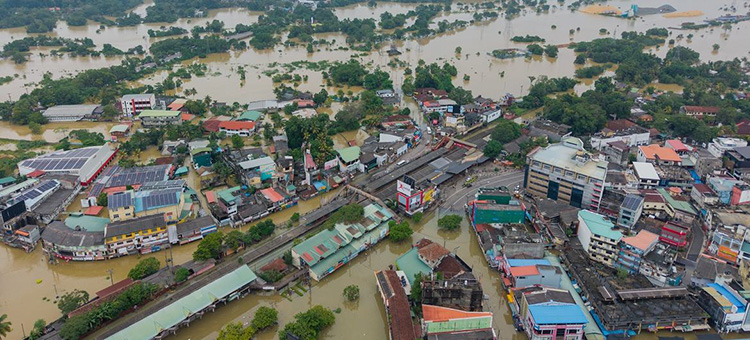
Death toll hits 627, over 2.17 mn affected across 25 districts
The Disaster Management Centre (DMC) has issued fresh landslide warnings as relentless heavy rains continue to pound regions still reeling from Cyclone Ditwah.
The Department of Meteorology has cautioned that thunderstorms accompanied by heavy rainfall are likely across parts of the Western and Sabaragamuwa provinces, as well as Galle and Matara districts. Rainfall is expected to intensify further on the 9th, 10th, and 11th of this month.
Authorities urged the public to stay indoors in safe buildings or vehicles and avoid open areas such as coconut and tea plantations, playgrounds, and reservoirs, during adverse weather events. The public has also been advised against using fixed-line phones, electrical appliances, and open vehicles like bicycles, tractors, and boats due to the risk of lightning strikes and strong winds.
With the northeast monsoon gradually intensifying, occasional rains are also expected in the Northern, North Central, Eastern, and Uva provinces, with some areas of the Batticaloa district expected to receive up to 75 mm of rainfall. Misty conditions may affect parts of the Western, Sabaragamuwa, Central, and Uva provinces during early mornings.
The DMC has said the floods and landslides, triggered by Cyclone Ditwah, have so far claimed 627 lives, with 190 people still missing. More than 2.17 million people, across 25 districts, have been affected, including 611,530 families. A total of 4,517 houses have been destroyed, and 76,066 partially damaged, leaving over 80,500 homes affected, nationwide.
Kandy is the hardest hit District, recording 232 deaths, 81 missing persons, 1,800 fully destroyed houses, and over 13,000 partially damaged homes. Puttalam and Kurunegala reported 573 and 480 fully destroyed houses, respectively, while Kegalle, Ratnapura, Badulla, and Gampaha also suffered extensive property losses.
Authorities have set up 956 safety centres across the country, currently sheltering 27,663 families, totaling 89,857 people. Relief and rehabilitation efforts are ongoing, with priority given to food, water, and medical aid. Officials warned residents in landslide-prone areas to remain in shelters until conditions stabilise.
by Chaminda Silva

In a massive nationwide crackdown under the Ratama Ekata (A Nation United) Drug Prevention Programme, police have taken 35,855 drug traffickers and users into custody across the country in just 36 days, according to Deputy Inspector General of Police Ashoka Dharmasena.
During the operation, authorities had seized 268 kilos of heroin and 994 kilos of ‘Ice’ (crystal methamphetamine), Dharmasena added.
He also highlighted that since January 2025, the ongoing campaign had resulted in the confiscation of 1,754 kilos of heroin, 3,535 kilos of ‘Ice,’ and 15,975 kilos of cannabis, marking a significant blow to drug networks operating nationwide.
The Police Narcotics Bureau Chief said that the drive was part of an ongoing effort to curb drug abuse and trafficking across the country, sending a strong message to offenders that law enforcement would leave no stone unturned in tackling the menace.
by Norman Palihawadane and Hemantha Randunu

The Hydrology and Disaster Management Directorate yesterday issued a cautionary alert as the water level in the Malwathu Oya continued to rise steadily, increasing the possibility of localised flooding in vulnerable settlements downstream.
As of 3.30 p.m. yesterday, the river gauge at Thanthirimale reported a water level of 6.48 metres, surpassing the official alert threshold of 5.00 metres and edging closer to the minor flood level of 6.80 metres. Officials classified the situation as “Alert – Rising”, prompting heightened field surveillance.
“We are monitoring the trend closely because the gauge shows a continuous rise. Even moderate rainfall upstream could elevate the risk of inundation across low-lying agricultural communities,” said a senior hydrology officer attached to the monitoring team.
Director (Hydrology and Disaster Management) Eng. L. S. Sooriyabandara, reviewing the bulletin, said the Department was alerting regional disaster coordinators to ensure preparedness measures were in place.
“Our teams are following this closely. Residents living adjacent to low-elevation areas of Malwathu Oya should stay updated on advisories issued over the next 24 hours,” he said.
The situation across other major river systems remained stable. Readings in Kelani, Kalu, Nilwala, Gin, Kirindi and Mahaweli rivers indicated no immediate threat. For instance, the Kelani Ganga at Nagalagam Street recorded 2.80 ft—well below its alert level of 4 ft—while Ratnapura on the Kalu Ganga continued at a safe 2.04 m against its alert threshold of 5.20 m.
Checking Officer W.A.S. Saumya (H.D.S.-Act) said that the forecast remains favourable, with many basin stations recording minimal rainfall during the six-hour interval up to 3.00 p.m. “Although the overall rainfall patterns appear low, it is critical not to be complacent given upstream variability,” Saumya said.
The latest river assessment bulletin was prepared by Duty Hydrology Analyst K.K.C.U. Dilshan, who confirmed that monitoring will continue overnight.
Authorities urged farming communities, school transport operators and residents living close to the floodplain of Malwathu Oya to remain cautious, refrain from night-time river crossings and heed updates issued through local administrative units and disaster offices.
By Ifham Nizam

New landslide alerts as Ditwah aftermath worsens

Over 35,000 drug offenders nabbed in 36 days

Rising water level in Malwathu Oya triggers alert in Thanthirimale

US INDOPACOM deploys airlift and logistics support for Lanka’s Cyclone Ditwah response

Seizure of drug haul off Kalpitiya:Father, son among 5 arrested

Chef arrested in exotic bird theft from Dehiwala Zoo

‘Dates have the highest sugar content to fight Coronavirus’

Sunday Island 27 December – Headlines

#SundayIsland 17th December – Headlines

Sunday Island – 28th March

Sunday Island Headlines – 21 March

Sunday Island – 21st February – Headlines
-
News5 days ago
Lunuwila tragedy not caused by those videoing Bell 212: SLAF
-
 News4 days ago
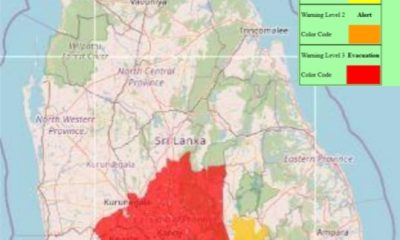
Level III landslide early warning continue to be in force in the districts of Kandy, Kegalle, Kurunegala and Matale
-
 Latest News6 days ago
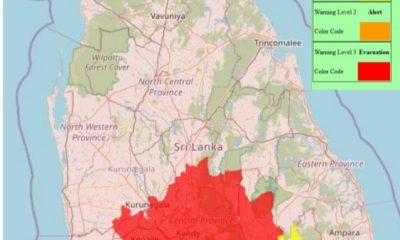
Level III landslide early warnings issued to the districts of Badulla, Kandy, Kegalle, Kurunegala, Matale and Nuwara-Eliya
-
 Features6 days ago
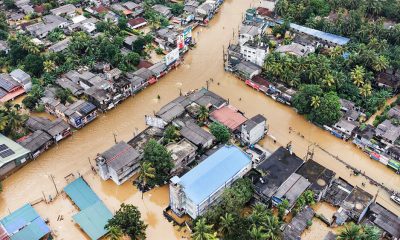
Ditwah: An unusual cyclone
-

 Latest News7 days ago
Updated Payment Instructions for Disaster Relief Contributions
-

 News2 days ago
CPC delegation meets JVP for talks on disaster response
-

 Business2 days ago
LOLC Finance Factoring powers business growth
-

 News2 days ago
A 6th Year Accolade: The Eternal Opulence of My Fair Lady