
News
Speaker reaffirms rejection of no-faith motion against Deputy Minister of Defence


Speaker Dr. Jagath Wickramaratne yesterday (25) informed the Houset that he was not in a position to accept the no-confidence motion submitted by the Opposition against Deputy Minister of Defence, Major General (retd.) Aruna Jayasekara by a group of MPs. He claimed parliament procedures did not provide for such a motion.
The motion was signed by the Opposition Leader Sajith Premadasa and 31 other members representing the opposition.
At the commencement of the House sittings yesterday, Speaker Wickramaratne said he had already announced his decision pertaining to the no-confidence motion and his decision could not be challenged according to Standing Order 76(1).
The Speaker said he had decided to clarify his decision on the motion again.
Text of the Speaker’s statement: “I wish to make this announcement in furtherance to the announcement made by me on 08.09.2025 on the Motion titled the ‘No-Confidence Motion’, submitted by a group of 32 Members of Parliament in the Opposition including the Leader of the Opposition in Parliament, on 12.08.2025 against Major General (retd.) Aruna Jayasekera, MP, Deputy Minister of Defence.
“At the outset, I wish to remind this House the Standing Order 76(1) which states that the Speaker in Parliament shall be responsible for the observance of the rules of order in Parliament and his/her decision upon any point of order shall not be open to appeal and shall not be reviewed by Parliament except upon a substantive motion made after notice.
“However, considering the queries raised in Parliament, I wish to further substantiate the factors highlighted in the previous announcement for ruling the said Motion out of Order.
“The 1978 Constitution of Sri Lanka and the Standing Orders of Parliament are silent on moving a No-Confidence Motion against an individual Cabinet Minister, Deputy Minister or any other holder of portfolios. The only existing provision on No-Confidence Motions is the Article 49(2) of the Constitution which provides only to move a No-Confidence Motion against a Government.
“However, No-Confidence Motions have been moved against the Prime Minister, Individual Ministers of the Cabinet of Ministers, notwithstanding the said silence in the Constitution and the Standing Orders, thus questioning the legal basis of such precedence.
“It is noted that, in the parliamentary context, the Speaker, Deputy Speaker, Deputy Chairman of Committees, Leader of the House of Parliament, Chief Government Whip, Leader of the Opposition, and Chief Opposition Whip are considered Parliamentary office-bearers, and that a substantive Motion of this nature may appropriately be brought against them.
“I wish to emphasize that in the international context, No-Confidence Motions have been allowed only in respect of the Government/ Council of Ministers as a whole (Erskine May, ‘Treatise on the Law, Privileges, Proceedings and Usage of Parliament’, 25th Ed. and M.N. Kaul and S.L. Shakdher, ‘Practice and Procedure of Parliament’, 8th Ed.). Further M.N. Kaul and S.L. Shakdher highlight that a Motion of No-Confidence can be moved only against the Council of Ministers as a whole and not against any individual Minister as per the Indian constitutional provisions regarding the collective responsibility of the Council of Ministers to the Lok Sabha.
“Similarly, the Articles 42, 43 and 44 of the Constitution of Sri Lanka, provides for the collective and individual ministerial responsibility of the Cabinet of Ministers.
“In Sri Lanka at present, Deputy Ministers have been appointed under Article 46(1) of the Constitution to assist the Ministers of the Cabinet of Ministers. However, the Ministers of the Cabinet of the present Government acting under Article 46(2) of the Constitution, have not delegated any power or duty pertaining to any subject or function to the Deputy Ministers. Nevertheless, I wish to place on record that the Deputy Ministers function in terms of Standing Order 32(2) on behalf of the Ministers, in compliance of Article 46(1) of the Constitution and read with Article 74 of the Constitution.
“Due to aforesaid reasons, I rule that the Motion is out of order in terms of Standing Order 27(3).
“In the alternate, I wish to note that incidental criticism of conduct of Members of Parliament or particularly to Members in their capacity as office holders in the House of Commons including the Speaker is permitted only through a substantive Motion (Erskine May, ‘Treatise on the Law, Privileges, Proceedings and Usage of Parliament’, 25th Ed.), and in the UK practice censure Motions can be tabled criticizing a Government policy or a Minister. M.N. Kaul and S.L. Shakdher (‘Practice and Procedure of Parliament’, 8th Ed.) states that Censure Motions can be moved against the Council of Ministers or an individual Minister or a group of Ministers for their failure to act or not to act or for their policy and may express regret, indignation or surprise of the House at the failure of the Minister or Ministers.
“Accordingly, I wish to inform this House to explore the possibility of submitting a substantive Motion instead of the current Motion in issue, in view of the national importance of the matters relating to the Easter Sunday Attack stated therein and as opined by the Attorney General, the specific facts in the Motion has no direct bearing to the cases pending before Courts.”

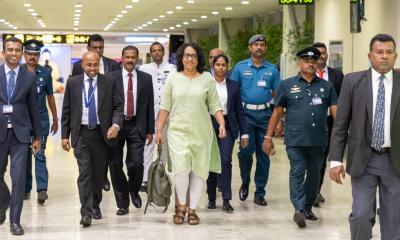


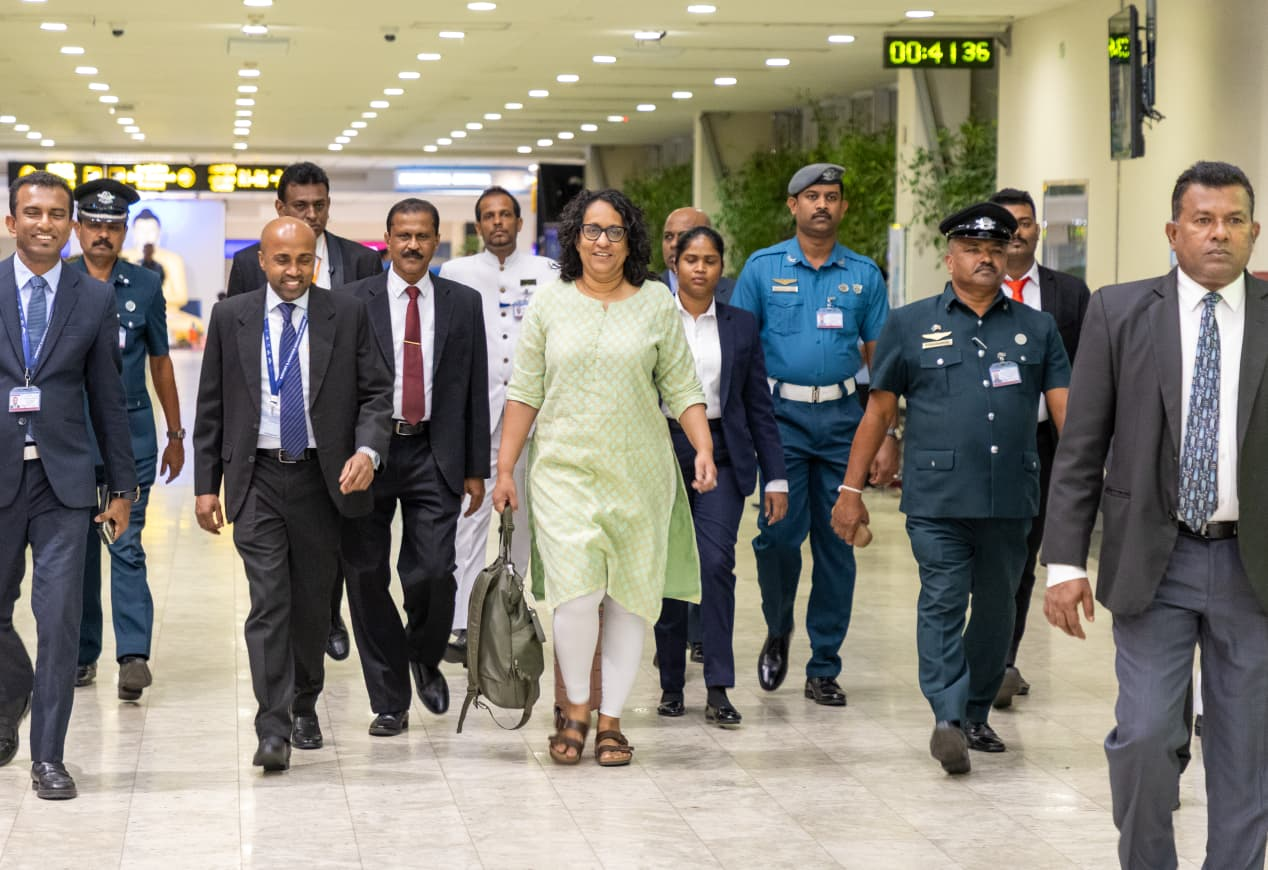
Prime Minister Dr. Harini Amarasuriya departed for Manila, Philippines, at midnight on 8 March on an official visit at the invitation of the Asian Development Bank (ADB), where she will participate in events marking International Women’s Day.
Upon arrival at the Ninoy Aquino International Airport (NAIA) in Manila, the Prime Minister was welcomed by Dr. Chanaka Thalpahewa, Ambassador of Sri Lanka to the Philippines, along with officials of the Government of the Philippines and representatives of the Asian Development Bank.
During the visit, the Prime Minister is scheduled to deliver a keynote address at the International Women’s Day event hosted at the ADB Headquarters in Manila.
On the sidelines of the event, the Prime Minister will also hold bilateral meetings with several Ministers of the Government of the Philippines to further strengthen cooperation and bilateral relations between Sri Lanka and the Philippines in areas of mutual interest.
[Prime Minister’s Media Division]
News
It is the government’s responsibility to ensure women’s rights are realized in everyday Life, and are not confined merely to Laws – PM

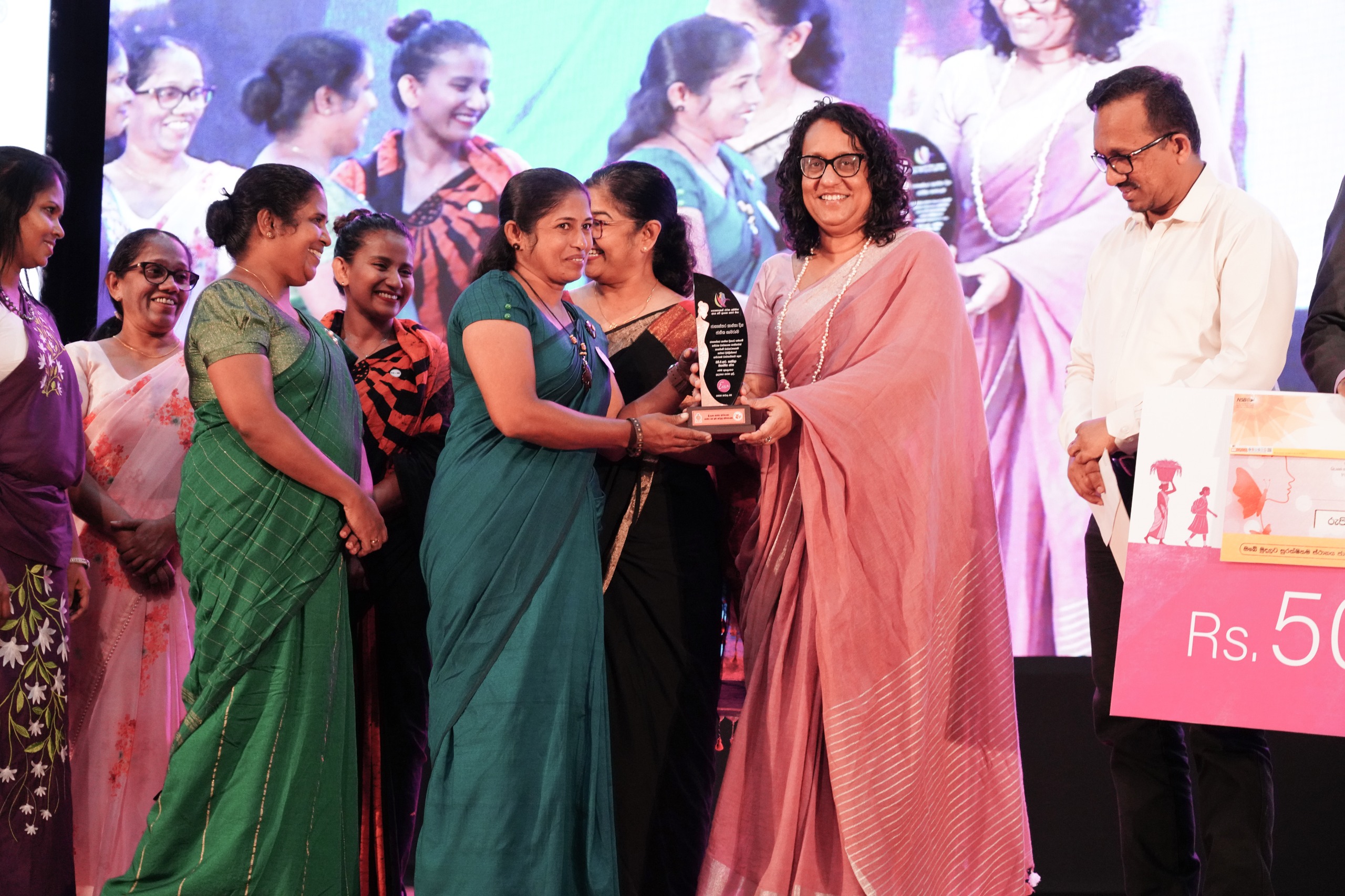
Prime Minister Dr. Harini Amarasuriya stated that it is the responsibility of the government to ensure that the political, economic, and social rights of women are not confined merely to laws or written documents, but are realized as a reality in the daily lives of every woman in the country.
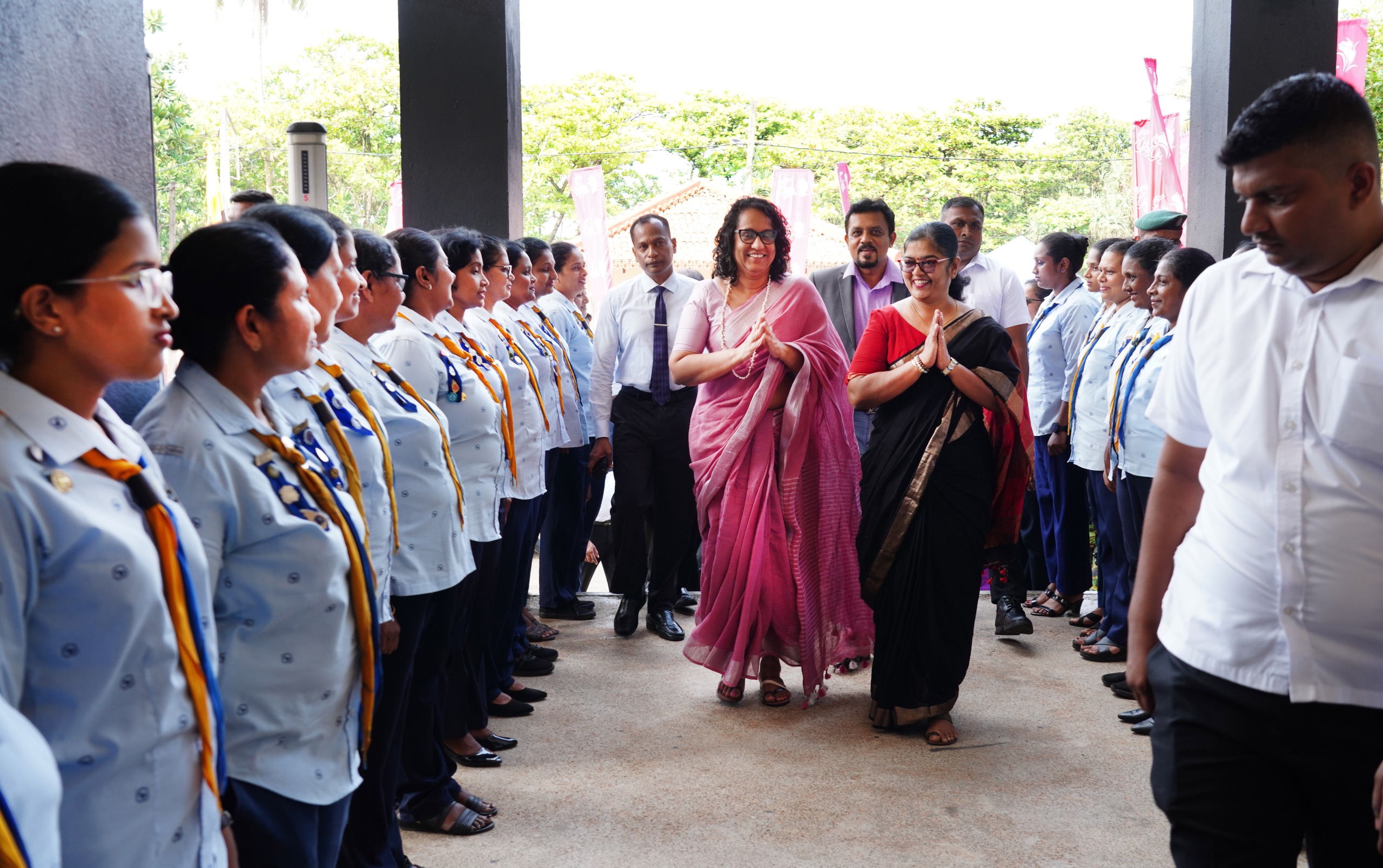
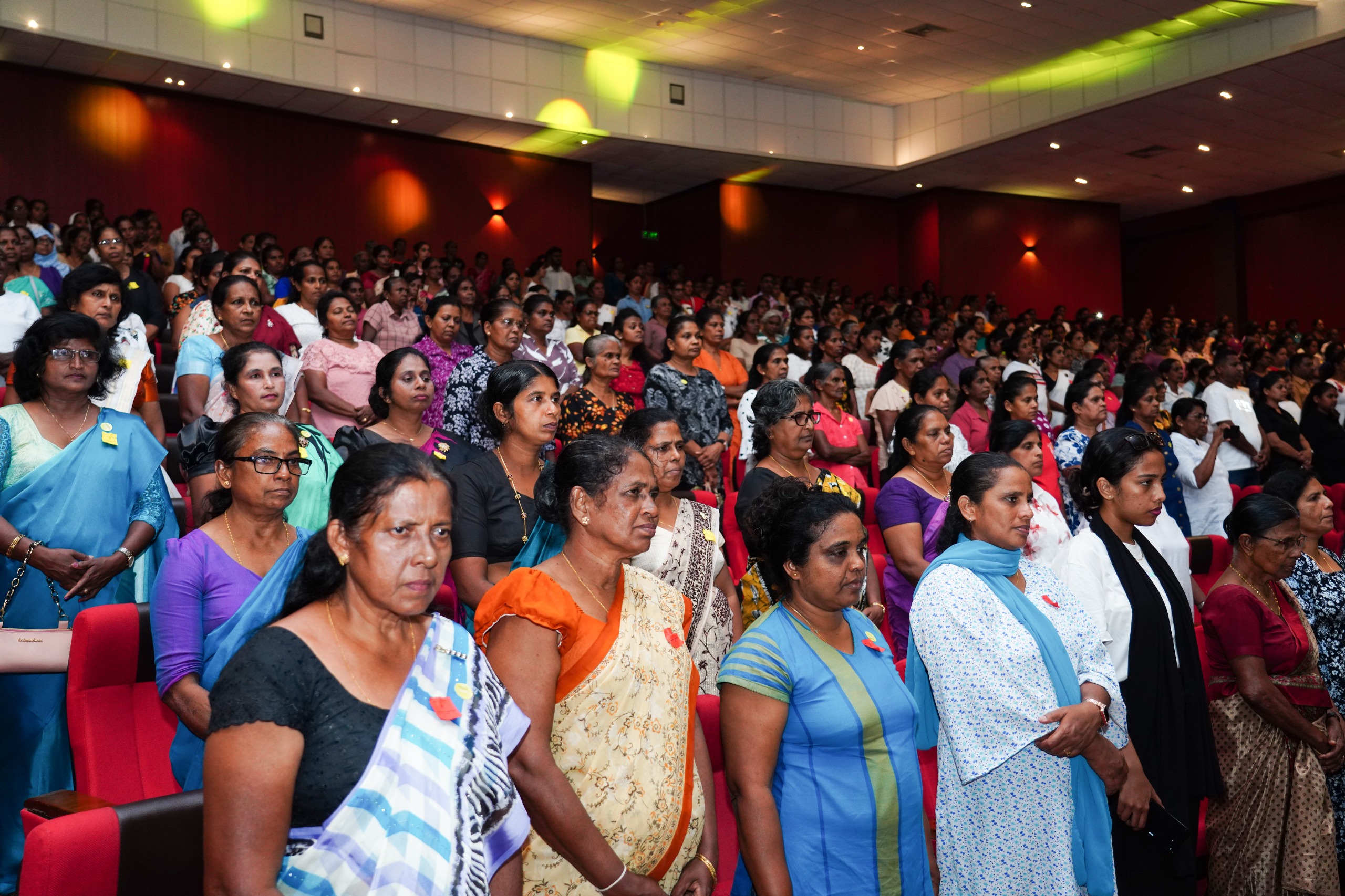
The Prime Minister made these remarks while participating as the Chief Guest at the National Celebration of International Women’s Day 2026, held on March 8 at the Rabindranath Tagore Memorial Auditorium of the University of Ruhuna in Matara under the theme “The Pride of a Prosperous Country – She is the Nation’s Path Forward.”
Addressing the gathering, the Prime Minister further stated:
“The freedoms we enjoy today including the right to education and political rights were won through the struggles carried out by women throughout history. This day is not merely confined to flowers. Our goal is to safeguard those rights and create an environment where every woman in our country can lead her life towards a better future.
The products of women entrepreneurs in this country should not remain confined to their local areas. The government is working to create an environment to ensure that they become active contributors to the national economy.
At the same time, a proposal has recently been presented by the Parliamentary Women’s Caucus to introduce a National Care Policy in order to recognize both the paid and unpaid contributions made by women for their families and for the country’s economy.
The Prime Minister also emphasized that women have a significant responsibility to stand for humanity in the face of the various crises occurring around the world. She called upon the women of the country to unite with compassion and take the lead in raising their voices for peace.
Addressing the event, Minister of Women and Child Affairs Saroja Savithri Paulraj stated that a new era has dawned in which the tears and sweat shed by women working abroad to strengthen the country’s foreign reserves will receive due recognition. She further noted that a comprehensive mechanism involving all ministries will be implemented to support women entrepreneurs, female heads of households, and women who have experienced violence.
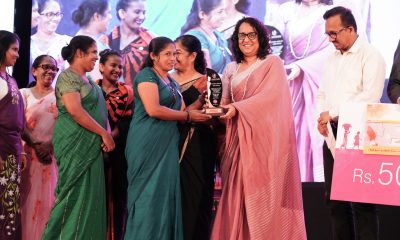
At this national event, the Prime Minister also presented appreciation awards to 25 successful women entrepreneurs from across the island.
The occasion was attended by the Minister of Industry and Entrepreneurship Development Sunil Handunneththi, Southern Province Governor Prof. Susiripala Manawadu, Deputy Ministers including Dr. Namal Sudarshana, along with ambassadors, public representatives, and a large number of participants.
[Prime Minister’s Media Division]
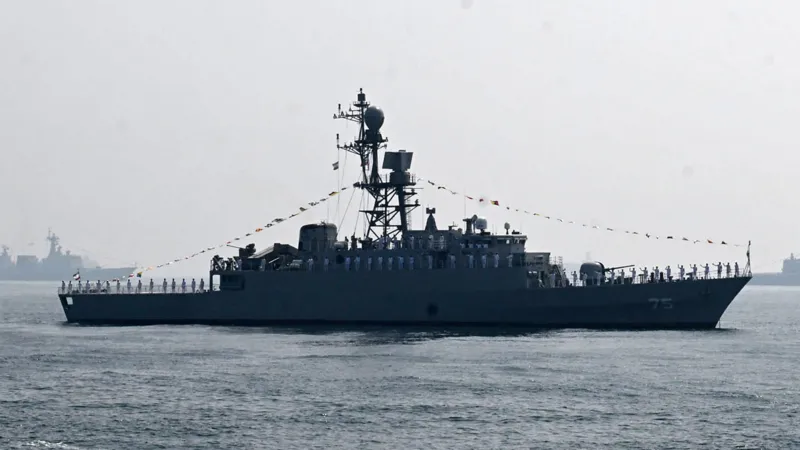
The Iranian warship Iris Dena was given permission by India to dock three days before it was torpedoed by a US submarine, India has said.
Foreign Minister S Jaishankar said Iran had sought permission for three of its ships to dock at Indian ports on 28 February – the day the US and Israel began a war on Iran – and permission was granted by India on 1 March.
The ships’ movements between 1 and 4 March are not clear and nor is why only one of them made it to India.
The sinking of the Iris Dena, with 130 sailors on board, in international waters off Sri Lanka’s southern coast on 4 March marked a dramatic widening of the war – and raised questions about India’s authority in its backyard.
It was the first military strike outside the Middle East since the US and Israel launched their war on Iran. President Donald Trump has said destroying Iran’s navy is one aim of the assault.
The three Iranian ships – Iris Dena, Iris Bushehr and Iris Lavan – had all participated in a military exercise hosted by India between 15 and 25 February in the coastal city of Visakhapatnam.
They left Indian waters on 25 February and were likely to have been in international waters on 28 February – when the US and Israel began attacking Iran.
“The Iranian side had requested permission on 28 February for three ships in the region to dock at our ports. This was accorded on 1 March,” Jaishankar told parliament on Monday. “Iris Lavan actually docked on 4 March in Kochi. The crew is currently in Indian naval facilities. We believe that this was the right thing to do.”
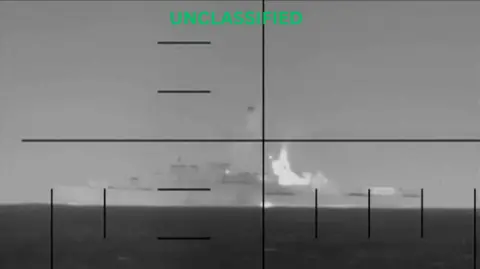
On 4 March, Iris Dena sank after being hit by a torpedo fired from a US submarine, killing at least 87 of its crew members.
According to the Indian Navy, the Iris Dena was operating about 20 nautical miles – roughly 23 miles (37km) – west of Galle in waters that fall under Sri Lanka’s designated search-and-rescue zone on the day it was struck.
The US tracks vessels across the world’s oceans, and a quarter of its submarine fleet of 65-70 is at sea at any given time, according to analysts.
Iran’s Foreign Minister Abbas Araghchi said last week the US had “perpetrated an atrocity at sea, 2,000 miles away from Iran’s shores” and that the warship was “struck in international waters without warning.”
Later, Sri Lanka said it had provided sanctuary for Iris Bushehr on 5 March, a day after it requested for docking following an engine malfunction.
Eventually, India also confirmed that Iris Lavan was docked in its southern city Kochi.
The BBC has written to the Iranian embassy in India and India’s external affairs ministry seeking clarification on the movements of the three Iranian naval vessels after Delhi granted them permission to dock.
US Defence Secretary Pete Hegseth has touted the attack on Iris Dena as an example of America’s military prowess, claiming it was “the first sinking of an enemy ship by a torpedo since World War Two”.
While it is the first time since 1945 that an American submarine has sunk an enemy ship this way, the UK and Pakistan have both sunk vessels using torpedoes since then.
The Iris Dena was one of about 20 Iranian navy vessels destroyed since Israel and the US launched co-ordinated strikes on Iran.
[BBC]

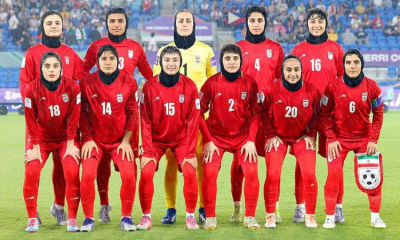
Five Iranian footballers granted Australian visas after anthem protest

Prime Minister on official visit to Manila, Philippines

It is the government’s responsibility to ensure women’s rights are realized in everyday Life, and are not confined merely to Laws – PM

North Korea cancels Pyongyang Marathon for ‘some reasons’

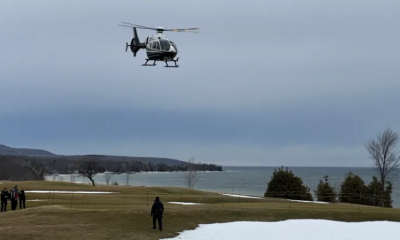
Canadian officials rescue 23 people who floated away on ice sheet

India offered sanctuary to Iranian ship three days before US sank it

‘Dates have the highest sugar content to fight Coronavirus’

Sunday Island 27 December – Headlines

#SundayIsland 17th December – Headlines

Sunday Island – 28th March

Sunday Island Headlines – 21 March

Sunday Island – 21st February – Headlines
-
 News4 days ago
University of Wolverhampton confirms Ranil was officially invited
-

 News5 days ago
Legal experts decry move to demolish STC dining hall
-

 News4 days ago
Female lawyer given 12 years RI for preparing forged deeds for Borella land
-

 News3 days ago
Peradeniya Uni issues alert over leopards in its premises
-

 Business5 days ago
Cabinet nod for the removal of Cess tax imposed on imported good
-
 News4 days ago
Library crisis hits Pera university
-

 News3 days ago
Wife raises alarm over Sallay’s detention under PTA
-
 Business6 days ago
War in Middle East sends shockwaves through Sri Lanka’s export sector