
Latest News
India offered sanctuary to Iranian ship three days before US sank it

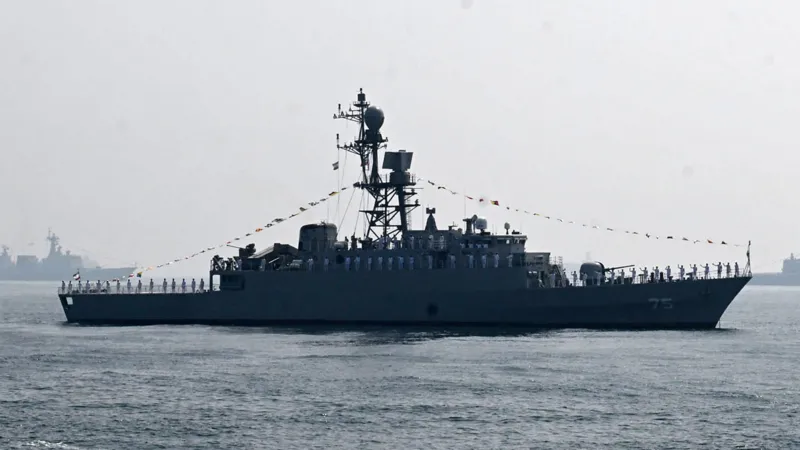
The Iranian warship Iris Dena was given permission by India to dock three days before it was torpedoed by a US submarine, India has said.
Foreign Minister S Jaishankar said Iran had sought permission for three of its ships to dock at Indian ports on 28 February – the day the US and Israel began a war on Iran – and permission was granted by India on 1 March.
The ships’ movements between 1 and 4 March are not clear and nor is why only one of them made it to India.
The sinking of the Iris Dena, with 130 sailors on board, in international waters off Sri Lanka’s southern coast on 4 March marked a dramatic widening of the war – and raised questions about India’s authority in its backyard.
It was the first military strike outside the Middle East since the US and Israel launched their war on Iran. President Donald Trump has said destroying Iran’s navy is one aim of the assault.
The three Iranian ships – Iris Dena, Iris Bushehr and Iris Lavan – had all participated in a military exercise hosted by India between 15 and 25 February in the coastal city of Visakhapatnam.
They left Indian waters on 25 February and were likely to have been in international waters on 28 February – when the US and Israel began attacking Iran.
“The Iranian side had requested permission on 28 February for three ships in the region to dock at our ports. This was accorded on 1 March,” Jaishankar told parliament on Monday. “Iris Lavan actually docked on 4 March in Kochi. The crew is currently in Indian naval facilities. We believe that this was the right thing to do.”
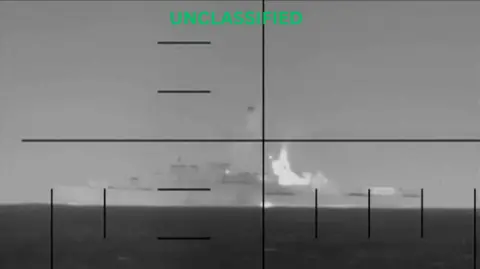
On 4 March, Iris Dena sank after being hit by a torpedo fired from a US submarine, killing at least 87 of its crew members.
According to the Indian Navy, the Iris Dena was operating about 20 nautical miles – roughly 23 miles (37km) – west of Galle in waters that fall under Sri Lanka’s designated search-and-rescue zone on the day it was struck.
The US tracks vessels across the world’s oceans, and a quarter of its submarine fleet of 65-70 is at sea at any given time, according to analysts.
Iran’s Foreign Minister Abbas Araghchi said last week the US had “perpetrated an atrocity at sea, 2,000 miles away from Iran’s shores” and that the warship was “struck in international waters without warning.”
Later, Sri Lanka said it had provided sanctuary for Iris Bushehr on 5 March, a day after it requested for docking following an engine malfunction.
Eventually, India also confirmed that Iris Lavan was docked in its southern city Kochi.
The BBC has written to the Iranian embassy in India and India’s external affairs ministry seeking clarification on the movements of the three Iranian naval vessels after Delhi granted them permission to dock.
US Defence Secretary Pete Hegseth has touted the attack on Iris Dena as an example of America’s military prowess, claiming it was “the first sinking of an enemy ship by a torpedo since World War Two”.
While it is the first time since 1945 that an American submarine has sunk an enemy ship this way, the UK and Pakistan have both sunk vessels using torpedoes since then.
The Iris Dena was one of about 20 Iranian navy vessels destroyed since Israel and the US launched co-ordinated strikes on Iran.
[BBC]

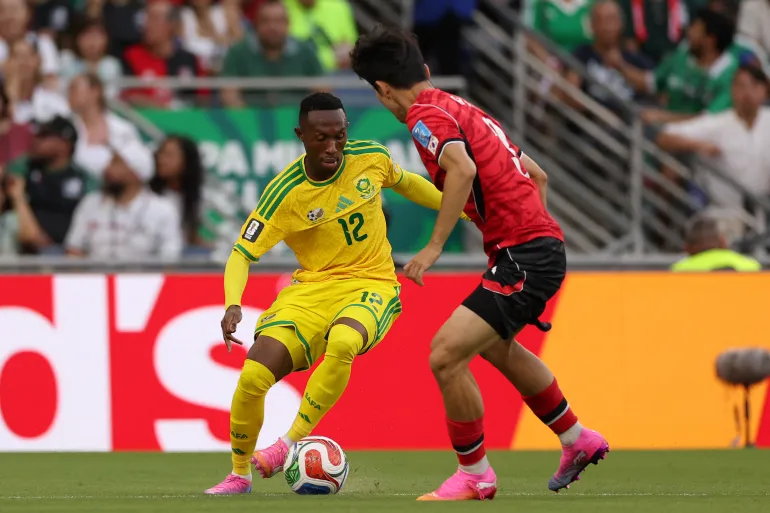
South Africa beat South Korea 1-0 to reach the World Cup knockout rounds for the first time in their history, an astonishing turnaround after a dismal opening defeat.
Bafana Bafana, playing at the tournament for the first time since South Africa hosted it in 2010, were widely written off after their 2-0 loss to Group A winners Mexico.
But they battled to a draw against the Chez Republic and came out on top of what was effectively a shootout with South Korea for second place in Monterrey, thanks to Thapelo Maseko’s second-half strike.
South Korea coach Myung-Bo Hong made a shock call by leaving captain Son Heungmin – considered by many to be Asia’s greatest-ever player – out of the starting lineup.
The Asian team started strongly, with stand-in captain Kim Minjae’s powerful header blocked on the goal line by Aubrey Modiba, before Lee Kangin flashed wide.
South Africa quickly settled, playing with hunger and adventure, but their finishing was wasteful.
They seemed certain to take the lead in the 30th minute when the ball fell to Evidence Makgopa after South Korean goalkeeper Kim Seunggyu parried Thalente Mbatha’s shot. But Makgopa could only tamely poke the ball straight at the goalkeeper from close range.
Son came on at the start of the second half, one of three changes made by coach Hong as he sought to change the script.
Early in the second period, Maseko squandered another good position, while South Korea forward Oh Hyeongyu tested goalkeeper Ronwen Williams at the other end.
As news filtered through from Mexico City that the host nation were leading against the Czech Republic, there was an added sense of urgency.
South Africa seized their moment, with Tshepang Moremi crossing to Maseko, who this time kept his cool, firing home inside the near post in the 63rd minute.
South Korea pushed hard in the closing stages but ran out of time, meaning South Africa will face cohosts Canada in Los Angeles on June 28 .
Mexico topped the group with nine points after winning all three of their matches.
[Aljazeera]
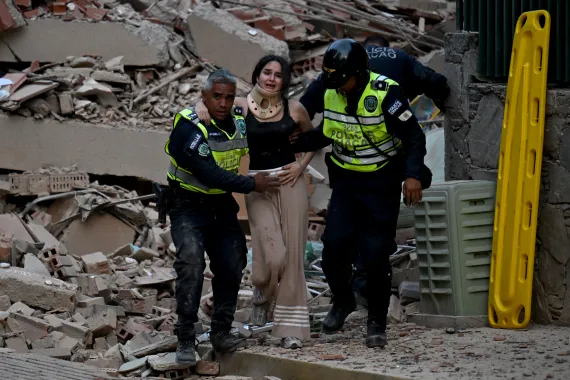
Back-to-back powerful earthquakes have struck Venezuela, collapsing buildings in the capital, Caracas, and killing at least 32 people and injuring over 700.
Acting President Delcy Rodriguez declared a state of emergency and said that the Simon Bolivar International Airport in Caracas is closed due to damage.
The US Geological Survey (USGS) has said that the first earthquake, measuring magnitude 7.2, struck west of Moron, about 168 km (104 miles) west of Caracas. A second tremor of magnitude 7.5 hit near the same area just a minute later. The USGS has warned that “high casualties and extensive damage are probable” and that the “disaster is likely widespread”.

(Aljazeera)

It has been reported that Attorney at Law Rakitha Rajapakshe, the son of former Minister of Justice Wijeyadasa Rajapakshe, has been arrested by the Commission to Investigate Allegations of Bribery or Corruption (CIABOC) over alleged links with the underworld.

Representatives from the Ceylon Chamber of Commerce meet PM

Progress of Housing Project for Malayagam Community families funded by India reviewed

South Africa stun South Korea to reach World Cup knockouts for the first time

Tremors of 7.5, 7.2 kill 32, injure hundreds in Venezuela

Former Minister Wijeyadasa Rajapakshe’s son arrested by CIABOC

Morocco come back after historic Haiti goals to reach World Cup last 32

‘Dates have the highest sugar content to fight Coronavirus’

Sunday Island 27 December – Headlines

#SundayIsland 17th December – Headlines

Sunday Island – 28th March

Sunday Island Headlines – 21 March

Sunday Island – 21st February – Headlines
-

 News6 days ago
Creditor receives USD 2.5 mn as Lankan public bears loss from theft of Treasury funds
-

 News5 days ago
Creditor not yet paid
-
 News5 days ago
Consumers bearing 22% tax burden despite 18% VAT claim: Dr. Harsha de Silva
-

 Features4 days ago
Nanda Pethiyagoda Wanasundara as three generations of family saw her
-

 Features3 days ago
Sri Lanka developing independent hydrographic capabilities
-

 Opinion6 days ago
SriLankan Airbus struck by lightning
-

 Editorial4 days ago
Fuel crisis: Beyond price debate
-

 Latest News4 days ago
Sooryavanshi thumps fastest List A fifty as India A win tri-series