
Opinion
South Asian Regional Conference on State of Higher Education 2026 and Education Diplomacy

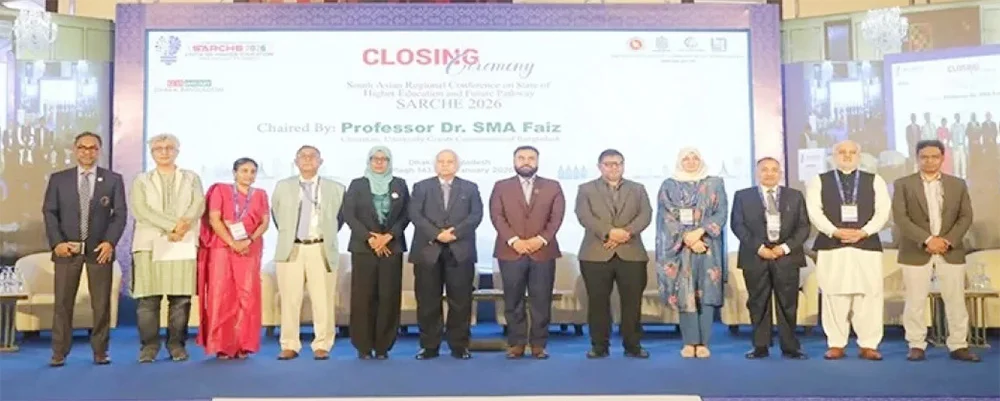
On the 15January 2026, the ‘Dhaka Declaration’ was adopted with eight strategic commitments, aimed at building a stable, inclusive, innovative and globally acceptable higher education system in the South Asian region at the third South Asian Regional Conference on State of Higher Education (SARCHE), 2026.
Advisors of the interim government, vice-chancellors of different public and private universities, scholars, researchers and diplomats were present at the third SARCHE 2026 Conference in Dhaka, emphasising the paramount importance of Education diplomacy.
The Nobel Laureate, Chief Adviser of the government, Professor Muhammad Yunus on 12th January 2026 inaugurated a three-day South Asian regional conference on higher education in Dhaka. The conference titled “South Asian Regional Conference on State of Higher Education and Future Pathway (SARCHE 2026)” organised by the Bangladesh government and World Bank funded Higher Education Acceleration and Transformation (HEAT) Project of the University Grants Commission (UGC) of Bangladesh.
Prof. Yunus’s call
Chief Adviser Professor Muhammad Yunus, has called upon the academics to align the education system with the youths’ expectations and aspirations and stressed on revival of the SAARC to enhance regional academic cooperation. “Today, I feel very excited that academics at the highest level could get together in Dhaka. It’s important that this is Dhaka. I hope you will have a chance to kind of review of the things that have happened in Dhaka in the past few months,” he said, referring to post-2024 July Uprising events in Bangladesh. Prof Yunus said review of those events will clarify what university education and education as a whole are really about, adding, this should be the core subject of discussion at the gathering.Highlighting the role of students in the 2024 uprising, he said, “Who are these young people that we are dealing with? They have their own mind. They stood up and raised their voices and brought down the ugliest fascist regime you could ever think of given their lives”.The Chief Adviser made the remarks while addressing the inaugural ceremony of the three-day “South Asian Regional Conference on State of Higher Education and Future Pathway (SARCHE 2026)” at a city hotel in Dhaka, Bangladesh. A total of 30 international representatives, including delegates from the United Kingdom, the Maldives, Malaysia, Nepal, Pakistan and Sri Lanka as well as representatives from the World Bank were represented in the event.”It would be a missed opportunity if you don’t spend some time on understanding what they did a few months back in this very city. What was their expectation? What was their aspiration? Why did they stand up in front of guns and give their lives knowingly it will happen,” the Chief Adviser said.To reflect the students’ motivation behind joining the uprising, he referred to school student Shaheed Shahriar Khan Anas’s letter, which he wrote to his mother before embracing the martyrdom, stating that it was his duty to take to the street with his friends, who were subjected to state-sponsored crackdown.Noting that the event was not a sudden outburst, Prof Yunus said it happened in Sri Lanka and in Nepal too, but it happened in a bigger way in Dhaka.
WB thanked for organisng event
He thanked the World Bank for organizing the conference, saying, “This was our responsibility to organize, but we failed. The World Bank has to step into make it happen”.Organizing such gatherings was part of the responsibility under the South Asian Association for Region-al Cooperation (SAARC), the Chief Adviser said, adding, but the SAARC as a word has been forgotten and “that’s a shame on us”. “This was supposed to be the idea of SAARC that we get together and make exchanges and learn from each other,” he said, noting his efforts since he has taken the responsibility as the Chief Adviser to revive the SAARC. “I am repeatedly reminding that we must get back to SAARC. That’s where our family belongs to. And I will not give up repeating that appeal to the governments of the region,” Prof Yunus said,Speaking about the forthcoming national elections and the referendum on February 12, he said the uprising tore everything apart and that the young people created their own July Charter to undo what the country was stuck with.
Referendum on Constitution
Chief Adviser said there would be a referendum to decide what the future constitution of Bangladesh should be, because they believed the root of the problems lay in the constitution. He said those issues were not taught in classrooms and questioned where universities stood in this reality. Noting that the young people have now formed their own political party, Prof Yunus said, “I’m sure some of them will get elected. “He called on educators to reflect on what education and university education should be in this very different world, warning that old ways of doing things are self-destructing and that change must happen quickly, just as the youth acted quickly during the July and August uprising.”So this is one issue, I hope this will be taken up seriously in this gathering where we are, what is being missed, how we can run and be in the front, rather than falling behind,” the Chief Adviser said.
He then said that the education system was not appropriate because it is job-oriented, adding, the system is designed around the idea that students must become suitable for jobs, and “If he or she fails to take a job, we think failure on the part of that student, not us”.Prof Yunus questioned whether the purpose of education is to prepare people for the job market. Human beings are not born as slaves and that each human being is a free person, he said, adding, jobs come from the tradition of slavery, where people work under orders for pay, which he equated with slavery.Stating that the young people who marched on the state refused to be slaves, he said, “So, what kind of education that you will be giving? This is a question I raise with you. You may dismiss it. You may pause for a while. But this is my point. Should we continue this education to create slaves? Turning creative beings into slaves, that’s a criminal job”. Prof Yunus said he translated creativity into entrepreneurship and argued that education should teach young people to be entrepreneurs rather than job seekers. He said young people should be told they are job creators and agents of change, driven by imagination, adding that imagination is the essence of human beings, and that people are born with enormous imagi-native power, which drove the youth to give their lives for the vision of a new Bangladesh.
Besides, representatives of UGCs and higher education commissions from SAARC member countries, vice-chancellors of universities from different countries, academicians and researchers took part in the conference.
Aim of the conference
According to the UGC, Bangladesh the conference has been organised aimed at elevating higher education in Bangladesh to a new height and further strengthen the UGC network among SAARC countries.
A total of eight sessions were held over the three-day conference. Emphasizing on “The Current State of Higher Education in South Asia: Governance, Quality and Inclusion” and “Research, Innovation, Sustainability and Social Engagement, Artificial Intelligence (AI) Integration, Digital Transformation and Smart Learning Ecosystems”, “Increasing Employment for Graduates and Industry–Academia collaboration”, “Future Pathways of Higher Education: Cooperation, Solidarity and Networking, “Stakeholder Dialogue on Higher Education Transformation: Voices of Civil Society”, and “Dialogue with Vice-Chancellors: the Context of the HEAT Project, gender issues in higher education will be held while the conference l ended following the adoption of the “Dhaka Higher Education Declaration”.
UGC, Bangladesh warns against fake foreign university branches in Bangladesh. Reports in various media outlets have highlighted several foreign universities, institutes are running unauthorized branch campuses, tutorial centers, and study centers across the country. The University Grants Commission (UGC) has cautioned students and parents against enrolling in three unauthorized foreign universities reportedly operating branch campuses in Bangladesh. According to the commission, American World University, USA; Trinity University, USA; and the Spiritual Institute of New York (State University) have no government or UGC approval to conduct academic activities in the country.
On the other hand, higher education has considered as a strategic necessity for the Maldives and called for enhanced regional cooperation, industry – academia collaboration, and impact – oriented research to support inclusive growth and resilience across the region.
While Pakistan has reached its greater heights in implementation of their AI policy, World bank is acting as a strong partner in developing these endeavors of regional partners.
Lessons to be learnt
We as a country has spent huge amount of expenditure in higher education, grants and research endeavors where majority of them have took place in western academic scenario. Our attitude as Sri Lankans do not wish to learn from regional partners and we highly embrace western based cultures and their development, while regional partners have emerged beyond Sri Lanka. Very few academia is passionately engaged in development initiatives while majority have violated bonds and residing in overseas lavishly having used government expenditure which should have spent on the public wellbeing of this Country. I wonder how many governments should take control of this paradise isle to understand this reality, still we are grappling with 17 universities under the Universities act with very few international student recruitments. The case of other State Universities cannot cater the increasing local demand as they need to keep their standards. In such a scenario admission of international students and their increasing demands are questionable? Our immigration do not facilitate as a separate compartment to facilitate international student recruitment like in Malaysia.
The government enacted the Private University Act in Bangladesh in 1992 and replaced in 2010. These laws were enacted to enable private universities to supplement the governments efforts in meeting the growing demand for higher education. Under the Act, private individuals, groups and philanthropic organizations are permitted to establish and operate self -financed, degree-awarding universities by fulfilling prescribed conditions. Due to rapid increase, the 2010 Act introduced Stricker provisions focused on quality assurance, accountability and good governance. It mandates statutory bodies such as Board of trustees, Syndicate and Academic Council and clearly defines their roles and responsibilities. The Vice chancellor serves as the chief executive and academic officer of the university and is the ex-officio member the Board of Trustees. The honorable president of Bangladesh act as the chancellor of all private universities and appoint key officials upon recommendations of the Board of trustees. The Act also mandates establishment of an accreditations council to ensure quality assurance UGC supervises and monitors private universities on behalf of the Ministry of Education, approves academic programs, curricula, prescribe minimum faculty qualifications and requires transparency through annual audited financial reporting.
However, many decades have gone and the Transnational education specifically in higher education in Sri Lanka is a struggle of Authority and Power. Many of the view that the Ministry of Higher Education does not cater the entire gamut of private Higher Education Institutes operating in Sri Lanka and do not address public issues. While UGC alone handles many of the public issues even in the transnational education with no authority in non-state sector. Hence, proper enactments under one umbrella need to be empowered for the sake of public. Sri Lankan practice is the Committees appointed to address public issues does not have genuine interest or knowledge to serve this sector rather depend on benefits derived.
Therefore, SARCHE 2026 has opened eyes of Sri Lanka on how the private sector should have healthy competition with public sector, while contributing massively to strengthen the economy.
Transnational Education in Sri Lanka
According to British Council reports on transnational Education,20224 and the SAARC regional Coordinator for the British Council was of the view that Sri Lanaka does not maintain a official repository for transnational education. The Company registrar or the Board of investment do not have a official repository which serves only for higher education purpose. There is no regulatory authority to address the agency problem engaged in transnational education where finally many have reported as unethical business practices.
While India, Pakistan, Maldives and Bangladesh massively invest on Transnational education to strengthen their economies we still do not have a national plan to address this with a regulatory mechanism with proper licensing, listing for Agents to operate in Sri Lanka in order to mitigate Education fraud.
Conclusion
There was a time when students who could not secure admissions to public universities turned to private universities as a last option. That really has changed significantly. Today, many students who qualify for public universities still choose private universities because they do not get admission to their preferred subjects. The primary reason is the freedom to study the subject of their choice. However, in Sri Lanka very few private entities provides a truly a university experience. While regional partners have improved beyond 100 in establishing private universities, still private public partnership in those countries are very best examples for Sri Lanka. According to the UGC,2023 Annual report there were 341,000 students enrolled across 110 private universities in Bangladesh, now has increased to 170 according to SARCHE,2026.
Pakistan maintains best examples of Artificial Intelligence models with World Bank Funding to their University System. University Business linkages in India, Pakistan and Bangladesh provide strong examples in Transfer of Technology. While Maldives will cater for the next round of SAARC conference on the state of higher education. They invite Sri Lanka along with regional partners for preparation of qualification framework with mutual recognition of qualifications with credit transfer facility. The “Dhaka declaration of Higher Education “was adopted at the SARCHE 2026, It intend to cooperate with regional partners in many aspects in Higher Education. With these concluding remarks it is high time to consider different aspects of higher education in the proposed reforms.
By Dr. Janadari Wijesinghe



Where the mind is without fear
And the head is held high
Where knowledge is free
Where the world has not been broken up
Into fragments by narrow domestic walls
Where words come out from the depths of truth …
Into that heaven of freedom, my Father,
Let my country awake
That was not a man ‘for all seasons’ (who are plentiful) but a man for the ages, writing those words in this kali yugaya.
Do you hear them? Now? Now, as ever, as everywhere?
Fifty years ago, I wrote commentaries on each poem in Gitanjali, from which those lines are taken. They were a kind of ‘crib’, paid for by an early tutory, Atlas Hall, which sort of prepared students for examinations at tertiary level here and in London. One might note that Gitanjali and other works by writers in South Asia (other than those touted by spurious academics as ‘post-modernist’ and ‘post-colonial’, – read ‘pro-colonial’) – have long been sent out of the window of classrooms in this country.
The immediate occasion that called for these comments was the presentation of a selection of songs, from Tagore’s extensive body of work, at the Wendt last Monday. It was by the foremost exponent today of robindra sangeeth, Rezwana Chowdhury Bannya of Bangladesh & Santiniketan (yes, that sounds as if Santiniketan is a nation by itself). In a singularly happy namaskar towards each other, it was co-hosted by the High Commissions of Bangladesh & India. The fact that both have adopted Tagore’s songs as their national anthems may be indicative of ‘the breaking down of narrow domestic walls’. ‘The Partition of Bengal’, first attempted by the British over a hundred years ago, failed because the people, Tagore active among them, did not want it. Four decades later they, the Brits again, succeeded in rebuilding that wall though it remains porous. As Sarath Amunugama observed, in a felicitous address in which he referred both to ‘the partition’, and to national anthems, and as is well known here, Ananda Samarakone’s namo, namo matha was inspired by his stay at Santiniketan. In the 1930s to the 1960s the latter connection has vitalised our dancing, singing, ‘music-making’ and our knowledge of theatre.
A somewhat hilarious outcome of the latter occurred about ten years ago at the Tower Hall, when Suchitra Mitra, whose name would for the foreseeable future be inextricably associated with robindra-sangeeth, invited our ‘old boys’ of Santiniketan to come up and join her in their school song. Most of them had lost the words and more than there seemed to be of them had lost their voice, leaving Suchitra Mitra up there encouraging and reprimanding them like a Montessori teacher.
And now we have, before our astonished gaze, a Cricket World Cup with loads of some kinds of drama, including a battle royal among three South-Asian giants of that English game with the sort of statutory-leaders of India, Pakistan and Sri Lanka present, polishing or twirling moustaches and waving gaily in the general direction of our millions of hoi polloi via TV cameras.
Sorry, yuga purusha, no trace of awareness around. So how could you and all of us whom you left behind (not that it could any longer matter to us as it did not to you), expect guilt?
The special issue of INDIA Perspectives (IP) that marked this occasion is a handsome work. The IP journal has always been a high-quality production but this was a revelation. Specialists in each area of Tagore’s interests and activities have contributed articles on his views on schooling, theatre, painting, religion, nationalism and internationalism, science, rural economics and so on, each from his/her perspective. What follows is drawn from that work.
Although he and Gandhi were friends and, says Amartya Sen, he had popularised the appellation Mahatma for Gandhi, Tagore had seen that the chakra was not the route to India’s future. There could be many views on that: Tagore may have overlooked its symbolic value or significance. After all, the bottom-line is that the European tribes became rich by pillaging the rest of the world and rendering those people poor. The textile industry in England, for instance, ‘developed’ by destroying the textile industry in Bengal; the methods adopted were various, the most direct being that of chopping off the fingers of the weavers. Tagore should have been aware of that.
The brutality of the British ‘raj’ was not unknown to him. Following the massacre of over 1,000 unarmed people at a gathering at Jaliawallah Bargh by a Brigadier (named Dyer) Tagore returned a ‘knighthood’ ‘bestowed’ on him by their monarch. A dozen years later, the oh-so-valiant Brits followed up the massacre at Jaliawallah Bargh by, in Tagore’s words, ‘a concerted homicidal attack, under cover of darkness, on defenseless prisoners undergoing the system of barbaric incarceration’. Any other examples, anyone?
Tagore had been an inveterate traveler and the questions that arise in ‘looking inwards and outwards’ tend to remain unresolved. He had foreseen that ‘science’ would be prostituted, that it would not serve the world community of living things, that it would become a man-made calamity: ‘Science is at the beginning of the invasion of the material world and there goes on a furious scramble for plunder. Often things look hideously materialistic, and shamelessly belie man’s own nature.’
Nevertheless he seems to have retained golden visions for what it was going to do: ‘But the day will come when some of the great processes of nature will be at the beck and call of every individual and at least the prime necessities of life will be supplied with very little care and cost’. (We have seen how Monsanto, Del Monte and fellow predators, have set about doing that). ‘To live will be as easy to man as to breathe, and his spirit will be free to create his own world.’ He was fortunate indeed in not being around to witness how the country he was born in and which had nourished his creativity has gone in the pursuit of command of the great processes of nature (and of her neighbours). Besides, the mega-mega weddings, etc., we are witness to the operations of an imperium hell-bent on evicting people from the lands, waterways and beaches that ‘the market’ covets.
How such a culture of science would choose to help the sick or, just a step further for such minds, to make the healthy ill, or, indeed, how such ‘science’ would be used to create, in Ralph Pieris’s term, ‘illth’ (not ‘wealth’), did not quite come to pass in his lifetime. Since his passing, we share a common experience of ‘patents’ on traditional medicines, including the most ubiquitous and widely / wisely used, kohomba or neem, of kotala himbutu and many others, acquired via ‘laws’ constructed by the ‘developed’ people aforementioned, and India’s experience in developing an antidote to the AIDS virus. They affirm the validity of Tagore’s ‘gut reaction’ to where ‘science’ may take the world and has indeed taken it.
Forty years ago Senaka Bibile initiated the construction and adoption of a formulary that reduced the number of drugs required in this country by some 80% and identified them by their generic name, and battle was joined. (Senaka was eventually eliminated/killed by a mercenary, from this part of this world, of Big-Pharma). That entity, Big-Pharma, has acquired control not only over the production of drugs and their marketing but over the entire range of activity that relates to health-care – systems of ‘referral’ and lab tests where such weren’t needed, so with hospitalisation or indoor treatment usually with yet more ‘tests’, ‘prescription drugs’, ‘insurance’ from an ‘approved’ company of blood suckers. Its control is most scandalously evident in the USA and includes a species of corruption that Tagore could not have conceived of. (robindra–sangeeth does not address such yet-to-be reality, nor do his plays and paintings). When Big-Pharma got their obedient servants in the USA administration to send in marines to force Bangladesh to allow their drugs in, the government and the people of Bangladesh, all honour to them, physically ‘repelled the boarders’.
Tagore lived in and came to terms with a changing world, and he responded to all of what he saw in terms that had not occurred to his contemporaries anywhere in ‘the known world’. There were others of course who had a like foresight. Though too numerous to mention here, I should think that Blake and Whitman belonged among them, – as did such great poets as Bharathari from centuries ago, and Subramaniam Bharathi, consigned to a pauper’s grave, from yesteryear. So many more through all the hundreds and thousands of years that don’t quite make up a kalpa.
We learn through the IP that Tagore’s name had been put up for the Nobel prize by a single member of the Royal Society, T S Moore, while 97 other members had collectively recommended Thomas Hardy. The Swedish Academy had picked Tagore out of 28 nominees. In a telegram conveying his acceptance of the award, Tagore expressed his appreciation of ‘the breadth of understanding which has brought the distant near, and has made the stranger a brother’. In these times, Sarkozy, Cameron and their ilk seem intent on making strangers of brothers.
A fallout of the instant fame it brought had been a loss of privacy (as Garcia Marquez and others discovered many decades later) and of the use of his time to get on with his work. Gitanjali was for the most part a rendering into English, by the poet himself, of his songs in Bangla. Translating a novel, short story or a play is no easy matter (as, with respect to Sinhala works, Ashley Halpe, Lakshmi de Silva, Vijitha Fernando et al could confirm). Hemingway had found the great Russians unreadable till he came upon the translations by Constance Garnett. Translating poetry is infinitely more difficult, (as Ranjini Obeyesekere and Lakshmi have shown) and Tagore was hounded by admirers to translate more of his work into English. He was called on to make his poetry accessible to those who had only English. His poems have since been put into English; among them, an effort I liked, a whole volume, was titled ‘I will not let you go’. Simply put, the title poem will not let you go.
Nevertheless, the task of translating works in other south Asian languages, to begin with, into Hindi, Bangla and Urdu and the other way is one that needs attention. Bangla has the second largest numbers of speakers in South Asia after Hindi – about two-thirds the number of Hindi-speakers. Bangladesh might consider setting up a kind of clearing house for such work, perhaps with SAARC support and located perhaps, at Silaideh, around Tagore’s ancestral land in Bangladesh. Maybe, as Tagore’s examples show, ‘start small’ would be a good approach.
On matters that have to do with ‘religion’, Tagore’s activities may be seen as being eclectic. He was a member of Brahmo, (of which Satyajit Ray and his father’s family were members), which took the Upanishads for text and had no truck with caste-orders of ‘Hinduism’ including the rationalization for it given in the Gita. He admired Sufism, presented a ‘Christothsava’ akin to Christmas, wrote on ‘Devotion to Buddhism’. His view on Siddhartha Gautama was: ‘This wisdom came, neither in texts of scripture, nor in symbols of deities, nor in religious practices sanctified by ages, but through the voice of a living man and the love that flowed from a human heart.’ The concept of nirvana had not attracted him and in that sense his perception of Buddhism seems to have been closer to that of the northern form than to the Theravada familiar to us here and in south-east Asia.
As with his experiments in theatre, where he moved away from the westernised urban mode to the folk-inspired dance-drama, so with music and song he moved away from the classical raag to folk music. That is a trajectory that our musicians should explore. He drew from other cultures – among the vibrant renderings given by Rezwana Chowdhury Bannya was one that gave a celebratory edge to ‘Ye banks & braes o’ bonnie Doon’.
My first encounter with robindra sangeeth occurred in Dhaka at the home of Mohamed Sirajuddin. When the late Prof. P P G L Siriwardena introduced us, Siraj exclaimed, ‘We are batch-mates’; what he meant was that he had joined the CSP (Civil Service of Pakistan) around the same time as I joined the CCS. As Secretary for Rural Development he did much to support cottage industries in Bangladesh and was familiar with our experience in that field. He invited artistes he valued, some, to my ears, at master level in robindra sangeeth, to perform at his place. I was struck by the variety of those who turned up to listen; there were friends, people from down – or off – the road, the Governor of the Central Bank, Ministers, colleagues … It reminded me of the glory days at Chitrasena’s in Kollupitiya. In an environment that seemed designed for chamber music, those songs sank into my heart. Among those who sang were a young couple who were TV stars but gave tribute to a middle-aged man, Farook, who was a master. Yes, robindra sangeeth, does need the male voice.
As Rezwana mentioned, delicately, as ‘in passing’, a problem that arises in appreciating such songs is that they are more sadly incomplete for the listener who has no Bangla than the emotions they do convey regardless. The affinity between Bangla and Sinhala is well known. (Some twenty years ago I sent a farmer from Berelihela, off Tissamaharama, to Dhaka for extended chats with fellow farmers from Asia and the Pacific. When I myself got there a few days later on allied business, I found that he had communicated very well indeed with people there in the only language he knew: his own). The present moment seems to offer an excellent opportunity for the High Commissions of Bangladesh and India to harness the active support of our government to set up an infrastructure for making Bangla accessible to our people. If, in these sort-of ‘market’ days a further incentive is required at this end, policy makers should be aware that workers and managers from here have contributed much to the resuscitation of a textile industry in Bangla that had been of an unparalleled excellence through the centuries.
by Gamini Seneviratne
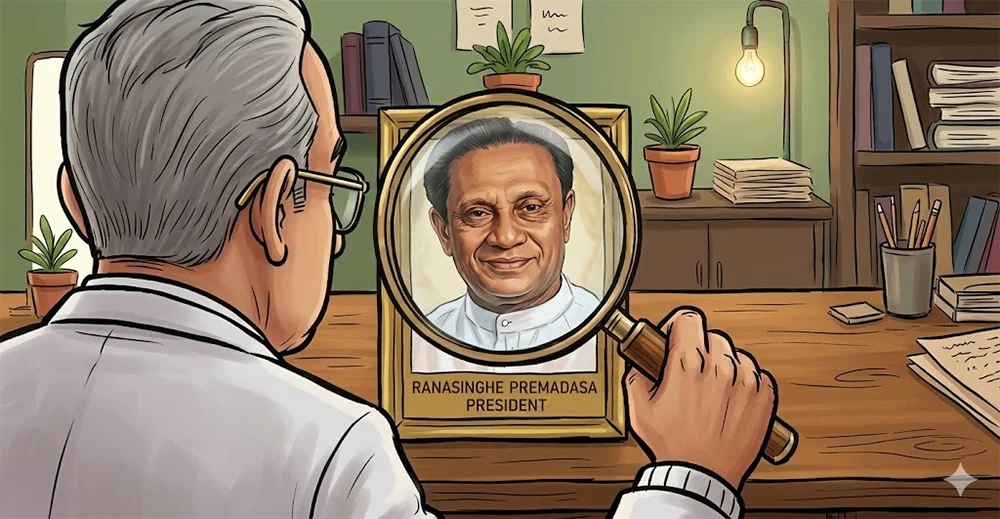
In an article published in The Island of 01 May, Rohan Abeygunawardena has paid a glowing tribute to R. Premadasa. It is true Premadasa, as a man from a humble urban working class, was ambitious, and to boost his personal image he targeted the rural and the common man, marginalised by previous regimes. He set up projects to satisfy these folks and selected his own staff to carry out his orders to achieve what he desired. He got rid of those who were sticking to rules and regulations.
One such case is, J .R. Jayewardene brought in previous prestigious Civil Service officers to revamp the fading public service, and one such was the illustrious Chandi Chanmugam, as Secretary to the Treasury. He was called up by Premadasa and requested to provide funds for a welfare project and when he explained the difficulties, he was bluntly told that he (Premadasa) could find an officer who could make the funds available. In keeping with the traditions of the CCS, Chanmugam tendered his resignation. The vacancy was filled by R. Paskaralingam. When Secretaries questioned about funds, Paskaralingam, who chaired the Development Secretaries Committee, would say, “This is bosses orders, find the funds somehow. ” How the Secretaries provided funds is another story.
The next three projects to boost his image at government expense were the mobile office programme, the housing programme and Gamudawa.
As Assistant Secretary to the Ministry for Power and Energy, I was assigned to conduct the mobile service. As far as I could remember, the first Mobile Office was held in the Yapahuwa Electorate, in a village called Badalgama. The previous day, I rang up the area engineer and asked him to meet me at the school building, allocated for the Mobile Office, and to inform the UNP party supporter, who was to find accommodation for my overnight stay. When I arrived, the Area Engineer was there with men to make arrangements for the mobile office. Then two officers from the Presidential Mobile Office Division walked in and inquired as to why I had not hung a picture of Premadasa as he wanted his picture prominently displayed at Mobile Offices. When I said that I had no picture, they rushed back and came with a beautifully framed picture and hung it on the wall.
The following day, before going to the Mobile Office to take an oath, I went to my office to find that someone had garlanded the picture. It was later found that the clerk, who accompanied the area engineer, had overheard the conversation, knowing Premadasa’s whims and fancies.
The work started and as usual. Premadasa visited all offices and when he came to mine, I greeted him in the oriental fashion but his eyes were directed towards his picture and a beam of smile crossed his face. When leaving he said, “Carry on the good work.” Since then at every Mobile Office, I arranged for a special event for him to attend, such as the opening of a rural electrification project.
Gamudawa: This project was similar to the presidential mobile service. There was a variety show organised by the UNP supporters, and crowds dispersed happily. When the Gamudawa project was to be started, a request was made by the Presidential Secretariat to supply generators as the sites selected were far away from the transmission line. The then Chairman of the CEB, Prof. K. K. Y. W. Perera, who was also the Secretary to the Ministry for Power and Energy, politely replied requesting a payment to meet at least the cost. There was no reply and when I visited the Gamudawa held in Wellawaya, I saw CEB men operating the generators. On my return, I reported the matter to the Secretary to the Ministry and also the General Manager, CEB. They said that they were aware but remained silent.
At the first staff meeting, after the 1988 presidential election, Premadasa said, “Carry out my orders and those who do not agree could find other places.”
This was the start of deterioration in the power and energy sector. He brought in his own staff and the once well-managed sector fell into disarray. Premadasa removed Prof. Perera from the post of Chairman, CEB, and the Workshop Engineer, who supplied the generators without the knowledge of the management, was appointed Chairman, CEB, a reward for carrying out illegal orders! Having been in the state service for 40 years, I walked out happily without a farewell party. I took with me only a wooden block, on which my name was printed, and the Lion Flag, which I displayed at Mobile Offices.
President Premadasa also ordered that all policemen in the Eastern Province, surrender to the LTTE, with their weapons. The LTTE killed all of them, numbering over 600.
G. A. D. Sirimal
Boralesgamuwa
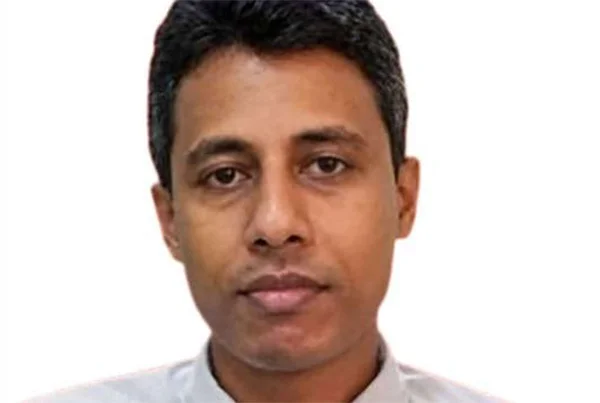
A serious debate has erupted following a postmortem examination conducted on the body of Ranga Rajapakshe, who was found dead in his garden.
The controversy has arisen as Rajapakshe, an Assistant Director in the Finance Ministry, had been suspended over the diversion of 2.5 million dollars to a fraudulent account. Although the cause of death (COD) is obviously cardiorespiratory failure due to severe haemorrhage (loss of blood), whether the two cut wounds on his legs and on his left wrist were self-inflicted or caused by an external agency is what has led to this raging controversy.
A four-member ‘regional’ expert forensic panel (EFP) was appointed supposedly by the Secretary, Ministry of Health. The Judicial post mortem report was submitted within 24 hours. Many questions have risen as a result. Whether the expert forensic panel looked into all aspects of the death – and not only the injuries in the body of the deceased — has become a moot point.
Was the death due to self-inflicted cut injuries, i. e. suicide? Or, were they inflicted by another or others? If so, it becomes homicide or murder. If there have been any deficiencies in the procedure adopted by the expert forensic panel, whether they are errors, negligence or deliberate is what is reverberating on the social media and the public spaces.
One important point has to be mentioned at the outset. The JPM Report is still not in the public domain. Whether it would remain a privileged communication limited to the judiciary remains to be seen. Hence, none can come to definitive conclusions on the JPM findings – except judicious, informed speculation.
Judicial Post Mortem Examinations: Are they prone to error, negligence or deliberate falsification?
History tells us that all three of the above are possible. The fourth possibility is that it is none of the three above, but a legitimate, academically defensible difference of opinion. Neither medicine, nor forensics is an exact science.
Error
A cursory glance at information on the Internet gives us a reasonable overview of the issue of error. Of them, I quote only those that may be relevant to the issue at hand.
(1) Errors in post-mortem examinations can arise from procedural oversights, misinterpretation of findings, or lack of expertise, with major diagnostic error rates ranging from 8% to 24%.
(2) Common mistakes include misinterpreting postmortem changes as injuries, missing findings due to incomplete examination, and failing to secure the chain of custody.
(3) Incomplete Examination: Failing to examine all necessary body cavities or failing to perform histology/toxicology.
(4) Misclassification of Death Manner: Incorrectly labelling a death as natural vs. unnatural (e.g., suicide vs. homicide) due to overlooking evidence or biased interpretation.
Causes of Errors
(1) Systemic Issues: Heavy workloads, lack of specialised training, inadequate equipment, or poor communication between investigators and pathologists.
(2) External Pressure: Influences from law enforcement, media, or families that can bias the investigation.
(3) Inefficient Techniques: Relying on delegated assistants for vital dissections or conducting superficial examinations.
The above would suffice to give us an idea about lacunae and deficiency in JPM examinations that could lead to error. Those interested could go into the plethora of academic articles on this subject of error in JPMs.
Did any of the above lead to an outcome of error in the conclusions of the JMP Report by the expert panel?
Negligence
Negligence involves critical and serious errors that are inexcusable. These include inadequate body examination, failed scene investigations, missed evidence and speculative, premature reporting. These shortcomings can hinder legal proceedings, obscure causes of death, and lead to wrongful conclusions, with studies identifying major procedural errors, including failure to identify injuries or misinterpreting pathological findings.
We have no information whether the EFP had done a detailed site visit.
Deliberate falsification
Deliberate falsification or fraudulent autopsy reporting involves the intentional alteration of findings, documentation, or conclusions to misrepresent the cause or manner of death.
This misconduct can take many forms, including covering up homicide, misrepresenting police actions, or protecting influential individuals.
Forms of Deliberate Falsification include modification of Conclusions due to Forensic pathologists facing coercion from police, politicians, or families to change a homicide to an accidental death or natural causes. Intentional Neglect of Evidence: Failing to document injuries like strangulation marks or bruises to support a fabricated narrative of natural death. Issuing misleading or untrue post-mortem reports constitutes “serious” professional misconduct that is punishable by law.
There is absolutely no evidence that deliberate falsification has occurred in this case. But what I have attempted to inform the readers of is that such situations are well known.
The celebrated Sathasivam case illustrates the earliest instance in Sri Lanka, in which there was conflicting forensic evidence from two highly eminent forensic professors. Professor GSW de Saram, the first professor of forensic medicine, faculty of medicine, of the then University of Ceylon and JMO, Colombo was the most pre-eminent forensic expert in Ceylon who gave evidence for the prosecution and Sir (Prof.) Sydney Smith, world renowned professor of forensic medicine, University of Edinburgh who gave contrary forensic evidence on behalf of the defence. This conflict in the forensic evidence was a key factor that resulted in Sathasivam’s acquittal
I list below, a few JPM discrepancies and conflicting JPM reports that are now in the public domain in the recent past in Sri Lanka:
1. The death of a student at the University of Ruhuna raped and killed on the Matara beach, considered a suicide when circumstantial evidence indicated thugs of a well-known politician were involved in the incident. I was on the academic staff of the faculty of Medicine, University of Ruhuna at that time and came to know several details that had not come into the public domain.
2. The conflicting PM reports on the “disappearance” of the kidneys of a child at LRH, which was originally given as a medical death and later judgement given as a homicide. The child’s good kidney had been removed when the nephrectomy had to be done on the damaged kidney.
3. The infamous JPM report first given on Wasim Thajudeen’s killing. This falsification was done by a very senior JMO.
4. Lasantha Wickrematunga’s death, which was originally attributed to shooting but subsequently found to be due to stabbing with a sharp implement.
5. The RTA death of a policeman on a motorcycle (his wife and children were also seriously injured) in Boralesgamuwa due to the drunk driving by a female specialist doctor. The first JMO report stated that the doctor had not been under the influence of alcohol until CCTV evidence was presented to the Court that showed her drinking in a club that night. The police informed Court that the breathalyser test had confirmed that the doctor was under the influence of alcohol.
These are some of the well-known instances that there had been conflicting JMO reports. Furthermore, there have been several JMO reports where death in police custody was falsely documented in the JPM or JMO reports to safeguard the police involved in torture.
I know of one case personally, where a doctor from Nagoda Hospital, Kalutara was hauled up by the Sri Lanka Medical Council (of which I was a member for 10 years) for falsifying his JPM report of a death of a young man in police custody to safeguard the policemen concerned.
Why do JMOs falsify JMO reports?
Based on reports and studies, primarily focusing on the context of Sri Lanka, allegations of false or misleading judicial medical reports by Judicial Medical Officers (JMOs) arise from a combination of systemic, ethical, and external pressures rather than a single cause.
Reports indicate that instances of faulty reporting often stem from several factors. The main factor being political and external influence. These are likely in high-profile cases; JMOs may face pressure to tailor reports to suit the interests of powerful individuals or to minimize the culpability of suspects.
It has been seen that some reports are deemed erroneous or contradictory due to negligence, improper reporting procedures, or a lack of understanding of the ethical responsibilities of their role as JMOs. The police sometimes exert influence to speed up investigations, leading to “shortcuts”, where evidence is not properly scrutinised, or reports are tailored to support a premeditated narrative rather than scientific findings.
To be fair by JMOs, it must be said that false history or narratives given by victims and or perpetrators mislead the JMO. Victims or suspects may provide false history during the medical examination to protect themselves or to misdirect investigations.
The dearth of experienced forensic specialists can lead to inexperienced officers handling complex forensic cases. It has been the practice in many instances that Magistrates make specific requests that the PM examination be transferred to an experienced and senior forensic expert.
The subversion of justice is not limited to our part of the world. It happens everywhere. The judiciary, the legal and medical professions can work together to deliver justice to the impoverished and unempowered masses.
by Prof. Susirith Mendis
susmend2610@gmail.com
-

 News3 days ago
MIT expert warns of catastrophic consequences of USD 2.5 mn Treasury heist
-
 News5 days ago
CJ urged to inquire into AKD’s remarks on May 25 court verdict
-

 News6 days ago
USD 3.7 bn H’tota refinery: China won’t launch project without bigger local market share
-
 News7 days ago
Easter Sunday Case: Ex-SIS Chief concealed intel, former Defence Secy tells court
-

 Business7 days ago
Dialog Surpasses 1,000 5G Sites, Strengthening Nationwide 5G Coverage
-

 Editorial3 days ago
Clean Sri Lanka and dirty politics
-

 Editorial6 days ago
Deliver or perish
-
 Opinion5 days ago
Security, perception, and trust: Sri Lanka’s delicate balancing act