
Editorial
Sobering economic reality


Tuesday 7th October, 2025
Budget 2026 is around the corner, and speculation is rife in political circles that the Provincial Council elections will be held early next year. Chances are that the government will present an election-oriented budget and play Santa to garner favour with the electorate in a bid to recover lost ground. At the time of writing, it was reported that an alliance of Opposition parties had won the Udunuwara Cooperative Society election, securing all slots on the board of directors, leaving none for the NPP. Political parties throw their weight behind the candidates contesting co-operative society elections, which serve as political windsocks.
The government is emulating its predecessors in trying to shore up its approval ratings. It has decided to launch a massive state sector recruitment drive amidst pressure from the World Bank to downsize the state service, which is bursting at the seams. It has also launched some mega development projects.
Meanwhile, Sri Lanka has imported more than 37,000 cars and 160,000 motorcycles so far this year, according to media reports. Nearly USD 1 billion has been spent on vehicle imports. Taxes on imported vehicles have risen exponentially, and this is one of the reasons why the government’s revenue has increased considerably. An increase in state revenue is most welcome, but a fine balance has to be maintained between imports aimed at boosting tax revenue and the forex outflow. This is a financial high-wire act that is best left to economists, who must be allowed to make decisions, free from political interference. That is the way to prevent another forex crisis from emerging and leading to a situation where all vehicles, including the newly imported ones, will have to wait in long lines near refilling stations for days on end again.
Fitch Ratings has affirmed Sri Lanka’s Long-Term Foreign-Currency Issuer Default Rating at ‘CCC+’. There is a long way to go, and the government should tread cautiously. Fitch has noted that Sri Lanka’s sovereign rating remains ‘constrained by elevated general government indebtedness and a high interest-revenue ratio despite the completion of the sovereign’s debt restructuring in 2024’. The need for economic reforms cannot be overstated. President Ranil Wickremesinghe (2022-2024) made a host of vital yet unpopular decisions to manage the economic crisis. The biggest challenge for the NPP government is to maintain the growth momentum.
Meanwhile, the US has, in its 2025 Investment Climate Statements, told the NPP government a home truth. While appreciating the fact that the 5 percent GDP growth in 2024 has exceeded expectations, the US has said Sri Lanka’s investment climate remains challenging. “The NPP’s commitment to the country’s $3 billion, four-year (2023-2027) Extended Fund Facility IMF program reassured investors, but many remain wary given the NPP leadership’s historically anti-Western, Marxist-influenced ideology.” One may argue that the US is averse to the JVP’s affinity for the Chinese economic and political models, but it has apparently read the minds of foreign investors accurately. “Give a dog a bad name and hang him,” they say. The JVP finds itself in a Catch-22 situation. Its Marxist political orientation has stood in the way of the NPP government’s efforts to attract foreign investment, but it cannot renounce its ideological shibboleths lest it should alienate its cadres.
Thus, the JVP’s domineering old guard, which calls the shots in the NPP government, has become a liability for the incumbent government where foreign investor confidence is concerned. Moneybags in the sin stock sectors, such as gambling, may not mind parking their black money anywhere in the world, but those who are engaged in ethical and socially responsible investing are wary of taking unnecessary risks in the countries ruled by ideologically confused governments experiencing dialectical tensions between fractions represented by neoliberals and dyed-in-the-wool leftists still living in the Cold War era. Having chosen to run with the Marxist hare and hunt with the neoliberal hounds for political expediency, the JVP is apparently at a loss, unable to figure out whether it is running or hunting, so to speak. The time has come for it to stop signalling left and tuning right, and vice versa, and decide which way to go.



Friday 16th January, 2026
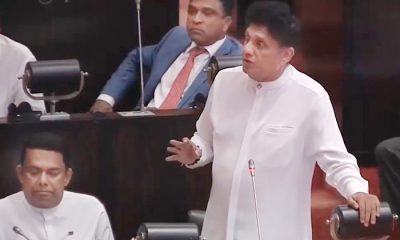
Never a dull day in Sri Lanka, where controversies abound. As if the ongoing political war on the government’s hurriedly introduced education reforms were not enough, there is a dispute over a religious symbol, of all things, The Opposition has taken exception to an image in a newly crafted learning module. SJB and Opposition Leader Sajith Premadasa insists that the symbol described as the Dhamma Chakka in the textbook is in fact the Ashoka Chakra. He took up the issue in Parliament last week, demanding an explanation from the government. Several other Opposition politicians have expressed similar views.
Responding to Premadasa’s argument, Prime Minister and Minister of Education and Higher Education Dr. Harini Amarasuriya told the House that the Buddhist symbol in the school textbook, introduced under the new education reform programme, looked similar to the Ashoka Chakra, but it was the Dhamma Chakka approved by the Ministry of Buddhist Affairs, the Advisory Council on Buddhist Affairs and the Maha Nayake Theras of the Asgiriya and Malwathu Chapters. However, the debate over the symbol in question is far from over; the Opposition politicians and their propagandists continue to castigate the government. The Chakka issue has left the public confused.
There have emerged two schools of thought over the Buddhist symbol in the school textbook. Differences between the Dhamma Chakka and the Ashoka Chakra are not limited to their distinct shapes alone, according to the critics of the symbol at issue. They have pointed out that the Dhamma Chakka symbolises the Noble Eightfold Path and moral law or Dhamma while the Ashoka Chakra represents law and justice (or dhamma in a civic sentence), movement, progress, good governance and discipline, and therefore in today’s context it is secular and not religious, as such. The Dhamma Chakka is found in Buddhist temples, stupas, manuscripts and religious art while the Ashoka Chakra is mostly in the Indian national flag, government emblems and currency and official seals. The rival school of thought insists that the symbol in the textbook is the real Dhamma Chakka and what the Opposition has taken up is a non-issue.
The ongoing debate is of immense interest in that the traditional Dhamma Chakka is known as a sacred Buddhist symbol of spiritual law and the path to liberation. The Ashoka Chakra has become a modern national symbol of India; it has been inspired by the Dhamma Chakka but used mostly in a secular context. The question is what prompted the government to use a symbol other than the traditional Dhamma Chakka in a school textbook, and thereby spark a controversy unncessarily.
Ironically, the NPP government drawing criticism for using a symbol that is confused with the Ashoka Chakra, a national symbol of India, is led by the JVP, which once launched a violent anti-Indian campaign and even gunned down traders who sold Indian onions or local varieties that resembled them. The government finds itself in a dilemma. Its critics maintain that the Dhamma Chakka in Sri Lanka’s state emblem is different from what the government calls the real Dhamma Chakka approved by the Ministry of Buddhist Affairs, the Advisory Committee on Buddhist Affairs and some Maha Nayake Theras. How can this glaring discrepancy be rectified? There cannot be two different Dhamma Chakkas—one in the state emblem and the other in school textbooks or elsewhere, according to those who want the government to stick to the traditional Dhamma Chakka.
It is imperative that the government, the Ministry of Buddha Sasana, the Opposition, the Maha Sangha, Buddhist scholars and other stakeholders address the Chakka issue urgently and clear up public confusion.
Thursday 15th January, 2026
The government finally swallowed its pride and postponed the implementation of education reforms meant for Grade 06. It has said its reform initiative is on track, but it is very likely to avoid a headlong rush. It may not concede defeat, but it is obviously wary of performing another high-wire act without a safety net amidst protests.
The government has done itself a favour by shelving the education reforms for Grade 06. Protests tend to snowball, and the Satyagraha campaigns, rallies and marches against the education reforms have the potential to develop into another ‘go-home’ movement.
The opponents of the current education reforms are now demanding that the government deep-six its reform package wholesale and ensure that the architects thereof bear the cost of error-ridden modules, amounting to about Rs. 70 million. Their message is loud and clear; those who wasted state funds for printing those modules will face legal action when the NPP loses power.
The Opposition and the trade unions critical of the proposed education reforms are still out for Prime Minister Dr. Harini Amarasuriya’s scalp, blaming her for the reform mess in the education sector. They are also making many unsubstantiated allegations against her. Trouble is far from over for her and the government.
Now that all stakeholders have agreed that the education system needs reform, the government should begin formulating education reforms anew while adopting an inclusive approach. The best way to set about the task of introducing reforms in any sector is to consult all key stakeholders and secure their concurrence.
The NPP government led by the JVP, which is a great admirer of the Chinese Communist Party, should have adopted the gradual trial-and-error approach recommended by Deng Xiaoping, and crossed the river by feeling the stones. Instead of taking one experimental step at a time and adapting to circumstances, the NPP government made the mistake of plunging headfirst into reforming the education system.
It has been proposed that the government set up a Presidential Task Force consisting of experts, political representatives, trade unionists and other stakeholders to reform the education system. This proposal deserves serious consideration. A broadly representative task force will help ensure the smooth implementation of education reforms. Well begun is said to be half done.
Meanwhile, Tuesday’s meeting between President Anura Kumara Dissanayake and some trade unions representing teachers and principals has been viewed in some quarters as part of a divide-and-rule strategy, for it has caused a rift between the trade unionists invited by the President and others, who claim that the event was scripted. However, those who met the President on Tuesday have thrown their weight behind the campaign to recover the cost of poorly crafted learning modules that have been shelved.
President of the All Ceylon United Teachers’ Association Ven. Yalwala Pannasekera Thera, one of the trade unionists who met the President on Tuesday, has given a karmic twist to the education reform issue. Tearing into the NPP politicians and state officials responsible for printing the badly drafted modules, he said yesterday those who misused funds meant for children would be reborn as frogs in Beira Lake and tortoises in the Kandy Lake.
Politicians who misuse state funds and abuse power may find themselves in the company of frogs and tortoises even before they go the way of all flesh. One may recall that in 2022, some politicians of the previous dispensation and their supporters swam with frogs in Beira Lake, where angry mobs plunged them. The same fate is likely to befall all politicians who let power get the better of them, resort to highhanded action, flaunting mandates and supermajorities, and thereby test the public’s patience.
Wednesday 14th January, 2026
The police have warned of an escalation in online financial scams. There have been numerous complaints of such frauds, and fraudsters often offer online employment opportunities, investment schemes or other financial benefits, luring victims into transferring money to their accounts, the police have said.
The commonest online scams in Sri Lanka, according to cybersecurity warnings during the past two years, are deceptive loan schemes, phishing links, fake job offers, work-from-home frauds, love traps, pyramid schemes, investment and crypto frauds, lottery prize and shopping rackets, and duping people into sharing their banking details with unknown parties. Common precautions against these scams are said to include ignoring suspicious links, never sharing passwords or OTPs with others, and being sceptical of lottery wins and unsolicited employment or investment offers.
Scams are as old as the hills; they have proliferated during the past couple of decades due to the phenomenal expansion of social media. Humans have a penchant for trust and leaps of faith. One of the earliest known scams occurred in 300 BC, when two Greek sailors sank their cargo ship to cheat money lenders. Historians inform us that some members of the Praetorian Guard ‘sold’ the Roman Empire, of all things, after murdering their master. Sir Isaac Newton struggled to outwit forgers following his appointment as the Warden of the Royal Mint. A con-artist sold the Eiffel Tower to an unsuspecting buyer about 100 years ago. Such instances abound in world history.
Scams mushroom at all levels of society in this country, and it is not possible for the police and other state institutions to crack down on all of them. There’s said to be a sucker born every minute. The same is true of scammers. Most Sri Lankans do not heed warnings and invest money and even their nest eggs in fraudulent schemes only to regret. The scam victims, except those who invest their black money, deserve sympathy and help, and everything possible must be done to bring the scammers to justice. Various factors drive the ordinary people to take such risks and fall prey to scammers, one being low banking returns, but it is debatable whether taxpayers’ money should be used to compensate those who lose their clandestine investments.
Besides online scammers, loan sharks operating in the guise of microfinance companies have become a curse. They exploit the poor, especially those in the rural sector, with impunity. Many borrowers end up losing their belongings, including agricultural equipment put up as collateral. They have no one to turn to. On Monday (12), the Sectoral Oversight Committee on Economic Development and International Relations approved the proposed Microfinance and Credit Regulatory Authority Bill, subject to amendments. It is hoped that we are not going to witness another false dawn, and the laws this vital Bill seeks to make will help liberate the poor from the clutches of the microfinance Shylocks.
Perhaps, the biggest scams in this country are not in the financial sector but in politics, and they are taken for granted. Remember the much-advertised political promises that helped politicians hoodwink the public and savour power—‘rice from the moon’, ‘eight pounds of grain plus a righteous society’, ‘a country free from corruption and violence’, ‘a prosperous future’, ‘good governance’ and ‘a beautiful life’? The best way to deal with those who are responsible for such politico-social scams is to make election manifestos and campaign promises legally binding, and change the existing electoral system to introduce the recall mechanism so that it will be possible to unseat the crafty politicians who secure state power by making umpteen Machiavellian promises and betray people’s trust. But the question is whether the politicians who alone can make such laws will ever legislate for the politico-social scams in question to be brought to an end. We are reminded of a question Juvenal famously asked about two millennia ago: “Who guards the guards?”

South Korea’s ex-president Yoon given 5-year jail term in martial law case

Indonesia sues six companies over environmental harm in flood zones

National ThaiPongal Celebration held at Temple Trees.

U19 World Cup: Zimbabwe U-19 vs Scotland U-19: Match abandoned

U-19 World Cup: Francis, Bell, Andrew help West Indies thump Tanzania

U-19 World Cup: Henil, Kundu secure India’s first win

‘Dates have the highest sugar content to fight Coronavirus’

Sunday Island 27 December – Headlines

#SundayIsland 17th December – Headlines

Sunday Island – 28th March

Sunday Island Headlines – 21 March

Sunday Island – 21st February – Headlines
-

 Business2 days ago
Koaloo.Fi and Stredge forge strategic partnership to offer businesses sustainable supply chain solutions
-

 Business6 days ago
Dialog and UnionPay International Join Forces to Elevate Sri Lanka’s Digital Payment Landscape
-
 News6 days ago
Sajith: Ashoka Chakra replaces Dharmachakra in Buddhism textbook
-

 Editorial15 hours ago
The Chakka Clash
-

 Features6 days ago
The Paradox of Trump Power: Contested Authoritarian at Home, Uncontested Bully Abroad
-

 Features6 days ago
Subject:Whatever happened to (my) three million dollars?
-
 Business2 days ago
SLT MOBITEL and Fintelex empower farmers with the launch of Yaya Agro App
-
 Features15 hours ago
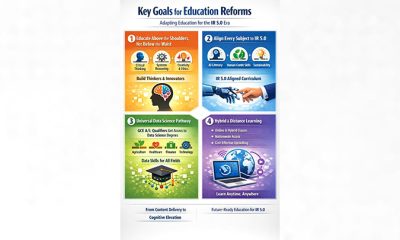
Online work compatibility of education tablets