
News
SLPP rebels call for Bandara’s sacking for resumption of talks with President

Kiriella chides dissidents for dilly-dallying on impeachment move
Second group of govt. rebels critical of defection
SLPP’s move to win over rebel MP Navaratne fails
By Shamindra Ferdinando
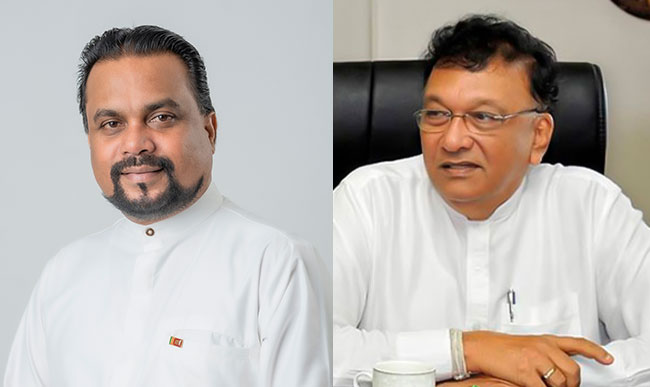
National Freedom Front (NFF) leader Wimal Weerawansa ha emphasised that the 11-party dissident group wouldn’t return to the negotiating table until President Gotabaya Rajapaksa sacked newly appointed State Minister Shantha Bandara.
The former Industries Minister said so yesterday (17) in response to The Island query whether the indefinitely postponed second round of talks with President Gotabaya Rajapaksa could be resumed early this year.
The dissident group has been engaged in talks with Opposition political parties in support of President Gotabaya Rajapaksa’s call for the establishment of an interim administration as part of the overall measures to restore political stability.
MP Weerawansa ruled out resumption of talks with the President unless he was ready to rectify the wrongdoing.
The dissident group called off a meeting scheduled to take place at the Janadhipathi Mandiraya at 7 pm on 12 April after Shantha Bandara was sworn in as the State Minister for Agriculture. The first round of talks took place on 10 April also at the same venue.
The rebel group comprises Democratic Left Front, the Lanka Sama Samaja Pakshaya, the Communist Party of Sri Lanka, the National Freedom Front, the National Congress, the Pivithuru Hela Urumaya the Sri Lanka Mahajana Pakshaya, the Vijaya Dharani Jathika Sabhawa, the Eksath Mahajana Pakshaya and the Yuthukama civil society organisation. The group consists of about 30 members.
MP Anura Priyadarshana Yapa alleged that the government’s failure to address issues at hand had prompted another group of SLPP members to rebel against the ruling coalition. Declaring they had no intention of betraying the government by joining what he called the Opposition political project, MP Yapa said that the government shouldn’t have engineered Shantha Bandara’s defection.
Responding to another query, Yapa said that second rebel group comprised 11 members at the moment though there was a likelihood of more joining them.
Yapa said that though there hadn’t been formal talks between the group consisting of 11 parties and those in the second dissident faction, both groups largely represented the same interests. Pointing out that the existence of the second group had been officially announced in Parliament, Yapa said that they would continue to pursue a campaign of their own to pressure the government. Lawmaker Yapa, who is also the Chairman of the Committee on Public Finance (CoPF) described Shantha Bandara’s defection as an outdated political strategy simply irrelevant at the present juncture.
Former General Secretary of the Communist Party D.E.W. Gunasekera yesterday warned the government that the rapidly developing crisis couldn’t be resolved by engineering defections. The former Minister agreed with MP Yapa’s assertion that such strategies were obsolete and even counterproductive.
Gunasekera said that the 11 party group had expressed concerns over Shantha Bandara’s defection. Declaring that whoever engineered the defection, it didn’t help the President’s efforts to defuse the political crisis. According to the former minister, an extremely ill-timed move jeopardized the government ahead of forthcoming talks with the International Monetary Fund (IMF) meant to obtain the much needed assistance to overcome the financial crisis.
Gunasekera emphasized that the government couldn’t have been unaware of the implications of the decision to announce the suspension of debt repayments pending talks with the IMF. The former Minister asked, “Wouldn’t it have been much better to make the announcement having obtained the IMF’s consent in that regard?”
The CP veteran questioned the alleged bid to win over rebel group member Asanka Navaratne through devious means. Gunasekera alleged that a National List MP and another first time MP accompanied by the Chairman of a state enterprise had been to MP Navaratne’s Kurunegala residence where they offered the rebel a ministerial portfolio on behalf of the SLPP founder Basil Rajapaksa.
The targeted MP has declined the offer and brought the incident to the attention of the rebel group.
President Gotabaya Rajapaksa has denied any knowledge of the move when the rebel group sought his position on the latest backdoor attempt. Gunasekera said that the President’s claim of not being involved in the failed defection should be examined against the backdrop of Shantha Bandara receiving a state ministerial portfolio.
Gunasekera said that there were half a dozen SLPP lawmakers closely watching the situation. “They are contemplating siding with the rebels and that may result in the government even losing its simple majority in Parliament,” the former Minister said.
Meanwhile, the Chief Opposition Whip Lakshaman Kiriella yesterday told The Island that the rebels including the so called second dissident group couldn’t under any circumstances refuse to sign a petition seeking to impeach President Gotabaya Rajapaksa. “We don’t want to hear any more excuses. What we need is their backing to impeach the President. The dissidents cannot drag their feet over the impeachment move, especially against the backdrop of Shantha Bandara’s defection,” lawmaker Kiriella declared.
Asked whether the Samagi Jana Balavegaya (SJB) move had received the backing of the entire Opposition, MP Kiriella said that there was absolutely no issue with regard to their support, the issue at hand was the delaying tactics adopted by those who declared intention to operate as independent groups in the Parliament.
The SJB needs 113 signatures for the impeachment move against the President to be a reality.
Responding to questions, MP Kiriella said that they were hoping to present an amendment to do away with the executive presidency and also exploring ways and means of securing consensus on the re-enactment of provisions in the 19th Amendment to the Constitution by way of a 21st Amendment.
Lawmaker Gammanpila said that President Rajapaksa’s response to the political crisis and the ongoing public protest campaign opposite the Presidential Secretariat demanding his resignation seemed quite inadequate. Gammanpila declared that Shantha Bandara’s defection increased pressure on the government struggling to cope up with the ongoing protest campaign.







Former first lady Shiranthi Rajapaksa, wife of former President Mahinda Rajapaksa was produced before the Hulftsdorp court, after being arrested by officers of the Commission to Investigate Allegations of Bribery or Corruption (CIABOC) and produce
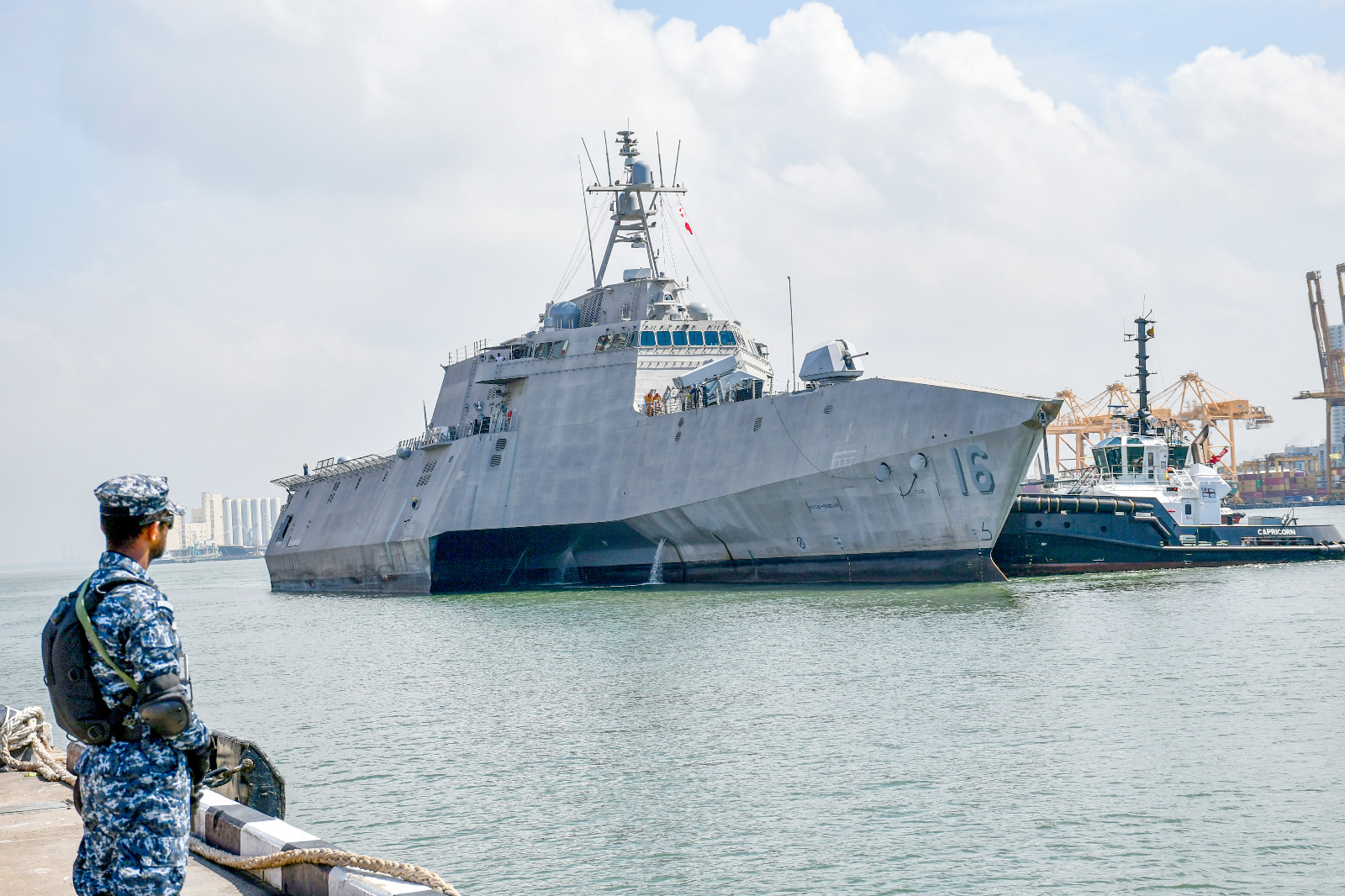
The U.S. Navy ship USS Tulsa (LCS 16) arrived at the Port of Colombo this morning, 7 October 2026 for replenishment purposes.
The visiting ship was welcomed by the Sri Lanka Navy in accordance with naval traditions.
The 127.7-metre-long platform is a Littoral Combat Ship commanded by Commander BM Wanier. Commissioned on 16 February 2019, USS Tulsa has since been in service with the US Navy.
The ship previously made a port call in Sri Lanka on 27 August 2025.
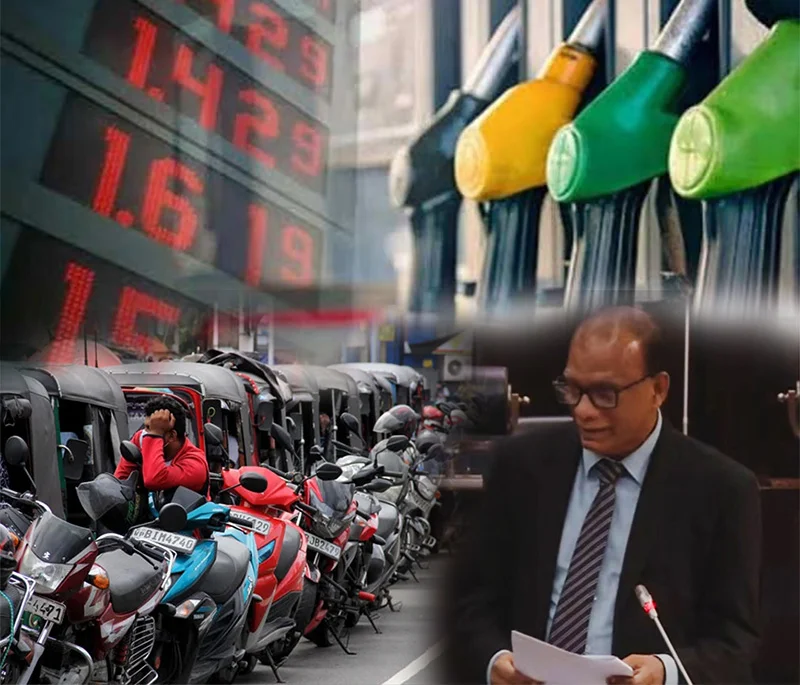
Govt. tells fuel distributors to maintain stocks to ensure uninterrupted supplies
by Saman Indrajith and Norman Palihawadane
The government had instructed private fuel distributors to maintain minimum stocks and ensure uninterrupted supplies to the market, Energy Minister Anura Karunathilaka told Parliament yesterday (06).
Karunathilaka said the Ministry of Energy Secretary had notified the relevant companies of the requirement, following a reduction in supplies by some private distributors, amid higher international fuel prices.
The Minister said private companies had informed the government that they were facing losses because international prices had risen while fuel was being sold, locally, at prevailing prices. As a result, some companies had reduced the volumes released to the market.
The reduced supplies had increased the burden on the Ceylon Petroleum Corporation (CPC), whose share of the diesel market had risen from about 54% to 82%, the Minister said.
“The CPC currently holds an 82% share of the market,” he said, adding that it had increased its supplies, compared with February, to compensate for the reduction by private distributors.
Karunathilaka said the government could not, under the existing agreements with private companies, specify the quantities they should supply to individual filling stations. However, it could require them to maintain minimum stocks in the country.
The Minister said the Energy Ministry had already instructed companies that had failed to maintain the required stocks to take steps to prevent supply disruptions.
The Minister attributed the queues reported at some filling stations to reduced supplies from private distributors, as well as normal variations in fuel distribution. He also said demand for CPC fuel had increased because private companies generally did not provide fuel to dealers on credit, while the CPC offered a three-day credit facility.
“We expect that, as the Ceylon Petroleum Corporation takes on this additional burden, the problem will ease to some extent by Wednesday or Thursday,” Karunathilaka said.
He said instructions had also been issued to increase supplies to CPC filling stations. A special discussion on the issue is scheduled for today (07), with officials of the Energy Ministry and CPC expected to participate,
along with President Anura Kumara Dissanayake.
Meanwhile, Petroleum Dealers’ Association officials have called for an early solution to the supply issue. Association Chairman D.V. Shantha Silva said queues had been reported at many filling stations, mainly those operated by private distributors.
He said the situation was not due to an overall shortage of fuel, but was linked to reduced orders by Lanka IOC, Sinopec and R.M. Parks amid concerns over losses incurred on fuel sales.
The Ceylon Petroleum Private Tanker Owners Association has urged motorists to refrain from panic buying, saying there was no nationwide disruption to fuel supplies.
The government earlier increased fuel prices and introduced a per-litre diesel subsidy following concerns raised by distributors over rising international prices.

Former first lady Shiranthi Rajapaksa arrested by CIABOC

U.S. Navy ship USS Tulsa arrives in Colombo for replenishment visit

Smriti Mandhana appointed India captain across formats

Ronaldo apologizes for Portugal walkout; says Jesus broke promise

Showers in the Western, Sabaragamuwa, Central, Uva, North-western and Southern provinces and in Anuradhapura and Mannar districts

Fuel crunch looms

‘Dates have the highest sugar content to fight Coronavirus’

Sunday Island 27 December – Headlines

#SundayIsland 17th December – Headlines

Sunday Island – 28th March

Sunday Island Headlines – 21 March

Sunday Island – 21st February – Headlines
-

 News7 days ago
US-assisted ‘Ice’ detection: NPC to examine IGP’s move to transfer drug-busting team
-

 Editorial6 days ago
Colombo Port drug bust: The plot thickens
-

 Editorial7 days ago
Drug busting, transfers and trust deficit
-

 Features4 days ago
The first woman in the foreign service or Ceylon Overseas Service it was then called
-
 News7 days ago
Sri Lankan facing death penalty in Saudi Arabia: Mano G appeals to Crown Prince
-

 Editorial5 days ago
Fuelling discontent and protest
-

 News3 days ago
Geneva takes up Sallay’s case and govt. ignores opportunity to answer accusations
-

 Latest News5 days ago
Tharindu Rathnayake, bowlers secure Asian Games Bronze for Sri Lanka